

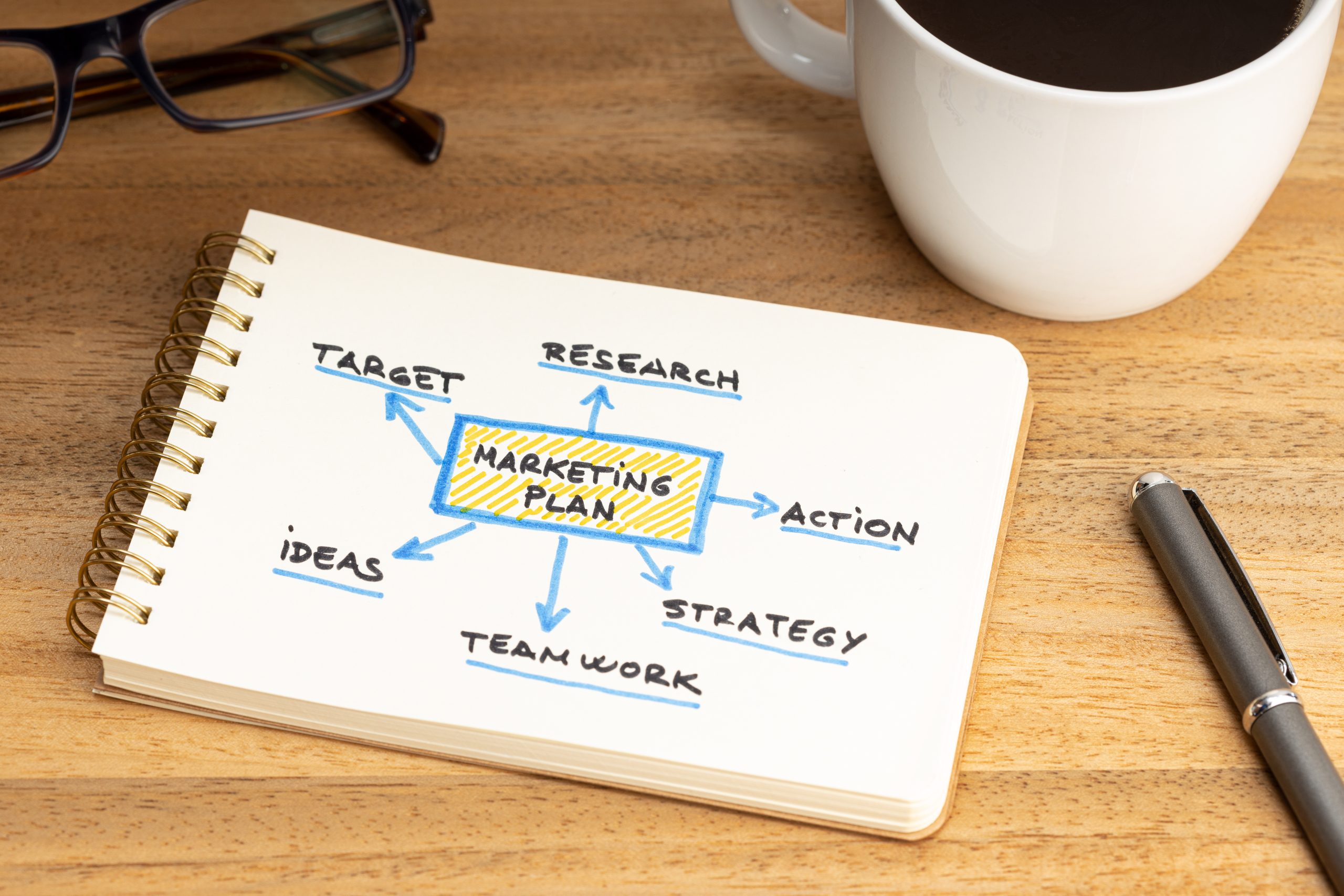
How to Build a Marketing Strategy From Scratch (Without Losing Your Mind)
How to Build a Marketing Strategy From Scratch (Without Losing Your Mind)
Creating a marketing strategy from zero can feel overwhelming. There’s pressure to do everything at once—ads, content, email, influencers, SEO. And the moment you start Googling frameworks, you’re hit with diagrams, funnel shapes, and spreadsheets that make it all feel even more complicated.
But here’s the truth: you don’t need a perfect strategy. You need a clear one. One that’s simple, focused, and built to evolve as you grow.
If you're starting fresh—whether you're launching a brand, reviving a business, or finally getting serious about growth—this is how to build a strategy that actually moves the needle, step by step.
Start with one goal
Your marketing strategy needs a single, measurable goal to anchor everything else. Not five. Not a vague “build awareness.” Pick one.
That goal could be:
- Get 1,000 email subscribers
- Drive 100 purchases this month
- Book 10 discovery calls
- Hit $25K in monthly revenue
Once you have that target, every channel, campaign, and creative decision gets run through one filter: Does this move us toward that goal?
Clarity kills overwhelm.
Know exactly who you're trying to reach
If your strategy is trying to speak to everyone, it’s speaking to no one.
Create a real profile of your ideal customer—what they’re struggling with, what they want, where they spend time, and how they make buying decisions. Forget demographics. Focus on desires, fears, and beliefs.
If you can finish this sentence, you’re ahead of most brands:
“Our customer is trying to solve ______, and believes ______.”
That belief drives how you position, what you say, and where you show up.
Pick your core channels (and ignore the rest—at first)
One of the fastest ways to fail is trying to show up everywhere with limited time and money. You don’t need to be on every platform—you need to own the ones that matter most to your audience.
For example:
- A skincare brand might focus on TikTok and email
- A B2B service might go heavy on LinkedIn and organic SEO
- A new food product might start with Instagram + IRL sampling
Start with two channels max: one that builds awareness, and one that nurtures conversion. Once those are running smoothly, expand.
Map your funnel (without making it a funnel)
Forget about fancy diagrams. Just ask:
- How do people discover us?
- What convinces them to try us?
- What makes them stick around?
Those three stages define your content and campaign strategy.
Discovery = content (short-form video, search, partnerships)
Conversion = proof and clarity (landing pages, email, retargeting)
Retention = value and relationship (community, SMS, surprise perks)
If you're clear on these, you’re building more than a strategy. You're building a system.
Create a 30-day sprint, not a 12-month plan
Long-term strategy is important—but don’t fall into the trap of planning everything in theory. Start small. Run a 30-day sprint focused on your goal.
Set a few key actions:
- Launch 2 ad creatives
- Publish 8 pieces of content
- Run 1 offer
- Send 4 emails
Measure what happens. Adjust. Repeat. Marketing isn’t a perfect blueprint—it’s a living feedback loop. You learn by doing.
A marketing strategy doesn’t have to be complex to be effective. It just needs to be honest, focused, and tied to what actually matters to your customer. Don’t try to build the “perfect” plan. Build a real one—then get moving.


Performance vs. Brand Marketing: Which One Does Your Business Actually Need?
Performance vs. Brand Marketing: Which One Does Your Business Actually Need?
It’s the debate that haunts every founder, CMO, and marketer with a limited budget:
Should we focus on performance—ads that convert?
Or should we invest in brand—content that builds long-term loyalty?
The truth is, you need both. But depending on your stage, product, and goals, one may need to lead.
Understanding the difference—and how to balance them—is what separates brands that flash and fade from the ones that scale with consistency.
Let’s break it down.
What performance marketing actually does
Performance marketing is built to drive a specific action, usually in a short timeframe. Think Meta ads, Google search campaigns, retargeting, conversion-focused emails—anything that’s trackable and tied directly to ROI.
It’s fast. It’s measurable. It’s scalable.
This is where you test offers, learn what messaging converts, and drive immediate results. If you’re launching a product, trying to grow revenue this quarter, or prove traction to investors, performance is your workhorse.
But there’s a catch: performance alone can’t build belief. It can bring people in—but it can’t always make them stay.
What brand marketing does differently
Brand marketing plays the long game. It builds emotional connection, story, and memory. It’s what makes someone choose your product over a cheaper one. It’s why they wear your hoodie, not just buy your product.
Brand marketing shows up in:
- Founder stories and origin content
- Behind-the-scenes posts
- UGC and community features
- Educational series
- Thoughtful packaging and tone of voice
- Campaigns that spark emotion, not just clicks
Done right, brand makes your performance marketing cheaper. Because people already know who you are when they see the ad.
The real question: what’s your constraint?
If your business needs cash flow right now, go heavier on performance. But if your ROAS is dropping, CAC is rising, and retention is flat—chances are you’ve leaned too far in and neglected brand.
Here’s a simple matrix:
| Your Problem | What You Likely Need More Of |
|---|---|
| Low sales | Performance |
| High churn | Brand |
| Low site traffic | Performance |
| Weak retention | Brand |
| Great ROAS, no followers | Brand |
| High followers, low sales | Performance |
Balance is the goal. But balance doesn’t mean equal. It means strategic allocation.
What it looks like to run both at once
Let’s say you’re launching a new CPG product. Here’s how you might split your energy:
-
Performance side:
-
Launch ads with strong hooks + clear CTA
-
Retargeting flows via email/SMS
-
Offer-based landing pages
-
-
Brand side:
-
Document the launch story on social
-
Share behind-the-scenes of product development
-
Collaborate with micro-creators on UGC
-
Invest in storytelling video assets
-
Each supports the other. The performance side drives sales. The brand side builds affinity and lowers CAC over time.
What founders get wrong about brand vs. performance
The biggest misconception is that brand is a luxury and performance is a necessity. That’s backwards.
Brand is the reason people choose you in the first place—and the reason they come back. If you build performance without brand, you’re renting growth. As soon as you stop spending, everything dries up.
On the flip side, if you go full brand with no performance, you risk beautiful content with no cash flow.
This isn’t either/or. It’s both, in the right ratio.
Every business hits a point where pure performance stops working. That’s your cue to build brand. And every brand that only vibes eventually needs performance to scale. If you want to grow sustainably, the question isn’t “Which one should we do?”
It’s: What’s the smartest way to blend both—right now?

3 Paid Ads Mistakes That Drain Your Budget (and How to Fix Them)
3 Paid Ads Mistakes That Drain Your Budget (and How to Fix Them)
If your ads aren't converting, it's not the algorithm.
It’s the strategy—or lack of one.
Paid ads can absolutely scale your brand—if you avoid these three common mistakes.
Let’s break them down and show you how to fix them today.
You’re Optimizing for Clicks, Not Sales
What’s happening:
You launch a new ad campaign.
You're getting a ton of clicks.
But... no sales.
Why this sucks:
High click-through rates (CTR) can trick you into thinking an ad is working—when it’s just interesting, not converting.
The Fix:
- Use Conversion Objective in Meta, not Traffic.
- Connect your pixel/data source to optimize for purchase events.
- Evaluate ads based on ROAS, not CTR.
Bonus Tip:
Use a post-purchase survey to trace which ad truly influenced the sale.
Your Creative Looks Like... an Ad
People hate being sold to.
They scroll right past obvious promos or overly polished designs.
What kills ads today:
-
Generic product shots with no human connection
-
Salesy headlines like “Buy Now!”
-
Lack of motion or hook in the first 3 seconds
The Fix:
Use native-feeling video content (think TikTok/Reels style)
Add social proof—show real people using your product
Start your ad with emotion, movement, or bold claims
“I didn’t believe it would work… until this happened ”
Works every time.
You’re Only Targeting Cold Traffic
What’s happening:
You keep launching new campaigns to reach new audiences.
But you’re leaving warm leads on the table.
Why that’s killing ROI:
Cold traffic is expensive. Warm traffic converts better—but you're not retargeting effectively.
The Fix:
- Set up custom audiences: people who viewed your video, visited your site, or added to cart.
- Run retargeting ads 3–7 days post interaction.
- Serve testimonial-focused or benefit-driven creatives to these warm leads.
Retargeting Formula:
- Hook – “Thinking about it?”
- Benefit Reminder – “Here’s what it can do for you…”
- Urgency – “Offer ends Friday.”
The Right Way to Structure Paid Ads in 2025
3-Part Ad Funnel
- Awareness: Use viral hooks, reels, UGC, behind-the-scenes. Goal: Stop the scroll.
- Consideration: Testimonials, problem/solution breakdowns, before & afters. Goal: Build trust.
- Conversion: Offers, urgency, product demos, FAQs. Goal: Drive action.
Metrics That Actually Matter
| Metric | What it Tells You | Target |
|---|---|---|
| ROAS | Real ad performance | 2.0+ (minimum) |
| CPM | Audience cost | <$20 |
| CTR | Creative strength | >1.5% |
| CPA | Acquisition cost | Brand-dependent |
| Hook Rate (Video) | First 3 sec retention | >35% |
If your paid ads aren’t converting—it’s not Meta’s fault.
It’s time to simplify, restructure, and focus on what drives results, not vanity metrics.
Kill the wasted spend. Scale what works.

Performance Marketing vs Brand Marketing: The Differences
Tracking Performance Marketing Wins (KPIs)
Performance marketing is all about follow through. On the performance marketing side, you measure success by tracking conversion rates, CTR, and ROI to determine if campaigns are returning value. Real-time dashboards tell you what’s working, what’s not, adjust copy, bids, etc. In real time.
Cost per impression (CPI) and cost per mille (CPM) limit budgets. This data-first approach hinges on rapid feedback loops. Each impression served, each click generated, and each dollar invested contributes to a growing body of actionable data.
After a couple campaigns, those metrics tell you which channels or creative performs the best. The process is simple: analyze, adjust, repeat. For resource-constrained teams, it’s a powerful way to experiment quickly and not waste spend.
Gauging Brand Marketing Impact (KPIs)
Brand marketing is long-game and indirect. For one, you can track share-of-voice—how frequently people are discussing your brand vs. Awareness surveys, sentiment analysis, and NPS (Net Promoter Score) are all useful.
These are all lagging indicators. The impact doesn’t happen overnight, or even in the coming months—it takes years. For new entrants, it’s more difficult to connect brand campaigns directly to an uptick in sales.
That’s why qualitative feedback—customer stories, social buzz—are as important as those raw numbers. These learnings inform overall positioning and messaging and help inform major messaging or partner collaborative leaps of faith. Long-term growth relies on us doing this right, even if the return is not immediately apparent.
The Challenge of Attribution
The Challenge of Attribution Attribution is the most difficult aspect. It’s impossible to know what touchpoint—an ad, a tweet, a referral—really drove someone to purchase or retain.
These multi-touch models are a great start, as they begin to map the entire customer journey, but they demand strong analytics and data governance. Skip one step, and millions in budget go to the wrong place.
Last-click attribution shifts too much weight to the very bottom of the funnel, further undervaluing brand. Too little on brand, and you’re losing out on performance driven dollars.
The smartest teams are putting their money into analytics that can read these signals and help determine the best strategy. They embrace a degree of uncertainty, but push back in search of transparency and precision at every turn.
[/vc_column_text]
Is Growth Hacking Performance Marketing?
Let’s be honest, growth hacking is the new performance marketing buzzword. At its heart, it is about running fast tests and using out-of-the-box approaches to achieve scalable and trackable growth. It carries the DNA of performance marketing.
Like performance marketers, both are results-oriented, work in Excel, and focus on what actually moves the needle. The route each one takes to get there differs in a fundamental way. Growth hacking is the scrappy construction company that knocks down walls to discover a more effective floorplan.
Growth hacking is the creative architect building the dream house. Performance marketing is the architect who sticks to the blueprint, optimizing for functionality and predictability.
What you will find is a significant amount of overlap. They both heavily rely on data, test constantly, and measure conversions. Both are interested in actual returns—not likes or buzz.
Growth hacking is a much broader field. It’s more than just paid advertising or improving conversion rates. It can be as simple as viral referral programs, onboarding tweaks, or product-led loops.
I’ve seen early-stage teams here in Jersey City increase user signups through fun and clever email drips. They use A/B tested landing pages and sometimes even start crazy TikTok challenges to stand out. That’s growth hacking—quick, nimble, willing to destroy (and then reassemble).
Performance marketing generally likes to stick to the bottom of the funnel. It’s about driving that sale, that install, that action—on channels you can directly track to, such as search engine marketing (SEM), paid social, or affiliate.
Performance marketing has little to do with growth hacking. Maybe it comes in during the onboarding process, or maybe the referral funnel, or perhaps through product changes that increase retention.
The actual difference is mindset. Growth hackers are willing to experiment on anything—even if it seems dangerous. Truth #6 – Performance marketers repeat what’s working. Performance marketers take a bet on the sure thing.


Choosing Your Marketing Focus
Choosing your marketing approach is more than choosing a side. Each has their own playbook, timelines and measurable outcomes. Then there’s the fact that most brands in North America and Europe are competing in a very digital world. The stakes of getting the focus right are high.
When you slice it apart, the question is not really which approach is ‘better’ at all. It’s not about where you want to be in five years.
Factors to weigh:
- Business goals (short-term vs. long-term)
- Target audience behavior and expectations
- Product or service lifecycle
- Available resources (budget, data, expertise)
- Competitive landscape
- Market maturity and consumer trends
Finding the right balance between what your business goals are and what your audiences are looking for is key. If you’re releasing a new transit app in Jersey City or a new e-scooter company in London, performance marketing can help you gain rapid upfront momentum.
If you’re entering a brand new category or repositioning your brand entirely, long-term brand marketing will help develop the trust that’s required. Product type is equally important. Fast-moving consumer goods rely heavily on brand equity, while SaaS startups usually tend to double down on the short-term, measurable, performance-based stuff.
There are trade-offs, as there always are. Overemphasizing performance marketing may achieve immediate, short-term successes, but it jeopardizes building lasting brand loyalty. Prioritizing just brand puts you at risk of being unprepared for a sudden turn in market dynamics.
Data science and technical know-how becomes a huge factor, too, as privacy, ad blockers and attribution complexity grow. Real growth occurs when you apply both tactics, in harmony, in context—not in disconnection, or worse, opposition.
When Performance Marketing Shines
When Performance Marketing Shines Product launches, flash sales, or any moment in which cash flow is of the essence. Its appeal is in its power to produce concrete results. This encompasses driving online and in-store sales, lead generation, and app installs via paid search, social advertising, and affiliate networks.
In this constantly shifting digital environment, these performance campaigns are able to pivot quickly. A Brooklyn-based DTC sneaker brand can quickly test, pause, and replace underperforming ads while doubling down on winners—maybe all in the same afternoon.
This new approach favors teams that are highly analytic and technically savvy to optimize spend and creative. The danger is that it can easily turn into a transactional approach if not paired with a larger narrative.
When Brand Building is Key
When you want longevity— such as when you’re developing a lifestyle brand or marketing in a new geographic area— brand marketing can be key. It’s more about influencing attitudes and getting that emotional connection, rather than the click.
The payoff isn’t immediate, but it builds on itself. Rolling out new branding for a local Jersey City coffee chain can’t happen overnight. Unlike performance ads, this kind of effort creates community and cultivates customer loyalty that lasts.
Brand work focuses on strategic and creative storytelling, design, and consistency. In the long run, it reduces your customer acquisition costs and increases customer retention, but it takes time and dedication.
Factors Shaping Your Decision
- Internal: Business goals, budget, team expertise, leadership vision, risk tolerance
- External: Industry trends, competitive activity, market saturation, consumer preferences, regulatory environment
In many cases, company size determines how much flexibility there is. Startups in competitive niches may need quick wins, favoring performance marketing, whereas established brands can afford a longer brand play.
Knowing who your competitive set is and what the audience expects from you is essential. In Jersey City, home to a booming tech sector and retail corridor, these types of decisions are seldom cut and dry.
Resource constraints—whether time, money, or data—play a big factor in determining your path.




Why You Need Both: The Synergy
The true power in marketing lies in understanding how performance marketing strategies and brand building work together. These two disciplines complement each other and produce success rather than compete. In this new reality, buyers are savvier than ever before.
To truly realize the potential for sustainable growth, you need a coordinated performance marketing approach that allows you to prioritize impactful, focused moves for effective short-term wins while simultaneously creating long-term brand equity that ensures customers keep returning.
The data backs this up: brands with high awareness see conversion rates almost three times higher than those without. So, the synergy isn’t just nice to have—it’s essential.
The Downside of Only One
Trying to depend on performance marketing without brand marketing would be like trying to run a sprint without a finish line. You will see immediate increases in sales or new leads. Without a compelling brand platform, you’ll be stuck fighting with low loyalty and high acquisition costs.
It’s no surprise that many companies go all in on paid search and social ads. What they find out too little too late is that their audience moves on after a month. This “growth hacking” mentality can erode your brand, leaving you a mere commodity in a sea of sameness.
The downside of just doing brand marketing is significant. More than 70% of digital advertising spend goes to performance marketing. Brand campaigns can build reputation and trust, but without performance tactics, you miss those critical moments when buyers are ready to act.
Then, you churn out these glitzy campaigns that win awards and make the industry magazines. These campaigns seldom result in measurable business impact. Failing to recognize the value in each approach results in squandered public budgets and lost project opportunities.
In today’s connected environment, a comprehensive approach is not only more clever—it’s become the only way to thrive.
Crafting an Integrated Strategy
Developing a strategy that effectively combines performance and brand marketing begins with defining your goals. First, define what you want to achieve across both horizons: immediate sales, yes, but growth in brand awareness and loyalty.
Step one is to balance emotion and logic. Whether you’re running a retargeting ad or launching a new brand story on TikTok, the voice and values should be consistent. This is where data becomes your backbone.
Use performance measures to figure out what’s effective and what’s missing. Tools such as Google Analytics and HubSpot make it easier to follow the trail of conversions and brand engagement metrics. Track campaign performance frequently—not only in terms of clicks or impressions, but in shifts in brand sentiment and brand recognition.
The best teams establish their own systems for feedback and iteration. They test, they iterate, they scale the successful ideas, and they stop doing what’s not working. This method helps you stay agile and ensures your campaigns are aligned.
How Analytics Bridge the Gap
This is where the true fusion of art and science comes alive—analytics. It closes the gap between the short-term actions that produce measurable results today and the long-term efforts that change hearts and minds tomorrow.
Leverage sophisticated analytics platforms to identify which brand campaigns are making the most impact on downstream conversions. Find out which marketing performance initiatives are driving improvements to aggregate brand sentiment.
Data-driven insights help you stop operating in the dark and make more informed decisions. You might be surprised to discover that your expensive video awareness campaign is driving tons of incremental traffic to your site.
Plus, it’s creating a huge boom in email signups. Or you see a drop in conversion rates when your messaging takes a turn for the unbrand. The smartest teams leverage these insights to drive both tactical and strategic decisions, ensuring that each marketing dollar goes further.
Good analytics infrastructure isn’t limited to measuring results—it should drive better action.
Short-Term Actions, Long-Term Effects
Short-term campaigns in isolation should be anathema. A well-planned paid search initiative should bring in an immediate influx of visitors. Each time your landing page and follow-up experience are an extension of that branding, you build a brand-recognition memory.
Cumulatively, these moments add up, creating a sense of trust and awareness. There’s definitely a better way to spend the budget. Research shows that the best brand/activation mix is closer to 60% brand-building and 40% direct activation.
That’s a powerful combination that will keep you moving toward hitting those quarterly KPIs while pouring some of your resources into winning the long race. Done well, performance marketing can complement brand building and even increase brand salience.
Think about a new, minority-owned Jersey City coffee shop that attracts new foot traffic with captivating digital coupons. Once on board, they stay engaged with each other with touching letters that emphasize their ethical sourcing and strong connection to each community.
The short-term move links to a larger story, making a one-time customer a loyal repeat patron.
Avoiding Pitfalls When Switching Focus
When going through transitions, don’t let up on keeping messaging focused and objectives clearly in view. If you’re moving dollars from performance to brand building, explain to your team the reason for this shift and illustrate what success should look like.
Managing expectations—both internally and externally, but particularly with leadership—is half the battle in keeping the priority on outcomes and not outputs.
Some pitfalls to avoid include losing consistency in brand messaging between campaigns, focusing too much on short-term KPIs at the expense of brand health measures, and making abrupt shifts without stakeholder buy-in.
Additionally, failing to set clear, measurable objectives for each phase and neglecting to re-educate internal teams as strategy evolves can hinder your progress.
Storytelling in Performance Campaigns
Storytelling isn’t limited to a thirty second TV spot or a full page glossy magazine advertisement. A great performance campaign can use these narrative hooks to penetrate that noise.
Consider, for example, a retargeting ad—it doesn’t have to be a feel transaction. You can tell a customer’s story in a concise way and illustrate an actual use case. Or, you might tie your campaign’s message to a social cause that aligns with your brand’s identity.
The desired outcome is still action of course, but via poignant stories that read very much like real life. When story matches brand purpose, ads stop being clicks; they become interactions that engage the audience on an emotional level.
Emotional responses occur at 3,000 times the speed of logical responses. By leveraging this synergy, we can create campaigns that are exponentially more powerful.
Adapting to New Digital Trends
The digital world is not static. Platforms get updated, algorithms adjust, and consumer behaviors adapt to new digital trends. Being up to date is more than just pursuing the newest shiny object.
It’s about understanding how these new digital trends can improve your distribution and engagement. With AI-driven personalization, marketers can deliver precisely defined brand experiences at mass scale.
At the same time, social listening tools help teams keep a finger on the pulse of changing sentiments as they occur. Flexibility is the absolute bottom line.
What’s successful today could be on the hands of a failure tomorrow. The best marketers don’t rest on their laurels—they test, they learn, they adapt—all with the goal of delivering the greatest value to their customers.




My View: Finding Your Marketing Mix
To find the ideal mix of performance marketing and brand marketing, start with transparency and organization. It’s not a matter of following the latest fads or cookie-cutter recipes for success. I hear from many teams I’ve worked with who feel strongly like they are being forced to take a side.
That’s the tricky part—because that’s a false choice! A truly awesome marketing mix is more than just that smattering. It is made up of tactical decisions that feed directly into your business objectives. The 60-40 rule—the majority of your spend, 60%, should build the brand, and the rest, 40%, should drive performance—is a useful beginning guideline.
It’s certainly not gospel. You pivot according to your audience, your runway, and your desire to go big or go home. Here’s what matters: a balanced approach lets you capture short-term wins without starving your long-term growth. If you focus only on performance, you might see a spike in conversions this quarter, but you’ll miss out on brand equity that pays off next year.
Spend too much on brand marketing, and you’ll be left with beautiful stories that don’t drive sales. The hard part is figuring out your funnel—awareness, interest, evaluation, closing—and aligning your tactics to those stages. That’s how you move people from simply being aware of you to engaging with your business and making a repeat purchase.
It’s not a one-and-done system. Your mix requires a regular tuning. Once you realize that your market is changing, your priorities change too. You’re doing more than serving ads; you’re building trust, shaping the reputation, and creating the demand.
The smartest tactics ground everything in measurable business goals, meaning every single campaign—whether it’s brand or performance—moves the business in the right direction.
Conclusion
Finding the right balance between performance marketing and brand marketing It’s not a competition. Those are just a few examples—but the point is, each approach solves a different problem. Performance marketing provides immediate, tangible results like conversion rates, click-throughs, and short-term revenue increases. Brand marketing creates awareness and brand trust. This groundwork paves the way for more sales, which are easier and more sustainable. In practice, the strongest brands in the U.S. Blend both: running targeted ads to drive action while investing in consistent stories and experiences that set them apart. Eventually, that combination influences not only what people choose to purchase but even more importantly, how they think of you. For those who are truly committed to sustainable growth, learning to embrace these strategies as allies—not enemies—will ensure more intelligent, more stable growth.

Frequently Asked Questions
What is the main difference between performance marketing and brand marketing?
Performance marketing strategies focus on tangible results, such as sales or qualified leads, while brand marketing campaigns aim to build awareness and reputation over time. Both performance marketing tactics and brand marketing efforts are essential for long-term business growth.
How do you measure success in performance marketing?
Success in performance marketing is measured by data, where effective performance marketing strategies focus on metrics such as clicks, conversions, and return on ad spend (ROAS).
Can brand marketing deliver quick results like performance marketing?
Brand marketing takes years, sometimes decades to build, creating customer loyalty and brand awareness. However, it isn’t typically known for delivering immediate ROI like performance marketing strategies.
Is growth hacking the same as performance marketing?
Not exactly—growth hacking is all about leveraging creative, fast-paced tactics to achieve hyper growth. In contrast, performance marketing strategies focus on paid campaigns with a specific ROI that can be directly attributed to the performance marketing campaign.
Should a small business choose performance or brand marketing?
Implementing performance marketing strategies initially can yield immediate results and cash flow for a small business. As your business expands, shift towards brand marketing initiatives to cultivate long-term awareness and a consistent brand image.
Why do experts recommend using both marketing approaches?
Together, they create the bedrock of a powerful business. While performance marketing strategies drive immediate sales, effective brand marketing ensures customer loyalty for future growth.
What are some popular performance marketing channels in the US?
Popular performance marketing channels include Google Ads, Facebook Ads, affiliate networks, and influencer partnerships, which are essential for effective performance marketing strategies due to their granular tracking and clear return on investment.
- Paid search (Google Ads)
- Paid social (Meta, TikTok, LinkedIn ads)
- Affiliate marketing
- Programmatic display
- Retargeting campaigns
- Email with direct offers
Brand Marketing Channels:
- TV and radio advertising
- Print media (magazines, newspapers)
- Sponsorships and events
- Out-of-home (billboards, transit)
- Content marketing and branded storytelling
Direct channels, such as search and paid social, motivate users to take action right away. Primarily, they’re measurable, and they’re flexible. Brand channels throw a wide net, creating awareness and building reputation through as many touchpoints as possible.
Selecting the appropriate media mix will be determined by campaign goals, target audience media consumption habits, and available budget.
6. Message Style: Urgency vs. Emotion
Performance marketing uses punchy, urgent messaging: “Shop now,” “Limited time offer,” “Sign up today.” The goal is to inspire people to take action right then and there.
Brand marketing leans on emotion, narrative, and values: “Because you’re worth it,” “Open happiness.” These messages are not focused on the transaction—they’re focused on building a relationship. Urgency may sell, but emotion earns brand loyalty.
The smartest brands understand when to apply the pressure and when to withdraw and engage with a narrative. Matching message style to the appropriate goal is critical to success.
7. Budget Approach: ROI-Driven vs. Equity Building
On the performance side, marketing budgets are directly linked to outcomes. Spend is based on ROI—if a campaign doesn’t produce immediate results it gets canceled. In contrast, brand marketing is an investment in equity, not immediate payoff.
Dollars are spent building awareness, reputation, and long-term equity. That makes ROI much easier to measure in performance, but that’s not the whole story. Brand spend takes faith in the process and an understanding that a long-term measurement plan is needed.
Both are equally important—the first is what keeps the lights on, the second is what builds the house.
8. Campaign Goals: Conversions vs. Awareness
Performance marketing campaigns are focused on getting conversions—signups, sales, downloads—and they either succeed or fail based on these conversions. Each tactic leads to a clear measurable action.
Brand marketing is focused on building awareness and perception. Is awareness of the brand among more people this quarter? Second, do they link it with credibility? Specific goals create specific results. Without them, campaigns lose focus.
Conversions and awareness are both necessary in order to achieve sustainable business growth.
[/vc_column_text]




Measuring Success: Different Yardsticks
Ultimately, success in the world of marketing is not a one-size-fits-all. As I’ve seen from the best teams, it’s really a cocktail of both numbers and narrative that helps them understand what’s working. Too often, leaders lean on these short-term successes—conversion rates, revenue, click-throughs—as their focus.
On the flipside, others focus on long-term indicators like brand perception and customer retention. The 60/40 rule often comes up: spend 60% on brand, 40% on performance. Yet context is always important. For early-stage startups in Jersey City or Brooklyn, they need that revenue today.
Established brands across North America look further out, tuning for share-of-voice and long-term equity.
|
KPI Type |
Performance Marketing |
Brand Marketing |
|---|---|---|
|
Primary Focus |
Conversions, Click-Through, ROI |
Awareness, Sentiment, Loyalty |
|
Key Metrics |
CTR, Conversion Rate, ROI, CPI, CPM |
Brand Recall, Share-of-Voice, NPS |
|
Typical Time Horizon |
Short-term (weeks/months) |
Long-term (months/years) |
|
Data Types |
Quantitative, Real-Time |
Quantitative & Qualitative, Lagged |
|
Attribution Approach |
Last-click, Multi-touch |
Survey, Sentiment Analysis |
Tracking Performance Marketing Wins (KPIs)
Performance marketing is all about follow through. On the performance marketing side, you measure success by tracking conversion rates, CTR, and ROI to determine if campaigns are returning value. Real-time dashboards tell you what’s working, what’s not, adjust copy, bids, etc. In real time.
Cost per impression (CPI) and cost per mille (CPM) limit budgets. This data-first approach hinges on rapid feedback loops. Each impression served, each click generated, and each dollar invested contributes to a growing body of actionable data.
After a couple campaigns, those metrics tell you which channels or creative performs the best. The process is simple: analyze, adjust, repeat. For resource-constrained teams, it’s a powerful way to experiment quickly and not waste spend.
Gauging Brand Marketing Impact (KPIs)
Brand marketing is long-game and indirect. For one, you can track share-of-voice—how frequently people are discussing your brand vs. Awareness surveys, sentiment analysis, and NPS (Net Promoter Score) are all useful.
These are all lagging indicators. The impact doesn’t happen overnight, or even in the coming months—it takes years. For new entrants, it’s more difficult to connect brand campaigns directly to an uptick in sales.
That’s why qualitative feedback—customer stories, social buzz—are as important as those raw numbers. These learnings inform overall positioning and messaging and help inform major messaging or partner collaborative leaps of faith. Long-term growth relies on us doing this right, even if the return is not immediately apparent.
The Challenge of Attribution
The Challenge of Attribution Attribution is the most difficult aspect. It’s impossible to know what touchpoint—an ad, a tweet, a referral—really drove someone to purchase or retain.
These multi-touch models are a great start, as they begin to map the entire customer journey, but they demand strong analytics and data governance. Skip one step, and millions in budget go to the wrong place.
Last-click attribution shifts too much weight to the very bottom of the funnel, further undervaluing brand. Too little on brand, and you’re losing out on performance driven dollars.
The smartest teams are putting their money into analytics that can read these signals and help determine the best strategy. They embrace a degree of uncertainty, but push back in search of transparency and precision at every turn.
Is Growth Hacking Performance Marketing?
Let’s be honest, growth hacking is the new performance marketing buzzword. At its heart, it is about running fast tests and using out-of-the-box approaches to achieve scalable and trackable growth. It carries the DNA of performance marketing.
Like performance marketers, both are results-oriented, work in Excel, and focus on what actually moves the needle. The route each one takes to get there differs in a fundamental way. Growth hacking is the scrappy construction company that knocks down walls to discover a more effective floorplan.
Growth hacking is the creative architect building the dream house. Performance marketing is the architect who sticks to the blueprint, optimizing for functionality and predictability.
What you will find is a significant amount of overlap. They both heavily rely on data, test constantly, and measure conversions. Both are interested in actual returns—not likes or buzz.
Growth hacking is a much broader field. It’s more than just paid advertising or improving conversion rates. It can be as simple as viral referral programs, onboarding tweaks, or product-led loops.
I’ve seen early-stage teams here in Jersey City increase user signups through fun and clever email drips. They use A/B tested landing pages and sometimes even start crazy TikTok challenges to stand out. That’s growth hacking—quick, nimble, willing to destroy (and then reassemble).
Performance marketing generally likes to stick to the bottom of the funnel. It’s about driving that sale, that install, that action—on channels you can directly track to, such as search engine marketing (SEM), paid social, or affiliate.
Performance marketing has little to do with growth hacking. Maybe it comes in during the onboarding process, or maybe the referral funnel, or perhaps through product changes that increase retention.
The actual difference is mindset. Growth hackers are willing to experiment on anything—even if it seems dangerous. Truth #6 – Performance marketers repeat what’s working. Performance marketers take a bet on the sure thing.
Choosing Your Marketing Focus
Choosing your marketing approach is more than choosing a side. Each has their own playbook, timelines and measurable outcomes. Then there’s the fact that most brands in North America and Europe are competing in a very digital world. The stakes of getting the focus right are high.
When you slice it apart, the question is not really which approach is ‘better’ at all. It’s not about where you want to be in five years.
Factors to weigh:
- Business goals (short-term vs. long-term)
- Target audience behavior and expectations
- Product or service lifecycle
- Available resources (budget, data, expertise)
- Competitive landscape
- Market maturity and consumer trends
Finding the right balance between what your business goals are and what your audiences are looking for is key. If you’re releasing a new transit app in Jersey City or a new e-scooter company in London, performance marketing can help you gain rapid upfront momentum.
If you’re entering a brand new category or repositioning your brand entirely, long-term brand marketing will help develop the trust that’s required. Product type is equally important. Fast-moving consumer goods rely heavily on brand equity, while SaaS startups usually tend to double down on the short-term, measurable, performance-based stuff.
There are trade-offs, as there always are. Overemphasizing performance marketing may achieve immediate, short-term successes, but it jeopardizes building lasting brand loyalty. Prioritizing just brand puts you at risk of being unprepared for a sudden turn in market dynamics.
Data science and technical know-how becomes a huge factor, too, as privacy, ad blockers and attribution complexity grow. Real growth occurs when you apply both tactics, in harmony, in context—not in disconnection, or worse, opposition.
When Performance Marketing Shines
When Performance Marketing Shines Product launches, flash sales, or any moment in which cash flow is of the essence. Its appeal is in its power to produce concrete results. This encompasses driving online and in-store sales, lead generation, and app installs via paid search, social advertising, and affiliate networks.
In this constantly shifting digital environment, these performance campaigns are able to pivot quickly. A Brooklyn-based DTC sneaker brand can quickly test, pause, and replace underperforming ads while doubling down on winners—maybe all in the same afternoon.
This new approach favors teams that are highly analytic and technically savvy to optimize spend and creative. The danger is that it can easily turn into a transactional approach if not paired with a larger narrative.
When Brand Building is Key
When you want longevity— such as when you’re developing a lifestyle brand or marketing in a new geographic area— brand marketing can be key. It’s more about influencing attitudes and getting that emotional connection, rather than the click.
The payoff isn’t immediate, but it builds on itself. Rolling out new branding for a local Jersey City coffee chain can’t happen overnight. Unlike performance ads, this kind of effort creates community and cultivates customer loyalty that lasts.
Brand work focuses on strategic and creative storytelling, design, and consistency. In the long run, it reduces your customer acquisition costs and increases customer retention, but it takes time and dedication.
Factors Shaping Your Decision
- Internal: Business goals, budget, team expertise, leadership vision, risk tolerance
- External: Industry trends, competitive activity, market saturation, consumer preferences, regulatory environment
In many cases, company size determines how much flexibility there is. Startups in competitive niches may need quick wins, favoring performance marketing, whereas established brands can afford a longer brand play.
Knowing who your competitive set is and what the audience expects from you is essential. In Jersey City, home to a booming tech sector and retail corridor, these types of decisions are seldom cut and dry.
Resource constraints—whether time, money, or data—play a big factor in determining your path.
Why You Need Both: The Synergy
The true power in marketing lies in understanding how performance marketing strategies and brand building work together. These two disciplines complement each other and produce success rather than compete. In this new reality, buyers are savvier than ever before.
To truly realize the potential for sustainable growth, you need a coordinated performance marketing approach that allows you to prioritize impactful, focused moves for effective short-term wins while simultaneously creating long-term brand equity that ensures customers keep returning.
The data backs this up: brands with high awareness see conversion rates almost three times higher than those without. So, the synergy isn’t just nice to have—it’s essential.
The Downside of Only One
Trying to depend on performance marketing without brand marketing would be like trying to run a sprint without a finish line. You will see immediate increases in sales or new leads. Without a compelling brand platform, you’ll be stuck fighting with low loyalty and high acquisition costs.
It’s no surprise that many companies go all in on paid search and social ads. What they find out too little too late is that their audience moves on after a month. This “growth hacking” mentality can erode your brand, leaving you a mere commodity in a sea of sameness.
The downside of just doing brand marketing is significant. More than 70% of digital advertising spend goes to performance marketing. Brand campaigns can build reputation and trust, but without performance tactics, you miss those critical moments when buyers are ready to act.
Then, you churn out these glitzy campaigns that win awards and make the industry magazines. These campaigns seldom result in measurable business impact. Failing to recognize the value in each approach results in squandered public budgets and lost project opportunities.
In today’s connected environment, a comprehensive approach is not only more clever—it’s become the only way to thrive.
Crafting an Integrated Strategy
Developing a strategy that effectively combines performance and brand marketing begins with defining your goals. First, define what you want to achieve across both horizons: immediate sales, yes, but growth in brand awareness and loyalty.
Step one is to balance emotion and logic. Whether you’re running a retargeting ad or launching a new brand story on TikTok, the voice and values should be consistent. This is where data becomes your backbone.
Use performance measures to figure out what’s effective and what’s missing. Tools such as Google Analytics and HubSpot make it easier to follow the trail of conversions and brand engagement metrics. Track campaign performance frequently—not only in terms of clicks or impressions, but in shifts in brand sentiment and brand recognition.
The best teams establish their own systems for feedback and iteration. They test, they iterate, they scale the successful ideas, and they stop doing what’s not working. This method helps you stay agile and ensures your campaigns are aligned.
How Analytics Bridge the Gap
This is where the true fusion of art and science comes alive—analytics. It closes the gap between the short-term actions that produce measurable results today and the long-term efforts that change hearts and minds tomorrow.
Leverage sophisticated analytics platforms to identify which brand campaigns are making the most impact on downstream conversions. Find out which marketing performance initiatives are driving improvements to aggregate brand sentiment.
Data-driven insights help you stop operating in the dark and make more informed decisions. You might be surprised to discover that your expensive video awareness campaign is driving tons of incremental traffic to your site.
Plus, it’s creating a huge boom in email signups. Or you see a drop in conversion rates when your messaging takes a turn for the unbrand. The smartest teams leverage these insights to drive both tactical and strategic decisions, ensuring that each marketing dollar goes further.
Good analytics infrastructure isn’t limited to measuring results—it should drive better action.
Short-Term Actions, Long-Term Effects
Short-term campaigns in isolation should be anathema. A well-planned paid search initiative should bring in an immediate influx of visitors. Each time your landing page and follow-up experience are an extension of that branding, you build a brand-recognition memory.
Cumulatively, these moments add up, creating a sense of trust and awareness. There’s definitely a better way to spend the budget. Research shows that the best brand/activation mix is closer to 60% brand-building and 40% direct activation.
That’s a powerful combination that will keep you moving toward hitting those quarterly KPIs while pouring some of your resources into winning the long race. Done well, performance marketing can complement brand building and even increase brand salience.
Think about a new, minority-owned Jersey City coffee shop that attracts new foot traffic with captivating digital coupons. Once on board, they stay engaged with each other with touching letters that emphasize their ethical sourcing and strong connection to each community.
The short-term move links to a larger story, making a one-time customer a loyal repeat patron.
Avoiding Pitfalls When Switching Focus
When going through transitions, don’t let up on keeping messaging focused and objectives clearly in view. If you’re moving dollars from performance to brand building, explain to your team the reason for this shift and illustrate what success should look like.
Managing expectations—both internally and externally, but particularly with leadership—is half the battle in keeping the priority on outcomes and not outputs.
Some pitfalls to avoid include losing consistency in brand messaging between campaigns, focusing too much on short-term KPIs at the expense of brand health measures, and making abrupt shifts without stakeholder buy-in.
Additionally, failing to set clear, measurable objectives for each phase and neglecting to re-educate internal teams as strategy evolves can hinder your progress.
Storytelling in Performance Campaigns
Storytelling isn’t limited to a thirty second TV spot or a full page glossy magazine advertisement. A great performance campaign can use these narrative hooks to penetrate that noise.
Consider, for example, a retargeting ad—it doesn’t have to be a feel transaction. You can tell a customer’s story in a concise way and illustrate an actual use case. Or, you might tie your campaign’s message to a social cause that aligns with your brand’s identity.
The desired outcome is still action of course, but via poignant stories that read very much like real life. When story matches brand purpose, ads stop being clicks; they become interactions that engage the audience on an emotional level.
Emotional responses occur at 3,000 times the speed of logical responses. By leveraging this synergy, we can create campaigns that are exponentially more powerful.
Adapting to New Digital Trends
The digital world is not static. Platforms get updated, algorithms adjust, and consumer behaviors adapt to new digital trends. Being up to date is more than just pursuing the newest shiny object.
It’s about understanding how these new digital trends can improve your distribution and engagement. With AI-driven personalization, marketers can deliver precisely defined brand experiences at mass scale.
At the same time, social listening tools help teams keep a finger on the pulse of changing sentiments as they occur. Flexibility is the absolute bottom line.
What’s successful today could be on the hands of a failure tomorrow. The best marketers don’t rest on their laurels—they test, they learn, they adapt—all with the goal of delivering the greatest value to their customers.
My View: Finding Your Marketing Mix
To find the ideal mix of performance marketing and brand marketing, start with transparency and organization. It’s not a matter of following the latest fads or cookie-cutter recipes for success. I hear from many teams I’ve worked with who feel strongly like they are being forced to take a side.
That’s the tricky part—because that’s a false choice! A truly awesome marketing mix is more than just that smattering. It is made up of tactical decisions that feed directly into your business objectives. The 60-40 rule—the majority of your spend, 60%, should build the brand, and the rest, 40%, should drive performance—is a useful beginning guideline.
It’s certainly not gospel. You pivot according to your audience, your runway, and your desire to go big or go home. Here’s what matters: a balanced approach lets you capture short-term wins without starving your long-term growth. If you focus only on performance, you might see a spike in conversions this quarter, but you’ll miss out on brand equity that pays off next year.
Spend too much on brand marketing, and you’ll be left with beautiful stories that don’t drive sales. The hard part is figuring out your funnel—awareness, interest, evaluation, closing—and aligning your tactics to those stages. That’s how you move people from simply being aware of you to engaging with your business and making a repeat purchase.
It’s not a one-and-done system. Your mix requires a regular tuning. Once you realize that your market is changing, your priorities change too. You’re doing more than serving ads; you’re building trust, shaping the reputation, and creating the demand.
The smartest tactics ground everything in measurable business goals, meaning every single campaign—whether it’s brand or performance—moves the business in the right direction.
Conclusion
Finding the right balance between performance marketing and brand marketing It’s not a competition. Those are just a few examples—but the point is, each approach solves a different problem. Performance marketing provides immediate, tangible results like conversion rates, click-throughs, and short-term revenue increases. Brand marketing creates awareness and brand trust. This groundwork paves the way for more sales, which are easier and more sustainable. In practice, the strongest brands in the U.S. Blend both: running targeted ads to drive action while investing in consistent stories and experiences that set them apart. Eventually, that combination influences not only what people choose to purchase but even more importantly, how they think of you. For those who are truly committed to sustainable growth, learning to embrace these strategies as allies—not enemies—will ensure more intelligent, more stable growth.
Frequently Asked Questions
What is the main difference between performance marketing and brand marketing?
Performance marketing strategies focus on tangible results, such as sales or qualified leads, while brand marketing campaigns aim to build awareness and reputation over time. Both performance marketing tactics and brand marketing efforts are essential for long-term business growth.
How do you measure success in performance marketing?
Success in performance marketing is measured by data, where effective performance marketing strategies focus on metrics such as clicks, conversions, and return on ad spend (ROAS).
Can brand marketing deliver quick results like performance marketing?
Brand marketing takes years, sometimes decades to build, creating customer loyalty and brand awareness. However, it isn’t typically known for delivering immediate ROI like performance marketing strategies.
Is growth hacking the same as performance marketing?
Not exactly—growth hacking is all about leveraging creative, fast-paced tactics to achieve hyper growth. In contrast, performance marketing strategies focus on paid campaigns with a specific ROI that can be directly attributed to the performance marketing campaign.
Should a small business choose performance or brand marketing?
Implementing performance marketing strategies initially can yield immediate results and cash flow for a small business. As your business expands, shift towards brand marketing initiatives to cultivate long-term awareness and a consistent brand image.
Why do experts recommend using both marketing approaches?
Together, they create the bedrock of a powerful business. While performance marketing strategies drive immediate sales, effective brand marketing ensures customer loyalty for future growth.
What are some popular performance marketing channels in the US?
Popular performance marketing channels include Google Ads, Facebook Ads, affiliate networks, and influencer partnerships, which are essential for effective performance marketing strategies due to their granular tracking and clear return on investment.
We know this table is just the tip of the iceberg. Let’s take a closer look at each of these.
1. Core Objectives: Now vs. Later
Performance marketing works in the immediate, focusing on effective performance marketing strategies. The goal is clear: drive action. Clicks, purchases, app installs — you name it, it’s tracked, measured, and optimized in real-time. Consider an e-commerce brand in the middle of a flash sale, bidding on Google Ads. Each dollar invested means concentrating on short-term paybacks through performance marketing tactics.
On the other hand, brand marketing is the science of playing the long game. The objective is larger than simply selling one product today. It’s about influencing what people think of your company for future decades. Like Apple’s “Think Different” campaign didn’t sell products—it created an attitude that aligns with effective brand marketing efforts.
When these marketing objectives are married with a wider business strategy, the wins speak for themselves, multiplying the impact. For startups who require rapid traction in order to survive, performance marketing campaigns stoke the flames. As for household names, brand marketing comes to the rescue, keeping them top of mind.
Both strategies are identical, but both depend on knowing exactly where your customers are in their journey. Just like a new visitor to your site, an old customer doesn’t have a lot of patience or reason to remain on board. Objectives inform budget, messaging, and performance marketing metrics—misstep on these, and no amount of top-tier tactics will succeed.
2. Audience Targeting: Precision vs. Reach
Performance marketing is a precision instrument — a scalpel. It cuts through the clutter, reaching users with pinpoint accuracy due to powerful data, retargeting, and audience segmentation capabilities. For instance, you might implement performance marketing tactics like running Facebook ads targeting 22-year-old college grads in Jersey City who’ve visited your site twice but never bought. The targeting is surgical in its precision.
Brand marketing strategies, on the other hand, function more like a wide-angle lens. They aim at much broader audiences—think national TV campaigns or sponsorships at significant events like the Super Bowl. The primary goal here is brand awareness and visibility to achieve top-of-mind recall among potential customers.
Each approach holds value. While performance marketing efforts fuel efficiency and relevance, over-targeting can create a bubble that limits exposure to future audiences. Conversely, broad reach is beneficial for building brand recognition but can lead to a loss of focus.
Smart marketing campaigns combine these strategies, leveraging data to determine when to narrow their focus and when to expand, constantly evaluating performance marketing metrics against scale.
3. Success Metrics: Hard Numbers vs. Soft Signs
Success in performance marketing is measured in quantifiable terms—cost per acquisition (CPA), click-through rate (CTR), return on ad spend (ROAS). Each bit of information is captured and can be used to optimize in real-time. You have hard figures for how much revenue each Instagram advertisement generated just last week.
Brand marketing measures softer signs: brand recall, share of voice, sentiment analysis. These are more difficult to measure but are critical to improving health in the long term. Surveys, social listening, and brand lift studies are familiar instruments.
There’s no perfect formula to measure “how much people love us,” but these signals drive loyalty and market strength over time. The problem though? Making the case for ROI on brand spend. Sure, performance budgets are easier to justify, but you can only go so far without brand investment—then you hit a wall.
In fact, brands that fail to pay attention to the “soft signs” usually find their return from performance campaigns deteriorating with time.
4. Time Horizon: Sprints vs. Marathons
Brand marketing is designed for marathons. Campaigns are launched at lightning speed, they are quickly optimized, and then they end—often times in a matter of days or weeks. It’s more akin to the 100-meter dash, where quickness and flexibility are rewarded.
Brand marketing is the long run. It is a slow-burn process, taking place over months or years, that calls for moderation, persistence, and a long-term view. The most effective brand campaigns have staying power, landing because they appear again and again in both large and subtle ways.
Time horizon determines it all—strategy, resource allocation, even what’s expected internally. Performance marketing delivers short-term wins, but will level off if the brand foundation is not strong. Brand marketing has a longer lead time to produce outcomes, but it builds equity that provides returns for decades.
5. Common Channels: Direct vs. Broad
Performance Marketing Channels:
- Paid search (Google Ads)
- Paid social (Meta, TikTok, LinkedIn ads)
- Affiliate marketing
- Programmatic display
- Retargeting campaigns
- Email with direct offers
Brand Marketing Channels:
- TV and radio advertising
- Print media (magazines, newspapers)
- Sponsorships and events
- Out-of-home (billboards, transit)
- Content marketing and branded storytelling
Direct channels, such as search and paid social, motivate users to take action right away. Primarily, they’re measurable, and they’re flexible. Brand channels throw a wide net, creating awareness and building reputation through as many touchpoints as possible.
Selecting the appropriate media mix will be determined by campaign goals, target audience media consumption habits, and available budget.
6. Message Style: Urgency vs. Emotion
Performance marketing uses punchy, urgent messaging: “Shop now,” “Limited time offer,” “Sign up today.” The goal is to inspire people to take action right then and there.
Brand marketing leans on emotion, narrative, and values: “Because you’re worth it,” “Open happiness.” These messages are not focused on the transaction—they’re focused on building a relationship. Urgency may sell, but emotion earns brand loyalty.
The smartest brands understand when to apply the pressure and when to withdraw and engage with a narrative. Matching message style to the appropriate goal is critical to success.
7. Budget Approach: ROI-Driven vs. Equity Building
On the performance side, marketing budgets are directly linked to outcomes. Spend is based on ROI—if a campaign doesn’t produce immediate results it gets canceled. In contrast, brand marketing is an investment in equity, not immediate payoff.
Dollars are spent building awareness, reputation, and long-term equity. That makes ROI much easier to measure in performance, but that’s not the whole story. Brand spend takes faith in the process and an understanding that a long-term measurement plan is needed.
Both are equally important—the first is what keeps the lights on, the second is what builds the house.
8. Campaign Goals: Conversions vs. Awareness
Performance marketing campaigns are focused on getting conversions—signups, sales, downloads—and they either succeed or fail based on these conversions. Each tactic leads to a clear measurable action.
Brand marketing is focused on building awareness and perception. Is awareness of the brand among more people this quarter? Second, do they link it with credibility? Specific goals create specific results. Without them, campaigns lose focus.
Conversions and awareness are both necessary in order to achieve sustainable business growth.
[/vc_column_text]
Measuring Success: Different Yardsticks
Ultimately, success in the world of marketing is not a one-size-fits-all. As I’ve seen from the best teams, it’s really a cocktail of both numbers and narrative that helps them understand what’s working. Too often, leaders lean on these short-term successes—conversion rates, revenue, click-throughs—as their focus.
On the flipside, others focus on long-term indicators like brand perception and customer retention. The 60/40 rule often comes up: spend 60% on brand, 40% on performance. Yet context is always important. For early-stage startups in Jersey City or Brooklyn, they need that revenue today.
Established brands across North America look further out, tuning for share-of-voice and long-term equity.
|
KPI Type |
Performance Marketing |
Brand Marketing |
|---|---|---|
|
Primary Focus |
Conversions, Click-Through, ROI |
Awareness, Sentiment, Loyalty |
|
Key Metrics |
CTR, Conversion Rate, ROI, CPI, CPM |
Brand Recall, Share-of-Voice, NPS |
|
Typical Time Horizon |
Short-term (weeks/months) |
Long-term (months/years) |
|
Data Types |
Quantitative, Real-Time |
Quantitative & Qualitative, Lagged |
|
Attribution Approach |
Last-click, Multi-touch |
Survey, Sentiment Analysis |
Tracking Performance Marketing Wins (KPIs)
Performance marketing is all about follow through. On the performance marketing side, you measure success by tracking conversion rates, CTR, and ROI to determine if campaigns are returning value. Real-time dashboards tell you what’s working, what’s not, adjust copy, bids, etc. In real time.
Cost per impression (CPI) and cost per mille (CPM) limit budgets. This data-first approach hinges on rapid feedback loops. Each impression served, each click generated, and each dollar invested contributes to a growing body of actionable data.
After a couple campaigns, those metrics tell you which channels or creative performs the best. The process is simple: analyze, adjust, repeat. For resource-constrained teams, it’s a powerful way to experiment quickly and not waste spend.
Gauging Brand Marketing Impact (KPIs)
Brand marketing is long-game and indirect. For one, you can track share-of-voice—how frequently people are discussing your brand vs. Awareness surveys, sentiment analysis, and NPS (Net Promoter Score) are all useful.
These are all lagging indicators. The impact doesn’t happen overnight, or even in the coming months—it takes years. For new entrants, it’s more difficult to connect brand campaigns directly to an uptick in sales.
That’s why qualitative feedback—customer stories, social buzz—are as important as those raw numbers. These learnings inform overall positioning and messaging and help inform major messaging or partner collaborative leaps of faith. Long-term growth relies on us doing this right, even if the return is not immediately apparent.
The Challenge of Attribution
The Challenge of Attribution Attribution is the most difficult aspect. It’s impossible to know what touchpoint—an ad, a tweet, a referral—really drove someone to purchase or retain.
These multi-touch models are a great start, as they begin to map the entire customer journey, but they demand strong analytics and data governance. Skip one step, and millions in budget go to the wrong place.
Last-click attribution shifts too much weight to the very bottom of the funnel, further undervaluing brand. Too little on brand, and you’re losing out on performance driven dollars.
The smartest teams are putting their money into analytics that can read these signals and help determine the best strategy. They embrace a degree of uncertainty, but push back in search of transparency and precision at every turn.
Is Growth Hacking Performance Marketing?
Let’s be honest, growth hacking is the new performance marketing buzzword. At its heart, it is about running fast tests and using out-of-the-box approaches to achieve scalable and trackable growth. It carries the DNA of performance marketing.
Like performance marketers, both are results-oriented, work in Excel, and focus on what actually moves the needle. The route each one takes to get there differs in a fundamental way. Growth hacking is the scrappy construction company that knocks down walls to discover a more effective floorplan.
Growth hacking is the creative architect building the dream house. Performance marketing is the architect who sticks to the blueprint, optimizing for functionality and predictability.
What you will find is a significant amount of overlap. They both heavily rely on data, test constantly, and measure conversions. Both are interested in actual returns—not likes or buzz.
Growth hacking is a much broader field. It’s more than just paid advertising or improving conversion rates. It can be as simple as viral referral programs, onboarding tweaks, or product-led loops.
I’ve seen early-stage teams here in Jersey City increase user signups through fun and clever email drips. They use A/B tested landing pages and sometimes even start crazy TikTok challenges to stand out. That’s growth hacking—quick, nimble, willing to destroy (and then reassemble).
Performance marketing generally likes to stick to the bottom of the funnel. It’s about driving that sale, that install, that action—on channels you can directly track to, such as search engine marketing (SEM), paid social, or affiliate.
Performance marketing has little to do with growth hacking. Maybe it comes in during the onboarding process, or maybe the referral funnel, or perhaps through product changes that increase retention.
The actual difference is mindset. Growth hackers are willing to experiment on anything—even if it seems dangerous. Truth #6 – Performance marketers repeat what’s working. Performance marketers take a bet on the sure thing.
Choosing Your Marketing Focus
Choosing your marketing approach is more than choosing a side. Each has their own playbook, timelines and measurable outcomes. Then there’s the fact that most brands in North America and Europe are competing in a very digital world. The stakes of getting the focus right are high.
When you slice it apart, the question is not really which approach is ‘better’ at all. It’s not about where you want to be in five years.
Factors to weigh:
- Business goals (short-term vs. long-term)
- Target audience behavior and expectations
- Product or service lifecycle
- Available resources (budget, data, expertise)
- Competitive landscape
- Market maturity and consumer trends
Finding the right balance between what your business goals are and what your audiences are looking for is key. If you’re releasing a new transit app in Jersey City or a new e-scooter company in London, performance marketing can help you gain rapid upfront momentum.
If you’re entering a brand new category or repositioning your brand entirely, long-term brand marketing will help develop the trust that’s required. Product type is equally important. Fast-moving consumer goods rely heavily on brand equity, while SaaS startups usually tend to double down on the short-term, measurable, performance-based stuff.
There are trade-offs, as there always are. Overemphasizing performance marketing may achieve immediate, short-term successes, but it jeopardizes building lasting brand loyalty. Prioritizing just brand puts you at risk of being unprepared for a sudden turn in market dynamics.
Data science and technical know-how becomes a huge factor, too, as privacy, ad blockers and attribution complexity grow. Real growth occurs when you apply both tactics, in harmony, in context—not in disconnection, or worse, opposition.
When Performance Marketing Shines
When Performance Marketing Shines Product launches, flash sales, or any moment in which cash flow is of the essence. Its appeal is in its power to produce concrete results. This encompasses driving online and in-store sales, lead generation, and app installs via paid search, social advertising, and affiliate networks.
In this constantly shifting digital environment, these performance campaigns are able to pivot quickly. A Brooklyn-based DTC sneaker brand can quickly test, pause, and replace underperforming ads while doubling down on winners—maybe all in the same afternoon.
This new approach favors teams that are highly analytic and technically savvy to optimize spend and creative. The danger is that it can easily turn into a transactional approach if not paired with a larger narrative.
When Brand Building is Key
When you want longevity— such as when you’re developing a lifestyle brand or marketing in a new geographic area— brand marketing can be key. It’s more about influencing attitudes and getting that emotional connection, rather than the click.
The payoff isn’t immediate, but it builds on itself. Rolling out new branding for a local Jersey City coffee chain can’t happen overnight. Unlike performance ads, this kind of effort creates community and cultivates customer loyalty that lasts.
Brand work focuses on strategic and creative storytelling, design, and consistency. In the long run, it reduces your customer acquisition costs and increases customer retention, but it takes time and dedication.
Factors Shaping Your Decision
- Internal: Business goals, budget, team expertise, leadership vision, risk tolerance
- External: Industry trends, competitive activity, market saturation, consumer preferences, regulatory environment
In many cases, company size determines how much flexibility there is. Startups in competitive niches may need quick wins, favoring performance marketing, whereas established brands can afford a longer brand play.
Knowing who your competitive set is and what the audience expects from you is essential. In Jersey City, home to a booming tech sector and retail corridor, these types of decisions are seldom cut and dry.
Resource constraints—whether time, money, or data—play a big factor in determining your path.
Why You Need Both: The Synergy
The true power in marketing lies in understanding how performance marketing strategies and brand building work together. These two disciplines complement each other and produce success rather than compete. In this new reality, buyers are savvier than ever before.
To truly realize the potential for sustainable growth, you need a coordinated performance marketing approach that allows you to prioritize impactful, focused moves for effective short-term wins while simultaneously creating long-term brand equity that ensures customers keep returning.
The data backs this up: brands with high awareness see conversion rates almost three times higher than those without. So, the synergy isn’t just nice to have—it’s essential.
The Downside of Only One
Trying to depend on performance marketing without brand marketing would be like trying to run a sprint without a finish line. You will see immediate increases in sales or new leads. Without a compelling brand platform, you’ll be stuck fighting with low loyalty and high acquisition costs.
It’s no surprise that many companies go all in on paid search and social ads. What they find out too little too late is that their audience moves on after a month. This “growth hacking” mentality can erode your brand, leaving you a mere commodity in a sea of sameness.
The downside of just doing brand marketing is significant. More than 70% of digital advertising spend goes to performance marketing. Brand campaigns can build reputation and trust, but without performance tactics, you miss those critical moments when buyers are ready to act.
Then, you churn out these glitzy campaigns that win awards and make the industry magazines. These campaigns seldom result in measurable business impact. Failing to recognize the value in each approach results in squandered public budgets and lost project opportunities.
In today’s connected environment, a comprehensive approach is not only more clever—it’s become the only way to thrive.
Crafting an Integrated Strategy
Developing a strategy that effectively combines performance and brand marketing begins with defining your goals. First, define what you want to achieve across both horizons: immediate sales, yes, but growth in brand awareness and loyalty.
Step one is to balance emotion and logic. Whether you’re running a retargeting ad or launching a new brand story on TikTok, the voice and values should be consistent. This is where data becomes your backbone.
Use performance measures to figure out what’s effective and what’s missing. Tools such as Google Analytics and HubSpot make it easier to follow the trail of conversions and brand engagement metrics. Track campaign performance frequently—not only in terms of clicks or impressions, but in shifts in brand sentiment and brand recognition.
The best teams establish their own systems for feedback and iteration. They test, they iterate, they scale the successful ideas, and they stop doing what’s not working. This method helps you stay agile and ensures your campaigns are aligned.
How Analytics Bridge the Gap
This is where the true fusion of art and science comes alive—analytics. It closes the gap between the short-term actions that produce measurable results today and the long-term efforts that change hearts and minds tomorrow.
Leverage sophisticated analytics platforms to identify which brand campaigns are making the most impact on downstream conversions. Find out which marketing performance initiatives are driving improvements to aggregate brand sentiment.
Data-driven insights help you stop operating in the dark and make more informed decisions. You might be surprised to discover that your expensive video awareness campaign is driving tons of incremental traffic to your site.
Plus, it’s creating a huge boom in email signups. Or you see a drop in conversion rates when your messaging takes a turn for the unbrand. The smartest teams leverage these insights to drive both tactical and strategic decisions, ensuring that each marketing dollar goes further.
Good analytics infrastructure isn’t limited to measuring results—it should drive better action.
Short-Term Actions, Long-Term Effects
Short-term campaigns in isolation should be anathema. A well-planned paid search initiative should bring in an immediate influx of visitors. Each time your landing page and follow-up experience are an extension of that branding, you build a brand-recognition memory.
Cumulatively, these moments add up, creating a sense of trust and awareness. There’s definitely a better way to spend the budget. Research shows that the best brand/activation mix is closer to 60% brand-building and 40% direct activation.
That’s a powerful combination that will keep you moving toward hitting those quarterly KPIs while pouring some of your resources into winning the long race. Done well, performance marketing can complement brand building and even increase brand salience.
Think about a new, minority-owned Jersey City coffee shop that attracts new foot traffic with captivating digital coupons. Once on board, they stay engaged with each other with touching letters that emphasize their ethical sourcing and strong connection to each community.
The short-term move links to a larger story, making a one-time customer a loyal repeat patron.
Avoiding Pitfalls When Switching Focus
When going through transitions, don’t let up on keeping messaging focused and objectives clearly in view. If you’re moving dollars from performance to brand building, explain to your team the reason for this shift and illustrate what success should look like.
Managing expectations—both internally and externally, but particularly with leadership—is half the battle in keeping the priority on outcomes and not outputs.
Some pitfalls to avoid include losing consistency in brand messaging between campaigns, focusing too much on short-term KPIs at the expense of brand health measures, and making abrupt shifts without stakeholder buy-in.
Additionally, failing to set clear, measurable objectives for each phase and neglecting to re-educate internal teams as strategy evolves can hinder your progress.
Storytelling in Performance Campaigns
Storytelling isn’t limited to a thirty second TV spot or a full page glossy magazine advertisement. A great performance campaign can use these narrative hooks to penetrate that noise.
Consider, for example, a retargeting ad—it doesn’t have to be a feel transaction. You can tell a customer’s story in a concise way and illustrate an actual use case. Or, you might tie your campaign’s message to a social cause that aligns with your brand’s identity.
The desired outcome is still action of course, but via poignant stories that read very much like real life. When story matches brand purpose, ads stop being clicks; they become interactions that engage the audience on an emotional level.
Emotional responses occur at 3,000 times the speed of logical responses. By leveraging this synergy, we can create campaigns that are exponentially more powerful.
Adapting to New Digital Trends
The digital world is not static. Platforms get updated, algorithms adjust, and consumer behaviors adapt to new digital trends. Being up to date is more than just pursuing the newest shiny object.
It’s about understanding how these new digital trends can improve your distribution and engagement. With AI-driven personalization, marketers can deliver precisely defined brand experiences at mass scale.
At the same time, social listening tools help teams keep a finger on the pulse of changing sentiments as they occur. Flexibility is the absolute bottom line.
What’s successful today could be on the hands of a failure tomorrow. The best marketers don’t rest on their laurels—they test, they learn, they adapt—all with the goal of delivering the greatest value to their customers.
My View: Finding Your Marketing Mix
To find the ideal mix of performance marketing and brand marketing, start with transparency and organization. It’s not a matter of following the latest fads or cookie-cutter recipes for success. I hear from many teams I’ve worked with who feel strongly like they are being forced to take a side.
That’s the tricky part—because that’s a false choice! A truly awesome marketing mix is more than just that smattering. It is made up of tactical decisions that feed directly into your business objectives. The 60-40 rule—the majority of your spend, 60%, should build the brand, and the rest, 40%, should drive performance—is a useful beginning guideline.
It’s certainly not gospel. You pivot according to your audience, your runway, and your desire to go big or go home. Here’s what matters: a balanced approach lets you capture short-term wins without starving your long-term growth. If you focus only on performance, you might see a spike in conversions this quarter, but you’ll miss out on brand equity that pays off next year.
Spend too much on brand marketing, and you’ll be left with beautiful stories that don’t drive sales. The hard part is figuring out your funnel—awareness, interest, evaluation, closing—and aligning your tactics to those stages. That’s how you move people from simply being aware of you to engaging with your business and making a repeat purchase.
It’s not a one-and-done system. Your mix requires a regular tuning. Once you realize that your market is changing, your priorities change too. You’re doing more than serving ads; you’re building trust, shaping the reputation, and creating the demand.
The smartest tactics ground everything in measurable business goals, meaning every single campaign—whether it’s brand or performance—moves the business in the right direction.
Conclusion
Finding the right balance between performance marketing and brand marketing It’s not a competition. Those are just a few examples—but the point is, each approach solves a different problem. Performance marketing provides immediate, tangible results like conversion rates, click-throughs, and short-term revenue increases. Brand marketing creates awareness and brand trust. This groundwork paves the way for more sales, which are easier and more sustainable. In practice, the strongest brands in the U.S. Blend both: running targeted ads to drive action while investing in consistent stories and experiences that set them apart. Eventually, that combination influences not only what people choose to purchase but even more importantly, how they think of you. For those who are truly committed to sustainable growth, learning to embrace these strategies as allies—not enemies—will ensure more intelligent, more stable growth.
Frequently Asked Questions
What is the main difference between performance marketing and brand marketing?
Performance marketing strategies focus on tangible results, such as sales or qualified leads, while brand marketing campaigns aim to build awareness and reputation over time. Both performance marketing tactics and brand marketing efforts are essential for long-term business growth.
How do you measure success in performance marketing?
Success in performance marketing is measured by data, where effective performance marketing strategies focus on metrics such as clicks, conversions, and return on ad spend (ROAS).
Can brand marketing deliver quick results like performance marketing?
Brand marketing takes years, sometimes decades to build, creating customer loyalty and brand awareness. However, it isn’t typically known for delivering immediate ROI like performance marketing strategies.
Is growth hacking the same as performance marketing?
Not exactly—growth hacking is all about leveraging creative, fast-paced tactics to achieve hyper growth. In contrast, performance marketing strategies focus on paid campaigns with a specific ROI that can be directly attributed to the performance marketing campaign.
Should a small business choose performance or brand marketing?
Implementing performance marketing strategies initially can yield immediate results and cash flow for a small business. As your business expands, shift towards brand marketing initiatives to cultivate long-term awareness and a consistent brand image.
Why do experts recommend using both marketing approaches?
Together, they create the bedrock of a powerful business. While performance marketing strategies drive immediate sales, effective brand marketing ensures customer loyalty for future growth.
What are some popular performance marketing channels in the US?
Popular performance marketing channels include Google Ads, Facebook Ads, affiliate networks, and influencer partnerships, which are essential for effective performance marketing strategies due to their granular tracking and clear return on investment.
[/vc_column_text][/vc_accordion_tab][/vc_accordion][/vc_column][/vc_row]
Performance marketing and brand marketing complement each other. They play distinct but equally important roles in how businesses develop and engage with Americans.
Performance marketing is all about the tangible, immediate return on investment—like clicks, conversions or sales—which you can quantify and analyze through data and tracking.
On the other hand, brand marketing focuses on building trust and developing long-term awareness. It builds and determines how customers perceive a company in the long run.
Knowing the distinctions between the two approaches allows marketing and communications teams to better select the appropriate strategy to meet individual goals and objectives.
What Is Performance Marketing Exactly?
Performance marketing is not just a buzzword—it’s a focus on measurable results. It’s an incredibly data-driven approach all centered around actions that really move the needle—purchases, leads, sign-ups or whatever your goal is.
The core idea: you only pay when something specific happens. This isn’t just creating a catchy tagline and brand hype. The hierarchy is obvious, the goals more focused. Performance marketing doesn’t rely on feelings; it relies on frameworks, and every tactic is designed to achieve a specific goal.
Digital channels fuel nearly all performance efforts — particularly in North America’s most competitive urban markets. Performance marketers rely heavily on tools such as paid search, social media advertising, and affiliate marketing.
The approach is straightforward: set a goal, build the campaign, and track every click or conversion. It shifts the attention to what you can measure and report on—surface-level, bottom-of-the-funnel actions, conversions, and sales. Metrics such as conversion rate, cost per lead, and return on ad spend (ROAS) are not just arbitrary numbers—they’re progress checkers, mile markers for your journey.
Focusing on Immediate Action
Speed is everything in this space. Performance campaigns, in the first place, are built for speedy iteration. You put out an ad, people respond instantly and in real time.
Calls to action create urgency—“buy now,” “sign up today.” The aim: short-term wins, not slow-burn brand building. For those of us who are early-career marketers or founders, this translates to you figure out what’s working, and you pivot fast.
The answer? Tangible momentum and rapid iteration, albeit short-lived, quick-win-focused gains.
Paying for Specific Results
The economics aren’t rocket science. You only pay for the specific result that matters to you, be that a click, lead, sign-up, or sale.
Models such as CPC and CPL would ensure budgets stay in check and accountability remains a priority. Instead, marketers determine specific goals, then optimize marketing spend to achieve those goals.
This means that every dollar is extremely precious, forcing teams to focus their strategy and measure what really moves the needle.
Understanding the Core Concept
At its core, performance marketing boils down to transparency and accountability. Every click is recorded, every spend dollar accounted for.
Digital tools allow for campaigns to be continuously refined, and efforts to be directly tied to business growth. With the right data analytics and KPIs, marketing becomes more of a repeatable system—test, track, tweak.
So you receive not only deep narratives but the structure.




What Is Brand Marketing About?
In essence, brand marketing is creating a legacy of brand loyalty that endures. At heart, it’s a strategy that influences the way audiences perceive, emote and communicate about an organization or brand. Branding is about creating identity, trust and emotional connections.
Instead of only going for the quick wins, this investment turns first-time buyers into lifelong brand advocates. Performance marketing is all about getting those short-term conversions. Brand marketing creates loyalty and equity over time with long-term payoffs.
Building Long-Term Connections
The essence of brand marketing has always been about making deeper connections, not simply driving a transaction. Brands that succeed take a long-term view on building connections that go far beyond one transaction.
This means engaging customers consistently: through thoughtful content, regular touchpoints, and a clear, steady message. For example, Nike’s storytelling around athletes and perseverance keeps people coming back, not just for shoes but for a sense of belonging.
Brand marketing takeaway #3: Consistency creates connectedness. When messaging, visuals, and values work together in harmony no matter the channel, a brand is easily recognizable and inherently trusted.
With time, this creates a flywheel of repeat business and organic referrals. Relationships create loyalty, and loyalty is the flywheel for growth.
Shaping Audience Perception
People’s perception of your brand determines if they go with you—or the competitor. Brand marketing intentionally influences these perceptions by making values and mission a priority.
A strong brand—Patagonia, for example—earns trust by acting in accordance with its environmental pledges. Visual elements—logo, color, packaging—are hugely important in getting a brand to register and stay top of mind.
While increased positive perception raises market share, it’s not achieved by catchy taglines—perception is earned through repeated, authentic actions.
Investing in Future Recognition
True brand marketing invests in future awareness. Awareness-driving campaigns, high-value content, and careful positioning build the foundation for brand awareness that compounds in value over time.
Brand equity—the value you’ve built in people’s minds—creates real, bottom line value for your company and allows you to charge premium prices. Having that consistency across every platform, from social media to in-person events, really cements this equity.
The more people know about you, the easier they are to acquire and retain. Brand marketing is not a short-term sprint; it’s a long-term marathon, and the effects of brand marketing are revealed through loyal, word-of-mouth, and lifetime customers.




Performance vs Brand: Key Differences
Performance marketing and brand marketing are equally important, complementary sides of the same coin. Each one is equally important, but plays a different role in allowing organizations to thrive, with different mechanics, timelines and end-goals.
Performance marketing emphasizes generating conversions and realizing direct results quickly. It is focused on creating immediate awareness and establishing credibility with your target market. Early-career professionals, founders, and marketers need to understand the key ways in which these two approaches are different. This kind of knowledge turns your advocacy from falling on deaf ears to building real, tangible, productive momentum.
To set the table, here’s a side-by-side snapshot:
|
Aspect |
Performance Marketing |
Brand Marketing |
|---|---|---|
|
Core Objective |
Immediate actions (click, buy, sign up) |
Long-term image, perception, loyalty |
|
Audience Targeting |
Highly precise, data-driven segmentation |
Broad, demographic or psychographic groups |
|
Success Metrics |
Quantitative (CTR, CPA, ROI, conversions) |
Qualitative (awareness, sentiment, recall) |
We know this table is just the tip of the iceberg. Let’s take a closer look at each of these.
1. Core Objectives: Now vs. Later
Performance marketing works in the immediate, focusing on effective performance marketing strategies. The goal is clear: drive action. Clicks, purchases, app installs — you name it, it’s tracked, measured, and optimized in real-time. Consider an e-commerce brand in the middle of a flash sale, bidding on Google Ads. Each dollar invested means concentrating on short-term paybacks through performance marketing tactics.
On the other hand, brand marketing is the science of playing the long game. The objective is larger than simply selling one product today. It’s about influencing what people think of your company for future decades. Like Apple’s “Think Different” campaign didn’t sell products—it created an attitude that aligns with effective brand marketing efforts.
When these marketing objectives are married with a wider business strategy, the wins speak for themselves, multiplying the impact. For startups who require rapid traction in order to survive, performance marketing campaigns stoke the flames. As for household names, brand marketing comes to the rescue, keeping them top of mind.
Both strategies are identical, but both depend on knowing exactly where your customers are in their journey. Just like a new visitor to your site, an old customer doesn’t have a lot of patience or reason to remain on board. Objectives inform budget, messaging, and performance marketing metrics—misstep on these, and no amount of top-tier tactics will succeed.
2. Audience Targeting: Precision vs. Reach
Performance marketing is a precision instrument — a scalpel. It cuts through the clutter, reaching users with pinpoint accuracy due to powerful data, retargeting, and audience segmentation capabilities. For instance, you might implement performance marketing tactics like running Facebook ads targeting 22-year-old college grads in Jersey City who’ve visited your site twice but never bought. The targeting is surgical in its precision.
Brand marketing strategies, on the other hand, function more like a wide-angle lens. They aim at much broader audiences—think national TV campaigns or sponsorships at significant events like the Super Bowl. The primary goal here is brand awareness and visibility to achieve top-of-mind recall among potential customers.
Each approach holds value. While performance marketing efforts fuel efficiency and relevance, over-targeting can create a bubble that limits exposure to future audiences. Conversely, broad reach is beneficial for building brand recognition but can lead to a loss of focus.
Smart marketing campaigns combine these strategies, leveraging data to determine when to narrow their focus and when to expand, constantly evaluating performance marketing metrics against scale.
3. Success Metrics: Hard Numbers vs. Soft Signs
Success in performance marketing is measured in quantifiable terms—cost per acquisition (CPA), click-through rate (CTR), return on ad spend (ROAS). Each bit of information is captured and can be used to optimize in real-time. You have hard figures for how much revenue each Instagram advertisement generated just last week.
Brand marketing measures softer signs: brand recall, share of voice, sentiment analysis. These are more difficult to measure but are critical to improving health in the long term. Surveys, social listening, and brand lift studies are familiar instruments.
There’s no perfect formula to measure “how much people love us,” but these signals drive loyalty and market strength over time. The problem though? Making the case for ROI on brand spend. Sure, performance budgets are easier to justify, but you can only go so far without brand investment—then you hit a wall.
In fact, brands that fail to pay attention to the “soft signs” usually find their return from performance campaigns deteriorating with time.
4. Time Horizon: Sprints vs. Marathons
Brand marketing is designed for marathons. Campaigns are launched at lightning speed, they are quickly optimized, and then they end—often times in a matter of days or weeks. It’s more akin to the 100-meter dash, where quickness and flexibility are rewarded.
Brand marketing is the long run. It is a slow-burn process, taking place over months or years, that calls for moderation, persistence, and a long-term view. The most effective brand campaigns have staying power, landing because they appear again and again in both large and subtle ways.
Time horizon determines it all—strategy, resource allocation, even what’s expected internally. Performance marketing delivers short-term wins, but will level off if the brand foundation is not strong. Brand marketing has a longer lead time to produce outcomes, but it builds equity that provides returns for decades.
5. Common Channels: Direct vs. Broad
Performance Marketing Channels:
- Paid search (Google Ads)
- Paid social (Meta, TikTok, LinkedIn ads)
- Affiliate marketing
- Programmatic display
- Retargeting campaigns
- Email with direct offers
Brand Marketing Channels:
- TV and radio advertising
- Print media (magazines, newspapers)
- Sponsorships and events
- Out-of-home (billboards, transit)
- Content marketing and branded storytelling
Direct channels, such as search and paid social, motivate users to take action right away. Primarily, they’re measurable, and they’re flexible. Brand channels throw a wide net, creating awareness and building reputation through as many touchpoints as possible.
Selecting the appropriate media mix will be determined by campaign goals, target audience media consumption habits, and available budget.
6. Message Style: Urgency vs. Emotion
Performance marketing uses punchy, urgent messaging: “Shop now,” “Limited time offer,” “Sign up today.” The goal is to inspire people to take action right then and there.
Brand marketing leans on emotion, narrative, and values: “Because you’re worth it,” “Open happiness.” These messages are not focused on the transaction—they’re focused on building a relationship. Urgency may sell, but emotion earns brand loyalty.
The smartest brands understand when to apply the pressure and when to withdraw and engage with a narrative. Matching message style to the appropriate goal is critical to success.
7. Budget Approach: ROI-Driven vs. Equity Building
On the performance side, marketing budgets are directly linked to outcomes. Spend is based on ROI—if a campaign doesn’t produce immediate results it gets canceled. In contrast, brand marketing is an investment in equity, not immediate payoff.
Dollars are spent building awareness, reputation, and long-term equity. That makes ROI much easier to measure in performance, but that’s not the whole story. Brand spend takes faith in the process and an understanding that a long-term measurement plan is needed.
Both are equally important—the first is what keeps the lights on, the second is what builds the house.
8. Campaign Goals: Conversions vs. Awareness
Performance marketing campaigns are focused on getting conversions—signups, sales, downloads—and they either succeed or fail based on these conversions. Each tactic leads to a clear measurable action.
Brand marketing is focused on building awareness and perception. Is awareness of the brand among more people this quarter? Second, do they link it with credibility? Specific goals create specific results. Without them, campaigns lose focus.
Conversions and awareness are both necessary in order to achieve sustainable business growth.
Measuring Success: Different Yardsticks
Ultimately, success in the world of marketing is not a one-size-fits-all. As I’ve seen from the best teams, it’s really a cocktail of both numbers and narrative that helps them understand what’s working. Too often, leaders lean on these short-term successes—conversion rates, revenue, click-throughs—as their focus.
On the flipside, others focus on long-term indicators like brand perception and customer retention. The 60/40 rule often comes up: spend 60% on brand, 40% on performance. Yet context is always important. For early-stage startups in Jersey City or Brooklyn, they need that revenue today.
Established brands across North America look further out, tuning for share-of-voice and long-term equity.
|
KPI Type |
Performance Marketing |
Brand Marketing |
|---|---|---|
|
Primary Focus |
Conversions, Click-Through, ROI |
Awareness, Sentiment, Loyalty |
|
Key Metrics |
CTR, Conversion Rate, ROI, CPI, CPM |
Brand Recall, Share-of-Voice, NPS |
|
Typical Time Horizon |
Short-term (weeks/months) |
Long-term (months/years) |
|
Data Types |
Quantitative, Real-Time |
Quantitative & Qualitative, Lagged |
|
Attribution Approach |
Last-click, Multi-touch |
Survey, Sentiment Analysis |
Tracking Performance Marketing Wins (KPIs)
Performance marketing is all about follow through. On the performance marketing side, you measure success by tracking conversion rates, CTR, and ROI to determine if campaigns are returning value. Real-time dashboards tell you what’s working, what’s not, adjust copy, bids, etc. In real time.
Cost per impression (CPI) and cost per mille (CPM) limit budgets. This data-first approach hinges on rapid feedback loops. Each impression served, each click generated, and each dollar invested contributes to a growing body of actionable data.
After a couple campaigns, those metrics tell you which channels or creative performs the best. The process is simple: analyze, adjust, repeat. For resource-constrained teams, it’s a powerful way to experiment quickly and not waste spend.
Gauging Brand Marketing Impact (KPIs)
Brand marketing is long-game and indirect. For one, you can track share-of-voice—how frequently people are discussing your brand vs. Awareness surveys, sentiment analysis, and NPS (Net Promoter Score) are all useful.
These are all lagging indicators. The impact doesn’t happen overnight, or even in the coming months—it takes years. For new entrants, it’s more difficult to connect brand campaigns directly to an uptick in sales.
That’s why qualitative feedback—customer stories, social buzz—are as important as those raw numbers. These learnings inform overall positioning and messaging and help inform major messaging or partner collaborative leaps of faith. Long-term growth relies on us doing this right, even if the return is not immediately apparent.
The Challenge of Attribution
The Challenge of Attribution Attribution is the most difficult aspect. It’s impossible to know what touchpoint—an ad, a tweet, a referral—really drove someone to purchase or retain.
These multi-touch models are a great start, as they begin to map the entire customer journey, but they demand strong analytics and data governance. Skip one step, and millions in budget go to the wrong place.
Last-click attribution shifts too much weight to the very bottom of the funnel, further undervaluing brand. Too little on brand, and you’re losing out on performance driven dollars.
The smartest teams are putting their money into analytics that can read these signals and help determine the best strategy. They embrace a degree of uncertainty, but push back in search of transparency and precision at every turn.
Is Growth Hacking Performance Marketing?
Let’s be honest, growth hacking is the new performance marketing buzzword. At its heart, it is about running fast tests and using out-of-the-box approaches to achieve scalable and trackable growth. It carries the DNA of performance marketing.
Like performance marketers, both are results-oriented, work in Excel, and focus on what actually moves the needle. The route each one takes to get there differs in a fundamental way. Growth hacking is the scrappy construction company that knocks down walls to discover a more effective floorplan.
Growth hacking is the creative architect building the dream house. Performance marketing is the architect who sticks to the blueprint, optimizing for functionality and predictability.
What you will find is a significant amount of overlap. They both heavily rely on data, test constantly, and measure conversions. Both are interested in actual returns—not likes or buzz.
Growth hacking is a much broader field. It’s more than just paid advertising or improving conversion rates. It can be as simple as viral referral programs, onboarding tweaks, or product-led loops.
I’ve seen early-stage teams here in Jersey City increase user signups through fun and clever email drips. They use A/B tested landing pages and sometimes even start crazy TikTok challenges to stand out. That’s growth hacking—quick, nimble, willing to destroy (and then reassemble).
Performance marketing generally likes to stick to the bottom of the funnel. It’s about driving that sale, that install, that action—on channels you can directly track to, such as search engine marketing (SEM), paid social, or affiliate.
Performance marketing has little to do with growth hacking. Maybe it comes in during the onboarding process, or maybe the referral funnel, or perhaps through product changes that increase retention.
The actual difference is mindset. Growth hackers are willing to experiment on anything—even if it seems dangerous. Truth #6 – Performance marketers repeat what’s working. Performance marketers take a bet on the sure thing.
Choosing Your Marketing Focus
Choosing your marketing approach is more than choosing a side. Each has their own playbook, timelines and measurable outcomes. Then there’s the fact that most brands in North America and Europe are competing in a very digital world. The stakes of getting the focus right are high.
When you slice it apart, the question is not really which approach is ‘better’ at all. It’s not about where you want to be in five years.
Factors to weigh:
- Business goals (short-term vs. long-term)
- Target audience behavior and expectations
- Product or service lifecycle
- Available resources (budget, data, expertise)
- Competitive landscape
- Market maturity and consumer trends
Finding the right balance between what your business goals are and what your audiences are looking for is key. If you’re releasing a new transit app in Jersey City or a new e-scooter company in London, performance marketing can help you gain rapid upfront momentum.
If you’re entering a brand new category or repositioning your brand entirely, long-term brand marketing will help develop the trust that’s required. Product type is equally important. Fast-moving consumer goods rely heavily on brand equity, while SaaS startups usually tend to double down on the short-term, measurable, performance-based stuff.
There are trade-offs, as there always are. Overemphasizing performance marketing may achieve immediate, short-term successes, but it jeopardizes building lasting brand loyalty. Prioritizing just brand puts you at risk of being unprepared for a sudden turn in market dynamics.
Data science and technical know-how becomes a huge factor, too, as privacy, ad blockers and attribution complexity grow. Real growth occurs when you apply both tactics, in harmony, in context—not in disconnection, or worse, opposition.
When Performance Marketing Shines
When Performance Marketing Shines Product launches, flash sales, or any moment in which cash flow is of the essence. Its appeal is in its power to produce concrete results. This encompasses driving online and in-store sales, lead generation, and app installs via paid search, social advertising, and affiliate networks.
In this constantly shifting digital environment, these performance campaigns are able to pivot quickly. A Brooklyn-based DTC sneaker brand can quickly test, pause, and replace underperforming ads while doubling down on winners—maybe all in the same afternoon.
This new approach favors teams that are highly analytic and technically savvy to optimize spend and creative. The danger is that it can easily turn into a transactional approach if not paired with a larger narrative.
When Brand Building is Key
When you want longevity— such as when you’re developing a lifestyle brand or marketing in a new geographic area— brand marketing can be key. It’s more about influencing attitudes and getting that emotional connection, rather than the click.
The payoff isn’t immediate, but it builds on itself. Rolling out new branding for a local Jersey City coffee chain can’t happen overnight. Unlike performance ads, this kind of effort creates community and cultivates customer loyalty that lasts.
Brand work focuses on strategic and creative storytelling, design, and consistency. In the long run, it reduces your customer acquisition costs and increases customer retention, but it takes time and dedication.
Factors Shaping Your Decision
- Internal: Business goals, budget, team expertise, leadership vision, risk tolerance
- External: Industry trends, competitive activity, market saturation, consumer preferences, regulatory environment
In many cases, company size determines how much flexibility there is. Startups in competitive niches may need quick wins, favoring performance marketing, whereas established brands can afford a longer brand play.
Knowing who your competitive set is and what the audience expects from you is essential. In Jersey City, home to a booming tech sector and retail corridor, these types of decisions are seldom cut and dry.
Resource constraints—whether time, money, or data—play a big factor in determining your path.
Why You Need Both: The Synergy
The true power in marketing lies in understanding how performance marketing strategies and brand building work together. These two disciplines complement each other and produce success rather than compete. In this new reality, buyers are savvier than ever before.
To truly realize the potential for sustainable growth, you need a coordinated performance marketing approach that allows you to prioritize impactful, focused moves for effective short-term wins while simultaneously creating long-term brand equity that ensures customers keep returning.
The data backs this up: brands with high awareness see conversion rates almost three times higher than those without. So, the synergy isn’t just nice to have—it’s essential.
The Downside of Only One
Trying to depend on performance marketing without brand marketing would be like trying to run a sprint without a finish line. You will see immediate increases in sales or new leads. Without a compelling brand platform, you’ll be stuck fighting with low loyalty and high acquisition costs.
It’s no surprise that many companies go all in on paid search and social ads. What they find out too little too late is that their audience moves on after a month. This “growth hacking” mentality can erode your brand, leaving you a mere commodity in a sea of sameness.
The downside of just doing brand marketing is significant. More than 70% of digital advertising spend goes to performance marketing. Brand campaigns can build reputation and trust, but without performance tactics, you miss those critical moments when buyers are ready to act.
Then, you churn out these glitzy campaigns that win awards and make the industry magazines. These campaigns seldom result in measurable business impact. Failing to recognize the value in each approach results in squandered public budgets and lost project opportunities.
In today’s connected environment, a comprehensive approach is not only more clever—it’s become the only way to thrive.
Crafting an Integrated Strategy
Developing a strategy that effectively combines performance and brand marketing begins with defining your goals. First, define what you want to achieve across both horizons: immediate sales, yes, but growth in brand awareness and loyalty.
Step one is to balance emotion and logic. Whether you’re running a retargeting ad or launching a new brand story on TikTok, the voice and values should be consistent. This is where data becomes your backbone.
Use performance measures to figure out what’s effective and what’s missing. Tools such as Google Analytics and HubSpot make it easier to follow the trail of conversions and brand engagement metrics. Track campaign performance frequently—not only in terms of clicks or impressions, but in shifts in brand sentiment and brand recognition.
The best teams establish their own systems for feedback and iteration. They test, they iterate, they scale the successful ideas, and they stop doing what’s not working. This method helps you stay agile and ensures your campaigns are aligned.
How Analytics Bridge the Gap
This is where the true fusion of art and science comes alive—analytics. It closes the gap between the short-term actions that produce measurable results today and the long-term efforts that change hearts and minds tomorrow.
Leverage sophisticated analytics platforms to identify which brand campaigns are making the most impact on downstream conversions. Find out which marketing performance initiatives are driving improvements to aggregate brand sentiment.
Data-driven insights help you stop operating in the dark and make more informed decisions. You might be surprised to discover that your expensive video awareness campaign is driving tons of incremental traffic to your site.
Plus, it’s creating a huge boom in email signups. Or you see a drop in conversion rates when your messaging takes a turn for the unbrand. The smartest teams leverage these insights to drive both tactical and strategic decisions, ensuring that each marketing dollar goes further.
Good analytics infrastructure isn’t limited to measuring results—it should drive better action.
Short-Term Actions, Long-Term Effects
Short-term campaigns in isolation should be anathema. A well-planned paid search initiative should bring in an immediate influx of visitors. Each time your landing page and follow-up experience are an extension of that branding, you build a brand-recognition memory.
Cumulatively, these moments add up, creating a sense of trust and awareness. There’s definitely a better way to spend the budget. Research shows that the best brand/activation mix is closer to 60% brand-building and 40% direct activation.
That’s a powerful combination that will keep you moving toward hitting those quarterly KPIs while pouring some of your resources into winning the long race. Done well, performance marketing can complement brand building and even increase brand salience.
Think about a new, minority-owned Jersey City coffee shop that attracts new foot traffic with captivating digital coupons. Once on board, they stay engaged with each other with touching letters that emphasize their ethical sourcing and strong connection to each community.
The short-term move links to a larger story, making a one-time customer a loyal repeat patron.
Avoiding Pitfalls When Switching Focus
When going through transitions, don’t let up on keeping messaging focused and objectives clearly in view. If you’re moving dollars from performance to brand building, explain to your team the reason for this shift and illustrate what success should look like.
Managing expectations—both internally and externally, but particularly with leadership—is half the battle in keeping the priority on outcomes and not outputs.
Some pitfalls to avoid include losing consistency in brand messaging between campaigns, focusing too much on short-term KPIs at the expense of brand health measures, and making abrupt shifts without stakeholder buy-in.
Additionally, failing to set clear, measurable objectives for each phase and neglecting to re-educate internal teams as strategy evolves can hinder your progress.
Storytelling in Performance Campaigns
Storytelling isn’t limited to a thirty second TV spot or a full page glossy magazine advertisement. A great performance campaign can use these narrative hooks to penetrate that noise.
Consider, for example, a retargeting ad—it doesn’t have to be a feel transaction. You can tell a customer’s story in a concise way and illustrate an actual use case. Or, you might tie your campaign’s message to a social cause that aligns with your brand’s identity.
The desired outcome is still action of course, but via poignant stories that read very much like real life. When story matches brand purpose, ads stop being clicks; they become interactions that engage the audience on an emotional level.
Emotional responses occur at 3,000 times the speed of logical responses. By leveraging this synergy, we can create campaigns that are exponentially more powerful.
Adapting to New Digital Trends
The digital world is not static. Platforms get updated, algorithms adjust, and consumer behaviors adapt to new digital trends. Being up to date is more than just pursuing the newest shiny object.
It’s about understanding how these new digital trends can improve your distribution and engagement. With AI-driven personalization, marketers can deliver precisely defined brand experiences at mass scale.
At the same time, social listening tools help teams keep a finger on the pulse of changing sentiments as they occur. Flexibility is the absolute bottom line.
What’s successful today could be on the hands of a failure tomorrow. The best marketers don’t rest on their laurels—they test, they learn, they adapt—all with the goal of delivering the greatest value to their customers.
My View: Finding Your Marketing Mix
To find the ideal mix of performance marketing and brand marketing, start with transparency and organization. It’s not a matter of following the latest fads or cookie-cutter recipes for success. I hear from many teams I’ve worked with who feel strongly like they are being forced to take a side.
That’s the tricky part—because that’s a false choice! A truly awesome marketing mix is more than just that smattering. It is made up of tactical decisions that feed directly into your business objectives. The 60-40 rule—the majority of your spend, 60%, should build the brand, and the rest, 40%, should drive performance—is a useful beginning guideline.
It’s certainly not gospel. You pivot according to your audience, your runway, and your desire to go big or go home. Here’s what matters: a balanced approach lets you capture short-term wins without starving your long-term growth. If you focus only on performance, you might see a spike in conversions this quarter, but you’ll miss out on brand equity that pays off next year.
Spend too much on brand marketing, and you’ll be left with beautiful stories that don’t drive sales. The hard part is figuring out your funnel—awareness, interest, evaluation, closing—and aligning your tactics to those stages. That’s how you move people from simply being aware of you to engaging with your business and making a repeat purchase.
It’s not a one-and-done system. Your mix requires a regular tuning. Once you realize that your market is changing, your priorities change too. You’re doing more than serving ads; you’re building trust, shaping the reputation, and creating the demand.
The smartest tactics ground everything in measurable business goals, meaning every single campaign—whether it’s brand or performance—moves the business in the right direction.
Conclusion
Finding the right balance between performance marketing and brand marketing It’s not a competition. Those are just a few examples—but the point is, each approach solves a different problem. Performance marketing provides immediate, tangible results like conversion rates, click-throughs, and short-term revenue increases. Brand marketing creates awareness and brand trust. This groundwork paves the way for more sales, which are easier and more sustainable. In practice, the strongest brands in the U.S. Blend both: running targeted ads to drive action while investing in consistent stories and experiences that set them apart. Eventually, that combination influences not only what people choose to purchase but even more importantly, how they think of you. For those who are truly committed to sustainable growth, learning to embrace these strategies as allies—not enemies—will ensure more intelligent, more stable growth.
Frequently Asked Questions
What is the main difference between performance marketing and brand marketing?
Performance marketing strategies focus on tangible results, such as sales or qualified leads, while brand marketing campaigns aim to build awareness and reputation over time. Both performance marketing tactics and brand marketing efforts are essential for long-term business growth.
How do you measure success in performance marketing?
Success in performance marketing is measured by data, where effective performance marketing strategies focus on metrics such as clicks, conversions, and return on ad spend (ROAS).
Can brand marketing deliver quick results like performance marketing?
Brand marketing takes years, sometimes decades to build, creating customer loyalty and brand awareness. However, it isn’t typically known for delivering immediate ROI like performance marketing strategies.
Is growth hacking the same as performance marketing?
Not exactly—growth hacking is all about leveraging creative, fast-paced tactics to achieve hyper growth. In contrast, performance marketing strategies focus on paid campaigns with a specific ROI that can be directly attributed to the performance marketing campaign.
Should a small business choose performance or brand marketing?
Implementing performance marketing strategies initially can yield immediate results and cash flow for a small business. As your business expands, shift towards brand marketing initiatives to cultivate long-term awareness and a consistent brand image.
Why do experts recommend using both marketing approaches?
Together, they create the bedrock of a powerful business. While performance marketing strategies drive immediate sales, effective brand marketing ensures customer loyalty for future growth.
What are some popular performance marketing channels in the US?
Popular performance marketing channels include Google Ads, Facebook Ads, affiliate networks, and influencer partnerships, which are essential for effective performance marketing strategies due to their granular tracking and clear return on investment.
[/vc_column_text][/vc_accordion_tab][/vc_accordion][/vc_column][/vc_row]
Performance marketing and brand marketing complement each other. They play distinct but equally important roles in how businesses develop and engage with Americans.
Performance marketing is all about the tangible, immediate return on investment—like clicks, conversions or sales—which you can quantify and analyze through data and tracking.
On the other hand, brand marketing focuses on building trust and developing long-term awareness. It builds and determines how customers perceive a company in the long run.
Knowing the distinctions between the two approaches allows marketing and communications teams to better select the appropriate strategy to meet individual goals and objectives.
What Is Performance Marketing Exactly?
Performance marketing is not just a buzzword—it’s a focus on measurable results. It’s an incredibly data-driven approach all centered around actions that really move the needle—purchases, leads, sign-ups or whatever your goal is.
The core idea: you only pay when something specific happens. This isn’t just creating a catchy tagline and brand hype. The hierarchy is obvious, the goals more focused. Performance marketing doesn’t rely on feelings; it relies on frameworks, and every tactic is designed to achieve a specific goal.
Digital channels fuel nearly all performance efforts — particularly in North America’s most competitive urban markets. Performance marketers rely heavily on tools such as paid search, social media advertising, and affiliate marketing.
The approach is straightforward: set a goal, build the campaign, and track every click or conversion. It shifts the attention to what you can measure and report on—surface-level, bottom-of-the-funnel actions, conversions, and sales. Metrics such as conversion rate, cost per lead, and return on ad spend (ROAS) are not just arbitrary numbers—they’re progress checkers, mile markers for your journey.
Focusing on Immediate Action
Speed is everything in this space. Performance campaigns, in the first place, are built for speedy iteration. You put out an ad, people respond instantly and in real time.
Calls to action create urgency—“buy now,” “sign up today.” The aim: short-term wins, not slow-burn brand building. For those of us who are early-career marketers or founders, this translates to you figure out what’s working, and you pivot fast.
The answer? Tangible momentum and rapid iteration, albeit short-lived, quick-win-focused gains.
Paying for Specific Results
The economics aren’t rocket science. You only pay for the specific result that matters to you, be that a click, lead, sign-up, or sale.
Models such as CPC and CPL would ensure budgets stay in check and accountability remains a priority. Instead, marketers determine specific goals, then optimize marketing spend to achieve those goals.
This means that every dollar is extremely precious, forcing teams to focus their strategy and measure what really moves the needle.
Understanding the Core Concept
At its core, performance marketing boils down to transparency and accountability. Every click is recorded, every spend dollar accounted for.
Digital tools allow for campaigns to be continuously refined, and efforts to be directly tied to business growth. With the right data analytics and KPIs, marketing becomes more of a repeatable system—test, track, tweak.
So you receive not only deep narratives but the structure.
What Is Brand Marketing About?
In essence, brand marketing is creating a legacy of brand loyalty that endures. At heart, it’s a strategy that influences the way audiences perceive, emote and communicate about an organization or brand. Branding is about creating identity, trust and emotional connections.
Instead of only going for the quick wins, this investment turns first-time buyers into lifelong brand advocates. Performance marketing is all about getting those short-term conversions. Brand marketing creates loyalty and equity over time with long-term payoffs.
Building Long-Term Connections
The essence of brand marketing has always been about making deeper connections, not simply driving a transaction. Brands that succeed take a long-term view on building connections that go far beyond one transaction.
This means engaging customers consistently: through thoughtful content, regular touchpoints, and a clear, steady message. For example, Nike’s storytelling around athletes and perseverance keeps people coming back, not just for shoes but for a sense of belonging.
Brand marketing takeaway #3: Consistency creates connectedness. When messaging, visuals, and values work together in harmony no matter the channel, a brand is easily recognizable and inherently trusted.
With time, this creates a flywheel of repeat business and organic referrals. Relationships create loyalty, and loyalty is the flywheel for growth.
Shaping Audience Perception
People’s perception of your brand determines if they go with you—or the competitor. Brand marketing intentionally influences these perceptions by making values and mission a priority.
A strong brand—Patagonia, for example—earns trust by acting in accordance with its environmental pledges. Visual elements—logo, color, packaging—are hugely important in getting a brand to register and stay top of mind.
While increased positive perception raises market share, it’s not achieved by catchy taglines—perception is earned through repeated, authentic actions.
Investing in Future Recognition
True brand marketing invests in future awareness. Awareness-driving campaigns, high-value content, and careful positioning build the foundation for brand awareness that compounds in value over time.
Brand equity—the value you’ve built in people’s minds—creates real, bottom line value for your company and allows you to charge premium prices. Having that consistency across every platform, from social media to in-person events, really cements this equity.
The more people know about you, the easier they are to acquire and retain. Brand marketing is not a short-term sprint; it’s a long-term marathon, and the effects of brand marketing are revealed through loyal, word-of-mouth, and lifetime customers.
Performance vs Brand: Key Differences
Performance marketing and brand marketing are equally important, complementary sides of the same coin. Each one is equally important, but plays a different role in allowing organizations to thrive, with different mechanics, timelines and end-goals.
Performance marketing emphasizes generating conversions and realizing direct results quickly. It is focused on creating immediate awareness and establishing credibility with your target market. Early-career professionals, founders, and marketers need to understand the key ways in which these two approaches are different. This kind of knowledge turns your advocacy from falling on deaf ears to building real, tangible, productive momentum.
To set the table, here’s a side-by-side snapshot:
|
Aspect |
Performance Marketing |
Brand Marketing |
|---|---|---|
|
Core Objective |
Immediate actions (click, buy, sign up) |
Long-term image, perception, loyalty |
|
Audience Targeting |
Highly precise, data-driven segmentation |
Broad, demographic or psychographic groups |
|
Success Metrics |
Quantitative (CTR, CPA, ROI, conversions) |
Qualitative (awareness, sentiment, recall) |
We know this table is just the tip of the iceberg. Let’s take a closer look at each of these.
1. Core Objectives: Now vs. Later
Performance marketing works in the immediate, focusing on effective performance marketing strategies. The goal is clear: drive action. Clicks, purchases, app installs — you name it, it’s tracked, measured, and optimized in real-time. Consider an e-commerce brand in the middle of a flash sale, bidding on Google Ads. Each dollar invested means concentrating on short-term paybacks through performance marketing tactics.
On the other hand, brand marketing is the science of playing the long game. The objective is larger than simply selling one product today. It’s about influencing what people think of your company for future decades. Like Apple’s “Think Different” campaign didn’t sell products—it created an attitude that aligns with effective brand marketing efforts.
When these marketing objectives are married with a wider business strategy, the wins speak for themselves, multiplying the impact. For startups who require rapid traction in order to survive, performance marketing campaigns stoke the flames. As for household names, brand marketing comes to the rescue, keeping them top of mind.
Both strategies are identical, but both depend on knowing exactly where your customers are in their journey. Just like a new visitor to your site, an old customer doesn’t have a lot of patience or reason to remain on board. Objectives inform budget, messaging, and performance marketing metrics—misstep on these, and no amount of top-tier tactics will succeed.
2. Audience Targeting: Precision vs. Reach
Performance marketing is a precision instrument — a scalpel. It cuts through the clutter, reaching users with pinpoint accuracy due to powerful data, retargeting, and audience segmentation capabilities. For instance, you might implement performance marketing tactics like running Facebook ads targeting 22-year-old college grads in Jersey City who’ve visited your site twice but never bought. The targeting is surgical in its precision.
Brand marketing strategies, on the other hand, function more like a wide-angle lens. They aim at much broader audiences—think national TV campaigns or sponsorships at significant events like the Super Bowl. The primary goal here is brand awareness and visibility to achieve top-of-mind recall among potential customers.
Each approach holds value. While performance marketing efforts fuel efficiency and relevance, over-targeting can create a bubble that limits exposure to future audiences. Conversely, broad reach is beneficial for building brand recognition but can lead to a loss of focus.
Smart marketing campaigns combine these strategies, leveraging data to determine when to narrow their focus and when to expand, constantly evaluating performance marketing metrics against scale.
3. Success Metrics: Hard Numbers vs. Soft Signs
Success in performance marketing is measured in quantifiable terms—cost per acquisition (CPA), click-through rate (CTR), return on ad spend (ROAS). Each bit of information is captured and can be used to optimize in real-time. You have hard figures for how much revenue each Instagram advertisement generated just last week.
Brand marketing measures softer signs: brand recall, share of voice, sentiment analysis. These are more difficult to measure but are critical to improving health in the long term. Surveys, social listening, and brand lift studies are familiar instruments.
There’s no perfect formula to measure “how much people love us,” but these signals drive loyalty and market strength over time. The problem though? Making the case for ROI on brand spend. Sure, performance budgets are easier to justify, but you can only go so far without brand investment—then you hit a wall.
In fact, brands that fail to pay attention to the “soft signs” usually find their return from performance campaigns deteriorating with time.
4. Time Horizon: Sprints vs. Marathons
Brand marketing is designed for marathons. Campaigns are launched at lightning speed, they are quickly optimized, and then they end—often times in a matter of days or weeks. It’s more akin to the 100-meter dash, where quickness and flexibility are rewarded.
Brand marketing is the long run. It is a slow-burn process, taking place over months or years, that calls for moderation, persistence, and a long-term view. The most effective brand campaigns have staying power, landing because they appear again and again in both large and subtle ways.
Time horizon determines it all—strategy, resource allocation, even what’s expected internally. Performance marketing delivers short-term wins, but will level off if the brand foundation is not strong. Brand marketing has a longer lead time to produce outcomes, but it builds equity that provides returns for decades.
5. Common Channels: Direct vs. Broad
Performance Marketing Channels:
- Paid search (Google Ads)
- Paid social (Meta, TikTok, LinkedIn ads)
- Affiliate marketing
- Programmatic display
- Retargeting campaigns
- Email with direct offers
Brand Marketing Channels:
- TV and radio advertising
- Print media (magazines, newspapers)
- Sponsorships and events
- Out-of-home (billboards, transit)
- Content marketing and branded storytelling
Direct channels, such as search and paid social, motivate users to take action right away. Primarily, they’re measurable, and they’re flexible. Brand channels throw a wide net, creating awareness and building reputation through as many touchpoints as possible.
Selecting the appropriate media mix will be determined by campaign goals, target audience media consumption habits, and available budget.
6. Message Style: Urgency vs. Emotion
Performance marketing uses punchy, urgent messaging: “Shop now,” “Limited time offer,” “Sign up today.” The goal is to inspire people to take action right then and there.
Brand marketing leans on emotion, narrative, and values: “Because you’re worth it,” “Open happiness.” These messages are not focused on the transaction—they’re focused on building a relationship. Urgency may sell, but emotion earns brand loyalty.
The smartest brands understand when to apply the pressure and when to withdraw and engage with a narrative. Matching message style to the appropriate goal is critical to success.
7. Budget Approach: ROI-Driven vs. Equity Building
On the performance side, marketing budgets are directly linked to outcomes. Spend is based on ROI—if a campaign doesn’t produce immediate results it gets canceled. In contrast, brand marketing is an investment in equity, not immediate payoff.
Dollars are spent building awareness, reputation, and long-term equity. That makes ROI much easier to measure in performance, but that’s not the whole story. Brand spend takes faith in the process and an understanding that a long-term measurement plan is needed.
Both are equally important—the first is what keeps the lights on, the second is what builds the house.
8. Campaign Goals: Conversions vs. Awareness
Performance marketing campaigns are focused on getting conversions—signups, sales, downloads—and they either succeed or fail based on these conversions. Each tactic leads to a clear measurable action.
Brand marketing is focused on building awareness and perception. Is awareness of the brand among more people this quarter? Second, do they link it with credibility? Specific goals create specific results. Without them, campaigns lose focus.
Conversions and awareness are both necessary in order to achieve sustainable business growth.
Measuring Success: Different Yardsticks
Ultimately, success in the world of marketing is not a one-size-fits-all. As I’ve seen from the best teams, it’s really a cocktail of both numbers and narrative that helps them understand what’s working. Too often, leaders lean on these short-term successes—conversion rates, revenue, click-throughs—as their focus.
On the flipside, others focus on long-term indicators like brand perception and customer retention. The 60/40 rule often comes up: spend 60% on brand, 40% on performance. Yet context is always important. For early-stage startups in Jersey City or Brooklyn, they need that revenue today.
Established brands across North America look further out, tuning for share-of-voice and long-term equity.
|
KPI Type |
Performance Marketing |
Brand Marketing |
|---|---|---|
|
Primary Focus |
Conversions, Click-Through, ROI |
Awareness, Sentiment, Loyalty |
|
Key Metrics |
CTR, Conversion Rate, ROI, CPI, CPM |
Brand Recall, Share-of-Voice, NPS |
|
Typical Time Horizon |
Short-term (weeks/months) |
Long-term (months/years) |
|
Data Types |
Quantitative, Real-Time |
Quantitative & Qualitative, Lagged |
|
Attribution Approach |
Last-click, Multi-touch |
Survey, Sentiment Analysis |
Tracking Performance Marketing Wins (KPIs)
Performance marketing is all about follow through. On the performance marketing side, you measure success by tracking conversion rates, CTR, and ROI to determine if campaigns are returning value. Real-time dashboards tell you what’s working, what’s not, adjust copy, bids, etc. In real time.
Cost per impression (CPI) and cost per mille (CPM) limit budgets. This data-first approach hinges on rapid feedback loops. Each impression served, each click generated, and each dollar invested contributes to a growing body of actionable data.
After a couple campaigns, those metrics tell you which channels or creative performs the best. The process is simple: analyze, adjust, repeat. For resource-constrained teams, it’s a powerful way to experiment quickly and not waste spend.
Gauging Brand Marketing Impact (KPIs)
Brand marketing is long-game and indirect. For one, you can track share-of-voice—how frequently people are discussing your brand vs. Awareness surveys, sentiment analysis, and NPS (Net Promoter Score) are all useful.
These are all lagging indicators. The impact doesn’t happen overnight, or even in the coming months—it takes years. For new entrants, it’s more difficult to connect brand campaigns directly to an uptick in sales.
That’s why qualitative feedback—customer stories, social buzz—are as important as those raw numbers. These learnings inform overall positioning and messaging and help inform major messaging or partner collaborative leaps of faith. Long-term growth relies on us doing this right, even if the return is not immediately apparent.
The Challenge of Attribution
The Challenge of Attribution Attribution is the most difficult aspect. It’s impossible to know what touchpoint—an ad, a tweet, a referral—really drove someone to purchase or retain.
These multi-touch models are a great start, as they begin to map the entire customer journey, but they demand strong analytics and data governance. Skip one step, and millions in budget go to the wrong place.
Last-click attribution shifts too much weight to the very bottom of the funnel, further undervaluing brand. Too little on brand, and you’re losing out on performance driven dollars.
The smartest teams are putting their money into analytics that can read these signals and help determine the best strategy. They embrace a degree of uncertainty, but push back in search of transparency and precision at every turn.
Is Growth Hacking Performance Marketing?
Let’s be honest, growth hacking is the new performance marketing buzzword. At its heart, it is about running fast tests and using out-of-the-box approaches to achieve scalable and trackable growth. It carries the DNA of performance marketing.
Like performance marketers, both are results-oriented, work in Excel, and focus on what actually moves the needle. The route each one takes to get there differs in a fundamental way. Growth hacking is the scrappy construction company that knocks down walls to discover a more effective floorplan.
Growth hacking is the creative architect building the dream house. Performance marketing is the architect who sticks to the blueprint, optimizing for functionality and predictability.
What you will find is a significant amount of overlap. They both heavily rely on data, test constantly, and measure conversions. Both are interested in actual returns—not likes or buzz.
Growth hacking is a much broader field. It’s more than just paid advertising or improving conversion rates. It can be as simple as viral referral programs, onboarding tweaks, or product-led loops.
I’ve seen early-stage teams here in Jersey City increase user signups through fun and clever email drips. They use A/B tested landing pages and sometimes even start crazy TikTok challenges to stand out. That’s growth hacking—quick, nimble, willing to destroy (and then reassemble).
Performance marketing generally likes to stick to the bottom of the funnel. It’s about driving that sale, that install, that action—on channels you can directly track to, such as search engine marketing (SEM), paid social, or affiliate.
Performance marketing has little to do with growth hacking. Maybe it comes in during the onboarding process, or maybe the referral funnel, or perhaps through product changes that increase retention.
The actual difference is mindset. Growth hackers are willing to experiment on anything—even if it seems dangerous. Truth #6 – Performance marketers repeat what’s working. Performance marketers take a bet on the sure thing.
Choosing Your Marketing Focus
Choosing your marketing approach is more than choosing a side. Each has their own playbook, timelines and measurable outcomes. Then there’s the fact that most brands in North America and Europe are competing in a very digital world. The stakes of getting the focus right are high.
When you slice it apart, the question is not really which approach is ‘better’ at all. It’s not about where you want to be in five years.
Factors to weigh:
- Business goals (short-term vs. long-term)
- Target audience behavior and expectations
- Product or service lifecycle
- Available resources (budget, data, expertise)
- Competitive landscape
- Market maturity and consumer trends
Finding the right balance between what your business goals are and what your audiences are looking for is key. If you’re releasing a new transit app in Jersey City or a new e-scooter company in London, performance marketing can help you gain rapid upfront momentum.
If you’re entering a brand new category or repositioning your brand entirely, long-term brand marketing will help develop the trust that’s required. Product type is equally important. Fast-moving consumer goods rely heavily on brand equity, while SaaS startups usually tend to double down on the short-term, measurable, performance-based stuff.
There are trade-offs, as there always are. Overemphasizing performance marketing may achieve immediate, short-term successes, but it jeopardizes building lasting brand loyalty. Prioritizing just brand puts you at risk of being unprepared for a sudden turn in market dynamics.
Data science and technical know-how becomes a huge factor, too, as privacy, ad blockers and attribution complexity grow. Real growth occurs when you apply both tactics, in harmony, in context—not in disconnection, or worse, opposition.
When Performance Marketing Shines
When Performance Marketing Shines Product launches, flash sales, or any moment in which cash flow is of the essence. Its appeal is in its power to produce concrete results. This encompasses driving online and in-store sales, lead generation, and app installs via paid search, social advertising, and affiliate networks.
In this constantly shifting digital environment, these performance campaigns are able to pivot quickly. A Brooklyn-based DTC sneaker brand can quickly test, pause, and replace underperforming ads while doubling down on winners—maybe all in the same afternoon.
This new approach favors teams that are highly analytic and technically savvy to optimize spend and creative. The danger is that it can easily turn into a transactional approach if not paired with a larger narrative.
When Brand Building is Key
When you want longevity— such as when you’re developing a lifestyle brand or marketing in a new geographic area— brand marketing can be key. It’s more about influencing attitudes and getting that emotional connection, rather than the click.
The payoff isn’t immediate, but it builds on itself. Rolling out new branding for a local Jersey City coffee chain can’t happen overnight. Unlike performance ads, this kind of effort creates community and cultivates customer loyalty that lasts.
Brand work focuses on strategic and creative storytelling, design, and consistency. In the long run, it reduces your customer acquisition costs and increases customer retention, but it takes time and dedication.
Factors Shaping Your Decision
- Internal: Business goals, budget, team expertise, leadership vision, risk tolerance
- External: Industry trends, competitive activity, market saturation, consumer preferences, regulatory environment
In many cases, company size determines how much flexibility there is. Startups in competitive niches may need quick wins, favoring performance marketing, whereas established brands can afford a longer brand play.
Knowing who your competitive set is and what the audience expects from you is essential. In Jersey City, home to a booming tech sector and retail corridor, these types of decisions are seldom cut and dry.
Resource constraints—whether time, money, or data—play a big factor in determining your path.
Why You Need Both: The Synergy
The true power in marketing lies in understanding how performance marketing strategies and brand building work together. These two disciplines complement each other and produce success rather than compete. In this new reality, buyers are savvier than ever before.
To truly realize the potential for sustainable growth, you need a coordinated performance marketing approach that allows you to prioritize impactful, focused moves for effective short-term wins while simultaneously creating long-term brand equity that ensures customers keep returning.
The data backs this up: brands with high awareness see conversion rates almost three times higher than those without. So, the synergy isn’t just nice to have—it’s essential.
The Downside of Only One
Trying to depend on performance marketing without brand marketing would be like trying to run a sprint without a finish line. You will see immediate increases in sales or new leads. Without a compelling brand platform, you’ll be stuck fighting with low loyalty and high acquisition costs.
It’s no surprise that many companies go all in on paid search and social ads. What they find out too little too late is that their audience moves on after a month. This “growth hacking” mentality can erode your brand, leaving you a mere commodity in a sea of sameness.
The downside of just doing brand marketing is significant. More than 70% of digital advertising spend goes to performance marketing. Brand campaigns can build reputation and trust, but without performance tactics, you miss those critical moments when buyers are ready to act.
Then, you churn out these glitzy campaigns that win awards and make the industry magazines. These campaigns seldom result in measurable business impact. Failing to recognize the value in each approach results in squandered public budgets and lost project opportunities.
In today’s connected environment, a comprehensive approach is not only more clever—it’s become the only way to thrive.
Crafting an Integrated Strategy
Developing a strategy that effectively combines performance and brand marketing begins with defining your goals. First, define what you want to achieve across both horizons: immediate sales, yes, but growth in brand awareness and loyalty.
Step one is to balance emotion and logic. Whether you’re running a retargeting ad or launching a new brand story on TikTok, the voice and values should be consistent. This is where data becomes your backbone.
Use performance measures to figure out what’s effective and what’s missing. Tools such as Google Analytics and HubSpot make it easier to follow the trail of conversions and brand engagement metrics. Track campaign performance frequently—not only in terms of clicks or impressions, but in shifts in brand sentiment and brand recognition.
The best teams establish their own systems for feedback and iteration. They test, they iterate, they scale the successful ideas, and they stop doing what’s not working. This method helps you stay agile and ensures your campaigns are aligned.
How Analytics Bridge the Gap
This is where the true fusion of art and science comes alive—analytics. It closes the gap between the short-term actions that produce measurable results today and the long-term efforts that change hearts and minds tomorrow.
Leverage sophisticated analytics platforms to identify which brand campaigns are making the most impact on downstream conversions. Find out which marketing performance initiatives are driving improvements to aggregate brand sentiment.
Data-driven insights help you stop operating in the dark and make more informed decisions. You might be surprised to discover that your expensive video awareness campaign is driving tons of incremental traffic to your site.
Plus, it’s creating a huge boom in email signups. Or you see a drop in conversion rates when your messaging takes a turn for the unbrand. The smartest teams leverage these insights to drive both tactical and strategic decisions, ensuring that each marketing dollar goes further.
Good analytics infrastructure isn’t limited to measuring results—it should drive better action.
Short-Term Actions, Long-Term Effects
Short-term campaigns in isolation should be anathema. A well-planned paid search initiative should bring in an immediate influx of visitors. Each time your landing page and follow-up experience are an extension of that branding, you build a brand-recognition memory.
Cumulatively, these moments add up, creating a sense of trust and awareness. There’s definitely a better way to spend the budget. Research shows that the best brand/activation mix is closer to 60% brand-building and 40% direct activation.
That’s a powerful combination that will keep you moving toward hitting those quarterly KPIs while pouring some of your resources into winning the long race. Done well, performance marketing can complement brand building and even increase brand salience.
Think about a new, minority-owned Jersey City coffee shop that attracts new foot traffic with captivating digital coupons. Once on board, they stay engaged with each other with touching letters that emphasize their ethical sourcing and strong connection to each community.
The short-term move links to a larger story, making a one-time customer a loyal repeat patron.
Avoiding Pitfalls When Switching Focus
When going through transitions, don’t let up on keeping messaging focused and objectives clearly in view. If you’re moving dollars from performance to brand building, explain to your team the reason for this shift and illustrate what success should look like.
Managing expectations—both internally and externally, but particularly with leadership—is half the battle in keeping the priority on outcomes and not outputs.
Some pitfalls to avoid include losing consistency in brand messaging between campaigns, focusing too much on short-term KPIs at the expense of brand health measures, and making abrupt shifts without stakeholder buy-in.
Additionally, failing to set clear, measurable objectives for each phase and neglecting to re-educate internal teams as strategy evolves can hinder your progress.
Storytelling in Performance Campaigns
Storytelling isn’t limited to a thirty second TV spot or a full page glossy magazine advertisement. A great performance campaign can use these narrative hooks to penetrate that noise.
Consider, for example, a retargeting ad—it doesn’t have to be a feel transaction. You can tell a customer’s story in a concise way and illustrate an actual use case. Or, you might tie your campaign’s message to a social cause that aligns with your brand’s identity.
The desired outcome is still action of course, but via poignant stories that read very much like real life. When story matches brand purpose, ads stop being clicks; they become interactions that engage the audience on an emotional level.
Emotional responses occur at 3,000 times the speed of logical responses. By leveraging this synergy, we can create campaigns that are exponentially more powerful.
Adapting to New Digital Trends
The digital world is not static. Platforms get updated, algorithms adjust, and consumer behaviors adapt to new digital trends. Being up to date is more than just pursuing the newest shiny object.
It’s about understanding how these new digital trends can improve your distribution and engagement. With AI-driven personalization, marketers can deliver precisely defined brand experiences at mass scale.
At the same time, social listening tools help teams keep a finger on the pulse of changing sentiments as they occur. Flexibility is the absolute bottom line.
What’s successful today could be on the hands of a failure tomorrow. The best marketers don’t rest on their laurels—they test, they learn, they adapt—all with the goal of delivering the greatest value to their customers.
My View: Finding Your Marketing Mix
To find the ideal mix of performance marketing and brand marketing, start with transparency and organization. It’s not a matter of following the latest fads or cookie-cutter recipes for success. I hear from many teams I’ve worked with who feel strongly like they are being forced to take a side.
That’s the tricky part—because that’s a false choice! A truly awesome marketing mix is more than just that smattering. It is made up of tactical decisions that feed directly into your business objectives. The 60-40 rule—the majority of your spend, 60%, should build the brand, and the rest, 40%, should drive performance—is a useful beginning guideline.
It’s certainly not gospel. You pivot according to your audience, your runway, and your desire to go big or go home. Here’s what matters: a balanced approach lets you capture short-term wins without starving your long-term growth. If you focus only on performance, you might see a spike in conversions this quarter, but you’ll miss out on brand equity that pays off next year.
Spend too much on brand marketing, and you’ll be left with beautiful stories that don’t drive sales. The hard part is figuring out your funnel—awareness, interest, evaluation, closing—and aligning your tactics to those stages. That’s how you move people from simply being aware of you to engaging with your business and making a repeat purchase.
It’s not a one-and-done system. Your mix requires a regular tuning. Once you realize that your market is changing, your priorities change too. You’re doing more than serving ads; you’re building trust, shaping the reputation, and creating the demand.
The smartest tactics ground everything in measurable business goals, meaning every single campaign—whether it’s brand or performance—moves the business in the right direction.
Conclusion
Finding the right balance between performance marketing and brand marketing It’s not a competition. Those are just a few examples—but the point is, each approach solves a different problem. Performance marketing provides immediate, tangible results like conversion rates, click-throughs, and short-term revenue increases. Brand marketing creates awareness and brand trust. This groundwork paves the way for more sales, which are easier and more sustainable. In practice, the strongest brands in the U.S. Blend both: running targeted ads to drive action while investing in consistent stories and experiences that set them apart. Eventually, that combination influences not only what people choose to purchase but even more importantly, how they think of you. For those who are truly committed to sustainable growth, learning to embrace these strategies as allies—not enemies—will ensure more intelligent, more stable growth.
Frequently Asked Questions
What is the main difference between performance marketing and brand marketing?
Performance marketing strategies focus on tangible results, such as sales or qualified leads, while brand marketing campaigns aim to build awareness and reputation over time. Both performance marketing tactics and brand marketing efforts are essential for long-term business growth.
How do you measure success in performance marketing?
Success in performance marketing is measured by data, where effective performance marketing strategies focus on metrics such as clicks, conversions, and return on ad spend (ROAS).
Can brand marketing deliver quick results like performance marketing?
Brand marketing takes years, sometimes decades to build, creating customer loyalty and brand awareness. However, it isn’t typically known for delivering immediate ROI like performance marketing strategies.
Is growth hacking the same as performance marketing?
Not exactly—growth hacking is all about leveraging creative, fast-paced tactics to achieve hyper growth. In contrast, performance marketing strategies focus on paid campaigns with a specific ROI that can be directly attributed to the performance marketing campaign.
Should a small business choose performance or brand marketing?
Implementing performance marketing strategies initially can yield immediate results and cash flow for a small business. As your business expands, shift towards brand marketing initiatives to cultivate long-term awareness and a consistent brand image.
Why do experts recommend using both marketing approaches?
Together, they create the bedrock of a powerful business. While performance marketing strategies drive immediate sales, effective brand marketing ensures customer loyalty for future growth.
What are some popular performance marketing channels in the US?
Popular performance marketing channels include Google Ads, Facebook Ads, affiliate networks, and influencer partnerships, which are essential for effective performance marketing strategies due to their granular tracking and clear return on investment.
- Key Takeaways
- What Is Performance Marketing Exactly?
- What Is Brand Marketing About?
- Performance vs Brand: Key Differences
- 1. Core Objectives: Now vs. Later
- 2. Audience Targeting: Precision vs. Reach
- 3. Success Metrics: Hard Numbers vs. Soft Signs
- 4. Time Horizon: Sprints vs. Marathons
- 5. Common Channels: Direct vs. Broad
- 6. Message Style: Urgency vs. Emotion
- 7. Budget Approach: ROI-Driven vs. Equity Building
- 8. Campaign Goals: Conversions vs. Awareness
- Measuring Success: Different Yardsticks
- Is Growth Hacking Performance Marketing?
- Choosing Your Marketing Focus
- Why You Need Both: The Synergy
- My View: Finding Your Marketing Mix
- Conclusion
- Frequently Asked Questions
- What is the main difference between performance marketing and brand marketing?
- How do you measure success in performance marketing?
- Can brand marketing deliver quick results like performance marketing?
- Is growth hacking the same as performance marketing?
- Should a small business choose performance or brand marketing?
- Why do experts recommend using both marketing approaches?
- What are some popular performance marketing channels in the US?
Key Takeaways
- Performance marketing provides fast, trackable ROI. Additionally, it centers on data-driven tactics and only charges for measurable results such as clicks or leads, which makes it ideal for short-term campaigns that require quick sales or actions.
- Brand marketing builds emotional resonance and provides a unified front. This fosters deeper long-term customer loyalty and a strong brand identity, which provide the foundation for sustainable growth and customer retention in the long run.
- The most successful marketing strategies in the United States are those that truly mix these two styles. They use performance marketing for immediate wins and invest in brand marketing to build eventual name recognition and trust over time.
- Understanding your target audience, business goals, and available resources is crucial when choosing between performance and brand marketing or determining the right mix for your company.
- Analytics and data-driven insights can help you maximize both performance and brand marketing activities. They go a long way in helping to refine strategies and maximize return on investment.
- Continuously test and measure your marketing performance so you can adapt and win. By being nimble to emerging trends, you too can accomplish your short and long-term goals in the US market.
Performance marketing and brand marketing complement each other. They play distinct but equally important roles in how businesses develop and engage with Americans.
Performance marketing is all about the tangible, immediate return on investment—like clicks, conversions or sales—which you can quantify and analyze through data and tracking.
On the other hand, brand marketing focuses on building trust and developing long-term awareness. It builds and determines how customers perceive a company in the long run.
Knowing the distinctions between the two approaches allows marketing and communications teams to better select the appropriate strategy to meet individual goals and objectives.
What Is Performance Marketing Exactly?
Performance marketing is not just a buzzword—it’s a focus on measurable results. It’s an incredibly data-driven approach all centered around actions that really move the needle—purchases, leads, sign-ups or whatever your goal is.
The core idea: you only pay when something specific happens. This isn’t just creating a catchy tagline and brand hype. The hierarchy is obvious, the goals more focused. Performance marketing doesn’t rely on feelings; it relies on frameworks, and every tactic is designed to achieve a specific goal.
Digital channels fuel nearly all performance efforts — particularly in North America’s most competitive urban markets. Performance marketers rely heavily on tools such as paid search, social media advertising, and affiliate marketing.
The approach is straightforward: set a goal, build the campaign, and track every click or conversion. It shifts the attention to what you can measure and report on—surface-level, bottom-of-the-funnel actions, conversions, and sales. Metrics such as conversion rate, cost per lead, and return on ad spend (ROAS) are not just arbitrary numbers—they’re progress checkers, mile markers for your journey.
Focusing on Immediate Action
Speed is everything in this space. Performance campaigns, in the first place, are built for speedy iteration. You put out an ad, people respond instantly and in real time.
Calls to action create urgency—“buy now,” “sign up today.” The aim: short-term wins, not slow-burn brand building. For those of us who are early-career marketers or founders, this translates to you figure out what’s working, and you pivot fast.
The answer? Tangible momentum and rapid iteration, albeit short-lived, quick-win-focused gains.
Paying for Specific Results
The economics aren’t rocket science. You only pay for the specific result that matters to you, be that a click, lead, sign-up, or sale.
Models such as CPC and CPL would ensure budgets stay in check and accountability remains a priority. Instead, marketers determine specific goals, then optimize marketing spend to achieve those goals.
This means that every dollar is extremely precious, forcing teams to focus their strategy and measure what really moves the needle.
Understanding the Core Concept
At its core, performance marketing boils down to transparency and accountability. Every click is recorded, every spend dollar accounted for.
Digital tools allow for campaigns to be continuously refined, and efforts to be directly tied to business growth. With the right data analytics and KPIs, marketing becomes more of a repeatable system—test, track, tweak.
So you receive not only deep narratives but the structure.
What Is Brand Marketing About?
In essence, brand marketing is creating a legacy of brand loyalty that endures. At heart, it’s a strategy that influences the way audiences perceive, emote and communicate about an organization or brand. Branding is about creating identity, trust and emotional connections.
Instead of only going for the quick wins, this investment turns first-time buyers into lifelong brand advocates. Performance marketing is all about getting those short-term conversions. Brand marketing creates loyalty and equity over time with long-term payoffs.
Building Long-Term Connections
The essence of brand marketing has always been about making deeper connections, not simply driving a transaction. Brands that succeed take a long-term view on building connections that go far beyond one transaction.
This means engaging customers consistently: through thoughtful content, regular touchpoints, and a clear, steady message. For example, Nike’s storytelling around athletes and perseverance keeps people coming back, not just for shoes but for a sense of belonging.
Brand marketing takeaway #3: Consistency creates connectedness. When messaging, visuals, and values work together in harmony no matter the channel, a brand is easily recognizable and inherently trusted.
With time, this creates a flywheel of repeat business and organic referrals. Relationships create loyalty, and loyalty is the flywheel for growth.
Shaping Audience Perception
People’s perception of your brand determines if they go with you—or the competitor. Brand marketing intentionally influences these perceptions by making values and mission a priority.
A strong brand—Patagonia, for example—earns trust by acting in accordance with its environmental pledges. Visual elements—logo, color, packaging—are hugely important in getting a brand to register and stay top of mind.
While increased positive perception raises market share, it’s not achieved by catchy taglines—perception is earned through repeated, authentic actions.
Investing in Future Recognition
True brand marketing invests in future awareness. Awareness-driving campaigns, high-value content, and careful positioning build the foundation for brand awareness that compounds in value over time.
Brand equity—the value you’ve built in people’s minds—creates real, bottom line value for your company and allows you to charge premium prices. Having that consistency across every platform, from social media to in-person events, really cements this equity.
The more people know about you, the easier they are to acquire and retain. Brand marketing is not a short-term sprint; it’s a long-term marathon, and the effects of brand marketing are revealed through loyal, word-of-mouth, and lifetime customers.
Performance vs Brand: Key Differences
Performance marketing and brand marketing are equally important, complementary sides of the same coin. Each one is equally important, but plays a different role in allowing organizations to thrive, with different mechanics, timelines and end-goals.
Performance marketing emphasizes generating conversions and realizing direct results quickly. It is focused on creating immediate awareness and establishing credibility with your target market. Early-career professionals, founders, and marketers need to understand the key ways in which these two approaches are different. This kind of knowledge turns your advocacy from falling on deaf ears to building real, tangible, productive momentum.
To set the table, here’s a side-by-side snapshot:
|
Aspect |
Performance Marketing |
Brand Marketing |
|---|---|---|
|
Core Objective |
Immediate actions (click, buy, sign up) |
Long-term image, perception, loyalty |
|
Audience Targeting |
Highly precise, data-driven segmentation |
Broad, demographic or psychographic groups |
|
Success Metrics |
Quantitative (CTR, CPA, ROI, conversions) |
Qualitative (awareness, sentiment, recall) |
We know this table is just the tip of the iceberg. Let’s take a closer look at each of these.
1. Core Objectives: Now vs. Later
Performance marketing works in the immediate, focusing on effective performance marketing strategies. The goal is clear: drive action. Clicks, purchases, app installs — you name it, it’s tracked, measured, and optimized in real-time. Consider an e-commerce brand in the middle of a flash sale, bidding on Google Ads. Each dollar invested means concentrating on short-term paybacks through performance marketing tactics.
On the other hand, brand marketing is the science of playing the long game. The objective is larger than simply selling one product today. It’s about influencing what people think of your company for future decades. Like Apple’s “Think Different” campaign didn’t sell products—it created an attitude that aligns with effective brand marketing efforts.
When these marketing objectives are married with a wider business strategy, the wins speak for themselves, multiplying the impact. For startups who require rapid traction in order to survive, performance marketing campaigns stoke the flames. As for household names, brand marketing comes to the rescue, keeping them top of mind.
Both strategies are identical, but both depend on knowing exactly where your customers are in their journey. Just like a new visitor to your site, an old customer doesn’t have a lot of patience or reason to remain on board. Objectives inform budget, messaging, and performance marketing metrics—misstep on these, and no amount of top-tier tactics will succeed.
2. Audience Targeting: Precision vs. Reach
Performance marketing is a precision instrument — a scalpel. It cuts through the clutter, reaching users with pinpoint accuracy due to powerful data, retargeting, and audience segmentation capabilities. For instance, you might implement performance marketing tactics like running Facebook ads targeting 22-year-old college grads in Jersey City who’ve visited your site twice but never bought. The targeting is surgical in its precision.
Brand marketing strategies, on the other hand, function more like a wide-angle lens. They aim at much broader audiences—think national TV campaigns or sponsorships at significant events like the Super Bowl. The primary goal here is brand awareness and visibility to achieve top-of-mind recall among potential customers.
Each approach holds value. While performance marketing efforts fuel efficiency and relevance, over-targeting can create a bubble that limits exposure to future audiences. Conversely, broad reach is beneficial for building brand recognition but can lead to a loss of focus.
Smart marketing campaigns combine these strategies, leveraging data to determine when to narrow their focus and when to expand, constantly evaluating performance marketing metrics against scale.
3. Success Metrics: Hard Numbers vs. Soft Signs
Success in performance marketing is measured in quantifiable terms—cost per acquisition (CPA), click-through rate (CTR), return on ad spend (ROAS). Each bit of information is captured and can be used to optimize in real-time. You have hard figures for how much revenue each Instagram advertisement generated just last week.
Brand marketing measures softer signs: brand recall, share of voice, sentiment analysis. These are more difficult to measure but are critical to improving health in the long term. Surveys, social listening, and brand lift studies are familiar instruments.
There’s no perfect formula to measure “how much people love us,” but these signals drive loyalty and market strength over time. The problem though? Making the case for ROI on brand spend. Sure, performance budgets are easier to justify, but you can only go so far without brand investment—then you hit a wall.
In fact, brands that fail to pay attention to the “soft signs” usually find their return from performance campaigns deteriorating with time.
4. Time Horizon: Sprints vs. Marathons
Brand marketing is designed for marathons. Campaigns are launched at lightning speed, they are quickly optimized, and then they end—often times in a matter of days or weeks. It’s more akin to the 100-meter dash, where quickness and flexibility are rewarded.
Brand marketing is the long run. It is a slow-burn process, taking place over months or years, that calls for moderation, persistence, and a long-term view. The most effective brand campaigns have staying power, landing because they appear again and again in both large and subtle ways.
Time horizon determines it all—strategy, resource allocation, even what’s expected internally. Performance marketing delivers short-term wins, but will level off if the brand foundation is not strong. Brand marketing has a longer lead time to produce outcomes, but it builds equity that provides returns for decades.
5. Common Channels: Direct vs. Broad
Performance Marketing Channels:
- Paid search (Google Ads)
- Paid social (Meta, TikTok, LinkedIn ads)
- Affiliate marketing
- Programmatic display
- Retargeting campaigns
- Email with direct offers
Brand Marketing Channels:
- TV and radio advertising
- Print media (magazines, newspapers)
- Sponsorships and events
- Out-of-home (billboards, transit)
- Content marketing and branded storytelling
Direct channels, such as search and paid social, motivate users to take action right away. Primarily, they’re measurable, and they’re flexible. Brand channels throw a wide net, creating awareness and building reputation through as many touchpoints as possible.
Selecting the appropriate media mix will be determined by campaign goals, target audience media consumption habits, and available budget.
6. Message Style: Urgency vs. Emotion
Performance marketing uses punchy, urgent messaging: “Shop now,” “Limited time offer,” “Sign up today.” The goal is to inspire people to take action right then and there.
Brand marketing leans on emotion, narrative, and values: “Because you’re worth it,” “Open happiness.” These messages are not focused on the transaction—they’re focused on building a relationship. Urgency may sell, but emotion earns brand loyalty.
The smartest brands understand when to apply the pressure and when to withdraw and engage with a narrative. Matching message style to the appropriate goal is critical to success.
7. Budget Approach: ROI-Driven vs. Equity Building
On the performance side, marketing budgets are directly linked to outcomes. Spend is based on ROI—if a campaign doesn’t produce immediate results it gets canceled. In contrast, brand marketing is an investment in equity, not immediate payoff.
Dollars are spent building awareness, reputation, and long-term equity. That makes ROI much easier to measure in performance, but that’s not the whole story. Brand spend takes faith in the process and an understanding that a long-term measurement plan is needed.
Both are equally important—the first is what keeps the lights on, the second is what builds the house.
8. Campaign Goals: Conversions vs. Awareness
Performance marketing campaigns are focused on getting conversions—signups, sales, downloads—and they either succeed or fail based on these conversions. Each tactic leads to a clear measurable action.
Brand marketing is focused on building awareness and perception. Is awareness of the brand among more people this quarter? Second, do they link it with credibility? Specific goals create specific results. Without them, campaigns lose focus.
Conversions and awareness are both necessary in order to achieve sustainable business growth.
Measuring Success: Different Yardsticks
Ultimately, success in the world of marketing is not a one-size-fits-all. As I’ve seen from the best teams, it’s really a cocktail of both numbers and narrative that helps them understand what’s working. Too often, leaders lean on these short-term successes—conversion rates, revenue, click-throughs—as their focus.
On the flipside, others focus on long-term indicators like brand perception and customer retention. The 60/40 rule often comes up: spend 60% on brand, 40% on performance. Yet context is always important. For early-stage startups in Jersey City or Brooklyn, they need that revenue today.
Established brands across North America look further out, tuning for share-of-voice and long-term equity.
|
KPI Type |
Performance Marketing |
Brand Marketing |
|---|---|---|
|
Primary Focus |
Conversions, Click-Through, ROI |
Awareness, Sentiment, Loyalty |
|
Key Metrics |
CTR, Conversion Rate, ROI, CPI, CPM |
Brand Recall, Share-of-Voice, NPS |
|
Typical Time Horizon |
Short-term (weeks/months) |
Long-term (months/years) |
|
Data Types |
Quantitative, Real-Time |
Quantitative & Qualitative, Lagged |
|
Attribution Approach |
Last-click, Multi-touch |
Survey, Sentiment Analysis |
Tracking Performance Marketing Wins (KPIs)
Performance marketing is all about follow through. On the performance marketing side, you measure success by tracking conversion rates, CTR, and ROI to determine if campaigns are returning value. Real-time dashboards tell you what’s working, what’s not, adjust copy, bids, etc. In real time.
Cost per impression (CPI) and cost per mille (CPM) limit budgets. This data-first approach hinges on rapid feedback loops. Each impression served, each click generated, and each dollar invested contributes to a growing body of actionable data.
After a couple campaigns, those metrics tell you which channels or creative performs the best. The process is simple: analyze, adjust, repeat. For resource-constrained teams, it’s a powerful way to experiment quickly and not waste spend.
Gauging Brand Marketing Impact (KPIs)
Brand marketing is long-game and indirect. For one, you can track share-of-voice—how frequently people are discussing your brand vs. Awareness surveys, sentiment analysis, and NPS (Net Promoter Score) are all useful.
These are all lagging indicators. The impact doesn’t happen overnight, or even in the coming months—it takes years. For new entrants, it’s more difficult to connect brand campaigns directly to an uptick in sales.
That’s why qualitative feedback—customer stories, social buzz—are as important as those raw numbers. These learnings inform overall positioning and messaging and help inform major messaging or partner collaborative leaps of faith. Long-term growth relies on us doing this right, even if the return is not immediately apparent.
The Challenge of Attribution
The Challenge of Attribution Attribution is the most difficult aspect. It’s impossible to know what touchpoint—an ad, a tweet, a referral—really drove someone to purchase or retain.
These multi-touch models are a great start, as they begin to map the entire customer journey, but they demand strong analytics and data governance. Skip one step, and millions in budget go to the wrong place.
Last-click attribution shifts too much weight to the very bottom of the funnel, further undervaluing brand. Too little on brand, and you’re losing out on performance driven dollars.
The smartest teams are putting their money into analytics that can read these signals and help determine the best strategy. They embrace a degree of uncertainty, but push back in search of transparency and precision at every turn.
Is Growth Hacking Performance Marketing?
Let’s be honest, growth hacking is the new performance marketing buzzword. At its heart, it is about running fast tests and using out-of-the-box approaches to achieve scalable and trackable growth. It carries the DNA of performance marketing.
Like performance marketers, both are results-oriented, work in Excel, and focus on what actually moves the needle. The route each one takes to get there differs in a fundamental way. Growth hacking is the scrappy construction company that knocks down walls to discover a more effective floorplan.
Growth hacking is the creative architect building the dream house. Performance marketing is the architect who sticks to the blueprint, optimizing for functionality and predictability.
What you will find is a significant amount of overlap. They both heavily rely on data, test constantly, and measure conversions. Both are interested in actual returns—not likes or buzz.
Growth hacking is a much broader field. It’s more than just paid advertising or improving conversion rates. It can be as simple as viral referral programs, onboarding tweaks, or product-led loops.
I’ve seen early-stage teams here in Jersey City increase user signups through fun and clever email drips. They use A/B tested landing pages and sometimes even start crazy TikTok challenges to stand out. That’s growth hacking—quick, nimble, willing to destroy (and then reassemble).
Performance marketing generally likes to stick to the bottom of the funnel. It’s about driving that sale, that install, that action—on channels you can directly track to, such as search engine marketing (SEM), paid social, or affiliate.
Performance marketing has little to do with growth hacking. Maybe it comes in during the onboarding process, or maybe the referral funnel, or perhaps through product changes that increase retention.
The actual difference is mindset. Growth hackers are willing to experiment on anything—even if it seems dangerous. Truth #6 – Performance marketers repeat what’s working. Performance marketers take a bet on the sure thing.
Choosing Your Marketing Focus
Choosing your marketing approach is more than choosing a side. Each has their own playbook, timelines and measurable outcomes. Then there’s the fact that most brands in North America and Europe are competing in a very digital world. The stakes of getting the focus right are high.
When you slice it apart, the question is not really which approach is ‘better’ at all. It’s not about where you want to be in five years.
Factors to weigh:
- Business goals (short-term vs. long-term)
- Target audience behavior and expectations
- Product or service lifecycle
- Available resources (budget, data, expertise)
- Competitive landscape
- Market maturity and consumer trends
Finding the right balance between what your business goals are and what your audiences are looking for is key. If you’re releasing a new transit app in Jersey City or a new e-scooter company in London, performance marketing can help you gain rapid upfront momentum.
If you’re entering a brand new category or repositioning your brand entirely, long-term brand marketing will help develop the trust that’s required. Product type is equally important. Fast-moving consumer goods rely heavily on brand equity, while SaaS startups usually tend to double down on the short-term, measurable, performance-based stuff.
There are trade-offs, as there always are. Overemphasizing performance marketing may achieve immediate, short-term successes, but it jeopardizes building lasting brand loyalty. Prioritizing just brand puts you at risk of being unprepared for a sudden turn in market dynamics.
Data science and technical know-how becomes a huge factor, too, as privacy, ad blockers and attribution complexity grow. Real growth occurs when you apply both tactics, in harmony, in context—not in disconnection, or worse, opposition.
When Performance Marketing Shines
When Performance Marketing Shines Product launches, flash sales, or any moment in which cash flow is of the essence. Its appeal is in its power to produce concrete results. This encompasses driving online and in-store sales, lead generation, and app installs via paid search, social advertising, and affiliate networks.
In this constantly shifting digital environment, these performance campaigns are able to pivot quickly. A Brooklyn-based DTC sneaker brand can quickly test, pause, and replace underperforming ads while doubling down on winners—maybe all in the same afternoon.
This new approach favors teams that are highly analytic and technically savvy to optimize spend and creative. The danger is that it can easily turn into a transactional approach if not paired with a larger narrative.
When Brand Building is Key
When you want longevity— such as when you’re developing a lifestyle brand or marketing in a new geographic area— brand marketing can be key. It’s more about influencing attitudes and getting that emotional connection, rather than the click.
The payoff isn’t immediate, but it builds on itself. Rolling out new branding for a local Jersey City coffee chain can’t happen overnight. Unlike performance ads, this kind of effort creates community and cultivates customer loyalty that lasts.
Brand work focuses on strategic and creative storytelling, design, and consistency. In the long run, it reduces your customer acquisition costs and increases customer retention, but it takes time and dedication.
Factors Shaping Your Decision
- Internal: Business goals, budget, team expertise, leadership vision, risk tolerance
- External: Industry trends, competitive activity, market saturation, consumer preferences, regulatory environment
In many cases, company size determines how much flexibility there is. Startups in competitive niches may need quick wins, favoring performance marketing, whereas established brands can afford a longer brand play.
Knowing who your competitive set is and what the audience expects from you is essential. In Jersey City, home to a booming tech sector and retail corridor, these types of decisions are seldom cut and dry.
Resource constraints—whether time, money, or data—play a big factor in determining your path.
Why You Need Both: The Synergy
The true power in marketing lies in understanding how performance marketing strategies and brand building work together. These two disciplines complement each other and produce success rather than compete. In this new reality, buyers are savvier than ever before.
To truly realize the potential for sustainable growth, you need a coordinated performance marketing approach that allows you to prioritize impactful, focused moves for effective short-term wins while simultaneously creating long-term brand equity that ensures customers keep returning.
The data backs this up: brands with high awareness see conversion rates almost three times higher than those without. So, the synergy isn’t just nice to have—it’s essential.
The Downside of Only One
Trying to depend on performance marketing without brand marketing would be like trying to run a sprint without a finish line. You will see immediate increases in sales or new leads. Without a compelling brand platform, you’ll be stuck fighting with low loyalty and high acquisition costs.
It’s no surprise that many companies go all in on paid search and social ads. What they find out too little too late is that their audience moves on after a month. This “growth hacking” mentality can erode your brand, leaving you a mere commodity in a sea of sameness.
The downside of just doing brand marketing is significant. More than 70% of digital advertising spend goes to performance marketing. Brand campaigns can build reputation and trust, but without performance tactics, you miss those critical moments when buyers are ready to act.
Then, you churn out these glitzy campaigns that win awards and make the industry magazines. These campaigns seldom result in measurable business impact. Failing to recognize the value in each approach results in squandered public budgets and lost project opportunities.
In today’s connected environment, a comprehensive approach is not only more clever—it’s become the only way to thrive.
Crafting an Integrated Strategy
Developing a strategy that effectively combines performance and brand marketing begins with defining your goals. First, define what you want to achieve across both horizons: immediate sales, yes, but growth in brand awareness and loyalty.
Step one is to balance emotion and logic. Whether you’re running a retargeting ad or launching a new brand story on TikTok, the voice and values should be consistent. This is where data becomes your backbone.
Use performance measures to figure out what’s effective and what’s missing. Tools such as Google Analytics and HubSpot make it easier to follow the trail of conversions and brand engagement metrics. Track campaign performance frequently—not only in terms of clicks or impressions, but in shifts in brand sentiment and brand recognition.
The best teams establish their own systems for feedback and iteration. They test, they iterate, they scale the successful ideas, and they stop doing what’s not working. This method helps you stay agile and ensures your campaigns are aligned.
How Analytics Bridge the Gap
This is where the true fusion of art and science comes alive—analytics. It closes the gap between the short-term actions that produce measurable results today and the long-term efforts that change hearts and minds tomorrow.
Leverage sophisticated analytics platforms to identify which brand campaigns are making the most impact on downstream conversions. Find out which marketing performance initiatives are driving improvements to aggregate brand sentiment.
Data-driven insights help you stop operating in the dark and make more informed decisions. You might be surprised to discover that your expensive video awareness campaign is driving tons of incremental traffic to your site.
Plus, it’s creating a huge boom in email signups. Or you see a drop in conversion rates when your messaging takes a turn for the unbrand. The smartest teams leverage these insights to drive both tactical and strategic decisions, ensuring that each marketing dollar goes further.
Good analytics infrastructure isn’t limited to measuring results—it should drive better action.
Short-Term Actions, Long-Term Effects
Short-term campaigns in isolation should be anathema. A well-planned paid search initiative should bring in an immediate influx of visitors. Each time your landing page and follow-up experience are an extension of that branding, you build a brand-recognition memory.
Cumulatively, these moments add up, creating a sense of trust and awareness. There’s definitely a better way to spend the budget. Research shows that the best brand/activation mix is closer to 60% brand-building and 40% direct activation.
That’s a powerful combination that will keep you moving toward hitting those quarterly KPIs while pouring some of your resources into winning the long race. Done well, performance marketing can complement brand building and even increase brand salience.
Think about a new, minority-owned Jersey City coffee shop that attracts new foot traffic with captivating digital coupons. Once on board, they stay engaged with each other with touching letters that emphasize their ethical sourcing and strong connection to each community.
The short-term move links to a larger story, making a one-time customer a loyal repeat patron.
Avoiding Pitfalls When Switching Focus
When going through transitions, don’t let up on keeping messaging focused and objectives clearly in view. If you’re moving dollars from performance to brand building, explain to your team the reason for this shift and illustrate what success should look like.
Managing expectations—both internally and externally, but particularly with leadership—is half the battle in keeping the priority on outcomes and not outputs.
Some pitfalls to avoid include losing consistency in brand messaging between campaigns, focusing too much on short-term KPIs at the expense of brand health measures, and making abrupt shifts without stakeholder buy-in.
Additionally, failing to set clear, measurable objectives for each phase and neglecting to re-educate internal teams as strategy evolves can hinder your progress.
Storytelling in Performance Campaigns
Storytelling isn’t limited to a thirty second TV spot or a full page glossy magazine advertisement. A great performance campaign can use these narrative hooks to penetrate that noise.
Consider, for example, a retargeting ad—it doesn’t have to be a feel transaction. You can tell a customer’s story in a concise way and illustrate an actual use case. Or, you might tie your campaign’s message to a social cause that aligns with your brand’s identity.
The desired outcome is still action of course, but via poignant stories that read very much like real life. When story matches brand purpose, ads stop being clicks; they become interactions that engage the audience on an emotional level.
Emotional responses occur at 3,000 times the speed of logical responses. By leveraging this synergy, we can create campaigns that are exponentially more powerful.
Adapting to New Digital Trends
The digital world is not static. Platforms get updated, algorithms adjust, and consumer behaviors adapt to new digital trends. Being up to date is more than just pursuing the newest shiny object.
It’s about understanding how these new digital trends can improve your distribution and engagement. With AI-driven personalization, marketers can deliver precisely defined brand experiences at mass scale.
At the same time, social listening tools help teams keep a finger on the pulse of changing sentiments as they occur. Flexibility is the absolute bottom line.
What’s successful today could be on the hands of a failure tomorrow. The best marketers don’t rest on their laurels—they test, they learn, they adapt—all with the goal of delivering the greatest value to their customers.
My View: Finding Your Marketing Mix
To find the ideal mix of performance marketing and brand marketing, start with transparency and organization. It’s not a matter of following the latest fads or cookie-cutter recipes for success. I hear from many teams I’ve worked with who feel strongly like they are being forced to take a side.
That’s the tricky part—because that’s a false choice! A truly awesome marketing mix is more than just that smattering. It is made up of tactical decisions that feed directly into your business objectives. The 60-40 rule—the majority of your spend, 60%, should build the brand, and the rest, 40%, should drive performance—is a useful beginning guideline.
It’s certainly not gospel. You pivot according to your audience, your runway, and your desire to go big or go home. Here’s what matters: a balanced approach lets you capture short-term wins without starving your long-term growth. If you focus only on performance, you might see a spike in conversions this quarter, but you’ll miss out on brand equity that pays off next year.
Spend too much on brand marketing, and you’ll be left with beautiful stories that don’t drive sales. The hard part is figuring out your funnel—awareness, interest, evaluation, closing—and aligning your tactics to those stages. That’s how you move people from simply being aware of you to engaging with your business and making a repeat purchase.
It’s not a one-and-done system. Your mix requires a regular tuning. Once you realize that your market is changing, your priorities change too. You’re doing more than serving ads; you’re building trust, shaping the reputation, and creating the demand.
The smartest tactics ground everything in measurable business goals, meaning every single campaign—whether it’s brand or performance—moves the business in the right direction.
Conclusion
Finding the right balance between performance marketing and brand marketing It’s not a competition. Those are just a few examples—but the point is, each approach solves a different problem. Performance marketing provides immediate, tangible results like conversion rates, click-throughs, and short-term revenue increases. Brand marketing creates awareness and brand trust. This groundwork paves the way for more sales, which are easier and more sustainable. In practice, the strongest brands in the U.S. Blend both: running targeted ads to drive action while investing in consistent stories and experiences that set them apart. Eventually, that combination influences not only what people choose to purchase but even more importantly, how they think of you. For those who are truly committed to sustainable growth, learning to embrace these strategies as allies—not enemies—will ensure more intelligent, more stable growth.
Frequently Asked Questions
What is the main difference between performance marketing and brand marketing?
Performance marketing strategies focus on tangible results, such as sales or qualified leads, while brand marketing campaigns aim to build awareness and reputation over time. Both performance marketing tactics and brand marketing efforts are essential for long-term business growth.
How do you measure success in performance marketing?
Success in performance marketing is measured by data, where effective performance marketing strategies focus on metrics such as clicks, conversions, and return on ad spend (ROAS).
Can brand marketing deliver quick results like performance marketing?
Brand marketing takes years, sometimes decades to build, creating customer loyalty and brand awareness. However, it isn’t typically known for delivering immediate ROI like performance marketing strategies.
Is growth hacking the same as performance marketing?
Not exactly—growth hacking is all about leveraging creative, fast-paced tactics to achieve hyper growth. In contrast, performance marketing strategies focus on paid campaigns with a specific ROI that can be directly attributed to the performance marketing campaign.
Should a small business choose performance or brand marketing?
Implementing performance marketing strategies initially can yield immediate results and cash flow for a small business. As your business expands, shift towards brand marketing initiatives to cultivate long-term awareness and a consistent brand image.
Why do experts recommend using both marketing approaches?
Together, they create the bedrock of a powerful business. While performance marketing strategies drive immediate sales, effective brand marketing ensures customer loyalty for future growth.
What are some popular performance marketing channels in the US?
Popular performance marketing channels include Google Ads, Facebook Ads, affiliate networks, and influencer partnerships, which are essential for effective performance marketing strategies due to their granular tracking and clear return on investment.
- Paid search (Google Ads)
- Paid social (Meta, TikTok, LinkedIn ads)
- Affiliate marketing
- Programmatic display
- Retargeting campaigns
- Email with direct offers
Brand Marketing Channels:
- TV and radio advertising
- Print media (magazines, newspapers)
- Sponsorships and events
- Out-of-home (billboards, transit)
- Content marketing and branded storytelling
Direct channels, such as search and paid social, motivate users to take action right away. Primarily, they’re measurable, and they’re flexible. Brand channels throw a wide net, creating awareness and building reputation through as many touchpoints as possible.
Selecting the appropriate media mix will be determined by campaign goals, target audience media consumption habits, and available budget.
6. Message Style: Urgency vs. Emotion
Performance marketing uses punchy, urgent messaging: “Shop now,” “Limited time offer,” “Sign up today.” The goal is to inspire people to take action right then and there.
Brand marketing leans on emotion, narrative, and values: “Because you’re worth it,” “Open happiness.” These messages are not focused on the transaction—they’re focused on building a relationship. Urgency may sell, but emotion earns brand loyalty.
The smartest brands understand when to apply the pressure and when to withdraw and engage with a narrative. Matching message style to the appropriate goal is critical to success.
7. Budget Approach: ROI-Driven vs. Equity Building
On the performance side, marketing budgets are directly linked to outcomes. Spend is based on ROI—if a campaign doesn’t produce immediate results it gets canceled. In contrast, brand marketing is an investment in equity, not immediate payoff.
Dollars are spent building awareness, reputation, and long-term equity. That makes ROI much easier to measure in performance, but that’s not the whole story. Brand spend takes faith in the process and an understanding that a long-term measurement plan is needed.
Both are equally important—the first is what keeps the lights on, the second is what builds the house.
8. Campaign Goals: Conversions vs. Awareness
Performance marketing campaigns are focused on getting conversions—signups, sales, downloads—and they either succeed or fail based on these conversions. Each tactic leads to a clear measurable action.
Brand marketing is focused on building awareness and perception. Is awareness of the brand among more people this quarter? Second, do they link it with credibility? Specific goals create specific results. Without them, campaigns lose focus.
Conversions and awareness are both necessary in order to achieve sustainable business growth.
[/vc_column_text]
Measuring Success: Different Yardsticks
Ultimately, success in the world of marketing is not a one-size-fits-all. As I’ve seen from the best teams, it’s really a cocktail of both numbers and narrative that helps them understand what’s working. Too often, leaders lean on these short-term successes—conversion rates, revenue, click-throughs—as their focus.
On the flipside, others focus on long-term indicators like brand perception and customer retention. The 60/40 rule often comes up: spend 60% on brand, 40% on performance. Yet context is always important. For early-stage startups in Jersey City or Brooklyn, they need that revenue today.
Established brands across North America look further out, tuning for share-of-voice and long-term equity.
|
KPI Type |
Performance Marketing |
Brand Marketing |
|---|---|---|
|
Primary Focus |
Conversions, Click-Through, ROI |
Awareness, Sentiment, Loyalty |
|
Key Metrics |
CTR, Conversion Rate, ROI, CPI, CPM |
Brand Recall, Share-of-Voice, NPS |
|
Typical Time Horizon |
Short-term (weeks/months) |
Long-term (months/years) |
|
Data Types |
Quantitative, Real-Time |
Quantitative & Qualitative, Lagged |
|
Attribution Approach |
Last-click, Multi-touch |
Survey, Sentiment Analysis |
Tracking Performance Marketing Wins (KPIs)
Performance marketing is all about follow through. On the performance marketing side, you measure success by tracking conversion rates, CTR, and ROI to determine if campaigns are returning value. Real-time dashboards tell you what’s working, what’s not, adjust copy, bids, etc. In real time.
Cost per impression (CPI) and cost per mille (CPM) limit budgets. This data-first approach hinges on rapid feedback loops. Each impression served, each click generated, and each dollar invested contributes to a growing body of actionable data.
After a couple campaigns, those metrics tell you which channels or creative performs the best. The process is simple: analyze, adjust, repeat. For resource-constrained teams, it’s a powerful way to experiment quickly and not waste spend.
Gauging Brand Marketing Impact (KPIs)
Brand marketing is long-game and indirect. For one, you can track share-of-voice—how frequently people are discussing your brand vs. Awareness surveys, sentiment analysis, and NPS (Net Promoter Score) are all useful.
These are all lagging indicators. The impact doesn’t happen overnight, or even in the coming months—it takes years. For new entrants, it’s more difficult to connect brand campaigns directly to an uptick in sales.
That’s why qualitative feedback—customer stories, social buzz—are as important as those raw numbers. These learnings inform overall positioning and messaging and help inform major messaging or partner collaborative leaps of faith. Long-term growth relies on us doing this right, even if the return is not immediately apparent.
The Challenge of Attribution
The Challenge of Attribution Attribution is the most difficult aspect. It’s impossible to know what touchpoint—an ad, a tweet, a referral—really drove someone to purchase or retain.
These multi-touch models are a great start, as they begin to map the entire customer journey, but they demand strong analytics and data governance. Skip one step, and millions in budget go to the wrong place.
Last-click attribution shifts too much weight to the very bottom of the funnel, further undervaluing brand. Too little on brand, and you’re losing out on performance driven dollars.
The smartest teams are putting their money into analytics that can read these signals and help determine the best strategy. They embrace a degree of uncertainty, but push back in search of transparency and precision at every turn.
Is Growth Hacking Performance Marketing?
Let’s be honest, growth hacking is the new performance marketing buzzword. At its heart, it is about running fast tests and using out-of-the-box approaches to achieve scalable and trackable growth. It carries the DNA of performance marketing.
Like performance marketers, both are results-oriented, work in Excel, and focus on what actually moves the needle. The route each one takes to get there differs in a fundamental way. Growth hacking is the scrappy construction company that knocks down walls to discover a more effective floorplan.
Growth hacking is the creative architect building the dream house. Performance marketing is the architect who sticks to the blueprint, optimizing for functionality and predictability.
What you will find is a significant amount of overlap. They both heavily rely on data, test constantly, and measure conversions. Both are interested in actual returns—not likes or buzz.
Growth hacking is a much broader field. It’s more than just paid advertising or improving conversion rates. It can be as simple as viral referral programs, onboarding tweaks, or product-led loops.
I’ve seen early-stage teams here in Jersey City increase user signups through fun and clever email drips. They use A/B tested landing pages and sometimes even start crazy TikTok challenges to stand out. That’s growth hacking—quick, nimble, willing to destroy (and then reassemble).
Performance marketing generally likes to stick to the bottom of the funnel. It’s about driving that sale, that install, that action—on channels you can directly track to, such as search engine marketing (SEM), paid social, or affiliate.
Performance marketing has little to do with growth hacking. Maybe it comes in during the onboarding process, or maybe the referral funnel, or perhaps through product changes that increase retention.
The actual difference is mindset. Growth hackers are willing to experiment on anything—even if it seems dangerous. Truth #6 – Performance marketers repeat what’s working. Performance marketers take a bet on the sure thing.
Choosing Your Marketing Focus
Choosing your marketing approach is more than choosing a side. Each has their own playbook, timelines and measurable outcomes. Then there’s the fact that most brands in North America and Europe are competing in a very digital world. The stakes of getting the focus right are high.
When you slice it apart, the question is not really which approach is ‘better’ at all. It’s not about where you want to be in five years.
Factors to weigh:
- Business goals (short-term vs. long-term)
- Target audience behavior and expectations
- Product or service lifecycle
- Available resources (budget, data, expertise)
- Competitive landscape
- Market maturity and consumer trends
Finding the right balance between what your business goals are and what your audiences are looking for is key. If you’re releasing a new transit app in Jersey City or a new e-scooter company in London, performance marketing can help you gain rapid upfront momentum.
If you’re entering a brand new category or repositioning your brand entirely, long-term brand marketing will help develop the trust that’s required. Product type is equally important. Fast-moving consumer goods rely heavily on brand equity, while SaaS startups usually tend to double down on the short-term, measurable, performance-based stuff.
There are trade-offs, as there always are. Overemphasizing performance marketing may achieve immediate, short-term successes, but it jeopardizes building lasting brand loyalty. Prioritizing just brand puts you at risk of being unprepared for a sudden turn in market dynamics.
Data science and technical know-how becomes a huge factor, too, as privacy, ad blockers and attribution complexity grow. Real growth occurs when you apply both tactics, in harmony, in context—not in disconnection, or worse, opposition.
When Performance Marketing Shines
When Performance Marketing Shines Product launches, flash sales, or any moment in which cash flow is of the essence. Its appeal is in its power to produce concrete results. This encompasses driving online and in-store sales, lead generation, and app installs via paid search, social advertising, and affiliate networks.
In this constantly shifting digital environment, these performance campaigns are able to pivot quickly. A Brooklyn-based DTC sneaker brand can quickly test, pause, and replace underperforming ads while doubling down on winners—maybe all in the same afternoon.
This new approach favors teams that are highly analytic and technically savvy to optimize spend and creative. The danger is that it can easily turn into a transactional approach if not paired with a larger narrative.
When Brand Building is Key
When you want longevity— such as when you’re developing a lifestyle brand or marketing in a new geographic area— brand marketing can be key. It’s more about influencing attitudes and getting that emotional connection, rather than the click.
The payoff isn’t immediate, but it builds on itself. Rolling out new branding for a local Jersey City coffee chain can’t happen overnight. Unlike performance ads, this kind of effort creates community and cultivates customer loyalty that lasts.
Brand work focuses on strategic and creative storytelling, design, and consistency. In the long run, it reduces your customer acquisition costs and increases customer retention, but it takes time and dedication.
Factors Shaping Your Decision
- Internal: Business goals, budget, team expertise, leadership vision, risk tolerance
- External: Industry trends, competitive activity, market saturation, consumer preferences, regulatory environment
In many cases, company size determines how much flexibility there is. Startups in competitive niches may need quick wins, favoring performance marketing, whereas established brands can afford a longer brand play.
Knowing who your competitive set is and what the audience expects from you is essential. In Jersey City, home to a booming tech sector and retail corridor, these types of decisions are seldom cut and dry.
Resource constraints—whether time, money, or data—play a big factor in determining your path.
Why You Need Both: The Synergy
The true power in marketing lies in understanding how performance marketing strategies and brand building work together. These two disciplines complement each other and produce success rather than compete. In this new reality, buyers are savvier than ever before.
To truly realize the potential for sustainable growth, you need a coordinated performance marketing approach that allows you to prioritize impactful, focused moves for effective short-term wins while simultaneously creating long-term brand equity that ensures customers keep returning.
The data backs this up: brands with high awareness see conversion rates almost three times higher than those without. So, the synergy isn’t just nice to have—it’s essential.
The Downside of Only One
Trying to depend on performance marketing without brand marketing would be like trying to run a sprint without a finish line. You will see immediate increases in sales or new leads. Without a compelling brand platform, you’ll be stuck fighting with low loyalty and high acquisition costs.
It’s no surprise that many companies go all in on paid search and social ads. What they find out too little too late is that their audience moves on after a month. This “growth hacking” mentality can erode your brand, leaving you a mere commodity in a sea of sameness.
The downside of just doing brand marketing is significant. More than 70% of digital advertising spend goes to performance marketing. Brand campaigns can build reputation and trust, but without performance tactics, you miss those critical moments when buyers are ready to act.
Then, you churn out these glitzy campaigns that win awards and make the industry magazines. These campaigns seldom result in measurable business impact. Failing to recognize the value in each approach results in squandered public budgets and lost project opportunities.
In today’s connected environment, a comprehensive approach is not only more clever—it’s become the only way to thrive.
Crafting an Integrated Strategy
Developing a strategy that effectively combines performance and brand marketing begins with defining your goals. First, define what you want to achieve across both horizons: immediate sales, yes, but growth in brand awareness and loyalty.
Step one is to balance emotion and logic. Whether you’re running a retargeting ad or launching a new brand story on TikTok, the voice and values should be consistent. This is where data becomes your backbone.
Use performance measures to figure out what’s effective and what’s missing. Tools such as Google Analytics and HubSpot make it easier to follow the trail of conversions and brand engagement metrics. Track campaign performance frequently—not only in terms of clicks or impressions, but in shifts in brand sentiment and brand recognition.
The best teams establish their own systems for feedback and iteration. They test, they iterate, they scale the successful ideas, and they stop doing what’s not working. This method helps you stay agile and ensures your campaigns are aligned.
How Analytics Bridge the Gap
This is where the true fusion of art and science comes alive—analytics. It closes the gap between the short-term actions that produce measurable results today and the long-term efforts that change hearts and minds tomorrow.
Leverage sophisticated analytics platforms to identify which brand campaigns are making the most impact on downstream conversions. Find out which marketing performance initiatives are driving improvements to aggregate brand sentiment.
Data-driven insights help you stop operating in the dark and make more informed decisions. You might be surprised to discover that your expensive video awareness campaign is driving tons of incremental traffic to your site.
Plus, it’s creating a huge boom in email signups. Or you see a drop in conversion rates when your messaging takes a turn for the unbrand. The smartest teams leverage these insights to drive both tactical and strategic decisions, ensuring that each marketing dollar goes further.
Good analytics infrastructure isn’t limited to measuring results—it should drive better action.
Short-Term Actions, Long-Term Effects
Short-term campaigns in isolation should be anathema. A well-planned paid search initiative should bring in an immediate influx of visitors. Each time your landing page and follow-up experience are an extension of that branding, you build a brand-recognition memory.
Cumulatively, these moments add up, creating a sense of trust and awareness. There’s definitely a better way to spend the budget. Research shows that the best brand/activation mix is closer to 60% brand-building and 40% direct activation.
That’s a powerful combination that will keep you moving toward hitting those quarterly KPIs while pouring some of your resources into winning the long race. Done well, performance marketing can complement brand building and even increase brand salience.
Think about a new, minority-owned Jersey City coffee shop that attracts new foot traffic with captivating digital coupons. Once on board, they stay engaged with each other with touching letters that emphasize their ethical sourcing and strong connection to each community.
The short-term move links to a larger story, making a one-time customer a loyal repeat patron.
Avoiding Pitfalls When Switching Focus
When going through transitions, don’t let up on keeping messaging focused and objectives clearly in view. If you’re moving dollars from performance to brand building, explain to your team the reason for this shift and illustrate what success should look like.
Managing expectations—both internally and externally, but particularly with leadership—is half the battle in keeping the priority on outcomes and not outputs.
Some pitfalls to avoid include losing consistency in brand messaging between campaigns, focusing too much on short-term KPIs at the expense of brand health measures, and making abrupt shifts without stakeholder buy-in.
Additionally, failing to set clear, measurable objectives for each phase and neglecting to re-educate internal teams as strategy evolves can hinder your progress.
Storytelling in Performance Campaigns
Storytelling isn’t limited to a thirty second TV spot or a full page glossy magazine advertisement. A great performance campaign can use these narrative hooks to penetrate that noise.
Consider, for example, a retargeting ad—it doesn’t have to be a feel transaction. You can tell a customer’s story in a concise way and illustrate an actual use case. Or, you might tie your campaign’s message to a social cause that aligns with your brand’s identity.
The desired outcome is still action of course, but via poignant stories that read very much like real life. When story matches brand purpose, ads stop being clicks; they become interactions that engage the audience on an emotional level.
Emotional responses occur at 3,000 times the speed of logical responses. By leveraging this synergy, we can create campaigns that are exponentially more powerful.
Adapting to New Digital Trends
The digital world is not static. Platforms get updated, algorithms adjust, and consumer behaviors adapt to new digital trends. Being up to date is more than just pursuing the newest shiny object.
It’s about understanding how these new digital trends can improve your distribution and engagement. With AI-driven personalization, marketers can deliver precisely defined brand experiences at mass scale.
At the same time, social listening tools help teams keep a finger on the pulse of changing sentiments as they occur. Flexibility is the absolute bottom line.
What’s successful today could be on the hands of a failure tomorrow. The best marketers don’t rest on their laurels—they test, they learn, they adapt—all with the goal of delivering the greatest value to their customers.
My View: Finding Your Marketing Mix
To find the ideal mix of performance marketing and brand marketing, start with transparency and organization. It’s not a matter of following the latest fads or cookie-cutter recipes for success. I hear from many teams I’ve worked with who feel strongly like they are being forced to take a side.
That’s the tricky part—because that’s a false choice! A truly awesome marketing mix is more than just that smattering. It is made up of tactical decisions that feed directly into your business objectives. The 60-40 rule—the majority of your spend, 60%, should build the brand, and the rest, 40%, should drive performance—is a useful beginning guideline.
It’s certainly not gospel. You pivot according to your audience, your runway, and your desire to go big or go home. Here’s what matters: a balanced approach lets you capture short-term wins without starving your long-term growth. If you focus only on performance, you might see a spike in conversions this quarter, but you’ll miss out on brand equity that pays off next year.
Spend too much on brand marketing, and you’ll be left with beautiful stories that don’t drive sales. The hard part is figuring out your funnel—awareness, interest, evaluation, closing—and aligning your tactics to those stages. That’s how you move people from simply being aware of you to engaging with your business and making a repeat purchase.
It’s not a one-and-done system. Your mix requires a regular tuning. Once you realize that your market is changing, your priorities change too. You’re doing more than serving ads; you’re building trust, shaping the reputation, and creating the demand.
The smartest tactics ground everything in measurable business goals, meaning every single campaign—whether it’s brand or performance—moves the business in the right direction.
Conclusion
Finding the right balance between performance marketing and brand marketing It’s not a competition. Those are just a few examples—but the point is, each approach solves a different problem. Performance marketing provides immediate, tangible results like conversion rates, click-throughs, and short-term revenue increases. Brand marketing creates awareness and brand trust. This groundwork paves the way for more sales, which are easier and more sustainable. In practice, the strongest brands in the U.S. Blend both: running targeted ads to drive action while investing in consistent stories and experiences that set them apart. Eventually, that combination influences not only what people choose to purchase but even more importantly, how they think of you. For those who are truly committed to sustainable growth, learning to embrace these strategies as allies—not enemies—will ensure more intelligent, more stable growth.
Frequently Asked Questions
What is the main difference between performance marketing and brand marketing?
Performance marketing strategies focus on tangible results, such as sales or qualified leads, while brand marketing campaigns aim to build awareness and reputation over time. Both performance marketing tactics and brand marketing efforts are essential for long-term business growth.
How do you measure success in performance marketing?
Success in performance marketing is measured by data, where effective performance marketing strategies focus on metrics such as clicks, conversions, and return on ad spend (ROAS).
Can brand marketing deliver quick results like performance marketing?
Brand marketing takes years, sometimes decades to build, creating customer loyalty and brand awareness. However, it isn’t typically known for delivering immediate ROI like performance marketing strategies.
Is growth hacking the same as performance marketing?
Not exactly—growth hacking is all about leveraging creative, fast-paced tactics to achieve hyper growth. In contrast, performance marketing strategies focus on paid campaigns with a specific ROI that can be directly attributed to the performance marketing campaign.
Should a small business choose performance or brand marketing?
Implementing performance marketing strategies initially can yield immediate results and cash flow for a small business. As your business expands, shift towards brand marketing initiatives to cultivate long-term awareness and a consistent brand image.
Why do experts recommend using both marketing approaches?
Together, they create the bedrock of a powerful business. While performance marketing strategies drive immediate sales, effective brand marketing ensures customer loyalty for future growth.
What are some popular performance marketing channels in the US?
Popular performance marketing channels include Google Ads, Facebook Ads, affiliate networks, and influencer partnerships, which are essential for effective performance marketing strategies due to their granular tracking and clear return on investment.
- Key Takeaways
- What Is Performance Marketing Exactly?
- What Is Brand Marketing About?
- Performance vs Brand: Key Differences
- 1. Core Objectives: Now vs. Later
- 2. Audience Targeting: Precision vs. Reach
- 3. Success Metrics: Hard Numbers vs. Soft Signs
- 4. Time Horizon: Sprints vs. Marathons
- 5. Common Channels: Direct vs. Broad
- 6. Message Style: Urgency vs. Emotion
- 7. Budget Approach: ROI-Driven vs. Equity Building
- 8. Campaign Goals: Conversions vs. Awareness
- Measuring Success: Different Yardsticks
- Is Growth Hacking Performance Marketing?
- Choosing Your Marketing Focus
- Why You Need Both: The Synergy
- My View: Finding Your Marketing Mix
- Conclusion
- Frequently Asked Questions
- What is the main difference between performance marketing and brand marketing?
- How do you measure success in performance marketing?
- Can brand marketing deliver quick results like performance marketing?
- Is growth hacking the same as performance marketing?
- Should a small business choose performance or brand marketing?
- Why do experts recommend using both marketing approaches?
- What are some popular performance marketing channels in the US?
Key Takeaways
- Performance marketing provides fast, trackable ROI. Additionally, it centers on data-driven tactics and only charges for measurable results such as clicks or leads, which makes it ideal for short-term campaigns that require quick sales or actions.
- Brand marketing builds emotional resonance and provides a unified front. This fosters deeper long-term customer loyalty and a strong brand identity, which provide the foundation for sustainable growth and customer retention in the long run.
- The most successful marketing strategies in the United States are those that truly mix these two styles. They use performance marketing for immediate wins and invest in brand marketing to build eventual name recognition and trust over time.
- Understanding your target audience, business goals, and available resources is crucial when choosing between performance and brand marketing or determining the right mix for your company.
- Analytics and data-driven insights can help you maximize both performance and brand marketing activities. They go a long way in helping to refine strategies and maximize return on investment.
- Continuously test and measure your marketing performance so you can adapt and win. By being nimble to emerging trends, you too can accomplish your short and long-term goals in the US market.
Performance marketing and brand marketing complement each other. They play distinct but equally important roles in how businesses develop and engage with Americans.
Performance marketing is all about the tangible, immediate return on investment—like clicks, conversions or sales—which you can quantify and analyze through data and tracking.
On the other hand, brand marketing focuses on building trust and developing long-term awareness. It builds and determines how customers perceive a company in the long run.
Knowing the distinctions between the two approaches allows marketing and communications teams to better select the appropriate strategy to meet individual goals and objectives.
What Is Performance Marketing Exactly?
Performance marketing is not just a buzzword—it’s a focus on measurable results. It’s an incredibly data-driven approach all centered around actions that really move the needle—purchases, leads, sign-ups or whatever your goal is.
The core idea: you only pay when something specific happens. This isn’t just creating a catchy tagline and brand hype. The hierarchy is obvious, the goals more focused. Performance marketing doesn’t rely on feelings; it relies on frameworks, and every tactic is designed to achieve a specific goal.
Digital channels fuel nearly all performance efforts — particularly in North America’s most competitive urban markets. Performance marketers rely heavily on tools such as paid search, social media advertising, and affiliate marketing.
The approach is straightforward: set a goal, build the campaign, and track every click or conversion. It shifts the attention to what you can measure and report on—surface-level, bottom-of-the-funnel actions, conversions, and sales. Metrics such as conversion rate, cost per lead, and return on ad spend (ROAS) are not just arbitrary numbers—they’re progress checkers, mile markers for your journey.
Focusing on Immediate Action
Speed is everything in this space. Performance campaigns, in the first place, are built for speedy iteration. You put out an ad, people respond instantly and in real time.
Calls to action create urgency—“buy now,” “sign up today.” The aim: short-term wins, not slow-burn brand building. For those of us who are early-career marketers or founders, this translates to you figure out what’s working, and you pivot fast.
The answer? Tangible momentum and rapid iteration, albeit short-lived, quick-win-focused gains.
Paying for Specific Results
The economics aren’t rocket science. You only pay for the specific result that matters to you, be that a click, lead, sign-up, or sale.
Models such as CPC and CPL would ensure budgets stay in check and accountability remains a priority. Instead, marketers determine specific goals, then optimize marketing spend to achieve those goals.
This means that every dollar is extremely precious, forcing teams to focus their strategy and measure what really moves the needle.
Understanding the Core Concept
At its core, performance marketing boils down to transparency and accountability. Every click is recorded, every spend dollar accounted for.
Digital tools allow for campaigns to be continuously refined, and efforts to be directly tied to business growth. With the right data analytics and KPIs, marketing becomes more of a repeatable system—test, track, tweak.
So you receive not only deep narratives but the structure.
What Is Brand Marketing About?
In essence, brand marketing is creating a legacy of brand loyalty that endures. At heart, it’s a strategy that influences the way audiences perceive, emote and communicate about an organization or brand. Branding is about creating identity, trust and emotional connections.
Instead of only going for the quick wins, this investment turns first-time buyers into lifelong brand advocates. Performance marketing is all about getting those short-term conversions. Brand marketing creates loyalty and equity over time with long-term payoffs.
Building Long-Term Connections
The essence of brand marketing has always been about making deeper connections, not simply driving a transaction. Brands that succeed take a long-term view on building connections that go far beyond one transaction.
This means engaging customers consistently: through thoughtful content, regular touchpoints, and a clear, steady message. For example, Nike’s storytelling around athletes and perseverance keeps people coming back, not just for shoes but for a sense of belonging.
Brand marketing takeaway #3: Consistency creates connectedness. When messaging, visuals, and values work together in harmony no matter the channel, a brand is easily recognizable and inherently trusted.
With time, this creates a flywheel of repeat business and organic referrals. Relationships create loyalty, and loyalty is the flywheel for growth.
Shaping Audience Perception
People’s perception of your brand determines if they go with you—or the competitor. Brand marketing intentionally influences these perceptions by making values and mission a priority.
A strong brand—Patagonia, for example—earns trust by acting in accordance with its environmental pledges. Visual elements—logo, color, packaging—are hugely important in getting a brand to register and stay top of mind.
While increased positive perception raises market share, it’s not achieved by catchy taglines—perception is earned through repeated, authentic actions.
Investing in Future Recognition
True brand marketing invests in future awareness. Awareness-driving campaigns, high-value content, and careful positioning build the foundation for brand awareness that compounds in value over time.
Brand equity—the value you’ve built in people’s minds—creates real, bottom line value for your company and allows you to charge premium prices. Having that consistency across every platform, from social media to in-person events, really cements this equity.
The more people know about you, the easier they are to acquire and retain. Brand marketing is not a short-term sprint; it’s a long-term marathon, and the effects of brand marketing are revealed through loyal, word-of-mouth, and lifetime customers.
Performance vs Brand: Key Differences
Performance marketing and brand marketing are equally important, complementary sides of the same coin. Each one is equally important, but plays a different role in allowing organizations to thrive, with different mechanics, timelines and end-goals.
Performance marketing emphasizes generating conversions and realizing direct results quickly. It is focused on creating immediate awareness and establishing credibility with your target market. Early-career professionals, founders, and marketers need to understand the key ways in which these two approaches are different. This kind of knowledge turns your advocacy from falling on deaf ears to building real, tangible, productive momentum.
To set the table, here’s a side-by-side snapshot:
|
Aspect |
Performance Marketing |
Brand Marketing |
|---|---|---|
|
Core Objective |
Immediate actions (click, buy, sign up) |
Long-term image, perception, loyalty |
|
Audience Targeting |
Highly precise, data-driven segmentation |
Broad, demographic or psychographic groups |
|
Success Metrics |
Quantitative (CTR, CPA, ROI, conversions) |
Qualitative (awareness, sentiment, recall) |
We know this table is just the tip of the iceberg. Let’s take a closer look at each of these.
1. Core Objectives: Now vs. Later
Performance marketing works in the immediate, focusing on effective performance marketing strategies. The goal is clear: drive action. Clicks, purchases, app installs — you name it, it’s tracked, measured, and optimized in real-time. Consider an e-commerce brand in the middle of a flash sale, bidding on Google Ads. Each dollar invested means concentrating on short-term paybacks through performance marketing tactics.
On the other hand, brand marketing is the science of playing the long game. The objective is larger than simply selling one product today. It’s about influencing what people think of your company for future decades. Like Apple’s “Think Different” campaign didn’t sell products—it created an attitude that aligns with effective brand marketing efforts.
When these marketing objectives are married with a wider business strategy, the wins speak for themselves, multiplying the impact. For startups who require rapid traction in order to survive, performance marketing campaigns stoke the flames. As for household names, brand marketing comes to the rescue, keeping them top of mind.
Both strategies are identical, but both depend on knowing exactly where your customers are in their journey. Just like a new visitor to your site, an old customer doesn’t have a lot of patience or reason to remain on board. Objectives inform budget, messaging, and performance marketing metrics—misstep on these, and no amount of top-tier tactics will succeed.
2. Audience Targeting: Precision vs. Reach
Performance marketing is a precision instrument — a scalpel. It cuts through the clutter, reaching users with pinpoint accuracy due to powerful data, retargeting, and audience segmentation capabilities. For instance, you might implement performance marketing tactics like running Facebook ads targeting 22-year-old college grads in Jersey City who’ve visited your site twice but never bought. The targeting is surgical in its precision.
Brand marketing strategies, on the other hand, function more like a wide-angle lens. They aim at much broader audiences—think national TV campaigns or sponsorships at significant events like the Super Bowl. The primary goal here is brand awareness and visibility to achieve top-of-mind recall among potential customers.
Each approach holds value. While performance marketing efforts fuel efficiency and relevance, over-targeting can create a bubble that limits exposure to future audiences. Conversely, broad reach is beneficial for building brand recognition but can lead to a loss of focus.
Smart marketing campaigns combine these strategies, leveraging data to determine when to narrow their focus and when to expand, constantly evaluating performance marketing metrics against scale.
3. Success Metrics: Hard Numbers vs. Soft Signs
Success in performance marketing is measured in quantifiable terms—cost per acquisition (CPA), click-through rate (CTR), return on ad spend (ROAS). Each bit of information is captured and can be used to optimize in real-time. You have hard figures for how much revenue each Instagram advertisement generated just last week.
Brand marketing measures softer signs: brand recall, share of voice, sentiment analysis. These are more difficult to measure but are critical to improving health in the long term. Surveys, social listening, and brand lift studies are familiar instruments.
There’s no perfect formula to measure “how much people love us,” but these signals drive loyalty and market strength over time. The problem though? Making the case for ROI on brand spend. Sure, performance budgets are easier to justify, but you can only go so far without brand investment—then you hit a wall.
In fact, brands that fail to pay attention to the “soft signs” usually find their return from performance campaigns deteriorating with time.
4. Time Horizon: Sprints vs. Marathons
Brand marketing is designed for marathons. Campaigns are launched at lightning speed, they are quickly optimized, and then they end—often times in a matter of days or weeks. It’s more akin to the 100-meter dash, where quickness and flexibility are rewarded.
Brand marketing is the long run. It is a slow-burn process, taking place over months or years, that calls for moderation, persistence, and a long-term view. The most effective brand campaigns have staying power, landing because they appear again and again in both large and subtle ways.
Time horizon determines it all—strategy, resource allocation, even what’s expected internally. Performance marketing delivers short-term wins, but will level off if the brand foundation is not strong. Brand marketing has a longer lead time to produce outcomes, but it builds equity that provides returns for decades.
5. Common Channels: Direct vs. Broad
Performance Marketing Channels:
- Paid search (Google Ads)
- Paid social (Meta, TikTok, LinkedIn ads)
- Affiliate marketing
- Programmatic display
- Retargeting campaigns
- Email with direct offers
Brand Marketing Channels:
- TV and radio advertising
- Print media (magazines, newspapers)
- Sponsorships and events
- Out-of-home (billboards, transit)
- Content marketing and branded storytelling
Direct channels, such as search and paid social, motivate users to take action right away. Primarily, they’re measurable, and they’re flexible. Brand channels throw a wide net, creating awareness and building reputation through as many touchpoints as possible.
Selecting the appropriate media mix will be determined by campaign goals, target audience media consumption habits, and available budget.
6. Message Style: Urgency vs. Emotion
Performance marketing uses punchy, urgent messaging: “Shop now,” “Limited time offer,” “Sign up today.” The goal is to inspire people to take action right then and there.
Brand marketing leans on emotion, narrative, and values: “Because you’re worth it,” “Open happiness.” These messages are not focused on the transaction—they’re focused on building a relationship. Urgency may sell, but emotion earns brand loyalty.
The smartest brands understand when to apply the pressure and when to withdraw and engage with a narrative. Matching message style to the appropriate goal is critical to success.
7. Budget Approach: ROI-Driven vs. Equity Building
On the performance side, marketing budgets are directly linked to outcomes. Spend is based on ROI—if a campaign doesn’t produce immediate results it gets canceled. In contrast, brand marketing is an investment in equity, not immediate payoff.
Dollars are spent building awareness, reputation, and long-term equity. That makes ROI much easier to measure in performance, but that’s not the whole story. Brand spend takes faith in the process and an understanding that a long-term measurement plan is needed.
Both are equally important—the first is what keeps the lights on, the second is what builds the house.
8. Campaign Goals: Conversions vs. Awareness
Performance marketing campaigns are focused on getting conversions—signups, sales, downloads—and they either succeed or fail based on these conversions. Each tactic leads to a clear measurable action.
Brand marketing is focused on building awareness and perception. Is awareness of the brand among more people this quarter? Second, do they link it with credibility? Specific goals create specific results. Without them, campaigns lose focus.
Conversions and awareness are both necessary in order to achieve sustainable business growth.
Measuring Success: Different Yardsticks
Ultimately, success in the world of marketing is not a one-size-fits-all. As I’ve seen from the best teams, it’s really a cocktail of both numbers and narrative that helps them understand what’s working. Too often, leaders lean on these short-term successes—conversion rates, revenue, click-throughs—as their focus.
On the flipside, others focus on long-term indicators like brand perception and customer retention. The 60/40 rule often comes up: spend 60% on brand, 40% on performance. Yet context is always important. For early-stage startups in Jersey City or Brooklyn, they need that revenue today.
Established brands across North America look further out, tuning for share-of-voice and long-term equity.
|
KPI Type |
Performance Marketing |
Brand Marketing |
|---|---|---|
|
Primary Focus |
Conversions, Click-Through, ROI |
Awareness, Sentiment, Loyalty |
|
Key Metrics |
CTR, Conversion Rate, ROI, CPI, CPM |
Brand Recall, Share-of-Voice, NPS |
|
Typical Time Horizon |
Short-term (weeks/months) |
Long-term (months/years) |
|
Data Types |
Quantitative, Real-Time |
Quantitative & Qualitative, Lagged |
|
Attribution Approach |
Last-click, Multi-touch |
Survey, Sentiment Analysis |
Tracking Performance Marketing Wins (KPIs)
Performance marketing is all about follow through. On the performance marketing side, you measure success by tracking conversion rates, CTR, and ROI to determine if campaigns are returning value. Real-time dashboards tell you what’s working, what’s not, adjust copy, bids, etc. In real time.
Cost per impression (CPI) and cost per mille (CPM) limit budgets. This data-first approach hinges on rapid feedback loops. Each impression served, each click generated, and each dollar invested contributes to a growing body of actionable data.
After a couple campaigns, those metrics tell you which channels or creative performs the best. The process is simple: analyze, adjust, repeat. For resource-constrained teams, it’s a powerful way to experiment quickly and not waste spend.
Gauging Brand Marketing Impact (KPIs)
Brand marketing is long-game and indirect. For one, you can track share-of-voice—how frequently people are discussing your brand vs. Awareness surveys, sentiment analysis, and NPS (Net Promoter Score) are all useful.
These are all lagging indicators. The impact doesn’t happen overnight, or even in the coming months—it takes years. For new entrants, it’s more difficult to connect brand campaigns directly to an uptick in sales.
That’s why qualitative feedback—customer stories, social buzz—are as important as those raw numbers. These learnings inform overall positioning and messaging and help inform major messaging or partner collaborative leaps of faith. Long-term growth relies on us doing this right, even if the return is not immediately apparent.
The Challenge of Attribution
The Challenge of Attribution Attribution is the most difficult aspect. It’s impossible to know what touchpoint—an ad, a tweet, a referral—really drove someone to purchase or retain.
These multi-touch models are a great start, as they begin to map the entire customer journey, but they demand strong analytics and data governance. Skip one step, and millions in budget go to the wrong place.
Last-click attribution shifts too much weight to the very bottom of the funnel, further undervaluing brand. Too little on brand, and you’re losing out on performance driven dollars.
The smartest teams are putting their money into analytics that can read these signals and help determine the best strategy. They embrace a degree of uncertainty, but push back in search of transparency and precision at every turn.
Is Growth Hacking Performance Marketing?
Let’s be honest, growth hacking is the new performance marketing buzzword. At its heart, it is about running fast tests and using out-of-the-box approaches to achieve scalable and trackable growth. It carries the DNA of performance marketing.
Like performance marketers, both are results-oriented, work in Excel, and focus on what actually moves the needle. The route each one takes to get there differs in a fundamental way. Growth hacking is the scrappy construction company that knocks down walls to discover a more effective floorplan.
Growth hacking is the creative architect building the dream house. Performance marketing is the architect who sticks to the blueprint, optimizing for functionality and predictability.
What you will find is a significant amount of overlap. They both heavily rely on data, test constantly, and measure conversions. Both are interested in actual returns—not likes or buzz.
Growth hacking is a much broader field. It’s more than just paid advertising or improving conversion rates. It can be as simple as viral referral programs, onboarding tweaks, or product-led loops.
I’ve seen early-stage teams here in Jersey City increase user signups through fun and clever email drips. They use A/B tested landing pages and sometimes even start crazy TikTok challenges to stand out. That’s growth hacking—quick, nimble, willing to destroy (and then reassemble).
Performance marketing generally likes to stick to the bottom of the funnel. It’s about driving that sale, that install, that action—on channels you can directly track to, such as search engine marketing (SEM), paid social, or affiliate.
Performance marketing has little to do with growth hacking. Maybe it comes in during the onboarding process, or maybe the referral funnel, or perhaps through product changes that increase retention.
The actual difference is mindset. Growth hackers are willing to experiment on anything—even if it seems dangerous. Truth #6 – Performance marketers repeat what’s working. Performance marketers take a bet on the sure thing.
Choosing Your Marketing Focus
Choosing your marketing approach is more than choosing a side. Each has their own playbook, timelines and measurable outcomes. Then there’s the fact that most brands in North America and Europe are competing in a very digital world. The stakes of getting the focus right are high.
When you slice it apart, the question is not really which approach is ‘better’ at all. It’s not about where you want to be in five years.
Factors to weigh:
- Business goals (short-term vs. long-term)
- Target audience behavior and expectations
- Product or service lifecycle
- Available resources (budget, data, expertise)
- Competitive landscape
- Market maturity and consumer trends
Finding the right balance between what your business goals are and what your audiences are looking for is key. If you’re releasing a new transit app in Jersey City or a new e-scooter company in London, performance marketing can help you gain rapid upfront momentum.
If you’re entering a brand new category or repositioning your brand entirely, long-term brand marketing will help develop the trust that’s required. Product type is equally important. Fast-moving consumer goods rely heavily on brand equity, while SaaS startups usually tend to double down on the short-term, measurable, performance-based stuff.
There are trade-offs, as there always are. Overemphasizing performance marketing may achieve immediate, short-term successes, but it jeopardizes building lasting brand loyalty. Prioritizing just brand puts you at risk of being unprepared for a sudden turn in market dynamics.
Data science and technical know-how becomes a huge factor, too, as privacy, ad blockers and attribution complexity grow. Real growth occurs when you apply both tactics, in harmony, in context—not in disconnection, or worse, opposition.
When Performance Marketing Shines
When Performance Marketing Shines Product launches, flash sales, or any moment in which cash flow is of the essence. Its appeal is in its power to produce concrete results. This encompasses driving online and in-store sales, lead generation, and app installs via paid search, social advertising, and affiliate networks.
In this constantly shifting digital environment, these performance campaigns are able to pivot quickly. A Brooklyn-based DTC sneaker brand can quickly test, pause, and replace underperforming ads while doubling down on winners—maybe all in the same afternoon.
This new approach favors teams that are highly analytic and technically savvy to optimize spend and creative. The danger is that it can easily turn into a transactional approach if not paired with a larger narrative.
When Brand Building is Key
When you want longevity— such as when you’re developing a lifestyle brand or marketing in a new geographic area— brand marketing can be key. It’s more about influencing attitudes and getting that emotional connection, rather than the click.
The payoff isn’t immediate, but it builds on itself. Rolling out new branding for a local Jersey City coffee chain can’t happen overnight. Unlike performance ads, this kind of effort creates community and cultivates customer loyalty that lasts.
Brand work focuses on strategic and creative storytelling, design, and consistency. In the long run, it reduces your customer acquisition costs and increases customer retention, but it takes time and dedication.
Factors Shaping Your Decision
- Internal: Business goals, budget, team expertise, leadership vision, risk tolerance
- External: Industry trends, competitive activity, market saturation, consumer preferences, regulatory environment
In many cases, company size determines how much flexibility there is. Startups in competitive niches may need quick wins, favoring performance marketing, whereas established brands can afford a longer brand play.
Knowing who your competitive set is and what the audience expects from you is essential. In Jersey City, home to a booming tech sector and retail corridor, these types of decisions are seldom cut and dry.
Resource constraints—whether time, money, or data—play a big factor in determining your path.
Why You Need Both: The Synergy
The true power in marketing lies in understanding how performance marketing strategies and brand building work together. These two disciplines complement each other and produce success rather than compete. In this new reality, buyers are savvier than ever before.
To truly realize the potential for sustainable growth, you need a coordinated performance marketing approach that allows you to prioritize impactful, focused moves for effective short-term wins while simultaneously creating long-term brand equity that ensures customers keep returning.
The data backs this up: brands with high awareness see conversion rates almost three times higher than those without. So, the synergy isn’t just nice to have—it’s essential.
The Downside of Only One
Trying to depend on performance marketing without brand marketing would be like trying to run a sprint without a finish line. You will see immediate increases in sales or new leads. Without a compelling brand platform, you’ll be stuck fighting with low loyalty and high acquisition costs.
It’s no surprise that many companies go all in on paid search and social ads. What they find out too little too late is that their audience moves on after a month. This “growth hacking” mentality can erode your brand, leaving you a mere commodity in a sea of sameness.
The downside of just doing brand marketing is significant. More than 70% of digital advertising spend goes to performance marketing. Brand campaigns can build reputation and trust, but without performance tactics, you miss those critical moments when buyers are ready to act.
Then, you churn out these glitzy campaigns that win awards and make the industry magazines. These campaigns seldom result in measurable business impact. Failing to recognize the value in each approach results in squandered public budgets and lost project opportunities.
In today’s connected environment, a comprehensive approach is not only more clever—it’s become the only way to thrive.
Crafting an Integrated Strategy
Developing a strategy that effectively combines performance and brand marketing begins with defining your goals. First, define what you want to achieve across both horizons: immediate sales, yes, but growth in brand awareness and loyalty.
Step one is to balance emotion and logic. Whether you’re running a retargeting ad or launching a new brand story on TikTok, the voice and values should be consistent. This is where data becomes your backbone.
Use performance measures to figure out what’s effective and what’s missing. Tools such as Google Analytics and HubSpot make it easier to follow the trail of conversions and brand engagement metrics. Track campaign performance frequently—not only in terms of clicks or impressions, but in shifts in brand sentiment and brand recognition.
The best teams establish their own systems for feedback and iteration. They test, they iterate, they scale the successful ideas, and they stop doing what’s not working. This method helps you stay agile and ensures your campaigns are aligned.
How Analytics Bridge the Gap
This is where the true fusion of art and science comes alive—analytics. It closes the gap between the short-term actions that produce measurable results today and the long-term efforts that change hearts and minds tomorrow.
Leverage sophisticated analytics platforms to identify which brand campaigns are making the most impact on downstream conversions. Find out which marketing performance initiatives are driving improvements to aggregate brand sentiment.
Data-driven insights help you stop operating in the dark and make more informed decisions. You might be surprised to discover that your expensive video awareness campaign is driving tons of incremental traffic to your site.
Plus, it’s creating a huge boom in email signups. Or you see a drop in conversion rates when your messaging takes a turn for the unbrand. The smartest teams leverage these insights to drive both tactical and strategic decisions, ensuring that each marketing dollar goes further.
Good analytics infrastructure isn’t limited to measuring results—it should drive better action.
Short-Term Actions, Long-Term Effects
Short-term campaigns in isolation should be anathema. A well-planned paid search initiative should bring in an immediate influx of visitors. Each time your landing page and follow-up experience are an extension of that branding, you build a brand-recognition memory.
Cumulatively, these moments add up, creating a sense of trust and awareness. There’s definitely a better way to spend the budget. Research shows that the best brand/activation mix is closer to 60% brand-building and 40% direct activation.
That’s a powerful combination that will keep you moving toward hitting those quarterly KPIs while pouring some of your resources into winning the long race. Done well, performance marketing can complement brand building and even increase brand salience.
Think about a new, minority-owned Jersey City coffee shop that attracts new foot traffic with captivating digital coupons. Once on board, they stay engaged with each other with touching letters that emphasize their ethical sourcing and strong connection to each community.
The short-term move links to a larger story, making a one-time customer a loyal repeat patron.
Avoiding Pitfalls When Switching Focus
When going through transitions, don’t let up on keeping messaging focused and objectives clearly in view. If you’re moving dollars from performance to brand building, explain to your team the reason for this shift and illustrate what success should look like.
Managing expectations—both internally and externally, but particularly with leadership—is half the battle in keeping the priority on outcomes and not outputs.
Some pitfalls to avoid include losing consistency in brand messaging between campaigns, focusing too much on short-term KPIs at the expense of brand health measures, and making abrupt shifts without stakeholder buy-in.
Additionally, failing to set clear, measurable objectives for each phase and neglecting to re-educate internal teams as strategy evolves can hinder your progress.
Storytelling in Performance Campaigns
Storytelling isn’t limited to a thirty second TV spot or a full page glossy magazine advertisement. A great performance campaign can use these narrative hooks to penetrate that noise.
Consider, for example, a retargeting ad—it doesn’t have to be a feel transaction. You can tell a customer’s story in a concise way and illustrate an actual use case. Or, you might tie your campaign’s message to a social cause that aligns with your brand’s identity.
The desired outcome is still action of course, but via poignant stories that read very much like real life. When story matches brand purpose, ads stop being clicks; they become interactions that engage the audience on an emotional level.
Emotional responses occur at 3,000 times the speed of logical responses. By leveraging this synergy, we can create campaigns that are exponentially more powerful.
Adapting to New Digital Trends
The digital world is not static. Platforms get updated, algorithms adjust, and consumer behaviors adapt to new digital trends. Being up to date is more than just pursuing the newest shiny object.
It’s about understanding how these new digital trends can improve your distribution and engagement. With AI-driven personalization, marketers can deliver precisely defined brand experiences at mass scale.
At the same time, social listening tools help teams keep a finger on the pulse of changing sentiments as they occur. Flexibility is the absolute bottom line.
What’s successful today could be on the hands of a failure tomorrow. The best marketers don’t rest on their laurels—they test, they learn, they adapt—all with the goal of delivering the greatest value to their customers.
My View: Finding Your Marketing Mix
To find the ideal mix of performance marketing and brand marketing, start with transparency and organization. It’s not a matter of following the latest fads or cookie-cutter recipes for success. I hear from many teams I’ve worked with who feel strongly like they are being forced to take a side.
That’s the tricky part—because that’s a false choice! A truly awesome marketing mix is more than just that smattering. It is made up of tactical decisions that feed directly into your business objectives. The 60-40 rule—the majority of your spend, 60%, should build the brand, and the rest, 40%, should drive performance—is a useful beginning guideline.
It’s certainly not gospel. You pivot according to your audience, your runway, and your desire to go big or go home. Here’s what matters: a balanced approach lets you capture short-term wins without starving your long-term growth. If you focus only on performance, you might see a spike in conversions this quarter, but you’ll miss out on brand equity that pays off next year.
Spend too much on brand marketing, and you’ll be left with beautiful stories that don’t drive sales. The hard part is figuring out your funnel—awareness, interest, evaluation, closing—and aligning your tactics to those stages. That’s how you move people from simply being aware of you to engaging with your business and making a repeat purchase.
It’s not a one-and-done system. Your mix requires a regular tuning. Once you realize that your market is changing, your priorities change too. You’re doing more than serving ads; you’re building trust, shaping the reputation, and creating the demand.
The smartest tactics ground everything in measurable business goals, meaning every single campaign—whether it’s brand or performance—moves the business in the right direction.
Conclusion
Finding the right balance between performance marketing and brand marketing It’s not a competition. Those are just a few examples—but the point is, each approach solves a different problem. Performance marketing provides immediate, tangible results like conversion rates, click-throughs, and short-term revenue increases. Brand marketing creates awareness and brand trust. This groundwork paves the way for more sales, which are easier and more sustainable. In practice, the strongest brands in the U.S. Blend both: running targeted ads to drive action while investing in consistent stories and experiences that set them apart. Eventually, that combination influences not only what people choose to purchase but even more importantly, how they think of you. For those who are truly committed to sustainable growth, learning to embrace these strategies as allies—not enemies—will ensure more intelligent, more stable growth.
Frequently Asked Questions
What is the main difference between performance marketing and brand marketing?
Performance marketing strategies focus on tangible results, such as sales or qualified leads, while brand marketing campaigns aim to build awareness and reputation over time. Both performance marketing tactics and brand marketing efforts are essential for long-term business growth.
How do you measure success in performance marketing?
Success in performance marketing is measured by data, where effective performance marketing strategies focus on metrics such as clicks, conversions, and return on ad spend (ROAS).
Can brand marketing deliver quick results like performance marketing?
Brand marketing takes years, sometimes decades to build, creating customer loyalty and brand awareness. However, it isn’t typically known for delivering immediate ROI like performance marketing strategies.
Is growth hacking the same as performance marketing?
Not exactly—growth hacking is all about leveraging creative, fast-paced tactics to achieve hyper growth. In contrast, performance marketing strategies focus on paid campaigns with a specific ROI that can be directly attributed to the performance marketing campaign.
Should a small business choose performance or brand marketing?
Implementing performance marketing strategies initially can yield immediate results and cash flow for a small business. As your business expands, shift towards brand marketing initiatives to cultivate long-term awareness and a consistent brand image.
Why do experts recommend using both marketing approaches?
Together, they create the bedrock of a powerful business. While performance marketing strategies drive immediate sales, effective brand marketing ensures customer loyalty for future growth.
What are some popular performance marketing channels in the US?
Popular performance marketing channels include Google Ads, Facebook Ads, affiliate networks, and influencer partnerships, which are essential for effective performance marketing strategies due to their granular tracking and clear return on investment.
We know this table is just the tip of the iceberg. Let’s take a closer look at each of these.
1. Core Objectives: Now vs. Later
Performance marketing works in the immediate, focusing on effective performance marketing strategies. The goal is clear: drive action. Clicks, purchases, app installs — you name it, it’s tracked, measured, and optimized in real-time. Consider an e-commerce brand in the middle of a flash sale, bidding on Google Ads. Each dollar invested means concentrating on short-term paybacks through performance marketing tactics.
On the other hand, brand marketing is the science of playing the long game. The objective is larger than simply selling one product today. It’s about influencing what people think of your company for future decades. Like Apple’s “Think Different” campaign didn’t sell products—it created an attitude that aligns with effective brand marketing efforts.
When these marketing objectives are married with a wider business strategy, the wins speak for themselves, multiplying the impact. For startups who require rapid traction in order to survive, performance marketing campaigns stoke the flames. As for household names, brand marketing comes to the rescue, keeping them top of mind.
Both strategies are identical, but both depend on knowing exactly where your customers are in their journey. Just like a new visitor to your site, an old customer doesn’t have a lot of patience or reason to remain on board. Objectives inform budget, messaging, and performance marketing metrics—misstep on these, and no amount of top-tier tactics will succeed.
2. Audience Targeting: Precision vs. Reach
Performance marketing is a precision instrument — a scalpel. It cuts through the clutter, reaching users with pinpoint accuracy due to powerful data, retargeting, and audience segmentation capabilities. For instance, you might implement performance marketing tactics like running Facebook ads targeting 22-year-old college grads in Jersey City who’ve visited your site twice but never bought. The targeting is surgical in its precision.
Brand marketing strategies, on the other hand, function more like a wide-angle lens. They aim at much broader audiences—think national TV campaigns or sponsorships at significant events like the Super Bowl. The primary goal here is brand awareness and visibility to achieve top-of-mind recall among potential customers.
Each approach holds value. While performance marketing efforts fuel efficiency and relevance, over-targeting can create a bubble that limits exposure to future audiences. Conversely, broad reach is beneficial for building brand recognition but can lead to a loss of focus.
Smart marketing campaigns combine these strategies, leveraging data to determine when to narrow their focus and when to expand, constantly evaluating performance marketing metrics against scale.
3. Success Metrics: Hard Numbers vs. Soft Signs
Success in performance marketing is measured in quantifiable terms—cost per acquisition (CPA), click-through rate (CTR), return on ad spend (ROAS). Each bit of information is captured and can be used to optimize in real-time. You have hard figures for how much revenue each Instagram advertisement generated just last week.
Brand marketing measures softer signs: brand recall, share of voice, sentiment analysis. These are more difficult to measure but are critical to improving health in the long term. Surveys, social listening, and brand lift studies are familiar instruments.
There’s no perfect formula to measure “how much people love us,” but these signals drive loyalty and market strength over time. The problem though? Making the case for ROI on brand spend. Sure, performance budgets are easier to justify, but you can only go so far without brand investment—then you hit a wall.
In fact, brands that fail to pay attention to the “soft signs” usually find their return from performance campaigns deteriorating with time.
4. Time Horizon: Sprints vs. Marathons
Brand marketing is designed for marathons. Campaigns are launched at lightning speed, they are quickly optimized, and then they end—often times in a matter of days or weeks. It’s more akin to the 100-meter dash, where quickness and flexibility are rewarded.
Brand marketing is the long run. It is a slow-burn process, taking place over months or years, that calls for moderation, persistence, and a long-term view. The most effective brand campaigns have staying power, landing because they appear again and again in both large and subtle ways.
Time horizon determines it all—strategy, resource allocation, even what’s expected internally. Performance marketing delivers short-term wins, but will level off if the brand foundation is not strong. Brand marketing has a longer lead time to produce outcomes, but it builds equity that provides returns for decades.
5. Common Channels: Direct vs. Broad
Performance Marketing Channels:
- Paid search (Google Ads)
- Paid social (Meta, TikTok, LinkedIn ads)
- Affiliate marketing
- Programmatic display
- Retargeting campaigns
- Email with direct offers
Brand Marketing Channels:
- TV and radio advertising
- Print media (magazines, newspapers)
- Sponsorships and events
- Out-of-home (billboards, transit)
- Content marketing and branded storytelling
Direct channels, such as search and paid social, motivate users to take action right away. Primarily, they’re measurable, and they’re flexible. Brand channels throw a wide net, creating awareness and building reputation through as many touchpoints as possible.
Selecting the appropriate media mix will be determined by campaign goals, target audience media consumption habits, and available budget.
6. Message Style: Urgency vs. Emotion
Performance marketing uses punchy, urgent messaging: “Shop now,” “Limited time offer,” “Sign up today.” The goal is to inspire people to take action right then and there.
Brand marketing leans on emotion, narrative, and values: “Because you’re worth it,” “Open happiness.” These messages are not focused on the transaction—they’re focused on building a relationship. Urgency may sell, but emotion earns brand loyalty.
The smartest brands understand when to apply the pressure and when to withdraw and engage with a narrative. Matching message style to the appropriate goal is critical to success.
7. Budget Approach: ROI-Driven vs. Equity Building
On the performance side, marketing budgets are directly linked to outcomes. Spend is based on ROI—if a campaign doesn’t produce immediate results it gets canceled. In contrast, brand marketing is an investment in equity, not immediate payoff.
Dollars are spent building awareness, reputation, and long-term equity. That makes ROI much easier to measure in performance, but that’s not the whole story. Brand spend takes faith in the process and an understanding that a long-term measurement plan is needed.
Both are equally important—the first is what keeps the lights on, the second is what builds the house.
8. Campaign Goals: Conversions vs. Awareness
Performance marketing campaigns are focused on getting conversions—signups, sales, downloads—and they either succeed or fail based on these conversions. Each tactic leads to a clear measurable action.
Brand marketing is focused on building awareness and perception. Is awareness of the brand among more people this quarter? Second, do they link it with credibility? Specific goals create specific results. Without them, campaigns lose focus.
Conversions and awareness are both necessary in order to achieve sustainable business growth.
[/vc_column_text]
Measuring Success: Different Yardsticks
Ultimately, success in the world of marketing is not a one-size-fits-all. As I’ve seen from the best teams, it’s really a cocktail of both numbers and narrative that helps them understand what’s working. Too often, leaders lean on these short-term successes—conversion rates, revenue, click-throughs—as their focus.
On the flipside, others focus on long-term indicators like brand perception and customer retention. The 60/40 rule often comes up: spend 60% on brand, 40% on performance. Yet context is always important. For early-stage startups in Jersey City or Brooklyn, they need that revenue today.
Established brands across North America look further out, tuning for share-of-voice and long-term equity.
|
KPI Type |
Performance Marketing |
Brand Marketing |
|---|---|---|
|
Primary Focus |
Conversions, Click-Through, ROI |
Awareness, Sentiment, Loyalty |
|
Key Metrics |
CTR, Conversion Rate, ROI, CPI, CPM |
Brand Recall, Share-of-Voice, NPS |
|
Typical Time Horizon |
Short-term (weeks/months) |
Long-term (months/years) |
|
Data Types |
Quantitative, Real-Time |
Quantitative & Qualitative, Lagged |
|
Attribution Approach |
Last-click, Multi-touch |
Survey, Sentiment Analysis |
Tracking Performance Marketing Wins (KPIs)
Performance marketing is all about follow through. On the performance marketing side, you measure success by tracking conversion rates, CTR, and ROI to determine if campaigns are returning value. Real-time dashboards tell you what’s working, what’s not, adjust copy, bids, etc. In real time.
Cost per impression (CPI) and cost per mille (CPM) limit budgets. This data-first approach hinges on rapid feedback loops. Each impression served, each click generated, and each dollar invested contributes to a growing body of actionable data.
After a couple campaigns, those metrics tell you which channels or creative performs the best. The process is simple: analyze, adjust, repeat. For resource-constrained teams, it’s a powerful way to experiment quickly and not waste spend.
Gauging Brand Marketing Impact (KPIs)
Brand marketing is long-game and indirect. For one, you can track share-of-voice—how frequently people are discussing your brand vs. Awareness surveys, sentiment analysis, and NPS (Net Promoter Score) are all useful.
These are all lagging indicators. The impact doesn’t happen overnight, or even in the coming months—it takes years. For new entrants, it’s more difficult to connect brand campaigns directly to an uptick in sales.
That’s why qualitative feedback—customer stories, social buzz—are as important as those raw numbers. These learnings inform overall positioning and messaging and help inform major messaging or partner collaborative leaps of faith. Long-term growth relies on us doing this right, even if the return is not immediately apparent.
The Challenge of Attribution
The Challenge of Attribution Attribution is the most difficult aspect. It’s impossible to know what touchpoint—an ad, a tweet, a referral—really drove someone to purchase or retain.
These multi-touch models are a great start, as they begin to map the entire customer journey, but they demand strong analytics and data governance. Skip one step, and millions in budget go to the wrong place.
Last-click attribution shifts too much weight to the very bottom of the funnel, further undervaluing brand. Too little on brand, and you’re losing out on performance driven dollars.
The smartest teams are putting their money into analytics that can read these signals and help determine the best strategy. They embrace a degree of uncertainty, but push back in search of transparency and precision at every turn.
Is Growth Hacking Performance Marketing?
Let’s be honest, growth hacking is the new performance marketing buzzword. At its heart, it is about running fast tests and using out-of-the-box approaches to achieve scalable and trackable growth. It carries the DNA of performance marketing.
Like performance marketers, both are results-oriented, work in Excel, and focus on what actually moves the needle. The route each one takes to get there differs in a fundamental way. Growth hacking is the scrappy construction company that knocks down walls to discover a more effective floorplan.
Growth hacking is the creative architect building the dream house. Performance marketing is the architect who sticks to the blueprint, optimizing for functionality and predictability.
What you will find is a significant amount of overlap. They both heavily rely on data, test constantly, and measure conversions. Both are interested in actual returns—not likes or buzz.
Growth hacking is a much broader field. It’s more than just paid advertising or improving conversion rates. It can be as simple as viral referral programs, onboarding tweaks, or product-led loops.
I’ve seen early-stage teams here in Jersey City increase user signups through fun and clever email drips. They use A/B tested landing pages and sometimes even start crazy TikTok challenges to stand out. That’s growth hacking—quick, nimble, willing to destroy (and then reassemble).
Performance marketing generally likes to stick to the bottom of the funnel. It’s about driving that sale, that install, that action—on channels you can directly track to, such as search engine marketing (SEM), paid social, or affiliate.
Performance marketing has little to do with growth hacking. Maybe it comes in during the onboarding process, or maybe the referral funnel, or perhaps through product changes that increase retention.
The actual difference is mindset. Growth hackers are willing to experiment on anything—even if it seems dangerous. Truth #6 – Performance marketers repeat what’s working. Performance marketers take a bet on the sure thing.
Choosing Your Marketing Focus
Choosing your marketing approach is more than choosing a side. Each has their own playbook, timelines and measurable outcomes. Then there’s the fact that most brands in North America and Europe are competing in a very digital world. The stakes of getting the focus right are high.
When you slice it apart, the question is not really which approach is ‘better’ at all. It’s not about where you want to be in five years.
Factors to weigh:
- Business goals (short-term vs. long-term)
- Target audience behavior and expectations
- Product or service lifecycle
- Available resources (budget, data, expertise)
- Competitive landscape
- Market maturity and consumer trends
Finding the right balance between what your business goals are and what your audiences are looking for is key. If you’re releasing a new transit app in Jersey City or a new e-scooter company in London, performance marketing can help you gain rapid upfront momentum.
If you’re entering a brand new category or repositioning your brand entirely, long-term brand marketing will help develop the trust that’s required. Product type is equally important. Fast-moving consumer goods rely heavily on brand equity, while SaaS startups usually tend to double down on the short-term, measurable, performance-based stuff.
There are trade-offs, as there always are. Overemphasizing performance marketing may achieve immediate, short-term successes, but it jeopardizes building lasting brand loyalty. Prioritizing just brand puts you at risk of being unprepared for a sudden turn in market dynamics.
Data science and technical know-how becomes a huge factor, too, as privacy, ad blockers and attribution complexity grow. Real growth occurs when you apply both tactics, in harmony, in context—not in disconnection, or worse, opposition.
When Performance Marketing Shines
When Performance Marketing Shines Product launches, flash sales, or any moment in which cash flow is of the essence. Its appeal is in its power to produce concrete results. This encompasses driving online and in-store sales, lead generation, and app installs via paid search, social advertising, and affiliate networks.
In this constantly shifting digital environment, these performance campaigns are able to pivot quickly. A Brooklyn-based DTC sneaker brand can quickly test, pause, and replace underperforming ads while doubling down on winners—maybe all in the same afternoon.
This new approach favors teams that are highly analytic and technically savvy to optimize spend and creative. The danger is that it can easily turn into a transactional approach if not paired with a larger narrative.
When Brand Building is Key
When you want longevity— such as when you’re developing a lifestyle brand or marketing in a new geographic area— brand marketing can be key. It’s more about influencing attitudes and getting that emotional connection, rather than the click.
The payoff isn’t immediate, but it builds on itself. Rolling out new branding for a local Jersey City coffee chain can’t happen overnight. Unlike performance ads, this kind of effort creates community and cultivates customer loyalty that lasts.
Brand work focuses on strategic and creative storytelling, design, and consistency. In the long run, it reduces your customer acquisition costs and increases customer retention, but it takes time and dedication.
Factors Shaping Your Decision
- Internal: Business goals, budget, team expertise, leadership vision, risk tolerance
- External: Industry trends, competitive activity, market saturation, consumer preferences, regulatory environment
In many cases, company size determines how much flexibility there is. Startups in competitive niches may need quick wins, favoring performance marketing, whereas established brands can afford a longer brand play.
Knowing who your competitive set is and what the audience expects from you is essential. In Jersey City, home to a booming tech sector and retail corridor, these types of decisions are seldom cut and dry.
Resource constraints—whether time, money, or data—play a big factor in determining your path.
Why You Need Both: The Synergy
The true power in marketing lies in understanding how performance marketing strategies and brand building work together. These two disciplines complement each other and produce success rather than compete. In this new reality, buyers are savvier than ever before.
To truly realize the potential for sustainable growth, you need a coordinated performance marketing approach that allows you to prioritize impactful, focused moves for effective short-term wins while simultaneously creating long-term brand equity that ensures customers keep returning.
The data backs this up: brands with high awareness see conversion rates almost three times higher than those without. So, the synergy isn’t just nice to have—it’s essential.
The Downside of Only One
Trying to depend on performance marketing without brand marketing would be like trying to run a sprint without a finish line. You will see immediate increases in sales or new leads. Without a compelling brand platform, you’ll be stuck fighting with low loyalty and high acquisition costs.
It’s no surprise that many companies go all in on paid search and social ads. What they find out too little too late is that their audience moves on after a month. This “growth hacking” mentality can erode your brand, leaving you a mere commodity in a sea of sameness.
The downside of just doing brand marketing is significant. More than 70% of digital advertising spend goes to performance marketing. Brand campaigns can build reputation and trust, but without performance tactics, you miss those critical moments when buyers are ready to act.
Then, you churn out these glitzy campaigns that win awards and make the industry magazines. These campaigns seldom result in measurable business impact. Failing to recognize the value in each approach results in squandered public budgets and lost project opportunities.
In today’s connected environment, a comprehensive approach is not only more clever—it’s become the only way to thrive.
Crafting an Integrated Strategy
Developing a strategy that effectively combines performance and brand marketing begins with defining your goals. First, define what you want to achieve across both horizons: immediate sales, yes, but growth in brand awareness and loyalty.
Step one is to balance emotion and logic. Whether you’re running a retargeting ad or launching a new brand story on TikTok, the voice and values should be consistent. This is where data becomes your backbone.
Use performance measures to figure out what’s effective and what’s missing. Tools such as Google Analytics and HubSpot make it easier to follow the trail of conversions and brand engagement metrics. Track campaign performance frequently—not only in terms of clicks or impressions, but in shifts in brand sentiment and brand recognition.
The best teams establish their own systems for feedback and iteration. They test, they iterate, they scale the successful ideas, and they stop doing what’s not working. This method helps you stay agile and ensures your campaigns are aligned.
How Analytics Bridge the Gap
This is where the true fusion of art and science comes alive—analytics. It closes the gap between the short-term actions that produce measurable results today and the long-term efforts that change hearts and minds tomorrow.
Leverage sophisticated analytics platforms to identify which brand campaigns are making the most impact on downstream conversions. Find out which marketing performance initiatives are driving improvements to aggregate brand sentiment.
Data-driven insights help you stop operating in the dark and make more informed decisions. You might be surprised to discover that your expensive video awareness campaign is driving tons of incremental traffic to your site.
Plus, it’s creating a huge boom in email signups. Or you see a drop in conversion rates when your messaging takes a turn for the unbrand. The smartest teams leverage these insights to drive both tactical and strategic decisions, ensuring that each marketing dollar goes further.
Good analytics infrastructure isn’t limited to measuring results—it should drive better action.
Short-Term Actions, Long-Term Effects
Short-term campaigns in isolation should be anathema. A well-planned paid search initiative should bring in an immediate influx of visitors. Each time your landing page and follow-up experience are an extension of that branding, you build a brand-recognition memory.
Cumulatively, these moments add up, creating a sense of trust and awareness. There’s definitely a better way to spend the budget. Research shows that the best brand/activation mix is closer to 60% brand-building and 40% direct activation.
That’s a powerful combination that will keep you moving toward hitting those quarterly KPIs while pouring some of your resources into winning the long race. Done well, performance marketing can complement brand building and even increase brand salience.
Think about a new, minority-owned Jersey City coffee shop that attracts new foot traffic with captivating digital coupons. Once on board, they stay engaged with each other with touching letters that emphasize their ethical sourcing and strong connection to each community.
The short-term move links to a larger story, making a one-time customer a loyal repeat patron.
Avoiding Pitfalls When Switching Focus
When going through transitions, don’t let up on keeping messaging focused and objectives clearly in view. If you’re moving dollars from performance to brand building, explain to your team the reason for this shift and illustrate what success should look like.
Managing expectations—both internally and externally, but particularly with leadership—is half the battle in keeping the priority on outcomes and not outputs.
Some pitfalls to avoid include losing consistency in brand messaging between campaigns, focusing too much on short-term KPIs at the expense of brand health measures, and making abrupt shifts without stakeholder buy-in.
Additionally, failing to set clear, measurable objectives for each phase and neglecting to re-educate internal teams as strategy evolves can hinder your progress.
Storytelling in Performance Campaigns
Storytelling isn’t limited to a thirty second TV spot or a full page glossy magazine advertisement. A great performance campaign can use these narrative hooks to penetrate that noise.
Consider, for example, a retargeting ad—it doesn’t have to be a feel transaction. You can tell a customer’s story in a concise way and illustrate an actual use case. Or, you might tie your campaign’s message to a social cause that aligns with your brand’s identity.
The desired outcome is still action of course, but via poignant stories that read very much like real life. When story matches brand purpose, ads stop being clicks; they become interactions that engage the audience on an emotional level.
Emotional responses occur at 3,000 times the speed of logical responses. By leveraging this synergy, we can create campaigns that are exponentially more powerful.
Adapting to New Digital Trends
The digital world is not static. Platforms get updated, algorithms adjust, and consumer behaviors adapt to new digital trends. Being up to date is more than just pursuing the newest shiny object.
It’s about understanding how these new digital trends can improve your distribution and engagement. With AI-driven personalization, marketers can deliver precisely defined brand experiences at mass scale.
At the same time, social listening tools help teams keep a finger on the pulse of changing sentiments as they occur. Flexibility is the absolute bottom line.
What’s successful today could be on the hands of a failure tomorrow. The best marketers don’t rest on their laurels—they test, they learn, they adapt—all with the goal of delivering the greatest value to their customers.
My View: Finding Your Marketing Mix
To find the ideal mix of performance marketing and brand marketing, start with transparency and organization. It’s not a matter of following the latest fads or cookie-cutter recipes for success. I hear from many teams I’ve worked with who feel strongly like they are being forced to take a side.
That’s the tricky part—because that’s a false choice! A truly awesome marketing mix is more than just that smattering. It is made up of tactical decisions that feed directly into your business objectives. The 60-40 rule—the majority of your spend, 60%, should build the brand, and the rest, 40%, should drive performance—is a useful beginning guideline.
It’s certainly not gospel. You pivot according to your audience, your runway, and your desire to go big or go home. Here’s what matters: a balanced approach lets you capture short-term wins without starving your long-term growth. If you focus only on performance, you might see a spike in conversions this quarter, but you’ll miss out on brand equity that pays off next year.
Spend too much on brand marketing, and you’ll be left with beautiful stories that don’t drive sales. The hard part is figuring out your funnel—awareness, interest, evaluation, closing—and aligning your tactics to those stages. That’s how you move people from simply being aware of you to engaging with your business and making a repeat purchase.
It’s not a one-and-done system. Your mix requires a regular tuning. Once you realize that your market is changing, your priorities change too. You’re doing more than serving ads; you’re building trust, shaping the reputation, and creating the demand.
The smartest tactics ground everything in measurable business goals, meaning every single campaign—whether it’s brand or performance—moves the business in the right direction.
Conclusion
Finding the right balance between performance marketing and brand marketing It’s not a competition. Those are just a few examples—but the point is, each approach solves a different problem. Performance marketing provides immediate, tangible results like conversion rates, click-throughs, and short-term revenue increases. Brand marketing creates awareness and brand trust. This groundwork paves the way for more sales, which are easier and more sustainable. In practice, the strongest brands in the U.S. Blend both: running targeted ads to drive action while investing in consistent stories and experiences that set them apart. Eventually, that combination influences not only what people choose to purchase but even more importantly, how they think of you. For those who are truly committed to sustainable growth, learning to embrace these strategies as allies—not enemies—will ensure more intelligent, more stable growth.
Frequently Asked Questions
What is the main difference between performance marketing and brand marketing?
Performance marketing strategies focus on tangible results, such as sales or qualified leads, while brand marketing campaigns aim to build awareness and reputation over time. Both performance marketing tactics and brand marketing efforts are essential for long-term business growth.
How do you measure success in performance marketing?
Success in performance marketing is measured by data, where effective performance marketing strategies focus on metrics such as clicks, conversions, and return on ad spend (ROAS).
Can brand marketing deliver quick results like performance marketing?
Brand marketing takes years, sometimes decades to build, creating customer loyalty and brand awareness. However, it isn’t typically known for delivering immediate ROI like performance marketing strategies.
Is growth hacking the same as performance marketing?
Not exactly—growth hacking is all about leveraging creative, fast-paced tactics to achieve hyper growth. In contrast, performance marketing strategies focus on paid campaigns with a specific ROI that can be directly attributed to the performance marketing campaign.
Should a small business choose performance or brand marketing?
Implementing performance marketing strategies initially can yield immediate results and cash flow for a small business. As your business expands, shift towards brand marketing initiatives to cultivate long-term awareness and a consistent brand image.
Why do experts recommend using both marketing approaches?
Together, they create the bedrock of a powerful business. While performance marketing strategies drive immediate sales, effective brand marketing ensures customer loyalty for future growth.
What are some popular performance marketing channels in the US?
Popular performance marketing channels include Google Ads, Facebook Ads, affiliate networks, and influencer partnerships, which are essential for effective performance marketing strategies due to their granular tracking and clear return on investment.
- Key Takeaways
- What Is Performance Marketing Exactly?
- What Is Brand Marketing About?
- Performance vs Brand: Key Differences
- 1. Core Objectives: Now vs. Later
- 2. Audience Targeting: Precision vs. Reach
- 3. Success Metrics: Hard Numbers vs. Soft Signs
- 4. Time Horizon: Sprints vs. Marathons
- 5. Common Channels: Direct vs. Broad
- 6. Message Style: Urgency vs. Emotion
- 7. Budget Approach: ROI-Driven vs. Equity Building
- 8. Campaign Goals: Conversions vs. Awareness
- Measuring Success: Different Yardsticks
- Is Growth Hacking Performance Marketing?
- Choosing Your Marketing Focus
- Why You Need Both: The Synergy
- My View: Finding Your Marketing Mix
- Conclusion
- Frequently Asked Questions
- What is the main difference between performance marketing and brand marketing?
- How do you measure success in performance marketing?
- Can brand marketing deliver quick results like performance marketing?
- Is growth hacking the same as performance marketing?
- Should a small business choose performance or brand marketing?
- Why do experts recommend using both marketing approaches?
- What are some popular performance marketing channels in the US?
Key Takeaways
- Performance marketing provides fast, trackable ROI. Additionally, it centers on data-driven tactics and only charges for measurable results such as clicks or leads, which makes it ideal for short-term campaigns that require quick sales or actions.
- Brand marketing builds emotional resonance and provides a unified front. This fosters deeper long-term customer loyalty and a strong brand identity, which provide the foundation for sustainable growth and customer retention in the long run.
- The most successful marketing strategies in the United States are those that truly mix these two styles. They use performance marketing for immediate wins and invest in brand marketing to build eventual name recognition and trust over time.
- Understanding your target audience, business goals, and available resources is crucial when choosing between performance and brand marketing or determining the right mix for your company.
- Analytics and data-driven insights can help you maximize both performance and brand marketing activities. They go a long way in helping to refine strategies and maximize return on investment.
- Continuously test and measure your marketing performance so you can adapt and win. By being nimble to emerging trends, you too can accomplish your short and long-term goals in the US market.
Performance marketing and brand marketing complement each other. They play distinct but equally important roles in how businesses develop and engage with Americans.
Performance marketing is all about the tangible, immediate return on investment—like clicks, conversions or sales—which you can quantify and analyze through data and tracking.
On the other hand, brand marketing focuses on building trust and developing long-term awareness. It builds and determines how customers perceive a company in the long run.
Knowing the distinctions between the two approaches allows marketing and communications teams to better select the appropriate strategy to meet individual goals and objectives.
What Is Performance Marketing Exactly?
Performance marketing is not just a buzzword—it’s a focus on measurable results. It’s an incredibly data-driven approach all centered around actions that really move the needle—purchases, leads, sign-ups or whatever your goal is.
The core idea: you only pay when something specific happens. This isn’t just creating a catchy tagline and brand hype. The hierarchy is obvious, the goals more focused. Performance marketing doesn’t rely on feelings; it relies on frameworks, and every tactic is designed to achieve a specific goal.
Digital channels fuel nearly all performance efforts — particularly in North America’s most competitive urban markets. Performance marketers rely heavily on tools such as paid search, social media advertising, and affiliate marketing.
The approach is straightforward: set a goal, build the campaign, and track every click or conversion. It shifts the attention to what you can measure and report on—surface-level, bottom-of-the-funnel actions, conversions, and sales. Metrics such as conversion rate, cost per lead, and return on ad spend (ROAS) are not just arbitrary numbers—they’re progress checkers, mile markers for your journey.
Focusing on Immediate Action
Speed is everything in this space. Performance campaigns, in the first place, are built for speedy iteration. You put out an ad, people respond instantly and in real time.
Calls to action create urgency—“buy now,” “sign up today.” The aim: short-term wins, not slow-burn brand building. For those of us who are early-career marketers or founders, this translates to you figure out what’s working, and you pivot fast.
The answer? Tangible momentum and rapid iteration, albeit short-lived, quick-win-focused gains.
Paying for Specific Results
The economics aren’t rocket science. You only pay for the specific result that matters to you, be that a click, lead, sign-up, or sale.
Models such as CPC and CPL would ensure budgets stay in check and accountability remains a priority. Instead, marketers determine specific goals, then optimize marketing spend to achieve those goals.
This means that every dollar is extremely precious, forcing teams to focus their strategy and measure what really moves the needle.
Understanding the Core Concept
At its core, performance marketing boils down to transparency and accountability. Every click is recorded, every spend dollar accounted for.
Digital tools allow for campaigns to be continuously refined, and efforts to be directly tied to business growth. With the right data analytics and KPIs, marketing becomes more of a repeatable system—test, track, tweak.
So you receive not only deep narratives but the structure.
What Is Brand Marketing About?
In essence, brand marketing is creating a legacy of brand loyalty that endures. At heart, it’s a strategy that influences the way audiences perceive, emote and communicate about an organization or brand. Branding is about creating identity, trust and emotional connections.
Instead of only going for the quick wins, this investment turns first-time buyers into lifelong brand advocates. Performance marketing is all about getting those short-term conversions. Brand marketing creates loyalty and equity over time with long-term payoffs.
Building Long-Term Connections
The essence of brand marketing has always been about making deeper connections, not simply driving a transaction. Brands that succeed take a long-term view on building connections that go far beyond one transaction.
This means engaging customers consistently: through thoughtful content, regular touchpoints, and a clear, steady message. For example, Nike’s storytelling around athletes and perseverance keeps people coming back, not just for shoes but for a sense of belonging.
Brand marketing takeaway #3: Consistency creates connectedness. When messaging, visuals, and values work together in harmony no matter the channel, a brand is easily recognizable and inherently trusted.
With time, this creates a flywheel of repeat business and organic referrals. Relationships create loyalty, and loyalty is the flywheel for growth.
Shaping Audience Perception
People’s perception of your brand determines if they go with you—or the competitor. Brand marketing intentionally influences these perceptions by making values and mission a priority.
A strong brand—Patagonia, for example—earns trust by acting in accordance with its environmental pledges. Visual elements—logo, color, packaging—are hugely important in getting a brand to register and stay top of mind.
While increased positive perception raises market share, it’s not achieved by catchy taglines—perception is earned through repeated, authentic actions.
Investing in Future Recognition
True brand marketing invests in future awareness. Awareness-driving campaigns, high-value content, and careful positioning build the foundation for brand awareness that compounds in value over time.
Brand equity—the value you’ve built in people’s minds—creates real, bottom line value for your company and allows you to charge premium prices. Having that consistency across every platform, from social media to in-person events, really cements this equity.
The more people know about you, the easier they are to acquire and retain. Brand marketing is not a short-term sprint; it’s a long-term marathon, and the effects of brand marketing are revealed through loyal, word-of-mouth, and lifetime customers.
Performance vs Brand: Key Differences
Performance marketing and brand marketing are equally important, complementary sides of the same coin. Each one is equally important, but plays a different role in allowing organizations to thrive, with different mechanics, timelines and end-goals.
Performance marketing emphasizes generating conversions and realizing direct results quickly. It is focused on creating immediate awareness and establishing credibility with your target market. Early-career professionals, founders, and marketers need to understand the key ways in which these two approaches are different. This kind of knowledge turns your advocacy from falling on deaf ears to building real, tangible, productive momentum.
To set the table, here’s a side-by-side snapshot:
|
Aspect |
Performance Marketing |
Brand Marketing |
|---|---|---|
|
Core Objective |
Immediate actions (click, buy, sign up) |
Long-term image, perception, loyalty |
|
Audience Targeting |
Highly precise, data-driven segmentation |
Broad, demographic or psychographic groups |
|
Success Metrics |
Quantitative (CTR, CPA, ROI, conversions) |
Qualitative (awareness, sentiment, recall) |
We know this table is just the tip of the iceberg. Let’s take a closer look at each of these.
1. Core Objectives: Now vs. Later
Performance marketing works in the immediate, focusing on effective performance marketing strategies. The goal is clear: drive action. Clicks, purchases, app installs — you name it, it’s tracked, measured, and optimized in real-time. Consider an e-commerce brand in the middle of a flash sale, bidding on Google Ads. Each dollar invested means concentrating on short-term paybacks through performance marketing tactics.
On the other hand, brand marketing is the science of playing the long game. The objective is larger than simply selling one product today. It’s about influencing what people think of your company for future decades. Like Apple’s “Think Different” campaign didn’t sell products—it created an attitude that aligns with effective brand marketing efforts.
When these marketing objectives are married with a wider business strategy, the wins speak for themselves, multiplying the impact. For startups who require rapid traction in order to survive, performance marketing campaigns stoke the flames. As for household names, brand marketing comes to the rescue, keeping them top of mind.
Both strategies are identical, but both depend on knowing exactly where your customers are in their journey. Just like a new visitor to your site, an old customer doesn’t have a lot of patience or reason to remain on board. Objectives inform budget, messaging, and performance marketing metrics—misstep on these, and no amount of top-tier tactics will succeed.
2. Audience Targeting: Precision vs. Reach
Performance marketing is a precision instrument — a scalpel. It cuts through the clutter, reaching users with pinpoint accuracy due to powerful data, retargeting, and audience segmentation capabilities. For instance, you might implement performance marketing tactics like running Facebook ads targeting 22-year-old college grads in Jersey City who’ve visited your site twice but never bought. The targeting is surgical in its precision.
Brand marketing strategies, on the other hand, function more like a wide-angle lens. They aim at much broader audiences—think national TV campaigns or sponsorships at significant events like the Super Bowl. The primary goal here is brand awareness and visibility to achieve top-of-mind recall among potential customers.
Each approach holds value. While performance marketing efforts fuel efficiency and relevance, over-targeting can create a bubble that limits exposure to future audiences. Conversely, broad reach is beneficial for building brand recognition but can lead to a loss of focus.
Smart marketing campaigns combine these strategies, leveraging data to determine when to narrow their focus and when to expand, constantly evaluating performance marketing metrics against scale.
3. Success Metrics: Hard Numbers vs. Soft Signs
Success in performance marketing is measured in quantifiable terms—cost per acquisition (CPA), click-through rate (CTR), return on ad spend (ROAS). Each bit of information is captured and can be used to optimize in real-time. You have hard figures for how much revenue each Instagram advertisement generated just last week.
Brand marketing measures softer signs: brand recall, share of voice, sentiment analysis. These are more difficult to measure but are critical to improving health in the long term. Surveys, social listening, and brand lift studies are familiar instruments.
There’s no perfect formula to measure “how much people love us,” but these signals drive loyalty and market strength over time. The problem though? Making the case for ROI on brand spend. Sure, performance budgets are easier to justify, but you can only go so far without brand investment—then you hit a wall.
In fact, brands that fail to pay attention to the “soft signs” usually find their return from performance campaigns deteriorating with time.
4. Time Horizon: Sprints vs. Marathons
Brand marketing is designed for marathons. Campaigns are launched at lightning speed, they are quickly optimized, and then they end—often times in a matter of days or weeks. It’s more akin to the 100-meter dash, where quickness and flexibility are rewarded.
Brand marketing is the long run. It is a slow-burn process, taking place over months or years, that calls for moderation, persistence, and a long-term view. The most effective brand campaigns have staying power, landing because they appear again and again in both large and subtle ways.
Time horizon determines it all—strategy, resource allocation, even what’s expected internally. Performance marketing delivers short-term wins, but will level off if the brand foundation is not strong. Brand marketing has a longer lead time to produce outcomes, but it builds equity that provides returns for decades.
5. Common Channels: Direct vs. Broad
Performance Marketing Channels:
- Paid search (Google Ads)
- Paid social (Meta, TikTok, LinkedIn ads)
- Affiliate marketing
- Programmatic display
- Retargeting campaigns
- Email with direct offers
Brand Marketing Channels:
- TV and radio advertising
- Print media (magazines, newspapers)
- Sponsorships and events
- Out-of-home (billboards, transit)
- Content marketing and branded storytelling
Direct channels, such as search and paid social, motivate users to take action right away. Primarily, they’re measurable, and they’re flexible. Brand channels throw a wide net, creating awareness and building reputation through as many touchpoints as possible.
Selecting the appropriate media mix will be determined by campaign goals, target audience media consumption habits, and available budget.
6. Message Style: Urgency vs. Emotion
Performance marketing uses punchy, urgent messaging: “Shop now,” “Limited time offer,” “Sign up today.” The goal is to inspire people to take action right then and there.
Brand marketing leans on emotion, narrative, and values: “Because you’re worth it,” “Open happiness.” These messages are not focused on the transaction—they’re focused on building a relationship. Urgency may sell, but emotion earns brand loyalty.
The smartest brands understand when to apply the pressure and when to withdraw and engage with a narrative. Matching message style to the appropriate goal is critical to success.
7. Budget Approach: ROI-Driven vs. Equity Building
On the performance side, marketing budgets are directly linked to outcomes. Spend is based on ROI—if a campaign doesn’t produce immediate results it gets canceled. In contrast, brand marketing is an investment in equity, not immediate payoff.
Dollars are spent building awareness, reputation, and long-term equity. That makes ROI much easier to measure in performance, but that’s not the whole story. Brand spend takes faith in the process and an understanding that a long-term measurement plan is needed.
Both are equally important—the first is what keeps the lights on, the second is what builds the house.
8. Campaign Goals: Conversions vs. Awareness
Performance marketing campaigns are focused on getting conversions—signups, sales, downloads—and they either succeed or fail based on these conversions. Each tactic leads to a clear measurable action.
Brand marketing is focused on building awareness and perception. Is awareness of the brand among more people this quarter? Second, do they link it with credibility? Specific goals create specific results. Without them, campaigns lose focus.
Conversions and awareness are both necessary in order to achieve sustainable business growth.
Measuring Success: Different Yardsticks
Ultimately, success in the world of marketing is not a one-size-fits-all. As I’ve seen from the best teams, it’s really a cocktail of both numbers and narrative that helps them understand what’s working. Too often, leaders lean on these short-term successes—conversion rates, revenue, click-throughs—as their focus.
On the flipside, others focus on long-term indicators like brand perception and customer retention. The 60/40 rule often comes up: spend 60% on brand, 40% on performance. Yet context is always important. For early-stage startups in Jersey City or Brooklyn, they need that revenue today.
Established brands across North America look further out, tuning for share-of-voice and long-term equity.
|
KPI Type |
Performance Marketing |
Brand Marketing |
|---|---|---|
|
Primary Focus |
Conversions, Click-Through, ROI |
Awareness, Sentiment, Loyalty |
|
Key Metrics |
CTR, Conversion Rate, ROI, CPI, CPM |
Brand Recall, Share-of-Voice, NPS |
|
Typical Time Horizon |
Short-term (weeks/months) |
Long-term (months/years) |
|
Data Types |
Quantitative, Real-Time |
Quantitative & Qualitative, Lagged |
|
Attribution Approach |
Last-click, Multi-touch |
Survey, Sentiment Analysis |
Tracking Performance Marketing Wins (KPIs)
Performance marketing is all about follow through. On the performance marketing side, you measure success by tracking conversion rates, CTR, and ROI to determine if campaigns are returning value. Real-time dashboards tell you what’s working, what’s not, adjust copy, bids, etc. In real time.
Cost per impression (CPI) and cost per mille (CPM) limit budgets. This data-first approach hinges on rapid feedback loops. Each impression served, each click generated, and each dollar invested contributes to a growing body of actionable data.
After a couple campaigns, those metrics tell you which channels or creative performs the best. The process is simple: analyze, adjust, repeat. For resource-constrained teams, it’s a powerful way to experiment quickly and not waste spend.
Gauging Brand Marketing Impact (KPIs)
Brand marketing is long-game and indirect. For one, you can track share-of-voice—how frequently people are discussing your brand vs. Awareness surveys, sentiment analysis, and NPS (Net Promoter Score) are all useful.
These are all lagging indicators. The impact doesn’t happen overnight, or even in the coming months—it takes years. For new entrants, it’s more difficult to connect brand campaigns directly to an uptick in sales.
That’s why qualitative feedback—customer stories, social buzz—are as important as those raw numbers. These learnings inform overall positioning and messaging and help inform major messaging or partner collaborative leaps of faith. Long-term growth relies on us doing this right, even if the return is not immediately apparent.
The Challenge of Attribution
The Challenge of Attribution Attribution is the most difficult aspect. It’s impossible to know what touchpoint—an ad, a tweet, a referral—really drove someone to purchase or retain.
These multi-touch models are a great start, as they begin to map the entire customer journey, but they demand strong analytics and data governance. Skip one step, and millions in budget go to the wrong place.
Last-click attribution shifts too much weight to the very bottom of the funnel, further undervaluing brand. Too little on brand, and you’re losing out on performance driven dollars.
The smartest teams are putting their money into analytics that can read these signals and help determine the best strategy. They embrace a degree of uncertainty, but push back in search of transparency and precision at every turn.
Is Growth Hacking Performance Marketing?
Let’s be honest, growth hacking is the new performance marketing buzzword. At its heart, it is about running fast tests and using out-of-the-box approaches to achieve scalable and trackable growth. It carries the DNA of performance marketing.
Like performance marketers, both are results-oriented, work in Excel, and focus on what actually moves the needle. The route each one takes to get there differs in a fundamental way. Growth hacking is the scrappy construction company that knocks down walls to discover a more effective floorplan.
Growth hacking is the creative architect building the dream house. Performance marketing is the architect who sticks to the blueprint, optimizing for functionality and predictability.
What you will find is a significant amount of overlap. They both heavily rely on data, test constantly, and measure conversions. Both are interested in actual returns—not likes or buzz.
Growth hacking is a much broader field. It’s more than just paid advertising or improving conversion rates. It can be as simple as viral referral programs, onboarding tweaks, or product-led loops.
I’ve seen early-stage teams here in Jersey City increase user signups through fun and clever email drips. They use A/B tested landing pages and sometimes even start crazy TikTok challenges to stand out. That’s growth hacking—quick, nimble, willing to destroy (and then reassemble).
Performance marketing generally likes to stick to the bottom of the funnel. It’s about driving that sale, that install, that action—on channels you can directly track to, such as search engine marketing (SEM), paid social, or affiliate.
Performance marketing has little to do with growth hacking. Maybe it comes in during the onboarding process, or maybe the referral funnel, or perhaps through product changes that increase retention.
The actual difference is mindset. Growth hackers are willing to experiment on anything—even if it seems dangerous. Truth #6 – Performance marketers repeat what’s working. Performance marketers take a bet on the sure thing.
Choosing Your Marketing Focus
Choosing your marketing approach is more than choosing a side. Each has their own playbook, timelines and measurable outcomes. Then there’s the fact that most brands in North America and Europe are competing in a very digital world. The stakes of getting the focus right are high.
When you slice it apart, the question is not really which approach is ‘better’ at all. It’s not about where you want to be in five years.
Factors to weigh:
- Business goals (short-term vs. long-term)
- Target audience behavior and expectations
- Product or service lifecycle
- Available resources (budget, data, expertise)
- Competitive landscape
- Market maturity and consumer trends
Finding the right balance between what your business goals are and what your audiences are looking for is key. If you’re releasing a new transit app in Jersey City or a new e-scooter company in London, performance marketing can help you gain rapid upfront momentum.
If you’re entering a brand new category or repositioning your brand entirely, long-term brand marketing will help develop the trust that’s required. Product type is equally important. Fast-moving consumer goods rely heavily on brand equity, while SaaS startups usually tend to double down on the short-term, measurable, performance-based stuff.
There are trade-offs, as there always are. Overemphasizing performance marketing may achieve immediate, short-term successes, but it jeopardizes building lasting brand loyalty. Prioritizing just brand puts you at risk of being unprepared for a sudden turn in market dynamics.
Data science and technical know-how becomes a huge factor, too, as privacy, ad blockers and attribution complexity grow. Real growth occurs when you apply both tactics, in harmony, in context—not in disconnection, or worse, opposition.
When Performance Marketing Shines
When Performance Marketing Shines Product launches, flash sales, or any moment in which cash flow is of the essence. Its appeal is in its power to produce concrete results. This encompasses driving online and in-store sales, lead generation, and app installs via paid search, social advertising, and affiliate networks.
In this constantly shifting digital environment, these performance campaigns are able to pivot quickly. A Brooklyn-based DTC sneaker brand can quickly test, pause, and replace underperforming ads while doubling down on winners—maybe all in the same afternoon.
This new approach favors teams that are highly analytic and technically savvy to optimize spend and creative. The danger is that it can easily turn into a transactional approach if not paired with a larger narrative.
When Brand Building is Key
When you want longevity— such as when you’re developing a lifestyle brand or marketing in a new geographic area— brand marketing can be key. It’s more about influencing attitudes and getting that emotional connection, rather than the click.
The payoff isn’t immediate, but it builds on itself. Rolling out new branding for a local Jersey City coffee chain can’t happen overnight. Unlike performance ads, this kind of effort creates community and cultivates customer loyalty that lasts.
Brand work focuses on strategic and creative storytelling, design, and consistency. In the long run, it reduces your customer acquisition costs and increases customer retention, but it takes time and dedication.
Factors Shaping Your Decision
- Internal: Business goals, budget, team expertise, leadership vision, risk tolerance
- External: Industry trends, competitive activity, market saturation, consumer preferences, regulatory environment
In many cases, company size determines how much flexibility there is. Startups in competitive niches may need quick wins, favoring performance marketing, whereas established brands can afford a longer brand play.
Knowing who your competitive set is and what the audience expects from you is essential. In Jersey City, home to a booming tech sector and retail corridor, these types of decisions are seldom cut and dry.
Resource constraints—whether time, money, or data—play a big factor in determining your path.
Why You Need Both: The Synergy
The true power in marketing lies in understanding how performance marketing strategies and brand building work together. These two disciplines complement each other and produce success rather than compete. In this new reality, buyers are savvier than ever before.
To truly realize the potential for sustainable growth, you need a coordinated performance marketing approach that allows you to prioritize impactful, focused moves for effective short-term wins while simultaneously creating long-term brand equity that ensures customers keep returning.
The data backs this up: brands with high awareness see conversion rates almost three times higher than those without. So, the synergy isn’t just nice to have—it’s essential.
The Downside of Only One
Trying to depend on performance marketing without brand marketing would be like trying to run a sprint without a finish line. You will see immediate increases in sales or new leads. Without a compelling brand platform, you’ll be stuck fighting with low loyalty and high acquisition costs.
It’s no surprise that many companies go all in on paid search and social ads. What they find out too little too late is that their audience moves on after a month. This “growth hacking” mentality can erode your brand, leaving you a mere commodity in a sea of sameness.
The downside of just doing brand marketing is significant. More than 70% of digital advertising spend goes to performance marketing. Brand campaigns can build reputation and trust, but without performance tactics, you miss those critical moments when buyers are ready to act.
Then, you churn out these glitzy campaigns that win awards and make the industry magazines. These campaigns seldom result in measurable business impact. Failing to recognize the value in each approach results in squandered public budgets and lost project opportunities.
In today’s connected environment, a comprehensive approach is not only more clever—it’s become the only way to thrive.
Crafting an Integrated Strategy
Developing a strategy that effectively combines performance and brand marketing begins with defining your goals. First, define what you want to achieve across both horizons: immediate sales, yes, but growth in brand awareness and loyalty.
Step one is to balance emotion and logic. Whether you’re running a retargeting ad or launching a new brand story on TikTok, the voice and values should be consistent. This is where data becomes your backbone.
Use performance measures to figure out what’s effective and what’s missing. Tools such as Google Analytics and HubSpot make it easier to follow the trail of conversions and brand engagement metrics. Track campaign performance frequently—not only in terms of clicks or impressions, but in shifts in brand sentiment and brand recognition.
The best teams establish their own systems for feedback and iteration. They test, they iterate, they scale the successful ideas, and they stop doing what’s not working. This method helps you stay agile and ensures your campaigns are aligned.
How Analytics Bridge the Gap
This is where the true fusion of art and science comes alive—analytics. It closes the gap between the short-term actions that produce measurable results today and the long-term efforts that change hearts and minds tomorrow.
Leverage sophisticated analytics platforms to identify which brand campaigns are making the most impact on downstream conversions. Find out which marketing performance initiatives are driving improvements to aggregate brand sentiment.
Data-driven insights help you stop operating in the dark and make more informed decisions. You might be surprised to discover that your expensive video awareness campaign is driving tons of incremental traffic to your site.
Plus, it’s creating a huge boom in email signups. Or you see a drop in conversion rates when your messaging takes a turn for the unbrand. The smartest teams leverage these insights to drive both tactical and strategic decisions, ensuring that each marketing dollar goes further.
Good analytics infrastructure isn’t limited to measuring results—it should drive better action.
Short-Term Actions, Long-Term Effects
Short-term campaigns in isolation should be anathema. A well-planned paid search initiative should bring in an immediate influx of visitors. Each time your landing page and follow-up experience are an extension of that branding, you build a brand-recognition memory.
Cumulatively, these moments add up, creating a sense of trust and awareness. There’s definitely a better way to spend the budget. Research shows that the best brand/activation mix is closer to 60% brand-building and 40% direct activation.
That’s a powerful combination that will keep you moving toward hitting those quarterly KPIs while pouring some of your resources into winning the long race. Done well, performance marketing can complement brand building and even increase brand salience.
Think about a new, minority-owned Jersey City coffee shop that attracts new foot traffic with captivating digital coupons. Once on board, they stay engaged with each other with touching letters that emphasize their ethical sourcing and strong connection to each community.
The short-term move links to a larger story, making a one-time customer a loyal repeat patron.
Avoiding Pitfalls When Switching Focus
When going through transitions, don’t let up on keeping messaging focused and objectives clearly in view. If you’re moving dollars from performance to brand building, explain to your team the reason for this shift and illustrate what success should look like.
Managing expectations—both internally and externally, but particularly with leadership—is half the battle in keeping the priority on outcomes and not outputs.
Some pitfalls to avoid include losing consistency in brand messaging between campaigns, focusing too much on short-term KPIs at the expense of brand health measures, and making abrupt shifts without stakeholder buy-in.
Additionally, failing to set clear, measurable objectives for each phase and neglecting to re-educate internal teams as strategy evolves can hinder your progress.
Storytelling in Performance Campaigns
Storytelling isn’t limited to a thirty second TV spot or a full page glossy magazine advertisement. A great performance campaign can use these narrative hooks to penetrate that noise.
Consider, for example, a retargeting ad—it doesn’t have to be a feel transaction. You can tell a customer’s story in a concise way and illustrate an actual use case. Or, you might tie your campaign’s message to a social cause that aligns with your brand’s identity.
The desired outcome is still action of course, but via poignant stories that read very much like real life. When story matches brand purpose, ads stop being clicks; they become interactions that engage the audience on an emotional level.
Emotional responses occur at 3,000 times the speed of logical responses. By leveraging this synergy, we can create campaigns that are exponentially more powerful.
Adapting to New Digital Trends
The digital world is not static. Platforms get updated, algorithms adjust, and consumer behaviors adapt to new digital trends. Being up to date is more than just pursuing the newest shiny object.
It’s about understanding how these new digital trends can improve your distribution and engagement. With AI-driven personalization, marketers can deliver precisely defined brand experiences at mass scale.
At the same time, social listening tools help teams keep a finger on the pulse of changing sentiments as they occur. Flexibility is the absolute bottom line.
What’s successful today could be on the hands of a failure tomorrow. The best marketers don’t rest on their laurels—they test, they learn, they adapt—all with the goal of delivering the greatest value to their customers.
My View: Finding Your Marketing Mix
To find the ideal mix of performance marketing and brand marketing, start with transparency and organization. It’s not a matter of following the latest fads or cookie-cutter recipes for success. I hear from many teams I’ve worked with who feel strongly like they are being forced to take a side.
That’s the tricky part—because that’s a false choice! A truly awesome marketing mix is more than just that smattering. It is made up of tactical decisions that feed directly into your business objectives. The 60-40 rule—the majority of your spend, 60%, should build the brand, and the rest, 40%, should drive performance—is a useful beginning guideline.
It’s certainly not gospel. You pivot according to your audience, your runway, and your desire to go big or go home. Here’s what matters: a balanced approach lets you capture short-term wins without starving your long-term growth. If you focus only on performance, you might see a spike in conversions this quarter, but you’ll miss out on brand equity that pays off next year.
Spend too much on brand marketing, and you’ll be left with beautiful stories that don’t drive sales. The hard part is figuring out your funnel—awareness, interest, evaluation, closing—and aligning your tactics to those stages. That’s how you move people from simply being aware of you to engaging with your business and making a repeat purchase.
It’s not a one-and-done system. Your mix requires a regular tuning. Once you realize that your market is changing, your priorities change too. You’re doing more than serving ads; you’re building trust, shaping the reputation, and creating the demand.
The smartest tactics ground everything in measurable business goals, meaning every single campaign—whether it’s brand or performance—moves the business in the right direction.
Conclusion
Finding the right balance between performance marketing and brand marketing It’s not a competition. Those are just a few examples—but the point is, each approach solves a different problem. Performance marketing provides immediate, tangible results like conversion rates, click-throughs, and short-term revenue increases. Brand marketing creates awareness and brand trust. This groundwork paves the way for more sales, which are easier and more sustainable. In practice, the strongest brands in the U.S. Blend both: running targeted ads to drive action while investing in consistent stories and experiences that set them apart. Eventually, that combination influences not only what people choose to purchase but even more importantly, how they think of you. For those who are truly committed to sustainable growth, learning to embrace these strategies as allies—not enemies—will ensure more intelligent, more stable growth.
Frequently Asked Questions
What is the main difference between performance marketing and brand marketing?
Performance marketing strategies focus on tangible results, such as sales or qualified leads, while brand marketing campaigns aim to build awareness and reputation over time. Both performance marketing tactics and brand marketing efforts are essential for long-term business growth.
How do you measure success in performance marketing?
Success in performance marketing is measured by data, where effective performance marketing strategies focus on metrics such as clicks, conversions, and return on ad spend (ROAS).
Can brand marketing deliver quick results like performance marketing?
Brand marketing takes years, sometimes decades to build, creating customer loyalty and brand awareness. However, it isn’t typically known for delivering immediate ROI like performance marketing strategies.
Is growth hacking the same as performance marketing?
Not exactly—growth hacking is all about leveraging creative, fast-paced tactics to achieve hyper growth. In contrast, performance marketing strategies focus on paid campaigns with a specific ROI that can be directly attributed to the performance marketing campaign.
Should a small business choose performance or brand marketing?
Implementing performance marketing strategies initially can yield immediate results and cash flow for a small business. As your business expands, shift towards brand marketing initiatives to cultivate long-term awareness and a consistent brand image.
Why do experts recommend using both marketing approaches?
Together, they create the bedrock of a powerful business. While performance marketing strategies drive immediate sales, effective brand marketing ensures customer loyalty for future growth.
What are some popular performance marketing channels in the US?
Popular performance marketing channels include Google Ads, Facebook Ads, affiliate networks, and influencer partnerships, which are essential for effective performance marketing strategies due to their granular tracking and clear return on investment.
[/vc_column_text][/vc_accordion_tab][/vc_accordion][/vc_column][/vc_row]
Performance marketing and brand marketing complement each other. They play distinct but equally important roles in how businesses develop and engage with Americans.
Performance marketing is all about the tangible, immediate return on investment—like clicks, conversions or sales—which you can quantify and analyze through data and tracking.
On the other hand, brand marketing focuses on building trust and developing long-term awareness. It builds and determines how customers perceive a company in the long run.
Knowing the distinctions between the two approaches allows marketing and communications teams to better select the appropriate strategy to meet individual goals and objectives.
What Is Performance Marketing Exactly?
Performance marketing is not just a buzzword—it’s a focus on measurable results. It’s an incredibly data-driven approach all centered around actions that really move the needle—purchases, leads, sign-ups or whatever your goal is.
The core idea: you only pay when something specific happens. This isn’t just creating a catchy tagline and brand hype. The hierarchy is obvious, the goals more focused. Performance marketing doesn’t rely on feelings; it relies on frameworks, and every tactic is designed to achieve a specific goal.
Digital channels fuel nearly all performance efforts — particularly in North America’s most competitive urban markets. Performance marketers rely heavily on tools such as paid search, social media advertising, and affiliate marketing.
The approach is straightforward: set a goal, build the campaign, and track every click or conversion. It shifts the attention to what you can measure and report on—surface-level, bottom-of-the-funnel actions, conversions, and sales. Metrics such as conversion rate, cost per lead, and return on ad spend (ROAS) are not just arbitrary numbers—they’re progress checkers, mile markers for your journey.
Focusing on Immediate Action
Speed is everything in this space. Performance campaigns, in the first place, are built for speedy iteration. You put out an ad, people respond instantly and in real time.
Calls to action create urgency—“buy now,” “sign up today.” The aim: short-term wins, not slow-burn brand building. For those of us who are early-career marketers or founders, this translates to you figure out what’s working, and you pivot fast.
The answer? Tangible momentum and rapid iteration, albeit short-lived, quick-win-focused gains.
Paying for Specific Results
The economics aren’t rocket science. You only pay for the specific result that matters to you, be that a click, lead, sign-up, or sale.
Models such as CPC and CPL would ensure budgets stay in check and accountability remains a priority. Instead, marketers determine specific goals, then optimize marketing spend to achieve those goals.
This means that every dollar is extremely precious, forcing teams to focus their strategy and measure what really moves the needle.
Understanding the Core Concept
At its core, performance marketing boils down to transparency and accountability. Every click is recorded, every spend dollar accounted for.
Digital tools allow for campaigns to be continuously refined, and efforts to be directly tied to business growth. With the right data analytics and KPIs, marketing becomes more of a repeatable system—test, track, tweak.
So you receive not only deep narratives but the structure.
What Is Brand Marketing About?
In essence, brand marketing is creating a legacy of brand loyalty that endures. At heart, it’s a strategy that influences the way audiences perceive, emote and communicate about an organization or brand. Branding is about creating identity, trust and emotional connections.
Instead of only going for the quick wins, this investment turns first-time buyers into lifelong brand advocates. Performance marketing is all about getting those short-term conversions. Brand marketing creates loyalty and equity over time with long-term payoffs.
Building Long-Term Connections
The essence of brand marketing has always been about making deeper connections, not simply driving a transaction. Brands that succeed take a long-term view on building connections that go far beyond one transaction.
This means engaging customers consistently: through thoughtful content, regular touchpoints, and a clear, steady message. For example, Nike’s storytelling around athletes and perseverance keeps people coming back, not just for shoes but for a sense of belonging.
Brand marketing takeaway #3: Consistency creates connectedness. When messaging, visuals, and values work together in harmony no matter the channel, a brand is easily recognizable and inherently trusted.
With time, this creates a flywheel of repeat business and organic referrals. Relationships create loyalty, and loyalty is the flywheel for growth.
Shaping Audience Perception
People’s perception of your brand determines if they go with you—or the competitor. Brand marketing intentionally influences these perceptions by making values and mission a priority.
A strong brand—Patagonia, for example—earns trust by acting in accordance with its environmental pledges. Visual elements—logo, color, packaging—are hugely important in getting a brand to register and stay top of mind.
While increased positive perception raises market share, it’s not achieved by catchy taglines—perception is earned through repeated, authentic actions.
Investing in Future Recognition
True brand marketing invests in future awareness. Awareness-driving campaigns, high-value content, and careful positioning build the foundation for brand awareness that compounds in value over time.
Brand equity—the value you’ve built in people’s minds—creates real, bottom line value for your company and allows you to charge premium prices. Having that consistency across every platform, from social media to in-person events, really cements this equity.
The more people know about you, the easier they are to acquire and retain. Brand marketing is not a short-term sprint; it’s a long-term marathon, and the effects of brand marketing are revealed through loyal, word-of-mouth, and lifetime customers.
Performance vs Brand: Key Differences
Performance marketing and brand marketing are equally important, complementary sides of the same coin. Each one is equally important, but plays a different role in allowing organizations to thrive, with different mechanics, timelines and end-goals.
Performance marketing emphasizes generating conversions and realizing direct results quickly. It is focused on creating immediate awareness and establishing credibility with your target market. Early-career professionals, founders, and marketers need to understand the key ways in which these two approaches are different. This kind of knowledge turns your advocacy from falling on deaf ears to building real, tangible, productive momentum.
To set the table, here’s a side-by-side snapshot:
|
Aspect |
Performance Marketing |
Brand Marketing |
|---|---|---|
|
Core Objective |
Immediate actions (click, buy, sign up) |
Long-term image, perception, loyalty |
|
Audience Targeting |
Highly precise, data-driven segmentation |
Broad, demographic or psychographic groups |
|
Success Metrics |
Quantitative (CTR, CPA, ROI, conversions) |
Qualitative (awareness, sentiment, recall) |
We know this table is just the tip of the iceberg. Let’s take a closer look at each of these.
1. Core Objectives: Now vs. Later
Performance marketing works in the immediate, focusing on effective performance marketing strategies. The goal is clear: drive action. Clicks, purchases, app installs — you name it, it’s tracked, measured, and optimized in real-time. Consider an e-commerce brand in the middle of a flash sale, bidding on Google Ads. Each dollar invested means concentrating on short-term paybacks through performance marketing tactics.
On the other hand, brand marketing is the science of playing the long game. The objective is larger than simply selling one product today. It’s about influencing what people think of your company for future decades. Like Apple’s “Think Different” campaign didn’t sell products—it created an attitude that aligns with effective brand marketing efforts.
When these marketing objectives are married with a wider business strategy, the wins speak for themselves, multiplying the impact. For startups who require rapid traction in order to survive, performance marketing campaigns stoke the flames. As for household names, brand marketing comes to the rescue, keeping them top of mind.
Both strategies are identical, but both depend on knowing exactly where your customers are in their journey. Just like a new visitor to your site, an old customer doesn’t have a lot of patience or reason to remain on board. Objectives inform budget, messaging, and performance marketing metrics—misstep on these, and no amount of top-tier tactics will succeed.
2. Audience Targeting: Precision vs. Reach
Performance marketing is a precision instrument — a scalpel. It cuts through the clutter, reaching users with pinpoint accuracy due to powerful data, retargeting, and audience segmentation capabilities. For instance, you might implement performance marketing tactics like running Facebook ads targeting 22-year-old college grads in Jersey City who’ve visited your site twice but never bought. The targeting is surgical in its precision.
Brand marketing strategies, on the other hand, function more like a wide-angle lens. They aim at much broader audiences—think national TV campaigns or sponsorships at significant events like the Super Bowl. The primary goal here is brand awareness and visibility to achieve top-of-mind recall among potential customers.
Each approach holds value. While performance marketing efforts fuel efficiency and relevance, over-targeting can create a bubble that limits exposure to future audiences. Conversely, broad reach is beneficial for building brand recognition but can lead to a loss of focus.
Smart marketing campaigns combine these strategies, leveraging data to determine when to narrow their focus and when to expand, constantly evaluating performance marketing metrics against scale.
3. Success Metrics: Hard Numbers vs. Soft Signs
Success in performance marketing is measured in quantifiable terms—cost per acquisition (CPA), click-through rate (CTR), return on ad spend (ROAS). Each bit of information is captured and can be used to optimize in real-time. You have hard figures for how much revenue each Instagram advertisement generated just last week.
Brand marketing measures softer signs: brand recall, share of voice, sentiment analysis. These are more difficult to measure but are critical to improving health in the long term. Surveys, social listening, and brand lift studies are familiar instruments.
There’s no perfect formula to measure “how much people love us,” but these signals drive loyalty and market strength over time. The problem though? Making the case for ROI on brand spend. Sure, performance budgets are easier to justify, but you can only go so far without brand investment—then you hit a wall.
In fact, brands that fail to pay attention to the “soft signs” usually find their return from performance campaigns deteriorating with time.
4. Time Horizon: Sprints vs. Marathons
Brand marketing is designed for marathons. Campaigns are launched at lightning speed, they are quickly optimized, and then they end—often times in a matter of days or weeks. It’s more akin to the 100-meter dash, where quickness and flexibility are rewarded.
Brand marketing is the long run. It is a slow-burn process, taking place over months or years, that calls for moderation, persistence, and a long-term view. The most effective brand campaigns have staying power, landing because they appear again and again in both large and subtle ways.
Time horizon determines it all—strategy, resource allocation, even what’s expected internally. Performance marketing delivers short-term wins, but will level off if the brand foundation is not strong. Brand marketing has a longer lead time to produce outcomes, but it builds equity that provides returns for decades.
5. Common Channels: Direct vs. Broad
Performance Marketing Channels:
- Paid search (Google Ads)
- Paid social (Meta, TikTok, LinkedIn ads)
- Affiliate marketing
- Programmatic display
- Retargeting campaigns
- Email with direct offers
Brand Marketing Channels:
- TV and radio advertising
- Print media (magazines, newspapers)
- Sponsorships and events
- Out-of-home (billboards, transit)
- Content marketing and branded storytelling
Direct channels, such as search and paid social, motivate users to take action right away. Primarily, they’re measurable, and they’re flexible. Brand channels throw a wide net, creating awareness and building reputation through as many touchpoints as possible.
Selecting the appropriate media mix will be determined by campaign goals, target audience media consumption habits, and available budget.
6. Message Style: Urgency vs. Emotion
Performance marketing uses punchy, urgent messaging: “Shop now,” “Limited time offer,” “Sign up today.” The goal is to inspire people to take action right then and there.
Brand marketing leans on emotion, narrative, and values: “Because you’re worth it,” “Open happiness.” These messages are not focused on the transaction—they’re focused on building a relationship. Urgency may sell, but emotion earns brand loyalty.
The smartest brands understand when to apply the pressure and when to withdraw and engage with a narrative. Matching message style to the appropriate goal is critical to success.
7. Budget Approach: ROI-Driven vs. Equity Building
On the performance side, marketing budgets are directly linked to outcomes. Spend is based on ROI—if a campaign doesn’t produce immediate results it gets canceled. In contrast, brand marketing is an investment in equity, not immediate payoff.
Dollars are spent building awareness, reputation, and long-term equity. That makes ROI much easier to measure in performance, but that’s not the whole story. Brand spend takes faith in the process and an understanding that a long-term measurement plan is needed.
Both are equally important—the first is what keeps the lights on, the second is what builds the house.
8. Campaign Goals: Conversions vs. Awareness
Performance marketing campaigns are focused on getting conversions—signups, sales, downloads—and they either succeed or fail based on these conversions. Each tactic leads to a clear measurable action.
Brand marketing is focused on building awareness and perception. Is awareness of the brand among more people this quarter? Second, do they link it with credibility? Specific goals create specific results. Without them, campaigns lose focus.
Conversions and awareness are both necessary in order to achieve sustainable business growth.
Measuring Success: Different Yardsticks
Ultimately, success in the world of marketing is not a one-size-fits-all. As I’ve seen from the best teams, it’s really a cocktail of both numbers and narrative that helps them understand what’s working. Too often, leaders lean on these short-term successes—conversion rates, revenue, click-throughs—as their focus.
On the flipside, others focus on long-term indicators like brand perception and customer retention. The 60/40 rule often comes up: spend 60% on brand, 40% on performance. Yet context is always important. For early-stage startups in Jersey City or Brooklyn, they need that revenue today.
Established brands across North America look further out, tuning for share-of-voice and long-term equity.
|
KPI Type |
Performance Marketing |
Brand Marketing |
|---|---|---|
|
Primary Focus |
Conversions, Click-Through, ROI |
Awareness, Sentiment, Loyalty |
|
Key Metrics |
CTR, Conversion Rate, ROI, CPI, CPM |
Brand Recall, Share-of-Voice, NPS |
|
Typical Time Horizon |
Short-term (weeks/months) |
Long-term (months/years) |
|
Data Types |
Quantitative, Real-Time |
Quantitative & Qualitative, Lagged |
|
Attribution Approach |
Last-click, Multi-touch |
Survey, Sentiment Analysis |
Tracking Performance Marketing Wins (KPIs)
Performance marketing is all about follow through. On the performance marketing side, you measure success by tracking conversion rates, CTR, and ROI to determine if campaigns are returning value. Real-time dashboards tell you what’s working, what’s not, adjust copy, bids, etc. In real time.
Cost per impression (CPI) and cost per mille (CPM) limit budgets. This data-first approach hinges on rapid feedback loops. Each impression served, each click generated, and each dollar invested contributes to a growing body of actionable data.
After a couple campaigns, those metrics tell you which channels or creative performs the best. The process is simple: analyze, adjust, repeat. For resource-constrained teams, it’s a powerful way to experiment quickly and not waste spend.
Gauging Brand Marketing Impact (KPIs)
Brand marketing is long-game and indirect. For one, you can track share-of-voice—how frequently people are discussing your brand vs. Awareness surveys, sentiment analysis, and NPS (Net Promoter Score) are all useful.
These are all lagging indicators. The impact doesn’t happen overnight, or even in the coming months—it takes years. For new entrants, it’s more difficult to connect brand campaigns directly to an uptick in sales.
That’s why qualitative feedback—customer stories, social buzz—are as important as those raw numbers. These learnings inform overall positioning and messaging and help inform major messaging or partner collaborative leaps of faith. Long-term growth relies on us doing this right, even if the return is not immediately apparent.
The Challenge of Attribution
The Challenge of Attribution Attribution is the most difficult aspect. It’s impossible to know what touchpoint—an ad, a tweet, a referral—really drove someone to purchase or retain.
These multi-touch models are a great start, as they begin to map the entire customer journey, but they demand strong analytics and data governance. Skip one step, and millions in budget go to the wrong place.
Last-click attribution shifts too much weight to the very bottom of the funnel, further undervaluing brand. Too little on brand, and you’re losing out on performance driven dollars.
The smartest teams are putting their money into analytics that can read these signals and help determine the best strategy. They embrace a degree of uncertainty, but push back in search of transparency and precision at every turn.
Is Growth Hacking Performance Marketing?
Let’s be honest, growth hacking is the new performance marketing buzzword. At its heart, it is about running fast tests and using out-of-the-box approaches to achieve scalable and trackable growth. It carries the DNA of performance marketing.
Like performance marketers, both are results-oriented, work in Excel, and focus on what actually moves the needle. The route each one takes to get there differs in a fundamental way. Growth hacking is the scrappy construction company that knocks down walls to discover a more effective floorplan.
Growth hacking is the creative architect building the dream house. Performance marketing is the architect who sticks to the blueprint, optimizing for functionality and predictability.
What you will find is a significant amount of overlap. They both heavily rely on data, test constantly, and measure conversions. Both are interested in actual returns—not likes or buzz.
Growth hacking is a much broader field. It’s more than just paid advertising or improving conversion rates. It can be as simple as viral referral programs, onboarding tweaks, or product-led loops.
I’ve seen early-stage teams here in Jersey City increase user signups through fun and clever email drips. They use A/B tested landing pages and sometimes even start crazy TikTok challenges to stand out. That’s growth hacking—quick, nimble, willing to destroy (and then reassemble).
Performance marketing generally likes to stick to the bottom of the funnel. It’s about driving that sale, that install, that action—on channels you can directly track to, such as search engine marketing (SEM), paid social, or affiliate.
Performance marketing has little to do with growth hacking. Maybe it comes in during the onboarding process, or maybe the referral funnel, or perhaps through product changes that increase retention.
The actual difference is mindset. Growth hackers are willing to experiment on anything—even if it seems dangerous. Truth #6 – Performance marketers repeat what’s working. Performance marketers take a bet on the sure thing.
Choosing Your Marketing Focus
Choosing your marketing approach is more than choosing a side. Each has their own playbook, timelines and measurable outcomes. Then there’s the fact that most brands in North America and Europe are competing in a very digital world. The stakes of getting the focus right are high.
When you slice it apart, the question is not really which approach is ‘better’ at all. It’s not about where you want to be in five years.
Factors to weigh:
- Business goals (short-term vs. long-term)
- Target audience behavior and expectations
- Product or service lifecycle
- Available resources (budget, data, expertise)
- Competitive landscape
- Market maturity and consumer trends
Finding the right balance between what your business goals are and what your audiences are looking for is key. If you’re releasing a new transit app in Jersey City or a new e-scooter company in London, performance marketing can help you gain rapid upfront momentum.
If you’re entering a brand new category or repositioning your brand entirely, long-term brand marketing will help develop the trust that’s required. Product type is equally important. Fast-moving consumer goods rely heavily on brand equity, while SaaS startups usually tend to double down on the short-term, measurable, performance-based stuff.
There are trade-offs, as there always are. Overemphasizing performance marketing may achieve immediate, short-term successes, but it jeopardizes building lasting brand loyalty. Prioritizing just brand puts you at risk of being unprepared for a sudden turn in market dynamics.
Data science and technical know-how becomes a huge factor, too, as privacy, ad blockers and attribution complexity grow. Real growth occurs when you apply both tactics, in harmony, in context—not in disconnection, or worse, opposition.
When Performance Marketing Shines
When Performance Marketing Shines Product launches, flash sales, or any moment in which cash flow is of the essence. Its appeal is in its power to produce concrete results. This encompasses driving online and in-store sales, lead generation, and app installs via paid search, social advertising, and affiliate networks.
In this constantly shifting digital environment, these performance campaigns are able to pivot quickly. A Brooklyn-based DTC sneaker brand can quickly test, pause, and replace underperforming ads while doubling down on winners—maybe all in the same afternoon.
This new approach favors teams that are highly analytic and technically savvy to optimize spend and creative. The danger is that it can easily turn into a transactional approach if not paired with a larger narrative.
When Brand Building is Key
When you want longevity— such as when you’re developing a lifestyle brand or marketing in a new geographic area— brand marketing can be key. It’s more about influencing attitudes and getting that emotional connection, rather than the click.
The payoff isn’t immediate, but it builds on itself. Rolling out new branding for a local Jersey City coffee chain can’t happen overnight. Unlike performance ads, this kind of effort creates community and cultivates customer loyalty that lasts.
Brand work focuses on strategic and creative storytelling, design, and consistency. In the long run, it reduces your customer acquisition costs and increases customer retention, but it takes time and dedication.
Factors Shaping Your Decision
- Internal: Business goals, budget, team expertise, leadership vision, risk tolerance
- External: Industry trends, competitive activity, market saturation, consumer preferences, regulatory environment
In many cases, company size determines how much flexibility there is. Startups in competitive niches may need quick wins, favoring performance marketing, whereas established brands can afford a longer brand play.
Knowing who your competitive set is and what the audience expects from you is essential. In Jersey City, home to a booming tech sector and retail corridor, these types of decisions are seldom cut and dry.
Resource constraints—whether time, money, or data—play a big factor in determining your path.
Why You Need Both: The Synergy
The true power in marketing lies in understanding how performance marketing strategies and brand building work together. These two disciplines complement each other and produce success rather than compete. In this new reality, buyers are savvier than ever before.
To truly realize the potential for sustainable growth, you need a coordinated performance marketing approach that allows you to prioritize impactful, focused moves for effective short-term wins while simultaneously creating long-term brand equity that ensures customers keep returning.
The data backs this up: brands with high awareness see conversion rates almost three times higher than those without. So, the synergy isn’t just nice to have—it’s essential.
The Downside of Only One
Trying to depend on performance marketing without brand marketing would be like trying to run a sprint without a finish line. You will see immediate increases in sales or new leads. Without a compelling brand platform, you’ll be stuck fighting with low loyalty and high acquisition costs.
It’s no surprise that many companies go all in on paid search and social ads. What they find out too little too late is that their audience moves on after a month. This “growth hacking” mentality can erode your brand, leaving you a mere commodity in a sea of sameness.
The downside of just doing brand marketing is significant. More than 70% of digital advertising spend goes to performance marketing. Brand campaigns can build reputation and trust, but without performance tactics, you miss those critical moments when buyers are ready to act.
Then, you churn out these glitzy campaigns that win awards and make the industry magazines. These campaigns seldom result in measurable business impact. Failing to recognize the value in each approach results in squandered public budgets and lost project opportunities.
In today’s connected environment, a comprehensive approach is not only more clever—it’s become the only way to thrive.
Crafting an Integrated Strategy
Developing a strategy that effectively combines performance and brand marketing begins with defining your goals. First, define what you want to achieve across both horizons: immediate sales, yes, but growth in brand awareness and loyalty.
Step one is to balance emotion and logic. Whether you’re running a retargeting ad or launching a new brand story on TikTok, the voice and values should be consistent. This is where data becomes your backbone.
Use performance measures to figure out what’s effective and what’s missing. Tools such as Google Analytics and HubSpot make it easier to follow the trail of conversions and brand engagement metrics. Track campaign performance frequently—not only in terms of clicks or impressions, but in shifts in brand sentiment and brand recognition.
The best teams establish their own systems for feedback and iteration. They test, they iterate, they scale the successful ideas, and they stop doing what’s not working. This method helps you stay agile and ensures your campaigns are aligned.
How Analytics Bridge the Gap
This is where the true fusion of art and science comes alive—analytics. It closes the gap between the short-term actions that produce measurable results today and the long-term efforts that change hearts and minds tomorrow.
Leverage sophisticated analytics platforms to identify which brand campaigns are making the most impact on downstream conversions. Find out which marketing performance initiatives are driving improvements to aggregate brand sentiment.
Data-driven insights help you stop operating in the dark and make more informed decisions. You might be surprised to discover that your expensive video awareness campaign is driving tons of incremental traffic to your site.
Plus, it’s creating a huge boom in email signups. Or you see a drop in conversion rates when your messaging takes a turn for the unbrand. The smartest teams leverage these insights to drive both tactical and strategic decisions, ensuring that each marketing dollar goes further.
Good analytics infrastructure isn’t limited to measuring results—it should drive better action.
Short-Term Actions, Long-Term Effects
Short-term campaigns in isolation should be anathema. A well-planned paid search initiative should bring in an immediate influx of visitors. Each time your landing page and follow-up experience are an extension of that branding, you build a brand-recognition memory.
Cumulatively, these moments add up, creating a sense of trust and awareness. There’s definitely a better way to spend the budget. Research shows that the best brand/activation mix is closer to 60% brand-building and 40% direct activation.
That’s a powerful combination that will keep you moving toward hitting those quarterly KPIs while pouring some of your resources into winning the long race. Done well, performance marketing can complement brand building and even increase brand salience.
Think about a new, minority-owned Jersey City coffee shop that attracts new foot traffic with captivating digital coupons. Once on board, they stay engaged with each other with touching letters that emphasize their ethical sourcing and strong connection to each community.
The short-term move links to a larger story, making a one-time customer a loyal repeat patron.
Avoiding Pitfalls When Switching Focus
When going through transitions, don’t let up on keeping messaging focused and objectives clearly in view. If you’re moving dollars from performance to brand building, explain to your team the reason for this shift and illustrate what success should look like.
Managing expectations—both internally and externally, but particularly with leadership—is half the battle in keeping the priority on outcomes and not outputs.
Some pitfalls to avoid include losing consistency in brand messaging between campaigns, focusing too much on short-term KPIs at the expense of brand health measures, and making abrupt shifts without stakeholder buy-in.
Additionally, failing to set clear, measurable objectives for each phase and neglecting to re-educate internal teams as strategy evolves can hinder your progress.
Storytelling in Performance Campaigns
Storytelling isn’t limited to a thirty second TV spot or a full page glossy magazine advertisement. A great performance campaign can use these narrative hooks to penetrate that noise.
Consider, for example, a retargeting ad—it doesn’t have to be a feel transaction. You can tell a customer’s story in a concise way and illustrate an actual use case. Or, you might tie your campaign’s message to a social cause that aligns with your brand’s identity.
The desired outcome is still action of course, but via poignant stories that read very much like real life. When story matches brand purpose, ads stop being clicks; they become interactions that engage the audience on an emotional level.
Emotional responses occur at 3,000 times the speed of logical responses. By leveraging this synergy, we can create campaigns that are exponentially more powerful.
Adapting to New Digital Trends
The digital world is not static. Platforms get updated, algorithms adjust, and consumer behaviors adapt to new digital trends. Being up to date is more than just pursuing the newest shiny object.
It’s about understanding how these new digital trends can improve your distribution and engagement. With AI-driven personalization, marketers can deliver precisely defined brand experiences at mass scale.
At the same time, social listening tools help teams keep a finger on the pulse of changing sentiments as they occur. Flexibility is the absolute bottom line.
What’s successful today could be on the hands of a failure tomorrow. The best marketers don’t rest on their laurels—they test, they learn, they adapt—all with the goal of delivering the greatest value to their customers.
My View: Finding Your Marketing Mix
To find the ideal mix of performance marketing and brand marketing, start with transparency and organization. It’s not a matter of following the latest fads or cookie-cutter recipes for success. I hear from many teams I’ve worked with who feel strongly like they are being forced to take a side.
That’s the tricky part—because that’s a false choice! A truly awesome marketing mix is more than just that smattering. It is made up of tactical decisions that feed directly into your business objectives. The 60-40 rule—the majority of your spend, 60%, should build the brand, and the rest, 40%, should drive performance—is a useful beginning guideline.
It’s certainly not gospel. You pivot according to your audience, your runway, and your desire to go big or go home. Here’s what matters: a balanced approach lets you capture short-term wins without starving your long-term growth. If you focus only on performance, you might see a spike in conversions this quarter, but you’ll miss out on brand equity that pays off next year.
Spend too much on brand marketing, and you’ll be left with beautiful stories that don’t drive sales. The hard part is figuring out your funnel—awareness, interest, evaluation, closing—and aligning your tactics to those stages. That’s how you move people from simply being aware of you to engaging with your business and making a repeat purchase.
It’s not a one-and-done system. Your mix requires a regular tuning. Once you realize that your market is changing, your priorities change too. You’re doing more than serving ads; you’re building trust, shaping the reputation, and creating the demand.
The smartest tactics ground everything in measurable business goals, meaning every single campaign—whether it’s brand or performance—moves the business in the right direction.
Conclusion
Finding the right balance between performance marketing and brand marketing It’s not a competition. Those are just a few examples—but the point is, each approach solves a different problem. Performance marketing provides immediate, tangible results like conversion rates, click-throughs, and short-term revenue increases. Brand marketing creates awareness and brand trust. This groundwork paves the way for more sales, which are easier and more sustainable. In practice, the strongest brands in the U.S. Blend both: running targeted ads to drive action while investing in consistent stories and experiences that set them apart. Eventually, that combination influences not only what people choose to purchase but even more importantly, how they think of you. For those who are truly committed to sustainable growth, learning to embrace these strategies as allies—not enemies—will ensure more intelligent, more stable growth.
Frequently Asked Questions
What is the main difference between performance marketing and brand marketing?
Performance marketing strategies focus on tangible results, such as sales or qualified leads, while brand marketing campaigns aim to build awareness and reputation over time. Both performance marketing tactics and brand marketing efforts are essential for long-term business growth.
How do you measure success in performance marketing?
Success in performance marketing is measured by data, where effective performance marketing strategies focus on metrics such as clicks, conversions, and return on ad spend (ROAS).
Can brand marketing deliver quick results like performance marketing?
Brand marketing takes years, sometimes decades to build, creating customer loyalty and brand awareness. However, it isn’t typically known for delivering immediate ROI like performance marketing strategies.
Is growth hacking the same as performance marketing?
Not exactly—growth hacking is all about leveraging creative, fast-paced tactics to achieve hyper growth. In contrast, performance marketing strategies focus on paid campaigns with a specific ROI that can be directly attributed to the performance marketing campaign.
Should a small business choose performance or brand marketing?
Implementing performance marketing strategies initially can yield immediate results and cash flow for a small business. As your business expands, shift towards brand marketing initiatives to cultivate long-term awareness and a consistent brand image.
Why do experts recommend using both marketing approaches?
Together, they create the bedrock of a powerful business. While performance marketing strategies drive immediate sales, effective brand marketing ensures customer loyalty for future growth.
What are some popular performance marketing channels in the US?
Popular performance marketing channels include Google Ads, Facebook Ads, affiliate networks, and influencer partnerships, which are essential for effective performance marketing strategies due to their granular tracking and clear return on investment.
- Key Takeaways
- What Is Performance Marketing Exactly?
- What Is Brand Marketing About?
- Performance vs Brand: Key Differences
- 1. Core Objectives: Now vs. Later
- 2. Audience Targeting: Precision vs. Reach
- 3. Success Metrics: Hard Numbers vs. Soft Signs
- 4. Time Horizon: Sprints vs. Marathons
- 5. Common Channels: Direct vs. Broad
- 6. Message Style: Urgency vs. Emotion
- 7. Budget Approach: ROI-Driven vs. Equity Building
- 8. Campaign Goals: Conversions vs. Awareness
- Measuring Success: Different Yardsticks
- Is Growth Hacking Performance Marketing?
- Choosing Your Marketing Focus
- Why You Need Both: The Synergy
- My View: Finding Your Marketing Mix
- Conclusion
- Frequently Asked Questions
- What is the main difference between performance marketing and brand marketing?
- How do you measure success in performance marketing?
- Can brand marketing deliver quick results like performance marketing?
- Is growth hacking the same as performance marketing?
- Should a small business choose performance or brand marketing?
- Why do experts recommend using both marketing approaches?
- What are some popular performance marketing channels in the US?
Key Takeaways
- Performance marketing provides fast, trackable ROI. Additionally, it centers on data-driven tactics and only charges for measurable results such as clicks or leads, which makes it ideal for short-term campaigns that require quick sales or actions.
- Brand marketing builds emotional resonance and provides a unified front. This fosters deeper long-term customer loyalty and a strong brand identity, which provide the foundation for sustainable growth and customer retention in the long run.
- The most successful marketing strategies in the United States are those that truly mix these two styles. They use performance marketing for immediate wins and invest in brand marketing to build eventual name recognition and trust over time.
- Understanding your target audience, business goals, and available resources is crucial when choosing between performance and brand marketing or determining the right mix for your company.
- Analytics and data-driven insights can help you maximize both performance and brand marketing activities. They go a long way in helping to refine strategies and maximize return on investment.
- Continuously test and measure your marketing performance so you can adapt and win. By being nimble to emerging trends, you too can accomplish your short and long-term goals in the US market.
Performance marketing and brand marketing complement each other. They play distinct but equally important roles in how businesses develop and engage with Americans.
Performance marketing is all about the tangible, immediate return on investment—like clicks, conversions or sales—which you can quantify and analyze through data and tracking.
On the other hand, brand marketing focuses on building trust and developing long-term awareness. It builds and determines how customers perceive a company in the long run.
Knowing the distinctions between the two approaches allows marketing and communications teams to better select the appropriate strategy to meet individual goals and objectives.
What Is Performance Marketing Exactly?
Performance marketing is not just a buzzword—it’s a focus on measurable results. It’s an incredibly data-driven approach all centered around actions that really move the needle—purchases, leads, sign-ups or whatever your goal is.
The core idea: you only pay when something specific happens. This isn’t just creating a catchy tagline and brand hype. The hierarchy is obvious, the goals more focused. Performance marketing doesn’t rely on feelings; it relies on frameworks, and every tactic is designed to achieve a specific goal.
Digital channels fuel nearly all performance efforts — particularly in North America’s most competitive urban markets. Performance marketers rely heavily on tools such as paid search, social media advertising, and affiliate marketing.
The approach is straightforward: set a goal, build the campaign, and track every click or conversion. It shifts the attention to what you can measure and report on—surface-level, bottom-of-the-funnel actions, conversions, and sales. Metrics such as conversion rate, cost per lead, and return on ad spend (ROAS) are not just arbitrary numbers—they’re progress checkers, mile markers for your journey.
Focusing on Immediate Action
Speed is everything in this space. Performance campaigns, in the first place, are built for speedy iteration. You put out an ad, people respond instantly and in real time.
Calls to action create urgency—“buy now,” “sign up today.” The aim: short-term wins, not slow-burn brand building. For those of us who are early-career marketers or founders, this translates to you figure out what’s working, and you pivot fast.
The answer? Tangible momentum and rapid iteration, albeit short-lived, quick-win-focused gains.
Paying for Specific Results
The economics aren’t rocket science. You only pay for the specific result that matters to you, be that a click, lead, sign-up, or sale.
Models such as CPC and CPL would ensure budgets stay in check and accountability remains a priority. Instead, marketers determine specific goals, then optimize marketing spend to achieve those goals.
This means that every dollar is extremely precious, forcing teams to focus their strategy and measure what really moves the needle.
Understanding the Core Concept
At its core, performance marketing boils down to transparency and accountability. Every click is recorded, every spend dollar accounted for.
Digital tools allow for campaigns to be continuously refined, and efforts to be directly tied to business growth. With the right data analytics and KPIs, marketing becomes more of a repeatable system—test, track, tweak.
So you receive not only deep narratives but the structure.
What Is Brand Marketing About?
In essence, brand marketing is creating a legacy of brand loyalty that endures. At heart, it’s a strategy that influences the way audiences perceive, emote and communicate about an organization or brand. Branding is about creating identity, trust and emotional connections.
Instead of only going for the quick wins, this investment turns first-time buyers into lifelong brand advocates. Performance marketing is all about getting those short-term conversions. Brand marketing creates loyalty and equity over time with long-term payoffs.
Building Long-Term Connections
The essence of brand marketing has always been about making deeper connections, not simply driving a transaction. Brands that succeed take a long-term view on building connections that go far beyond one transaction.
This means engaging customers consistently: through thoughtful content, regular touchpoints, and a clear, steady message. For example, Nike’s storytelling around athletes and perseverance keeps people coming back, not just for shoes but for a sense of belonging.
Brand marketing takeaway #3: Consistency creates connectedness. When messaging, visuals, and values work together in harmony no matter the channel, a brand is easily recognizable and inherently trusted.
With time, this creates a flywheel of repeat business and organic referrals. Relationships create loyalty, and loyalty is the flywheel for growth.
Shaping Audience Perception
People’s perception of your brand determines if they go with you—or the competitor. Brand marketing intentionally influences these perceptions by making values and mission a priority.
A strong brand—Patagonia, for example—earns trust by acting in accordance with its environmental pledges. Visual elements—logo, color, packaging—are hugely important in getting a brand to register and stay top of mind.
While increased positive perception raises market share, it’s not achieved by catchy taglines—perception is earned through repeated, authentic actions.
Investing in Future Recognition
True brand marketing invests in future awareness. Awareness-driving campaigns, high-value content, and careful positioning build the foundation for brand awareness that compounds in value over time.
Brand equity—the value you’ve built in people’s minds—creates real, bottom line value for your company and allows you to charge premium prices. Having that consistency across every platform, from social media to in-person events, really cements this equity.
The more people know about you, the easier they are to acquire and retain. Brand marketing is not a short-term sprint; it’s a long-term marathon, and the effects of brand marketing are revealed through loyal, word-of-mouth, and lifetime customers.
Performance vs Brand: Key Differences
Performance marketing and brand marketing are equally important, complementary sides of the same coin. Each one is equally important, but plays a different role in allowing organizations to thrive, with different mechanics, timelines and end-goals.
Performance marketing emphasizes generating conversions and realizing direct results quickly. It is focused on creating immediate awareness and establishing credibility with your target market. Early-career professionals, founders, and marketers need to understand the key ways in which these two approaches are different. This kind of knowledge turns your advocacy from falling on deaf ears to building real, tangible, productive momentum.
To set the table, here’s a side-by-side snapshot:
|
Aspect |
Performance Marketing |
Brand Marketing |
|---|---|---|
|
Core Objective |
Immediate actions (click, buy, sign up) |
Long-term image, perception, loyalty |
|
Audience Targeting |
Highly precise, data-driven segmentation |
Broad, demographic or psychographic groups |
|
Success Metrics |
Quantitative (CTR, CPA, ROI, conversions) |
Qualitative (awareness, sentiment, recall) |
We know this table is just the tip of the iceberg. Let’s take a closer look at each of these.
1. Core Objectives: Now vs. Later
Performance marketing works in the immediate, focusing on effective performance marketing strategies. The goal is clear: drive action. Clicks, purchases, app installs — you name it, it’s tracked, measured, and optimized in real-time. Consider an e-commerce brand in the middle of a flash sale, bidding on Google Ads. Each dollar invested means concentrating on short-term paybacks through performance marketing tactics.
On the other hand, brand marketing is the science of playing the long game. The objective is larger than simply selling one product today. It’s about influencing what people think of your company for future decades. Like Apple’s “Think Different” campaign didn’t sell products—it created an attitude that aligns with effective brand marketing efforts.
When these marketing objectives are married with a wider business strategy, the wins speak for themselves, multiplying the impact. For startups who require rapid traction in order to survive, performance marketing campaigns stoke the flames. As for household names, brand marketing comes to the rescue, keeping them top of mind.
Both strategies are identical, but both depend on knowing exactly where your customers are in their journey. Just like a new visitor to your site, an old customer doesn’t have a lot of patience or reason to remain on board. Objectives inform budget, messaging, and performance marketing metrics—misstep on these, and no amount of top-tier tactics will succeed.
2. Audience Targeting: Precision vs. Reach
Performance marketing is a precision instrument — a scalpel. It cuts through the clutter, reaching users with pinpoint accuracy due to powerful data, retargeting, and audience segmentation capabilities. For instance, you might implement performance marketing tactics like running Facebook ads targeting 22-year-old college grads in Jersey City who’ve visited your site twice but never bought. The targeting is surgical in its precision.
Brand marketing strategies, on the other hand, function more like a wide-angle lens. They aim at much broader audiences—think national TV campaigns or sponsorships at significant events like the Super Bowl. The primary goal here is brand awareness and visibility to achieve top-of-mind recall among potential customers.
Each approach holds value. While performance marketing efforts fuel efficiency and relevance, over-targeting can create a bubble that limits exposure to future audiences. Conversely, broad reach is beneficial for building brand recognition but can lead to a loss of focus.
Smart marketing campaigns combine these strategies, leveraging data to determine when to narrow their focus and when to expand, constantly evaluating performance marketing metrics against scale.
3. Success Metrics: Hard Numbers vs. Soft Signs
Success in performance marketing is measured in quantifiable terms—cost per acquisition (CPA), click-through rate (CTR), return on ad spend (ROAS). Each bit of information is captured and can be used to optimize in real-time. You have hard figures for how much revenue each Instagram advertisement generated just last week.
Brand marketing measures softer signs: brand recall, share of voice, sentiment analysis. These are more difficult to measure but are critical to improving health in the long term. Surveys, social listening, and brand lift studies are familiar instruments.
There’s no perfect formula to measure “how much people love us,” but these signals drive loyalty and market strength over time. The problem though? Making the case for ROI on brand spend. Sure, performance budgets are easier to justify, but you can only go so far without brand investment—then you hit a wall.
In fact, brands that fail to pay attention to the “soft signs” usually find their return from performance campaigns deteriorating with time.
4. Time Horizon: Sprints vs. Marathons
Brand marketing is designed for marathons. Campaigns are launched at lightning speed, they are quickly optimized, and then they end—often times in a matter of days or weeks. It’s more akin to the 100-meter dash, where quickness and flexibility are rewarded.
Brand marketing is the long run. It is a slow-burn process, taking place over months or years, that calls for moderation, persistence, and a long-term view. The most effective brand campaigns have staying power, landing because they appear again and again in both large and subtle ways.
Time horizon determines it all—strategy, resource allocation, even what’s expected internally. Performance marketing delivers short-term wins, but will level off if the brand foundation is not strong. Brand marketing has a longer lead time to produce outcomes, but it builds equity that provides returns for decades.
5. Common Channels: Direct vs. Broad
Performance Marketing Channels:
- Paid search (Google Ads)
- Paid social (Meta, TikTok, LinkedIn ads)
- Affiliate marketing
- Programmatic display
- Retargeting campaigns
- Email with direct offers
Brand Marketing Channels:
- TV and radio advertising
- Print media (magazines, newspapers)
- Sponsorships and events
- Out-of-home (billboards, transit)
- Content marketing and branded storytelling
Direct channels, such as search and paid social, motivate users to take action right away. Primarily, they’re measurable, and they’re flexible. Brand channels throw a wide net, creating awareness and building reputation through as many touchpoints as possible.
Selecting the appropriate media mix will be determined by campaign goals, target audience media consumption habits, and available budget.
6. Message Style: Urgency vs. Emotion
Performance marketing uses punchy, urgent messaging: “Shop now,” “Limited time offer,” “Sign up today.” The goal is to inspire people to take action right then and there.
Brand marketing leans on emotion, narrative, and values: “Because you’re worth it,” “Open happiness.” These messages are not focused on the transaction—they’re focused on building a relationship. Urgency may sell, but emotion earns brand loyalty.
The smartest brands understand when to apply the pressure and when to withdraw and engage with a narrative. Matching message style to the appropriate goal is critical to success.
7. Budget Approach: ROI-Driven vs. Equity Building
On the performance side, marketing budgets are directly linked to outcomes. Spend is based on ROI—if a campaign doesn’t produce immediate results it gets canceled. In contrast, brand marketing is an investment in equity, not immediate payoff.
Dollars are spent building awareness, reputation, and long-term equity. That makes ROI much easier to measure in performance, but that’s not the whole story. Brand spend takes faith in the process and an understanding that a long-term measurement plan is needed.
Both are equally important—the first is what keeps the lights on, the second is what builds the house.
8. Campaign Goals: Conversions vs. Awareness
Performance marketing campaigns are focused on getting conversions—signups, sales, downloads—and they either succeed or fail based on these conversions. Each tactic leads to a clear measurable action.
Brand marketing is focused on building awareness and perception. Is awareness of the brand among more people this quarter? Second, do they link it with credibility? Specific goals create specific results. Without them, campaigns lose focus.
Conversions and awareness are both necessary in order to achieve sustainable business growth.
Measuring Success: Different Yardsticks
Ultimately, success in the world of marketing is not a one-size-fits-all. As I’ve seen from the best teams, it’s really a cocktail of both numbers and narrative that helps them understand what’s working. Too often, leaders lean on these short-term successes—conversion rates, revenue, click-throughs—as their focus.
On the flipside, others focus on long-term indicators like brand perception and customer retention. The 60/40 rule often comes up: spend 60% on brand, 40% on performance. Yet context is always important. For early-stage startups in Jersey City or Brooklyn, they need that revenue today.
Established brands across North America look further out, tuning for share-of-voice and long-term equity.
|
KPI Type |
Performance Marketing |
Brand Marketing |
|---|---|---|
|
Primary Focus |
Conversions, Click-Through, ROI |
Awareness, Sentiment, Loyalty |
|
Key Metrics |
CTR, Conversion Rate, ROI, CPI, CPM |
Brand Recall, Share-of-Voice, NPS |
|
Typical Time Horizon |
Short-term (weeks/months) |
Long-term (months/years) |
|
Data Types |
Quantitative, Real-Time |
Quantitative & Qualitative, Lagged |
|
Attribution Approach |
Last-click, Multi-touch |
Survey, Sentiment Analysis |
Tracking Performance Marketing Wins (KPIs)
Performance marketing is all about follow through. On the performance marketing side, you measure success by tracking conversion rates, CTR, and ROI to determine if campaigns are returning value. Real-time dashboards tell you what’s working, what’s not, adjust copy, bids, etc. In real time.
Cost per impression (CPI) and cost per mille (CPM) limit budgets. This data-first approach hinges on rapid feedback loops. Each impression served, each click generated, and each dollar invested contributes to a growing body of actionable data.
After a couple campaigns, those metrics tell you which channels or creative performs the best. The process is simple: analyze, adjust, repeat. For resource-constrained teams, it’s a powerful way to experiment quickly and not waste spend.
Gauging Brand Marketing Impact (KPIs)
Brand marketing is long-game and indirect. For one, you can track share-of-voice—how frequently people are discussing your brand vs. Awareness surveys, sentiment analysis, and NPS (Net Promoter Score) are all useful.
These are all lagging indicators. The impact doesn’t happen overnight, or even in the coming months—it takes years. For new entrants, it’s more difficult to connect brand campaigns directly to an uptick in sales.
That’s why qualitative feedback—customer stories, social buzz—are as important as those raw numbers. These learnings inform overall positioning and messaging and help inform major messaging or partner collaborative leaps of faith. Long-term growth relies on us doing this right, even if the return is not immediately apparent.
The Challenge of Attribution
The Challenge of Attribution Attribution is the most difficult aspect. It’s impossible to know what touchpoint—an ad, a tweet, a referral—really drove someone to purchase or retain.
These multi-touch models are a great start, as they begin to map the entire customer journey, but they demand strong analytics and data governance. Skip one step, and millions in budget go to the wrong place.
Last-click attribution shifts too much weight to the very bottom of the funnel, further undervaluing brand. Too little on brand, and you’re losing out on performance driven dollars.
The smartest teams are putting their money into analytics that can read these signals and help determine the best strategy. They embrace a degree of uncertainty, but push back in search of transparency and precision at every turn.
Is Growth Hacking Performance Marketing?
Let’s be honest, growth hacking is the new performance marketing buzzword. At its heart, it is about running fast tests and using out-of-the-box approaches to achieve scalable and trackable growth. It carries the DNA of performance marketing.
Like performance marketers, both are results-oriented, work in Excel, and focus on what actually moves the needle. The route each one takes to get there differs in a fundamental way. Growth hacking is the scrappy construction company that knocks down walls to discover a more effective floorplan.
Growth hacking is the creative architect building the dream house. Performance marketing is the architect who sticks to the blueprint, optimizing for functionality and predictability.
What you will find is a significant amount of overlap. They both heavily rely on data, test constantly, and measure conversions. Both are interested in actual returns—not likes or buzz.
Growth hacking is a much broader field. It’s more than just paid advertising or improving conversion rates. It can be as simple as viral referral programs, onboarding tweaks, or product-led loops.
I’ve seen early-stage teams here in Jersey City increase user signups through fun and clever email drips. They use A/B tested landing pages and sometimes even start crazy TikTok challenges to stand out. That’s growth hacking—quick, nimble, willing to destroy (and then reassemble).
Performance marketing generally likes to stick to the bottom of the funnel. It’s about driving that sale, that install, that action—on channels you can directly track to, such as search engine marketing (SEM), paid social, or affiliate.
Performance marketing has little to do with growth hacking. Maybe it comes in during the onboarding process, or maybe the referral funnel, or perhaps through product changes that increase retention.
The actual difference is mindset. Growth hackers are willing to experiment on anything—even if it seems dangerous. Truth #6 – Performance marketers repeat what’s working. Performance marketers take a bet on the sure thing.
Choosing Your Marketing Focus
Choosing your marketing approach is more than choosing a side. Each has their own playbook, timelines and measurable outcomes. Then there’s the fact that most brands in North America and Europe are competing in a very digital world. The stakes of getting the focus right are high.
When you slice it apart, the question is not really which approach is ‘better’ at all. It’s not about where you want to be in five years.
Factors to weigh:
- Business goals (short-term vs. long-term)
- Target audience behavior and expectations
- Product or service lifecycle
- Available resources (budget, data, expertise)
- Competitive landscape
- Market maturity and consumer trends
Finding the right balance between what your business goals are and what your audiences are looking for is key. If you’re releasing a new transit app in Jersey City or a new e-scooter company in London, performance marketing can help you gain rapid upfront momentum.
If you’re entering a brand new category or repositioning your brand entirely, long-term brand marketing will help develop the trust that’s required. Product type is equally important. Fast-moving consumer goods rely heavily on brand equity, while SaaS startups usually tend to double down on the short-term, measurable, performance-based stuff.
There are trade-offs, as there always are. Overemphasizing performance marketing may achieve immediate, short-term successes, but it jeopardizes building lasting brand loyalty. Prioritizing just brand puts you at risk of being unprepared for a sudden turn in market dynamics.
Data science and technical know-how becomes a huge factor, too, as privacy, ad blockers and attribution complexity grow. Real growth occurs when you apply both tactics, in harmony, in context—not in disconnection, or worse, opposition.
When Performance Marketing Shines
When Performance Marketing Shines Product launches, flash sales, or any moment in which cash flow is of the essence. Its appeal is in its power to produce concrete results. This encompasses driving online and in-store sales, lead generation, and app installs via paid search, social advertising, and affiliate networks.
In this constantly shifting digital environment, these performance campaigns are able to pivot quickly. A Brooklyn-based DTC sneaker brand can quickly test, pause, and replace underperforming ads while doubling down on winners—maybe all in the same afternoon.
This new approach favors teams that are highly analytic and technically savvy to optimize spend and creative. The danger is that it can easily turn into a transactional approach if not paired with a larger narrative.
When Brand Building is Key
When you want longevity— such as when you’re developing a lifestyle brand or marketing in a new geographic area— brand marketing can be key. It’s more about influencing attitudes and getting that emotional connection, rather than the click.
The payoff isn’t immediate, but it builds on itself. Rolling out new branding for a local Jersey City coffee chain can’t happen overnight. Unlike performance ads, this kind of effort creates community and cultivates customer loyalty that lasts.
Brand work focuses on strategic and creative storytelling, design, and consistency. In the long run, it reduces your customer acquisition costs and increases customer retention, but it takes time and dedication.
Factors Shaping Your Decision
- Internal: Business goals, budget, team expertise, leadership vision, risk tolerance
- External: Industry trends, competitive activity, market saturation, consumer preferences, regulatory environment
In many cases, company size determines how much flexibility there is. Startups in competitive niches may need quick wins, favoring performance marketing, whereas established brands can afford a longer brand play.
Knowing who your competitive set is and what the audience expects from you is essential. In Jersey City, home to a booming tech sector and retail corridor, these types of decisions are seldom cut and dry.
Resource constraints—whether time, money, or data—play a big factor in determining your path.
Why You Need Both: The Synergy
The true power in marketing lies in understanding how performance marketing strategies and brand building work together. These two disciplines complement each other and produce success rather than compete. In this new reality, buyers are savvier than ever before.
To truly realize the potential for sustainable growth, you need a coordinated performance marketing approach that allows you to prioritize impactful, focused moves for effective short-term wins while simultaneously creating long-term brand equity that ensures customers keep returning.
The data backs this up: brands with high awareness see conversion rates almost three times higher than those without. So, the synergy isn’t just nice to have—it’s essential.
The Downside of Only One
Trying to depend on performance marketing without brand marketing would be like trying to run a sprint without a finish line. You will see immediate increases in sales or new leads. Without a compelling brand platform, you’ll be stuck fighting with low loyalty and high acquisition costs.
It’s no surprise that many companies go all in on paid search and social ads. What they find out too little too late is that their audience moves on after a month. This “growth hacking” mentality can erode your brand, leaving you a mere commodity in a sea of sameness.
The downside of just doing brand marketing is significant. More than 70% of digital advertising spend goes to performance marketing. Brand campaigns can build reputation and trust, but without performance tactics, you miss those critical moments when buyers are ready to act.
Then, you churn out these glitzy campaigns that win awards and make the industry magazines. These campaigns seldom result in measurable business impact. Failing to recognize the value in each approach results in squandered public budgets and lost project opportunities.
In today’s connected environment, a comprehensive approach is not only more clever—it’s become the only way to thrive.
Crafting an Integrated Strategy
Developing a strategy that effectively combines performance and brand marketing begins with defining your goals. First, define what you want to achieve across both horizons: immediate sales, yes, but growth in brand awareness and loyalty.
Step one is to balance emotion and logic. Whether you’re running a retargeting ad or launching a new brand story on TikTok, the voice and values should be consistent. This is where data becomes your backbone.
Use performance measures to figure out what’s effective and what’s missing. Tools such as Google Analytics and HubSpot make it easier to follow the trail of conversions and brand engagement metrics. Track campaign performance frequently—not only in terms of clicks or impressions, but in shifts in brand sentiment and brand recognition.
The best teams establish their own systems for feedback and iteration. They test, they iterate, they scale the successful ideas, and they stop doing what’s not working. This method helps you stay agile and ensures your campaigns are aligned.
How Analytics Bridge the Gap
This is where the true fusion of art and science comes alive—analytics. It closes the gap between the short-term actions that produce measurable results today and the long-term efforts that change hearts and minds tomorrow.
Leverage sophisticated analytics platforms to identify which brand campaigns are making the most impact on downstream conversions. Find out which marketing performance initiatives are driving improvements to aggregate brand sentiment.
Data-driven insights help you stop operating in the dark and make more informed decisions. You might be surprised to discover that your expensive video awareness campaign is driving tons of incremental traffic to your site.
Plus, it’s creating a huge boom in email signups. Or you see a drop in conversion rates when your messaging takes a turn for the unbrand. The smartest teams leverage these insights to drive both tactical and strategic decisions, ensuring that each marketing dollar goes further.
Good analytics infrastructure isn’t limited to measuring results—it should drive better action.
Short-Term Actions, Long-Term Effects
Short-term campaigns in isolation should be anathema. A well-planned paid search initiative should bring in an immediate influx of visitors. Each time your landing page and follow-up experience are an extension of that branding, you build a brand-recognition memory.
Cumulatively, these moments add up, creating a sense of trust and awareness. There’s definitely a better way to spend the budget. Research shows that the best brand/activation mix is closer to 60% brand-building and 40% direct activation.
That’s a powerful combination that will keep you moving toward hitting those quarterly KPIs while pouring some of your resources into winning the long race. Done well, performance marketing can complement brand building and even increase brand salience.
Think about a new, minority-owned Jersey City coffee shop that attracts new foot traffic with captivating digital coupons. Once on board, they stay engaged with each other with touching letters that emphasize their ethical sourcing and strong connection to each community.
The short-term move links to a larger story, making a one-time customer a loyal repeat patron.
Avoiding Pitfalls When Switching Focus
When going through transitions, don’t let up on keeping messaging focused and objectives clearly in view. If you’re moving dollars from performance to brand building, explain to your team the reason for this shift and illustrate what success should look like.
Managing expectations—both internally and externally, but particularly with leadership—is half the battle in keeping the priority on outcomes and not outputs.
Some pitfalls to avoid include losing consistency in brand messaging between campaigns, focusing too much on short-term KPIs at the expense of brand health measures, and making abrupt shifts without stakeholder buy-in.
Additionally, failing to set clear, measurable objectives for each phase and neglecting to re-educate internal teams as strategy evolves can hinder your progress.
Storytelling in Performance Campaigns
Storytelling isn’t limited to a thirty second TV spot or a full page glossy magazine advertisement. A great performance campaign can use these narrative hooks to penetrate that noise.
Consider, for example, a retargeting ad—it doesn’t have to be a feel transaction. You can tell a customer’s story in a concise way and illustrate an actual use case. Or, you might tie your campaign’s message to a social cause that aligns with your brand’s identity.
The desired outcome is still action of course, but via poignant stories that read very much like real life. When story matches brand purpose, ads stop being clicks; they become interactions that engage the audience on an emotional level.
Emotional responses occur at 3,000 times the speed of logical responses. By leveraging this synergy, we can create campaigns that are exponentially more powerful.
Adapting to New Digital Trends
The digital world is not static. Platforms get updated, algorithms adjust, and consumer behaviors adapt to new digital trends. Being up to date is more than just pursuing the newest shiny object.
It’s about understanding how these new digital trends can improve your distribution and engagement. With AI-driven personalization, marketers can deliver precisely defined brand experiences at mass scale.
At the same time, social listening tools help teams keep a finger on the pulse of changing sentiments as they occur. Flexibility is the absolute bottom line.
What’s successful today could be on the hands of a failure tomorrow. The best marketers don’t rest on their laurels—they test, they learn, they adapt—all with the goal of delivering the greatest value to their customers.
My View: Finding Your Marketing Mix
To find the ideal mix of performance marketing and brand marketing, start with transparency and organization. It’s not a matter of following the latest fads or cookie-cutter recipes for success. I hear from many teams I’ve worked with who feel strongly like they are being forced to take a side.
That’s the tricky part—because that’s a false choice! A truly awesome marketing mix is more than just that smattering. It is made up of tactical decisions that feed directly into your business objectives. The 60-40 rule—the majority of your spend, 60%, should build the brand, and the rest, 40%, should drive performance—is a useful beginning guideline.
It’s certainly not gospel. You pivot according to your audience, your runway, and your desire to go big or go home. Here’s what matters: a balanced approach lets you capture short-term wins without starving your long-term growth. If you focus only on performance, you might see a spike in conversions this quarter, but you’ll miss out on brand equity that pays off next year.
Spend too much on brand marketing, and you’ll be left with beautiful stories that don’t drive sales. The hard part is figuring out your funnel—awareness, interest, evaluation, closing—and aligning your tactics to those stages. That’s how you move people from simply being aware of you to engaging with your business and making a repeat purchase.
It’s not a one-and-done system. Your mix requires a regular tuning. Once you realize that your market is changing, your priorities change too. You’re doing more than serving ads; you’re building trust, shaping the reputation, and creating the demand.
The smartest tactics ground everything in measurable business goals, meaning every single campaign—whether it’s brand or performance—moves the business in the right direction.
Conclusion
Finding the right balance between performance marketing and brand marketing It’s not a competition. Those are just a few examples—but the point is, each approach solves a different problem. Performance marketing provides immediate, tangible results like conversion rates, click-throughs, and short-term revenue increases. Brand marketing creates awareness and brand trust. This groundwork paves the way for more sales, which are easier and more sustainable. In practice, the strongest brands in the U.S. Blend both: running targeted ads to drive action while investing in consistent stories and experiences that set them apart. Eventually, that combination influences not only what people choose to purchase but even more importantly, how they think of you. For those who are truly committed to sustainable growth, learning to embrace these strategies as allies—not enemies—will ensure more intelligent, more stable growth.
Frequently Asked Questions
What is the main difference between performance marketing and brand marketing?
Performance marketing strategies focus on tangible results, such as sales or qualified leads, while brand marketing campaigns aim to build awareness and reputation over time. Both performance marketing tactics and brand marketing efforts are essential for long-term business growth.
How do you measure success in performance marketing?
Success in performance marketing is measured by data, where effective performance marketing strategies focus on metrics such as clicks, conversions, and return on ad spend (ROAS).
Can brand marketing deliver quick results like performance marketing?
Brand marketing takes years, sometimes decades to build, creating customer loyalty and brand awareness. However, it isn’t typically known for delivering immediate ROI like performance marketing strategies.
Is growth hacking the same as performance marketing?
Not exactly—growth hacking is all about leveraging creative, fast-paced tactics to achieve hyper growth. In contrast, performance marketing strategies focus on paid campaigns with a specific ROI that can be directly attributed to the performance marketing campaign.
Should a small business choose performance or brand marketing?
Implementing performance marketing strategies initially can yield immediate results and cash flow for a small business. As your business expands, shift towards brand marketing initiatives to cultivate long-term awareness and a consistent brand image.
Why do experts recommend using both marketing approaches?
Together, they create the bedrock of a powerful business. While performance marketing strategies drive immediate sales, effective brand marketing ensures customer loyalty for future growth.
What are some popular performance marketing channels in the US?
Popular performance marketing channels include Google Ads, Facebook Ads, affiliate networks, and influencer partnerships, which are essential for effective performance marketing strategies due to their granular tracking and clear return on investment.
[/vc_column_text][/vc_accordion_tab][/vc_accordion][/vc_column][/vc_row]
Performance marketing and brand marketing complement each other. They play distinct but equally important roles in how businesses develop and engage with Americans.
Performance marketing is all about the tangible, immediate return on investment—like clicks, conversions or sales—which you can quantify and analyze through data and tracking.
On the other hand, brand marketing focuses on building trust and developing long-term awareness. It builds and determines how customers perceive a company in the long run.
Knowing the distinctions between the two approaches allows marketing and communications teams to better select the appropriate strategy to meet individual goals and objectives.
What Is Performance Marketing Exactly?
Performance marketing is not just a buzzword—it’s a focus on measurable results. It’s an incredibly data-driven approach all centered around actions that really move the needle—purchases, leads, sign-ups or whatever your goal is.
The core idea: you only pay when something specific happens. This isn’t just creating a catchy tagline and brand hype. The hierarchy is obvious, the goals more focused. Performance marketing doesn’t rely on feelings; it relies on frameworks, and every tactic is designed to achieve a specific goal.
Digital channels fuel nearly all performance efforts — particularly in North America’s most competitive urban markets. Performance marketers rely heavily on tools such as paid search, social media advertising, and affiliate marketing.
The approach is straightforward: set a goal, build the campaign, and track every click or conversion. It shifts the attention to what you can measure and report on—surface-level, bottom-of-the-funnel actions, conversions, and sales. Metrics such as conversion rate, cost per lead, and return on ad spend (ROAS) are not just arbitrary numbers—they’re progress checkers, mile markers for your journey.
Focusing on Immediate Action
Speed is everything in this space. Performance campaigns, in the first place, are built for speedy iteration. You put out an ad, people respond instantly and in real time.
Calls to action create urgency—“buy now,” “sign up today.” The aim: short-term wins, not slow-burn brand building. For those of us who are early-career marketers or founders, this translates to you figure out what’s working, and you pivot fast.
The answer? Tangible momentum and rapid iteration, albeit short-lived, quick-win-focused gains.
Paying for Specific Results
The economics aren’t rocket science. You only pay for the specific result that matters to you, be that a click, lead, sign-up, or sale.
Models such as CPC and CPL would ensure budgets stay in check and accountability remains a priority. Instead, marketers determine specific goals, then optimize marketing spend to achieve those goals.
This means that every dollar is extremely precious, forcing teams to focus their strategy and measure what really moves the needle.
Understanding the Core Concept
At its core, performance marketing boils down to transparency and accountability. Every click is recorded, every spend dollar accounted for.
Digital tools allow for campaigns to be continuously refined, and efforts to be directly tied to business growth. With the right data analytics and KPIs, marketing becomes more of a repeatable system—test, track, tweak.
So you receive not only deep narratives but the structure.
What Is Brand Marketing About?
In essence, brand marketing is creating a legacy of brand loyalty that endures. At heart, it’s a strategy that influences the way audiences perceive, emote and communicate about an organization or brand. Branding is about creating identity, trust and emotional connections.
Instead of only going for the quick wins, this investment turns first-time buyers into lifelong brand advocates. Performance marketing is all about getting those short-term conversions. Brand marketing creates loyalty and equity over time with long-term payoffs.
Building Long-Term Connections
The essence of brand marketing has always been about making deeper connections, not simply driving a transaction. Brands that succeed take a long-term view on building connections that go far beyond one transaction.
This means engaging customers consistently: through thoughtful content, regular touchpoints, and a clear, steady message. For example, Nike’s storytelling around athletes and perseverance keeps people coming back, not just for shoes but for a sense of belonging.
Brand marketing takeaway #3: Consistency creates connectedness. When messaging, visuals, and values work together in harmony no matter the channel, a brand is easily recognizable and inherently trusted.
With time, this creates a flywheel of repeat business and organic referrals. Relationships create loyalty, and loyalty is the flywheel for growth.
Shaping Audience Perception
People’s perception of your brand determines if they go with you—or the competitor. Brand marketing intentionally influences these perceptions by making values and mission a priority.
A strong brand—Patagonia, for example—earns trust by acting in accordance with its environmental pledges. Visual elements—logo, color, packaging—are hugely important in getting a brand to register and stay top of mind.
While increased positive perception raises market share, it’s not achieved by catchy taglines—perception is earned through repeated, authentic actions.
Investing in Future Recognition
True brand marketing invests in future awareness. Awareness-driving campaigns, high-value content, and careful positioning build the foundation for brand awareness that compounds in value over time.
Brand equity—the value you’ve built in people’s minds—creates real, bottom line value for your company and allows you to charge premium prices. Having that consistency across every platform, from social media to in-person events, really cements this equity.
The more people know about you, the easier they are to acquire and retain. Brand marketing is not a short-term sprint; it’s a long-term marathon, and the effects of brand marketing are revealed through loyal, word-of-mouth, and lifetime customers.
Performance vs Brand: Key Differences
Performance marketing and brand marketing are equally important, complementary sides of the same coin. Each one is equally important, but plays a different role in allowing organizations to thrive, with different mechanics, timelines and end-goals.
Performance marketing emphasizes generating conversions and realizing direct results quickly. It is focused on creating immediate awareness and establishing credibility with your target market. Early-career professionals, founders, and marketers need to understand the key ways in which these two approaches are different. This kind of knowledge turns your advocacy from falling on deaf ears to building real, tangible, productive momentum.
To set the table, here’s a side-by-side snapshot:
|
Aspect |
Performance Marketing |
Brand Marketing |
|---|---|---|
|
Core Objective |
Immediate actions (click, buy, sign up) |
Long-term image, perception, loyalty |
|
Audience Targeting |
Highly precise, data-driven segmentation |
Broad, demographic or psychographic groups |
|
Success Metrics |
Quantitative (CTR, CPA, ROI, conversions) |
Qualitative (awareness, sentiment, recall) |
We know this table is just the tip of the iceberg. Let’s take a closer look at each of these.
1. Core Objectives: Now vs. Later
Performance marketing works in the immediate, focusing on effective performance marketing strategies. The goal is clear: drive action. Clicks, purchases, app installs — you name it, it’s tracked, measured, and optimized in real-time. Consider an e-commerce brand in the middle of a flash sale, bidding on Google Ads. Each dollar invested means concentrating on short-term paybacks through performance marketing tactics.
On the other hand, brand marketing is the science of playing the long game. The objective is larger than simply selling one product today. It’s about influencing what people think of your company for future decades. Like Apple’s “Think Different” campaign didn’t sell products—it created an attitude that aligns with effective brand marketing efforts.
When these marketing objectives are married with a wider business strategy, the wins speak for themselves, multiplying the impact. For startups who require rapid traction in order to survive, performance marketing campaigns stoke the flames. As for household names, brand marketing comes to the rescue, keeping them top of mind.
Both strategies are identical, but both depend on knowing exactly where your customers are in their journey. Just like a new visitor to your site, an old customer doesn’t have a lot of patience or reason to remain on board. Objectives inform budget, messaging, and performance marketing metrics—misstep on these, and no amount of top-tier tactics will succeed.
2. Audience Targeting: Precision vs. Reach
Performance marketing is a precision instrument — a scalpel. It cuts through the clutter, reaching users with pinpoint accuracy due to powerful data, retargeting, and audience segmentation capabilities. For instance, you might implement performance marketing tactics like running Facebook ads targeting 22-year-old college grads in Jersey City who’ve visited your site twice but never bought. The targeting is surgical in its precision.
Brand marketing strategies, on the other hand, function more like a wide-angle lens. They aim at much broader audiences—think national TV campaigns or sponsorships at significant events like the Super Bowl. The primary goal here is brand awareness and visibility to achieve top-of-mind recall among potential customers.
Each approach holds value. While performance marketing efforts fuel efficiency and relevance, over-targeting can create a bubble that limits exposure to future audiences. Conversely, broad reach is beneficial for building brand recognition but can lead to a loss of focus.
Smart marketing campaigns combine these strategies, leveraging data to determine when to narrow their focus and when to expand, constantly evaluating performance marketing metrics against scale.
3. Success Metrics: Hard Numbers vs. Soft Signs
Success in performance marketing is measured in quantifiable terms—cost per acquisition (CPA), click-through rate (CTR), return on ad spend (ROAS). Each bit of information is captured and can be used to optimize in real-time. You have hard figures for how much revenue each Instagram advertisement generated just last week.
Brand marketing measures softer signs: brand recall, share of voice, sentiment analysis. These are more difficult to measure but are critical to improving health in the long term. Surveys, social listening, and brand lift studies are familiar instruments.
There’s no perfect formula to measure “how much people love us,” but these signals drive loyalty and market strength over time. The problem though? Making the case for ROI on brand spend. Sure, performance budgets are easier to justify, but you can only go so far without brand investment—then you hit a wall.
In fact, brands that fail to pay attention to the “soft signs” usually find their return from performance campaigns deteriorating with time.
4. Time Horizon: Sprints vs. Marathons
Brand marketing is designed for marathons. Campaigns are launched at lightning speed, they are quickly optimized, and then they end—often times in a matter of days or weeks. It’s more akin to the 100-meter dash, where quickness and flexibility are rewarded.
Brand marketing is the long run. It is a slow-burn process, taking place over months or years, that calls for moderation, persistence, and a long-term view. The most effective brand campaigns have staying power, landing because they appear again and again in both large and subtle ways.
Time horizon determines it all—strategy, resource allocation, even what’s expected internally. Performance marketing delivers short-term wins, but will level off if the brand foundation is not strong. Brand marketing has a longer lead time to produce outcomes, but it builds equity that provides returns for decades.
5. Common Channels: Direct vs. Broad
Performance Marketing Channels:
- Paid search (Google Ads)
- Paid social (Meta, TikTok, LinkedIn ads)
- Affiliate marketing
- Programmatic display
- Retargeting campaigns
- Email with direct offers
Brand Marketing Channels:
- TV and radio advertising
- Print media (magazines, newspapers)
- Sponsorships and events
- Out-of-home (billboards, transit)
- Content marketing and branded storytelling
Direct channels, such as search and paid social, motivate users to take action right away. Primarily, they’re measurable, and they’re flexible. Brand channels throw a wide net, creating awareness and building reputation through as many touchpoints as possible.
Selecting the appropriate media mix will be determined by campaign goals, target audience media consumption habits, and available budget.
6. Message Style: Urgency vs. Emotion
Performance marketing uses punchy, urgent messaging: “Shop now,” “Limited time offer,” “Sign up today.” The goal is to inspire people to take action right then and there.
Brand marketing leans on emotion, narrative, and values: “Because you’re worth it,” “Open happiness.” These messages are not focused on the transaction—they’re focused on building a relationship. Urgency may sell, but emotion earns brand loyalty.
The smartest brands understand when to apply the pressure and when to withdraw and engage with a narrative. Matching message style to the appropriate goal is critical to success.
7. Budget Approach: ROI-Driven vs. Equity Building
On the performance side, marketing budgets are directly linked to outcomes. Spend is based on ROI—if a campaign doesn’t produce immediate results it gets canceled. In contrast, brand marketing is an investment in equity, not immediate payoff.
Dollars are spent building awareness, reputation, and long-term equity. That makes ROI much easier to measure in performance, but that’s not the whole story. Brand spend takes faith in the process and an understanding that a long-term measurement plan is needed.
Both are equally important—the first is what keeps the lights on, the second is what builds the house.
8. Campaign Goals: Conversions vs. Awareness
Performance marketing campaigns are focused on getting conversions—signups, sales, downloads—and they either succeed or fail based on these conversions. Each tactic leads to a clear measurable action.
Brand marketing is focused on building awareness and perception. Is awareness of the brand among more people this quarter? Second, do they link it with credibility? Specific goals create specific results. Without them, campaigns lose focus.
Conversions and awareness are both necessary in order to achieve sustainable business growth.
Measuring Success: Different Yardsticks
Ultimately, success in the world of marketing is not a one-size-fits-all. As I’ve seen from the best teams, it’s really a cocktail of both numbers and narrative that helps them understand what’s working. Too often, leaders lean on these short-term successes—conversion rates, revenue, click-throughs—as their focus.
On the flipside, others focus on long-term indicators like brand perception and customer retention. The 60/40 rule often comes up: spend 60% on brand, 40% on performance. Yet context is always important. For early-stage startups in Jersey City or Brooklyn, they need that revenue today.
Established brands across North America look further out, tuning for share-of-voice and long-term equity.
|
KPI Type |
Performance Marketing |
Brand Marketing |
|---|---|---|
|
Primary Focus |
Conversions, Click-Through, ROI |
Awareness, Sentiment, Loyalty |
|
Key Metrics |
CTR, Conversion Rate, ROI, CPI, CPM |
Brand Recall, Share-of-Voice, NPS |
|
Typical Time Horizon |
Short-term (weeks/months) |
Long-term (months/years) |
|
Data Types |
Quantitative, Real-Time |
Quantitative & Qualitative, Lagged |
|
Attribution Approach |
Last-click, Multi-touch |
Survey, Sentiment Analysis |
Tracking Performance Marketing Wins (KPIs)
Performance marketing is all about follow through. On the performance marketing side, you measure success by tracking conversion rates, CTR, and ROI to determine if campaigns are returning value. Real-time dashboards tell you what’s working, what’s not, adjust copy, bids, etc. In real time.
Cost per impression (CPI) and cost per mille (CPM) limit budgets. This data-first approach hinges on rapid feedback loops. Each impression served, each click generated, and each dollar invested contributes to a growing body of actionable data.
After a couple campaigns, those metrics tell you which channels or creative performs the best. The process is simple: analyze, adjust, repeat. For resource-constrained teams, it’s a powerful way to experiment quickly and not waste spend.
Gauging Brand Marketing Impact (KPIs)
Brand marketing is long-game and indirect. For one, you can track share-of-voice—how frequently people are discussing your brand vs. Awareness surveys, sentiment analysis, and NPS (Net Promoter Score) are all useful.
These are all lagging indicators. The impact doesn’t happen overnight, or even in the coming months—it takes years. For new entrants, it’s more difficult to connect brand campaigns directly to an uptick in sales.
That’s why qualitative feedback—customer stories, social buzz—are as important as those raw numbers. These learnings inform overall positioning and messaging and help inform major messaging or partner collaborative leaps of faith. Long-term growth relies on us doing this right, even if the return is not immediately apparent.
The Challenge of Attribution
The Challenge of Attribution Attribution is the most difficult aspect. It’s impossible to know what touchpoint—an ad, a tweet, a referral—really drove someone to purchase or retain.
These multi-touch models are a great start, as they begin to map the entire customer journey, but they demand strong analytics and data governance. Skip one step, and millions in budget go to the wrong place.
Last-click attribution shifts too much weight to the very bottom of the funnel, further undervaluing brand. Too little on brand, and you’re losing out on performance driven dollars.
The smartest teams are putting their money into analytics that can read these signals and help determine the best strategy. They embrace a degree of uncertainty, but push back in search of transparency and precision at every turn.
Is Growth Hacking Performance Marketing?
Let’s be honest, growth hacking is the new performance marketing buzzword. At its heart, it is about running fast tests and using out-of-the-box approaches to achieve scalable and trackable growth. It carries the DNA of performance marketing.
Like performance marketers, both are results-oriented, work in Excel, and focus on what actually moves the needle. The route each one takes to get there differs in a fundamental way. Growth hacking is the scrappy construction company that knocks down walls to discover a more effective floorplan.
Growth hacking is the creative architect building the dream house. Performance marketing is the architect who sticks to the blueprint, optimizing for functionality and predictability.
What you will find is a significant amount of overlap. They both heavily rely on data, test constantly, and measure conversions. Both are interested in actual returns—not likes or buzz.
Growth hacking is a much broader field. It’s more than just paid advertising or improving conversion rates. It can be as simple as viral referral programs, onboarding tweaks, or product-led loops.
I’ve seen early-stage teams here in Jersey City increase user signups through fun and clever email drips. They use A/B tested landing pages and sometimes even start crazy TikTok challenges to stand out. That’s growth hacking—quick, nimble, willing to destroy (and then reassemble).
Performance marketing generally likes to stick to the bottom of the funnel. It’s about driving that sale, that install, that action—on channels you can directly track to, such as search engine marketing (SEM), paid social, or affiliate.
Performance marketing has little to do with growth hacking. Maybe it comes in during the onboarding process, or maybe the referral funnel, or perhaps through product changes that increase retention.
The actual difference is mindset. Growth hackers are willing to experiment on anything—even if it seems dangerous. Truth #6 – Performance marketers repeat what’s working. Performance marketers take a bet on the sure thing.
Choosing Your Marketing Focus
Choosing your marketing approach is more than choosing a side. Each has their own playbook, timelines and measurable outcomes. Then there’s the fact that most brands in North America and Europe are competing in a very digital world. The stakes of getting the focus right are high.
When you slice it apart, the question is not really which approach is ‘better’ at all. It’s not about where you want to be in five years.
Factors to weigh:
- Business goals (short-term vs. long-term)
- Target audience behavior and expectations
- Product or service lifecycle
- Available resources (budget, data, expertise)
- Competitive landscape
- Market maturity and consumer trends
Finding the right balance between what your business goals are and what your audiences are looking for is key. If you’re releasing a new transit app in Jersey City or a new e-scooter company in London, performance marketing can help you gain rapid upfront momentum.
If you’re entering a brand new category or repositioning your brand entirely, long-term brand marketing will help develop the trust that’s required. Product type is equally important. Fast-moving consumer goods rely heavily on brand equity, while SaaS startups usually tend to double down on the short-term, measurable, performance-based stuff.
There are trade-offs, as there always are. Overemphasizing performance marketing may achieve immediate, short-term successes, but it jeopardizes building lasting brand loyalty. Prioritizing just brand puts you at risk of being unprepared for a sudden turn in market dynamics.
Data science and technical know-how becomes a huge factor, too, as privacy, ad blockers and attribution complexity grow. Real growth occurs when you apply both tactics, in harmony, in context—not in disconnection, or worse, opposition.
When Performance Marketing Shines
When Performance Marketing Shines Product launches, flash sales, or any moment in which cash flow is of the essence. Its appeal is in its power to produce concrete results. This encompasses driving online and in-store sales, lead generation, and app installs via paid search, social advertising, and affiliate networks.
In this constantly shifting digital environment, these performance campaigns are able to pivot quickly. A Brooklyn-based DTC sneaker brand can quickly test, pause, and replace underperforming ads while doubling down on winners—maybe all in the same afternoon.
This new approach favors teams that are highly analytic and technically savvy to optimize spend and creative. The danger is that it can easily turn into a transactional approach if not paired with a larger narrative.
When Brand Building is Key
When you want longevity— such as when you’re developing a lifestyle brand or marketing in a new geographic area— brand marketing can be key. It’s more about influencing attitudes and getting that emotional connection, rather than the click.
The payoff isn’t immediate, but it builds on itself. Rolling out new branding for a local Jersey City coffee chain can’t happen overnight. Unlike performance ads, this kind of effort creates community and cultivates customer loyalty that lasts.
Brand work focuses on strategic and creative storytelling, design, and consistency. In the long run, it reduces your customer acquisition costs and increases customer retention, but it takes time and dedication.
Factors Shaping Your Decision
- Internal: Business goals, budget, team expertise, leadership vision, risk tolerance
- External: Industry trends, competitive activity, market saturation, consumer preferences, regulatory environment
In many cases, company size determines how much flexibility there is. Startups in competitive niches may need quick wins, favoring performance marketing, whereas established brands can afford a longer brand play.
Knowing who your competitive set is and what the audience expects from you is essential. In Jersey City, home to a booming tech sector and retail corridor, these types of decisions are seldom cut and dry.
Resource constraints—whether time, money, or data—play a big factor in determining your path.
Why You Need Both: The Synergy
The true power in marketing lies in understanding how performance marketing strategies and brand building work together. These two disciplines complement each other and produce success rather than compete. In this new reality, buyers are savvier than ever before.
To truly realize the potential for sustainable growth, you need a coordinated performance marketing approach that allows you to prioritize impactful, focused moves for effective short-term wins while simultaneously creating long-term brand equity that ensures customers keep returning.
The data backs this up: brands with high awareness see conversion rates almost three times higher than those without. So, the synergy isn’t just nice to have—it’s essential.
The Downside of Only One
Trying to depend on performance marketing without brand marketing would be like trying to run a sprint without a finish line. You will see immediate increases in sales or new leads. Without a compelling brand platform, you’ll be stuck fighting with low loyalty and high acquisition costs.
It’s no surprise that many companies go all in on paid search and social ads. What they find out too little too late is that their audience moves on after a month. This “growth hacking” mentality can erode your brand, leaving you a mere commodity in a sea of sameness.
The downside of just doing brand marketing is significant. More than 70% of digital advertising spend goes to performance marketing. Brand campaigns can build reputation and trust, but without performance tactics, you miss those critical moments when buyers are ready to act.
Then, you churn out these glitzy campaigns that win awards and make the industry magazines. These campaigns seldom result in measurable business impact. Failing to recognize the value in each approach results in squandered public budgets and lost project opportunities.
In today’s connected environment, a comprehensive approach is not only more clever—it’s become the only way to thrive.
Crafting an Integrated Strategy
Developing a strategy that effectively combines performance and brand marketing begins with defining your goals. First, define what you want to achieve across both horizons: immediate sales, yes, but growth in brand awareness and loyalty.
Step one is to balance emotion and logic. Whether you’re running a retargeting ad or launching a new brand story on TikTok, the voice and values should be consistent. This is where data becomes your backbone.
Use performance measures to figure out what’s effective and what’s missing. Tools such as Google Analytics and HubSpot make it easier to follow the trail of conversions and brand engagement metrics. Track campaign performance frequently—not only in terms of clicks or impressions, but in shifts in brand sentiment and brand recognition.
The best teams establish their own systems for feedback and iteration. They test, they iterate, they scale the successful ideas, and they stop doing what’s not working. This method helps you stay agile and ensures your campaigns are aligned.
How Analytics Bridge the Gap
This is where the true fusion of art and science comes alive—analytics. It closes the gap between the short-term actions that produce measurable results today and the long-term efforts that change hearts and minds tomorrow.
Leverage sophisticated analytics platforms to identify which brand campaigns are making the most impact on downstream conversions. Find out which marketing performance initiatives are driving improvements to aggregate brand sentiment.
Data-driven insights help you stop operating in the dark and make more informed decisions. You might be surprised to discover that your expensive video awareness campaign is driving tons of incremental traffic to your site.
Plus, it’s creating a huge boom in email signups. Or you see a drop in conversion rates when your messaging takes a turn for the unbrand. The smartest teams leverage these insights to drive both tactical and strategic decisions, ensuring that each marketing dollar goes further.
Good analytics infrastructure isn’t limited to measuring results—it should drive better action.
Short-Term Actions, Long-Term Effects
Short-term campaigns in isolation should be anathema. A well-planned paid search initiative should bring in an immediate influx of visitors. Each time your landing page and follow-up experience are an extension of that branding, you build a brand-recognition memory.
Cumulatively, these moments add up, creating a sense of trust and awareness. There’s definitely a better way to spend the budget. Research shows that the best brand/activation mix is closer to 60% brand-building and 40% direct activation.
That’s a powerful combination that will keep you moving toward hitting those quarterly KPIs while pouring some of your resources into winning the long race. Done well, performance marketing can complement brand building and even increase brand salience.
Think about a new, minority-owned Jersey City coffee shop that attracts new foot traffic with captivating digital coupons. Once on board, they stay engaged with each other with touching letters that emphasize their ethical sourcing and strong connection to each community.
The short-term move links to a larger story, making a one-time customer a loyal repeat patron.
Avoiding Pitfalls When Switching Focus
When going through transitions, don’t let up on keeping messaging focused and objectives clearly in view. If you’re moving dollars from performance to brand building, explain to your team the reason for this shift and illustrate what success should look like.
Managing expectations—both internally and externally, but particularly with leadership—is half the battle in keeping the priority on outcomes and not outputs.
Some pitfalls to avoid include losing consistency in brand messaging between campaigns, focusing too much on short-term KPIs at the expense of brand health measures, and making abrupt shifts without stakeholder buy-in.
Additionally, failing to set clear, measurable objectives for each phase and neglecting to re-educate internal teams as strategy evolves can hinder your progress.
Storytelling in Performance Campaigns
Storytelling isn’t limited to a thirty second TV spot or a full page glossy magazine advertisement. A great performance campaign can use these narrative hooks to penetrate that noise.
Consider, for example, a retargeting ad—it doesn’t have to be a feel transaction. You can tell a customer’s story in a concise way and illustrate an actual use case. Or, you might tie your campaign’s message to a social cause that aligns with your brand’s identity.
The desired outcome is still action of course, but via poignant stories that read very much like real life. When story matches brand purpose, ads stop being clicks; they become interactions that engage the audience on an emotional level.
Emotional responses occur at 3,000 times the speed of logical responses. By leveraging this synergy, we can create campaigns that are exponentially more powerful.
Adapting to New Digital Trends
The digital world is not static. Platforms get updated, algorithms adjust, and consumer behaviors adapt to new digital trends. Being up to date is more than just pursuing the newest shiny object.
It’s about understanding how these new digital trends can improve your distribution and engagement. With AI-driven personalization, marketers can deliver precisely defined brand experiences at mass scale.
At the same time, social listening tools help teams keep a finger on the pulse of changing sentiments as they occur. Flexibility is the absolute bottom line.
What’s successful today could be on the hands of a failure tomorrow. The best marketers don’t rest on their laurels—they test, they learn, they adapt—all with the goal of delivering the greatest value to their customers.
My View: Finding Your Marketing Mix
To find the ideal mix of performance marketing and brand marketing, start with transparency and organization. It’s not a matter of following the latest fads or cookie-cutter recipes for success. I hear from many teams I’ve worked with who feel strongly like they are being forced to take a side.
That’s the tricky part—because that’s a false choice! A truly awesome marketing mix is more than just that smattering. It is made up of tactical decisions that feed directly into your business objectives. The 60-40 rule—the majority of your spend, 60%, should build the brand, and the rest, 40%, should drive performance—is a useful beginning guideline.
It’s certainly not gospel. You pivot according to your audience, your runway, and your desire to go big or go home. Here’s what matters: a balanced approach lets you capture short-term wins without starving your long-term growth. If you focus only on performance, you might see a spike in conversions this quarter, but you’ll miss out on brand equity that pays off next year.
Spend too much on brand marketing, and you’ll be left with beautiful stories that don’t drive sales. The hard part is figuring out your funnel—awareness, interest, evaluation, closing—and aligning your tactics to those stages. That’s how you move people from simply being aware of you to engaging with your business and making a repeat purchase.
It’s not a one-and-done system. Your mix requires a regular tuning. Once you realize that your market is changing, your priorities change too. You’re doing more than serving ads; you’re building trust, shaping the reputation, and creating the demand.
The smartest tactics ground everything in measurable business goals, meaning every single campaign—whether it’s brand or performance—moves the business in the right direction.
Conclusion
Finding the right balance between performance marketing and brand marketing It’s not a competition. Those are just a few examples—but the point is, each approach solves a different problem. Performance marketing provides immediate, tangible results like conversion rates, click-throughs, and short-term revenue increases. Brand marketing creates awareness and brand trust. This groundwork paves the way for more sales, which are easier and more sustainable. In practice, the strongest brands in the U.S. Blend both: running targeted ads to drive action while investing in consistent stories and experiences that set them apart. Eventually, that combination influences not only what people choose to purchase but even more importantly, how they think of you. For those who are truly committed to sustainable growth, learning to embrace these strategies as allies—not enemies—will ensure more intelligent, more stable growth.
Frequently Asked Questions
What is the main difference between performance marketing and brand marketing?
Performance marketing strategies focus on tangible results, such as sales or qualified leads, while brand marketing campaigns aim to build awareness and reputation over time. Both performance marketing tactics and brand marketing efforts are essential for long-term business growth.
How do you measure success in performance marketing?
Success in performance marketing is measured by data, where effective performance marketing strategies focus on metrics such as clicks, conversions, and return on ad spend (ROAS).
Can brand marketing deliver quick results like performance marketing?
Brand marketing takes years, sometimes decades to build, creating customer loyalty and brand awareness. However, it isn’t typically known for delivering immediate ROI like performance marketing strategies.
Is growth hacking the same as performance marketing?
Not exactly—growth hacking is all about leveraging creative, fast-paced tactics to achieve hyper growth. In contrast, performance marketing strategies focus on paid campaigns with a specific ROI that can be directly attributed to the performance marketing campaign.
Should a small business choose performance or brand marketing?
Implementing performance marketing strategies initially can yield immediate results and cash flow for a small business. As your business expands, shift towards brand marketing initiatives to cultivate long-term awareness and a consistent brand image.
Why do experts recommend using both marketing approaches?
Together, they create the bedrock of a powerful business. While performance marketing strategies drive immediate sales, effective brand marketing ensures customer loyalty for future growth.
What are some popular performance marketing channels in the US?
Popular performance marketing channels include Google Ads, Facebook Ads, affiliate networks, and influencer partnerships, which are essential for effective performance marketing strategies due to their granular tracking and clear return on investment.
- Key Takeaways
- What Is Performance Marketing Exactly?
- What Is Brand Marketing About?
- Performance vs Brand: Key Differences
- 1. Core Objectives: Now vs. Later
- 2. Audience Targeting: Precision vs. Reach
- 3. Success Metrics: Hard Numbers vs. Soft Signs
- 4. Time Horizon: Sprints vs. Marathons
- 5. Common Channels: Direct vs. Broad
- 6. Message Style: Urgency vs. Emotion
- 7. Budget Approach: ROI-Driven vs. Equity Building
- 8. Campaign Goals: Conversions vs. Awareness
- Measuring Success: Different Yardsticks
- Is Growth Hacking Performance Marketing?
- Choosing Your Marketing Focus
- Why You Need Both: The Synergy
- My View: Finding Your Marketing Mix
- Conclusion
- Frequently Asked Questions
- What is the main difference between performance marketing and brand marketing?
- How do you measure success in performance marketing?
- Can brand marketing deliver quick results like performance marketing?
- Is growth hacking the same as performance marketing?
- Should a small business choose performance or brand marketing?
- Why do experts recommend using both marketing approaches?
- What are some popular performance marketing channels in the US?
Key Takeaways
- Performance marketing provides fast, trackable ROI. Additionally, it centers on data-driven tactics and only charges for measurable results such as clicks or leads, which makes it ideal for short-term campaigns that require quick sales or actions.
- Brand marketing builds emotional resonance and provides a unified front. This fosters deeper long-term customer loyalty and a strong brand identity, which provide the foundation for sustainable growth and customer retention in the long run.
- The most successful marketing strategies in the United States are those that truly mix these two styles. They use performance marketing for immediate wins and invest in brand marketing to build eventual name recognition and trust over time.
- Understanding your target audience, business goals, and available resources is crucial when choosing between performance and brand marketing or determining the right mix for your company.
- Analytics and data-driven insights can help you maximize both performance and brand marketing activities. They go a long way in helping to refine strategies and maximize return on investment.
- Continuously test and measure your marketing performance so you can adapt and win. By being nimble to emerging trends, you too can accomplish your short and long-term goals in the US market.
Performance marketing and brand marketing complement each other. They play distinct but equally important roles in how businesses develop and engage with Americans.
Performance marketing is all about the tangible, immediate return on investment—like clicks, conversions or sales—which you can quantify and analyze through data and tracking.
On the other hand, brand marketing focuses on building trust and developing long-term awareness. It builds and determines how customers perceive a company in the long run.
Knowing the distinctions between the two approaches allows marketing and communications teams to better select the appropriate strategy to meet individual goals and objectives.
What Is Performance Marketing Exactly?
Performance marketing is not just a buzzword—it’s a focus on measurable results. It’s an incredibly data-driven approach all centered around actions that really move the needle—purchases, leads, sign-ups or whatever your goal is.
The core idea: you only pay when something specific happens. This isn’t just creating a catchy tagline and brand hype. The hierarchy is obvious, the goals more focused. Performance marketing doesn’t rely on feelings; it relies on frameworks, and every tactic is designed to achieve a specific goal.
Digital channels fuel nearly all performance efforts — particularly in North America’s most competitive urban markets. Performance marketers rely heavily on tools such as paid search, social media advertising, and affiliate marketing.
The approach is straightforward: set a goal, build the campaign, and track every click or conversion. It shifts the attention to what you can measure and report on—surface-level, bottom-of-the-funnel actions, conversions, and sales. Metrics such as conversion rate, cost per lead, and return on ad spend (ROAS) are not just arbitrary numbers—they’re progress checkers, mile markers for your journey.
Focusing on Immediate Action
Speed is everything in this space. Performance campaigns, in the first place, are built for speedy iteration. You put out an ad, people respond instantly and in real time.
Calls to action create urgency—“buy now,” “sign up today.” The aim: short-term wins, not slow-burn brand building. For those of us who are early-career marketers or founders, this translates to you figure out what’s working, and you pivot fast.
The answer? Tangible momentum and rapid iteration, albeit short-lived, quick-win-focused gains.
Paying for Specific Results
The economics aren’t rocket science. You only pay for the specific result that matters to you, be that a click, lead, sign-up, or sale.
Models such as CPC and CPL would ensure budgets stay in check and accountability remains a priority. Instead, marketers determine specific goals, then optimize marketing spend to achieve those goals.
This means that every dollar is extremely precious, forcing teams to focus their strategy and measure what really moves the needle.
Understanding the Core Concept
At its core, performance marketing boils down to transparency and accountability. Every click is recorded, every spend dollar accounted for.
Digital tools allow for campaigns to be continuously refined, and efforts to be directly tied to business growth. With the right data analytics and KPIs, marketing becomes more of a repeatable system—test, track, tweak.
So you receive not only deep narratives but the structure.
What Is Brand Marketing About?
In essence, brand marketing is creating a legacy of brand loyalty that endures. At heart, it’s a strategy that influences the way audiences perceive, emote and communicate about an organization or brand. Branding is about creating identity, trust and emotional connections.
Instead of only going for the quick wins, this investment turns first-time buyers into lifelong brand advocates. Performance marketing is all about getting those short-term conversions. Brand marketing creates loyalty and equity over time with long-term payoffs.
Building Long-Term Connections
The essence of brand marketing has always been about making deeper connections, not simply driving a transaction. Brands that succeed take a long-term view on building connections that go far beyond one transaction.
This means engaging customers consistently: through thoughtful content, regular touchpoints, and a clear, steady message. For example, Nike’s storytelling around athletes and perseverance keeps people coming back, not just for shoes but for a sense of belonging.
Brand marketing takeaway #3: Consistency creates connectedness. When messaging, visuals, and values work together in harmony no matter the channel, a brand is easily recognizable and inherently trusted.
With time, this creates a flywheel of repeat business and organic referrals. Relationships create loyalty, and loyalty is the flywheel for growth.
Shaping Audience Perception
People’s perception of your brand determines if they go with you—or the competitor. Brand marketing intentionally influences these perceptions by making values and mission a priority.
A strong brand—Patagonia, for example—earns trust by acting in accordance with its environmental pledges. Visual elements—logo, color, packaging—are hugely important in getting a brand to register and stay top of mind.
While increased positive perception raises market share, it’s not achieved by catchy taglines—perception is earned through repeated, authentic actions.
Investing in Future Recognition
True brand marketing invests in future awareness. Awareness-driving campaigns, high-value content, and careful positioning build the foundation for brand awareness that compounds in value over time.
Brand equity—the value you’ve built in people’s minds—creates real, bottom line value for your company and allows you to charge premium prices. Having that consistency across every platform, from social media to in-person events, really cements this equity.
The more people know about you, the easier they are to acquire and retain. Brand marketing is not a short-term sprint; it’s a long-term marathon, and the effects of brand marketing are revealed through loyal, word-of-mouth, and lifetime customers.
Performance vs Brand: Key Differences
Performance marketing and brand marketing are equally important, complementary sides of the same coin. Each one is equally important, but plays a different role in allowing organizations to thrive, with different mechanics, timelines and end-goals.
Performance marketing emphasizes generating conversions and realizing direct results quickly. It is focused on creating immediate awareness and establishing credibility with your target market. Early-career professionals, founders, and marketers need to understand the key ways in which these two approaches are different. This kind of knowledge turns your advocacy from falling on deaf ears to building real, tangible, productive momentum.
To set the table, here’s a side-by-side snapshot:
|
Aspect |
Performance Marketing |
Brand Marketing |
|---|---|---|
|
Core Objective |
Immediate actions (click, buy, sign up) |
Long-term image, perception, loyalty |
|
Audience Targeting |
Highly precise, data-driven segmentation |
Broad, demographic or psychographic groups |
|
Success Metrics |
Quantitative (CTR, CPA, ROI, conversions) |
Qualitative (awareness, sentiment, recall) |
We know this table is just the tip of the iceberg. Let’s take a closer look at each of these.
1. Core Objectives: Now vs. Later
Performance marketing works in the immediate, focusing on effective performance marketing strategies. The goal is clear: drive action. Clicks, purchases, app installs — you name it, it’s tracked, measured, and optimized in real-time. Consider an e-commerce brand in the middle of a flash sale, bidding on Google Ads. Each dollar invested means concentrating on short-term paybacks through performance marketing tactics.
On the other hand, brand marketing is the science of playing the long game. The objective is larger than simply selling one product today. It’s about influencing what people think of your company for future decades. Like Apple’s “Think Different” campaign didn’t sell products—it created an attitude that aligns with effective brand marketing efforts.
When these marketing objectives are married with a wider business strategy, the wins speak for themselves, multiplying the impact. For startups who require rapid traction in order to survive, performance marketing campaigns stoke the flames. As for household names, brand marketing comes to the rescue, keeping them top of mind.
Both strategies are identical, but both depend on knowing exactly where your customers are in their journey. Just like a new visitor to your site, an old customer doesn’t have a lot of patience or reason to remain on board. Objectives inform budget, messaging, and performance marketing metrics—misstep on these, and no amount of top-tier tactics will succeed.
2. Audience Targeting: Precision vs. Reach
Performance marketing is a precision instrument — a scalpel. It cuts through the clutter, reaching users with pinpoint accuracy due to powerful data, retargeting, and audience segmentation capabilities. For instance, you might implement performance marketing tactics like running Facebook ads targeting 22-year-old college grads in Jersey City who’ve visited your site twice but never bought. The targeting is surgical in its precision.
Brand marketing strategies, on the other hand, function more like a wide-angle lens. They aim at much broader audiences—think national TV campaigns or sponsorships at significant events like the Super Bowl. The primary goal here is brand awareness and visibility to achieve top-of-mind recall among potential customers.
Each approach holds value. While performance marketing efforts fuel efficiency and relevance, over-targeting can create a bubble that limits exposure to future audiences. Conversely, broad reach is beneficial for building brand recognition but can lead to a loss of focus.
Smart marketing campaigns combine these strategies, leveraging data to determine when to narrow their focus and when to expand, constantly evaluating performance marketing metrics against scale.
3. Success Metrics: Hard Numbers vs. Soft Signs
Success in performance marketing is measured in quantifiable terms—cost per acquisition (CPA), click-through rate (CTR), return on ad spend (ROAS). Each bit of information is captured and can be used to optimize in real-time. You have hard figures for how much revenue each Instagram advertisement generated just last week.
Brand marketing measures softer signs: brand recall, share of voice, sentiment analysis. These are more difficult to measure but are critical to improving health in the long term. Surveys, social listening, and brand lift studies are familiar instruments.
There’s no perfect formula to measure “how much people love us,” but these signals drive loyalty and market strength over time. The problem though? Making the case for ROI on brand spend. Sure, performance budgets are easier to justify, but you can only go so far without brand investment—then you hit a wall.
In fact, brands that fail to pay attention to the “soft signs” usually find their return from performance campaigns deteriorating with time.
4. Time Horizon: Sprints vs. Marathons
Brand marketing is designed for marathons. Campaigns are launched at lightning speed, they are quickly optimized, and then they end—often times in a matter of days or weeks. It’s more akin to the 100-meter dash, where quickness and flexibility are rewarded.
Brand marketing is the long run. It is a slow-burn process, taking place over months or years, that calls for moderation, persistence, and a long-term view. The most effective brand campaigns have staying power, landing because they appear again and again in both large and subtle ways.
Time horizon determines it all—strategy, resource allocation, even what’s expected internally. Performance marketing delivers short-term wins, but will level off if the brand foundation is not strong. Brand marketing has a longer lead time to produce outcomes, but it builds equity that provides returns for decades.
5. Common Channels: Direct vs. Broad
Performance Marketing Channels:
- Paid search (Google Ads)
- Paid social (Meta, TikTok, LinkedIn ads)
- Affiliate marketing
- Programmatic display
- Retargeting campaigns
- Email with direct offers
Brand Marketing Channels:
- TV and radio advertising
- Print media (magazines, newspapers)
- Sponsorships and events
- Out-of-home (billboards, transit)
- Content marketing and branded storytelling
Direct channels, such as search and paid social, motivate users to take action right away. Primarily, they’re measurable, and they’re flexible. Brand channels throw a wide net, creating awareness and building reputation through as many touchpoints as possible.
Selecting the appropriate media mix will be determined by campaign goals, target audience media consumption habits, and available budget.
6. Message Style: Urgency vs. Emotion
Performance marketing uses punchy, urgent messaging: “Shop now,” “Limited time offer,” “Sign up today.” The goal is to inspire people to take action right then and there.
Brand marketing leans on emotion, narrative, and values: “Because you’re worth it,” “Open happiness.” These messages are not focused on the transaction—they’re focused on building a relationship. Urgency may sell, but emotion earns brand loyalty.
The smartest brands understand when to apply the pressure and when to withdraw and engage with a narrative. Matching message style to the appropriate goal is critical to success.
7. Budget Approach: ROI-Driven vs. Equity Building
On the performance side, marketing budgets are directly linked to outcomes. Spend is based on ROI—if a campaign doesn’t produce immediate results it gets canceled. In contrast, brand marketing is an investment in equity, not immediate payoff.
Dollars are spent building awareness, reputation, and long-term equity. That makes ROI much easier to measure in performance, but that’s not the whole story. Brand spend takes faith in the process and an understanding that a long-term measurement plan is needed.
Both are equally important—the first is what keeps the lights on, the second is what builds the house.
8. Campaign Goals: Conversions vs. Awareness
Performance marketing campaigns are focused on getting conversions—signups, sales, downloads—and they either succeed or fail based on these conversions. Each tactic leads to a clear measurable action.
Brand marketing is focused on building awareness and perception. Is awareness of the brand among more people this quarter? Second, do they link it with credibility? Specific goals create specific results. Without them, campaigns lose focus.
Conversions and awareness are both necessary in order to achieve sustainable business growth.
Measuring Success: Different Yardsticks
Ultimately, success in the world of marketing is not a one-size-fits-all. As I’ve seen from the best teams, it’s really a cocktail of both numbers and narrative that helps them understand what’s working. Too often, leaders lean on these short-term successes—conversion rates, revenue, click-throughs—as their focus.
On the flipside, others focus on long-term indicators like brand perception and customer retention. The 60/40 rule often comes up: spend 60% on brand, 40% on performance. Yet context is always important. For early-stage startups in Jersey City or Brooklyn, they need that revenue today.
Established brands across North America look further out, tuning for share-of-voice and long-term equity.
|
KPI Type |
Performance Marketing |
Brand Marketing |
|---|---|---|
|
Primary Focus |
Conversions, Click-Through, ROI |
Awareness, Sentiment, Loyalty |
|
Key Metrics |
CTR, Conversion Rate, ROI, CPI, CPM |
Brand Recall, Share-of-Voice, NPS |
|
Typical Time Horizon |
Short-term (weeks/months) |
Long-term (months/years) |
|
Data Types |
Quantitative, Real-Time |
Quantitative & Qualitative, Lagged |
|
Attribution Approach |
Last-click, Multi-touch |
Survey, Sentiment Analysis |
Tracking Performance Marketing Wins (KPIs)
Performance marketing is all about follow through. On the performance marketing side, you measure success by tracking conversion rates, CTR, and ROI to determine if campaigns are returning value. Real-time dashboards tell you what’s working, what’s not, adjust copy, bids, etc. In real time.
Cost per impression (CPI) and cost per mille (CPM) limit budgets. This data-first approach hinges on rapid feedback loops. Each impression served, each click generated, and each dollar invested contributes to a growing body of actionable data.
After a couple campaigns, those metrics tell you which channels or creative performs the best. The process is simple: analyze, adjust, repeat. For resource-constrained teams, it’s a powerful way to experiment quickly and not waste spend.
Gauging Brand Marketing Impact (KPIs)
Brand marketing is long-game and indirect. For one, you can track share-of-voice—how frequently people are discussing your brand vs. Awareness surveys, sentiment analysis, and NPS (Net Promoter Score) are all useful.
These are all lagging indicators. The impact doesn’t happen overnight, or even in the coming months—it takes years. For new entrants, it’s more difficult to connect brand campaigns directly to an uptick in sales.
That’s why qualitative feedback—customer stories, social buzz—are as important as those raw numbers. These learnings inform overall positioning and messaging and help inform major messaging or partner collaborative leaps of faith. Long-term growth relies on us doing this right, even if the return is not immediately apparent.
The Challenge of Attribution
The Challenge of Attribution Attribution is the most difficult aspect. It’s impossible to know what touchpoint—an ad, a tweet, a referral—really drove someone to purchase or retain.
These multi-touch models are a great start, as they begin to map the entire customer journey, but they demand strong analytics and data governance. Skip one step, and millions in budget go to the wrong place.
Last-click attribution shifts too much weight to the very bottom of the funnel, further undervaluing brand. Too little on brand, and you’re losing out on performance driven dollars.
The smartest teams are putting their money into analytics that can read these signals and help determine the best strategy. They embrace a degree of uncertainty, but push back in search of transparency and precision at every turn.
Is Growth Hacking Performance Marketing?
Let’s be honest, growth hacking is the new performance marketing buzzword. At its heart, it is about running fast tests and using out-of-the-box approaches to achieve scalable and trackable growth. It carries the DNA of performance marketing.
Like performance marketers, both are results-oriented, work in Excel, and focus on what actually moves the needle. The route each one takes to get there differs in a fundamental way. Growth hacking is the scrappy construction company that knocks down walls to discover a more effective floorplan.
Growth hacking is the creative architect building the dream house. Performance marketing is the architect who sticks to the blueprint, optimizing for functionality and predictability.
What you will find is a significant amount of overlap. They both heavily rely on data, test constantly, and measure conversions. Both are interested in actual returns—not likes or buzz.
Growth hacking is a much broader field. It’s more than just paid advertising or improving conversion rates. It can be as simple as viral referral programs, onboarding tweaks, or product-led loops.
I’ve seen early-stage teams here in Jersey City increase user signups through fun and clever email drips. They use A/B tested landing pages and sometimes even start crazy TikTok challenges to stand out. That’s growth hacking—quick, nimble, willing to destroy (and then reassemble).
Performance marketing generally likes to stick to the bottom of the funnel. It’s about driving that sale, that install, that action—on channels you can directly track to, such as search engine marketing (SEM), paid social, or affiliate.
Performance marketing has little to do with growth hacking. Maybe it comes in during the onboarding process, or maybe the referral funnel, or perhaps through product changes that increase retention.
The actual difference is mindset. Growth hackers are willing to experiment on anything—even if it seems dangerous. Truth #6 – Performance marketers repeat what’s working. Performance marketers take a bet on the sure thing.
Choosing Your Marketing Focus
Choosing your marketing approach is more than choosing a side. Each has their own playbook, timelines and measurable outcomes. Then there’s the fact that most brands in North America and Europe are competing in a very digital world. The stakes of getting the focus right are high.
When you slice it apart, the question is not really which approach is ‘better’ at all. It’s not about where you want to be in five years.
Factors to weigh:
- Business goals (short-term vs. long-term)
- Target audience behavior and expectations
- Product or service lifecycle
- Available resources (budget, data, expertise)
- Competitive landscape
- Market maturity and consumer trends
Finding the right balance between what your business goals are and what your audiences are looking for is key. If you’re releasing a new transit app in Jersey City or a new e-scooter company in London, performance marketing can help you gain rapid upfront momentum.
If you’re entering a brand new category or repositioning your brand entirely, long-term brand marketing will help develop the trust that’s required. Product type is equally important. Fast-moving consumer goods rely heavily on brand equity, while SaaS startups usually tend to double down on the short-term, measurable, performance-based stuff.
There are trade-offs, as there always are. Overemphasizing performance marketing may achieve immediate, short-term successes, but it jeopardizes building lasting brand loyalty. Prioritizing just brand puts you at risk of being unprepared for a sudden turn in market dynamics.
Data science and technical know-how becomes a huge factor, too, as privacy, ad blockers and attribution complexity grow. Real growth occurs when you apply both tactics, in harmony, in context—not in disconnection, or worse, opposition.
When Performance Marketing Shines
When Performance Marketing Shines Product launches, flash sales, or any moment in which cash flow is of the essence. Its appeal is in its power to produce concrete results. This encompasses driving online and in-store sales, lead generation, and app installs via paid search, social advertising, and affiliate networks.
In this constantly shifting digital environment, these performance campaigns are able to pivot quickly. A Brooklyn-based DTC sneaker brand can quickly test, pause, and replace underperforming ads while doubling down on winners—maybe all in the same afternoon.
This new approach favors teams that are highly analytic and technically savvy to optimize spend and creative. The danger is that it can easily turn into a transactional approach if not paired with a larger narrative.
When Brand Building is Key
When you want longevity— such as when you’re developing a lifestyle brand or marketing in a new geographic area— brand marketing can be key. It’s more about influencing attitudes and getting that emotional connection, rather than the click.
The payoff isn’t immediate, but it builds on itself. Rolling out new branding for a local Jersey City coffee chain can’t happen overnight. Unlike performance ads, this kind of effort creates community and cultivates customer loyalty that lasts.
Brand work focuses on strategic and creative storytelling, design, and consistency. In the long run, it reduces your customer acquisition costs and increases customer retention, but it takes time and dedication.
Factors Shaping Your Decision
- Internal: Business goals, budget, team expertise, leadership vision, risk tolerance
- External: Industry trends, competitive activity, market saturation, consumer preferences, regulatory environment
In many cases, company size determines how much flexibility there is. Startups in competitive niches may need quick wins, favoring performance marketing, whereas established brands can afford a longer brand play.
Knowing who your competitive set is and what the audience expects from you is essential. In Jersey City, home to a booming tech sector and retail corridor, these types of decisions are seldom cut and dry.
Resource constraints—whether time, money, or data—play a big factor in determining your path.
Why You Need Both: The Synergy
The true power in marketing lies in understanding how performance marketing strategies and brand building work together. These two disciplines complement each other and produce success rather than compete. In this new reality, buyers are savvier than ever before.
To truly realize the potential for sustainable growth, you need a coordinated performance marketing approach that allows you to prioritize impactful, focused moves for effective short-term wins while simultaneously creating long-term brand equity that ensures customers keep returning.
The data backs this up: brands with high awareness see conversion rates almost three times higher than those without. So, the synergy isn’t just nice to have—it’s essential.
The Downside of Only One
Trying to depend on performance marketing without brand marketing would be like trying to run a sprint without a finish line. You will see immediate increases in sales or new leads. Without a compelling brand platform, you’ll be stuck fighting with low loyalty and high acquisition costs.
It’s no surprise that many companies go all in on paid search and social ads. What they find out too little too late is that their audience moves on after a month. This “growth hacking” mentality can erode your brand, leaving you a mere commodity in a sea of sameness.
The downside of just doing brand marketing is significant. More than 70% of digital advertising spend goes to performance marketing. Brand campaigns can build reputation and trust, but without performance tactics, you miss those critical moments when buyers are ready to act.
Then, you churn out these glitzy campaigns that win awards and make the industry magazines. These campaigns seldom result in measurable business impact. Failing to recognize the value in each approach results in squandered public budgets and lost project opportunities.
In today’s connected environment, a comprehensive approach is not only more clever—it’s become the only way to thrive.
Crafting an Integrated Strategy
Developing a strategy that effectively combines performance and brand marketing begins with defining your goals. First, define what you want to achieve across both horizons: immediate sales, yes, but growth in brand awareness and loyalty.
Step one is to balance emotion and logic. Whether you’re running a retargeting ad or launching a new brand story on TikTok, the voice and values should be consistent. This is where data becomes your backbone.
Use performance measures to figure out what’s effective and what’s missing. Tools such as Google Analytics and HubSpot make it easier to follow the trail of conversions and brand engagement metrics. Track campaign performance frequently—not only in terms of clicks or impressions, but in shifts in brand sentiment and brand recognition.
The best teams establish their own systems for feedback and iteration. They test, they iterate, they scale the successful ideas, and they stop doing what’s not working. This method helps you stay agile and ensures your campaigns are aligned.
How Analytics Bridge the Gap
This is where the true fusion of art and science comes alive—analytics. It closes the gap between the short-term actions that produce measurable results today and the long-term efforts that change hearts and minds tomorrow.
Leverage sophisticated analytics platforms to identify which brand campaigns are making the most impact on downstream conversions. Find out which marketing performance initiatives are driving improvements to aggregate brand sentiment.
Data-driven insights help you stop operating in the dark and make more informed decisions. You might be surprised to discover that your expensive video awareness campaign is driving tons of incremental traffic to your site.
Plus, it’s creating a huge boom in email signups. Or you see a drop in conversion rates when your messaging takes a turn for the unbrand. The smartest teams leverage these insights to drive both tactical and strategic decisions, ensuring that each marketing dollar goes further.
Good analytics infrastructure isn’t limited to measuring results—it should drive better action.
Short-Term Actions, Long-Term Effects
Short-term campaigns in isolation should be anathema. A well-planned paid search initiative should bring in an immediate influx of visitors. Each time your landing page and follow-up experience are an extension of that branding, you build a brand-recognition memory.
Cumulatively, these moments add up, creating a sense of trust and awareness. There’s definitely a better way to spend the budget. Research shows that the best brand/activation mix is closer to 60% brand-building and 40% direct activation.
That’s a powerful combination that will keep you moving toward hitting those quarterly KPIs while pouring some of your resources into winning the long race. Done well, performance marketing can complement brand building and even increase brand salience.
Think about a new, minority-owned Jersey City coffee shop that attracts new foot traffic with captivating digital coupons. Once on board, they stay engaged with each other with touching letters that emphasize their ethical sourcing and strong connection to each community.
The short-term move links to a larger story, making a one-time customer a loyal repeat patron.
Avoiding Pitfalls When Switching Focus
When going through transitions, don’t let up on keeping messaging focused and objectives clearly in view. If you’re moving dollars from performance to brand building, explain to your team the reason for this shift and illustrate what success should look like.
Managing expectations—both internally and externally, but particularly with leadership—is half the battle in keeping the priority on outcomes and not outputs.
Some pitfalls to avoid include losing consistency in brand messaging between campaigns, focusing too much on short-term KPIs at the expense of brand health measures, and making abrupt shifts without stakeholder buy-in.
Additionally, failing to set clear, measurable objectives for each phase and neglecting to re-educate internal teams as strategy evolves can hinder your progress.
Storytelling in Performance Campaigns
Storytelling isn’t limited to a thirty second TV spot or a full page glossy magazine advertisement. A great performance campaign can use these narrative hooks to penetrate that noise.
Consider, for example, a retargeting ad—it doesn’t have to be a feel transaction. You can tell a customer’s story in a concise way and illustrate an actual use case. Or, you might tie your campaign’s message to a social cause that aligns with your brand’s identity.
The desired outcome is still action of course, but via poignant stories that read very much like real life. When story matches brand purpose, ads stop being clicks; they become interactions that engage the audience on an emotional level.
Emotional responses occur at 3,000 times the speed of logical responses. By leveraging this synergy, we can create campaigns that are exponentially more powerful.
Adapting to New Digital Trends
The digital world is not static. Platforms get updated, algorithms adjust, and consumer behaviors adapt to new digital trends. Being up to date is more than just pursuing the newest shiny object.
It’s about understanding how these new digital trends can improve your distribution and engagement. With AI-driven personalization, marketers can deliver precisely defined brand experiences at mass scale.
At the same time, social listening tools help teams keep a finger on the pulse of changing sentiments as they occur. Flexibility is the absolute bottom line.
What’s successful today could be on the hands of a failure tomorrow. The best marketers don’t rest on their laurels—they test, they learn, they adapt—all with the goal of delivering the greatest value to their customers.
My View: Finding Your Marketing Mix
To find the ideal mix of performance marketing and brand marketing, start with transparency and organization. It’s not a matter of following the latest fads or cookie-cutter recipes for success. I hear from many teams I’ve worked with who feel strongly like they are being forced to take a side.
That’s the tricky part—because that’s a false choice! A truly awesome marketing mix is more than just that smattering. It is made up of tactical decisions that feed directly into your business objectives. The 60-40 rule—the majority of your spend, 60%, should build the brand, and the rest, 40%, should drive performance—is a useful beginning guideline.
It’s certainly not gospel. You pivot according to your audience, your runway, and your desire to go big or go home. Here’s what matters: a balanced approach lets you capture short-term wins without starving your long-term growth. If you focus only on performance, you might see a spike in conversions this quarter, but you’ll miss out on brand equity that pays off next year.
Spend too much on brand marketing, and you’ll be left with beautiful stories that don’t drive sales. The hard part is figuring out your funnel—awareness, interest, evaluation, closing—and aligning your tactics to those stages. That’s how you move people from simply being aware of you to engaging with your business and making a repeat purchase.
It’s not a one-and-done system. Your mix requires a regular tuning. Once you realize that your market is changing, your priorities change too. You’re doing more than serving ads; you’re building trust, shaping the reputation, and creating the demand.
The smartest tactics ground everything in measurable business goals, meaning every single campaign—whether it’s brand or performance—moves the business in the right direction.
Conclusion
Finding the right balance between performance marketing and brand marketing It’s not a competition. Those are just a few examples—but the point is, each approach solves a different problem. Performance marketing provides immediate, tangible results like conversion rates, click-throughs, and short-term revenue increases. Brand marketing creates awareness and brand trust. This groundwork paves the way for more sales, which are easier and more sustainable. In practice, the strongest brands in the U.S. Blend both: running targeted ads to drive action while investing in consistent stories and experiences that set them apart. Eventually, that combination influences not only what people choose to purchase but even more importantly, how they think of you. For those who are truly committed to sustainable growth, learning to embrace these strategies as allies—not enemies—will ensure more intelligent, more stable growth.
Frequently Asked Questions
What is the main difference between performance marketing and brand marketing?
Performance marketing strategies focus on tangible results, such as sales or qualified leads, while brand marketing campaigns aim to build awareness and reputation over time. Both performance marketing tactics and brand marketing efforts are essential for long-term business growth.
How do you measure success in performance marketing?
Success in performance marketing is measured by data, where effective performance marketing strategies focus on metrics such as clicks, conversions, and return on ad spend (ROAS).
Can brand marketing deliver quick results like performance marketing?
Brand marketing takes years, sometimes decades to build, creating customer loyalty and brand awareness. However, it isn’t typically known for delivering immediate ROI like performance marketing strategies.
Is growth hacking the same as performance marketing?
Not exactly—growth hacking is all about leveraging creative, fast-paced tactics to achieve hyper growth. In contrast, performance marketing strategies focus on paid campaigns with a specific ROI that can be directly attributed to the performance marketing campaign.
Should a small business choose performance or brand marketing?
Implementing performance marketing strategies initially can yield immediate results and cash flow for a small business. As your business expands, shift towards brand marketing initiatives to cultivate long-term awareness and a consistent brand image.
Why do experts recommend using both marketing approaches?
Together, they create the bedrock of a powerful business. While performance marketing strategies drive immediate sales, effective brand marketing ensures customer loyalty for future growth.
What are some popular performance marketing channels in the US?
Popular performance marketing channels include Google Ads, Facebook Ads, affiliate networks, and influencer partnerships, which are essential for effective performance marketing strategies due to their granular tracking and clear return on investment.
- Paid search (Google Ads)
- Paid social (Meta, TikTok, LinkedIn ads)
- Affiliate marketing
- Programmatic display
- Retargeting campaigns
- Email with direct offers
Brand Marketing Channels:
- TV and radio advertising
- Print media (magazines, newspapers)
- Sponsorships and events
- Out-of-home (billboards, transit)
- Content marketing and branded storytelling
Direct channels, such as search and paid social, motivate users to take action right away. Primarily, they’re measurable, and they’re flexible. Brand channels throw a wide net, creating awareness and building reputation through as many touchpoints as possible.
Selecting the appropriate media mix will be determined by campaign goals, target audience media consumption habits, and available budget.
6. Message Style: Urgency vs. Emotion
Performance marketing uses punchy, urgent messaging: “Shop now,” “Limited time offer,” “Sign up today.” The goal is to inspire people to take action right then and there.
Brand marketing leans on emotion, narrative, and values: “Because you’re worth it,” “Open happiness.” These messages are not focused on the transaction—they’re focused on building a relationship. Urgency may sell, but emotion earns brand loyalty.
The smartest brands understand when to apply the pressure and when to withdraw and engage with a narrative. Matching message style to the appropriate goal is critical to success.
7. Budget Approach: ROI-Driven vs. Equity Building
On the performance side, marketing budgets are directly linked to outcomes. Spend is based on ROI—if a campaign doesn’t produce immediate results it gets canceled. In contrast, brand marketing is an investment in equity, not immediate payoff.
Dollars are spent building awareness, reputation, and long-term equity. That makes ROI much easier to measure in performance, but that’s not the whole story. Brand spend takes faith in the process and an understanding that a long-term measurement plan is needed.
Both are equally important—the first is what keeps the lights on, the second is what builds the house.
8. Campaign Goals: Conversions vs. Awareness
Performance marketing campaigns are focused on getting conversions—signups, sales, downloads—and they either succeed or fail based on these conversions. Each tactic leads to a clear measurable action.
Brand marketing is focused on building awareness and perception. Is awareness of the brand among more people this quarter? Second, do they link it with credibility? Specific goals create specific results. Without them, campaigns lose focus.
Conversions and awareness are both necessary in order to achieve sustainable business growth.
[/vc_column_text]
Measuring Success: Different Yardsticks
Ultimately, success in the world of marketing is not a one-size-fits-all. As I’ve seen from the best teams, it’s really a cocktail of both numbers and narrative that helps them understand what’s working. Too often, leaders lean on these short-term successes—conversion rates, revenue, click-throughs—as their focus.
On the flipside, others focus on long-term indicators like brand perception and customer retention. The 60/40 rule often comes up: spend 60% on brand, 40% on performance. Yet context is always important. For early-stage startups in Jersey City or Brooklyn, they need that revenue today.
Established brands across North America look further out, tuning for share-of-voice and long-term equity.
|
KPI Type |
Performance Marketing |
Brand Marketing |
|---|---|---|
|
Primary Focus |
Conversions, Click-Through, ROI |
Awareness, Sentiment, Loyalty |
|
Key Metrics |
CTR, Conversion Rate, ROI, CPI, CPM |
Brand Recall, Share-of-Voice, NPS |
|
Typical Time Horizon |
Short-term (weeks/months) |
Long-term (months/years) |
|
Data Types |
Quantitative, Real-Time |
Quantitative & Qualitative, Lagged |
|
Attribution Approach |
Last-click, Multi-touch |
Survey, Sentiment Analysis |
Tracking Performance Marketing Wins (KPIs)
Performance marketing is all about follow through. On the performance marketing side, you measure success by tracking conversion rates, CTR, and ROI to determine if campaigns are returning value. Real-time dashboards tell you what’s working, what’s not, adjust copy, bids, etc. In real time.
Cost per impression (CPI) and cost per mille (CPM) limit budgets. This data-first approach hinges on rapid feedback loops. Each impression served, each click generated, and each dollar invested contributes to a growing body of actionable data.
After a couple campaigns, those metrics tell you which channels or creative performs the best. The process is simple: analyze, adjust, repeat. For resource-constrained teams, it’s a powerful way to experiment quickly and not waste spend.
Gauging Brand Marketing Impact (KPIs)
Brand marketing is long-game and indirect. For one, you can track share-of-voice—how frequently people are discussing your brand vs. Awareness surveys, sentiment analysis, and NPS (Net Promoter Score) are all useful.
These are all lagging indicators. The impact doesn’t happen overnight, or even in the coming months—it takes years. For new entrants, it’s more difficult to connect brand campaigns directly to an uptick in sales.
That’s why qualitative feedback—customer stories, social buzz—are as important as those raw numbers. These learnings inform overall positioning and messaging and help inform major messaging or partner collaborative leaps of faith. Long-term growth relies on us doing this right, even if the return is not immediately apparent.
The Challenge of Attribution
The Challenge of Attribution Attribution is the most difficult aspect. It’s impossible to know what touchpoint—an ad, a tweet, a referral—really drove someone to purchase or retain.
These multi-touch models are a great start, as they begin to map the entire customer journey, but they demand strong analytics and data governance. Skip one step, and millions in budget go to the wrong place.
Last-click attribution shifts too much weight to the very bottom of the funnel, further undervaluing brand. Too little on brand, and you’re losing out on performance driven dollars.
The smartest teams are putting their money into analytics that can read these signals and help determine the best strategy. They embrace a degree of uncertainty, but push back in search of transparency and precision at every turn.
Is Growth Hacking Performance Marketing?
Let’s be honest, growth hacking is the new performance marketing buzzword. At its heart, it is about running fast tests and using out-of-the-box approaches to achieve scalable and trackable growth. It carries the DNA of performance marketing.
Like performance marketers, both are results-oriented, work in Excel, and focus on what actually moves the needle. The route each one takes to get there differs in a fundamental way. Growth hacking is the scrappy construction company that knocks down walls to discover a more effective floorplan.
Growth hacking is the creative architect building the dream house. Performance marketing is the architect who sticks to the blueprint, optimizing for functionality and predictability.
What you will find is a significant amount of overlap. They both heavily rely on data, test constantly, and measure conversions. Both are interested in actual returns—not likes or buzz.
Growth hacking is a much broader field. It’s more than just paid advertising or improving conversion rates. It can be as simple as viral referral programs, onboarding tweaks, or product-led loops.
I’ve seen early-stage teams here in Jersey City increase user signups through fun and clever email drips. They use A/B tested landing pages and sometimes even start crazy TikTok challenges to stand out. That’s growth hacking—quick, nimble, willing to destroy (and then reassemble).
Performance marketing generally likes to stick to the bottom of the funnel. It’s about driving that sale, that install, that action—on channels you can directly track to, such as search engine marketing (SEM), paid social, or affiliate.
Performance marketing has little to do with growth hacking. Maybe it comes in during the onboarding process, or maybe the referral funnel, or perhaps through product changes that increase retention.
The actual difference is mindset. Growth hackers are willing to experiment on anything—even if it seems dangerous. Truth #6 – Performance marketers repeat what’s working. Performance marketers take a bet on the sure thing.
Choosing Your Marketing Focus
Choosing your marketing approach is more than choosing a side. Each has their own playbook, timelines and measurable outcomes. Then there’s the fact that most brands in North America and Europe are competing in a very digital world. The stakes of getting the focus right are high.
When you slice it apart, the question is not really which approach is ‘better’ at all. It’s not about where you want to be in five years.
Factors to weigh:
- Business goals (short-term vs. long-term)
- Target audience behavior and expectations
- Product or service lifecycle
- Available resources (budget, data, expertise)
- Competitive landscape
- Market maturity and consumer trends
Finding the right balance between what your business goals are and what your audiences are looking for is key. If you’re releasing a new transit app in Jersey City or a new e-scooter company in London, performance marketing can help you gain rapid upfront momentum.
If you’re entering a brand new category or repositioning your brand entirely, long-term brand marketing will help develop the trust that’s required. Product type is equally important. Fast-moving consumer goods rely heavily on brand equity, while SaaS startups usually tend to double down on the short-term, measurable, performance-based stuff.
There are trade-offs, as there always are. Overemphasizing performance marketing may achieve immediate, short-term successes, but it jeopardizes building lasting brand loyalty. Prioritizing just brand puts you at risk of being unprepared for a sudden turn in market dynamics.
Data science and technical know-how becomes a huge factor, too, as privacy, ad blockers and attribution complexity grow. Real growth occurs when you apply both tactics, in harmony, in context—not in disconnection, or worse, opposition.
When Performance Marketing Shines
When Performance Marketing Shines Product launches, flash sales, or any moment in which cash flow is of the essence. Its appeal is in its power to produce concrete results. This encompasses driving online and in-store sales, lead generation, and app installs via paid search, social advertising, and affiliate networks.
In this constantly shifting digital environment, these performance campaigns are able to pivot quickly. A Brooklyn-based DTC sneaker brand can quickly test, pause, and replace underperforming ads while doubling down on winners—maybe all in the same afternoon.
This new approach favors teams that are highly analytic and technically savvy to optimize spend and creative. The danger is that it can easily turn into a transactional approach if not paired with a larger narrative.
When Brand Building is Key
When you want longevity— such as when you’re developing a lifestyle brand or marketing in a new geographic area— brand marketing can be key. It’s more about influencing attitudes and getting that emotional connection, rather than the click.
The payoff isn’t immediate, but it builds on itself. Rolling out new branding for a local Jersey City coffee chain can’t happen overnight. Unlike performance ads, this kind of effort creates community and cultivates customer loyalty that lasts.
Brand work focuses on strategic and creative storytelling, design, and consistency. In the long run, it reduces your customer acquisition costs and increases customer retention, but it takes time and dedication.
Factors Shaping Your Decision
- Internal: Business goals, budget, team expertise, leadership vision, risk tolerance
- External: Industry trends, competitive activity, market saturation, consumer preferences, regulatory environment
In many cases, company size determines how much flexibility there is. Startups in competitive niches may need quick wins, favoring performance marketing, whereas established brands can afford a longer brand play.
Knowing who your competitive set is and what the audience expects from you is essential. In Jersey City, home to a booming tech sector and retail corridor, these types of decisions are seldom cut and dry.
Resource constraints—whether time, money, or data—play a big factor in determining your path.
Why You Need Both: The Synergy
The true power in marketing lies in understanding how performance marketing strategies and brand building work together. These two disciplines complement each other and produce success rather than compete. In this new reality, buyers are savvier than ever before.
To truly realize the potential for sustainable growth, you need a coordinated performance marketing approach that allows you to prioritize impactful, focused moves for effective short-term wins while simultaneously creating long-term brand equity that ensures customers keep returning.
The data backs this up: brands with high awareness see conversion rates almost three times higher than those without. So, the synergy isn’t just nice to have—it’s essential.
The Downside of Only One
Trying to depend on performance marketing without brand marketing would be like trying to run a sprint without a finish line. You will see immediate increases in sales or new leads. Without a compelling brand platform, you’ll be stuck fighting with low loyalty and high acquisition costs.
It’s no surprise that many companies go all in on paid search and social ads. What they find out too little too late is that their audience moves on after a month. This “growth hacking” mentality can erode your brand, leaving you a mere commodity in a sea of sameness.
The downside of just doing brand marketing is significant. More than 70% of digital advertising spend goes to performance marketing. Brand campaigns can build reputation and trust, but without performance tactics, you miss those critical moments when buyers are ready to act.
Then, you churn out these glitzy campaigns that win awards and make the industry magazines. These campaigns seldom result in measurable business impact. Failing to recognize the value in each approach results in squandered public budgets and lost project opportunities.
In today’s connected environment, a comprehensive approach is not only more clever—it’s become the only way to thrive.
Crafting an Integrated Strategy
Developing a strategy that effectively combines performance and brand marketing begins with defining your goals. First, define what you want to achieve across both horizons: immediate sales, yes, but growth in brand awareness and loyalty.
Step one is to balance emotion and logic. Whether you’re running a retargeting ad or launching a new brand story on TikTok, the voice and values should be consistent. This is where data becomes your backbone.
Use performance measures to figure out what’s effective and what’s missing. Tools such as Google Analytics and HubSpot make it easier to follow the trail of conversions and brand engagement metrics. Track campaign performance frequently—not only in terms of clicks or impressions, but in shifts in brand sentiment and brand recognition.
The best teams establish their own systems for feedback and iteration. They test, they iterate, they scale the successful ideas, and they stop doing what’s not working. This method helps you stay agile and ensures your campaigns are aligned.
How Analytics Bridge the Gap
This is where the true fusion of art and science comes alive—analytics. It closes the gap between the short-term actions that produce measurable results today and the long-term efforts that change hearts and minds tomorrow.
Leverage sophisticated analytics platforms to identify which brand campaigns are making the most impact on downstream conversions. Find out which marketing performance initiatives are driving improvements to aggregate brand sentiment.
Data-driven insights help you stop operating in the dark and make more informed decisions. You might be surprised to discover that your expensive video awareness campaign is driving tons of incremental traffic to your site.
Plus, it’s creating a huge boom in email signups. Or you see a drop in conversion rates when your messaging takes a turn for the unbrand. The smartest teams leverage these insights to drive both tactical and strategic decisions, ensuring that each marketing dollar goes further.
Good analytics infrastructure isn’t limited to measuring results—it should drive better action.
Short-Term Actions, Long-Term Effects
Short-term campaigns in isolation should be anathema. A well-planned paid search initiative should bring in an immediate influx of visitors. Each time your landing page and follow-up experience are an extension of that branding, you build a brand-recognition memory.
Cumulatively, these moments add up, creating a sense of trust and awareness. There’s definitely a better way to spend the budget. Research shows that the best brand/activation mix is closer to 60% brand-building and 40% direct activation.
That’s a powerful combination that will keep you moving toward hitting those quarterly KPIs while pouring some of your resources into winning the long race. Done well, performance marketing can complement brand building and even increase brand salience.
Think about a new, minority-owned Jersey City coffee shop that attracts new foot traffic with captivating digital coupons. Once on board, they stay engaged with each other with touching letters that emphasize their ethical sourcing and strong connection to each community.
The short-term move links to a larger story, making a one-time customer a loyal repeat patron.
Avoiding Pitfalls When Switching Focus
When going through transitions, don’t let up on keeping messaging focused and objectives clearly in view. If you’re moving dollars from performance to brand building, explain to your team the reason for this shift and illustrate what success should look like.
Managing expectations—both internally and externally, but particularly with leadership—is half the battle in keeping the priority on outcomes and not outputs.
Some pitfalls to avoid include losing consistency in brand messaging between campaigns, focusing too much on short-term KPIs at the expense of brand health measures, and making abrupt shifts without stakeholder buy-in.
Additionally, failing to set clear, measurable objectives for each phase and neglecting to re-educate internal teams as strategy evolves can hinder your progress.
Storytelling in Performance Campaigns
Storytelling isn’t limited to a thirty second TV spot or a full page glossy magazine advertisement. A great performance campaign can use these narrative hooks to penetrate that noise.
Consider, for example, a retargeting ad—it doesn’t have to be a feel transaction. You can tell a customer’s story in a concise way and illustrate an actual use case. Or, you might tie your campaign’s message to a social cause that aligns with your brand’s identity.
The desired outcome is still action of course, but via poignant stories that read very much like real life. When story matches brand purpose, ads stop being clicks; they become interactions that engage the audience on an emotional level.
Emotional responses occur at 3,000 times the speed of logical responses. By leveraging this synergy, we can create campaigns that are exponentially more powerful.
Adapting to New Digital Trends
The digital world is not static. Platforms get updated, algorithms adjust, and consumer behaviors adapt to new digital trends. Being up to date is more than just pursuing the newest shiny object.
It’s about understanding how these new digital trends can improve your distribution and engagement. With AI-driven personalization, marketers can deliver precisely defined brand experiences at mass scale.
At the same time, social listening tools help teams keep a finger on the pulse of changing sentiments as they occur. Flexibility is the absolute bottom line.
What’s successful today could be on the hands of a failure tomorrow. The best marketers don’t rest on their laurels—they test, they learn, they adapt—all with the goal of delivering the greatest value to their customers.
My View: Finding Your Marketing Mix
To find the ideal mix of performance marketing and brand marketing, start with transparency and organization. It’s not a matter of following the latest fads or cookie-cutter recipes for success. I hear from many teams I’ve worked with who feel strongly like they are being forced to take a side.
That’s the tricky part—because that’s a false choice! A truly awesome marketing mix is more than just that smattering. It is made up of tactical decisions that feed directly into your business objectives. The 60-40 rule—the majority of your spend, 60%, should build the brand, and the rest, 40%, should drive performance—is a useful beginning guideline.
It’s certainly not gospel. You pivot according to your audience, your runway, and your desire to go big or go home. Here’s what matters: a balanced approach lets you capture short-term wins without starving your long-term growth. If you focus only on performance, you might see a spike in conversions this quarter, but you’ll miss out on brand equity that pays off next year.
Spend too much on brand marketing, and you’ll be left with beautiful stories that don’t drive sales. The hard part is figuring out your funnel—awareness, interest, evaluation, closing—and aligning your tactics to those stages. That’s how you move people from simply being aware of you to engaging with your business and making a repeat purchase.
It’s not a one-and-done system. Your mix requires a regular tuning. Once you realize that your market is changing, your priorities change too. You’re doing more than serving ads; you’re building trust, shaping the reputation, and creating the demand.
The smartest tactics ground everything in measurable business goals, meaning every single campaign—whether it’s brand or performance—moves the business in the right direction.
Conclusion
Finding the right balance between performance marketing and brand marketing It’s not a competition. Those are just a few examples—but the point is, each approach solves a different problem. Performance marketing provides immediate, tangible results like conversion rates, click-throughs, and short-term revenue increases. Brand marketing creates awareness and brand trust. This groundwork paves the way for more sales, which are easier and more sustainable. In practice, the strongest brands in the U.S. Blend both: running targeted ads to drive action while investing in consistent stories and experiences that set them apart. Eventually, that combination influences not only what people choose to purchase but even more importantly, how they think of you. For those who are truly committed to sustainable growth, learning to embrace these strategies as allies—not enemies—will ensure more intelligent, more stable growth.
Frequently Asked Questions
What is the main difference between performance marketing and brand marketing?
Performance marketing strategies focus on tangible results, such as sales or qualified leads, while brand marketing campaigns aim to build awareness and reputation over time. Both performance marketing tactics and brand marketing efforts are essential for long-term business growth.
How do you measure success in performance marketing?
Success in performance marketing is measured by data, where effective performance marketing strategies focus on metrics such as clicks, conversions, and return on ad spend (ROAS).
Can brand marketing deliver quick results like performance marketing?
Brand marketing takes years, sometimes decades to build, creating customer loyalty and brand awareness. However, it isn’t typically known for delivering immediate ROI like performance marketing strategies.
Is growth hacking the same as performance marketing?
Not exactly—growth hacking is all about leveraging creative, fast-paced tactics to achieve hyper growth. In contrast, performance marketing strategies focus on paid campaigns with a specific ROI that can be directly attributed to the performance marketing campaign.
Should a small business choose performance or brand marketing?
Implementing performance marketing strategies initially can yield immediate results and cash flow for a small business. As your business expands, shift towards brand marketing initiatives to cultivate long-term awareness and a consistent brand image.
Why do experts recommend using both marketing approaches?
Together, they create the bedrock of a powerful business. While performance marketing strategies drive immediate sales, effective brand marketing ensures customer loyalty for future growth.
What are some popular performance marketing channels in the US?
Popular performance marketing channels include Google Ads, Facebook Ads, affiliate networks, and influencer partnerships, which are essential for effective performance marketing strategies due to their granular tracking and clear return on investment.
[/vc_column_text][/vc_accordion_tab][/vc_accordion][/vc_column][/vc_row]
Performance marketing and brand marketing complement each other. They play distinct but equally important roles in how businesses develop and engage with Americans.
Performance marketing is all about the tangible, immediate return on investment—like clicks, conversions or sales—which you can quantify and analyze through data and tracking.
On the other hand, brand marketing focuses on building trust and developing long-term awareness. It builds and determines how customers perceive a company in the long run.
Knowing the distinctions between the two approaches allows marketing and communications teams to better select the appropriate strategy to meet individual goals and objectives.
What Is Performance Marketing Exactly?
Performance marketing is not just a buzzword—it’s a focus on measurable results. It’s an incredibly data-driven approach all centered around actions that really move the needle—purchases, leads, sign-ups or whatever your goal is.
The core idea: you only pay when something specific happens. This isn’t just creating a catchy tagline and brand hype. The hierarchy is obvious, the goals more focused. Performance marketing doesn’t rely on feelings; it relies on frameworks, and every tactic is designed to achieve a specific goal.
Digital channels fuel nearly all performance efforts — particularly in North America’s most competitive urban markets. Performance marketers rely heavily on tools such as paid search, social media advertising, and affiliate marketing.
The approach is straightforward: set a goal, build the campaign, and track every click or conversion. It shifts the attention to what you can measure and report on—surface-level, bottom-of-the-funnel actions, conversions, and sales. Metrics such as conversion rate, cost per lead, and return on ad spend (ROAS) are not just arbitrary numbers—they’re progress checkers, mile markers for your journey.
Focusing on Immediate Action
Speed is everything in this space. Performance campaigns, in the first place, are built for speedy iteration. You put out an ad, people respond instantly and in real time.
Calls to action create urgency—“buy now,” “sign up today.” The aim: short-term wins, not slow-burn brand building. For those of us who are early-career marketers or founders, this translates to you figure out what’s working, and you pivot fast.
The answer? Tangible momentum and rapid iteration, albeit short-lived, quick-win-focused gains.
Paying for Specific Results
The economics aren’t rocket science. You only pay for the specific result that matters to you, be that a click, lead, sign-up, or sale.
Models such as CPC and CPL would ensure budgets stay in check and accountability remains a priority. Instead, marketers determine specific goals, then optimize marketing spend to achieve those goals.
This means that every dollar is extremely precious, forcing teams to focus their strategy and measure what really moves the needle.
Understanding the Core Concept
At its core, performance marketing boils down to transparency and accountability. Every click is recorded, every spend dollar accounted for.
Digital tools allow for campaigns to be continuously refined, and efforts to be directly tied to business growth. With the right data analytics and KPIs, marketing becomes more of a repeatable system—test, track, tweak.
So you receive not only deep narratives but the structure.
What Is Brand Marketing About?
In essence, brand marketing is creating a legacy of brand loyalty that endures. At heart, it’s a strategy that influences the way audiences perceive, emote and communicate about an organization or brand. Branding is about creating identity, trust and emotional connections.
Instead of only going for the quick wins, this investment turns first-time buyers into lifelong brand advocates. Performance marketing is all about getting those short-term conversions. Brand marketing creates loyalty and equity over time with long-term payoffs.
Building Long-Term Connections
The essence of brand marketing has always been about making deeper connections, not simply driving a transaction. Brands that succeed take a long-term view on building connections that go far beyond one transaction.
This means engaging customers consistently: through thoughtful content, regular touchpoints, and a clear, steady message. For example, Nike’s storytelling around athletes and perseverance keeps people coming back, not just for shoes but for a sense of belonging.
Brand marketing takeaway #3: Consistency creates connectedness. When messaging, visuals, and values work together in harmony no matter the channel, a brand is easily recognizable and inherently trusted.
With time, this creates a flywheel of repeat business and organic referrals. Relationships create loyalty, and loyalty is the flywheel for growth.
Shaping Audience Perception
People’s perception of your brand determines if they go with you—or the competitor. Brand marketing intentionally influences these perceptions by making values and mission a priority.
A strong brand—Patagonia, for example—earns trust by acting in accordance with its environmental pledges. Visual elements—logo, color, packaging—are hugely important in getting a brand to register and stay top of mind.
While increased positive perception raises market share, it’s not achieved by catchy taglines—perception is earned through repeated, authentic actions.
Investing in Future Recognition
True brand marketing invests in future awareness. Awareness-driving campaigns, high-value content, and careful positioning build the foundation for brand awareness that compounds in value over time.
Brand equity—the value you’ve built in people’s minds—creates real, bottom line value for your company and allows you to charge premium prices. Having that consistency across every platform, from social media to in-person events, really cements this equity.
The more people know about you, the easier they are to acquire and retain. Brand marketing is not a short-term sprint; it’s a long-term marathon, and the effects of brand marketing are revealed through loyal, word-of-mouth, and lifetime customers.
Performance vs Brand: Key Differences
Performance marketing and brand marketing are equally important, complementary sides of the same coin. Each one is equally important, but plays a different role in allowing organizations to thrive, with different mechanics, timelines and end-goals.
Performance marketing emphasizes generating conversions and realizing direct results quickly. It is focused on creating immediate awareness and establishing credibility with your target market. Early-career professionals, founders, and marketers need to understand the key ways in which these two approaches are different. This kind of knowledge turns your advocacy from falling on deaf ears to building real, tangible, productive momentum.
To set the table, here’s a side-by-side snapshot:
|
Aspect |
Performance Marketing |
Brand Marketing |
|---|---|---|
|
Core Objective |
Immediate actions (click, buy, sign up) |
Long-term image, perception, loyalty |
|
Audience Targeting |
Highly precise, data-driven segmentation |
Broad, demographic or psychographic groups |
|
Success Metrics |
Quantitative (CTR, CPA, ROI, conversions) |
Qualitative (awareness, sentiment, recall) |
We know this table is just the tip of the iceberg. Let’s take a closer look at each of these.
1. Core Objectives: Now vs. Later
Performance marketing works in the immediate, focusing on effective performance marketing strategies. The goal is clear: drive action. Clicks, purchases, app installs — you name it, it’s tracked, measured, and optimized in real-time. Consider an e-commerce brand in the middle of a flash sale, bidding on Google Ads. Each dollar invested means concentrating on short-term paybacks through performance marketing tactics.
On the other hand, brand marketing is the science of playing the long game. The objective is larger than simply selling one product today. It’s about influencing what people think of your company for future decades. Like Apple’s “Think Different” campaign didn’t sell products—it created an attitude that aligns with effective brand marketing efforts.
When these marketing objectives are married with a wider business strategy, the wins speak for themselves, multiplying the impact. For startups who require rapid traction in order to survive, performance marketing campaigns stoke the flames. As for household names, brand marketing comes to the rescue, keeping them top of mind.
Both strategies are identical, but both depend on knowing exactly where your customers are in their journey. Just like a new visitor to your site, an old customer doesn’t have a lot of patience or reason to remain on board. Objectives inform budget, messaging, and performance marketing metrics—misstep on these, and no amount of top-tier tactics will succeed.
2. Audience Targeting: Precision vs. Reach
Performance marketing is a precision instrument — a scalpel. It cuts through the clutter, reaching users with pinpoint accuracy due to powerful data, retargeting, and audience segmentation capabilities. For instance, you might implement performance marketing tactics like running Facebook ads targeting 22-year-old college grads in Jersey City who’ve visited your site twice but never bought. The targeting is surgical in its precision.
Brand marketing strategies, on the other hand, function more like a wide-angle lens. They aim at much broader audiences—think national TV campaigns or sponsorships at significant events like the Super Bowl. The primary goal here is brand awareness and visibility to achieve top-of-mind recall among potential customers.
Each approach holds value. While performance marketing efforts fuel efficiency and relevance, over-targeting can create a bubble that limits exposure to future audiences. Conversely, broad reach is beneficial for building brand recognition but can lead to a loss of focus.
Smart marketing campaigns combine these strategies, leveraging data to determine when to narrow their focus and when to expand, constantly evaluating performance marketing metrics against scale.
3. Success Metrics: Hard Numbers vs. Soft Signs
Success in performance marketing is measured in quantifiable terms—cost per acquisition (CPA), click-through rate (CTR), return on ad spend (ROAS). Each bit of information is captured and can be used to optimize in real-time. You have hard figures for how much revenue each Instagram advertisement generated just last week.
Brand marketing measures softer signs: brand recall, share of voice, sentiment analysis. These are more difficult to measure but are critical to improving health in the long term. Surveys, social listening, and brand lift studies are familiar instruments.
There’s no perfect formula to measure “how much people love us,” but these signals drive loyalty and market strength over time. The problem though? Making the case for ROI on brand spend. Sure, performance budgets are easier to justify, but you can only go so far without brand investment—then you hit a wall.
In fact, brands that fail to pay attention to the “soft signs” usually find their return from performance campaigns deteriorating with time.
4. Time Horizon: Sprints vs. Marathons
Brand marketing is designed for marathons. Campaigns are launched at lightning speed, they are quickly optimized, and then they end—often times in a matter of days or weeks. It’s more akin to the 100-meter dash, where quickness and flexibility are rewarded.
Brand marketing is the long run. It is a slow-burn process, taking place over months or years, that calls for moderation, persistence, and a long-term view. The most effective brand campaigns have staying power, landing because they appear again and again in both large and subtle ways.
Time horizon determines it all—strategy, resource allocation, even what’s expected internally. Performance marketing delivers short-term wins, but will level off if the brand foundation is not strong. Brand marketing has a longer lead time to produce outcomes, but it builds equity that provides returns for decades.
5. Common Channels: Direct vs. Broad
Performance Marketing Channels:
- Paid search (Google Ads)
- Paid social (Meta, TikTok, LinkedIn ads)
- Affiliate marketing
- Programmatic display
- Retargeting campaigns
- Email with direct offers
Brand Marketing Channels:
- TV and radio advertising
- Print media (magazines, newspapers)
- Sponsorships and events
- Out-of-home (billboards, transit)
- Content marketing and branded storytelling
Direct channels, such as search and paid social, motivate users to take action right away. Primarily, they’re measurable, and they’re flexible. Brand channels throw a wide net, creating awareness and building reputation through as many touchpoints as possible.
Selecting the appropriate media mix will be determined by campaign goals, target audience media consumption habits, and available budget.
6. Message Style: Urgency vs. Emotion
Performance marketing uses punchy, urgent messaging: “Shop now,” “Limited time offer,” “Sign up today.” The goal is to inspire people to take action right then and there.
Brand marketing leans on emotion, narrative, and values: “Because you’re worth it,” “Open happiness.” These messages are not focused on the transaction—they’re focused on building a relationship. Urgency may sell, but emotion earns brand loyalty.
The smartest brands understand when to apply the pressure and when to withdraw and engage with a narrative. Matching message style to the appropriate goal is critical to success.
7. Budget Approach: ROI-Driven vs. Equity Building
On the performance side, marketing budgets are directly linked to outcomes. Spend is based on ROI—if a campaign doesn’t produce immediate results it gets canceled. In contrast, brand marketing is an investment in equity, not immediate payoff.
Dollars are spent building awareness, reputation, and long-term equity. That makes ROI much easier to measure in performance, but that’s not the whole story. Brand spend takes faith in the process and an understanding that a long-term measurement plan is needed.
Both are equally important—the first is what keeps the lights on, the second is what builds the house.
8. Campaign Goals: Conversions vs. Awareness
Performance marketing campaigns are focused on getting conversions—signups, sales, downloads—and they either succeed or fail based on these conversions. Each tactic leads to a clear measurable action.
Brand marketing is focused on building awareness and perception. Is awareness of the brand among more people this quarter? Second, do they link it with credibility? Specific goals create specific results. Without them, campaigns lose focus.
Conversions and awareness are both necessary in order to achieve sustainable business growth.
Measuring Success: Different Yardsticks
Ultimately, success in the world of marketing is not a one-size-fits-all. As I’ve seen from the best teams, it’s really a cocktail of both numbers and narrative that helps them understand what’s working. Too often, leaders lean on these short-term successes—conversion rates, revenue, click-throughs—as their focus.
On the flipside, others focus on long-term indicators like brand perception and customer retention. The 60/40 rule often comes up: spend 60% on brand, 40% on performance. Yet context is always important. For early-stage startups in Jersey City or Brooklyn, they need that revenue today.
Established brands across North America look further out, tuning for share-of-voice and long-term equity.
|
KPI Type |
Performance Marketing |
Brand Marketing |
|---|---|---|
|
Primary Focus |
Conversions, Click-Through, ROI |
Awareness, Sentiment, Loyalty |
|
Key Metrics |
CTR, Conversion Rate, ROI, CPI, CPM |
Brand Recall, Share-of-Voice, NPS |
|
Typical Time Horizon |
Short-term (weeks/months) |
Long-term (months/years) |
|
Data Types |
Quantitative, Real-Time |
Quantitative & Qualitative, Lagged |
|
Attribution Approach |
Last-click, Multi-touch |
Survey, Sentiment Analysis |
Tracking Performance Marketing Wins (KPIs)
Performance marketing is all about follow through. On the performance marketing side, you measure success by tracking conversion rates, CTR, and ROI to determine if campaigns are returning value. Real-time dashboards tell you what’s working, what’s not, adjust copy, bids, etc. In real time.
Cost per impression (CPI) and cost per mille (CPM) limit budgets. This data-first approach hinges on rapid feedback loops. Each impression served, each click generated, and each dollar invested contributes to a growing body of actionable data.
After a couple campaigns, those metrics tell you which channels or creative performs the best. The process is simple: analyze, adjust, repeat. For resource-constrained teams, it’s a powerful way to experiment quickly and not waste spend.
Gauging Brand Marketing Impact (KPIs)
Brand marketing is long-game and indirect. For one, you can track share-of-voice—how frequently people are discussing your brand vs. Awareness surveys, sentiment analysis, and NPS (Net Promoter Score) are all useful.
These are all lagging indicators. The impact doesn’t happen overnight, or even in the coming months—it takes years. For new entrants, it’s more difficult to connect brand campaigns directly to an uptick in sales.
That’s why qualitative feedback—customer stories, social buzz—are as important as those raw numbers. These learnings inform overall positioning and messaging and help inform major messaging or partner collaborative leaps of faith. Long-term growth relies on us doing this right, even if the return is not immediately apparent.
The Challenge of Attribution
The Challenge of Attribution Attribution is the most difficult aspect. It’s impossible to know what touchpoint—an ad, a tweet, a referral—really drove someone to purchase or retain.
These multi-touch models are a great start, as they begin to map the entire customer journey, but they demand strong analytics and data governance. Skip one step, and millions in budget go to the wrong place.
Last-click attribution shifts too much weight to the very bottom of the funnel, further undervaluing brand. Too little on brand, and you’re losing out on performance driven dollars.
The smartest teams are putting their money into analytics that can read these signals and help determine the best strategy. They embrace a degree of uncertainty, but push back in search of transparency and precision at every turn.
Is Growth Hacking Performance Marketing?
Let’s be honest, growth hacking is the new performance marketing buzzword. At its heart, it is about running fast tests and using out-of-the-box approaches to achieve scalable and trackable growth. It carries the DNA of performance marketing.
Like performance marketers, both are results-oriented, work in Excel, and focus on what actually moves the needle. The route each one takes to get there differs in a fundamental way. Growth hacking is the scrappy construction company that knocks down walls to discover a more effective floorplan.
Growth hacking is the creative architect building the dream house. Performance marketing is the architect who sticks to the blueprint, optimizing for functionality and predictability.
What you will find is a significant amount of overlap. They both heavily rely on data, test constantly, and measure conversions. Both are interested in actual returns—not likes or buzz.
Growth hacking is a much broader field. It’s more than just paid advertising or improving conversion rates. It can be as simple as viral referral programs, onboarding tweaks, or product-led loops.
I’ve seen early-stage teams here in Jersey City increase user signups through fun and clever email drips. They use A/B tested landing pages and sometimes even start crazy TikTok challenges to stand out. That’s growth hacking—quick, nimble, willing to destroy (and then reassemble).
Performance marketing generally likes to stick to the bottom of the funnel. It’s about driving that sale, that install, that action—on channels you can directly track to, such as search engine marketing (SEM), paid social, or affiliate.
Performance marketing has little to do with growth hacking. Maybe it comes in during the onboarding process, or maybe the referral funnel, or perhaps through product changes that increase retention.
The actual difference is mindset. Growth hackers are willing to experiment on anything—even if it seems dangerous. Truth #6 – Performance marketers repeat what’s working. Performance marketers take a bet on the sure thing.
Choosing Your Marketing Focus
Choosing your marketing approach is more than choosing a side. Each has their own playbook, timelines and measurable outcomes. Then there’s the fact that most brands in North America and Europe are competing in a very digital world. The stakes of getting the focus right are high.
When you slice it apart, the question is not really which approach is ‘better’ at all. It’s not about where you want to be in five years.
Factors to weigh:
- Business goals (short-term vs. long-term)
- Target audience behavior and expectations
- Product or service lifecycle
- Available resources (budget, data, expertise)
- Competitive landscape
- Market maturity and consumer trends
Finding the right balance between what your business goals are and what your audiences are looking for is key. If you’re releasing a new transit app in Jersey City or a new e-scooter company in London, performance marketing can help you gain rapid upfront momentum.
If you’re entering a brand new category or repositioning your brand entirely, long-term brand marketing will help develop the trust that’s required. Product type is equally important. Fast-moving consumer goods rely heavily on brand equity, while SaaS startups usually tend to double down on the short-term, measurable, performance-based stuff.
There are trade-offs, as there always are. Overemphasizing performance marketing may achieve immediate, short-term successes, but it jeopardizes building lasting brand loyalty. Prioritizing just brand puts you at risk of being unprepared for a sudden turn in market dynamics.
Data science and technical know-how becomes a huge factor, too, as privacy, ad blockers and attribution complexity grow. Real growth occurs when you apply both tactics, in harmony, in context—not in disconnection, or worse, opposition.
When Performance Marketing Shines
When Performance Marketing Shines Product launches, flash sales, or any moment in which cash flow is of the essence. Its appeal is in its power to produce concrete results. This encompasses driving online and in-store sales, lead generation, and app installs via paid search, social advertising, and affiliate networks.
In this constantly shifting digital environment, these performance campaigns are able to pivot quickly. A Brooklyn-based DTC sneaker brand can quickly test, pause, and replace underperforming ads while doubling down on winners—maybe all in the same afternoon.
This new approach favors teams that are highly analytic and technically savvy to optimize spend and creative. The danger is that it can easily turn into a transactional approach if not paired with a larger narrative.
When Brand Building is Key
When you want longevity— such as when you’re developing a lifestyle brand or marketing in a new geographic area— brand marketing can be key. It’s more about influencing attitudes and getting that emotional connection, rather than the click.
The payoff isn’t immediate, but it builds on itself. Rolling out new branding for a local Jersey City coffee chain can’t happen overnight. Unlike performance ads, this kind of effort creates community and cultivates customer loyalty that lasts.
Brand work focuses on strategic and creative storytelling, design, and consistency. In the long run, it reduces your customer acquisition costs and increases customer retention, but it takes time and dedication.
Factors Shaping Your Decision
- Internal: Business goals, budget, team expertise, leadership vision, risk tolerance
- External: Industry trends, competitive activity, market saturation, consumer preferences, regulatory environment
In many cases, company size determines how much flexibility there is. Startups in competitive niches may need quick wins, favoring performance marketing, whereas established brands can afford a longer brand play.
Knowing who your competitive set is and what the audience expects from you is essential. In Jersey City, home to a booming tech sector and retail corridor, these types of decisions are seldom cut and dry.
Resource constraints—whether time, money, or data—play a big factor in determining your path.
Why You Need Both: The Synergy
The true power in marketing lies in understanding how performance marketing strategies and brand building work together. These two disciplines complement each other and produce success rather than compete. In this new reality, buyers are savvier than ever before.
To truly realize the potential for sustainable growth, you need a coordinated performance marketing approach that allows you to prioritize impactful, focused moves for effective short-term wins while simultaneously creating long-term brand equity that ensures customers keep returning.
The data backs this up: brands with high awareness see conversion rates almost three times higher than those without. So, the synergy isn’t just nice to have—it’s essential.
The Downside of Only One
Trying to depend on performance marketing without brand marketing would be like trying to run a sprint without a finish line. You will see immediate increases in sales or new leads. Without a compelling brand platform, you’ll be stuck fighting with low loyalty and high acquisition costs.
It’s no surprise that many companies go all in on paid search and social ads. What they find out too little too late is that their audience moves on after a month. This “growth hacking” mentality can erode your brand, leaving you a mere commodity in a sea of sameness.
The downside of just doing brand marketing is significant. More than 70% of digital advertising spend goes to performance marketing. Brand campaigns can build reputation and trust, but without performance tactics, you miss those critical moments when buyers are ready to act.
Then, you churn out these glitzy campaigns that win awards and make the industry magazines. These campaigns seldom result in measurable business impact. Failing to recognize the value in each approach results in squandered public budgets and lost project opportunities.
In today’s connected environment, a comprehensive approach is not only more clever—it’s become the only way to thrive.
Crafting an Integrated Strategy
Developing a strategy that effectively combines performance and brand marketing begins with defining your goals. First, define what you want to achieve across both horizons: immediate sales, yes, but growth in brand awareness and loyalty.
Step one is to balance emotion and logic. Whether you’re running a retargeting ad or launching a new brand story on TikTok, the voice and values should be consistent. This is where data becomes your backbone.
Use performance measures to figure out what’s effective and what’s missing. Tools such as Google Analytics and HubSpot make it easier to follow the trail of conversions and brand engagement metrics. Track campaign performance frequently—not only in terms of clicks or impressions, but in shifts in brand sentiment and brand recognition.
The best teams establish their own systems for feedback and iteration. They test, they iterate, they scale the successful ideas, and they stop doing what’s not working. This method helps you stay agile and ensures your campaigns are aligned.
How Analytics Bridge the Gap
This is where the true fusion of art and science comes alive—analytics. It closes the gap between the short-term actions that produce measurable results today and the long-term efforts that change hearts and minds tomorrow.
Leverage sophisticated analytics platforms to identify which brand campaigns are making the most impact on downstream conversions. Find out which marketing performance initiatives are driving improvements to aggregate brand sentiment.
Data-driven insights help you stop operating in the dark and make more informed decisions. You might be surprised to discover that your expensive video awareness campaign is driving tons of incremental traffic to your site.
Plus, it’s creating a huge boom in email signups. Or you see a drop in conversion rates when your messaging takes a turn for the unbrand. The smartest teams leverage these insights to drive both tactical and strategic decisions, ensuring that each marketing dollar goes further.
Good analytics infrastructure isn’t limited to measuring results—it should drive better action.
Short-Term Actions, Long-Term Effects
Short-term campaigns in isolation should be anathema. A well-planned paid search initiative should bring in an immediate influx of visitors. Each time your landing page and follow-up experience are an extension of that branding, you build a brand-recognition memory.
Cumulatively, these moments add up, creating a sense of trust and awareness. There’s definitely a better way to spend the budget. Research shows that the best brand/activation mix is closer to 60% brand-building and 40% direct activation.
That’s a powerful combination that will keep you moving toward hitting those quarterly KPIs while pouring some of your resources into winning the long race. Done well, performance marketing can complement brand building and even increase brand salience.
Think about a new, minority-owned Jersey City coffee shop that attracts new foot traffic with captivating digital coupons. Once on board, they stay engaged with each other with touching letters that emphasize their ethical sourcing and strong connection to each community.
The short-term move links to a larger story, making a one-time customer a loyal repeat patron.
Avoiding Pitfalls When Switching Focus
When going through transitions, don’t let up on keeping messaging focused and objectives clearly in view. If you’re moving dollars from performance to brand building, explain to your team the reason for this shift and illustrate what success should look like.
Managing expectations—both internally and externally, but particularly with leadership—is half the battle in keeping the priority on outcomes and not outputs.
Some pitfalls to avoid include losing consistency in brand messaging between campaigns, focusing too much on short-term KPIs at the expense of brand health measures, and making abrupt shifts without stakeholder buy-in.
Additionally, failing to set clear, measurable objectives for each phase and neglecting to re-educate internal teams as strategy evolves can hinder your progress.
Storytelling in Performance Campaigns
Storytelling isn’t limited to a thirty second TV spot or a full page glossy magazine advertisement. A great performance campaign can use these narrative hooks to penetrate that noise.
Consider, for example, a retargeting ad—it doesn’t have to be a feel transaction. You can tell a customer’s story in a concise way and illustrate an actual use case. Or, you might tie your campaign’s message to a social cause that aligns with your brand’s identity.
The desired outcome is still action of course, but via poignant stories that read very much like real life. When story matches brand purpose, ads stop being clicks; they become interactions that engage the audience on an emotional level.
Emotional responses occur at 3,000 times the speed of logical responses. By leveraging this synergy, we can create campaigns that are exponentially more powerful.
Adapting to New Digital Trends
The digital world is not static. Platforms get updated, algorithms adjust, and consumer behaviors adapt to new digital trends. Being up to date is more than just pursuing the newest shiny object.
It’s about understanding how these new digital trends can improve your distribution and engagement. With AI-driven personalization, marketers can deliver precisely defined brand experiences at mass scale.
At the same time, social listening tools help teams keep a finger on the pulse of changing sentiments as they occur. Flexibility is the absolute bottom line.
What’s successful today could be on the hands of a failure tomorrow. The best marketers don’t rest on their laurels—they test, they learn, they adapt—all with the goal of delivering the greatest value to their customers.
My View: Finding Your Marketing Mix
To find the ideal mix of performance marketing and brand marketing, start with transparency and organization. It’s not a matter of following the latest fads or cookie-cutter recipes for success. I hear from many teams I’ve worked with who feel strongly like they are being forced to take a side.
That’s the tricky part—because that’s a false choice! A truly awesome marketing mix is more than just that smattering. It is made up of tactical decisions that feed directly into your business objectives. The 60-40 rule—the majority of your spend, 60%, should build the brand, and the rest, 40%, should drive performance—is a useful beginning guideline.
It’s certainly not gospel. You pivot according to your audience, your runway, and your desire to go big or go home. Here’s what matters: a balanced approach lets you capture short-term wins without starving your long-term growth. If you focus only on performance, you might see a spike in conversions this quarter, but you’ll miss out on brand equity that pays off next year.
Spend too much on brand marketing, and you’ll be left with beautiful stories that don’t drive sales. The hard part is figuring out your funnel—awareness, interest, evaluation, closing—and aligning your tactics to those stages. That’s how you move people from simply being aware of you to engaging with your business and making a repeat purchase.
It’s not a one-and-done system. Your mix requires a regular tuning. Once you realize that your market is changing, your priorities change too. You’re doing more than serving ads; you’re building trust, shaping the reputation, and creating the demand.
The smartest tactics ground everything in measurable business goals, meaning every single campaign—whether it’s brand or performance—moves the business in the right direction.
Conclusion
Finding the right balance between performance marketing and brand marketing It’s not a competition. Those are just a few examples—but the point is, each approach solves a different problem. Performance marketing provides immediate, tangible results like conversion rates, click-throughs, and short-term revenue increases. Brand marketing creates awareness and brand trust. This groundwork paves the way for more sales, which are easier and more sustainable. In practice, the strongest brands in the U.S. Blend both: running targeted ads to drive action while investing in consistent stories and experiences that set them apart. Eventually, that combination influences not only what people choose to purchase but even more importantly, how they think of you. For those who are truly committed to sustainable growth, learning to embrace these strategies as allies—not enemies—will ensure more intelligent, more stable growth.
Frequently Asked Questions
What is the main difference between performance marketing and brand marketing?
Performance marketing strategies focus on tangible results, such as sales or qualified leads, while brand marketing campaigns aim to build awareness and reputation over time. Both performance marketing tactics and brand marketing efforts are essential for long-term business growth.
How do you measure success in performance marketing?
Success in performance marketing is measured by data, where effective performance marketing strategies focus on metrics such as clicks, conversions, and return on ad spend (ROAS).
Can brand marketing deliver quick results like performance marketing?
Brand marketing takes years, sometimes decades to build, creating customer loyalty and brand awareness. However, it isn’t typically known for delivering immediate ROI like performance marketing strategies.
Is growth hacking the same as performance marketing?
Not exactly—growth hacking is all about leveraging creative, fast-paced tactics to achieve hyper growth. In contrast, performance marketing strategies focus on paid campaigns with a specific ROI that can be directly attributed to the performance marketing campaign.
Should a small business choose performance or brand marketing?
Implementing performance marketing strategies initially can yield immediate results and cash flow for a small business. As your business expands, shift towards brand marketing initiatives to cultivate long-term awareness and a consistent brand image.
Why do experts recommend using both marketing approaches?
Together, they create the bedrock of a powerful business. While performance marketing strategies drive immediate sales, effective brand marketing ensures customer loyalty for future growth.
What are some popular performance marketing channels in the US?
Popular performance marketing channels include Google Ads, Facebook Ads, affiliate networks, and influencer partnerships, which are essential for effective performance marketing strategies due to their granular tracking and clear return on investment.
- Key Takeaways
- What Is Performance Marketing Exactly?
- What Is Brand Marketing About?
- Performance vs Brand: Key Differences
- 1. Core Objectives: Now vs. Later
- 2. Audience Targeting: Precision vs. Reach
- 3. Success Metrics: Hard Numbers vs. Soft Signs
- 4. Time Horizon: Sprints vs. Marathons
- 5. Common Channels: Direct vs. Broad
- 6. Message Style: Urgency vs. Emotion
- 7. Budget Approach: ROI-Driven vs. Equity Building
- 8. Campaign Goals: Conversions vs. Awareness
- Measuring Success: Different Yardsticks
- Is Growth Hacking Performance Marketing?
- Choosing Your Marketing Focus
- Why You Need Both: The Synergy
- My View: Finding Your Marketing Mix
- Conclusion
- Frequently Asked Questions
- What is the main difference between performance marketing and brand marketing?
- How do you measure success in performance marketing?
- Can brand marketing deliver quick results like performance marketing?
- Is growth hacking the same as performance marketing?
- Should a small business choose performance or brand marketing?
- Why do experts recommend using both marketing approaches?
- What are some popular performance marketing channels in the US?
Key Takeaways
- Performance marketing provides fast, trackable ROI. Additionally, it centers on data-driven tactics and only charges for measurable results such as clicks or leads, which makes it ideal for short-term campaigns that require quick sales or actions.
- Brand marketing builds emotional resonance and provides a unified front. This fosters deeper long-term customer loyalty and a strong brand identity, which provide the foundation for sustainable growth and customer retention in the long run.
- The most successful marketing strategies in the United States are those that truly mix these two styles. They use performance marketing for immediate wins and invest in brand marketing to build eventual name recognition and trust over time.
- Understanding your target audience, business goals, and available resources is crucial when choosing between performance and brand marketing or determining the right mix for your company.
- Analytics and data-driven insights can help you maximize both performance and brand marketing activities. They go a long way in helping to refine strategies and maximize return on investment.
- Continuously test and measure your marketing performance so you can adapt and win. By being nimble to emerging trends, you too can accomplish your short and long-term goals in the US market.
Performance marketing and brand marketing complement each other. They play distinct but equally important roles in how businesses develop and engage with Americans.
Performance marketing is all about the tangible, immediate return on investment—like clicks, conversions or sales—which you can quantify and analyze through data and tracking.
On the other hand, brand marketing focuses on building trust and developing long-term awareness. It builds and determines how customers perceive a company in the long run.
Knowing the distinctions between the two approaches allows marketing and communications teams to better select the appropriate strategy to meet individual goals and objectives.
What Is Performance Marketing Exactly?
Performance marketing is not just a buzzword—it’s a focus on measurable results. It’s an incredibly data-driven approach all centered around actions that really move the needle—purchases, leads, sign-ups or whatever your goal is.
The core idea: you only pay when something specific happens. This isn’t just creating a catchy tagline and brand hype. The hierarchy is obvious, the goals more focused. Performance marketing doesn’t rely on feelings; it relies on frameworks, and every tactic is designed to achieve a specific goal.
Digital channels fuel nearly all performance efforts — particularly in North America’s most competitive urban markets. Performance marketers rely heavily on tools such as paid search, social media advertising, and affiliate marketing.
The approach is straightforward: set a goal, build the campaign, and track every click or conversion. It shifts the attention to what you can measure and report on—surface-level, bottom-of-the-funnel actions, conversions, and sales. Metrics such as conversion rate, cost per lead, and return on ad spend (ROAS) are not just arbitrary numbers—they’re progress checkers, mile markers for your journey.
Focusing on Immediate Action
Speed is everything in this space. Performance campaigns, in the first place, are built for speedy iteration. You put out an ad, people respond instantly and in real time.
Calls to action create urgency—“buy now,” “sign up today.” The aim: short-term wins, not slow-burn brand building. For those of us who are early-career marketers or founders, this translates to you figure out what’s working, and you pivot fast.
The answer? Tangible momentum and rapid iteration, albeit short-lived, quick-win-focused gains.
Paying for Specific Results
The economics aren’t rocket science. You only pay for the specific result that matters to you, be that a click, lead, sign-up, or sale.
Models such as CPC and CPL would ensure budgets stay in check and accountability remains a priority. Instead, marketers determine specific goals, then optimize marketing spend to achieve those goals.
This means that every dollar is extremely precious, forcing teams to focus their strategy and measure what really moves the needle.
Understanding the Core Concept
At its core, performance marketing boils down to transparency and accountability. Every click is recorded, every spend dollar accounted for.
Digital tools allow for campaigns to be continuously refined, and efforts to be directly tied to business growth. With the right data analytics and KPIs, marketing becomes more of a repeatable system—test, track, tweak.
So you receive not only deep narratives but the structure.
What Is Brand Marketing About?
In essence, brand marketing is creating a legacy of brand loyalty that endures. At heart, it’s a strategy that influences the way audiences perceive, emote and communicate about an organization or brand. Branding is about creating identity, trust and emotional connections.
Instead of only going for the quick wins, this investment turns first-time buyers into lifelong brand advocates. Performance marketing is all about getting those short-term conversions. Brand marketing creates loyalty and equity over time with long-term payoffs.
Building Long-Term Connections
The essence of brand marketing has always been about making deeper connections, not simply driving a transaction. Brands that succeed take a long-term view on building connections that go far beyond one transaction.
This means engaging customers consistently: through thoughtful content, regular touchpoints, and a clear, steady message. For example, Nike’s storytelling around athletes and perseverance keeps people coming back, not just for shoes but for a sense of belonging.
Brand marketing takeaway #3: Consistency creates connectedness. When messaging, visuals, and values work together in harmony no matter the channel, a brand is easily recognizable and inherently trusted.
With time, this creates a flywheel of repeat business and organic referrals. Relationships create loyalty, and loyalty is the flywheel for growth.
Shaping Audience Perception
People’s perception of your brand determines if they go with you—or the competitor. Brand marketing intentionally influences these perceptions by making values and mission a priority.
A strong brand—Patagonia, for example—earns trust by acting in accordance with its environmental pledges. Visual elements—logo, color, packaging—are hugely important in getting a brand to register and stay top of mind.
While increased positive perception raises market share, it’s not achieved by catchy taglines—perception is earned through repeated, authentic actions.
Investing in Future Recognition
True brand marketing invests in future awareness. Awareness-driving campaigns, high-value content, and careful positioning build the foundation for brand awareness that compounds in value over time.
Brand equity—the value you’ve built in people’s minds—creates real, bottom line value for your company and allows you to charge premium prices. Having that consistency across every platform, from social media to in-person events, really cements this equity.
The more people know about you, the easier they are to acquire and retain. Brand marketing is not a short-term sprint; it’s a long-term marathon, and the effects of brand marketing are revealed through loyal, word-of-mouth, and lifetime customers.
Performance vs Brand: Key Differences
Performance marketing and brand marketing are equally important, complementary sides of the same coin. Each one is equally important, but plays a different role in allowing organizations to thrive, with different mechanics, timelines and end-goals.
Performance marketing emphasizes generating conversions and realizing direct results quickly. It is focused on creating immediate awareness and establishing credibility with your target market. Early-career professionals, founders, and marketers need to understand the key ways in which these two approaches are different. This kind of knowledge turns your advocacy from falling on deaf ears to building real, tangible, productive momentum.
To set the table, here’s a side-by-side snapshot:
|
Aspect |
Performance Marketing |
Brand Marketing |
|---|---|---|
|
Core Objective |
Immediate actions (click, buy, sign up) |
Long-term image, perception, loyalty |
|
Audience Targeting |
Highly precise, data-driven segmentation |
Broad, demographic or psychographic groups |
|
Success Metrics |
Quantitative (CTR, CPA, ROI, conversions) |
Qualitative (awareness, sentiment, recall) |
We know this table is just the tip of the iceberg. Let’s take a closer look at each of these.
1. Core Objectives: Now vs. Later
Performance marketing works in the immediate, focusing on effective performance marketing strategies. The goal is clear: drive action. Clicks, purchases, app installs — you name it, it’s tracked, measured, and optimized in real-time. Consider an e-commerce brand in the middle of a flash sale, bidding on Google Ads. Each dollar invested means concentrating on short-term paybacks through performance marketing tactics.
On the other hand, brand marketing is the science of playing the long game. The objective is larger than simply selling one product today. It’s about influencing what people think of your company for future decades. Like Apple’s “Think Different” campaign didn’t sell products—it created an attitude that aligns with effective brand marketing efforts.
When these marketing objectives are married with a wider business strategy, the wins speak for themselves, multiplying the impact. For startups who require rapid traction in order to survive, performance marketing campaigns stoke the flames. As for household names, brand marketing comes to the rescue, keeping them top of mind.
Both strategies are identical, but both depend on knowing exactly where your customers are in their journey. Just like a new visitor to your site, an old customer doesn’t have a lot of patience or reason to remain on board. Objectives inform budget, messaging, and performance marketing metrics—misstep on these, and no amount of top-tier tactics will succeed.
2. Audience Targeting: Precision vs. Reach
Performance marketing is a precision instrument — a scalpel. It cuts through the clutter, reaching users with pinpoint accuracy due to powerful data, retargeting, and audience segmentation capabilities. For instance, you might implement performance marketing tactics like running Facebook ads targeting 22-year-old college grads in Jersey City who’ve visited your site twice but never bought. The targeting is surgical in its precision.
Brand marketing strategies, on the other hand, function more like a wide-angle lens. They aim at much broader audiences—think national TV campaigns or sponsorships at significant events like the Super Bowl. The primary goal here is brand awareness and visibility to achieve top-of-mind recall among potential customers.
Each approach holds value. While performance marketing efforts fuel efficiency and relevance, over-targeting can create a bubble that limits exposure to future audiences. Conversely, broad reach is beneficial for building brand recognition but can lead to a loss of focus.
Smart marketing campaigns combine these strategies, leveraging data to determine when to narrow their focus and when to expand, constantly evaluating performance marketing metrics against scale.
3. Success Metrics: Hard Numbers vs. Soft Signs
Success in performance marketing is measured in quantifiable terms—cost per acquisition (CPA), click-through rate (CTR), return on ad spend (ROAS). Each bit of information is captured and can be used to optimize in real-time. You have hard figures for how much revenue each Instagram advertisement generated just last week.
Brand marketing measures softer signs: brand recall, share of voice, sentiment analysis. These are more difficult to measure but are critical to improving health in the long term. Surveys, social listening, and brand lift studies are familiar instruments.
There’s no perfect formula to measure “how much people love us,” but these signals drive loyalty and market strength over time. The problem though? Making the case for ROI on brand spend. Sure, performance budgets are easier to justify, but you can only go so far without brand investment—then you hit a wall.
In fact, brands that fail to pay attention to the “soft signs” usually find their return from performance campaigns deteriorating with time.
4. Time Horizon: Sprints vs. Marathons
Brand marketing is designed for marathons. Campaigns are launched at lightning speed, they are quickly optimized, and then they end—often times in a matter of days or weeks. It’s more akin to the 100-meter dash, where quickness and flexibility are rewarded.
Brand marketing is the long run. It is a slow-burn process, taking place over months or years, that calls for moderation, persistence, and a long-term view. The most effective brand campaigns have staying power, landing because they appear again and again in both large and subtle ways.
Time horizon determines it all—strategy, resource allocation, even what’s expected internally. Performance marketing delivers short-term wins, but will level off if the brand foundation is not strong. Brand marketing has a longer lead time to produce outcomes, but it builds equity that provides returns for decades.
5. Common Channels: Direct vs. Broad
Performance Marketing Channels:
- Paid search (Google Ads)
- Paid social (Meta, TikTok, LinkedIn ads)
- Affiliate marketing
- Programmatic display
- Retargeting campaigns
- Email with direct offers
Brand Marketing Channels:
- TV and radio advertising
- Print media (magazines, newspapers)
- Sponsorships and events
- Out-of-home (billboards, transit)
- Content marketing and branded storytelling
Direct channels, such as search and paid social, motivate users to take action right away. Primarily, they’re measurable, and they’re flexible. Brand channels throw a wide net, creating awareness and building reputation through as many touchpoints as possible.
Selecting the appropriate media mix will be determined by campaign goals, target audience media consumption habits, and available budget.
6. Message Style: Urgency vs. Emotion
Performance marketing uses punchy, urgent messaging: “Shop now,” “Limited time offer,” “Sign up today.” The goal is to inspire people to take action right then and there.
Brand marketing leans on emotion, narrative, and values: “Because you’re worth it,” “Open happiness.” These messages are not focused on the transaction—they’re focused on building a relationship. Urgency may sell, but emotion earns brand loyalty.
The smartest brands understand when to apply the pressure and when to withdraw and engage with a narrative. Matching message style to the appropriate goal is critical to success.
7. Budget Approach: ROI-Driven vs. Equity Building
On the performance side, marketing budgets are directly linked to outcomes. Spend is based on ROI—if a campaign doesn’t produce immediate results it gets canceled. In contrast, brand marketing is an investment in equity, not immediate payoff.
Dollars are spent building awareness, reputation, and long-term equity. That makes ROI much easier to measure in performance, but that’s not the whole story. Brand spend takes faith in the process and an understanding that a long-term measurement plan is needed.
Both are equally important—the first is what keeps the lights on, the second is what builds the house.
8. Campaign Goals: Conversions vs. Awareness
Performance marketing campaigns are focused on getting conversions—signups, sales, downloads—and they either succeed or fail based on these conversions. Each tactic leads to a clear measurable action.
Brand marketing is focused on building awareness and perception. Is awareness of the brand among more people this quarter? Second, do they link it with credibility? Specific goals create specific results. Without them, campaigns lose focus.
Conversions and awareness are both necessary in order to achieve sustainable business growth.
Measuring Success: Different Yardsticks
Ultimately, success in the world of marketing is not a one-size-fits-all. As I’ve seen from the best teams, it’s really a cocktail of both numbers and narrative that helps them understand what’s working. Too often, leaders lean on these short-term successes—conversion rates, revenue, click-throughs—as their focus.
On the flipside, others focus on long-term indicators like brand perception and customer retention. The 60/40 rule often comes up: spend 60% on brand, 40% on performance. Yet context is always important. For early-stage startups in Jersey City or Brooklyn, they need that revenue today.
Established brands across North America look further out, tuning for share-of-voice and long-term equity.
|
KPI Type |
Performance Marketing |
Brand Marketing |
|---|---|---|
|
Primary Focus |
Conversions, Click-Through, ROI |
Awareness, Sentiment, Loyalty |
|
Key Metrics |
CTR, Conversion Rate, ROI, CPI, CPM |
Brand Recall, Share-of-Voice, NPS |
|
Typical Time Horizon |
Short-term (weeks/months) |
Long-term (months/years) |
|
Data Types |
Quantitative, Real-Time |
Quantitative & Qualitative, Lagged |
|
Attribution Approach |
Last-click, Multi-touch |
Survey, Sentiment Analysis |
Tracking Performance Marketing Wins (KPIs)
Performance marketing is all about follow through. On the performance marketing side, you measure success by tracking conversion rates, CTR, and ROI to determine if campaigns are returning value. Real-time dashboards tell you what’s working, what’s not, adjust copy, bids, etc. In real time.
Cost per impression (CPI) and cost per mille (CPM) limit budgets. This data-first approach hinges on rapid feedback loops. Each impression served, each click generated, and each dollar invested contributes to a growing body of actionable data.
After a couple campaigns, those metrics tell you which channels or creative performs the best. The process is simple: analyze, adjust, repeat. For resource-constrained teams, it’s a powerful way to experiment quickly and not waste spend.
Gauging Brand Marketing Impact (KPIs)
Brand marketing is long-game and indirect. For one, you can track share-of-voice—how frequently people are discussing your brand vs. Awareness surveys, sentiment analysis, and NPS (Net Promoter Score) are all useful.
These are all lagging indicators. The impact doesn’t happen overnight, or even in the coming months—it takes years. For new entrants, it’s more difficult to connect brand campaigns directly to an uptick in sales.
That’s why qualitative feedback—customer stories, social buzz—are as important as those raw numbers. These learnings inform overall positioning and messaging and help inform major messaging or partner collaborative leaps of faith. Long-term growth relies on us doing this right, even if the return is not immediately apparent.
The Challenge of Attribution
The Challenge of Attribution Attribution is the most difficult aspect. It’s impossible to know what touchpoint—an ad, a tweet, a referral—really drove someone to purchase or retain.
These multi-touch models are a great start, as they begin to map the entire customer journey, but they demand strong analytics and data governance. Skip one step, and millions in budget go to the wrong place.
Last-click attribution shifts too much weight to the very bottom of the funnel, further undervaluing brand. Too little on brand, and you’re losing out on performance driven dollars.
The smartest teams are putting their money into analytics that can read these signals and help determine the best strategy. They embrace a degree of uncertainty, but push back in search of transparency and precision at every turn.
Is Growth Hacking Performance Marketing?
Let’s be honest, growth hacking is the new performance marketing buzzword. At its heart, it is about running fast tests and using out-of-the-box approaches to achieve scalable and trackable growth. It carries the DNA of performance marketing.
Like performance marketers, both are results-oriented, work in Excel, and focus on what actually moves the needle. The route each one takes to get there differs in a fundamental way. Growth hacking is the scrappy construction company that knocks down walls to discover a more effective floorplan.
Growth hacking is the creative architect building the dream house. Performance marketing is the architect who sticks to the blueprint, optimizing for functionality and predictability.
What you will find is a significant amount of overlap. They both heavily rely on data, test constantly, and measure conversions. Both are interested in actual returns—not likes or buzz.
Growth hacking is a much broader field. It’s more than just paid advertising or improving conversion rates. It can be as simple as viral referral programs, onboarding tweaks, or product-led loops.
I’ve seen early-stage teams here in Jersey City increase user signups through fun and clever email drips. They use A/B tested landing pages and sometimes even start crazy TikTok challenges to stand out. That’s growth hacking—quick, nimble, willing to destroy (and then reassemble).
Performance marketing generally likes to stick to the bottom of the funnel. It’s about driving that sale, that install, that action—on channels you can directly track to, such as search engine marketing (SEM), paid social, or affiliate.
Performance marketing has little to do with growth hacking. Maybe it comes in during the onboarding process, or maybe the referral funnel, or perhaps through product changes that increase retention.
The actual difference is mindset. Growth hackers are willing to experiment on anything—even if it seems dangerous. Truth #6 – Performance marketers repeat what’s working. Performance marketers take a bet on the sure thing.
Choosing Your Marketing Focus
Choosing your marketing approach is more than choosing a side. Each has their own playbook, timelines and measurable outcomes. Then there’s the fact that most brands in North America and Europe are competing in a very digital world. The stakes of getting the focus right are high.
When you slice it apart, the question is not really which approach is ‘better’ at all. It’s not about where you want to be in five years.
Factors to weigh:
- Business goals (short-term vs. long-term)
- Target audience behavior and expectations
- Product or service lifecycle
- Available resources (budget, data, expertise)
- Competitive landscape
- Market maturity and consumer trends
Finding the right balance between what your business goals are and what your audiences are looking for is key. If you’re releasing a new transit app in Jersey City or a new e-scooter company in London, performance marketing can help you gain rapid upfront momentum.
If you’re entering a brand new category or repositioning your brand entirely, long-term brand marketing will help develop the trust that’s required. Product type is equally important. Fast-moving consumer goods rely heavily on brand equity, while SaaS startups usually tend to double down on the short-term, measurable, performance-based stuff.
There are trade-offs, as there always are. Overemphasizing performance marketing may achieve immediate, short-term successes, but it jeopardizes building lasting brand loyalty. Prioritizing just brand puts you at risk of being unprepared for a sudden turn in market dynamics.
Data science and technical know-how becomes a huge factor, too, as privacy, ad blockers and attribution complexity grow. Real growth occurs when you apply both tactics, in harmony, in context—not in disconnection, or worse, opposition.
When Performance Marketing Shines
When Performance Marketing Shines Product launches, flash sales, or any moment in which cash flow is of the essence. Its appeal is in its power to produce concrete results. This encompasses driving online and in-store sales, lead generation, and app installs via paid search, social advertising, and affiliate networks.
In this constantly shifting digital environment, these performance campaigns are able to pivot quickly. A Brooklyn-based DTC sneaker brand can quickly test, pause, and replace underperforming ads while doubling down on winners—maybe all in the same afternoon.
This new approach favors teams that are highly analytic and technically savvy to optimize spend and creative. The danger is that it can easily turn into a transactional approach if not paired with a larger narrative.
When Brand Building is Key
When you want longevity— such as when you’re developing a lifestyle brand or marketing in a new geographic area— brand marketing can be key. It’s more about influencing attitudes and getting that emotional connection, rather than the click.
The payoff isn’t immediate, but it builds on itself. Rolling out new branding for a local Jersey City coffee chain can’t happen overnight. Unlike performance ads, this kind of effort creates community and cultivates customer loyalty that lasts.
Brand work focuses on strategic and creative storytelling, design, and consistency. In the long run, it reduces your customer acquisition costs and increases customer retention, but it takes time and dedication.
Factors Shaping Your Decision
- Internal: Business goals, budget, team expertise, leadership vision, risk tolerance
- External: Industry trends, competitive activity, market saturation, consumer preferences, regulatory environment
In many cases, company size determines how much flexibility there is. Startups in competitive niches may need quick wins, favoring performance marketing, whereas established brands can afford a longer brand play.
Knowing who your competitive set is and what the audience expects from you is essential. In Jersey City, home to a booming tech sector and retail corridor, these types of decisions are seldom cut and dry.
Resource constraints—whether time, money, or data—play a big factor in determining your path.
Why You Need Both: The Synergy
The true power in marketing lies in understanding how performance marketing strategies and brand building work together. These two disciplines complement each other and produce success rather than compete. In this new reality, buyers are savvier than ever before.
To truly realize the potential for sustainable growth, you need a coordinated performance marketing approach that allows you to prioritize impactful, focused moves for effective short-term wins while simultaneously creating long-term brand equity that ensures customers keep returning.
The data backs this up: brands with high awareness see conversion rates almost three times higher than those without. So, the synergy isn’t just nice to have—it’s essential.
The Downside of Only One
Trying to depend on performance marketing without brand marketing would be like trying to run a sprint without a finish line. You will see immediate increases in sales or new leads. Without a compelling brand platform, you’ll be stuck fighting with low loyalty and high acquisition costs.
It’s no surprise that many companies go all in on paid search and social ads. What they find out too little too late is that their audience moves on after a month. This “growth hacking” mentality can erode your brand, leaving you a mere commodity in a sea of sameness.
The downside of just doing brand marketing is significant. More than 70% of digital advertising spend goes to performance marketing. Brand campaigns can build reputation and trust, but without performance tactics, you miss those critical moments when buyers are ready to act.
Then, you churn out these glitzy campaigns that win awards and make the industry magazines. These campaigns seldom result in measurable business impact. Failing to recognize the value in each approach results in squandered public budgets and lost project opportunities.
In today’s connected environment, a comprehensive approach is not only more clever—it’s become the only way to thrive.
Crafting an Integrated Strategy
Developing a strategy that effectively combines performance and brand marketing begins with defining your goals. First, define what you want to achieve across both horizons: immediate sales, yes, but growth in brand awareness and loyalty.
Step one is to balance emotion and logic. Whether you’re running a retargeting ad or launching a new brand story on TikTok, the voice and values should be consistent. This is where data becomes your backbone.
Use performance measures to figure out what’s effective and what’s missing. Tools such as Google Analytics and HubSpot make it easier to follow the trail of conversions and brand engagement metrics. Track campaign performance frequently—not only in terms of clicks or impressions, but in shifts in brand sentiment and brand recognition.
The best teams establish their own systems for feedback and iteration. They test, they iterate, they scale the successful ideas, and they stop doing what’s not working. This method helps you stay agile and ensures your campaigns are aligned.
How Analytics Bridge the Gap
This is where the true fusion of art and science comes alive—analytics. It closes the gap between the short-term actions that produce measurable results today and the long-term efforts that change hearts and minds tomorrow.
Leverage sophisticated analytics platforms to identify which brand campaigns are making the most impact on downstream conversions. Find out which marketing performance initiatives are driving improvements to aggregate brand sentiment.
Data-driven insights help you stop operating in the dark and make more informed decisions. You might be surprised to discover that your expensive video awareness campaign is driving tons of incremental traffic to your site.
Plus, it’s creating a huge boom in email signups. Or you see a drop in conversion rates when your messaging takes a turn for the unbrand. The smartest teams leverage these insights to drive both tactical and strategic decisions, ensuring that each marketing dollar goes further.
Good analytics infrastructure isn’t limited to measuring results—it should drive better action.
Short-Term Actions, Long-Term Effects
Short-term campaigns in isolation should be anathema. A well-planned paid search initiative should bring in an immediate influx of visitors. Each time your landing page and follow-up experience are an extension of that branding, you build a brand-recognition memory.
Cumulatively, these moments add up, creating a sense of trust and awareness. There’s definitely a better way to spend the budget. Research shows that the best brand/activation mix is closer to 60% brand-building and 40% direct activation.
That’s a powerful combination that will keep you moving toward hitting those quarterly KPIs while pouring some of your resources into winning the long race. Done well, performance marketing can complement brand building and even increase brand salience.
Think about a new, minority-owned Jersey City coffee shop that attracts new foot traffic with captivating digital coupons. Once on board, they stay engaged with each other with touching letters that emphasize their ethical sourcing and strong connection to each community.
The short-term move links to a larger story, making a one-time customer a loyal repeat patron.
Avoiding Pitfalls When Switching Focus
When going through transitions, don’t let up on keeping messaging focused and objectives clearly in view. If you’re moving dollars from performance to brand building, explain to your team the reason for this shift and illustrate what success should look like.
Managing expectations—both internally and externally, but particularly with leadership—is half the battle in keeping the priority on outcomes and not outputs.
Some pitfalls to avoid include losing consistency in brand messaging between campaigns, focusing too much on short-term KPIs at the expense of brand health measures, and making abrupt shifts without stakeholder buy-in.
Additionally, failing to set clear, measurable objectives for each phase and neglecting to re-educate internal teams as strategy evolves can hinder your progress.
Storytelling in Performance Campaigns
Storytelling isn’t limited to a thirty second TV spot or a full page glossy magazine advertisement. A great performance campaign can use these narrative hooks to penetrate that noise.
Consider, for example, a retargeting ad—it doesn’t have to be a feel transaction. You can tell a customer’s story in a concise way and illustrate an actual use case. Or, you might tie your campaign’s message to a social cause that aligns with your brand’s identity.
The desired outcome is still action of course, but via poignant stories that read very much like real life. When story matches brand purpose, ads stop being clicks; they become interactions that engage the audience on an emotional level.
Emotional responses occur at 3,000 times the speed of logical responses. By leveraging this synergy, we can create campaigns that are exponentially more powerful.
Adapting to New Digital Trends
The digital world is not static. Platforms get updated, algorithms adjust, and consumer behaviors adapt to new digital trends. Being up to date is more than just pursuing the newest shiny object.
It’s about understanding how these new digital trends can improve your distribution and engagement. With AI-driven personalization, marketers can deliver precisely defined brand experiences at mass scale.
At the same time, social listening tools help teams keep a finger on the pulse of changing sentiments as they occur. Flexibility is the absolute bottom line.
What’s successful today could be on the hands of a failure tomorrow. The best marketers don’t rest on their laurels—they test, they learn, they adapt—all with the goal of delivering the greatest value to their customers.
My View: Finding Your Marketing Mix
To find the ideal mix of performance marketing and brand marketing, start with transparency and organization. It’s not a matter of following the latest fads or cookie-cutter recipes for success. I hear from many teams I’ve worked with who feel strongly like they are being forced to take a side.
That’s the tricky part—because that’s a false choice! A truly awesome marketing mix is more than just that smattering. It is made up of tactical decisions that feed directly into your business objectives. The 60-40 rule—the majority of your spend, 60%, should build the brand, and the rest, 40%, should drive performance—is a useful beginning guideline.
It’s certainly not gospel. You pivot according to your audience, your runway, and your desire to go big or go home. Here’s what matters: a balanced approach lets you capture short-term wins without starving your long-term growth. If you focus only on performance, you might see a spike in conversions this quarter, but you’ll miss out on brand equity that pays off next year.
Spend too much on brand marketing, and you’ll be left with beautiful stories that don’t drive sales. The hard part is figuring out your funnel—awareness, interest, evaluation, closing—and aligning your tactics to those stages. That’s how you move people from simply being aware of you to engaging with your business and making a repeat purchase.
It’s not a one-and-done system. Your mix requires a regular tuning. Once you realize that your market is changing, your priorities change too. You’re doing more than serving ads; you’re building trust, shaping the reputation, and creating the demand.
The smartest tactics ground everything in measurable business goals, meaning every single campaign—whether it’s brand or performance—moves the business in the right direction.
Conclusion
Finding the right balance between performance marketing and brand marketing It’s not a competition. Those are just a few examples—but the point is, each approach solves a different problem. Performance marketing provides immediate, tangible results like conversion rates, click-throughs, and short-term revenue increases. Brand marketing creates awareness and brand trust. This groundwork paves the way for more sales, which are easier and more sustainable. In practice, the strongest brands in the U.S. Blend both: running targeted ads to drive action while investing in consistent stories and experiences that set them apart. Eventually, that combination influences not only what people choose to purchase but even more importantly, how they think of you. For those who are truly committed to sustainable growth, learning to embrace these strategies as allies—not enemies—will ensure more intelligent, more stable growth.
Frequently Asked Questions
What is the main difference between performance marketing and brand marketing?
Performance marketing strategies focus on tangible results, such as sales or qualified leads, while brand marketing campaigns aim to build awareness and reputation over time. Both performance marketing tactics and brand marketing efforts are essential for long-term business growth.
How do you measure success in performance marketing?
Success in performance marketing is measured by data, where effective performance marketing strategies focus on metrics such as clicks, conversions, and return on ad spend (ROAS).
Can brand marketing deliver quick results like performance marketing?
Brand marketing takes years, sometimes decades to build, creating customer loyalty and brand awareness. However, it isn’t typically known for delivering immediate ROI like performance marketing strategies.
Is growth hacking the same as performance marketing?
Not exactly—growth hacking is all about leveraging creative, fast-paced tactics to achieve hyper growth. In contrast, performance marketing strategies focus on paid campaigns with a specific ROI that can be directly attributed to the performance marketing campaign.
Should a small business choose performance or brand marketing?
Implementing performance marketing strategies initially can yield immediate results and cash flow for a small business. As your business expands, shift towards brand marketing initiatives to cultivate long-term awareness and a consistent brand image.
Why do experts recommend using both marketing approaches?
Together, they create the bedrock of a powerful business. While performance marketing strategies drive immediate sales, effective brand marketing ensures customer loyalty for future growth.
What are some popular performance marketing channels in the US?
Popular performance marketing channels include Google Ads, Facebook Ads, affiliate networks, and influencer partnerships, which are essential for effective performance marketing strategies due to their granular tracking and clear return on investment.
We know this table is just the tip of the iceberg. Let’s take a closer look at each of these.
1. Core Objectives: Now vs. Later
Performance marketing works in the immediate, focusing on effective performance marketing strategies. The goal is clear: drive action. Clicks, purchases, app installs — you name it, it’s tracked, measured, and optimized in real-time. Consider an e-commerce brand in the middle of a flash sale, bidding on Google Ads. Each dollar invested means concentrating on short-term paybacks through performance marketing tactics.
On the other hand, brand marketing is the science of playing the long game. The objective is larger than simply selling one product today. It’s about influencing what people think of your company for future decades. Like Apple’s “Think Different” campaign didn’t sell products—it created an attitude that aligns with effective brand marketing efforts.
When these marketing objectives are married with a wider business strategy, the wins speak for themselves, multiplying the impact. For startups who require rapid traction in order to survive, performance marketing campaigns stoke the flames. As for household names, brand marketing comes to the rescue, keeping them top of mind.
Both strategies are identical, but both depend on knowing exactly where your customers are in their journey. Just like a new visitor to your site, an old customer doesn’t have a lot of patience or reason to remain on board. Objectives inform budget, messaging, and performance marketing metrics—misstep on these, and no amount of top-tier tactics will succeed.
2. Audience Targeting: Precision vs. Reach
Performance marketing is a precision instrument — a scalpel. It cuts through the clutter, reaching users with pinpoint accuracy due to powerful data, retargeting, and audience segmentation capabilities. For instance, you might implement performance marketing tactics like running Facebook ads targeting 22-year-old college grads in Jersey City who’ve visited your site twice but never bought. The targeting is surgical in its precision.
Brand marketing strategies, on the other hand, function more like a wide-angle lens. They aim at much broader audiences—think national TV campaigns or sponsorships at significant events like the Super Bowl. The primary goal here is brand awareness and visibility to achieve top-of-mind recall among potential customers.
Each approach holds value. While performance marketing efforts fuel efficiency and relevance, over-targeting can create a bubble that limits exposure to future audiences. Conversely, broad reach is beneficial for building brand recognition but can lead to a loss of focus.
Smart marketing campaigns combine these strategies, leveraging data to determine when to narrow their focus and when to expand, constantly evaluating performance marketing metrics against scale.
3. Success Metrics: Hard Numbers vs. Soft Signs
Success in performance marketing is measured in quantifiable terms—cost per acquisition (CPA), click-through rate (CTR), return on ad spend (ROAS). Each bit of information is captured and can be used to optimize in real-time. You have hard figures for how much revenue each Instagram advertisement generated just last week.
Brand marketing measures softer signs: brand recall, share of voice, sentiment analysis. These are more difficult to measure but are critical to improving health in the long term. Surveys, social listening, and brand lift studies are familiar instruments.
There’s no perfect formula to measure “how much people love us,” but these signals drive loyalty and market strength over time. The problem though? Making the case for ROI on brand spend. Sure, performance budgets are easier to justify, but you can only go so far without brand investment—then you hit a wall.
In fact, brands that fail to pay attention to the “soft signs” usually find their return from performance campaigns deteriorating with time.
4. Time Horizon: Sprints vs. Marathons
Brand marketing is designed for marathons. Campaigns are launched at lightning speed, they are quickly optimized, and then they end—often times in a matter of days or weeks. It’s more akin to the 100-meter dash, where quickness and flexibility are rewarded.
Brand marketing is the long run. It is a slow-burn process, taking place over months or years, that calls for moderation, persistence, and a long-term view. The most effective brand campaigns have staying power, landing because they appear again and again in both large and subtle ways.
Time horizon determines it all—strategy, resource allocation, even what’s expected internally. Performance marketing delivers short-term wins, but will level off if the brand foundation is not strong. Brand marketing has a longer lead time to produce outcomes, but it builds equity that provides returns for decades.
5. Common Channels: Direct vs. Broad
Performance Marketing Channels:
- Paid search (Google Ads)
- Paid social (Meta, TikTok, LinkedIn ads)
- Affiliate marketing
- Programmatic display
- Retargeting campaigns
- Email with direct offers
Brand Marketing Channels:
- TV and radio advertising
- Print media (magazines, newspapers)
- Sponsorships and events
- Out-of-home (billboards, transit)
- Content marketing and branded storytelling
Direct channels, such as search and paid social, motivate users to take action right away. Primarily, they’re measurable, and they’re flexible. Brand channels throw a wide net, creating awareness and building reputation through as many touchpoints as possible.
Selecting the appropriate media mix will be determined by campaign goals, target audience media consumption habits, and available budget.
6. Message Style: Urgency vs. Emotion
Performance marketing uses punchy, urgent messaging: “Shop now,” “Limited time offer,” “Sign up today.” The goal is to inspire people to take action right then and there.
Brand marketing leans on emotion, narrative, and values: “Because you’re worth it,” “Open happiness.” These messages are not focused on the transaction—they’re focused on building a relationship. Urgency may sell, but emotion earns brand loyalty.
The smartest brands understand when to apply the pressure and when to withdraw and engage with a narrative. Matching message style to the appropriate goal is critical to success.
7. Budget Approach: ROI-Driven vs. Equity Building
On the performance side, marketing budgets are directly linked to outcomes. Spend is based on ROI—if a campaign doesn’t produce immediate results it gets canceled. In contrast, brand marketing is an investment in equity, not immediate payoff.
Dollars are spent building awareness, reputation, and long-term equity. That makes ROI much easier to measure in performance, but that’s not the whole story. Brand spend takes faith in the process and an understanding that a long-term measurement plan is needed.
Both are equally important—the first is what keeps the lights on, the second is what builds the house.
8. Campaign Goals: Conversions vs. Awareness
Performance marketing campaigns are focused on getting conversions—signups, sales, downloads—and they either succeed or fail based on these conversions. Each tactic leads to a clear measurable action.
Brand marketing is focused on building awareness and perception. Is awareness of the brand among more people this quarter? Second, do they link it with credibility? Specific goals create specific results. Without them, campaigns lose focus.
Conversions and awareness are both necessary in order to achieve sustainable business growth.
[/vc_column_text]
Measuring Success: Different Yardsticks
Ultimately, success in the world of marketing is not a one-size-fits-all. As I’ve seen from the best teams, it’s really a cocktail of both numbers and narrative that helps them understand what’s working. Too often, leaders lean on these short-term successes—conversion rates, revenue, click-throughs—as their focus.
On the flipside, others focus on long-term indicators like brand perception and customer retention. The 60/40 rule often comes up: spend 60% on brand, 40% on performance. Yet context is always important. For early-stage startups in Jersey City or Brooklyn, they need that revenue today.
Established brands across North America look further out, tuning for share-of-voice and long-term equity.
|
KPI Type |
Performance Marketing |
Brand Marketing |
|---|---|---|
|
Primary Focus |
Conversions, Click-Through, ROI |
Awareness, Sentiment, Loyalty |
|
Key Metrics |
CTR, Conversion Rate, ROI, CPI, CPM |
Brand Recall, Share-of-Voice, NPS |
|
Typical Time Horizon |
Short-term (weeks/months) |
Long-term (months/years) |
|
Data Types |
Quantitative, Real-Time |
Quantitative & Qualitative, Lagged |
|
Attribution Approach |
Last-click, Multi-touch |
Survey, Sentiment Analysis |
Tracking Performance Marketing Wins (KPIs)
Performance marketing is all about follow through. On the performance marketing side, you measure success by tracking conversion rates, CTR, and ROI to determine if campaigns are returning value. Real-time dashboards tell you what’s working, what’s not, adjust copy, bids, etc. In real time.
Cost per impression (CPI) and cost per mille (CPM) limit budgets. This data-first approach hinges on rapid feedback loops. Each impression served, each click generated, and each dollar invested contributes to a growing body of actionable data.
After a couple campaigns, those metrics tell you which channels or creative performs the best. The process is simple: analyze, adjust, repeat. For resource-constrained teams, it’s a powerful way to experiment quickly and not waste spend.
Gauging Brand Marketing Impact (KPIs)
Brand marketing is long-game and indirect. For one, you can track share-of-voice—how frequently people are discussing your brand vs. Awareness surveys, sentiment analysis, and NPS (Net Promoter Score) are all useful.
These are all lagging indicators. The impact doesn’t happen overnight, or even in the coming months—it takes years. For new entrants, it’s more difficult to connect brand campaigns directly to an uptick in sales.
That’s why qualitative feedback—customer stories, social buzz—are as important as those raw numbers. These learnings inform overall positioning and messaging and help inform major messaging or partner collaborative leaps of faith. Long-term growth relies on us doing this right, even if the return is not immediately apparent.
The Challenge of Attribution
The Challenge of Attribution Attribution is the most difficult aspect. It’s impossible to know what touchpoint—an ad, a tweet, a referral—really drove someone to purchase or retain.
These multi-touch models are a great start, as they begin to map the entire customer journey, but they demand strong analytics and data governance. Skip one step, and millions in budget go to the wrong place.
Last-click attribution shifts too much weight to the very bottom of the funnel, further undervaluing brand. Too little on brand, and you’re losing out on performance driven dollars.
The smartest teams are putting their money into analytics that can read these signals and help determine the best strategy. They embrace a degree of uncertainty, but push back in search of transparency and precision at every turn.
Is Growth Hacking Performance Marketing?
Let’s be honest, growth hacking is the new performance marketing buzzword. At its heart, it is about running fast tests and using out-of-the-box approaches to achieve scalable and trackable growth. It carries the DNA of performance marketing.
Like performance marketers, both are results-oriented, work in Excel, and focus on what actually moves the needle. The route each one takes to get there differs in a fundamental way. Growth hacking is the scrappy construction company that knocks down walls to discover a more effective floorplan.
Growth hacking is the creative architect building the dream house. Performance marketing is the architect who sticks to the blueprint, optimizing for functionality and predictability.
What you will find is a significant amount of overlap. They both heavily rely on data, test constantly, and measure conversions. Both are interested in actual returns—not likes or buzz.
Growth hacking is a much broader field. It’s more than just paid advertising or improving conversion rates. It can be as simple as viral referral programs, onboarding tweaks, or product-led loops.
I’ve seen early-stage teams here in Jersey City increase user signups through fun and clever email drips. They use A/B tested landing pages and sometimes even start crazy TikTok challenges to stand out. That’s growth hacking—quick, nimble, willing to destroy (and then reassemble).
Performance marketing generally likes to stick to the bottom of the funnel. It’s about driving that sale, that install, that action—on channels you can directly track to, such as search engine marketing (SEM), paid social, or affiliate.
Performance marketing has little to do with growth hacking. Maybe it comes in during the onboarding process, or maybe the referral funnel, or perhaps through product changes that increase retention.
The actual difference is mindset. Growth hackers are willing to experiment on anything—even if it seems dangerous. Truth #6 – Performance marketers repeat what’s working. Performance marketers take a bet on the sure thing.
Choosing Your Marketing Focus
Choosing your marketing approach is more than choosing a side. Each has their own playbook, timelines and measurable outcomes. Then there’s the fact that most brands in North America and Europe are competing in a very digital world. The stakes of getting the focus right are high.
When you slice it apart, the question is not really which approach is ‘better’ at all. It’s not about where you want to be in five years.
Factors to weigh:
- Business goals (short-term vs. long-term)
- Target audience behavior and expectations
- Product or service lifecycle
- Available resources (budget, data, expertise)
- Competitive landscape
- Market maturity and consumer trends
Finding the right balance between what your business goals are and what your audiences are looking for is key. If you’re releasing a new transit app in Jersey City or a new e-scooter company in London, performance marketing can help you gain rapid upfront momentum.
If you’re entering a brand new category or repositioning your brand entirely, long-term brand marketing will help develop the trust that’s required. Product type is equally important. Fast-moving consumer goods rely heavily on brand equity, while SaaS startups usually tend to double down on the short-term, measurable, performance-based stuff.
There are trade-offs, as there always are. Overemphasizing performance marketing may achieve immediate, short-term successes, but it jeopardizes building lasting brand loyalty. Prioritizing just brand puts you at risk of being unprepared for a sudden turn in market dynamics.
Data science and technical know-how becomes a huge factor, too, as privacy, ad blockers and attribution complexity grow. Real growth occurs when you apply both tactics, in harmony, in context—not in disconnection, or worse, opposition.
When Performance Marketing Shines
When Performance Marketing Shines Product launches, flash sales, or any moment in which cash flow is of the essence. Its appeal is in its power to produce concrete results. This encompasses driving online and in-store sales, lead generation, and app installs via paid search, social advertising, and affiliate networks.
In this constantly shifting digital environment, these performance campaigns are able to pivot quickly. A Brooklyn-based DTC sneaker brand can quickly test, pause, and replace underperforming ads while doubling down on winners—maybe all in the same afternoon.
This new approach favors teams that are highly analytic and technically savvy to optimize spend and creative. The danger is that it can easily turn into a transactional approach if not paired with a larger narrative.
When Brand Building is Key
When you want longevity— such as when you’re developing a lifestyle brand or marketing in a new geographic area— brand marketing can be key. It’s more about influencing attitudes and getting that emotional connection, rather than the click.
The payoff isn’t immediate, but it builds on itself. Rolling out new branding for a local Jersey City coffee chain can’t happen overnight. Unlike performance ads, this kind of effort creates community and cultivates customer loyalty that lasts.
Brand work focuses on strategic and creative storytelling, design, and consistency. In the long run, it reduces your customer acquisition costs and increases customer retention, but it takes time and dedication.
Factors Shaping Your Decision
- Internal: Business goals, budget, team expertise, leadership vision, risk tolerance
- External: Industry trends, competitive activity, market saturation, consumer preferences, regulatory environment
In many cases, company size determines how much flexibility there is. Startups in competitive niches may need quick wins, favoring performance marketing, whereas established brands can afford a longer brand play.
Knowing who your competitive set is and what the audience expects from you is essential. In Jersey City, home to a booming tech sector and retail corridor, these types of decisions are seldom cut and dry.
Resource constraints—whether time, money, or data—play a big factor in determining your path.
Why You Need Both: The Synergy
The true power in marketing lies in understanding how performance marketing strategies and brand building work together. These two disciplines complement each other and produce success rather than compete. In this new reality, buyers are savvier than ever before.
To truly realize the potential for sustainable growth, you need a coordinated performance marketing approach that allows you to prioritize impactful, focused moves for effective short-term wins while simultaneously creating long-term brand equity that ensures customers keep returning.
The data backs this up: brands with high awareness see conversion rates almost three times higher than those without. So, the synergy isn’t just nice to have—it’s essential.
The Downside of Only One
Trying to depend on performance marketing without brand marketing would be like trying to run a sprint without a finish line. You will see immediate increases in sales or new leads. Without a compelling brand platform, you’ll be stuck fighting with low loyalty and high acquisition costs.
It’s no surprise that many companies go all in on paid search and social ads. What they find out too little too late is that their audience moves on after a month. This “growth hacking” mentality can erode your brand, leaving you a mere commodity in a sea of sameness.
The downside of just doing brand marketing is significant. More than 70% of digital advertising spend goes to performance marketing. Brand campaigns can build reputation and trust, but without performance tactics, you miss those critical moments when buyers are ready to act.
Then, you churn out these glitzy campaigns that win awards and make the industry magazines. These campaigns seldom result in measurable business impact. Failing to recognize the value in each approach results in squandered public budgets and lost project opportunities.
In today’s connected environment, a comprehensive approach is not only more clever—it’s become the only way to thrive.
Crafting an Integrated Strategy
Developing a strategy that effectively combines performance and brand marketing begins with defining your goals. First, define what you want to achieve across both horizons: immediate sales, yes, but growth in brand awareness and loyalty.
Step one is to balance emotion and logic. Whether you’re running a retargeting ad or launching a new brand story on TikTok, the voice and values should be consistent. This is where data becomes your backbone.
Use performance measures to figure out what’s effective and what’s missing. Tools such as Google Analytics and HubSpot make it easier to follow the trail of conversions and brand engagement metrics. Track campaign performance frequently—not only in terms of clicks or impressions, but in shifts in brand sentiment and brand recognition.
The best teams establish their own systems for feedback and iteration. They test, they iterate, they scale the successful ideas, and they stop doing what’s not working. This method helps you stay agile and ensures your campaigns are aligned.
How Analytics Bridge the Gap
This is where the true fusion of art and science comes alive—analytics. It closes the gap between the short-term actions that produce measurable results today and the long-term efforts that change hearts and minds tomorrow.
Leverage sophisticated analytics platforms to identify which brand campaigns are making the most impact on downstream conversions. Find out which marketing performance initiatives are driving improvements to aggregate brand sentiment.
Data-driven insights help you stop operating in the dark and make more informed decisions. You might be surprised to discover that your expensive video awareness campaign is driving tons of incremental traffic to your site.
Plus, it’s creating a huge boom in email signups. Or you see a drop in conversion rates when your messaging takes a turn for the unbrand. The smartest teams leverage these insights to drive both tactical and strategic decisions, ensuring that each marketing dollar goes further.
Good analytics infrastructure isn’t limited to measuring results—it should drive better action.
Short-Term Actions, Long-Term Effects
Short-term campaigns in isolation should be anathema. A well-planned paid search initiative should bring in an immediate influx of visitors. Each time your landing page and follow-up experience are an extension of that branding, you build a brand-recognition memory.
Cumulatively, these moments add up, creating a sense of trust and awareness. There’s definitely a better way to spend the budget. Research shows that the best brand/activation mix is closer to 60% brand-building and 40% direct activation.
That’s a powerful combination that will keep you moving toward hitting those quarterly KPIs while pouring some of your resources into winning the long race. Done well, performance marketing can complement brand building and even increase brand salience.
Think about a new, minority-owned Jersey City coffee shop that attracts new foot traffic with captivating digital coupons. Once on board, they stay engaged with each other with touching letters that emphasize their ethical sourcing and strong connection to each community.
The short-term move links to a larger story, making a one-time customer a loyal repeat patron.
Avoiding Pitfalls When Switching Focus
When going through transitions, don’t let up on keeping messaging focused and objectives clearly in view. If you’re moving dollars from performance to brand building, explain to your team the reason for this shift and illustrate what success should look like.
Managing expectations—both internally and externally, but particularly with leadership—is half the battle in keeping the priority on outcomes and not outputs.
Some pitfalls to avoid include losing consistency in brand messaging between campaigns, focusing too much on short-term KPIs at the expense of brand health measures, and making abrupt shifts without stakeholder buy-in.
Additionally, failing to set clear, measurable objectives for each phase and neglecting to re-educate internal teams as strategy evolves can hinder your progress.
Storytelling in Performance Campaigns
Storytelling isn’t limited to a thirty second TV spot or a full page glossy magazine advertisement. A great performance campaign can use these narrative hooks to penetrate that noise.
Consider, for example, a retargeting ad—it doesn’t have to be a feel transaction. You can tell a customer’s story in a concise way and illustrate an actual use case. Or, you might tie your campaign’s message to a social cause that aligns with your brand’s identity.
The desired outcome is still action of course, but via poignant stories that read very much like real life. When story matches brand purpose, ads stop being clicks; they become interactions that engage the audience on an emotional level.
Emotional responses occur at 3,000 times the speed of logical responses. By leveraging this synergy, we can create campaigns that are exponentially more powerful.
Adapting to New Digital Trends
The digital world is not static. Platforms get updated, algorithms adjust, and consumer behaviors adapt to new digital trends. Being up to date is more than just pursuing the newest shiny object.
It’s about understanding how these new digital trends can improve your distribution and engagement. With AI-driven personalization, marketers can deliver precisely defined brand experiences at mass scale.
At the same time, social listening tools help teams keep a finger on the pulse of changing sentiments as they occur. Flexibility is the absolute bottom line.
What’s successful today could be on the hands of a failure tomorrow. The best marketers don’t rest on their laurels—they test, they learn, they adapt—all with the goal of delivering the greatest value to their customers.
My View: Finding Your Marketing Mix
To find the ideal mix of performance marketing and brand marketing, start with transparency and organization. It’s not a matter of following the latest fads or cookie-cutter recipes for success. I hear from many teams I’ve worked with who feel strongly like they are being forced to take a side.
That’s the tricky part—because that’s a false choice! A truly awesome marketing mix is more than just that smattering. It is made up of tactical decisions that feed directly into your business objectives. The 60-40 rule—the majority of your spend, 60%, should build the brand, and the rest, 40%, should drive performance—is a useful beginning guideline.
It’s certainly not gospel. You pivot according to your audience, your runway, and your desire to go big or go home. Here’s what matters: a balanced approach lets you capture short-term wins without starving your long-term growth. If you focus only on performance, you might see a spike in conversions this quarter, but you’ll miss out on brand equity that pays off next year.
Spend too much on brand marketing, and you’ll be left with beautiful stories that don’t drive sales. The hard part is figuring out your funnel—awareness, interest, evaluation, closing—and aligning your tactics to those stages. That’s how you move people from simply being aware of you to engaging with your business and making a repeat purchase.
It’s not a one-and-done system. Your mix requires a regular tuning. Once you realize that your market is changing, your priorities change too. You’re doing more than serving ads; you’re building trust, shaping the reputation, and creating the demand.
The smartest tactics ground everything in measurable business goals, meaning every single campaign—whether it’s brand or performance—moves the business in the right direction.
Conclusion
Finding the right balance between performance marketing and brand marketing It’s not a competition. Those are just a few examples—but the point is, each approach solves a different problem. Performance marketing provides immediate, tangible results like conversion rates, click-throughs, and short-term revenue increases. Brand marketing creates awareness and brand trust. This groundwork paves the way for more sales, which are easier and more sustainable. In practice, the strongest brands in the U.S. Blend both: running targeted ads to drive action while investing in consistent stories and experiences that set them apart. Eventually, that combination influences not only what people choose to purchase but even more importantly, how they think of you. For those who are truly committed to sustainable growth, learning to embrace these strategies as allies—not enemies—will ensure more intelligent, more stable growth.
Frequently Asked Questions
What is the main difference between performance marketing and brand marketing?
Performance marketing strategies focus on tangible results, such as sales or qualified leads, while brand marketing campaigns aim to build awareness and reputation over time. Both performance marketing tactics and brand marketing efforts are essential for long-term business growth.
How do you measure success in performance marketing?
Success in performance marketing is measured by data, where effective performance marketing strategies focus on metrics such as clicks, conversions, and return on ad spend (ROAS).
Can brand marketing deliver quick results like performance marketing?
Brand marketing takes years, sometimes decades to build, creating customer loyalty and brand awareness. However, it isn’t typically known for delivering immediate ROI like performance marketing strategies.
Is growth hacking the same as performance marketing?
Not exactly—growth hacking is all about leveraging creative, fast-paced tactics to achieve hyper growth. In contrast, performance marketing strategies focus on paid campaigns with a specific ROI that can be directly attributed to the performance marketing campaign.
Should a small business choose performance or brand marketing?
Implementing performance marketing strategies initially can yield immediate results and cash flow for a small business. As your business expands, shift towards brand marketing initiatives to cultivate long-term awareness and a consistent brand image.
Why do experts recommend using both marketing approaches?
Together, they create the bedrock of a powerful business. While performance marketing strategies drive immediate sales, effective brand marketing ensures customer loyalty for future growth.
What are some popular performance marketing channels in the US?
Popular performance marketing channels include Google Ads, Facebook Ads, affiliate networks, and influencer partnerships, which are essential for effective performance marketing strategies due to their granular tracking and clear return on investment.
[/vc_column_text][/vc_accordion_tab][/vc_accordion][/vc_column][/vc_row]
Performance marketing and brand marketing complement each other. They play distinct but equally important roles in how businesses develop and engage with Americans.
Performance marketing is all about the tangible, immediate return on investment—like clicks, conversions or sales—which you can quantify and analyze through data and tracking.
On the other hand, brand marketing focuses on building trust and developing long-term awareness. It builds and determines how customers perceive a company in the long run.
Knowing the distinctions between the two approaches allows marketing and communications teams to better select the appropriate strategy to meet individual goals and objectives.
What Is Performance Marketing Exactly?
Performance marketing is not just a buzzword—it’s a focus on measurable results. It’s an incredibly data-driven approach all centered around actions that really move the needle—purchases, leads, sign-ups or whatever your goal is.
The core idea: you only pay when something specific happens. This isn’t just creating a catchy tagline and brand hype. The hierarchy is obvious, the goals more focused. Performance marketing doesn’t rely on feelings; it relies on frameworks, and every tactic is designed to achieve a specific goal.
Digital channels fuel nearly all performance efforts — particularly in North America’s most competitive urban markets. Performance marketers rely heavily on tools such as paid search, social media advertising, and affiliate marketing.
The approach is straightforward: set a goal, build the campaign, and track every click or conversion. It shifts the attention to what you can measure and report on—surface-level, bottom-of-the-funnel actions, conversions, and sales. Metrics such as conversion rate, cost per lead, and return on ad spend (ROAS) are not just arbitrary numbers—they’re progress checkers, mile markers for your journey.
Focusing on Immediate Action
Speed is everything in this space. Performance campaigns, in the first place, are built for speedy iteration. You put out an ad, people respond instantly and in real time.
Calls to action create urgency—“buy now,” “sign up today.” The aim: short-term wins, not slow-burn brand building. For those of us who are early-career marketers or founders, this translates to you figure out what’s working, and you pivot fast.
The answer? Tangible momentum and rapid iteration, albeit short-lived, quick-win-focused gains.
Paying for Specific Results
The economics aren’t rocket science. You only pay for the specific result that matters to you, be that a click, lead, sign-up, or sale.
Models such as CPC and CPL would ensure budgets stay in check and accountability remains a priority. Instead, marketers determine specific goals, then optimize marketing spend to achieve those goals.
This means that every dollar is extremely precious, forcing teams to focus their strategy and measure what really moves the needle.
Understanding the Core Concept
At its core, performance marketing boils down to transparency and accountability. Every click is recorded, every spend dollar accounted for.
Digital tools allow for campaigns to be continuously refined, and efforts to be directly tied to business growth. With the right data analytics and KPIs, marketing becomes more of a repeatable system—test, track, tweak.
So you receive not only deep narratives but the structure.
What Is Brand Marketing About?
In essence, brand marketing is creating a legacy of brand loyalty that endures. At heart, it’s a strategy that influences the way audiences perceive, emote and communicate about an organization or brand. Branding is about creating identity, trust and emotional connections.
Instead of only going for the quick wins, this investment turns first-time buyers into lifelong brand advocates. Performance marketing is all about getting those short-term conversions. Brand marketing creates loyalty and equity over time with long-term payoffs.
Building Long-Term Connections
The essence of brand marketing has always been about making deeper connections, not simply driving a transaction. Brands that succeed take a long-term view on building connections that go far beyond one transaction.
This means engaging customers consistently: through thoughtful content, regular touchpoints, and a clear, steady message. For example, Nike’s storytelling around athletes and perseverance keeps people coming back, not just for shoes but for a sense of belonging.
Brand marketing takeaway #3: Consistency creates connectedness. When messaging, visuals, and values work together in harmony no matter the channel, a brand is easily recognizable and inherently trusted.
With time, this creates a flywheel of repeat business and organic referrals. Relationships create loyalty, and loyalty is the flywheel for growth.
Shaping Audience Perception
People’s perception of your brand determines if they go with you—or the competitor. Brand marketing intentionally influences these perceptions by making values and mission a priority.
A strong brand—Patagonia, for example—earns trust by acting in accordance with its environmental pledges. Visual elements—logo, color, packaging—are hugely important in getting a brand to register and stay top of mind.
While increased positive perception raises market share, it’s not achieved by catchy taglines—perception is earned through repeated, authentic actions.
Investing in Future Recognition
True brand marketing invests in future awareness. Awareness-driving campaigns, high-value content, and careful positioning build the foundation for brand awareness that compounds in value over time.
Brand equity—the value you’ve built in people’s minds—creates real, bottom line value for your company and allows you to charge premium prices. Having that consistency across every platform, from social media to in-person events, really cements this equity.
The more people know about you, the easier they are to acquire and retain. Brand marketing is not a short-term sprint; it’s a long-term marathon, and the effects of brand marketing are revealed through loyal, word-of-mouth, and lifetime customers.
Performance vs Brand: Key Differences
Performance marketing and brand marketing are equally important, complementary sides of the same coin. Each one is equally important, but plays a different role in allowing organizations to thrive, with different mechanics, timelines and end-goals.
Performance marketing emphasizes generating conversions and realizing direct results quickly. It is focused on creating immediate awareness and establishing credibility with your target market. Early-career professionals, founders, and marketers need to understand the key ways in which these two approaches are different. This kind of knowledge turns your advocacy from falling on deaf ears to building real, tangible, productive momentum.
To set the table, here’s a side-by-side snapshot:
|
Aspect |
Performance Marketing |
Brand Marketing |
|---|---|---|
|
Core Objective |
Immediate actions (click, buy, sign up) |
Long-term image, perception, loyalty |
|
Audience Targeting |
Highly precise, data-driven segmentation |
Broad, demographic or psychographic groups |
|
Success Metrics |
Quantitative (CTR, CPA, ROI, conversions) |
Qualitative (awareness, sentiment, recall) |
We know this table is just the tip of the iceberg. Let’s take a closer look at each of these.
1. Core Objectives: Now vs. Later
Performance marketing works in the immediate, focusing on effective performance marketing strategies. The goal is clear: drive action. Clicks, purchases, app installs — you name it, it’s tracked, measured, and optimized in real-time. Consider an e-commerce brand in the middle of a flash sale, bidding on Google Ads. Each dollar invested means concentrating on short-term paybacks through performance marketing tactics.
On the other hand, brand marketing is the science of playing the long game. The objective is larger than simply selling one product today. It’s about influencing what people think of your company for future decades. Like Apple’s “Think Different” campaign didn’t sell products—it created an attitude that aligns with effective brand marketing efforts.
When these marketing objectives are married with a wider business strategy, the wins speak for themselves, multiplying the impact. For startups who require rapid traction in order to survive, performance marketing campaigns stoke the flames. As for household names, brand marketing comes to the rescue, keeping them top of mind.
Both strategies are identical, but both depend on knowing exactly where your customers are in their journey. Just like a new visitor to your site, an old customer doesn’t have a lot of patience or reason to remain on board. Objectives inform budget, messaging, and performance marketing metrics—misstep on these, and no amount of top-tier tactics will succeed.
2. Audience Targeting: Precision vs. Reach
Performance marketing is a precision instrument — a scalpel. It cuts through the clutter, reaching users with pinpoint accuracy due to powerful data, retargeting, and audience segmentation capabilities. For instance, you might implement performance marketing tactics like running Facebook ads targeting 22-year-old college grads in Jersey City who’ve visited your site twice but never bought. The targeting is surgical in its precision.
Brand marketing strategies, on the other hand, function more like a wide-angle lens. They aim at much broader audiences—think national TV campaigns or sponsorships at significant events like the Super Bowl. The primary goal here is brand awareness and visibility to achieve top-of-mind recall among potential customers.
Each approach holds value. While performance marketing efforts fuel efficiency and relevance, over-targeting can create a bubble that limits exposure to future audiences. Conversely, broad reach is beneficial for building brand recognition but can lead to a loss of focus.
Smart marketing campaigns combine these strategies, leveraging data to determine when to narrow their focus and when to expand, constantly evaluating performance marketing metrics against scale.
3. Success Metrics: Hard Numbers vs. Soft Signs
Success in performance marketing is measured in quantifiable terms—cost per acquisition (CPA), click-through rate (CTR), return on ad spend (ROAS). Each bit of information is captured and can be used to optimize in real-time. You have hard figures for how much revenue each Instagram advertisement generated just last week.
Brand marketing measures softer signs: brand recall, share of voice, sentiment analysis. These are more difficult to measure but are critical to improving health in the long term. Surveys, social listening, and brand lift studies are familiar instruments.
There’s no perfect formula to measure “how much people love us,” but these signals drive loyalty and market strength over time. The problem though? Making the case for ROI on brand spend. Sure, performance budgets are easier to justify, but you can only go so far without brand investment—then you hit a wall.
In fact, brands that fail to pay attention to the “soft signs” usually find their return from performance campaigns deteriorating with time.
4. Time Horizon: Sprints vs. Marathons
Brand marketing is designed for marathons. Campaigns are launched at lightning speed, they are quickly optimized, and then they end—often times in a matter of days or weeks. It’s more akin to the 100-meter dash, where quickness and flexibility are rewarded.
Brand marketing is the long run. It is a slow-burn process, taking place over months or years, that calls for moderation, persistence, and a long-term view. The most effective brand campaigns have staying power, landing because they appear again and again in both large and subtle ways.
Time horizon determines it all—strategy, resource allocation, even what’s expected internally. Performance marketing delivers short-term wins, but will level off if the brand foundation is not strong. Brand marketing has a longer lead time to produce outcomes, but it builds equity that provides returns for decades.
5. Common Channels: Direct vs. Broad
Performance Marketing Channels:
- Paid search (Google Ads)
- Paid social (Meta, TikTok, LinkedIn ads)
- Affiliate marketing
- Programmatic display
- Retargeting campaigns
- Email with direct offers
Brand Marketing Channels:
- TV and radio advertising
- Print media (magazines, newspapers)
- Sponsorships and events
- Out-of-home (billboards, transit)
- Content marketing and branded storytelling
Direct channels, such as search and paid social, motivate users to take action right away. Primarily, they’re measurable, and they’re flexible. Brand channels throw a wide net, creating awareness and building reputation through as many touchpoints as possible.
Selecting the appropriate media mix will be determined by campaign goals, target audience media consumption habits, and available budget.
6. Message Style: Urgency vs. Emotion
Performance marketing uses punchy, urgent messaging: “Shop now,” “Limited time offer,” “Sign up today.” The goal is to inspire people to take action right then and there.
Brand marketing leans on emotion, narrative, and values: “Because you’re worth it,” “Open happiness.” These messages are not focused on the transaction—they’re focused on building a relationship. Urgency may sell, but emotion earns brand loyalty.
The smartest brands understand when to apply the pressure and when to withdraw and engage with a narrative. Matching message style to the appropriate goal is critical to success.
7. Budget Approach: ROI-Driven vs. Equity Building
On the performance side, marketing budgets are directly linked to outcomes. Spend is based on ROI—if a campaign doesn’t produce immediate results it gets canceled. In contrast, brand marketing is an investment in equity, not immediate payoff.
Dollars are spent building awareness, reputation, and long-term equity. That makes ROI much easier to measure in performance, but that’s not the whole story. Brand spend takes faith in the process and an understanding that a long-term measurement plan is needed.
Both are equally important—the first is what keeps the lights on, the second is what builds the house.
8. Campaign Goals: Conversions vs. Awareness
Performance marketing campaigns are focused on getting conversions—signups, sales, downloads—and they either succeed or fail based on these conversions. Each tactic leads to a clear measurable action.
Brand marketing is focused on building awareness and perception. Is awareness of the brand among more people this quarter? Second, do they link it with credibility? Specific goals create specific results. Without them, campaigns lose focus.
Conversions and awareness are both necessary in order to achieve sustainable business growth.
Measuring Success: Different Yardsticks
Ultimately, success in the world of marketing is not a one-size-fits-all. As I’ve seen from the best teams, it’s really a cocktail of both numbers and narrative that helps them understand what’s working. Too often, leaders lean on these short-term successes—conversion rates, revenue, click-throughs—as their focus.
On the flipside, others focus on long-term indicators like brand perception and customer retention. The 60/40 rule often comes up: spend 60% on brand, 40% on performance. Yet context is always important. For early-stage startups in Jersey City or Brooklyn, they need that revenue today.
Established brands across North America look further out, tuning for share-of-voice and long-term equity.
|
KPI Type |
Performance Marketing |
Brand Marketing |
|---|---|---|
|
Primary Focus |
Conversions, Click-Through, ROI |
Awareness, Sentiment, Loyalty |
|
Key Metrics |
CTR, Conversion Rate, ROI, CPI, CPM |
Brand Recall, Share-of-Voice, NPS |
|
Typical Time Horizon |
Short-term (weeks/months) |
Long-term (months/years) |
|
Data Types |
Quantitative, Real-Time |
Quantitative & Qualitative, Lagged |
|
Attribution Approach |
Last-click, Multi-touch |
Survey, Sentiment Analysis |
Tracking Performance Marketing Wins (KPIs)
Performance marketing is all about follow through. On the performance marketing side, you measure success by tracking conversion rates, CTR, and ROI to determine if campaigns are returning value. Real-time dashboards tell you what’s working, what’s not, adjust copy, bids, etc. In real time.
Cost per impression (CPI) and cost per mille (CPM) limit budgets. This data-first approach hinges on rapid feedback loops. Each impression served, each click generated, and each dollar invested contributes to a growing body of actionable data.
After a couple campaigns, those metrics tell you which channels or creative performs the best. The process is simple: analyze, adjust, repeat. For resource-constrained teams, it’s a powerful way to experiment quickly and not waste spend.
Gauging Brand Marketing Impact (KPIs)
Brand marketing is long-game and indirect. For one, you can track share-of-voice—how frequently people are discussing your brand vs. Awareness surveys, sentiment analysis, and NPS (Net Promoter Score) are all useful.
These are all lagging indicators. The impact doesn’t happen overnight, or even in the coming months—it takes years. For new entrants, it’s more difficult to connect brand campaigns directly to an uptick in sales.
That’s why qualitative feedback—customer stories, social buzz—are as important as those raw numbers. These learnings inform overall positioning and messaging and help inform major messaging or partner collaborative leaps of faith. Long-term growth relies on us doing this right, even if the return is not immediately apparent.
The Challenge of Attribution
The Challenge of Attribution Attribution is the most difficult aspect. It’s impossible to know what touchpoint—an ad, a tweet, a referral—really drove someone to purchase or retain.
These multi-touch models are a great start, as they begin to map the entire customer journey, but they demand strong analytics and data governance. Skip one step, and millions in budget go to the wrong place.
Last-click attribution shifts too much weight to the very bottom of the funnel, further undervaluing brand. Too little on brand, and you’re losing out on performance driven dollars.
The smartest teams are putting their money into analytics that can read these signals and help determine the best strategy. They embrace a degree of uncertainty, but push back in search of transparency and precision at every turn.
Is Growth Hacking Performance Marketing?
Let’s be honest, growth hacking is the new performance marketing buzzword. At its heart, it is about running fast tests and using out-of-the-box approaches to achieve scalable and trackable growth. It carries the DNA of performance marketing.
Like performance marketers, both are results-oriented, work in Excel, and focus on what actually moves the needle. The route each one takes to get there differs in a fundamental way. Growth hacking is the scrappy construction company that knocks down walls to discover a more effective floorplan.
Growth hacking is the creative architect building the dream house. Performance marketing is the architect who sticks to the blueprint, optimizing for functionality and predictability.
What you will find is a significant amount of overlap. They both heavily rely on data, test constantly, and measure conversions. Both are interested in actual returns—not likes or buzz.
Growth hacking is a much broader field. It’s more than just paid advertising or improving conversion rates. It can be as simple as viral referral programs, onboarding tweaks, or product-led loops.
I’ve seen early-stage teams here in Jersey City increase user signups through fun and clever email drips. They use A/B tested landing pages and sometimes even start crazy TikTok challenges to stand out. That’s growth hacking—quick, nimble, willing to destroy (and then reassemble).
Performance marketing generally likes to stick to the bottom of the funnel. It’s about driving that sale, that install, that action—on channels you can directly track to, such as search engine marketing (SEM), paid social, or affiliate.
Performance marketing has little to do with growth hacking. Maybe it comes in during the onboarding process, or maybe the referral funnel, or perhaps through product changes that increase retention.
The actual difference is mindset. Growth hackers are willing to experiment on anything—even if it seems dangerous. Truth #6 – Performance marketers repeat what’s working. Performance marketers take a bet on the sure thing.
Choosing Your Marketing Focus
Choosing your marketing approach is more than choosing a side. Each has their own playbook, timelines and measurable outcomes. Then there’s the fact that most brands in North America and Europe are competing in a very digital world. The stakes of getting the focus right are high.
When you slice it apart, the question is not really which approach is ‘better’ at all. It’s not about where you want to be in five years.
Factors to weigh:
- Business goals (short-term vs. long-term)
- Target audience behavior and expectations
- Product or service lifecycle
- Available resources (budget, data, expertise)
- Competitive landscape
- Market maturity and consumer trends
Finding the right balance between what your business goals are and what your audiences are looking for is key. If you’re releasing a new transit app in Jersey City or a new e-scooter company in London, performance marketing can help you gain rapid upfront momentum.
If you’re entering a brand new category or repositioning your brand entirely, long-term brand marketing will help develop the trust that’s required. Product type is equally important. Fast-moving consumer goods rely heavily on brand equity, while SaaS startups usually tend to double down on the short-term, measurable, performance-based stuff.
There are trade-offs, as there always are. Overemphasizing performance marketing may achieve immediate, short-term successes, but it jeopardizes building lasting brand loyalty. Prioritizing just brand puts you at risk of being unprepared for a sudden turn in market dynamics.
Data science and technical know-how becomes a huge factor, too, as privacy, ad blockers and attribution complexity grow. Real growth occurs when you apply both tactics, in harmony, in context—not in disconnection, or worse, opposition.
When Performance Marketing Shines
When Performance Marketing Shines Product launches, flash sales, or any moment in which cash flow is of the essence. Its appeal is in its power to produce concrete results. This encompasses driving online and in-store sales, lead generation, and app installs via paid search, social advertising, and affiliate networks.
In this constantly shifting digital environment, these performance campaigns are able to pivot quickly. A Brooklyn-based DTC sneaker brand can quickly test, pause, and replace underperforming ads while doubling down on winners—maybe all in the same afternoon.
This new approach favors teams that are highly analytic and technically savvy to optimize spend and creative. The danger is that it can easily turn into a transactional approach if not paired with a larger narrative.
When Brand Building is Key
When you want longevity— such as when you’re developing a lifestyle brand or marketing in a new geographic area— brand marketing can be key. It’s more about influencing attitudes and getting that emotional connection, rather than the click.
The payoff isn’t immediate, but it builds on itself. Rolling out new branding for a local Jersey City coffee chain can’t happen overnight. Unlike performance ads, this kind of effort creates community and cultivates customer loyalty that lasts.
Brand work focuses on strategic and creative storytelling, design, and consistency. In the long run, it reduces your customer acquisition costs and increases customer retention, but it takes time and dedication.
Factors Shaping Your Decision
- Internal: Business goals, budget, team expertise, leadership vision, risk tolerance
- External: Industry trends, competitive activity, market saturation, consumer preferences, regulatory environment
In many cases, company size determines how much flexibility there is. Startups in competitive niches may need quick wins, favoring performance marketing, whereas established brands can afford a longer brand play.
Knowing who your competitive set is and what the audience expects from you is essential. In Jersey City, home to a booming tech sector and retail corridor, these types of decisions are seldom cut and dry.
Resource constraints—whether time, money, or data—play a big factor in determining your path.
Why You Need Both: The Synergy
The true power in marketing lies in understanding how performance marketing strategies and brand building work together. These two disciplines complement each other and produce success rather than compete. In this new reality, buyers are savvier than ever before.
To truly realize the potential for sustainable growth, you need a coordinated performance marketing approach that allows you to prioritize impactful, focused moves for effective short-term wins while simultaneously creating long-term brand equity that ensures customers keep returning.
The data backs this up: brands with high awareness see conversion rates almost three times higher than those without. So, the synergy isn’t just nice to have—it’s essential.
The Downside of Only One
Trying to depend on performance marketing without brand marketing would be like trying to run a sprint without a finish line. You will see immediate increases in sales or new leads. Without a compelling brand platform, you’ll be stuck fighting with low loyalty and high acquisition costs.
It’s no surprise that many companies go all in on paid search and social ads. What they find out too little too late is that their audience moves on after a month. This “growth hacking” mentality can erode your brand, leaving you a mere commodity in a sea of sameness.
The downside of just doing brand marketing is significant. More than 70% of digital advertising spend goes to performance marketing. Brand campaigns can build reputation and trust, but without performance tactics, you miss those critical moments when buyers are ready to act.
Then, you churn out these glitzy campaigns that win awards and make the industry magazines. These campaigns seldom result in measurable business impact. Failing to recognize the value in each approach results in squandered public budgets and lost project opportunities.
In today’s connected environment, a comprehensive approach is not only more clever—it’s become the only way to thrive.
Crafting an Integrated Strategy
Developing a strategy that effectively combines performance and brand marketing begins with defining your goals. First, define what you want to achieve across both horizons: immediate sales, yes, but growth in brand awareness and loyalty.
Step one is to balance emotion and logic. Whether you’re running a retargeting ad or launching a new brand story on TikTok, the voice and values should be consistent. This is where data becomes your backbone.
Use performance measures to figure out what’s effective and what’s missing. Tools such as Google Analytics and HubSpot make it easier to follow the trail of conversions and brand engagement metrics. Track campaign performance frequently—not only in terms of clicks or impressions, but in shifts in brand sentiment and brand recognition.
The best teams establish their own systems for feedback and iteration. They test, they iterate, they scale the successful ideas, and they stop doing what’s not working. This method helps you stay agile and ensures your campaigns are aligned.
How Analytics Bridge the Gap
This is where the true fusion of art and science comes alive—analytics. It closes the gap between the short-term actions that produce measurable results today and the long-term efforts that change hearts and minds tomorrow.
Leverage sophisticated analytics platforms to identify which brand campaigns are making the most impact on downstream conversions. Find out which marketing performance initiatives are driving improvements to aggregate brand sentiment.
Data-driven insights help you stop operating in the dark and make more informed decisions. You might be surprised to discover that your expensive video awareness campaign is driving tons of incremental traffic to your site.
Plus, it’s creating a huge boom in email signups. Or you see a drop in conversion rates when your messaging takes a turn for the unbrand. The smartest teams leverage these insights to drive both tactical and strategic decisions, ensuring that each marketing dollar goes further.
Good analytics infrastructure isn’t limited to measuring results—it should drive better action.
Short-Term Actions, Long-Term Effects
Short-term campaigns in isolation should be anathema. A well-planned paid search initiative should bring in an immediate influx of visitors. Each time your landing page and follow-up experience are an extension of that branding, you build a brand-recognition memory.
Cumulatively, these moments add up, creating a sense of trust and awareness. There’s definitely a better way to spend the budget. Research shows that the best brand/activation mix is closer to 60% brand-building and 40% direct activation.
That’s a powerful combination that will keep you moving toward hitting those quarterly KPIs while pouring some of your resources into winning the long race. Done well, performance marketing can complement brand building and even increase brand salience.
Think about a new, minority-owned Jersey City coffee shop that attracts new foot traffic with captivating digital coupons. Once on board, they stay engaged with each other with touching letters that emphasize their ethical sourcing and strong connection to each community.
The short-term move links to a larger story, making a one-time customer a loyal repeat patron.
Avoiding Pitfalls When Switching Focus
When going through transitions, don’t let up on keeping messaging focused and objectives clearly in view. If you’re moving dollars from performance to brand building, explain to your team the reason for this shift and illustrate what success should look like.
Managing expectations—both internally and externally, but particularly with leadership—is half the battle in keeping the priority on outcomes and not outputs.
Some pitfalls to avoid include losing consistency in brand messaging between campaigns, focusing too much on short-term KPIs at the expense of brand health measures, and making abrupt shifts without stakeholder buy-in.
Additionally, failing to set clear, measurable objectives for each phase and neglecting to re-educate internal teams as strategy evolves can hinder your progress.
Storytelling in Performance Campaigns
Storytelling isn’t limited to a thirty second TV spot or a full page glossy magazine advertisement. A great performance campaign can use these narrative hooks to penetrate that noise.
Consider, for example, a retargeting ad—it doesn’t have to be a feel transaction. You can tell a customer’s story in a concise way and illustrate an actual use case. Or, you might tie your campaign’s message to a social cause that aligns with your brand’s identity.
The desired outcome is still action of course, but via poignant stories that read very much like real life. When story matches brand purpose, ads stop being clicks; they become interactions that engage the audience on an emotional level.
Emotional responses occur at 3,000 times the speed of logical responses. By leveraging this synergy, we can create campaigns that are exponentially more powerful.
Adapting to New Digital Trends
The digital world is not static. Platforms get updated, algorithms adjust, and consumer behaviors adapt to new digital trends. Being up to date is more than just pursuing the newest shiny object.
It’s about understanding how these new digital trends can improve your distribution and engagement. With AI-driven personalization, marketers can deliver precisely defined brand experiences at mass scale.
At the same time, social listening tools help teams keep a finger on the pulse of changing sentiments as they occur. Flexibility is the absolute bottom line.
What’s successful today could be on the hands of a failure tomorrow. The best marketers don’t rest on their laurels—they test, they learn, they adapt—all with the goal of delivering the greatest value to their customers.
My View: Finding Your Marketing Mix
To find the ideal mix of performance marketing and brand marketing, start with transparency and organization. It’s not a matter of following the latest fads or cookie-cutter recipes for success. I hear from many teams I’ve worked with who feel strongly like they are being forced to take a side.
That’s the tricky part—because that’s a false choice! A truly awesome marketing mix is more than just that smattering. It is made up of tactical decisions that feed directly into your business objectives. The 60-40 rule—the majority of your spend, 60%, should build the brand, and the rest, 40%, should drive performance—is a useful beginning guideline.
It’s certainly not gospel. You pivot according to your audience, your runway, and your desire to go big or go home. Here’s what matters: a balanced approach lets you capture short-term wins without starving your long-term growth. If you focus only on performance, you might see a spike in conversions this quarter, but you’ll miss out on brand equity that pays off next year.
Spend too much on brand marketing, and you’ll be left with beautiful stories that don’t drive sales. The hard part is figuring out your funnel—awareness, interest, evaluation, closing—and aligning your tactics to those stages. That’s how you move people from simply being aware of you to engaging with your business and making a repeat purchase.
It’s not a one-and-done system. Your mix requires a regular tuning. Once you realize that your market is changing, your priorities change too. You’re doing more than serving ads; you’re building trust, shaping the reputation, and creating the demand.
The smartest tactics ground everything in measurable business goals, meaning every single campaign—whether it’s brand or performance—moves the business in the right direction.
Conclusion
Finding the right balance between performance marketing and brand marketing It’s not a competition. Those are just a few examples—but the point is, each approach solves a different problem. Performance marketing provides immediate, tangible results like conversion rates, click-throughs, and short-term revenue increases. Brand marketing creates awareness and brand trust. This groundwork paves the way for more sales, which are easier and more sustainable. In practice, the strongest brands in the U.S. Blend both: running targeted ads to drive action while investing in consistent stories and experiences that set them apart. Eventually, that combination influences not only what people choose to purchase but even more importantly, how they think of you. For those who are truly committed to sustainable growth, learning to embrace these strategies as allies—not enemies—will ensure more intelligent, more stable growth.
Frequently Asked Questions
What is the main difference between performance marketing and brand marketing?
Performance marketing strategies focus on tangible results, such as sales or qualified leads, while brand marketing campaigns aim to build awareness and reputation over time. Both performance marketing tactics and brand marketing efforts are essential for long-term business growth.
How do you measure success in performance marketing?
Success in performance marketing is measured by data, where effective performance marketing strategies focus on metrics such as clicks, conversions, and return on ad spend (ROAS).
Can brand marketing deliver quick results like performance marketing?
Brand marketing takes years, sometimes decades to build, creating customer loyalty and brand awareness. However, it isn’t typically known for delivering immediate ROI like performance marketing strategies.
Is growth hacking the same as performance marketing?
Not exactly—growth hacking is all about leveraging creative, fast-paced tactics to achieve hyper growth. In contrast, performance marketing strategies focus on paid campaigns with a specific ROI that can be directly attributed to the performance marketing campaign.
Should a small business choose performance or brand marketing?
Implementing performance marketing strategies initially can yield immediate results and cash flow for a small business. As your business expands, shift towards brand marketing initiatives to cultivate long-term awareness and a consistent brand image.
Why do experts recommend using both marketing approaches?
Together, they create the bedrock of a powerful business. While performance marketing strategies drive immediate sales, effective brand marketing ensures customer loyalty for future growth.
What are some popular performance marketing channels in the US?
Popular performance marketing channels include Google Ads, Facebook Ads, affiliate networks, and influencer partnerships, which are essential for effective performance marketing strategies due to their granular tracking and clear return on investment.
- Key Takeaways
- What Is Performance Marketing Exactly?
- What Is Brand Marketing About?
- Performance vs Brand: Key Differences
- 1. Core Objectives: Now vs. Later
- 2. Audience Targeting: Precision vs. Reach
- 3. Success Metrics: Hard Numbers vs. Soft Signs
- 4. Time Horizon: Sprints vs. Marathons
- 5. Common Channels: Direct vs. Broad
- 6. Message Style: Urgency vs. Emotion
- 7. Budget Approach: ROI-Driven vs. Equity Building
- 8. Campaign Goals: Conversions vs. Awareness
- Measuring Success: Different Yardsticks
- Is Growth Hacking Performance Marketing?
- Choosing Your Marketing Focus
- Why You Need Both: The Synergy
- My View: Finding Your Marketing Mix
- Conclusion
- Frequently Asked Questions
- What is the main difference between performance marketing and brand marketing?
- How do you measure success in performance marketing?
- Can brand marketing deliver quick results like performance marketing?
- Is growth hacking the same as performance marketing?
- Should a small business choose performance or brand marketing?
- Why do experts recommend using both marketing approaches?
- What are some popular performance marketing channels in the US?
Key Takeaways
- Performance marketing provides fast, trackable ROI. Additionally, it centers on data-driven tactics and only charges for measurable results such as clicks or leads, which makes it ideal for short-term campaigns that require quick sales or actions.
- Brand marketing builds emotional resonance and provides a unified front. This fosters deeper long-term customer loyalty and a strong brand identity, which provide the foundation for sustainable growth and customer retention in the long run.
- The most successful marketing strategies in the United States are those that truly mix these two styles. They use performance marketing for immediate wins and invest in brand marketing to build eventual name recognition and trust over time.
- Understanding your target audience, business goals, and available resources is crucial when choosing between performance and brand marketing or determining the right mix for your company.
- Analytics and data-driven insights can help you maximize both performance and brand marketing activities. They go a long way in helping to refine strategies and maximize return on investment.
- Continuously test and measure your marketing performance so you can adapt and win. By being nimble to emerging trends, you too can accomplish your short and long-term goals in the US market.
Performance marketing and brand marketing complement each other. They play distinct but equally important roles in how businesses develop and engage with Americans.
Performance marketing is all about the tangible, immediate return on investment—like clicks, conversions or sales—which you can quantify and analyze through data and tracking.
On the other hand, brand marketing focuses on building trust and developing long-term awareness. It builds and determines how customers perceive a company in the long run.
Knowing the distinctions between the two approaches allows marketing and communications teams to better select the appropriate strategy to meet individual goals and objectives.
What Is Performance Marketing Exactly?
Performance marketing is not just a buzzword—it’s a focus on measurable results. It’s an incredibly data-driven approach all centered around actions that really move the needle—purchases, leads, sign-ups or whatever your goal is.
The core idea: you only pay when something specific happens. This isn’t just creating a catchy tagline and brand hype. The hierarchy is obvious, the goals more focused. Performance marketing doesn’t rely on feelings; it relies on frameworks, and every tactic is designed to achieve a specific goal.
Digital channels fuel nearly all performance efforts — particularly in North America’s most competitive urban markets. Performance marketers rely heavily on tools such as paid search, social media advertising, and affiliate marketing.
The approach is straightforward: set a goal, build the campaign, and track every click or conversion. It shifts the attention to what you can measure and report on—surface-level, bottom-of-the-funnel actions, conversions, and sales. Metrics such as conversion rate, cost per lead, and return on ad spend (ROAS) are not just arbitrary numbers—they’re progress checkers, mile markers for your journey.
Focusing on Immediate Action
Speed is everything in this space. Performance campaigns, in the first place, are built for speedy iteration. You put out an ad, people respond instantly and in real time.
Calls to action create urgency—“buy now,” “sign up today.” The aim: short-term wins, not slow-burn brand building. For those of us who are early-career marketers or founders, this translates to you figure out what’s working, and you pivot fast.
The answer? Tangible momentum and rapid iteration, albeit short-lived, quick-win-focused gains.
Paying for Specific Results
The economics aren’t rocket science. You only pay for the specific result that matters to you, be that a click, lead, sign-up, or sale.
Models such as CPC and CPL would ensure budgets stay in check and accountability remains a priority. Instead, marketers determine specific goals, then optimize marketing spend to achieve those goals.
This means that every dollar is extremely precious, forcing teams to focus their strategy and measure what really moves the needle.
Understanding the Core Concept
At its core, performance marketing boils down to transparency and accountability. Every click is recorded, every spend dollar accounted for.
Digital tools allow for campaigns to be continuously refined, and efforts to be directly tied to business growth. With the right data analytics and KPIs, marketing becomes more of a repeatable system—test, track, tweak.
So you receive not only deep narratives but the structure.
What Is Brand Marketing About?
In essence, brand marketing is creating a legacy of brand loyalty that endures. At heart, it’s a strategy that influences the way audiences perceive, emote and communicate about an organization or brand. Branding is about creating identity, trust and emotional connections.
Instead of only going for the quick wins, this investment turns first-time buyers into lifelong brand advocates. Performance marketing is all about getting those short-term conversions. Brand marketing creates loyalty and equity over time with long-term payoffs.
Building Long-Term Connections
The essence of brand marketing has always been about making deeper connections, not simply driving a transaction. Brands that succeed take a long-term view on building connections that go far beyond one transaction.
This means engaging customers consistently: through thoughtful content, regular touchpoints, and a clear, steady message. For example, Nike’s storytelling around athletes and perseverance keeps people coming back, not just for shoes but for a sense of belonging.
Brand marketing takeaway #3: Consistency creates connectedness. When messaging, visuals, and values work together in harmony no matter the channel, a brand is easily recognizable and inherently trusted.
With time, this creates a flywheel of repeat business and organic referrals. Relationships create loyalty, and loyalty is the flywheel for growth.
Shaping Audience Perception
People’s perception of your brand determines if they go with you—or the competitor. Brand marketing intentionally influences these perceptions by making values and mission a priority.
A strong brand—Patagonia, for example—earns trust by acting in accordance with its environmental pledges. Visual elements—logo, color, packaging—are hugely important in getting a brand to register and stay top of mind.
While increased positive perception raises market share, it’s not achieved by catchy taglines—perception is earned through repeated, authentic actions.
Investing in Future Recognition
True brand marketing invests in future awareness. Awareness-driving campaigns, high-value content, and careful positioning build the foundation for brand awareness that compounds in value over time.
Brand equity—the value you’ve built in people’s minds—creates real, bottom line value for your company and allows you to charge premium prices. Having that consistency across every platform, from social media to in-person events, really cements this equity.
The more people know about you, the easier they are to acquire and retain. Brand marketing is not a short-term sprint; it’s a long-term marathon, and the effects of brand marketing are revealed through loyal, word-of-mouth, and lifetime customers.
Performance vs Brand: Key Differences
Performance marketing and brand marketing are equally important, complementary sides of the same coin. Each one is equally important, but plays a different role in allowing organizations to thrive, with different mechanics, timelines and end-goals.
Performance marketing emphasizes generating conversions and realizing direct results quickly. It is focused on creating immediate awareness and establishing credibility with your target market. Early-career professionals, founders, and marketers need to understand the key ways in which these two approaches are different. This kind of knowledge turns your advocacy from falling on deaf ears to building real, tangible, productive momentum.
To set the table, here’s a side-by-side snapshot:
|
Aspect |
Performance Marketing |
Brand Marketing |
|---|---|---|
|
Core Objective |
Immediate actions (click, buy, sign up) |
Long-term image, perception, loyalty |
|
Audience Targeting |
Highly precise, data-driven segmentation |
Broad, demographic or psychographic groups |
|
Success Metrics |
Quantitative (CTR, CPA, ROI, conversions) |
Qualitative (awareness, sentiment, recall) |
We know this table is just the tip of the iceberg. Let’s take a closer look at each of these.
1. Core Objectives: Now vs. Later
Performance marketing works in the immediate, focusing on effective performance marketing strategies. The goal is clear: drive action. Clicks, purchases, app installs — you name it, it’s tracked, measured, and optimized in real-time. Consider an e-commerce brand in the middle of a flash sale, bidding on Google Ads. Each dollar invested means concentrating on short-term paybacks through performance marketing tactics.
On the other hand, brand marketing is the science of playing the long game. The objective is larger than simply selling one product today. It’s about influencing what people think of your company for future decades. Like Apple’s “Think Different” campaign didn’t sell products—it created an attitude that aligns with effective brand marketing efforts.
When these marketing objectives are married with a wider business strategy, the wins speak for themselves, multiplying the impact. For startups who require rapid traction in order to survive, performance marketing campaigns stoke the flames. As for household names, brand marketing comes to the rescue, keeping them top of mind.
Both strategies are identical, but both depend on knowing exactly where your customers are in their journey. Just like a new visitor to your site, an old customer doesn’t have a lot of patience or reason to remain on board. Objectives inform budget, messaging, and performance marketing metrics—misstep on these, and no amount of top-tier tactics will succeed.
2. Audience Targeting: Precision vs. Reach
Performance marketing is a precision instrument — a scalpel. It cuts through the clutter, reaching users with pinpoint accuracy due to powerful data, retargeting, and audience segmentation capabilities. For instance, you might implement performance marketing tactics like running Facebook ads targeting 22-year-old college grads in Jersey City who’ve visited your site twice but never bought. The targeting is surgical in its precision.
Brand marketing strategies, on the other hand, function more like a wide-angle lens. They aim at much broader audiences—think national TV campaigns or sponsorships at significant events like the Super Bowl. The primary goal here is brand awareness and visibility to achieve top-of-mind recall among potential customers.
Each approach holds value. While performance marketing efforts fuel efficiency and relevance, over-targeting can create a bubble that limits exposure to future audiences. Conversely, broad reach is beneficial for building brand recognition but can lead to a loss of focus.
Smart marketing campaigns combine these strategies, leveraging data to determine when to narrow their focus and when to expand, constantly evaluating performance marketing metrics against scale.
3. Success Metrics: Hard Numbers vs. Soft Signs
Success in performance marketing is measured in quantifiable terms—cost per acquisition (CPA), click-through rate (CTR), return on ad spend (ROAS). Each bit of information is captured and can be used to optimize in real-time. You have hard figures for how much revenue each Instagram advertisement generated just last week.
Brand marketing measures softer signs: brand recall, share of voice, sentiment analysis. These are more difficult to measure but are critical to improving health in the long term. Surveys, social listening, and brand lift studies are familiar instruments.
There’s no perfect formula to measure “how much people love us,” but these signals drive loyalty and market strength over time. The problem though? Making the case for ROI on brand spend. Sure, performance budgets are easier to justify, but you can only go so far without brand investment—then you hit a wall.
In fact, brands that fail to pay attention to the “soft signs” usually find their return from performance campaigns deteriorating with time.
4. Time Horizon: Sprints vs. Marathons
Brand marketing is designed for marathons. Campaigns are launched at lightning speed, they are quickly optimized, and then they end—often times in a matter of days or weeks. It’s more akin to the 100-meter dash, where quickness and flexibility are rewarded.
Brand marketing is the long run. It is a slow-burn process, taking place over months or years, that calls for moderation, persistence, and a long-term view. The most effective brand campaigns have staying power, landing because they appear again and again in both large and subtle ways.
Time horizon determines it all—strategy, resource allocation, even what’s expected internally. Performance marketing delivers short-term wins, but will level off if the brand foundation is not strong. Brand marketing has a longer lead time to produce outcomes, but it builds equity that provides returns for decades.
5. Common Channels: Direct vs. Broad
Performance Marketing Channels:
- Paid search (Google Ads)
- Paid social (Meta, TikTok, LinkedIn ads)
- Affiliate marketing
- Programmatic display
- Retargeting campaigns
- Email with direct offers
Brand Marketing Channels:
- TV and radio advertising
- Print media (magazines, newspapers)
- Sponsorships and events
- Out-of-home (billboards, transit)
- Content marketing and branded storytelling
Direct channels, such as search and paid social, motivate users to take action right away. Primarily, they’re measurable, and they’re flexible. Brand channels throw a wide net, creating awareness and building reputation through as many touchpoints as possible.
Selecting the appropriate media mix will be determined by campaign goals, target audience media consumption habits, and available budget.
6. Message Style: Urgency vs. Emotion
Performance marketing uses punchy, urgent messaging: “Shop now,” “Limited time offer,” “Sign up today.” The goal is to inspire people to take action right then and there.
Brand marketing leans on emotion, narrative, and values: “Because you’re worth it,” “Open happiness.” These messages are not focused on the transaction—they’re focused on building a relationship. Urgency may sell, but emotion earns brand loyalty.
The smartest brands understand when to apply the pressure and when to withdraw and engage with a narrative. Matching message style to the appropriate goal is critical to success.
7. Budget Approach: ROI-Driven vs. Equity Building
On the performance side, marketing budgets are directly linked to outcomes. Spend is based on ROI—if a campaign doesn’t produce immediate results it gets canceled. In contrast, brand marketing is an investment in equity, not immediate payoff.
Dollars are spent building awareness, reputation, and long-term equity. That makes ROI much easier to measure in performance, but that’s not the whole story. Brand spend takes faith in the process and an understanding that a long-term measurement plan is needed.
Both are equally important—the first is what keeps the lights on, the second is what builds the house.
8. Campaign Goals: Conversions vs. Awareness
Performance marketing campaigns are focused on getting conversions—signups, sales, downloads—and they either succeed or fail based on these conversions. Each tactic leads to a clear measurable action.
Brand marketing is focused on building awareness and perception. Is awareness of the brand among more people this quarter? Second, do they link it with credibility? Specific goals create specific results. Without them, campaigns lose focus.
Conversions and awareness are both necessary in order to achieve sustainable business growth.
Measuring Success: Different Yardsticks
Ultimately, success in the world of marketing is not a one-size-fits-all. As I’ve seen from the best teams, it’s really a cocktail of both numbers and narrative that helps them understand what’s working. Too often, leaders lean on these short-term successes—conversion rates, revenue, click-throughs—as their focus.
On the flipside, others focus on long-term indicators like brand perception and customer retention. The 60/40 rule often comes up: spend 60% on brand, 40% on performance. Yet context is always important. For early-stage startups in Jersey City or Brooklyn, they need that revenue today.
Established brands across North America look further out, tuning for share-of-voice and long-term equity.
|
KPI Type |
Performance Marketing |
Brand Marketing |
|---|---|---|
|
Primary Focus |
Conversions, Click-Through, ROI |
Awareness, Sentiment, Loyalty |
|
Key Metrics |
CTR, Conversion Rate, ROI, CPI, CPM |
Brand Recall, Share-of-Voice, NPS |
|
Typical Time Horizon |
Short-term (weeks/months) |
Long-term (months/years) |
|
Data Types |
Quantitative, Real-Time |
Quantitative & Qualitative, Lagged |
|
Attribution Approach |
Last-click, Multi-touch |
Survey, Sentiment Analysis |
Tracking Performance Marketing Wins (KPIs)
Performance marketing is all about follow through. On the performance marketing side, you measure success by tracking conversion rates, CTR, and ROI to determine if campaigns are returning value. Real-time dashboards tell you what’s working, what’s not, adjust copy, bids, etc. In real time.
Cost per impression (CPI) and cost per mille (CPM) limit budgets. This data-first approach hinges on rapid feedback loops. Each impression served, each click generated, and each dollar invested contributes to a growing body of actionable data.
After a couple campaigns, those metrics tell you which channels or creative performs the best. The process is simple: analyze, adjust, repeat. For resource-constrained teams, it’s a powerful way to experiment quickly and not waste spend.
Gauging Brand Marketing Impact (KPIs)
Brand marketing is long-game and indirect. For one, you can track share-of-voice—how frequently people are discussing your brand vs. Awareness surveys, sentiment analysis, and NPS (Net Promoter Score) are all useful.
These are all lagging indicators. The impact doesn’t happen overnight, or even in the coming months—it takes years. For new entrants, it’s more difficult to connect brand campaigns directly to an uptick in sales.
That’s why qualitative feedback—customer stories, social buzz—are as important as those raw numbers. These learnings inform overall positioning and messaging and help inform major messaging or partner collaborative leaps of faith. Long-term growth relies on us doing this right, even if the return is not immediately apparent.
The Challenge of Attribution
The Challenge of Attribution Attribution is the most difficult aspect. It’s impossible to know what touchpoint—an ad, a tweet, a referral—really drove someone to purchase or retain.
These multi-touch models are a great start, as they begin to map the entire customer journey, but they demand strong analytics and data governance. Skip one step, and millions in budget go to the wrong place.
Last-click attribution shifts too much weight to the very bottom of the funnel, further undervaluing brand. Too little on brand, and you’re losing out on performance driven dollars.
The smartest teams are putting their money into analytics that can read these signals and help determine the best strategy. They embrace a degree of uncertainty, but push back in search of transparency and precision at every turn.
Is Growth Hacking Performance Marketing?
Let’s be honest, growth hacking is the new performance marketing buzzword. At its heart, it is about running fast tests and using out-of-the-box approaches to achieve scalable and trackable growth. It carries the DNA of performance marketing.
Like performance marketers, both are results-oriented, work in Excel, and focus on what actually moves the needle. The route each one takes to get there differs in a fundamental way. Growth hacking is the scrappy construction company that knocks down walls to discover a more effective floorplan.
Growth hacking is the creative architect building the dream house. Performance marketing is the architect who sticks to the blueprint, optimizing for functionality and predictability.
What you will find is a significant amount of overlap. They both heavily rely on data, test constantly, and measure conversions. Both are interested in actual returns—not likes or buzz.
Growth hacking is a much broader field. It’s more than just paid advertising or improving conversion rates. It can be as simple as viral referral programs, onboarding tweaks, or product-led loops.
I’ve seen early-stage teams here in Jersey City increase user signups through fun and clever email drips. They use A/B tested landing pages and sometimes even start crazy TikTok challenges to stand out. That’s growth hacking—quick, nimble, willing to destroy (and then reassemble).
Performance marketing generally likes to stick to the bottom of the funnel. It’s about driving that sale, that install, that action—on channels you can directly track to, such as search engine marketing (SEM), paid social, or affiliate.
Performance marketing has little to do with growth hacking. Maybe it comes in during the onboarding process, or maybe the referral funnel, or perhaps through product changes that increase retention.
The actual difference is mindset. Growth hackers are willing to experiment on anything—even if it seems dangerous. Truth #6 – Performance marketers repeat what’s working. Performance marketers take a bet on the sure thing.
Choosing Your Marketing Focus
Choosing your marketing approach is more than choosing a side. Each has their own playbook, timelines and measurable outcomes. Then there’s the fact that most brands in North America and Europe are competing in a very digital world. The stakes of getting the focus right are high.
When you slice it apart, the question is not really which approach is ‘better’ at all. It’s not about where you want to be in five years.
Factors to weigh:
- Business goals (short-term vs. long-term)
- Target audience behavior and expectations
- Product or service lifecycle
- Available resources (budget, data, expertise)
- Competitive landscape
- Market maturity and consumer trends
Finding the right balance between what your business goals are and what your audiences are looking for is key. If you’re releasing a new transit app in Jersey City or a new e-scooter company in London, performance marketing can help you gain rapid upfront momentum.
If you’re entering a brand new category or repositioning your brand entirely, long-term brand marketing will help develop the trust that’s required. Product type is equally important. Fast-moving consumer goods rely heavily on brand equity, while SaaS startups usually tend to double down on the short-term, measurable, performance-based stuff.
There are trade-offs, as there always are. Overemphasizing performance marketing may achieve immediate, short-term successes, but it jeopardizes building lasting brand loyalty. Prioritizing just brand puts you at risk of being unprepared for a sudden turn in market dynamics.
Data science and technical know-how becomes a huge factor, too, as privacy, ad blockers and attribution complexity grow. Real growth occurs when you apply both tactics, in harmony, in context—not in disconnection, or worse, opposition.
When Performance Marketing Shines
When Performance Marketing Shines Product launches, flash sales, or any moment in which cash flow is of the essence. Its appeal is in its power to produce concrete results. This encompasses driving online and in-store sales, lead generation, and app installs via paid search, social advertising, and affiliate networks.
In this constantly shifting digital environment, these performance campaigns are able to pivot quickly. A Brooklyn-based DTC sneaker brand can quickly test, pause, and replace underperforming ads while doubling down on winners—maybe all in the same afternoon.
This new approach favors teams that are highly analytic and technically savvy to optimize spend and creative. The danger is that it can easily turn into a transactional approach if not paired with a larger narrative.
When Brand Building is Key
When you want longevity— such as when you’re developing a lifestyle brand or marketing in a new geographic area— brand marketing can be key. It’s more about influencing attitudes and getting that emotional connection, rather than the click.
The payoff isn’t immediate, but it builds on itself. Rolling out new branding for a local Jersey City coffee chain can’t happen overnight. Unlike performance ads, this kind of effort creates community and cultivates customer loyalty that lasts.
Brand work focuses on strategic and creative storytelling, design, and consistency. In the long run, it reduces your customer acquisition costs and increases customer retention, but it takes time and dedication.
Factors Shaping Your Decision
- Internal: Business goals, budget, team expertise, leadership vision, risk tolerance
- External: Industry trends, competitive activity, market saturation, consumer preferences, regulatory environment
In many cases, company size determines how much flexibility there is. Startups in competitive niches may need quick wins, favoring performance marketing, whereas established brands can afford a longer brand play.
Knowing who your competitive set is and what the audience expects from you is essential. In Jersey City, home to a booming tech sector and retail corridor, these types of decisions are seldom cut and dry.
Resource constraints—whether time, money, or data—play a big factor in determining your path.
Why You Need Both: The Synergy
The true power in marketing lies in understanding how performance marketing strategies and brand building work together. These two disciplines complement each other and produce success rather than compete. In this new reality, buyers are savvier than ever before.
To truly realize the potential for sustainable growth, you need a coordinated performance marketing approach that allows you to prioritize impactful, focused moves for effective short-term wins while simultaneously creating long-term brand equity that ensures customers keep returning.
The data backs this up: brands with high awareness see conversion rates almost three times higher than those without. So, the synergy isn’t just nice to have—it’s essential.
The Downside of Only One
Trying to depend on performance marketing without brand marketing would be like trying to run a sprint without a finish line. You will see immediate increases in sales or new leads. Without a compelling brand platform, you’ll be stuck fighting with low loyalty and high acquisition costs.
It’s no surprise that many companies go all in on paid search and social ads. What they find out too little too late is that their audience moves on after a month. This “growth hacking” mentality can erode your brand, leaving you a mere commodity in a sea of sameness.
The downside of just doing brand marketing is significant. More than 70% of digital advertising spend goes to performance marketing. Brand campaigns can build reputation and trust, but without performance tactics, you miss those critical moments when buyers are ready to act.
Then, you churn out these glitzy campaigns that win awards and make the industry magazines. These campaigns seldom result in measurable business impact. Failing to recognize the value in each approach results in squandered public budgets and lost project opportunities.
In today’s connected environment, a comprehensive approach is not only more clever—it’s become the only way to thrive.
Crafting an Integrated Strategy
Developing a strategy that effectively combines performance and brand marketing begins with defining your goals. First, define what you want to achieve across both horizons: immediate sales, yes, but growth in brand awareness and loyalty.
Step one is to balance emotion and logic. Whether you’re running a retargeting ad or launching a new brand story on TikTok, the voice and values should be consistent. This is where data becomes your backbone.
Use performance measures to figure out what’s effective and what’s missing. Tools such as Google Analytics and HubSpot make it easier to follow the trail of conversions and brand engagement metrics. Track campaign performance frequently—not only in terms of clicks or impressions, but in shifts in brand sentiment and brand recognition.
The best teams establish their own systems for feedback and iteration. They test, they iterate, they scale the successful ideas, and they stop doing what’s not working. This method helps you stay agile and ensures your campaigns are aligned.
How Analytics Bridge the Gap
This is where the true fusion of art and science comes alive—analytics. It closes the gap between the short-term actions that produce measurable results today and the long-term efforts that change hearts and minds tomorrow.
Leverage sophisticated analytics platforms to identify which brand campaigns are making the most impact on downstream conversions. Find out which marketing performance initiatives are driving improvements to aggregate brand sentiment.
Data-driven insights help you stop operating in the dark and make more informed decisions. You might be surprised to discover that your expensive video awareness campaign is driving tons of incremental traffic to your site.
Plus, it’s creating a huge boom in email signups. Or you see a drop in conversion rates when your messaging takes a turn for the unbrand. The smartest teams leverage these insights to drive both tactical and strategic decisions, ensuring that each marketing dollar goes further.
Good analytics infrastructure isn’t limited to measuring results—it should drive better action.
Short-Term Actions, Long-Term Effects
Short-term campaigns in isolation should be anathema. A well-planned paid search initiative should bring in an immediate influx of visitors. Each time your landing page and follow-up experience are an extension of that branding, you build a brand-recognition memory.
Cumulatively, these moments add up, creating a sense of trust and awareness. There’s definitely a better way to spend the budget. Research shows that the best brand/activation mix is closer to 60% brand-building and 40% direct activation.
That’s a powerful combination that will keep you moving toward hitting those quarterly KPIs while pouring some of your resources into winning the long race. Done well, performance marketing can complement brand building and even increase brand salience.
Think about a new, minority-owned Jersey City coffee shop that attracts new foot traffic with captivating digital coupons. Once on board, they stay engaged with each other with touching letters that emphasize their ethical sourcing and strong connection to each community.
The short-term move links to a larger story, making a one-time customer a loyal repeat patron.
Avoiding Pitfalls When Switching Focus
When going through transitions, don’t let up on keeping messaging focused and objectives clearly in view. If you’re moving dollars from performance to brand building, explain to your team the reason for this shift and illustrate what success should look like.
Managing expectations—both internally and externally, but particularly with leadership—is half the battle in keeping the priority on outcomes and not outputs.
Some pitfalls to avoid include losing consistency in brand messaging between campaigns, focusing too much on short-term KPIs at the expense of brand health measures, and making abrupt shifts without stakeholder buy-in.
Additionally, failing to set clear, measurable objectives for each phase and neglecting to re-educate internal teams as strategy evolves can hinder your progress.
Storytelling in Performance Campaigns
Storytelling isn’t limited to a thirty second TV spot or a full page glossy magazine advertisement. A great performance campaign can use these narrative hooks to penetrate that noise.
Consider, for example, a retargeting ad—it doesn’t have to be a feel transaction. You can tell a customer’s story in a concise way and illustrate an actual use case. Or, you might tie your campaign’s message to a social cause that aligns with your brand’s identity.
The desired outcome is still action of course, but via poignant stories that read very much like real life. When story matches brand purpose, ads stop being clicks; they become interactions that engage the audience on an emotional level.
Emotional responses occur at 3,000 times the speed of logical responses. By leveraging this synergy, we can create campaigns that are exponentially more powerful.
Adapting to New Digital Trends
The digital world is not static. Platforms get updated, algorithms adjust, and consumer behaviors adapt to new digital trends. Being up to date is more than just pursuing the newest shiny object.
It’s about understanding how these new digital trends can improve your distribution and engagement. With AI-driven personalization, marketers can deliver precisely defined brand experiences at mass scale.
At the same time, social listening tools help teams keep a finger on the pulse of changing sentiments as they occur. Flexibility is the absolute bottom line.
What’s successful today could be on the hands of a failure tomorrow. The best marketers don’t rest on their laurels—they test, they learn, they adapt—all with the goal of delivering the greatest value to their customers.
My View: Finding Your Marketing Mix
To find the ideal mix of performance marketing and brand marketing, start with transparency and organization. It’s not a matter of following the latest fads or cookie-cutter recipes for success. I hear from many teams I’ve worked with who feel strongly like they are being forced to take a side.
That’s the tricky part—because that’s a false choice! A truly awesome marketing mix is more than just that smattering. It is made up of tactical decisions that feed directly into your business objectives. The 60-40 rule—the majority of your spend, 60%, should build the brand, and the rest, 40%, should drive performance—is a useful beginning guideline.
It’s certainly not gospel. You pivot according to your audience, your runway, and your desire to go big or go home. Here’s what matters: a balanced approach lets you capture short-term wins without starving your long-term growth. If you focus only on performance, you might see a spike in conversions this quarter, but you’ll miss out on brand equity that pays off next year.
Spend too much on brand marketing, and you’ll be left with beautiful stories that don’t drive sales. The hard part is figuring out your funnel—awareness, interest, evaluation, closing—and aligning your tactics to those stages. That’s how you move people from simply being aware of you to engaging with your business and making a repeat purchase.
It’s not a one-and-done system. Your mix requires a regular tuning. Once you realize that your market is changing, your priorities change too. You’re doing more than serving ads; you’re building trust, shaping the reputation, and creating the demand.
The smartest tactics ground everything in measurable business goals, meaning every single campaign—whether it’s brand or performance—moves the business in the right direction.
Conclusion
Finding the right balance between performance marketing and brand marketing It’s not a competition. Those are just a few examples—but the point is, each approach solves a different problem. Performance marketing provides immediate, tangible results like conversion rates, click-throughs, and short-term revenue increases. Brand marketing creates awareness and brand trust. This groundwork paves the way for more sales, which are easier and more sustainable. In practice, the strongest brands in the U.S. Blend both: running targeted ads to drive action while investing in consistent stories and experiences that set them apart. Eventually, that combination influences not only what people choose to purchase but even more importantly, how they think of you. For those who are truly committed to sustainable growth, learning to embrace these strategies as allies—not enemies—will ensure more intelligent, more stable growth.
Frequently Asked Questions
What is the main difference between performance marketing and brand marketing?
Performance marketing strategies focus on tangible results, such as sales or qualified leads, while brand marketing campaigns aim to build awareness and reputation over time. Both performance marketing tactics and brand marketing efforts are essential for long-term business growth.
How do you measure success in performance marketing?
Success in performance marketing is measured by data, where effective performance marketing strategies focus on metrics such as clicks, conversions, and return on ad spend (ROAS).
Can brand marketing deliver quick results like performance marketing?
Brand marketing takes years, sometimes decades to build, creating customer loyalty and brand awareness. However, it isn’t typically known for delivering immediate ROI like performance marketing strategies.
Is growth hacking the same as performance marketing?
Not exactly—growth hacking is all about leveraging creative, fast-paced tactics to achieve hyper growth. In contrast, performance marketing strategies focus on paid campaigns with a specific ROI that can be directly attributed to the performance marketing campaign.
Should a small business choose performance or brand marketing?
Implementing performance marketing strategies initially can yield immediate results and cash flow for a small business. As your business expands, shift towards brand marketing initiatives to cultivate long-term awareness and a consistent brand image.
Why do experts recommend using both marketing approaches?
Together, they create the bedrock of a powerful business. While performance marketing strategies drive immediate sales, effective brand marketing ensures customer loyalty for future growth.
What are some popular performance marketing channels in the US?
Popular performance marketing channels include Google Ads, Facebook Ads, affiliate networks, and influencer partnerships, which are essential for effective performance marketing strategies due to their granular tracking and clear return on investment.
[/vc_column_text][/vc_accordion_tab][/vc_accordion][/vc_column][/vc_row]
Performance marketing and brand marketing complement each other. They play distinct but equally important roles in how businesses develop and engage with Americans.
Performance marketing is all about the tangible, immediate return on investment—like clicks, conversions or sales—which you can quantify and analyze through data and tracking.
On the other hand, brand marketing focuses on building trust and developing long-term awareness. It builds and determines how customers perceive a company in the long run.
Knowing the distinctions between the two approaches allows marketing and communications teams to better select the appropriate strategy to meet individual goals and objectives.
What Is Performance Marketing Exactly?
Performance marketing is not just a buzzword—it’s a focus on measurable results. It’s an incredibly data-driven approach all centered around actions that really move the needle—purchases, leads, sign-ups or whatever your goal is.
The core idea: you only pay when something specific happens. This isn’t just creating a catchy tagline and brand hype. The hierarchy is obvious, the goals more focused. Performance marketing doesn’t rely on feelings; it relies on frameworks, and every tactic is designed to achieve a specific goal.
Digital channels fuel nearly all performance efforts — particularly in North America’s most competitive urban markets. Performance marketers rely heavily on tools such as paid search, social media advertising, and affiliate marketing.
The approach is straightforward: set a goal, build the campaign, and track every click or conversion. It shifts the attention to what you can measure and report on—surface-level, bottom-of-the-funnel actions, conversions, and sales. Metrics such as conversion rate, cost per lead, and return on ad spend (ROAS) are not just arbitrary numbers—they’re progress checkers, mile markers for your journey.
Focusing on Immediate Action
Speed is everything in this space. Performance campaigns, in the first place, are built for speedy iteration. You put out an ad, people respond instantly and in real time.
Calls to action create urgency—“buy now,” “sign up today.” The aim: short-term wins, not slow-burn brand building. For those of us who are early-career marketers or founders, this translates to you figure out what’s working, and you pivot fast.
The answer? Tangible momentum and rapid iteration, albeit short-lived, quick-win-focused gains.
Paying for Specific Results
The economics aren’t rocket science. You only pay for the specific result that matters to you, be that a click, lead, sign-up, or sale.
Models such as CPC and CPL would ensure budgets stay in check and accountability remains a priority. Instead, marketers determine specific goals, then optimize marketing spend to achieve those goals.
This means that every dollar is extremely precious, forcing teams to focus their strategy and measure what really moves the needle.
Understanding the Core Concept
At its core, performance marketing boils down to transparency and accountability. Every click is recorded, every spend dollar accounted for.
Digital tools allow for campaigns to be continuously refined, and efforts to be directly tied to business growth. With the right data analytics and KPIs, marketing becomes more of a repeatable system—test, track, tweak.
So you receive not only deep narratives but the structure.
What Is Brand Marketing About?
In essence, brand marketing is creating a legacy of brand loyalty that endures. At heart, it’s a strategy that influences the way audiences perceive, emote and communicate about an organization or brand. Branding is about creating identity, trust and emotional connections.
Instead of only going for the quick wins, this investment turns first-time buyers into lifelong brand advocates. Performance marketing is all about getting those short-term conversions. Brand marketing creates loyalty and equity over time with long-term payoffs.
Building Long-Term Connections
The essence of brand marketing has always been about making deeper connections, not simply driving a transaction. Brands that succeed take a long-term view on building connections that go far beyond one transaction.
This means engaging customers consistently: through thoughtful content, regular touchpoints, and a clear, steady message. For example, Nike’s storytelling around athletes and perseverance keeps people coming back, not just for shoes but for a sense of belonging.
Brand marketing takeaway #3: Consistency creates connectedness. When messaging, visuals, and values work together in harmony no matter the channel, a brand is easily recognizable and inherently trusted.
With time, this creates a flywheel of repeat business and organic referrals. Relationships create loyalty, and loyalty is the flywheel for growth.
Shaping Audience Perception
People’s perception of your brand determines if they go with you—or the competitor. Brand marketing intentionally influences these perceptions by making values and mission a priority.
A strong brand—Patagonia, for example—earns trust by acting in accordance with its environmental pledges. Visual elements—logo, color, packaging—are hugely important in getting a brand to register and stay top of mind.
While increased positive perception raises market share, it’s not achieved by catchy taglines—perception is earned through repeated, authentic actions.
Investing in Future Recognition
True brand marketing invests in future awareness. Awareness-driving campaigns, high-value content, and careful positioning build the foundation for brand awareness that compounds in value over time.
Brand equity—the value you’ve built in people’s minds—creates real, bottom line value for your company and allows you to charge premium prices. Having that consistency across every platform, from social media to in-person events, really cements this equity.
The more people know about you, the easier they are to acquire and retain. Brand marketing is not a short-term sprint; it’s a long-term marathon, and the effects of brand marketing are revealed through loyal, word-of-mouth, and lifetime customers.
Performance vs Brand: Key Differences
Performance marketing and brand marketing are equally important, complementary sides of the same coin. Each one is equally important, but plays a different role in allowing organizations to thrive, with different mechanics, timelines and end-goals.
Performance marketing emphasizes generating conversions and realizing direct results quickly. It is focused on creating immediate awareness and establishing credibility with your target market. Early-career professionals, founders, and marketers need to understand the key ways in which these two approaches are different. This kind of knowledge turns your advocacy from falling on deaf ears to building real, tangible, productive momentum.
To set the table, here’s a side-by-side snapshot:
|
Aspect |
Performance Marketing |
Brand Marketing |
|---|---|---|
|
Core Objective |
Immediate actions (click, buy, sign up) |
Long-term image, perception, loyalty |
|
Audience Targeting |
Highly precise, data-driven segmentation |
Broad, demographic or psychographic groups |
|
Success Metrics |
Quantitative (CTR, CPA, ROI, conversions) |
Qualitative (awareness, sentiment, recall) |
We know this table is just the tip of the iceberg. Let’s take a closer look at each of these.
1. Core Objectives: Now vs. Later
Performance marketing works in the immediate, focusing on effective performance marketing strategies. The goal is clear: drive action. Clicks, purchases, app installs — you name it, it’s tracked, measured, and optimized in real-time. Consider an e-commerce brand in the middle of a flash sale, bidding on Google Ads. Each dollar invested means concentrating on short-term paybacks through performance marketing tactics.
On the other hand, brand marketing is the science of playing the long game. The objective is larger than simply selling one product today. It’s about influencing what people think of your company for future decades. Like Apple’s “Think Different” campaign didn’t sell products—it created an attitude that aligns with effective brand marketing efforts.
When these marketing objectives are married with a wider business strategy, the wins speak for themselves, multiplying the impact. For startups who require rapid traction in order to survive, performance marketing campaigns stoke the flames. As for household names, brand marketing comes to the rescue, keeping them top of mind.
Both strategies are identical, but both depend on knowing exactly where your customers are in their journey. Just like a new visitor to your site, an old customer doesn’t have a lot of patience or reason to remain on board. Objectives inform budget, messaging, and performance marketing metrics—misstep on these, and no amount of top-tier tactics will succeed.
2. Audience Targeting: Precision vs. Reach
Performance marketing is a precision instrument — a scalpel. It cuts through the clutter, reaching users with pinpoint accuracy due to powerful data, retargeting, and audience segmentation capabilities. For instance, you might implement performance marketing tactics like running Facebook ads targeting 22-year-old college grads in Jersey City who’ve visited your site twice but never bought. The targeting is surgical in its precision.
Brand marketing strategies, on the other hand, function more like a wide-angle lens. They aim at much broader audiences—think national TV campaigns or sponsorships at significant events like the Super Bowl. The primary goal here is brand awareness and visibility to achieve top-of-mind recall among potential customers.
Each approach holds value. While performance marketing efforts fuel efficiency and relevance, over-targeting can create a bubble that limits exposure to future audiences. Conversely, broad reach is beneficial for building brand recognition but can lead to a loss of focus.
Smart marketing campaigns combine these strategies, leveraging data to determine when to narrow their focus and when to expand, constantly evaluating performance marketing metrics against scale.
3. Success Metrics: Hard Numbers vs. Soft Signs
Success in performance marketing is measured in quantifiable terms—cost per acquisition (CPA), click-through rate (CTR), return on ad spend (ROAS). Each bit of information is captured and can be used to optimize in real-time. You have hard figures for how much revenue each Instagram advertisement generated just last week.
Brand marketing measures softer signs: brand recall, share of voice, sentiment analysis. These are more difficult to measure but are critical to improving health in the long term. Surveys, social listening, and brand lift studies are familiar instruments.
There’s no perfect formula to measure “how much people love us,” but these signals drive loyalty and market strength over time. The problem though? Making the case for ROI on brand spend. Sure, performance budgets are easier to justify, but you can only go so far without brand investment—then you hit a wall.
In fact, brands that fail to pay attention to the “soft signs” usually find their return from performance campaigns deteriorating with time.
4. Time Horizon: Sprints vs. Marathons
Brand marketing is designed for marathons. Campaigns are launched at lightning speed, they are quickly optimized, and then they end—often times in a matter of days or weeks. It’s more akin to the 100-meter dash, where quickness and flexibility are rewarded.
Brand marketing is the long run. It is a slow-burn process, taking place over months or years, that calls for moderation, persistence, and a long-term view. The most effective brand campaigns have staying power, landing because they appear again and again in both large and subtle ways.
Time horizon determines it all—strategy, resource allocation, even what’s expected internally. Performance marketing delivers short-term wins, but will level off if the brand foundation is not strong. Brand marketing has a longer lead time to produce outcomes, but it builds equity that provides returns for decades.
5. Common Channels: Direct vs. Broad
Performance Marketing Channels:
- Paid search (Google Ads)
- Paid social (Meta, TikTok, LinkedIn ads)
- Affiliate marketing
- Programmatic display
- Retargeting campaigns
- Email with direct offers
Brand Marketing Channels:
- TV and radio advertising
- Print media (magazines, newspapers)
- Sponsorships and events
- Out-of-home (billboards, transit)
- Content marketing and branded storytelling
Direct channels, such as search and paid social, motivate users to take action right away. Primarily, they’re measurable, and they’re flexible. Brand channels throw a wide net, creating awareness and building reputation through as many touchpoints as possible.
Selecting the appropriate media mix will be determined by campaign goals, target audience media consumption habits, and available budget.
6. Message Style: Urgency vs. Emotion
Performance marketing uses punchy, urgent messaging: “Shop now,” “Limited time offer,” “Sign up today.” The goal is to inspire people to take action right then and there.
Brand marketing leans on emotion, narrative, and values: “Because you’re worth it,” “Open happiness.” These messages are not focused on the transaction—they’re focused on building a relationship. Urgency may sell, but emotion earns brand loyalty.
The smartest brands understand when to apply the pressure and when to withdraw and engage with a narrative. Matching message style to the appropriate goal is critical to success.
7. Budget Approach: ROI-Driven vs. Equity Building
On the performance side, marketing budgets are directly linked to outcomes. Spend is based on ROI—if a campaign doesn’t produce immediate results it gets canceled. In contrast, brand marketing is an investment in equity, not immediate payoff.
Dollars are spent building awareness, reputation, and long-term equity. That makes ROI much easier to measure in performance, but that’s not the whole story. Brand spend takes faith in the process and an understanding that a long-term measurement plan is needed.
Both are equally important—the first is what keeps the lights on, the second is what builds the house.
8. Campaign Goals: Conversions vs. Awareness
Performance marketing campaigns are focused on getting conversions—signups, sales, downloads—and they either succeed or fail based on these conversions. Each tactic leads to a clear measurable action.
Brand marketing is focused on building awareness and perception. Is awareness of the brand among more people this quarter? Second, do they link it with credibility? Specific goals create specific results. Without them, campaigns lose focus.
Conversions and awareness are both necessary in order to achieve sustainable business growth.
Measuring Success: Different Yardsticks
Ultimately, success in the world of marketing is not a one-size-fits-all. As I’ve seen from the best teams, it’s really a cocktail of both numbers and narrative that helps them understand what’s working. Too often, leaders lean on these short-term successes—conversion rates, revenue, click-throughs—as their focus.
On the flipside, others focus on long-term indicators like brand perception and customer retention. The 60/40 rule often comes up: spend 60% on brand, 40% on performance. Yet context is always important. For early-stage startups in Jersey City or Brooklyn, they need that revenue today.
Established brands across North America look further out, tuning for share-of-voice and long-term equity.
|
KPI Type |
Performance Marketing |
Brand Marketing |
|---|---|---|
|
Primary Focus |
Conversions, Click-Through, ROI |
Awareness, Sentiment, Loyalty |
|
Key Metrics |
CTR, Conversion Rate, ROI, CPI, CPM |
Brand Recall, Share-of-Voice, NPS |
|
Typical Time Horizon |
Short-term (weeks/months) |
Long-term (months/years) |
|
Data Types |
Quantitative, Real-Time |
Quantitative & Qualitative, Lagged |
|
Attribution Approach |
Last-click, Multi-touch |
Survey, Sentiment Analysis |
Tracking Performance Marketing Wins (KPIs)
Performance marketing is all about follow through. On the performance marketing side, you measure success by tracking conversion rates, CTR, and ROI to determine if campaigns are returning value. Real-time dashboards tell you what’s working, what’s not, adjust copy, bids, etc. In real time.
Cost per impression (CPI) and cost per mille (CPM) limit budgets. This data-first approach hinges on rapid feedback loops. Each impression served, each click generated, and each dollar invested contributes to a growing body of actionable data.
After a couple campaigns, those metrics tell you which channels or creative performs the best. The process is simple: analyze, adjust, repeat. For resource-constrained teams, it’s a powerful way to experiment quickly and not waste spend.
Gauging Brand Marketing Impact (KPIs)
Brand marketing is long-game and indirect. For one, you can track share-of-voice—how frequently people are discussing your brand vs. Awareness surveys, sentiment analysis, and NPS (Net Promoter Score) are all useful.
These are all lagging indicators. The impact doesn’t happen overnight, or even in the coming months—it takes years. For new entrants, it’s more difficult to connect brand campaigns directly to an uptick in sales.
That’s why qualitative feedback—customer stories, social buzz—are as important as those raw numbers. These learnings inform overall positioning and messaging and help inform major messaging or partner collaborative leaps of faith. Long-term growth relies on us doing this right, even if the return is not immediately apparent.
The Challenge of Attribution
The Challenge of Attribution Attribution is the most difficult aspect. It’s impossible to know what touchpoint—an ad, a tweet, a referral—really drove someone to purchase or retain.
These multi-touch models are a great start, as they begin to map the entire customer journey, but they demand strong analytics and data governance. Skip one step, and millions in budget go to the wrong place.
Last-click attribution shifts too much weight to the very bottom of the funnel, further undervaluing brand. Too little on brand, and you’re losing out on performance driven dollars.
The smartest teams are putting their money into analytics that can read these signals and help determine the best strategy. They embrace a degree of uncertainty, but push back in search of transparency and precision at every turn.
Is Growth Hacking Performance Marketing?
Let’s be honest, growth hacking is the new performance marketing buzzword. At its heart, it is about running fast tests and using out-of-the-box approaches to achieve scalable and trackable growth. It carries the DNA of performance marketing.
Like performance marketers, both are results-oriented, work in Excel, and focus on what actually moves the needle. The route each one takes to get there differs in a fundamental way. Growth hacking is the scrappy construction company that knocks down walls to discover a more effective floorplan.
Growth hacking is the creative architect building the dream house. Performance marketing is the architect who sticks to the blueprint, optimizing for functionality and predictability.
What you will find is a significant amount of overlap. They both heavily rely on data, test constantly, and measure conversions. Both are interested in actual returns—not likes or buzz.
Growth hacking is a much broader field. It’s more than just paid advertising or improving conversion rates. It can be as simple as viral referral programs, onboarding tweaks, or product-led loops.
I’ve seen early-stage teams here in Jersey City increase user signups through fun and clever email drips. They use A/B tested landing pages and sometimes even start crazy TikTok challenges to stand out. That’s growth hacking—quick, nimble, willing to destroy (and then reassemble).
Performance marketing generally likes to stick to the bottom of the funnel. It’s about driving that sale, that install, that action—on channels you can directly track to, such as search engine marketing (SEM), paid social, or affiliate.
Performance marketing has little to do with growth hacking. Maybe it comes in during the onboarding process, or maybe the referral funnel, or perhaps through product changes that increase retention.
The actual difference is mindset. Growth hackers are willing to experiment on anything—even if it seems dangerous. Truth #6 – Performance marketers repeat what’s working. Performance marketers take a bet on the sure thing.
Choosing Your Marketing Focus
Choosing your marketing approach is more than choosing a side. Each has their own playbook, timelines and measurable outcomes. Then there’s the fact that most brands in North America and Europe are competing in a very digital world. The stakes of getting the focus right are high.
When you slice it apart, the question is not really which approach is ‘better’ at all. It’s not about where you want to be in five years.
Factors to weigh:
- Business goals (short-term vs. long-term)
- Target audience behavior and expectations
- Product or service lifecycle
- Available resources (budget, data, expertise)
- Competitive landscape
- Market maturity and consumer trends
Finding the right balance between what your business goals are and what your audiences are looking for is key. If you’re releasing a new transit app in Jersey City or a new e-scooter company in London, performance marketing can help you gain rapid upfront momentum.
If you’re entering a brand new category or repositioning your brand entirely, long-term brand marketing will help develop the trust that’s required. Product type is equally important. Fast-moving consumer goods rely heavily on brand equity, while SaaS startups usually tend to double down on the short-term, measurable, performance-based stuff.
There are trade-offs, as there always are. Overemphasizing performance marketing may achieve immediate, short-term successes, but it jeopardizes building lasting brand loyalty. Prioritizing just brand puts you at risk of being unprepared for a sudden turn in market dynamics.
Data science and technical know-how becomes a huge factor, too, as privacy, ad blockers and attribution complexity grow. Real growth occurs when you apply both tactics, in harmony, in context—not in disconnection, or worse, opposition.
When Performance Marketing Shines
When Performance Marketing Shines Product launches, flash sales, or any moment in which cash flow is of the essence. Its appeal is in its power to produce concrete results. This encompasses driving online and in-store sales, lead generation, and app installs via paid search, social advertising, and affiliate networks.
In this constantly shifting digital environment, these performance campaigns are able to pivot quickly. A Brooklyn-based DTC sneaker brand can quickly test, pause, and replace underperforming ads while doubling down on winners—maybe all in the same afternoon.
This new approach favors teams that are highly analytic and technically savvy to optimize spend and creative. The danger is that it can easily turn into a transactional approach if not paired with a larger narrative.
When Brand Building is Key
When you want longevity— such as when you’re developing a lifestyle brand or marketing in a new geographic area— brand marketing can be key. It’s more about influencing attitudes and getting that emotional connection, rather than the click.
The payoff isn’t immediate, but it builds on itself. Rolling out new branding for a local Jersey City coffee chain can’t happen overnight. Unlike performance ads, this kind of effort creates community and cultivates customer loyalty that lasts.
Brand work focuses on strategic and creative storytelling, design, and consistency. In the long run, it reduces your customer acquisition costs and increases customer retention, but it takes time and dedication.
Factors Shaping Your Decision
- Internal: Business goals, budget, team expertise, leadership vision, risk tolerance
- External: Industry trends, competitive activity, market saturation, consumer preferences, regulatory environment
In many cases, company size determines how much flexibility there is. Startups in competitive niches may need quick wins, favoring performance marketing, whereas established brands can afford a longer brand play.
Knowing who your competitive set is and what the audience expects from you is essential. In Jersey City, home to a booming tech sector and retail corridor, these types of decisions are seldom cut and dry.
Resource constraints—whether time, money, or data—play a big factor in determining your path.
Why You Need Both: The Synergy
The true power in marketing lies in understanding how performance marketing strategies and brand building work together. These two disciplines complement each other and produce success rather than compete. In this new reality, buyers are savvier than ever before.
To truly realize the potential for sustainable growth, you need a coordinated performance marketing approach that allows you to prioritize impactful, focused moves for effective short-term wins while simultaneously creating long-term brand equity that ensures customers keep returning.
The data backs this up: brands with high awareness see conversion rates almost three times higher than those without. So, the synergy isn’t just nice to have—it’s essential.
The Downside of Only One
Trying to depend on performance marketing without brand marketing would be like trying to run a sprint without a finish line. You will see immediate increases in sales or new leads. Without a compelling brand platform, you’ll be stuck fighting with low loyalty and high acquisition costs.
It’s no surprise that many companies go all in on paid search and social ads. What they find out too little too late is that their audience moves on after a month. This “growth hacking” mentality can erode your brand, leaving you a mere commodity in a sea of sameness.
The downside of just doing brand marketing is significant. More than 70% of digital advertising spend goes to performance marketing. Brand campaigns can build reputation and trust, but without performance tactics, you miss those critical moments when buyers are ready to act.
Then, you churn out these glitzy campaigns that win awards and make the industry magazines. These campaigns seldom result in measurable business impact. Failing to recognize the value in each approach results in squandered public budgets and lost project opportunities.
In today’s connected environment, a comprehensive approach is not only more clever—it’s become the only way to thrive.
Crafting an Integrated Strategy
Developing a strategy that effectively combines performance and brand marketing begins with defining your goals. First, define what you want to achieve across both horizons: immediate sales, yes, but growth in brand awareness and loyalty.
Step one is to balance emotion and logic. Whether you’re running a retargeting ad or launching a new brand story on TikTok, the voice and values should be consistent. This is where data becomes your backbone.
Use performance measures to figure out what’s effective and what’s missing. Tools such as Google Analytics and HubSpot make it easier to follow the trail of conversions and brand engagement metrics. Track campaign performance frequently—not only in terms of clicks or impressions, but in shifts in brand sentiment and brand recognition.
The best teams establish their own systems for feedback and iteration. They test, they iterate, they scale the successful ideas, and they stop doing what’s not working. This method helps you stay agile and ensures your campaigns are aligned.
How Analytics Bridge the Gap
This is where the true fusion of art and science comes alive—analytics. It closes the gap between the short-term actions that produce measurable results today and the long-term efforts that change hearts and minds tomorrow.
Leverage sophisticated analytics platforms to identify which brand campaigns are making the most impact on downstream conversions. Find out which marketing performance initiatives are driving improvements to aggregate brand sentiment.
Data-driven insights help you stop operating in the dark and make more informed decisions. You might be surprised to discover that your expensive video awareness campaign is driving tons of incremental traffic to your site.
Plus, it’s creating a huge boom in email signups. Or you see a drop in conversion rates when your messaging takes a turn for the unbrand. The smartest teams leverage these insights to drive both tactical and strategic decisions, ensuring that each marketing dollar goes further.
Good analytics infrastructure isn’t limited to measuring results—it should drive better action.
Short-Term Actions, Long-Term Effects
Short-term campaigns in isolation should be anathema. A well-planned paid search initiative should bring in an immediate influx of visitors. Each time your landing page and follow-up experience are an extension of that branding, you build a brand-recognition memory.
Cumulatively, these moments add up, creating a sense of trust and awareness. There’s definitely a better way to spend the budget. Research shows that the best brand/activation mix is closer to 60% brand-building and 40% direct activation.
That’s a powerful combination that will keep you moving toward hitting those quarterly KPIs while pouring some of your resources into winning the long race. Done well, performance marketing can complement brand building and even increase brand salience.
Think about a new, minority-owned Jersey City coffee shop that attracts new foot traffic with captivating digital coupons. Once on board, they stay engaged with each other with touching letters that emphasize their ethical sourcing and strong connection to each community.
The short-term move links to a larger story, making a one-time customer a loyal repeat patron.
Avoiding Pitfalls When Switching Focus
When going through transitions, don’t let up on keeping messaging focused and objectives clearly in view. If you’re moving dollars from performance to brand building, explain to your team the reason for this shift and illustrate what success should look like.
Managing expectations—both internally and externally, but particularly with leadership—is half the battle in keeping the priority on outcomes and not outputs.
Some pitfalls to avoid include losing consistency in brand messaging between campaigns, focusing too much on short-term KPIs at the expense of brand health measures, and making abrupt shifts without stakeholder buy-in.
Additionally, failing to set clear, measurable objectives for each phase and neglecting to re-educate internal teams as strategy evolves can hinder your progress.
Storytelling in Performance Campaigns
Storytelling isn’t limited to a thirty second TV spot or a full page glossy magazine advertisement. A great performance campaign can use these narrative hooks to penetrate that noise.
Consider, for example, a retargeting ad—it doesn’t have to be a feel transaction. You can tell a customer’s story in a concise way and illustrate an actual use case. Or, you might tie your campaign’s message to a social cause that aligns with your brand’s identity.
The desired outcome is still action of course, but via poignant stories that read very much like real life. When story matches brand purpose, ads stop being clicks; they become interactions that engage the audience on an emotional level.
Emotional responses occur at 3,000 times the speed of logical responses. By leveraging this synergy, we can create campaigns that are exponentially more powerful.
Adapting to New Digital Trends
The digital world is not static. Platforms get updated, algorithms adjust, and consumer behaviors adapt to new digital trends. Being up to date is more than just pursuing the newest shiny object.
It’s about understanding how these new digital trends can improve your distribution and engagement. With AI-driven personalization, marketers can deliver precisely defined brand experiences at mass scale.
At the same time, social listening tools help teams keep a finger on the pulse of changing sentiments as they occur. Flexibility is the absolute bottom line.
What’s successful today could be on the hands of a failure tomorrow. The best marketers don’t rest on their laurels—they test, they learn, they adapt—all with the goal of delivering the greatest value to their customers.
My View: Finding Your Marketing Mix
To find the ideal mix of performance marketing and brand marketing, start with transparency and organization. It’s not a matter of following the latest fads or cookie-cutter recipes for success. I hear from many teams I’ve worked with who feel strongly like they are being forced to take a side.
That’s the tricky part—because that’s a false choice! A truly awesome marketing mix is more than just that smattering. It is made up of tactical decisions that feed directly into your business objectives. The 60-40 rule—the majority of your spend, 60%, should build the brand, and the rest, 40%, should drive performance—is a useful beginning guideline.
It’s certainly not gospel. You pivot according to your audience, your runway, and your desire to go big or go home. Here’s what matters: a balanced approach lets you capture short-term wins without starving your long-term growth. If you focus only on performance, you might see a spike in conversions this quarter, but you’ll miss out on brand equity that pays off next year.
Spend too much on brand marketing, and you’ll be left with beautiful stories that don’t drive sales. The hard part is figuring out your funnel—awareness, interest, evaluation, closing—and aligning your tactics to those stages. That’s how you move people from simply being aware of you to engaging with your business and making a repeat purchase.
It’s not a one-and-done system. Your mix requires a regular tuning. Once you realize that your market is changing, your priorities change too. You’re doing more than serving ads; you’re building trust, shaping the reputation, and creating the demand.
The smartest tactics ground everything in measurable business goals, meaning every single campaign—whether it’s brand or performance—moves the business in the right direction.
Conclusion
Finding the right balance between performance marketing and brand marketing It’s not a competition. Those are just a few examples—but the point is, each approach solves a different problem. Performance marketing provides immediate, tangible results like conversion rates, click-throughs, and short-term revenue increases. Brand marketing creates awareness and brand trust. This groundwork paves the way for more sales, which are easier and more sustainable. In practice, the strongest brands in the U.S. Blend both: running targeted ads to drive action while investing in consistent stories and experiences that set them apart. Eventually, that combination influences not only what people choose to purchase but even more importantly, how they think of you. For those who are truly committed to sustainable growth, learning to embrace these strategies as allies—not enemies—will ensure more intelligent, more stable growth.
Frequently Asked Questions
What is the main difference between performance marketing and brand marketing?
Performance marketing strategies focus on tangible results, such as sales or qualified leads, while brand marketing campaigns aim to build awareness and reputation over time. Both performance marketing tactics and brand marketing efforts are essential for long-term business growth.
How do you measure success in performance marketing?
Success in performance marketing is measured by data, where effective performance marketing strategies focus on metrics such as clicks, conversions, and return on ad spend (ROAS).
Can brand marketing deliver quick results like performance marketing?
Brand marketing takes years, sometimes decades to build, creating customer loyalty and brand awareness. However, it isn’t typically known for delivering immediate ROI like performance marketing strategies.
Is growth hacking the same as performance marketing?
Not exactly—growth hacking is all about leveraging creative, fast-paced tactics to achieve hyper growth. In contrast, performance marketing strategies focus on paid campaigns with a specific ROI that can be directly attributed to the performance marketing campaign.
Should a small business choose performance or brand marketing?
Implementing performance marketing strategies initially can yield immediate results and cash flow for a small business. As your business expands, shift towards brand marketing initiatives to cultivate long-term awareness and a consistent brand image.
Why do experts recommend using both marketing approaches?
Together, they create the bedrock of a powerful business. While performance marketing strategies drive immediate sales, effective brand marketing ensures customer loyalty for future growth.
What are some popular performance marketing channels in the US?
Popular performance marketing channels include Google Ads, Facebook Ads, affiliate networks, and influencer partnerships, which are essential for effective performance marketing strategies due to their granular tracking and clear return on investment.
[/vc_column_text][/vc_accordion_tab][/vc_accordion][/vc_column][/vc_row]
Performance marketing and brand marketing complement each other. They play distinct but equally important roles in how businesses develop and engage with Americans.
Performance marketing is all about the tangible, immediate return on investment—like clicks, conversions or sales—which you can quantify and analyze through data and tracking.
On the other hand, brand marketing focuses on building trust and developing long-term awareness. It builds and determines how customers perceive a company in the long run.
Knowing the distinctions between the two approaches allows marketing and communications teams to better select the appropriate strategy to meet individual goals and objectives.
What Is Performance Marketing Exactly?
Performance marketing is not just a buzzword—it’s a focus on measurable results. It’s an incredibly data-driven approach all centered around actions that really move the needle—purchases, leads, sign-ups or whatever your goal is.
The core idea: you only pay when something specific happens. This isn’t just creating a catchy tagline and brand hype. The hierarchy is obvious, the goals more focused. Performance marketing doesn’t rely on feelings; it relies on frameworks, and every tactic is designed to achieve a specific goal.
Digital channels fuel nearly all performance efforts — particularly in North America’s most competitive urban markets. Performance marketers rely heavily on tools such as paid search, social media advertising, and affiliate marketing.
The approach is straightforward: set a goal, build the campaign, and track every click or conversion. It shifts the attention to what you can measure and report on—surface-level, bottom-of-the-funnel actions, conversions, and sales. Metrics such as conversion rate, cost per lead, and return on ad spend (ROAS) are not just arbitrary numbers—they’re progress checkers, mile markers for your journey.
Focusing on Immediate Action
Speed is everything in this space. Performance campaigns, in the first place, are built for speedy iteration. You put out an ad, people respond instantly and in real time.
Calls to action create urgency—“buy now,” “sign up today.” The aim: short-term wins, not slow-burn brand building. For those of us who are early-career marketers or founders, this translates to you figure out what’s working, and you pivot fast.
The answer? Tangible momentum and rapid iteration, albeit short-lived, quick-win-focused gains.
Paying for Specific Results
The economics aren’t rocket science. You only pay for the specific result that matters to you, be that a click, lead, sign-up, or sale.
Models such as CPC and CPL would ensure budgets stay in check and accountability remains a priority. Instead, marketers determine specific goals, then optimize marketing spend to achieve those goals.
This means that every dollar is extremely precious, forcing teams to focus their strategy and measure what really moves the needle.
Understanding the Core Concept
At its core, performance marketing boils down to transparency and accountability. Every click is recorded, every spend dollar accounted for.
Digital tools allow for campaigns to be continuously refined, and efforts to be directly tied to business growth. With the right data analytics and KPIs, marketing becomes more of a repeatable system—test, track, tweak.
So you receive not only deep narratives but the structure.
What Is Brand Marketing About?
In essence, brand marketing is creating a legacy of brand loyalty that endures. At heart, it’s a strategy that influences the way audiences perceive, emote and communicate about an organization or brand. Branding is about creating identity, trust and emotional connections.
Instead of only going for the quick wins, this investment turns first-time buyers into lifelong brand advocates. Performance marketing is all about getting those short-term conversions. Brand marketing creates loyalty and equity over time with long-term payoffs.
Building Long-Term Connections
The essence of brand marketing has always been about making deeper connections, not simply driving a transaction. Brands that succeed take a long-term view on building connections that go far beyond one transaction.
This means engaging customers consistently: through thoughtful content, regular touchpoints, and a clear, steady message. For example, Nike’s storytelling around athletes and perseverance keeps people coming back, not just for shoes but for a sense of belonging.
Brand marketing takeaway #3: Consistency creates connectedness. When messaging, visuals, and values work together in harmony no matter the channel, a brand is easily recognizable and inherently trusted.
With time, this creates a flywheel of repeat business and organic referrals. Relationships create loyalty, and loyalty is the flywheel for growth.
Shaping Audience Perception
People’s perception of your brand determines if they go with you—or the competitor. Brand marketing intentionally influences these perceptions by making values and mission a priority.
A strong brand—Patagonia, for example—earns trust by acting in accordance with its environmental pledges. Visual elements—logo, color, packaging—are hugely important in getting a brand to register and stay top of mind.
While increased positive perception raises market share, it’s not achieved by catchy taglines—perception is earned through repeated, authentic actions.
Investing in Future Recognition
True brand marketing invests in future awareness. Awareness-driving campaigns, high-value content, and careful positioning build the foundation for brand awareness that compounds in value over time.
Brand equity—the value you’ve built in people’s minds—creates real, bottom line value for your company and allows you to charge premium prices. Having that consistency across every platform, from social media to in-person events, really cements this equity.
The more people know about you, the easier they are to acquire and retain. Brand marketing is not a short-term sprint; it’s a long-term marathon, and the effects of brand marketing are revealed through loyal, word-of-mouth, and lifetime customers.
Performance vs Brand: Key Differences
Performance marketing and brand marketing are equally important, complementary sides of the same coin. Each one is equally important, but plays a different role in allowing organizations to thrive, with different mechanics, timelines and end-goals.
Performance marketing emphasizes generating conversions and realizing direct results quickly. It is focused on creating immediate awareness and establishing credibility with your target market. Early-career professionals, founders, and marketers need to understand the key ways in which these two approaches are different. This kind of knowledge turns your advocacy from falling on deaf ears to building real, tangible, productive momentum.
To set the table, here’s a side-by-side snapshot:
|
Aspect |
Performance Marketing |
Brand Marketing |
|---|---|---|
|
Core Objective |
Immediate actions (click, buy, sign up) |
Long-term image, perception, loyalty |
|
Audience Targeting |
Highly precise, data-driven segmentation |
Broad, demographic or psychographic groups |
|
Success Metrics |
Quantitative (CTR, CPA, ROI, conversions) |
Qualitative (awareness, sentiment, recall) |
We know this table is just the tip of the iceberg. Let’s take a closer look at each of these.
1. Core Objectives: Now vs. Later
Performance marketing works in the immediate, focusing on effective performance marketing strategies. The goal is clear: drive action. Clicks, purchases, app installs — you name it, it’s tracked, measured, and optimized in real-time. Consider an e-commerce brand in the middle of a flash sale, bidding on Google Ads. Each dollar invested means concentrating on short-term paybacks through performance marketing tactics.
On the other hand, brand marketing is the science of playing the long game. The objective is larger than simply selling one product today. It’s about influencing what people think of your company for future decades. Like Apple’s “Think Different” campaign didn’t sell products—it created an attitude that aligns with effective brand marketing efforts.
When these marketing objectives are married with a wider business strategy, the wins speak for themselves, multiplying the impact. For startups who require rapid traction in order to survive, performance marketing campaigns stoke the flames. As for household names, brand marketing comes to the rescue, keeping them top of mind.
Both strategies are identical, but both depend on knowing exactly where your customers are in their journey. Just like a new visitor to your site, an old customer doesn’t have a lot of patience or reason to remain on board. Objectives inform budget, messaging, and performance marketing metrics—misstep on these, and no amount of top-tier tactics will succeed.
2. Audience Targeting: Precision vs. Reach
Performance marketing is a precision instrument — a scalpel. It cuts through the clutter, reaching users with pinpoint accuracy due to powerful data, retargeting, and audience segmentation capabilities. For instance, you might implement performance marketing tactics like running Facebook ads targeting 22-year-old college grads in Jersey City who’ve visited your site twice but never bought. The targeting is surgical in its precision.
Brand marketing strategies, on the other hand, function more like a wide-angle lens. They aim at much broader audiences—think national TV campaigns or sponsorships at significant events like the Super Bowl. The primary goal here is brand awareness and visibility to achieve top-of-mind recall among potential customers.
Each approach holds value. While performance marketing efforts fuel efficiency and relevance, over-targeting can create a bubble that limits exposure to future audiences. Conversely, broad reach is beneficial for building brand recognition but can lead to a loss of focus.
Smart marketing campaigns combine these strategies, leveraging data to determine when to narrow their focus and when to expand, constantly evaluating performance marketing metrics against scale.
3. Success Metrics: Hard Numbers vs. Soft Signs
Success in performance marketing is measured in quantifiable terms—cost per acquisition (CPA), click-through rate (CTR), return on ad spend (ROAS). Each bit of information is captured and can be used to optimize in real-time. You have hard figures for how much revenue each Instagram advertisement generated just last week.
Brand marketing measures softer signs: brand recall, share of voice, sentiment analysis. These are more difficult to measure but are critical to improving health in the long term. Surveys, social listening, and brand lift studies are familiar instruments.
There’s no perfect formula to measure “how much people love us,” but these signals drive loyalty and market strength over time. The problem though? Making the case for ROI on brand spend. Sure, performance budgets are easier to justify, but you can only go so far without brand investment—then you hit a wall.
In fact, brands that fail to pay attention to the “soft signs” usually find their return from performance campaigns deteriorating with time.
4. Time Horizon: Sprints vs. Marathons
Brand marketing is designed for marathons. Campaigns are launched at lightning speed, they are quickly optimized, and then they end—often times in a matter of days or weeks. It’s more akin to the 100-meter dash, where quickness and flexibility are rewarded.
Brand marketing is the long run. It is a slow-burn process, taking place over months or years, that calls for moderation, persistence, and a long-term view. The most effective brand campaigns have staying power, landing because they appear again and again in both large and subtle ways.
Time horizon determines it all—strategy, resource allocation, even what’s expected internally. Performance marketing delivers short-term wins, but will level off if the brand foundation is not strong. Brand marketing has a longer lead time to produce outcomes, but it builds equity that provides returns for decades.
5. Common Channels: Direct vs. Broad
Performance Marketing Channels:
- Paid search (Google Ads)
- Paid social (Meta, TikTok, LinkedIn ads)
- Affiliate marketing
- Programmatic display
- Retargeting campaigns
- Email with direct offers
Brand Marketing Channels:
- TV and radio advertising
- Print media (magazines, newspapers)
- Sponsorships and events
- Out-of-home (billboards, transit)
- Content marketing and branded storytelling
Direct channels, such as search and paid social, motivate users to take action right away. Primarily, they’re measurable, and they’re flexible. Brand channels throw a wide net, creating awareness and building reputation through as many touchpoints as possible.
Selecting the appropriate media mix will be determined by campaign goals, target audience media consumption habits, and available budget.
6. Message Style: Urgency vs. Emotion
Performance marketing uses punchy, urgent messaging: “Shop now,” “Limited time offer,” “Sign up today.” The goal is to inspire people to take action right then and there.
Brand marketing leans on emotion, narrative, and values: “Because you’re worth it,” “Open happiness.” These messages are not focused on the transaction—they’re focused on building a relationship. Urgency may sell, but emotion earns brand loyalty.
The smartest brands understand when to apply the pressure and when to withdraw and engage with a narrative. Matching message style to the appropriate goal is critical to success.
7. Budget Approach: ROI-Driven vs. Equity Building
On the performance side, marketing budgets are directly linked to outcomes. Spend is based on ROI—if a campaign doesn’t produce immediate results it gets canceled. In contrast, brand marketing is an investment in equity, not immediate payoff.
Dollars are spent building awareness, reputation, and long-term equity. That makes ROI much easier to measure in performance, but that’s not the whole story. Brand spend takes faith in the process and an understanding that a long-term measurement plan is needed.
Both are equally important—the first is what keeps the lights on, the second is what builds the house.
8. Campaign Goals: Conversions vs. Awareness
Performance marketing campaigns are focused on getting conversions—signups, sales, downloads—and they either succeed or fail based on these conversions. Each tactic leads to a clear measurable action.
Brand marketing is focused on building awareness and perception. Is awareness of the brand among more people this quarter? Second, do they link it with credibility? Specific goals create specific results. Without them, campaigns lose focus.
Conversions and awareness are both necessary in order to achieve sustainable business growth.
Measuring Success: Different Yardsticks
Ultimately, success in the world of marketing is not a one-size-fits-all. As I’ve seen from the best teams, it’s really a cocktail of both numbers and narrative that helps them understand what’s working. Too often, leaders lean on these short-term successes—conversion rates, revenue, click-throughs—as their focus.
On the flipside, others focus on long-term indicators like brand perception and customer retention. The 60/40 rule often comes up: spend 60% on brand, 40% on performance. Yet context is always important. For early-stage startups in Jersey City or Brooklyn, they need that revenue today.
Established brands across North America look further out, tuning for share-of-voice and long-term equity.
|
KPI Type |
Performance Marketing |
Brand Marketing |
|---|---|---|
|
Primary Focus |
Conversions, Click-Through, ROI |
Awareness, Sentiment, Loyalty |
|
Key Metrics |
CTR, Conversion Rate, ROI, CPI, CPM |
Brand Recall, Share-of-Voice, NPS |
|
Typical Time Horizon |
Short-term (weeks/months) |
Long-term (months/years) |
|
Data Types |
Quantitative, Real-Time |
Quantitative & Qualitative, Lagged |
|
Attribution Approach |
Last-click, Multi-touch |
Survey, Sentiment Analysis |
Tracking Performance Marketing Wins (KPIs)
Performance marketing is all about follow through. On the performance marketing side, you measure success by tracking conversion rates, CTR, and ROI to determine if campaigns are returning value. Real-time dashboards tell you what’s working, what’s not, adjust copy, bids, etc. In real time.
Cost per impression (CPI) and cost per mille (CPM) limit budgets. This data-first approach hinges on rapid feedback loops. Each impression served, each click generated, and each dollar invested contributes to a growing body of actionable data.
After a couple campaigns, those metrics tell you which channels or creative performs the best. The process is simple: analyze, adjust, repeat. For resource-constrained teams, it’s a powerful way to experiment quickly and not waste spend.
Gauging Brand Marketing Impact (KPIs)
Brand marketing is long-game and indirect. For one, you can track share-of-voice—how frequently people are discussing your brand vs. Awareness surveys, sentiment analysis, and NPS (Net Promoter Score) are all useful.
These are all lagging indicators. The impact doesn’t happen overnight, or even in the coming months—it takes years. For new entrants, it’s more difficult to connect brand campaigns directly to an uptick in sales.
That’s why qualitative feedback—customer stories, social buzz—are as important as those raw numbers. These learnings inform overall positioning and messaging and help inform major messaging or partner collaborative leaps of faith. Long-term growth relies on us doing this right, even if the return is not immediately apparent.
The Challenge of Attribution
The Challenge of Attribution Attribution is the most difficult aspect. It’s impossible to know what touchpoint—an ad, a tweet, a referral—really drove someone to purchase or retain.
These multi-touch models are a great start, as they begin to map the entire customer journey, but they demand strong analytics and data governance. Skip one step, and millions in budget go to the wrong place.
Last-click attribution shifts too much weight to the very bottom of the funnel, further undervaluing brand. Too little on brand, and you’re losing out on performance driven dollars.
The smartest teams are putting their money into analytics that can read these signals and help determine the best strategy. They embrace a degree of uncertainty, but push back in search of transparency and precision at every turn.
Is Growth Hacking Performance Marketing?
Let’s be honest, growth hacking is the new performance marketing buzzword. At its heart, it is about running fast tests and using out-of-the-box approaches to achieve scalable and trackable growth. It carries the DNA of performance marketing.
Like performance marketers, both are results-oriented, work in Excel, and focus on what actually moves the needle. The route each one takes to get there differs in a fundamental way. Growth hacking is the scrappy construction company that knocks down walls to discover a more effective floorplan.
Growth hacking is the creative architect building the dream house. Performance marketing is the architect who sticks to the blueprint, optimizing for functionality and predictability.
What you will find is a significant amount of overlap. They both heavily rely on data, test constantly, and measure conversions. Both are interested in actual returns—not likes or buzz.
Growth hacking is a much broader field. It’s more than just paid advertising or improving conversion rates. It can be as simple as viral referral programs, onboarding tweaks, or product-led loops.
I’ve seen early-stage teams here in Jersey City increase user signups through fun and clever email drips. They use A/B tested landing pages and sometimes even start crazy TikTok challenges to stand out. That’s growth hacking—quick, nimble, willing to destroy (and then reassemble).
Performance marketing generally likes to stick to the bottom of the funnel. It’s about driving that sale, that install, that action—on channels you can directly track to, such as search engine marketing (SEM), paid social, or affiliate.
Performance marketing has little to do with growth hacking. Maybe it comes in during the onboarding process, or maybe the referral funnel, or perhaps through product changes that increase retention.
The actual difference is mindset. Growth hackers are willing to experiment on anything—even if it seems dangerous. Truth #6 – Performance marketers repeat what’s working. Performance marketers take a bet on the sure thing.
Choosing Your Marketing Focus
Choosing your marketing approach is more than choosing a side. Each has their own playbook, timelines and measurable outcomes. Then there’s the fact that most brands in North America and Europe are competing in a very digital world. The stakes of getting the focus right are high.
When you slice it apart, the question is not really which approach is ‘better’ at all. It’s not about where you want to be in five years.
Factors to weigh:
- Business goals (short-term vs. long-term)
- Target audience behavior and expectations
- Product or service lifecycle
- Available resources (budget, data, expertise)
- Competitive landscape
- Market maturity and consumer trends
Finding the right balance between what your business goals are and what your audiences are looking for is key. If you’re releasing a new transit app in Jersey City or a new e-scooter company in London, performance marketing can help you gain rapid upfront momentum.
If you’re entering a brand new category or repositioning your brand entirely, long-term brand marketing will help develop the trust that’s required. Product type is equally important. Fast-moving consumer goods rely heavily on brand equity, while SaaS startups usually tend to double down on the short-term, measurable, performance-based stuff.
There are trade-offs, as there always are. Overemphasizing performance marketing may achieve immediate, short-term successes, but it jeopardizes building lasting brand loyalty. Prioritizing just brand puts you at risk of being unprepared for a sudden turn in market dynamics.
Data science and technical know-how becomes a huge factor, too, as privacy, ad blockers and attribution complexity grow. Real growth occurs when you apply both tactics, in harmony, in context—not in disconnection, or worse, opposition.
When Performance Marketing Shines
When Performance Marketing Shines Product launches, flash sales, or any moment in which cash flow is of the essence. Its appeal is in its power to produce concrete results. This encompasses driving online and in-store sales, lead generation, and app installs via paid search, social advertising, and affiliate networks.
In this constantly shifting digital environment, these performance campaigns are able to pivot quickly. A Brooklyn-based DTC sneaker brand can quickly test, pause, and replace underperforming ads while doubling down on winners—maybe all in the same afternoon.
This new approach favors teams that are highly analytic and technically savvy to optimize spend and creative. The danger is that it can easily turn into a transactional approach if not paired with a larger narrative.
When Brand Building is Key
When you want longevity— such as when you’re developing a lifestyle brand or marketing in a new geographic area— brand marketing can be key. It’s more about influencing attitudes and getting that emotional connection, rather than the click.
The payoff isn’t immediate, but it builds on itself. Rolling out new branding for a local Jersey City coffee chain can’t happen overnight. Unlike performance ads, this kind of effort creates community and cultivates customer loyalty that lasts.
Brand work focuses on strategic and creative storytelling, design, and consistency. In the long run, it reduces your customer acquisition costs and increases customer retention, but it takes time and dedication.
Factors Shaping Your Decision
- Internal: Business goals, budget, team expertise, leadership vision, risk tolerance
- External: Industry trends, competitive activity, market saturation, consumer preferences, regulatory environment
In many cases, company size determines how much flexibility there is. Startups in competitive niches may need quick wins, favoring performance marketing, whereas established brands can afford a longer brand play.
Knowing who your competitive set is and what the audience expects from you is essential. In Jersey City, home to a booming tech sector and retail corridor, these types of decisions are seldom cut and dry.
Resource constraints—whether time, money, or data—play a big factor in determining your path.
Why You Need Both: The Synergy
The true power in marketing lies in understanding how performance marketing strategies and brand building work together. These two disciplines complement each other and produce success rather than compete. In this new reality, buyers are savvier than ever before.
To truly realize the potential for sustainable growth, you need a coordinated performance marketing approach that allows you to prioritize impactful, focused moves for effective short-term wins while simultaneously creating long-term brand equity that ensures customers keep returning.
The data backs this up: brands with high awareness see conversion rates almost three times higher than those without. So, the synergy isn’t just nice to have—it’s essential.
The Downside of Only One
Trying to depend on performance marketing without brand marketing would be like trying to run a sprint without a finish line. You will see immediate increases in sales or new leads. Without a compelling brand platform, you’ll be stuck fighting with low loyalty and high acquisition costs.
It’s no surprise that many companies go all in on paid search and social ads. What they find out too little too late is that their audience moves on after a month. This “growth hacking” mentality can erode your brand, leaving you a mere commodity in a sea of sameness.
The downside of just doing brand marketing is significant. More than 70% of digital advertising spend goes to performance marketing. Brand campaigns can build reputation and trust, but without performance tactics, you miss those critical moments when buyers are ready to act.
Then, you churn out these glitzy campaigns that win awards and make the industry magazines. These campaigns seldom result in measurable business impact. Failing to recognize the value in each approach results in squandered public budgets and lost project opportunities.
In today’s connected environment, a comprehensive approach is not only more clever—it’s become the only way to thrive.
Crafting an Integrated Strategy
Developing a strategy that effectively combines performance and brand marketing begins with defining your goals. First, define what you want to achieve across both horizons: immediate sales, yes, but growth in brand awareness and loyalty.
Step one is to balance emotion and logic. Whether you’re running a retargeting ad or launching a new brand story on TikTok, the voice and values should be consistent. This is where data becomes your backbone.
Use performance measures to figure out what’s effective and what’s missing. Tools such as Google Analytics and HubSpot make it easier to follow the trail of conversions and brand engagement metrics. Track campaign performance frequently—not only in terms of clicks or impressions, but in shifts in brand sentiment and brand recognition.
The best teams establish their own systems for feedback and iteration. They test, they iterate, they scale the successful ideas, and they stop doing what’s not working. This method helps you stay agile and ensures your campaigns are aligned.
How Analytics Bridge the Gap
This is where the true fusion of art and science comes alive—analytics. It closes the gap between the short-term actions that produce measurable results today and the long-term efforts that change hearts and minds tomorrow.
Leverage sophisticated analytics platforms to identify which brand campaigns are making the most impact on downstream conversions. Find out which marketing performance initiatives are driving improvements to aggregate brand sentiment.
Data-driven insights help you stop operating in the dark and make more informed decisions. You might be surprised to discover that your expensive video awareness campaign is driving tons of incremental traffic to your site.
Plus, it’s creating a huge boom in email signups. Or you see a drop in conversion rates when your messaging takes a turn for the unbrand. The smartest teams leverage these insights to drive both tactical and strategic decisions, ensuring that each marketing dollar goes further.
Good analytics infrastructure isn’t limited to measuring results—it should drive better action.
Short-Term Actions, Long-Term Effects
Short-term campaigns in isolation should be anathema. A well-planned paid search initiative should bring in an immediate influx of visitors. Each time your landing page and follow-up experience are an extension of that branding, you build a brand-recognition memory.
Cumulatively, these moments add up, creating a sense of trust and awareness. There’s definitely a better way to spend the budget. Research shows that the best brand/activation mix is closer to 60% brand-building and 40% direct activation.
That’s a powerful combination that will keep you moving toward hitting those quarterly KPIs while pouring some of your resources into winning the long race. Done well, performance marketing can complement brand building and even increase brand salience.
Think about a new, minority-owned Jersey City coffee shop that attracts new foot traffic with captivating digital coupons. Once on board, they stay engaged with each other with touching letters that emphasize their ethical sourcing and strong connection to each community.
The short-term move links to a larger story, making a one-time customer a loyal repeat patron.
Avoiding Pitfalls When Switching Focus
When going through transitions, don’t let up on keeping messaging focused and objectives clearly in view. If you’re moving dollars from performance to brand building, explain to your team the reason for this shift and illustrate what success should look like.
Managing expectations—both internally and externally, but particularly with leadership—is half the battle in keeping the priority on outcomes and not outputs.
Some pitfalls to avoid include losing consistency in brand messaging between campaigns, focusing too much on short-term KPIs at the expense of brand health measures, and making abrupt shifts without stakeholder buy-in.
Additionally, failing to set clear, measurable objectives for each phase and neglecting to re-educate internal teams as strategy evolves can hinder your progress.
Storytelling in Performance Campaigns
Storytelling isn’t limited to a thirty second TV spot or a full page glossy magazine advertisement. A great performance campaign can use these narrative hooks to penetrate that noise.
Consider, for example, a retargeting ad—it doesn’t have to be a feel transaction. You can tell a customer’s story in a concise way and illustrate an actual use case. Or, you might tie your campaign’s message to a social cause that aligns with your brand’s identity.
The desired outcome is still action of course, but via poignant stories that read very much like real life. When story matches brand purpose, ads stop being clicks; they become interactions that engage the audience on an emotional level.
Emotional responses occur at 3,000 times the speed of logical responses. By leveraging this synergy, we can create campaigns that are exponentially more powerful.
Adapting to New Digital Trends
The digital world is not static. Platforms get updated, algorithms adjust, and consumer behaviors adapt to new digital trends. Being up to date is more than just pursuing the newest shiny object.
It’s about understanding how these new digital trends can improve your distribution and engagement. With AI-driven personalization, marketers can deliver precisely defined brand experiences at mass scale.
At the same time, social listening tools help teams keep a finger on the pulse of changing sentiments as they occur. Flexibility is the absolute bottom line.
What’s successful today could be on the hands of a failure tomorrow. The best marketers don’t rest on their laurels—they test, they learn, they adapt—all with the goal of delivering the greatest value to their customers.
My View: Finding Your Marketing Mix
To find the ideal mix of performance marketing and brand marketing, start with transparency and organization. It’s not a matter of following the latest fads or cookie-cutter recipes for success. I hear from many teams I’ve worked with who feel strongly like they are being forced to take a side.
That’s the tricky part—because that’s a false choice! A truly awesome marketing mix is more than just that smattering. It is made up of tactical decisions that feed directly into your business objectives. The 60-40 rule—the majority of your spend, 60%, should build the brand, and the rest, 40%, should drive performance—is a useful beginning guideline.
It’s certainly not gospel. You pivot according to your audience, your runway, and your desire to go big or go home. Here’s what matters: a balanced approach lets you capture short-term wins without starving your long-term growth. If you focus only on performance, you might see a spike in conversions this quarter, but you’ll miss out on brand equity that pays off next year.
Spend too much on brand marketing, and you’ll be left with beautiful stories that don’t drive sales. The hard part is figuring out your funnel—awareness, interest, evaluation, closing—and aligning your tactics to those stages. That’s how you move people from simply being aware of you to engaging with your business and making a repeat purchase.
It’s not a one-and-done system. Your mix requires a regular tuning. Once you realize that your market is changing, your priorities change too. You’re doing more than serving ads; you’re building trust, shaping the reputation, and creating the demand.
The smartest tactics ground everything in measurable business goals, meaning every single campaign—whether it’s brand or performance—moves the business in the right direction.
Conclusion
Finding the right balance between performance marketing and brand marketing It’s not a competition. Those are just a few examples—but the point is, each approach solves a different problem. Performance marketing provides immediate, tangible results like conversion rates, click-throughs, and short-term revenue increases. Brand marketing creates awareness and brand trust. This groundwork paves the way for more sales, which are easier and more sustainable. In practice, the strongest brands in the U.S. Blend both: running targeted ads to drive action while investing in consistent stories and experiences that set them apart. Eventually, that combination influences not only what people choose to purchase but even more importantly, how they think of you. For those who are truly committed to sustainable growth, learning to embrace these strategies as allies—not enemies—will ensure more intelligent, more stable growth.
Frequently Asked Questions
What is the main difference between performance marketing and brand marketing?
Performance marketing strategies focus on tangible results, such as sales or qualified leads, while brand marketing campaigns aim to build awareness and reputation over time. Both performance marketing tactics and brand marketing efforts are essential for long-term business growth.
How do you measure success in performance marketing?
Success in performance marketing is measured by data, where effective performance marketing strategies focus on metrics such as clicks, conversions, and return on ad spend (ROAS).
Can brand marketing deliver quick results like performance marketing?
Brand marketing takes years, sometimes decades to build, creating customer loyalty and brand awareness. However, it isn’t typically known for delivering immediate ROI like performance marketing strategies.
Is growth hacking the same as performance marketing?
Not exactly—growth hacking is all about leveraging creative, fast-paced tactics to achieve hyper growth. In contrast, performance marketing strategies focus on paid campaigns with a specific ROI that can be directly attributed to the performance marketing campaign.
Should a small business choose performance or brand marketing?
Implementing performance marketing strategies initially can yield immediate results and cash flow for a small business. As your business expands, shift towards brand marketing initiatives to cultivate long-term awareness and a consistent brand image.
Why do experts recommend using both marketing approaches?
Together, they create the bedrock of a powerful business. While performance marketing strategies drive immediate sales, effective brand marketing ensures customer loyalty for future growth.
What are some popular performance marketing channels in the US?
Popular performance marketing channels include Google Ads, Facebook Ads, affiliate networks, and influencer partnerships, which are essential for effective performance marketing strategies due to their granular tracking and clear return on investment.
- Key Takeaways
- What Is Performance Marketing Exactly?
- What Is Brand Marketing About?
- Performance vs Brand: Key Differences
- 1. Core Objectives: Now vs. Later
- 2. Audience Targeting: Precision vs. Reach
- 3. Success Metrics: Hard Numbers vs. Soft Signs
- 4. Time Horizon: Sprints vs. Marathons
- 5. Common Channels: Direct vs. Broad
- 6. Message Style: Urgency vs. Emotion
- 7. Budget Approach: ROI-Driven vs. Equity Building
- 8. Campaign Goals: Conversions vs. Awareness
- Measuring Success: Different Yardsticks
- Is Growth Hacking Performance Marketing?
- Choosing Your Marketing Focus
- Why You Need Both: The Synergy
- My View: Finding Your Marketing Mix
- Conclusion
- Frequently Asked Questions
- What is the main difference between performance marketing and brand marketing?
- How do you measure success in performance marketing?
- Can brand marketing deliver quick results like performance marketing?
- Is growth hacking the same as performance marketing?
- Should a small business choose performance or brand marketing?
- Why do experts recommend using both marketing approaches?
- What are some popular performance marketing channels in the US?
Key Takeaways
- Performance marketing provides fast, trackable ROI. Additionally, it centers on data-driven tactics and only charges for measurable results such as clicks or leads, which makes it ideal for short-term campaigns that require quick sales or actions.
- Brand marketing builds emotional resonance and provides a unified front. This fosters deeper long-term customer loyalty and a strong brand identity, which provide the foundation for sustainable growth and customer retention in the long run.
- The most successful marketing strategies in the United States are those that truly mix these two styles. They use performance marketing for immediate wins and invest in brand marketing to build eventual name recognition and trust over time.
- Understanding your target audience, business goals, and available resources is crucial when choosing between performance and brand marketing or determining the right mix for your company.
- Analytics and data-driven insights can help you maximize both performance and brand marketing activities. They go a long way in helping to refine strategies and maximize return on investment.
- Continuously test and measure your marketing performance so you can adapt and win. By being nimble to emerging trends, you too can accomplish your short and long-term goals in the US market.
Performance marketing and brand marketing complement each other. They play distinct but equally important roles in how businesses develop and engage with Americans.
Performance marketing is all about the tangible, immediate return on investment—like clicks, conversions or sales—which you can quantify and analyze through data and tracking.
On the other hand, brand marketing focuses on building trust and developing long-term awareness. It builds and determines how customers perceive a company in the long run.
Knowing the distinctions between the two approaches allows marketing and communications teams to better select the appropriate strategy to meet individual goals and objectives.
What Is Performance Marketing Exactly?
Performance marketing is not just a buzzword—it’s a focus on measurable results. It’s an incredibly data-driven approach all centered around actions that really move the needle—purchases, leads, sign-ups or whatever your goal is.
The core idea: you only pay when something specific happens. This isn’t just creating a catchy tagline and brand hype. The hierarchy is obvious, the goals more focused. Performance marketing doesn’t rely on feelings; it relies on frameworks, and every tactic is designed to achieve a specific goal.
Digital channels fuel nearly all performance efforts — particularly in North America’s most competitive urban markets. Performance marketers rely heavily on tools such as paid search, social media advertising, and affiliate marketing.
The approach is straightforward: set a goal, build the campaign, and track every click or conversion. It shifts the attention to what you can measure and report on—surface-level, bottom-of-the-funnel actions, conversions, and sales. Metrics such as conversion rate, cost per lead, and return on ad spend (ROAS) are not just arbitrary numbers—they’re progress checkers, mile markers for your journey.
Focusing on Immediate Action
Speed is everything in this space. Performance campaigns, in the first place, are built for speedy iteration. You put out an ad, people respond instantly and in real time.
Calls to action create urgency—“buy now,” “sign up today.” The aim: short-term wins, not slow-burn brand building. For those of us who are early-career marketers or founders, this translates to you figure out what’s working, and you pivot fast.
The answer? Tangible momentum and rapid iteration, albeit short-lived, quick-win-focused gains.
Paying for Specific Results
The economics aren’t rocket science. You only pay for the specific result that matters to you, be that a click, lead, sign-up, or sale.
Models such as CPC and CPL would ensure budgets stay in check and accountability remains a priority. Instead, marketers determine specific goals, then optimize marketing spend to achieve those goals.
This means that every dollar is extremely precious, forcing teams to focus their strategy and measure what really moves the needle.
Understanding the Core Concept
At its core, performance marketing boils down to transparency and accountability. Every click is recorded, every spend dollar accounted for.
Digital tools allow for campaigns to be continuously refined, and efforts to be directly tied to business growth. With the right data analytics and KPIs, marketing becomes more of a repeatable system—test, track, tweak.
So you receive not only deep narratives but the structure.
What Is Brand Marketing About?
In essence, brand marketing is creating a legacy of brand loyalty that endures. At heart, it’s a strategy that influences the way audiences perceive, emote and communicate about an organization or brand. Branding is about creating identity, trust and emotional connections.
Instead of only going for the quick wins, this investment turns first-time buyers into lifelong brand advocates. Performance marketing is all about getting those short-term conversions. Brand marketing creates loyalty and equity over time with long-term payoffs.
Building Long-Term Connections
The essence of brand marketing has always been about making deeper connections, not simply driving a transaction. Brands that succeed take a long-term view on building connections that go far beyond one transaction.
This means engaging customers consistently: through thoughtful content, regular touchpoints, and a clear, steady message. For example, Nike’s storytelling around athletes and perseverance keeps people coming back, not just for shoes but for a sense of belonging.
Brand marketing takeaway #3: Consistency creates connectedness. When messaging, visuals, and values work together in harmony no matter the channel, a brand is easily recognizable and inherently trusted.
With time, this creates a flywheel of repeat business and organic referrals. Relationships create loyalty, and loyalty is the flywheel for growth.
Shaping Audience Perception
People’s perception of your brand determines if they go with you—or the competitor. Brand marketing intentionally influences these perceptions by making values and mission a priority.
A strong brand—Patagonia, for example—earns trust by acting in accordance with its environmental pledges. Visual elements—logo, color, packaging—are hugely important in getting a brand to register and stay top of mind.
While increased positive perception raises market share, it’s not achieved by catchy taglines—perception is earned through repeated, authentic actions.
Investing in Future Recognition
True brand marketing invests in future awareness. Awareness-driving campaigns, high-value content, and careful positioning build the foundation for brand awareness that compounds in value over time.
Brand equity—the value you’ve built in people’s minds—creates real, bottom line value for your company and allows you to charge premium prices. Having that consistency across every platform, from social media to in-person events, really cements this equity.
The more people know about you, the easier they are to acquire and retain. Brand marketing is not a short-term sprint; it’s a long-term marathon, and the effects of brand marketing are revealed through loyal, word-of-mouth, and lifetime customers.
Performance vs Brand: Key Differences
Performance marketing and brand marketing are equally important, complementary sides of the same coin. Each one is equally important, but plays a different role in allowing organizations to thrive, with different mechanics, timelines and end-goals.
Performance marketing emphasizes generating conversions and realizing direct results quickly. It is focused on creating immediate awareness and establishing credibility with your target market. Early-career professionals, founders, and marketers need to understand the key ways in which these two approaches are different. This kind of knowledge turns your advocacy from falling on deaf ears to building real, tangible, productive momentum.
To set the table, here’s a side-by-side snapshot:
|
Aspect |
Performance Marketing |
Brand Marketing |
|---|---|---|
|
Core Objective |
Immediate actions (click, buy, sign up) |
Long-term image, perception, loyalty |
|
Audience Targeting |
Highly precise, data-driven segmentation |
Broad, demographic or psychographic groups |
|
Success Metrics |
Quantitative (CTR, CPA, ROI, conversions) |
Qualitative (awareness, sentiment, recall) |
We know this table is just the tip of the iceberg. Let’s take a closer look at each of these.
1. Core Objectives: Now vs. Later
Performance marketing works in the immediate, focusing on effective performance marketing strategies. The goal is clear: drive action. Clicks, purchases, app installs — you name it, it’s tracked, measured, and optimized in real-time. Consider an e-commerce brand in the middle of a flash sale, bidding on Google Ads. Each dollar invested means concentrating on short-term paybacks through performance marketing tactics.
On the other hand, brand marketing is the science of playing the long game. The objective is larger than simply selling one product today. It’s about influencing what people think of your company for future decades. Like Apple’s “Think Different” campaign didn’t sell products—it created an attitude that aligns with effective brand marketing efforts.
When these marketing objectives are married with a wider business strategy, the wins speak for themselves, multiplying the impact. For startups who require rapid traction in order to survive, performance marketing campaigns stoke the flames. As for household names, brand marketing comes to the rescue, keeping them top of mind.
Both strategies are identical, but both depend on knowing exactly where your customers are in their journey. Just like a new visitor to your site, an old customer doesn’t have a lot of patience or reason to remain on board. Objectives inform budget, messaging, and performance marketing metrics—misstep on these, and no amount of top-tier tactics will succeed.
2. Audience Targeting: Precision vs. Reach
Performance marketing is a precision instrument — a scalpel. It cuts through the clutter, reaching users with pinpoint accuracy due to powerful data, retargeting, and audience segmentation capabilities. For instance, you might implement performance marketing tactics like running Facebook ads targeting 22-year-old college grads in Jersey City who’ve visited your site twice but never bought. The targeting is surgical in its precision.
Brand marketing strategies, on the other hand, function more like a wide-angle lens. They aim at much broader audiences—think national TV campaigns or sponsorships at significant events like the Super Bowl. The primary goal here is brand awareness and visibility to achieve top-of-mind recall among potential customers.
Each approach holds value. While performance marketing efforts fuel efficiency and relevance, over-targeting can create a bubble that limits exposure to future audiences. Conversely, broad reach is beneficial for building brand recognition but can lead to a loss of focus.
Smart marketing campaigns combine these strategies, leveraging data to determine when to narrow their focus and when to expand, constantly evaluating performance marketing metrics against scale.
3. Success Metrics: Hard Numbers vs. Soft Signs
Success in performance marketing is measured in quantifiable terms—cost per acquisition (CPA), click-through rate (CTR), return on ad spend (ROAS). Each bit of information is captured and can be used to optimize in real-time. You have hard figures for how much revenue each Instagram advertisement generated just last week.
Brand marketing measures softer signs: brand recall, share of voice, sentiment analysis. These are more difficult to measure but are critical to improving health in the long term. Surveys, social listening, and brand lift studies are familiar instruments.
There’s no perfect formula to measure “how much people love us,” but these signals drive loyalty and market strength over time. The problem though? Making the case for ROI on brand spend. Sure, performance budgets are easier to justify, but you can only go so far without brand investment—then you hit a wall.
In fact, brands that fail to pay attention to the “soft signs” usually find their return from performance campaigns deteriorating with time.
4. Time Horizon: Sprints vs. Marathons
Brand marketing is designed for marathons. Campaigns are launched at lightning speed, they are quickly optimized, and then they end—often times in a matter of days or weeks. It’s more akin to the 100-meter dash, where quickness and flexibility are rewarded.
Brand marketing is the long run. It is a slow-burn process, taking place over months or years, that calls for moderation, persistence, and a long-term view. The most effective brand campaigns have staying power, landing because they appear again and again in both large and subtle ways.
Time horizon determines it all—strategy, resource allocation, even what’s expected internally. Performance marketing delivers short-term wins, but will level off if the brand foundation is not strong. Brand marketing has a longer lead time to produce outcomes, but it builds equity that provides returns for decades.
5. Common Channels: Direct vs. Broad
Performance Marketing Channels:
- Paid search (Google Ads)
- Paid social (Meta, TikTok, LinkedIn ads)
- Affiliate marketing
- Programmatic display
- Retargeting campaigns
- Email with direct offers
Brand Marketing Channels:
- TV and radio advertising
- Print media (magazines, newspapers)
- Sponsorships and events
- Out-of-home (billboards, transit)
- Content marketing and branded storytelling
Direct channels, such as search and paid social, motivate users to take action right away. Primarily, they’re measurable, and they’re flexible. Brand channels throw a wide net, creating awareness and building reputation through as many touchpoints as possible.
Selecting the appropriate media mix will be determined by campaign goals, target audience media consumption habits, and available budget.
6. Message Style: Urgency vs. Emotion
Performance marketing uses punchy, urgent messaging: “Shop now,” “Limited time offer,” “Sign up today.” The goal is to inspire people to take action right then and there.
Brand marketing leans on emotion, narrative, and values: “Because you’re worth it,” “Open happiness.” These messages are not focused on the transaction—they’re focused on building a relationship. Urgency may sell, but emotion earns brand loyalty.
The smartest brands understand when to apply the pressure and when to withdraw and engage with a narrative. Matching message style to the appropriate goal is critical to success.
7. Budget Approach: ROI-Driven vs. Equity Building
On the performance side, marketing budgets are directly linked to outcomes. Spend is based on ROI—if a campaign doesn’t produce immediate results it gets canceled. In contrast, brand marketing is an investment in equity, not immediate payoff.
Dollars are spent building awareness, reputation, and long-term equity. That makes ROI much easier to measure in performance, but that’s not the whole story. Brand spend takes faith in the process and an understanding that a long-term measurement plan is needed.
Both are equally important—the first is what keeps the lights on, the second is what builds the house.
8. Campaign Goals: Conversions vs. Awareness
Performance marketing campaigns are focused on getting conversions—signups, sales, downloads—and they either succeed or fail based on these conversions. Each tactic leads to a clear measurable action.
Brand marketing is focused on building awareness and perception. Is awareness of the brand among more people this quarter? Second, do they link it with credibility? Specific goals create specific results. Without them, campaigns lose focus.
Conversions and awareness are both necessary in order to achieve sustainable business growth.
Measuring Success: Different Yardsticks
Ultimately, success in the world of marketing is not a one-size-fits-all. As I’ve seen from the best teams, it’s really a cocktail of both numbers and narrative that helps them understand what’s working. Too often, leaders lean on these short-term successes—conversion rates, revenue, click-throughs—as their focus.
On the flipside, others focus on long-term indicators like brand perception and customer retention. The 60/40 rule often comes up: spend 60% on brand, 40% on performance. Yet context is always important. For early-stage startups in Jersey City or Brooklyn, they need that revenue today.
Established brands across North America look further out, tuning for share-of-voice and long-term equity.
|
KPI Type |
Performance Marketing |
Brand Marketing |
|---|---|---|
|
Primary Focus |
Conversions, Click-Through, ROI |
Awareness, Sentiment, Loyalty |
|
Key Metrics |
CTR, Conversion Rate, ROI, CPI, CPM |
Brand Recall, Share-of-Voice, NPS |
|
Typical Time Horizon |
Short-term (weeks/months) |
Long-term (months/years) |
|
Data Types |
Quantitative, Real-Time |
Quantitative & Qualitative, Lagged |
|
Attribution Approach |
Last-click, Multi-touch |
Survey, Sentiment Analysis |
Tracking Performance Marketing Wins (KPIs)
Performance marketing is all about follow through. On the performance marketing side, you measure success by tracking conversion rates, CTR, and ROI to determine if campaigns are returning value. Real-time dashboards tell you what’s working, what’s not, adjust copy, bids, etc. In real time.
Cost per impression (CPI) and cost per mille (CPM) limit budgets. This data-first approach hinges on rapid feedback loops. Each impression served, each click generated, and each dollar invested contributes to a growing body of actionable data.
After a couple campaigns, those metrics tell you which channels or creative performs the best. The process is simple: analyze, adjust, repeat. For resource-constrained teams, it’s a powerful way to experiment quickly and not waste spend.
Gauging Brand Marketing Impact (KPIs)
Brand marketing is long-game and indirect. For one, you can track share-of-voice—how frequently people are discussing your brand vs. Awareness surveys, sentiment analysis, and NPS (Net Promoter Score) are all useful.
These are all lagging indicators. The impact doesn’t happen overnight, or even in the coming months—it takes years. For new entrants, it’s more difficult to connect brand campaigns directly to an uptick in sales.
That’s why qualitative feedback—customer stories, social buzz—are as important as those raw numbers. These learnings inform overall positioning and messaging and help inform major messaging or partner collaborative leaps of faith. Long-term growth relies on us doing this right, even if the return is not immediately apparent.
The Challenge of Attribution
The Challenge of Attribution Attribution is the most difficult aspect. It’s impossible to know what touchpoint—an ad, a tweet, a referral—really drove someone to purchase or retain.
These multi-touch models are a great start, as they begin to map the entire customer journey, but they demand strong analytics and data governance. Skip one step, and millions in budget go to the wrong place.
Last-click attribution shifts too much weight to the very bottom of the funnel, further undervaluing brand. Too little on brand, and you’re losing out on performance driven dollars.
The smartest teams are putting their money into analytics that can read these signals and help determine the best strategy. They embrace a degree of uncertainty, but push back in search of transparency and precision at every turn.
Is Growth Hacking Performance Marketing?
Let’s be honest, growth hacking is the new performance marketing buzzword. At its heart, it is about running fast tests and using out-of-the-box approaches to achieve scalable and trackable growth. It carries the DNA of performance marketing.
Like performance marketers, both are results-oriented, work in Excel, and focus on what actually moves the needle. The route each one takes to get there differs in a fundamental way. Growth hacking is the scrappy construction company that knocks down walls to discover a more effective floorplan.
Growth hacking is the creative architect building the dream house. Performance marketing is the architect who sticks to the blueprint, optimizing for functionality and predictability.
What you will find is a significant amount of overlap. They both heavily rely on data, test constantly, and measure conversions. Both are interested in actual returns—not likes or buzz.
Growth hacking is a much broader field. It’s more than just paid advertising or improving conversion rates. It can be as simple as viral referral programs, onboarding tweaks, or product-led loops.
I’ve seen early-stage teams here in Jersey City increase user signups through fun and clever email drips. They use A/B tested landing pages and sometimes even start crazy TikTok challenges to stand out. That’s growth hacking—quick, nimble, willing to destroy (and then reassemble).
Performance marketing generally likes to stick to the bottom of the funnel. It’s about driving that sale, that install, that action—on channels you can directly track to, such as search engine marketing (SEM), paid social, or affiliate.
Performance marketing has little to do with growth hacking. Maybe it comes in during the onboarding process, or maybe the referral funnel, or perhaps through product changes that increase retention.
The actual difference is mindset. Growth hackers are willing to experiment on anything—even if it seems dangerous. Truth #6 – Performance marketers repeat what’s working. Performance marketers take a bet on the sure thing.
Choosing Your Marketing Focus
Choosing your marketing approach is more than choosing a side. Each has their own playbook, timelines and measurable outcomes. Then there’s the fact that most brands in North America and Europe are competing in a very digital world. The stakes of getting the focus right are high.
When you slice it apart, the question is not really which approach is ‘better’ at all. It’s not about where you want to be in five years.
Factors to weigh:
- Business goals (short-term vs. long-term)
- Target audience behavior and expectations
- Product or service lifecycle
- Available resources (budget, data, expertise)
- Competitive landscape
- Market maturity and consumer trends
Finding the right balance between what your business goals are and what your audiences are looking for is key. If you’re releasing a new transit app in Jersey City or a new e-scooter company in London, performance marketing can help you gain rapid upfront momentum.
If you’re entering a brand new category or repositioning your brand entirely, long-term brand marketing will help develop the trust that’s required. Product type is equally important. Fast-moving consumer goods rely heavily on brand equity, while SaaS startups usually tend to double down on the short-term, measurable, performance-based stuff.
There are trade-offs, as there always are. Overemphasizing performance marketing may achieve immediate, short-term successes, but it jeopardizes building lasting brand loyalty. Prioritizing just brand puts you at risk of being unprepared for a sudden turn in market dynamics.
Data science and technical know-how becomes a huge factor, too, as privacy, ad blockers and attribution complexity grow. Real growth occurs when you apply both tactics, in harmony, in context—not in disconnection, or worse, opposition.
When Performance Marketing Shines
When Performance Marketing Shines Product launches, flash sales, or any moment in which cash flow is of the essence. Its appeal is in its power to produce concrete results. This encompasses driving online and in-store sales, lead generation, and app installs via paid search, social advertising, and affiliate networks.
In this constantly shifting digital environment, these performance campaigns are able to pivot quickly. A Brooklyn-based DTC sneaker brand can quickly test, pause, and replace underperforming ads while doubling down on winners—maybe all in the same afternoon.
This new approach favors teams that are highly analytic and technically savvy to optimize spend and creative. The danger is that it can easily turn into a transactional approach if not paired with a larger narrative.
When Brand Building is Key
When you want longevity— such as when you’re developing a lifestyle brand or marketing in a new geographic area— brand marketing can be key. It’s more about influencing attitudes and getting that emotional connection, rather than the click.
The payoff isn’t immediate, but it builds on itself. Rolling out new branding for a local Jersey City coffee chain can’t happen overnight. Unlike performance ads, this kind of effort creates community and cultivates customer loyalty that lasts.
Brand work focuses on strategic and creative storytelling, design, and consistency. In the long run, it reduces your customer acquisition costs and increases customer retention, but it takes time and dedication.
Factors Shaping Your Decision
- Internal: Business goals, budget, team expertise, leadership vision, risk tolerance
- External: Industry trends, competitive activity, market saturation, consumer preferences, regulatory environment
In many cases, company size determines how much flexibility there is. Startups in competitive niches may need quick wins, favoring performance marketing, whereas established brands can afford a longer brand play.
Knowing who your competitive set is and what the audience expects from you is essential. In Jersey City, home to a booming tech sector and retail corridor, these types of decisions are seldom cut and dry.
Resource constraints—whether time, money, or data—play a big factor in determining your path.
Why You Need Both: The Synergy
The true power in marketing lies in understanding how performance marketing strategies and brand building work together. These two disciplines complement each other and produce success rather than compete. In this new reality, buyers are savvier than ever before.
To truly realize the potential for sustainable growth, you need a coordinated performance marketing approach that allows you to prioritize impactful, focused moves for effective short-term wins while simultaneously creating long-term brand equity that ensures customers keep returning.
The data backs this up: brands with high awareness see conversion rates almost three times higher than those without. So, the synergy isn’t just nice to have—it’s essential.
The Downside of Only One
Trying to depend on performance marketing without brand marketing would be like trying to run a sprint without a finish line. You will see immediate increases in sales or new leads. Without a compelling brand platform, you’ll be stuck fighting with low loyalty and high acquisition costs.
It’s no surprise that many companies go all in on paid search and social ads. What they find out too little too late is that their audience moves on after a month. This “growth hacking” mentality can erode your brand, leaving you a mere commodity in a sea of sameness.
The downside of just doing brand marketing is significant. More than 70% of digital advertising spend goes to performance marketing. Brand campaigns can build reputation and trust, but without performance tactics, you miss those critical moments when buyers are ready to act.
Then, you churn out these glitzy campaigns that win awards and make the industry magazines. These campaigns seldom result in measurable business impact. Failing to recognize the value in each approach results in squandered public budgets and lost project opportunities.
In today’s connected environment, a comprehensive approach is not only more clever—it’s become the only way to thrive.
Crafting an Integrated Strategy
Developing a strategy that effectively combines performance and brand marketing begins with defining your goals. First, define what you want to achieve across both horizons: immediate sales, yes, but growth in brand awareness and loyalty.
Step one is to balance emotion and logic. Whether you’re running a retargeting ad or launching a new brand story on TikTok, the voice and values should be consistent. This is where data becomes your backbone.
Use performance measures to figure out what’s effective and what’s missing. Tools such as Google Analytics and HubSpot make it easier to follow the trail of conversions and brand engagement metrics. Track campaign performance frequently—not only in terms of clicks or impressions, but in shifts in brand sentiment and brand recognition.
The best teams establish their own systems for feedback and iteration. They test, they iterate, they scale the successful ideas, and they stop doing what’s not working. This method helps you stay agile and ensures your campaigns are aligned.
How Analytics Bridge the Gap
This is where the true fusion of art and science comes alive—analytics. It closes the gap between the short-term actions that produce measurable results today and the long-term efforts that change hearts and minds tomorrow.
Leverage sophisticated analytics platforms to identify which brand campaigns are making the most impact on downstream conversions. Find out which marketing performance initiatives are driving improvements to aggregate brand sentiment.
Data-driven insights help you stop operating in the dark and make more informed decisions. You might be surprised to discover that your expensive video awareness campaign is driving tons of incremental traffic to your site.
Plus, it’s creating a huge boom in email signups. Or you see a drop in conversion rates when your messaging takes a turn for the unbrand. The smartest teams leverage these insights to drive both tactical and strategic decisions, ensuring that each marketing dollar goes further.
Good analytics infrastructure isn’t limited to measuring results—it should drive better action.
Short-Term Actions, Long-Term Effects
Short-term campaigns in isolation should be anathema. A well-planned paid search initiative should bring in an immediate influx of visitors. Each time your landing page and follow-up experience are an extension of that branding, you build a brand-recognition memory.
Cumulatively, these moments add up, creating a sense of trust and awareness. There’s definitely a better way to spend the budget. Research shows that the best brand/activation mix is closer to 60% brand-building and 40% direct activation.
That’s a powerful combination that will keep you moving toward hitting those quarterly KPIs while pouring some of your resources into winning the long race. Done well, performance marketing can complement brand building and even increase brand salience.
Think about a new, minority-owned Jersey City coffee shop that attracts new foot traffic with captivating digital coupons. Once on board, they stay engaged with each other with touching letters that emphasize their ethical sourcing and strong connection to each community.
The short-term move links to a larger story, making a one-time customer a loyal repeat patron.
Avoiding Pitfalls When Switching Focus
When going through transitions, don’t let up on keeping messaging focused and objectives clearly in view. If you’re moving dollars from performance to brand building, explain to your team the reason for this shift and illustrate what success should look like.
Managing expectations—both internally and externally, but particularly with leadership—is half the battle in keeping the priority on outcomes and not outputs.
Some pitfalls to avoid include losing consistency in brand messaging between campaigns, focusing too much on short-term KPIs at the expense of brand health measures, and making abrupt shifts without stakeholder buy-in.
Additionally, failing to set clear, measurable objectives for each phase and neglecting to re-educate internal teams as strategy evolves can hinder your progress.
Storytelling in Performance Campaigns
Storytelling isn’t limited to a thirty second TV spot or a full page glossy magazine advertisement. A great performance campaign can use these narrative hooks to penetrate that noise.
Consider, for example, a retargeting ad—it doesn’t have to be a feel transaction. You can tell a customer’s story in a concise way and illustrate an actual use case. Or, you might tie your campaign’s message to a social cause that aligns with your brand’s identity.
The desired outcome is still action of course, but via poignant stories that read very much like real life. When story matches brand purpose, ads stop being clicks; they become interactions that engage the audience on an emotional level.
Emotional responses occur at 3,000 times the speed of logical responses. By leveraging this synergy, we can create campaigns that are exponentially more powerful.
Adapting to New Digital Trends
The digital world is not static. Platforms get updated, algorithms adjust, and consumer behaviors adapt to new digital trends. Being up to date is more than just pursuing the newest shiny object.
It’s about understanding how these new digital trends can improve your distribution and engagement. With AI-driven personalization, marketers can deliver precisely defined brand experiences at mass scale.
At the same time, social listening tools help teams keep a finger on the pulse of changing sentiments as they occur. Flexibility is the absolute bottom line.
What’s successful today could be on the hands of a failure tomorrow. The best marketers don’t rest on their laurels—they test, they learn, they adapt—all with the goal of delivering the greatest value to their customers.
My View: Finding Your Marketing Mix
To find the ideal mix of performance marketing and brand marketing, start with transparency and organization. It’s not a matter of following the latest fads or cookie-cutter recipes for success. I hear from many teams I’ve worked with who feel strongly like they are being forced to take a side.
That’s the tricky part—because that’s a false choice! A truly awesome marketing mix is more than just that smattering. It is made up of tactical decisions that feed directly into your business objectives. The 60-40 rule—the majority of your spend, 60%, should build the brand, and the rest, 40%, should drive performance—is a useful beginning guideline.
It’s certainly not gospel. You pivot according to your audience, your runway, and your desire to go big or go home. Here’s what matters: a balanced approach lets you capture short-term wins without starving your long-term growth. If you focus only on performance, you might see a spike in conversions this quarter, but you’ll miss out on brand equity that pays off next year.
Spend too much on brand marketing, and you’ll be left with beautiful stories that don’t drive sales. The hard part is figuring out your funnel—awareness, interest, evaluation, closing—and aligning your tactics to those stages. That’s how you move people from simply being aware of you to engaging with your business and making a repeat purchase.
It’s not a one-and-done system. Your mix requires a regular tuning. Once you realize that your market is changing, your priorities change too. You’re doing more than serving ads; you’re building trust, shaping the reputation, and creating the demand.
The smartest tactics ground everything in measurable business goals, meaning every single campaign—whether it’s brand or performance—moves the business in the right direction.
Conclusion
Finding the right balance between performance marketing and brand marketing It’s not a competition. Those are just a few examples—but the point is, each approach solves a different problem. Performance marketing provides immediate, tangible results like conversion rates, click-throughs, and short-term revenue increases. Brand marketing creates awareness and brand trust. This groundwork paves the way for more sales, which are easier and more sustainable. In practice, the strongest brands in the U.S. Blend both: running targeted ads to drive action while investing in consistent stories and experiences that set them apart. Eventually, that combination influences not only what people choose to purchase but even more importantly, how they think of you. For those who are truly committed to sustainable growth, learning to embrace these strategies as allies—not enemies—will ensure more intelligent, more stable growth.
Frequently Asked Questions
What is the main difference between performance marketing and brand marketing?
Performance marketing strategies focus on tangible results, such as sales or qualified leads, while brand marketing campaigns aim to build awareness and reputation over time. Both performance marketing tactics and brand marketing efforts are essential for long-term business growth.
How do you measure success in performance marketing?
Success in performance marketing is measured by data, where effective performance marketing strategies focus on metrics such as clicks, conversions, and return on ad spend (ROAS).
Can brand marketing deliver quick results like performance marketing?
Brand marketing takes years, sometimes decades to build, creating customer loyalty and brand awareness. However, it isn’t typically known for delivering immediate ROI like performance marketing strategies.
Is growth hacking the same as performance marketing?
Not exactly—growth hacking is all about leveraging creative, fast-paced tactics to achieve hyper growth. In contrast, performance marketing strategies focus on paid campaigns with a specific ROI that can be directly attributed to the performance marketing campaign.
Should a small business choose performance or brand marketing?
Implementing performance marketing strategies initially can yield immediate results and cash flow for a small business. As your business expands, shift towards brand marketing initiatives to cultivate long-term awareness and a consistent brand image.
Why do experts recommend using both marketing approaches?
Together, they create the bedrock of a powerful business. While performance marketing strategies drive immediate sales, effective brand marketing ensures customer loyalty for future growth.
What are some popular performance marketing channels in the US?
Popular performance marketing channels include Google Ads, Facebook Ads, affiliate networks, and influencer partnerships, which are essential for effective performance marketing strategies due to their granular tracking and clear return on investment.
- Paid search (Google Ads)
- Paid social (Meta, TikTok, LinkedIn ads)
- Affiliate marketing
- Programmatic display
- Retargeting campaigns
- Email with direct offers
Brand Marketing Channels:
- TV and radio advertising
- Print media (magazines, newspapers)
- Sponsorships and events
- Out-of-home (billboards, transit)
- Content marketing and branded storytelling
Direct channels, such as search and paid social, motivate users to take action right away. Primarily, they’re measurable, and they’re flexible. Brand channels throw a wide net, creating awareness and building reputation through as many touchpoints as possible.
Selecting the appropriate media mix will be determined by campaign goals, target audience media consumption habits, and available budget.
6. Message Style: Urgency vs. Emotion
Performance marketing uses punchy, urgent messaging: “Shop now,” “Limited time offer,” “Sign up today.” The goal is to inspire people to take action right then and there.
Brand marketing leans on emotion, narrative, and values: “Because you’re worth it,” “Open happiness.” These messages are not focused on the transaction—they’re focused on building a relationship. Urgency may sell, but emotion earns brand loyalty.
The smartest brands understand when to apply the pressure and when to withdraw and engage with a narrative. Matching message style to the appropriate goal is critical to success.
7. Budget Approach: ROI-Driven vs. Equity Building
On the performance side, marketing budgets are directly linked to outcomes. Spend is based on ROI—if a campaign doesn’t produce immediate results it gets canceled. In contrast, brand marketing is an investment in equity, not immediate payoff.
Dollars are spent building awareness, reputation, and long-term equity. That makes ROI much easier to measure in performance, but that’s not the whole story. Brand spend takes faith in the process and an understanding that a long-term measurement plan is needed.
Both are equally important—the first is what keeps the lights on, the second is what builds the house.
8. Campaign Goals: Conversions vs. Awareness
Performance marketing campaigns are focused on getting conversions—signups, sales, downloads—and they either succeed or fail based on these conversions. Each tactic leads to a clear measurable action.
Brand marketing is focused on building awareness and perception. Is awareness of the brand among more people this quarter? Second, do they link it with credibility? Specific goals create specific results. Without them, campaigns lose focus.
Conversions and awareness are both necessary in order to achieve sustainable business growth.
[/vc_column_text]
Measuring Success: Different Yardsticks
Ultimately, success in the world of marketing is not a one-size-fits-all. As I’ve seen from the best teams, it’s really a cocktail of both numbers and narrative that helps them understand what’s working. Too often, leaders lean on these short-term successes—conversion rates, revenue, click-throughs—as their focus.
On the flipside, others focus on long-term indicators like brand perception and customer retention. The 60/40 rule often comes up: spend 60% on brand, 40% on performance. Yet context is always important. For early-stage startups in Jersey City or Brooklyn, they need that revenue today.
Established brands across North America look further out, tuning for share-of-voice and long-term equity.
|
KPI Type |
Performance Marketing |
Brand Marketing |
|---|---|---|
|
Primary Focus |
Conversions, Click-Through, ROI |
Awareness, Sentiment, Loyalty |
|
Key Metrics |
CTR, Conversion Rate, ROI, CPI, CPM |
Brand Recall, Share-of-Voice, NPS |
|
Typical Time Horizon |
Short-term (weeks/months) |
Long-term (months/years) |
|
Data Types |
Quantitative, Real-Time |
Quantitative & Qualitative, Lagged |
|
Attribution Approach |
Last-click, Multi-touch |
Survey, Sentiment Analysis |
Tracking Performance Marketing Wins (KPIs)
Performance marketing is all about follow through. On the performance marketing side, you measure success by tracking conversion rates, CTR, and ROI to determine if campaigns are returning value. Real-time dashboards tell you what’s working, what’s not, adjust copy, bids, etc. In real time.
Cost per impression (CPI) and cost per mille (CPM) limit budgets. This data-first approach hinges on rapid feedback loops. Each impression served, each click generated, and each dollar invested contributes to a growing body of actionable data.
After a couple campaigns, those metrics tell you which channels or creative performs the best. The process is simple: analyze, adjust, repeat. For resource-constrained teams, it’s a powerful way to experiment quickly and not waste spend.
Gauging Brand Marketing Impact (KPIs)
Brand marketing is long-game and indirect. For one, you can track share-of-voice—how frequently people are discussing your brand vs. Awareness surveys, sentiment analysis, and NPS (Net Promoter Score) are all useful.
These are all lagging indicators. The impact doesn’t happen overnight, or even in the coming months—it takes years. For new entrants, it’s more difficult to connect brand campaigns directly to an uptick in sales.
That’s why qualitative feedback—customer stories, social buzz—are as important as those raw numbers. These learnings inform overall positioning and messaging and help inform major messaging or partner collaborative leaps of faith. Long-term growth relies on us doing this right, even if the return is not immediately apparent.
The Challenge of Attribution
The Challenge of Attribution Attribution is the most difficult aspect. It’s impossible to know what touchpoint—an ad, a tweet, a referral—really drove someone to purchase or retain.
These multi-touch models are a great start, as they begin to map the entire customer journey, but they demand strong analytics and data governance. Skip one step, and millions in budget go to the wrong place.
Last-click attribution shifts too much weight to the very bottom of the funnel, further undervaluing brand. Too little on brand, and you’re losing out on performance driven dollars.
The smartest teams are putting their money into analytics that can read these signals and help determine the best strategy. They embrace a degree of uncertainty, but push back in search of transparency and precision at every turn.
Is Growth Hacking Performance Marketing?
Let’s be honest, growth hacking is the new performance marketing buzzword. At its heart, it is about running fast tests and using out-of-the-box approaches to achieve scalable and trackable growth. It carries the DNA of performance marketing.
Like performance marketers, both are results-oriented, work in Excel, and focus on what actually moves the needle. The route each one takes to get there differs in a fundamental way. Growth hacking is the scrappy construction company that knocks down walls to discover a more effective floorplan.
Growth hacking is the creative architect building the dream house. Performance marketing is the architect who sticks to the blueprint, optimizing for functionality and predictability.
What you will find is a significant amount of overlap. They both heavily rely on data, test constantly, and measure conversions. Both are interested in actual returns—not likes or buzz.
Growth hacking is a much broader field. It’s more than just paid advertising or improving conversion rates. It can be as simple as viral referral programs, onboarding tweaks, or product-led loops.
I’ve seen early-stage teams here in Jersey City increase user signups through fun and clever email drips. They use A/B tested landing pages and sometimes even start crazy TikTok challenges to stand out. That’s growth hacking—quick, nimble, willing to destroy (and then reassemble).
Performance marketing generally likes to stick to the bottom of the funnel. It’s about driving that sale, that install, that action—on channels you can directly track to, such as search engine marketing (SEM), paid social, or affiliate.
Performance marketing has little to do with growth hacking. Maybe it comes in during the onboarding process, or maybe the referral funnel, or perhaps through product changes that increase retention.
The actual difference is mindset. Growth hackers are willing to experiment on anything—even if it seems dangerous. Truth #6 – Performance marketers repeat what’s working. Performance marketers take a bet on the sure thing.
Choosing Your Marketing Focus
Choosing your marketing approach is more than choosing a side. Each has their own playbook, timelines and measurable outcomes. Then there’s the fact that most brands in North America and Europe are competing in a very digital world. The stakes of getting the focus right are high.
When you slice it apart, the question is not really which approach is ‘better’ at all. It’s not about where you want to be in five years.
Factors to weigh:
- Business goals (short-term vs. long-term)
- Target audience behavior and expectations
- Product or service lifecycle
- Available resources (budget, data, expertise)
- Competitive landscape
- Market maturity and consumer trends
Finding the right balance between what your business goals are and what your audiences are looking for is key. If you’re releasing a new transit app in Jersey City or a new e-scooter company in London, performance marketing can help you gain rapid upfront momentum.
If you’re entering a brand new category or repositioning your brand entirely, long-term brand marketing will help develop the trust that’s required. Product type is equally important. Fast-moving consumer goods rely heavily on brand equity, while SaaS startups usually tend to double down on the short-term, measurable, performance-based stuff.
There are trade-offs, as there always are. Overemphasizing performance marketing may achieve immediate, short-term successes, but it jeopardizes building lasting brand loyalty. Prioritizing just brand puts you at risk of being unprepared for a sudden turn in market dynamics.
Data science and technical know-how becomes a huge factor, too, as privacy, ad blockers and attribution complexity grow. Real growth occurs when you apply both tactics, in harmony, in context—not in disconnection, or worse, opposition.
When Performance Marketing Shines
When Performance Marketing Shines Product launches, flash sales, or any moment in which cash flow is of the essence. Its appeal is in its power to produce concrete results. This encompasses driving online and in-store sales, lead generation, and app installs via paid search, social advertising, and affiliate networks.
In this constantly shifting digital environment, these performance campaigns are able to pivot quickly. A Brooklyn-based DTC sneaker brand can quickly test, pause, and replace underperforming ads while doubling down on winners—maybe all in the same afternoon.
This new approach favors teams that are highly analytic and technically savvy to optimize spend and creative. The danger is that it can easily turn into a transactional approach if not paired with a larger narrative.
When Brand Building is Key
When you want longevity— such as when you’re developing a lifestyle brand or marketing in a new geographic area— brand marketing can be key. It’s more about influencing attitudes and getting that emotional connection, rather than the click.
The payoff isn’t immediate, but it builds on itself. Rolling out new branding for a local Jersey City coffee chain can’t happen overnight. Unlike performance ads, this kind of effort creates community and cultivates customer loyalty that lasts.
Brand work focuses on strategic and creative storytelling, design, and consistency. In the long run, it reduces your customer acquisition costs and increases customer retention, but it takes time and dedication.
Factors Shaping Your Decision
- Internal: Business goals, budget, team expertise, leadership vision, risk tolerance
- External: Industry trends, competitive activity, market saturation, consumer preferences, regulatory environment
In many cases, company size determines how much flexibility there is. Startups in competitive niches may need quick wins, favoring performance marketing, whereas established brands can afford a longer brand play.
Knowing who your competitive set is and what the audience expects from you is essential. In Jersey City, home to a booming tech sector and retail corridor, these types of decisions are seldom cut and dry.
Resource constraints—whether time, money, or data—play a big factor in determining your path.
Why You Need Both: The Synergy
The true power in marketing lies in understanding how performance marketing strategies and brand building work together. These two disciplines complement each other and produce success rather than compete. In this new reality, buyers are savvier than ever before.
To truly realize the potential for sustainable growth, you need a coordinated performance marketing approach that allows you to prioritize impactful, focused moves for effective short-term wins while simultaneously creating long-term brand equity that ensures customers keep returning.
The data backs this up: brands with high awareness see conversion rates almost three times higher than those without. So, the synergy isn’t just nice to have—it’s essential.
The Downside of Only One
Trying to depend on performance marketing without brand marketing would be like trying to run a sprint without a finish line. You will see immediate increases in sales or new leads. Without a compelling brand platform, you’ll be stuck fighting with low loyalty and high acquisition costs.
It’s no surprise that many companies go all in on paid search and social ads. What they find out too little too late is that their audience moves on after a month. This “growth hacking” mentality can erode your brand, leaving you a mere commodity in a sea of sameness.
The downside of just doing brand marketing is significant. More than 70% of digital advertising spend goes to performance marketing. Brand campaigns can build reputation and trust, but without performance tactics, you miss those critical moments when buyers are ready to act.
Then, you churn out these glitzy campaigns that win awards and make the industry magazines. These campaigns seldom result in measurable business impact. Failing to recognize the value in each approach results in squandered public budgets and lost project opportunities.
In today’s connected environment, a comprehensive approach is not only more clever—it’s become the only way to thrive.
Crafting an Integrated Strategy
Developing a strategy that effectively combines performance and brand marketing begins with defining your goals. First, define what you want to achieve across both horizons: immediate sales, yes, but growth in brand awareness and loyalty.
Step one is to balance emotion and logic. Whether you’re running a retargeting ad or launching a new brand story on TikTok, the voice and values should be consistent. This is where data becomes your backbone.
Use performance measures to figure out what’s effective and what’s missing. Tools such as Google Analytics and HubSpot make it easier to follow the trail of conversions and brand engagement metrics. Track campaign performance frequently—not only in terms of clicks or impressions, but in shifts in brand sentiment and brand recognition.
The best teams establish their own systems for feedback and iteration. They test, they iterate, they scale the successful ideas, and they stop doing what’s not working. This method helps you stay agile and ensures your campaigns are aligned.
How Analytics Bridge the Gap
This is where the true fusion of art and science comes alive—analytics. It closes the gap between the short-term actions that produce measurable results today and the long-term efforts that change hearts and minds tomorrow.
Leverage sophisticated analytics platforms to identify which brand campaigns are making the most impact on downstream conversions. Find out which marketing performance initiatives are driving improvements to aggregate brand sentiment.
Data-driven insights help you stop operating in the dark and make more informed decisions. You might be surprised to discover that your expensive video awareness campaign is driving tons of incremental traffic to your site.
Plus, it’s creating a huge boom in email signups. Or you see a drop in conversion rates when your messaging takes a turn for the unbrand. The smartest teams leverage these insights to drive both tactical and strategic decisions, ensuring that each marketing dollar goes further.
Good analytics infrastructure isn’t limited to measuring results—it should drive better action.
Short-Term Actions, Long-Term Effects
Short-term campaigns in isolation should be anathema. A well-planned paid search initiative should bring in an immediate influx of visitors. Each time your landing page and follow-up experience are an extension of that branding, you build a brand-recognition memory.
Cumulatively, these moments add up, creating a sense of trust and awareness. There’s definitely a better way to spend the budget. Research shows that the best brand/activation mix is closer to 60% brand-building and 40% direct activation.
That’s a powerful combination that will keep you moving toward hitting those quarterly KPIs while pouring some of your resources into winning the long race. Done well, performance marketing can complement brand building and even increase brand salience.
Think about a new, minority-owned Jersey City coffee shop that attracts new foot traffic with captivating digital coupons. Once on board, they stay engaged with each other with touching letters that emphasize their ethical sourcing and strong connection to each community.
The short-term move links to a larger story, making a one-time customer a loyal repeat patron.
Avoiding Pitfalls When Switching Focus
When going through transitions, don’t let up on keeping messaging focused and objectives clearly in view. If you’re moving dollars from performance to brand building, explain to your team the reason for this shift and illustrate what success should look like.
Managing expectations—both internally and externally, but particularly with leadership—is half the battle in keeping the priority on outcomes and not outputs.
Some pitfalls to avoid include losing consistency in brand messaging between campaigns, focusing too much on short-term KPIs at the expense of brand health measures, and making abrupt shifts without stakeholder buy-in.
Additionally, failing to set clear, measurable objectives for each phase and neglecting to re-educate internal teams as strategy evolves can hinder your progress.
Storytelling in Performance Campaigns
Storytelling isn’t limited to a thirty second TV spot or a full page glossy magazine advertisement. A great performance campaign can use these narrative hooks to penetrate that noise.
Consider, for example, a retargeting ad—it doesn’t have to be a feel transaction. You can tell a customer’s story in a concise way and illustrate an actual use case. Or, you might tie your campaign’s message to a social cause that aligns with your brand’s identity.
The desired outcome is still action of course, but via poignant stories that read very much like real life. When story matches brand purpose, ads stop being clicks; they become interactions that engage the audience on an emotional level.
Emotional responses occur at 3,000 times the speed of logical responses. By leveraging this synergy, we can create campaigns that are exponentially more powerful.
Adapting to New Digital Trends
The digital world is not static. Platforms get updated, algorithms adjust, and consumer behaviors adapt to new digital trends. Being up to date is more than just pursuing the newest shiny object.
It’s about understanding how these new digital trends can improve your distribution and engagement. With AI-driven personalization, marketers can deliver precisely defined brand experiences at mass scale.
At the same time, social listening tools help teams keep a finger on the pulse of changing sentiments as they occur. Flexibility is the absolute bottom line.
What’s successful today could be on the hands of a failure tomorrow. The best marketers don’t rest on their laurels—they test, they learn, they adapt—all with the goal of delivering the greatest value to their customers.
My View: Finding Your Marketing Mix
To find the ideal mix of performance marketing and brand marketing, start with transparency and organization. It’s not a matter of following the latest fads or cookie-cutter recipes for success. I hear from many teams I’ve worked with who feel strongly like they are being forced to take a side.
That’s the tricky part—because that’s a false choice! A truly awesome marketing mix is more than just that smattering. It is made up of tactical decisions that feed directly into your business objectives. The 60-40 rule—the majority of your spend, 60%, should build the brand, and the rest, 40%, should drive performance—is a useful beginning guideline.
It’s certainly not gospel. You pivot according to your audience, your runway, and your desire to go big or go home. Here’s what matters: a balanced approach lets you capture short-term wins without starving your long-term growth. If you focus only on performance, you might see a spike in conversions this quarter, but you’ll miss out on brand equity that pays off next year.
Spend too much on brand marketing, and you’ll be left with beautiful stories that don’t drive sales. The hard part is figuring out your funnel—awareness, interest, evaluation, closing—and aligning your tactics to those stages. That’s how you move people from simply being aware of you to engaging with your business and making a repeat purchase.
It’s not a one-and-done system. Your mix requires a regular tuning. Once you realize that your market is changing, your priorities change too. You’re doing more than serving ads; you’re building trust, shaping the reputation, and creating the demand.
The smartest tactics ground everything in measurable business goals, meaning every single campaign—whether it’s brand or performance—moves the business in the right direction.
Conclusion
Finding the right balance between performance marketing and brand marketing It’s not a competition. Those are just a few examples—but the point is, each approach solves a different problem. Performance marketing provides immediate, tangible results like conversion rates, click-throughs, and short-term revenue increases. Brand marketing creates awareness and brand trust. This groundwork paves the way for more sales, which are easier and more sustainable. In practice, the strongest brands in the U.S. Blend both: running targeted ads to drive action while investing in consistent stories and experiences that set them apart. Eventually, that combination influences not only what people choose to purchase but even more importantly, how they think of you. For those who are truly committed to sustainable growth, learning to embrace these strategies as allies—not enemies—will ensure more intelligent, more stable growth.
Frequently Asked Questions
What is the main difference between performance marketing and brand marketing?
Performance marketing strategies focus on tangible results, such as sales or qualified leads, while brand marketing campaigns aim to build awareness and reputation over time. Both performance marketing tactics and brand marketing efforts are essential for long-term business growth.
How do you measure success in performance marketing?
Success in performance marketing is measured by data, where effective performance marketing strategies focus on metrics such as clicks, conversions, and return on ad spend (ROAS).
Can brand marketing deliver quick results like performance marketing?
Brand marketing takes years, sometimes decades to build, creating customer loyalty and brand awareness. However, it isn’t typically known for delivering immediate ROI like performance marketing strategies.
Is growth hacking the same as performance marketing?
Not exactly—growth hacking is all about leveraging creative, fast-paced tactics to achieve hyper growth. In contrast, performance marketing strategies focus on paid campaigns with a specific ROI that can be directly attributed to the performance marketing campaign.
Should a small business choose performance or brand marketing?
Implementing performance marketing strategies initially can yield immediate results and cash flow for a small business. As your business expands, shift towards brand marketing initiatives to cultivate long-term awareness and a consistent brand image.
Why do experts recommend using both marketing approaches?
Together, they create the bedrock of a powerful business. While performance marketing strategies drive immediate sales, effective brand marketing ensures customer loyalty for future growth.
What are some popular performance marketing channels in the US?
Popular performance marketing channels include Google Ads, Facebook Ads, affiliate networks, and influencer partnerships, which are essential for effective performance marketing strategies due to their granular tracking and clear return on investment.
[/vc_column_text][/vc_accordion_tab][/vc_accordion][/vc_column][/vc_row]
Performance marketing and brand marketing complement each other. They play distinct but equally important roles in how businesses develop and engage with Americans.
Performance marketing is all about the tangible, immediate return on investment—like clicks, conversions or sales—which you can quantify and analyze through data and tracking.
On the other hand, brand marketing focuses on building trust and developing long-term awareness. It builds and determines how customers perceive a company in the long run.
Knowing the distinctions between the two approaches allows marketing and communications teams to better select the appropriate strategy to meet individual goals and objectives.
What Is Performance Marketing Exactly?
Performance marketing is not just a buzzword—it’s a focus on measurable results. It’s an incredibly data-driven approach all centered around actions that really move the needle—purchases, leads, sign-ups or whatever your goal is.
The core idea: you only pay when something specific happens. This isn’t just creating a catchy tagline and brand hype. The hierarchy is obvious, the goals more focused. Performance marketing doesn’t rely on feelings; it relies on frameworks, and every tactic is designed to achieve a specific goal.
Digital channels fuel nearly all performance efforts — particularly in North America’s most competitive urban markets. Performance marketers rely heavily on tools such as paid search, social media advertising, and affiliate marketing.
The approach is straightforward: set a goal, build the campaign, and track every click or conversion. It shifts the attention to what you can measure and report on—surface-level, bottom-of-the-funnel actions, conversions, and sales. Metrics such as conversion rate, cost per lead, and return on ad spend (ROAS) are not just arbitrary numbers—they’re progress checkers, mile markers for your journey.
Focusing on Immediate Action
Speed is everything in this space. Performance campaigns, in the first place, are built for speedy iteration. You put out an ad, people respond instantly and in real time.
Calls to action create urgency—“buy now,” “sign up today.” The aim: short-term wins, not slow-burn brand building. For those of us who are early-career marketers or founders, this translates to you figure out what’s working, and you pivot fast.
The answer? Tangible momentum and rapid iteration, albeit short-lived, quick-win-focused gains.
Paying for Specific Results
The economics aren’t rocket science. You only pay for the specific result that matters to you, be that a click, lead, sign-up, or sale.
Models such as CPC and CPL would ensure budgets stay in check and accountability remains a priority. Instead, marketers determine specific goals, then optimize marketing spend to achieve those goals.
This means that every dollar is extremely precious, forcing teams to focus their strategy and measure what really moves the needle.
Understanding the Core Concept
At its core, performance marketing boils down to transparency and accountability. Every click is recorded, every spend dollar accounted for.
Digital tools allow for campaigns to be continuously refined, and efforts to be directly tied to business growth. With the right data analytics and KPIs, marketing becomes more of a repeatable system—test, track, tweak.
So you receive not only deep narratives but the structure.
What Is Brand Marketing About?
In essence, brand marketing is creating a legacy of brand loyalty that endures. At heart, it’s a strategy that influences the way audiences perceive, emote and communicate about an organization or brand. Branding is about creating identity, trust and emotional connections.
Instead of only going for the quick wins, this investment turns first-time buyers into lifelong brand advocates. Performance marketing is all about getting those short-term conversions. Brand marketing creates loyalty and equity over time with long-term payoffs.
Building Long-Term Connections
The essence of brand marketing has always been about making deeper connections, not simply driving a transaction. Brands that succeed take a long-term view on building connections that go far beyond one transaction.
This means engaging customers consistently: through thoughtful content, regular touchpoints, and a clear, steady message. For example, Nike’s storytelling around athletes and perseverance keeps people coming back, not just for shoes but for a sense of belonging.
Brand marketing takeaway #3: Consistency creates connectedness. When messaging, visuals, and values work together in harmony no matter the channel, a brand is easily recognizable and inherently trusted.
With time, this creates a flywheel of repeat business and organic referrals. Relationships create loyalty, and loyalty is the flywheel for growth.
Shaping Audience Perception
People’s perception of your brand determines if they go with you—or the competitor. Brand marketing intentionally influences these perceptions by making values and mission a priority.
A strong brand—Patagonia, for example—earns trust by acting in accordance with its environmental pledges. Visual elements—logo, color, packaging—are hugely important in getting a brand to register and stay top of mind.
While increased positive perception raises market share, it’s not achieved by catchy taglines—perception is earned through repeated, authentic actions.
Investing in Future Recognition
True brand marketing invests in future awareness. Awareness-driving campaigns, high-value content, and careful positioning build the foundation for brand awareness that compounds in value over time.
Brand equity—the value you’ve built in people’s minds—creates real, bottom line value for your company and allows you to charge premium prices. Having that consistency across every platform, from social media to in-person events, really cements this equity.
The more people know about you, the easier they are to acquire and retain. Brand marketing is not a short-term sprint; it’s a long-term marathon, and the effects of brand marketing are revealed through loyal, word-of-mouth, and lifetime customers.
Performance vs Brand: Key Differences
Performance marketing and brand marketing are equally important, complementary sides of the same coin. Each one is equally important, but plays a different role in allowing organizations to thrive, with different mechanics, timelines and end-goals.
Performance marketing emphasizes generating conversions and realizing direct results quickly. It is focused on creating immediate awareness and establishing credibility with your target market. Early-career professionals, founders, and marketers need to understand the key ways in which these two approaches are different. This kind of knowledge turns your advocacy from falling on deaf ears to building real, tangible, productive momentum.
To set the table, here’s a side-by-side snapshot:
|
Aspect |
Performance Marketing |
Brand Marketing |
|---|---|---|
|
Core Objective |
Immediate actions (click, buy, sign up) |
Long-term image, perception, loyalty |
|
Audience Targeting |
Highly precise, data-driven segmentation |
Broad, demographic or psychographic groups |
|
Success Metrics |
Quantitative (CTR, CPA, ROI, conversions) |
Qualitative (awareness, sentiment, recall) |
We know this table is just the tip of the iceberg. Let’s take a closer look at each of these.
1. Core Objectives: Now vs. Later
Performance marketing works in the immediate, focusing on effective performance marketing strategies. The goal is clear: drive action. Clicks, purchases, app installs — you name it, it’s tracked, measured, and optimized in real-time. Consider an e-commerce brand in the middle of a flash sale, bidding on Google Ads. Each dollar invested means concentrating on short-term paybacks through performance marketing tactics.
On the other hand, brand marketing is the science of playing the long game. The objective is larger than simply selling one product today. It’s about influencing what people think of your company for future decades. Like Apple’s “Think Different” campaign didn’t sell products—it created an attitude that aligns with effective brand marketing efforts.
When these marketing objectives are married with a wider business strategy, the wins speak for themselves, multiplying the impact. For startups who require rapid traction in order to survive, performance marketing campaigns stoke the flames. As for household names, brand marketing comes to the rescue, keeping them top of mind.
Both strategies are identical, but both depend on knowing exactly where your customers are in their journey. Just like a new visitor to your site, an old customer doesn’t have a lot of patience or reason to remain on board. Objectives inform budget, messaging, and performance marketing metrics—misstep on these, and no amount of top-tier tactics will succeed.
2. Audience Targeting: Precision vs. Reach
Performance marketing is a precision instrument — a scalpel. It cuts through the clutter, reaching users with pinpoint accuracy due to powerful data, retargeting, and audience segmentation capabilities. For instance, you might implement performance marketing tactics like running Facebook ads targeting 22-year-old college grads in Jersey City who’ve visited your site twice but never bought. The targeting is surgical in its precision.
Brand marketing strategies, on the other hand, function more like a wide-angle lens. They aim at much broader audiences—think national TV campaigns or sponsorships at significant events like the Super Bowl. The primary goal here is brand awareness and visibility to achieve top-of-mind recall among potential customers.
Each approach holds value. While performance marketing efforts fuel efficiency and relevance, over-targeting can create a bubble that limits exposure to future audiences. Conversely, broad reach is beneficial for building brand recognition but can lead to a loss of focus.
Smart marketing campaigns combine these strategies, leveraging data to determine when to narrow their focus and when to expand, constantly evaluating performance marketing metrics against scale.
3. Success Metrics: Hard Numbers vs. Soft Signs
Success in performance marketing is measured in quantifiable terms—cost per acquisition (CPA), click-through rate (CTR), return on ad spend (ROAS). Each bit of information is captured and can be used to optimize in real-time. You have hard figures for how much revenue each Instagram advertisement generated just last week.
Brand marketing measures softer signs: brand recall, share of voice, sentiment analysis. These are more difficult to measure but are critical to improving health in the long term. Surveys, social listening, and brand lift studies are familiar instruments.
There’s no perfect formula to measure “how much people love us,” but these signals drive loyalty and market strength over time. The problem though? Making the case for ROI on brand spend. Sure, performance budgets are easier to justify, but you can only go so far without brand investment—then you hit a wall.
In fact, brands that fail to pay attention to the “soft signs” usually find their return from performance campaigns deteriorating with time.
4. Time Horizon: Sprints vs. Marathons
Brand marketing is designed for marathons. Campaigns are launched at lightning speed, they are quickly optimized, and then they end—often times in a matter of days or weeks. It’s more akin to the 100-meter dash, where quickness and flexibility are rewarded.
Brand marketing is the long run. It is a slow-burn process, taking place over months or years, that calls for moderation, persistence, and a long-term view. The most effective brand campaigns have staying power, landing because they appear again and again in both large and subtle ways.
Time horizon determines it all—strategy, resource allocation, even what’s expected internally. Performance marketing delivers short-term wins, but will level off if the brand foundation is not strong. Brand marketing has a longer lead time to produce outcomes, but it builds equity that provides returns for decades.
5. Common Channels: Direct vs. Broad
Performance Marketing Channels:
- Paid search (Google Ads)
- Paid social (Meta, TikTok, LinkedIn ads)
- Affiliate marketing
- Programmatic display
- Retargeting campaigns
- Email with direct offers
Brand Marketing Channels:
- TV and radio advertising
- Print media (magazines, newspapers)
- Sponsorships and events
- Out-of-home (billboards, transit)
- Content marketing and branded storytelling
Direct channels, such as search and paid social, motivate users to take action right away. Primarily, they’re measurable, and they’re flexible. Brand channels throw a wide net, creating awareness and building reputation through as many touchpoints as possible.
Selecting the appropriate media mix will be determined by campaign goals, target audience media consumption habits, and available budget.
6. Message Style: Urgency vs. Emotion
Performance marketing uses punchy, urgent messaging: “Shop now,” “Limited time offer,” “Sign up today.” The goal is to inspire people to take action right then and there.
Brand marketing leans on emotion, narrative, and values: “Because you’re worth it,” “Open happiness.” These messages are not focused on the transaction—they’re focused on building a relationship. Urgency may sell, but emotion earns brand loyalty.
The smartest brands understand when to apply the pressure and when to withdraw and engage with a narrative. Matching message style to the appropriate goal is critical to success.
7. Budget Approach: ROI-Driven vs. Equity Building
On the performance side, marketing budgets are directly linked to outcomes. Spend is based on ROI—if a campaign doesn’t produce immediate results it gets canceled. In contrast, brand marketing is an investment in equity, not immediate payoff.
Dollars are spent building awareness, reputation, and long-term equity. That makes ROI much easier to measure in performance, but that’s not the whole story. Brand spend takes faith in the process and an understanding that a long-term measurement plan is needed.
Both are equally important—the first is what keeps the lights on, the second is what builds the house.
8. Campaign Goals: Conversions vs. Awareness
Performance marketing campaigns are focused on getting conversions—signups, sales, downloads—and they either succeed or fail based on these conversions. Each tactic leads to a clear measurable action.
Brand marketing is focused on building awareness and perception. Is awareness of the brand among more people this quarter? Second, do they link it with credibility? Specific goals create specific results. Without them, campaigns lose focus.
Conversions and awareness are both necessary in order to achieve sustainable business growth.
Measuring Success: Different Yardsticks
Ultimately, success in the world of marketing is not a one-size-fits-all. As I’ve seen from the best teams, it’s really a cocktail of both numbers and narrative that helps them understand what’s working. Too often, leaders lean on these short-term successes—conversion rates, revenue, click-throughs—as their focus.
On the flipside, others focus on long-term indicators like brand perception and customer retention. The 60/40 rule often comes up: spend 60% on brand, 40% on performance. Yet context is always important. For early-stage startups in Jersey City or Brooklyn, they need that revenue today.
Established brands across North America look further out, tuning for share-of-voice and long-term equity.
|
KPI Type |
Performance Marketing |
Brand Marketing |
|---|---|---|
|
Primary Focus |
Conversions, Click-Through, ROI |
Awareness, Sentiment, Loyalty |
|
Key Metrics |
CTR, Conversion Rate, ROI, CPI, CPM |
Brand Recall, Share-of-Voice, NPS |
|
Typical Time Horizon |
Short-term (weeks/months) |
Long-term (months/years) |
|
Data Types |
Quantitative, Real-Time |
Quantitative & Qualitative, Lagged |
|
Attribution Approach |
Last-click, Multi-touch |
Survey, Sentiment Analysis |
Tracking Performance Marketing Wins (KPIs)
Performance marketing is all about follow through. On the performance marketing side, you measure success by tracking conversion rates, CTR, and ROI to determine if campaigns are returning value. Real-time dashboards tell you what’s working, what’s not, adjust copy, bids, etc. In real time.
Cost per impression (CPI) and cost per mille (CPM) limit budgets. This data-first approach hinges on rapid feedback loops. Each impression served, each click generated, and each dollar invested contributes to a growing body of actionable data.
After a couple campaigns, those metrics tell you which channels or creative performs the best. The process is simple: analyze, adjust, repeat. For resource-constrained teams, it’s a powerful way to experiment quickly and not waste spend.
Gauging Brand Marketing Impact (KPIs)
Brand marketing is long-game and indirect. For one, you can track share-of-voice—how frequently people are discussing your brand vs. Awareness surveys, sentiment analysis, and NPS (Net Promoter Score) are all useful.
These are all lagging indicators. The impact doesn’t happen overnight, or even in the coming months—it takes years. For new entrants, it’s more difficult to connect brand campaigns directly to an uptick in sales.
That’s why qualitative feedback—customer stories, social buzz—are as important as those raw numbers. These learnings inform overall positioning and messaging and help inform major messaging or partner collaborative leaps of faith. Long-term growth relies on us doing this right, even if the return is not immediately apparent.
The Challenge of Attribution
The Challenge of Attribution Attribution is the most difficult aspect. It’s impossible to know what touchpoint—an ad, a tweet, a referral—really drove someone to purchase or retain.
These multi-touch models are a great start, as they begin to map the entire customer journey, but they demand strong analytics and data governance. Skip one step, and millions in budget go to the wrong place.
Last-click attribution shifts too much weight to the very bottom of the funnel, further undervaluing brand. Too little on brand, and you’re losing out on performance driven dollars.
The smartest teams are putting their money into analytics that can read these signals and help determine the best strategy. They embrace a degree of uncertainty, but push back in search of transparency and precision at every turn.
Is Growth Hacking Performance Marketing?
Let’s be honest, growth hacking is the new performance marketing buzzword. At its heart, it is about running fast tests and using out-of-the-box approaches to achieve scalable and trackable growth. It carries the DNA of performance marketing.
Like performance marketers, both are results-oriented, work in Excel, and focus on what actually moves the needle. The route each one takes to get there differs in a fundamental way. Growth hacking is the scrappy construction company that knocks down walls to discover a more effective floorplan.
Growth hacking is the creative architect building the dream house. Performance marketing is the architect who sticks to the blueprint, optimizing for functionality and predictability.
What you will find is a significant amount of overlap. They both heavily rely on data, test constantly, and measure conversions. Both are interested in actual returns—not likes or buzz.
Growth hacking is a much broader field. It’s more than just paid advertising or improving conversion rates. It can be as simple as viral referral programs, onboarding tweaks, or product-led loops.
I’ve seen early-stage teams here in Jersey City increase user signups through fun and clever email drips. They use A/B tested landing pages and sometimes even start crazy TikTok challenges to stand out. That’s growth hacking—quick, nimble, willing to destroy (and then reassemble).
Performance marketing generally likes to stick to the bottom of the funnel. It’s about driving that sale, that install, that action—on channels you can directly track to, such as search engine marketing (SEM), paid social, or affiliate.
Performance marketing has little to do with growth hacking. Maybe it comes in during the onboarding process, or maybe the referral funnel, or perhaps through product changes that increase retention.
The actual difference is mindset. Growth hackers are willing to experiment on anything—even if it seems dangerous. Truth #6 – Performance marketers repeat what’s working. Performance marketers take a bet on the sure thing.
Choosing Your Marketing Focus
Choosing your marketing approach is more than choosing a side. Each has their own playbook, timelines and measurable outcomes. Then there’s the fact that most brands in North America and Europe are competing in a very digital world. The stakes of getting the focus right are high.
When you slice it apart, the question is not really which approach is ‘better’ at all. It’s not about where you want to be in five years.
Factors to weigh:
- Business goals (short-term vs. long-term)
- Target audience behavior and expectations
- Product or service lifecycle
- Available resources (budget, data, expertise)
- Competitive landscape
- Market maturity and consumer trends
Finding the right balance between what your business goals are and what your audiences are looking for is key. If you’re releasing a new transit app in Jersey City or a new e-scooter company in London, performance marketing can help you gain rapid upfront momentum.
If you’re entering a brand new category or repositioning your brand entirely, long-term brand marketing will help develop the trust that’s required. Product type is equally important. Fast-moving consumer goods rely heavily on brand equity, while SaaS startups usually tend to double down on the short-term, measurable, performance-based stuff.
There are trade-offs, as there always are. Overemphasizing performance marketing may achieve immediate, short-term successes, but it jeopardizes building lasting brand loyalty. Prioritizing just brand puts you at risk of being unprepared for a sudden turn in market dynamics.
Data science and technical know-how becomes a huge factor, too, as privacy, ad blockers and attribution complexity grow. Real growth occurs when you apply both tactics, in harmony, in context—not in disconnection, or worse, opposition.
When Performance Marketing Shines
When Performance Marketing Shines Product launches, flash sales, or any moment in which cash flow is of the essence. Its appeal is in its power to produce concrete results. This encompasses driving online and in-store sales, lead generation, and app installs via paid search, social advertising, and affiliate networks.
In this constantly shifting digital environment, these performance campaigns are able to pivot quickly. A Brooklyn-based DTC sneaker brand can quickly test, pause, and replace underperforming ads while doubling down on winners—maybe all in the same afternoon.
This new approach favors teams that are highly analytic and technically savvy to optimize spend and creative. The danger is that it can easily turn into a transactional approach if not paired with a larger narrative.
When Brand Building is Key
When you want longevity— such as when you’re developing a lifestyle brand or marketing in a new geographic area— brand marketing can be key. It’s more about influencing attitudes and getting that emotional connection, rather than the click.
The payoff isn’t immediate, but it builds on itself. Rolling out new branding for a local Jersey City coffee chain can’t happen overnight. Unlike performance ads, this kind of effort creates community and cultivates customer loyalty that lasts.
Brand work focuses on strategic and creative storytelling, design, and consistency. In the long run, it reduces your customer acquisition costs and increases customer retention, but it takes time and dedication.
Factors Shaping Your Decision
- Internal: Business goals, budget, team expertise, leadership vision, risk tolerance
- External: Industry trends, competitive activity, market saturation, consumer preferences, regulatory environment
In many cases, company size determines how much flexibility there is. Startups in competitive niches may need quick wins, favoring performance marketing, whereas established brands can afford a longer brand play.
Knowing who your competitive set is and what the audience expects from you is essential. In Jersey City, home to a booming tech sector and retail corridor, these types of decisions are seldom cut and dry.
Resource constraints—whether time, money, or data—play a big factor in determining your path.
Why You Need Both: The Synergy
The true power in marketing lies in understanding how performance marketing strategies and brand building work together. These two disciplines complement each other and produce success rather than compete. In this new reality, buyers are savvier than ever before.
To truly realize the potential for sustainable growth, you need a coordinated performance marketing approach that allows you to prioritize impactful, focused moves for effective short-term wins while simultaneously creating long-term brand equity that ensures customers keep returning.
The data backs this up: brands with high awareness see conversion rates almost three times higher than those without. So, the synergy isn’t just nice to have—it’s essential.
The Downside of Only One
Trying to depend on performance marketing without brand marketing would be like trying to run a sprint without a finish line. You will see immediate increases in sales or new leads. Without a compelling brand platform, you’ll be stuck fighting with low loyalty and high acquisition costs.
It’s no surprise that many companies go all in on paid search and social ads. What they find out too little too late is that their audience moves on after a month. This “growth hacking” mentality can erode your brand, leaving you a mere commodity in a sea of sameness.
The downside of just doing brand marketing is significant. More than 70% of digital advertising spend goes to performance marketing. Brand campaigns can build reputation and trust, but without performance tactics, you miss those critical moments when buyers are ready to act.
Then, you churn out these glitzy campaigns that win awards and make the industry magazines. These campaigns seldom result in measurable business impact. Failing to recognize the value in each approach results in squandered public budgets and lost project opportunities.
In today’s connected environment, a comprehensive approach is not only more clever—it’s become the only way to thrive.
Crafting an Integrated Strategy
Developing a strategy that effectively combines performance and brand marketing begins with defining your goals. First, define what you want to achieve across both horizons: immediate sales, yes, but growth in brand awareness and loyalty.
Step one is to balance emotion and logic. Whether you’re running a retargeting ad or launching a new brand story on TikTok, the voice and values should be consistent. This is where data becomes your backbone.
Use performance measures to figure out what’s effective and what’s missing. Tools such as Google Analytics and HubSpot make it easier to follow the trail of conversions and brand engagement metrics. Track campaign performance frequently—not only in terms of clicks or impressions, but in shifts in brand sentiment and brand recognition.
The best teams establish their own systems for feedback and iteration. They test, they iterate, they scale the successful ideas, and they stop doing what’s not working. This method helps you stay agile and ensures your campaigns are aligned.
How Analytics Bridge the Gap
This is where the true fusion of art and science comes alive—analytics. It closes the gap between the short-term actions that produce measurable results today and the long-term efforts that change hearts and minds tomorrow.
Leverage sophisticated analytics platforms to identify which brand campaigns are making the most impact on downstream conversions. Find out which marketing performance initiatives are driving improvements to aggregate brand sentiment.
Data-driven insights help you stop operating in the dark and make more informed decisions. You might be surprised to discover that your expensive video awareness campaign is driving tons of incremental traffic to your site.
Plus, it’s creating a huge boom in email signups. Or you see a drop in conversion rates when your messaging takes a turn for the unbrand. The smartest teams leverage these insights to drive both tactical and strategic decisions, ensuring that each marketing dollar goes further.
Good analytics infrastructure isn’t limited to measuring results—it should drive better action.
Short-Term Actions, Long-Term Effects
Short-term campaigns in isolation should be anathema. A well-planned paid search initiative should bring in an immediate influx of visitors. Each time your landing page and follow-up experience are an extension of that branding, you build a brand-recognition memory.
Cumulatively, these moments add up, creating a sense of trust and awareness. There’s definitely a better way to spend the budget. Research shows that the best brand/activation mix is closer to 60% brand-building and 40% direct activation.
That’s a powerful combination that will keep you moving toward hitting those quarterly KPIs while pouring some of your resources into winning the long race. Done well, performance marketing can complement brand building and even increase brand salience.
Think about a new, minority-owned Jersey City coffee shop that attracts new foot traffic with captivating digital coupons. Once on board, they stay engaged with each other with touching letters that emphasize their ethical sourcing and strong connection to each community.
The short-term move links to a larger story, making a one-time customer a loyal repeat patron.
Avoiding Pitfalls When Switching Focus
When going through transitions, don’t let up on keeping messaging focused and objectives clearly in view. If you’re moving dollars from performance to brand building, explain to your team the reason for this shift and illustrate what success should look like.
Managing expectations—both internally and externally, but particularly with leadership—is half the battle in keeping the priority on outcomes and not outputs.
Some pitfalls to avoid include losing consistency in brand messaging between campaigns, focusing too much on short-term KPIs at the expense of brand health measures, and making abrupt shifts without stakeholder buy-in.
Additionally, failing to set clear, measurable objectives for each phase and neglecting to re-educate internal teams as strategy evolves can hinder your progress.
Storytelling in Performance Campaigns
Storytelling isn’t limited to a thirty second TV spot or a full page glossy magazine advertisement. A great performance campaign can use these narrative hooks to penetrate that noise.
Consider, for example, a retargeting ad—it doesn’t have to be a feel transaction. You can tell a customer’s story in a concise way and illustrate an actual use case. Or, you might tie your campaign’s message to a social cause that aligns with your brand’s identity.
The desired outcome is still action of course, but via poignant stories that read very much like real life. When story matches brand purpose, ads stop being clicks; they become interactions that engage the audience on an emotional level.
Emotional responses occur at 3,000 times the speed of logical responses. By leveraging this synergy, we can create campaigns that are exponentially more powerful.
Adapting to New Digital Trends
The digital world is not static. Platforms get updated, algorithms adjust, and consumer behaviors adapt to new digital trends. Being up to date is more than just pursuing the newest shiny object.
It’s about understanding how these new digital trends can improve your distribution and engagement. With AI-driven personalization, marketers can deliver precisely defined brand experiences at mass scale.
At the same time, social listening tools help teams keep a finger on the pulse of changing sentiments as they occur. Flexibility is the absolute bottom line.
What’s successful today could be on the hands of a failure tomorrow. The best marketers don’t rest on their laurels—they test, they learn, they adapt—all with the goal of delivering the greatest value to their customers.
My View: Finding Your Marketing Mix
To find the ideal mix of performance marketing and brand marketing, start with transparency and organization. It’s not a matter of following the latest fads or cookie-cutter recipes for success. I hear from many teams I’ve worked with who feel strongly like they are being forced to take a side.
That’s the tricky part—because that’s a false choice! A truly awesome marketing mix is more than just that smattering. It is made up of tactical decisions that feed directly into your business objectives. The 60-40 rule—the majority of your spend, 60%, should build the brand, and the rest, 40%, should drive performance—is a useful beginning guideline.
It’s certainly not gospel. You pivot according to your audience, your runway, and your desire to go big or go home. Here’s what matters: a balanced approach lets you capture short-term wins without starving your long-term growth. If you focus only on performance, you might see a spike in conversions this quarter, but you’ll miss out on brand equity that pays off next year.
Spend too much on brand marketing, and you’ll be left with beautiful stories that don’t drive sales. The hard part is figuring out your funnel—awareness, interest, evaluation, closing—and aligning your tactics to those stages. That’s how you move people from simply being aware of you to engaging with your business and making a repeat purchase.
It’s not a one-and-done system. Your mix requires a regular tuning. Once you realize that your market is changing, your priorities change too. You’re doing more than serving ads; you’re building trust, shaping the reputation, and creating the demand.
The smartest tactics ground everything in measurable business goals, meaning every single campaign—whether it’s brand or performance—moves the business in the right direction.
Conclusion
Finding the right balance between performance marketing and brand marketing It’s not a competition. Those are just a few examples—but the point is, each approach solves a different problem. Performance marketing provides immediate, tangible results like conversion rates, click-throughs, and short-term revenue increases. Brand marketing creates awareness and brand trust. This groundwork paves the way for more sales, which are easier and more sustainable. In practice, the strongest brands in the U.S. Blend both: running targeted ads to drive action while investing in consistent stories and experiences that set them apart. Eventually, that combination influences not only what people choose to purchase but even more importantly, how they think of you. For those who are truly committed to sustainable growth, learning to embrace these strategies as allies—not enemies—will ensure more intelligent, more stable growth.
Frequently Asked Questions
What is the main difference between performance marketing and brand marketing?
Performance marketing strategies focus on tangible results, such as sales or qualified leads, while brand marketing campaigns aim to build awareness and reputation over time. Both performance marketing tactics and brand marketing efforts are essential for long-term business growth.
How do you measure success in performance marketing?
Success in performance marketing is measured by data, where effective performance marketing strategies focus on metrics such as clicks, conversions, and return on ad spend (ROAS).
Can brand marketing deliver quick results like performance marketing?
Brand marketing takes years, sometimes decades to build, creating customer loyalty and brand awareness. However, it isn’t typically known for delivering immediate ROI like performance marketing strategies.
Is growth hacking the same as performance marketing?
Not exactly—growth hacking is all about leveraging creative, fast-paced tactics to achieve hyper growth. In contrast, performance marketing strategies focus on paid campaigns with a specific ROI that can be directly attributed to the performance marketing campaign.
Should a small business choose performance or brand marketing?
Implementing performance marketing strategies initially can yield immediate results and cash flow for a small business. As your business expands, shift towards brand marketing initiatives to cultivate long-term awareness and a consistent brand image.
Why do experts recommend using both marketing approaches?
Together, they create the bedrock of a powerful business. While performance marketing strategies drive immediate sales, effective brand marketing ensures customer loyalty for future growth.
What are some popular performance marketing channels in the US?
Popular performance marketing channels include Google Ads, Facebook Ads, affiliate networks, and influencer partnerships, which are essential for effective performance marketing strategies due to their granular tracking and clear return on investment.
[/vc_column_text][/vc_accordion_tab][/vc_accordion][/vc_column][/vc_row]
Performance marketing and brand marketing complement each other. They play distinct but equally important roles in how businesses develop and engage with Americans.
Performance marketing is all about the tangible, immediate return on investment—like clicks, conversions or sales—which you can quantify and analyze through data and tracking.
On the other hand, brand marketing focuses on building trust and developing long-term awareness. It builds and determines how customers perceive a company in the long run.
Knowing the distinctions between the two approaches allows marketing and communications teams to better select the appropriate strategy to meet individual goals and objectives.
What Is Performance Marketing Exactly?
Performance marketing is not just a buzzword—it’s a focus on measurable results. It’s an incredibly data-driven approach all centered around actions that really move the needle—purchases, leads, sign-ups or whatever your goal is.
The core idea: you only pay when something specific happens. This isn’t just creating a catchy tagline and brand hype. The hierarchy is obvious, the goals more focused. Performance marketing doesn’t rely on feelings; it relies on frameworks, and every tactic is designed to achieve a specific goal.
Digital channels fuel nearly all performance efforts — particularly in North America’s most competitive urban markets. Performance marketers rely heavily on tools such as paid search, social media advertising, and affiliate marketing.
The approach is straightforward: set a goal, build the campaign, and track every click or conversion. It shifts the attention to what you can measure and report on—surface-level, bottom-of-the-funnel actions, conversions, and sales. Metrics such as conversion rate, cost per lead, and return on ad spend (ROAS) are not just arbitrary numbers—they’re progress checkers, mile markers for your journey.
Focusing on Immediate Action
Speed is everything in this space. Performance campaigns, in the first place, are built for speedy iteration. You put out an ad, people respond instantly and in real time.
Calls to action create urgency—“buy now,” “sign up today.” The aim: short-term wins, not slow-burn brand building. For those of us who are early-career marketers or founders, this translates to you figure out what’s working, and you pivot fast.
The answer? Tangible momentum and rapid iteration, albeit short-lived, quick-win-focused gains.
Paying for Specific Results
The economics aren’t rocket science. You only pay for the specific result that matters to you, be that a click, lead, sign-up, or sale.
Models such as CPC and CPL would ensure budgets stay in check and accountability remains a priority. Instead, marketers determine specific goals, then optimize marketing spend to achieve those goals.
This means that every dollar is extremely precious, forcing teams to focus their strategy and measure what really moves the needle.
Understanding the Core Concept
At its core, performance marketing boils down to transparency and accountability. Every click is recorded, every spend dollar accounted for.
Digital tools allow for campaigns to be continuously refined, and efforts to be directly tied to business growth. With the right data analytics and KPIs, marketing becomes more of a repeatable system—test, track, tweak.
So you receive not only deep narratives but the structure.
What Is Brand Marketing About?
In essence, brand marketing is creating a legacy of brand loyalty that endures. At heart, it’s a strategy that influences the way audiences perceive, emote and communicate about an organization or brand. Branding is about creating identity, trust and emotional connections.
Instead of only going for the quick wins, this investment turns first-time buyers into lifelong brand advocates. Performance marketing is all about getting those short-term conversions. Brand marketing creates loyalty and equity over time with long-term payoffs.
Building Long-Term Connections
The essence of brand marketing has always been about making deeper connections, not simply driving a transaction. Brands that succeed take a long-term view on building connections that go far beyond one transaction.
This means engaging customers consistently: through thoughtful content, regular touchpoints, and a clear, steady message. For example, Nike’s storytelling around athletes and perseverance keeps people coming back, not just for shoes but for a sense of belonging.
Brand marketing takeaway #3: Consistency creates connectedness. When messaging, visuals, and values work together in harmony no matter the channel, a brand is easily recognizable and inherently trusted.
With time, this creates a flywheel of repeat business and organic referrals. Relationships create loyalty, and loyalty is the flywheel for growth.
Shaping Audience Perception
People’s perception of your brand determines if they go with you—or the competitor. Brand marketing intentionally influences these perceptions by making values and mission a priority.
A strong brand—Patagonia, for example—earns trust by acting in accordance with its environmental pledges. Visual elements—logo, color, packaging—are hugely important in getting a brand to register and stay top of mind.
While increased positive perception raises market share, it’s not achieved by catchy taglines—perception is earned through repeated, authentic actions.
Investing in Future Recognition
True brand marketing invests in future awareness. Awareness-driving campaigns, high-value content, and careful positioning build the foundation for brand awareness that compounds in value over time.
Brand equity—the value you’ve built in people’s minds—creates real, bottom line value for your company and allows you to charge premium prices. Having that consistency across every platform, from social media to in-person events, really cements this equity.
The more people know about you, the easier they are to acquire and retain. Brand marketing is not a short-term sprint; it’s a long-term marathon, and the effects of brand marketing are revealed through loyal, word-of-mouth, and lifetime customers.
Performance vs Brand: Key Differences
Performance marketing and brand marketing are equally important, complementary sides of the same coin. Each one is equally important, but plays a different role in allowing organizations to thrive, with different mechanics, timelines and end-goals.
Performance marketing emphasizes generating conversions and realizing direct results quickly. It is focused on creating immediate awareness and establishing credibility with your target market. Early-career professionals, founders, and marketers need to understand the key ways in which these two approaches are different. This kind of knowledge turns your advocacy from falling on deaf ears to building real, tangible, productive momentum.
To set the table, here’s a side-by-side snapshot:
|
Aspect |
Performance Marketing |
Brand Marketing |
|---|---|---|
|
Core Objective |
Immediate actions (click, buy, sign up) |
Long-term image, perception, loyalty |
|
Audience Targeting |
Highly precise, data-driven segmentation |
Broad, demographic or psychographic groups |
|
Success Metrics |
Quantitative (CTR, CPA, ROI, conversions) |
Qualitative (awareness, sentiment, recall) |
We know this table is just the tip of the iceberg. Let’s take a closer look at each of these.
1. Core Objectives: Now vs. Later
Performance marketing works in the immediate, focusing on effective performance marketing strategies. The goal is clear: drive action. Clicks, purchases, app installs — you name it, it’s tracked, measured, and optimized in real-time. Consider an e-commerce brand in the middle of a flash sale, bidding on Google Ads. Each dollar invested means concentrating on short-term paybacks through performance marketing tactics.
On the other hand, brand marketing is the science of playing the long game. The objective is larger than simply selling one product today. It’s about influencing what people think of your company for future decades. Like Apple’s “Think Different” campaign didn’t sell products—it created an attitude that aligns with effective brand marketing efforts.
When these marketing objectives are married with a wider business strategy, the wins speak for themselves, multiplying the impact. For startups who require rapid traction in order to survive, performance marketing campaigns stoke the flames. As for household names, brand marketing comes to the rescue, keeping them top of mind.
Both strategies are identical, but both depend on knowing exactly where your customers are in their journey. Just like a new visitor to your site, an old customer doesn’t have a lot of patience or reason to remain on board. Objectives inform budget, messaging, and performance marketing metrics—misstep on these, and no amount of top-tier tactics will succeed.
2. Audience Targeting: Precision vs. Reach
Performance marketing is a precision instrument — a scalpel. It cuts through the clutter, reaching users with pinpoint accuracy due to powerful data, retargeting, and audience segmentation capabilities. For instance, you might implement performance marketing tactics like running Facebook ads targeting 22-year-old college grads in Jersey City who’ve visited your site twice but never bought. The targeting is surgical in its precision.
Brand marketing strategies, on the other hand, function more like a wide-angle lens. They aim at much broader audiences—think national TV campaigns or sponsorships at significant events like the Super Bowl. The primary goal here is brand awareness and visibility to achieve top-of-mind recall among potential customers.
Each approach holds value. While performance marketing efforts fuel efficiency and relevance, over-targeting can create a bubble that limits exposure to future audiences. Conversely, broad reach is beneficial for building brand recognition but can lead to a loss of focus.
Smart marketing campaigns combine these strategies, leveraging data to determine when to narrow their focus and when to expand, constantly evaluating performance marketing metrics against scale.
3. Success Metrics: Hard Numbers vs. Soft Signs
Success in performance marketing is measured in quantifiable terms—cost per acquisition (CPA), click-through rate (CTR), return on ad spend (ROAS). Each bit of information is captured and can be used to optimize in real-time. You have hard figures for how much revenue each Instagram advertisement generated just last week.
Brand marketing measures softer signs: brand recall, share of voice, sentiment analysis. These are more difficult to measure but are critical to improving health in the long term. Surveys, social listening, and brand lift studies are familiar instruments.
There’s no perfect formula to measure “how much people love us,” but these signals drive loyalty and market strength over time. The problem though? Making the case for ROI on brand spend. Sure, performance budgets are easier to justify, but you can only go so far without brand investment—then you hit a wall.
In fact, brands that fail to pay attention to the “soft signs” usually find their return from performance campaigns deteriorating with time.
4. Time Horizon: Sprints vs. Marathons
Brand marketing is designed for marathons. Campaigns are launched at lightning speed, they are quickly optimized, and then they end—often times in a matter of days or weeks. It’s more akin to the 100-meter dash, where quickness and flexibility are rewarded.
Brand marketing is the long run. It is a slow-burn process, taking place over months or years, that calls for moderation, persistence, and a long-term view. The most effective brand campaigns have staying power, landing because they appear again and again in both large and subtle ways.
Time horizon determines it all—strategy, resource allocation, even what’s expected internally. Performance marketing delivers short-term wins, but will level off if the brand foundation is not strong. Brand marketing has a longer lead time to produce outcomes, but it builds equity that provides returns for decades.
5. Common Channels: Direct vs. Broad
Performance Marketing Channels:
- Paid search (Google Ads)
- Paid social (Meta, TikTok, LinkedIn ads)
- Affiliate marketing
- Programmatic display
- Retargeting campaigns
- Email with direct offers
Brand Marketing Channels:
- TV and radio advertising
- Print media (magazines, newspapers)
- Sponsorships and events
- Out-of-home (billboards, transit)
- Content marketing and branded storytelling
Direct channels, such as search and paid social, motivate users to take action right away. Primarily, they’re measurable, and they’re flexible. Brand channels throw a wide net, creating awareness and building reputation through as many touchpoints as possible.
Selecting the appropriate media mix will be determined by campaign goals, target audience media consumption habits, and available budget.
6. Message Style: Urgency vs. Emotion
Performance marketing uses punchy, urgent messaging: “Shop now,” “Limited time offer,” “Sign up today.” The goal is to inspire people to take action right then and there.
Brand marketing leans on emotion, narrative, and values: “Because you’re worth it,” “Open happiness.” These messages are not focused on the transaction—they’re focused on building a relationship. Urgency may sell, but emotion earns brand loyalty.
The smartest brands understand when to apply the pressure and when to withdraw and engage with a narrative. Matching message style to the appropriate goal is critical to success.
7. Budget Approach: ROI-Driven vs. Equity Building
On the performance side, marketing budgets are directly linked to outcomes. Spend is based on ROI—if a campaign doesn’t produce immediate results it gets canceled. In contrast, brand marketing is an investment in equity, not immediate payoff.
Dollars are spent building awareness, reputation, and long-term equity. That makes ROI much easier to measure in performance, but that’s not the whole story. Brand spend takes faith in the process and an understanding that a long-term measurement plan is needed.
Both are equally important—the first is what keeps the lights on, the second is what builds the house.
8. Campaign Goals: Conversions vs. Awareness
Performance marketing campaigns are focused on getting conversions—signups, sales, downloads—and they either succeed or fail based on these conversions. Each tactic leads to a clear measurable action.
Brand marketing is focused on building awareness and perception. Is awareness of the brand among more people this quarter? Second, do they link it with credibility? Specific goals create specific results. Without them, campaigns lose focus.
Conversions and awareness are both necessary in order to achieve sustainable business growth.
Measuring Success: Different Yardsticks
Ultimately, success in the world of marketing is not a one-size-fits-all. As I’ve seen from the best teams, it’s really a cocktail of both numbers and narrative that helps them understand what’s working. Too often, leaders lean on these short-term successes—conversion rates, revenue, click-throughs—as their focus.
On the flipside, others focus on long-term indicators like brand perception and customer retention. The 60/40 rule often comes up: spend 60% on brand, 40% on performance. Yet context is always important. For early-stage startups in Jersey City or Brooklyn, they need that revenue today.
Established brands across North America look further out, tuning for share-of-voice and long-term equity.
|
KPI Type |
Performance Marketing |
Brand Marketing |
|---|---|---|
|
Primary Focus |
Conversions, Click-Through, ROI |
Awareness, Sentiment, Loyalty |
|
Key Metrics |
CTR, Conversion Rate, ROI, CPI, CPM |
Brand Recall, Share-of-Voice, NPS |
|
Typical Time Horizon |
Short-term (weeks/months) |
Long-term (months/years) |
|
Data Types |
Quantitative, Real-Time |
Quantitative & Qualitative, Lagged |
|
Attribution Approach |
Last-click, Multi-touch |
Survey, Sentiment Analysis |
Tracking Performance Marketing Wins (KPIs)
Performance marketing is all about follow through. On the performance marketing side, you measure success by tracking conversion rates, CTR, and ROI to determine if campaigns are returning value. Real-time dashboards tell you what’s working, what’s not, adjust copy, bids, etc. In real time.
Cost per impression (CPI) and cost per mille (CPM) limit budgets. This data-first approach hinges on rapid feedback loops. Each impression served, each click generated, and each dollar invested contributes to a growing body of actionable data.
After a couple campaigns, those metrics tell you which channels or creative performs the best. The process is simple: analyze, adjust, repeat. For resource-constrained teams, it’s a powerful way to experiment quickly and not waste spend.
Gauging Brand Marketing Impact (KPIs)
Brand marketing is long-game and indirect. For one, you can track share-of-voice—how frequently people are discussing your brand vs. Awareness surveys, sentiment analysis, and NPS (Net Promoter Score) are all useful.
These are all lagging indicators. The impact doesn’t happen overnight, or even in the coming months—it takes years. For new entrants, it’s more difficult to connect brand campaigns directly to an uptick in sales.
That’s why qualitative feedback—customer stories, social buzz—are as important as those raw numbers. These learnings inform overall positioning and messaging and help inform major messaging or partner collaborative leaps of faith. Long-term growth relies on us doing this right, even if the return is not immediately apparent.
The Challenge of Attribution
The Challenge of Attribution Attribution is the most difficult aspect. It’s impossible to know what touchpoint—an ad, a tweet, a referral—really drove someone to purchase or retain.
These multi-touch models are a great start, as they begin to map the entire customer journey, but they demand strong analytics and data governance. Skip one step, and millions in budget go to the wrong place.
Last-click attribution shifts too much weight to the very bottom of the funnel, further undervaluing brand. Too little on brand, and you’re losing out on performance driven dollars.
The smartest teams are putting their money into analytics that can read these signals and help determine the best strategy. They embrace a degree of uncertainty, but push back in search of transparency and precision at every turn.
Is Growth Hacking Performance Marketing?
Let’s be honest, growth hacking is the new performance marketing buzzword. At its heart, it is about running fast tests and using out-of-the-box approaches to achieve scalable and trackable growth. It carries the DNA of performance marketing.
Like performance marketers, both are results-oriented, work in Excel, and focus on what actually moves the needle. The route each one takes to get there differs in a fundamental way. Growth hacking is the scrappy construction company that knocks down walls to discover a more effective floorplan.
Growth hacking is the creative architect building the dream house. Performance marketing is the architect who sticks to the blueprint, optimizing for functionality and predictability.
What you will find is a significant amount of overlap. They both heavily rely on data, test constantly, and measure conversions. Both are interested in actual returns—not likes or buzz.
Growth hacking is a much broader field. It’s more than just paid advertising or improving conversion rates. It can be as simple as viral referral programs, onboarding tweaks, or product-led loops.
I’ve seen early-stage teams here in Jersey City increase user signups through fun and clever email drips. They use A/B tested landing pages and sometimes even start crazy TikTok challenges to stand out. That’s growth hacking—quick, nimble, willing to destroy (and then reassemble).
Performance marketing generally likes to stick to the bottom of the funnel. It’s about driving that sale, that install, that action—on channels you can directly track to, such as search engine marketing (SEM), paid social, or affiliate.
Performance marketing has little to do with growth hacking. Maybe it comes in during the onboarding process, or maybe the referral funnel, or perhaps through product changes that increase retention.
The actual difference is mindset. Growth hackers are willing to experiment on anything—even if it seems dangerous. Truth #6 – Performance marketers repeat what’s working. Performance marketers take a bet on the sure thing.
Choosing Your Marketing Focus
Choosing your marketing approach is more than choosing a side. Each has their own playbook, timelines and measurable outcomes. Then there’s the fact that most brands in North America and Europe are competing in a very digital world. The stakes of getting the focus right are high.
When you slice it apart, the question is not really which approach is ‘better’ at all. It’s not about where you want to be in five years.
Factors to weigh:
- Business goals (short-term vs. long-term)
- Target audience behavior and expectations
- Product or service lifecycle
- Available resources (budget, data, expertise)
- Competitive landscape
- Market maturity and consumer trends
Finding the right balance between what your business goals are and what your audiences are looking for is key. If you’re releasing a new transit app in Jersey City or a new e-scooter company in London, performance marketing can help you gain rapid upfront momentum.
If you’re entering a brand new category or repositioning your brand entirely, long-term brand marketing will help develop the trust that’s required. Product type is equally important. Fast-moving consumer goods rely heavily on brand equity, while SaaS startups usually tend to double down on the short-term, measurable, performance-based stuff.
There are trade-offs, as there always are. Overemphasizing performance marketing may achieve immediate, short-term successes, but it jeopardizes building lasting brand loyalty. Prioritizing just brand puts you at risk of being unprepared for a sudden turn in market dynamics.
Data science and technical know-how becomes a huge factor, too, as privacy, ad blockers and attribution complexity grow. Real growth occurs when you apply both tactics, in harmony, in context—not in disconnection, or worse, opposition.
When Performance Marketing Shines
When Performance Marketing Shines Product launches, flash sales, or any moment in which cash flow is of the essence. Its appeal is in its power to produce concrete results. This encompasses driving online and in-store sales, lead generation, and app installs via paid search, social advertising, and affiliate networks.
In this constantly shifting digital environment, these performance campaigns are able to pivot quickly. A Brooklyn-based DTC sneaker brand can quickly test, pause, and replace underperforming ads while doubling down on winners—maybe all in the same afternoon.
This new approach favors teams that are highly analytic and technically savvy to optimize spend and creative. The danger is that it can easily turn into a transactional approach if not paired with a larger narrative.
When Brand Building is Key
When you want longevity— such as when you’re developing a lifestyle brand or marketing in a new geographic area— brand marketing can be key. It’s more about influencing attitudes and getting that emotional connection, rather than the click.
The payoff isn’t immediate, but it builds on itself. Rolling out new branding for a local Jersey City coffee chain can’t happen overnight. Unlike performance ads, this kind of effort creates community and cultivates customer loyalty that lasts.
Brand work focuses on strategic and creative storytelling, design, and consistency. In the long run, it reduces your customer acquisition costs and increases customer retention, but it takes time and dedication.
Factors Shaping Your Decision
- Internal: Business goals, budget, team expertise, leadership vision, risk tolerance
- External: Industry trends, competitive activity, market saturation, consumer preferences, regulatory environment
In many cases, company size determines how much flexibility there is. Startups in competitive niches may need quick wins, favoring performance marketing, whereas established brands can afford a longer brand play.
Knowing who your competitive set is and what the audience expects from you is essential. In Jersey City, home to a booming tech sector and retail corridor, these types of decisions are seldom cut and dry.
Resource constraints—whether time, money, or data—play a big factor in determining your path.
Why You Need Both: The Synergy
The true power in marketing lies in understanding how performance marketing strategies and brand building work together. These two disciplines complement each other and produce success rather than compete. In this new reality, buyers are savvier than ever before.
To truly realize the potential for sustainable growth, you need a coordinated performance marketing approach that allows you to prioritize impactful, focused moves for effective short-term wins while simultaneously creating long-term brand equity that ensures customers keep returning.
The data backs this up: brands with high awareness see conversion rates almost three times higher than those without. So, the synergy isn’t just nice to have—it’s essential.
The Downside of Only One
Trying to depend on performance marketing without brand marketing would be like trying to run a sprint without a finish line. You will see immediate increases in sales or new leads. Without a compelling brand platform, you’ll be stuck fighting with low loyalty and high acquisition costs.
It’s no surprise that many companies go all in on paid search and social ads. What they find out too little too late is that their audience moves on after a month. This “growth hacking” mentality can erode your brand, leaving you a mere commodity in a sea of sameness.
The downside of just doing brand marketing is significant. More than 70% of digital advertising spend goes to performance marketing. Brand campaigns can build reputation and trust, but without performance tactics, you miss those critical moments when buyers are ready to act.
Then, you churn out these glitzy campaigns that win awards and make the industry magazines. These campaigns seldom result in measurable business impact. Failing to recognize the value in each approach results in squandered public budgets and lost project opportunities.
In today’s connected environment, a comprehensive approach is not only more clever—it’s become the only way to thrive.
Crafting an Integrated Strategy
Developing a strategy that effectively combines performance and brand marketing begins with defining your goals. First, define what you want to achieve across both horizons: immediate sales, yes, but growth in brand awareness and loyalty.
Step one is to balance emotion and logic. Whether you’re running a retargeting ad or launching a new brand story on TikTok, the voice and values should be consistent. This is where data becomes your backbone.
Use performance measures to figure out what’s effective and what’s missing. Tools such as Google Analytics and HubSpot make it easier to follow the trail of conversions and brand engagement metrics. Track campaign performance frequently—not only in terms of clicks or impressions, but in shifts in brand sentiment and brand recognition.
The best teams establish their own systems for feedback and iteration. They test, they iterate, they scale the successful ideas, and they stop doing what’s not working. This method helps you stay agile and ensures your campaigns are aligned.
How Analytics Bridge the Gap
This is where the true fusion of art and science comes alive—analytics. It closes the gap between the short-term actions that produce measurable results today and the long-term efforts that change hearts and minds tomorrow.
Leverage sophisticated analytics platforms to identify which brand campaigns are making the most impact on downstream conversions. Find out which marketing performance initiatives are driving improvements to aggregate brand sentiment.
Data-driven insights help you stop operating in the dark and make more informed decisions. You might be surprised to discover that your expensive video awareness campaign is driving tons of incremental traffic to your site.
Plus, it’s creating a huge boom in email signups. Or you see a drop in conversion rates when your messaging takes a turn for the unbrand. The smartest teams leverage these insights to drive both tactical and strategic decisions, ensuring that each marketing dollar goes further.
Good analytics infrastructure isn’t limited to measuring results—it should drive better action.
Short-Term Actions, Long-Term Effects
Short-term campaigns in isolation should be anathema. A well-planned paid search initiative should bring in an immediate influx of visitors. Each time your landing page and follow-up experience are an extension of that branding, you build a brand-recognition memory.
Cumulatively, these moments add up, creating a sense of trust and awareness. There’s definitely a better way to spend the budget. Research shows that the best brand/activation mix is closer to 60% brand-building and 40% direct activation.
That’s a powerful combination that will keep you moving toward hitting those quarterly KPIs while pouring some of your resources into winning the long race. Done well, performance marketing can complement brand building and even increase brand salience.
Think about a new, minority-owned Jersey City coffee shop that attracts new foot traffic with captivating digital coupons. Once on board, they stay engaged with each other with touching letters that emphasize their ethical sourcing and strong connection to each community.
The short-term move links to a larger story, making a one-time customer a loyal repeat patron.
Avoiding Pitfalls When Switching Focus
When going through transitions, don’t let up on keeping messaging focused and objectives clearly in view. If you’re moving dollars from performance to brand building, explain to your team the reason for this shift and illustrate what success should look like.
Managing expectations—both internally and externally, but particularly with leadership—is half the battle in keeping the priority on outcomes and not outputs.
Some pitfalls to avoid include losing consistency in brand messaging between campaigns, focusing too much on short-term KPIs at the expense of brand health measures, and making abrupt shifts without stakeholder buy-in.
Additionally, failing to set clear, measurable objectives for each phase and neglecting to re-educate internal teams as strategy evolves can hinder your progress.
Storytelling in Performance Campaigns
Storytelling isn’t limited to a thirty second TV spot or a full page glossy magazine advertisement. A great performance campaign can use these narrative hooks to penetrate that noise.
Consider, for example, a retargeting ad—it doesn’t have to be a feel transaction. You can tell a customer’s story in a concise way and illustrate an actual use case. Or, you might tie your campaign’s message to a social cause that aligns with your brand’s identity.
The desired outcome is still action of course, but via poignant stories that read very much like real life. When story matches brand purpose, ads stop being clicks; they become interactions that engage the audience on an emotional level.
Emotional responses occur at 3,000 times the speed of logical responses. By leveraging this synergy, we can create campaigns that are exponentially more powerful.
Adapting to New Digital Trends
The digital world is not static. Platforms get updated, algorithms adjust, and consumer behaviors adapt to new digital trends. Being up to date is more than just pursuing the newest shiny object.
It’s about understanding how these new digital trends can improve your distribution and engagement. With AI-driven personalization, marketers can deliver precisely defined brand experiences at mass scale.
At the same time, social listening tools help teams keep a finger on the pulse of changing sentiments as they occur. Flexibility is the absolute bottom line.
What’s successful today could be on the hands of a failure tomorrow. The best marketers don’t rest on their laurels—they test, they learn, they adapt—all with the goal of delivering the greatest value to their customers.
My View: Finding Your Marketing Mix
To find the ideal mix of performance marketing and brand marketing, start with transparency and organization. It’s not a matter of following the latest fads or cookie-cutter recipes for success. I hear from many teams I’ve worked with who feel strongly like they are being forced to take a side.
That’s the tricky part—because that’s a false choice! A truly awesome marketing mix is more than just that smattering. It is made up of tactical decisions that feed directly into your business objectives. The 60-40 rule—the majority of your spend, 60%, should build the brand, and the rest, 40%, should drive performance—is a useful beginning guideline.
It’s certainly not gospel. You pivot according to your audience, your runway, and your desire to go big or go home. Here’s what matters: a balanced approach lets you capture short-term wins without starving your long-term growth. If you focus only on performance, you might see a spike in conversions this quarter, but you’ll miss out on brand equity that pays off next year.
Spend too much on brand marketing, and you’ll be left with beautiful stories that don’t drive sales. The hard part is figuring out your funnel—awareness, interest, evaluation, closing—and aligning your tactics to those stages. That’s how you move people from simply being aware of you to engaging with your business and making a repeat purchase.
It’s not a one-and-done system. Your mix requires a regular tuning. Once you realize that your market is changing, your priorities change too. You’re doing more than serving ads; you’re building trust, shaping the reputation, and creating the demand.
The smartest tactics ground everything in measurable business goals, meaning every single campaign—whether it’s brand or performance—moves the business in the right direction.
Conclusion
Finding the right balance between performance marketing and brand marketing It’s not a competition. Those are just a few examples—but the point is, each approach solves a different problem. Performance marketing provides immediate, tangible results like conversion rates, click-throughs, and short-term revenue increases. Brand marketing creates awareness and brand trust. This groundwork paves the way for more sales, which are easier and more sustainable. In practice, the strongest brands in the U.S. Blend both: running targeted ads to drive action while investing in consistent stories and experiences that set them apart. Eventually, that combination influences not only what people choose to purchase but even more importantly, how they think of you. For those who are truly committed to sustainable growth, learning to embrace these strategies as allies—not enemies—will ensure more intelligent, more stable growth.
Frequently Asked Questions
What is the main difference between performance marketing and brand marketing?
Performance marketing strategies focus on tangible results, such as sales or qualified leads, while brand marketing campaigns aim to build awareness and reputation over time. Both performance marketing tactics and brand marketing efforts are essential for long-term business growth.
How do you measure success in performance marketing?
Success in performance marketing is measured by data, where effective performance marketing strategies focus on metrics such as clicks, conversions, and return on ad spend (ROAS).
Can brand marketing deliver quick results like performance marketing?
Brand marketing takes years, sometimes decades to build, creating customer loyalty and brand awareness. However, it isn’t typically known for delivering immediate ROI like performance marketing strategies.
Is growth hacking the same as performance marketing?
Not exactly—growth hacking is all about leveraging creative, fast-paced tactics to achieve hyper growth. In contrast, performance marketing strategies focus on paid campaigns with a specific ROI that can be directly attributed to the performance marketing campaign.
Should a small business choose performance or brand marketing?
Implementing performance marketing strategies initially can yield immediate results and cash flow for a small business. As your business expands, shift towards brand marketing initiatives to cultivate long-term awareness and a consistent brand image.
Why do experts recommend using both marketing approaches?
Together, they create the bedrock of a powerful business. While performance marketing strategies drive immediate sales, effective brand marketing ensures customer loyalty for future growth.
What are some popular performance marketing channels in the US?
Popular performance marketing channels include Google Ads, Facebook Ads, affiliate networks, and influencer partnerships, which are essential for effective performance marketing strategies due to their granular tracking and clear return on investment.
- Key Takeaways
- What Is Performance Marketing Exactly?
- What Is Brand Marketing About?
- Performance vs Brand: Key Differences
- 1. Core Objectives: Now vs. Later
- 2. Audience Targeting: Precision vs. Reach
- 3. Success Metrics: Hard Numbers vs. Soft Signs
- 4. Time Horizon: Sprints vs. Marathons
- 5. Common Channels: Direct vs. Broad
- 6. Message Style: Urgency vs. Emotion
- 7. Budget Approach: ROI-Driven vs. Equity Building
- 8. Campaign Goals: Conversions vs. Awareness
- Measuring Success: Different Yardsticks
- Is Growth Hacking Performance Marketing?
- Choosing Your Marketing Focus
- Why You Need Both: The Synergy
- My View: Finding Your Marketing Mix
- Conclusion
- Frequently Asked Questions
- What is the main difference between performance marketing and brand marketing?
- How do you measure success in performance marketing?
- Can brand marketing deliver quick results like performance marketing?
- Is growth hacking the same as performance marketing?
- Should a small business choose performance or brand marketing?
- Why do experts recommend using both marketing approaches?
- What are some popular performance marketing channels in the US?
Key Takeaways
- Performance marketing provides fast, trackable ROI. Additionally, it centers on data-driven tactics and only charges for measurable results such as clicks or leads, which makes it ideal for short-term campaigns that require quick sales or actions.
- Brand marketing builds emotional resonance and provides a unified front. This fosters deeper long-term customer loyalty and a strong brand identity, which provide the foundation for sustainable growth and customer retention in the long run.
- The most successful marketing strategies in the United States are those that truly mix these two styles. They use performance marketing for immediate wins and invest in brand marketing to build eventual name recognition and trust over time.
- Understanding your target audience, business goals, and available resources is crucial when choosing between performance and brand marketing or determining the right mix for your company.
- Analytics and data-driven insights can help you maximize both performance and brand marketing activities. They go a long way in helping to refine strategies and maximize return on investment.
- Continuously test and measure your marketing performance so you can adapt and win. By being nimble to emerging trends, you too can accomplish your short and long-term goals in the US market.
Performance marketing and brand marketing complement each other. They play distinct but equally important roles in how businesses develop and engage with Americans.
Performance marketing is all about the tangible, immediate return on investment—like clicks, conversions or sales—which you can quantify and analyze through data and tracking.
On the other hand, brand marketing focuses on building trust and developing long-term awareness. It builds and determines how customers perceive a company in the long run.
Knowing the distinctions between the two approaches allows marketing and communications teams to better select the appropriate strategy to meet individual goals and objectives.
What Is Performance Marketing Exactly?
Performance marketing is not just a buzzword—it’s a focus on measurable results. It’s an incredibly data-driven approach all centered around actions that really move the needle—purchases, leads, sign-ups or whatever your goal is.
The core idea: you only pay when something specific happens. This isn’t just creating a catchy tagline and brand hype. The hierarchy is obvious, the goals more focused. Performance marketing doesn’t rely on feelings; it relies on frameworks, and every tactic is designed to achieve a specific goal.
Digital channels fuel nearly all performance efforts — particularly in North America’s most competitive urban markets. Performance marketers rely heavily on tools such as paid search, social media advertising, and affiliate marketing.
The approach is straightforward: set a goal, build the campaign, and track every click or conversion. It shifts the attention to what you can measure and report on—surface-level, bottom-of-the-funnel actions, conversions, and sales. Metrics such as conversion rate, cost per lead, and return on ad spend (ROAS) are not just arbitrary numbers—they’re progress checkers, mile markers for your journey.
Focusing on Immediate Action
Speed is everything in this space. Performance campaigns, in the first place, are built for speedy iteration. You put out an ad, people respond instantly and in real time.
Calls to action create urgency—“buy now,” “sign up today.” The aim: short-term wins, not slow-burn brand building. For those of us who are early-career marketers or founders, this translates to you figure out what’s working, and you pivot fast.
The answer? Tangible momentum and rapid iteration, albeit short-lived, quick-win-focused gains.
Paying for Specific Results
The economics aren’t rocket science. You only pay for the specific result that matters to you, be that a click, lead, sign-up, or sale.
Models such as CPC and CPL would ensure budgets stay in check and accountability remains a priority. Instead, marketers determine specific goals, then optimize marketing spend to achieve those goals.
This means that every dollar is extremely precious, forcing teams to focus their strategy and measure what really moves the needle.
Understanding the Core Concept
At its core, performance marketing boils down to transparency and accountability. Every click is recorded, every spend dollar accounted for.
Digital tools allow for campaigns to be continuously refined, and efforts to be directly tied to business growth. With the right data analytics and KPIs, marketing becomes more of a repeatable system—test, track, tweak.
So you receive not only deep narratives but the structure.
What Is Brand Marketing About?
In essence, brand marketing is creating a legacy of brand loyalty that endures. At heart, it’s a strategy that influences the way audiences perceive, emote and communicate about an organization or brand. Branding is about creating identity, trust and emotional connections.
Instead of only going for the quick wins, this investment turns first-time buyers into lifelong brand advocates. Performance marketing is all about getting those short-term conversions. Brand marketing creates loyalty and equity over time with long-term payoffs.
Building Long-Term Connections
The essence of brand marketing has always been about making deeper connections, not simply driving a transaction. Brands that succeed take a long-term view on building connections that go far beyond one transaction.
This means engaging customers consistently: through thoughtful content, regular touchpoints, and a clear, steady message. For example, Nike’s storytelling around athletes and perseverance keeps people coming back, not just for shoes but for a sense of belonging.
Brand marketing takeaway #3: Consistency creates connectedness. When messaging, visuals, and values work together in harmony no matter the channel, a brand is easily recognizable and inherently trusted.
With time, this creates a flywheel of repeat business and organic referrals. Relationships create loyalty, and loyalty is the flywheel for growth.
Shaping Audience Perception
People’s perception of your brand determines if they go with you—or the competitor. Brand marketing intentionally influences these perceptions by making values and mission a priority.
A strong brand—Patagonia, for example—earns trust by acting in accordance with its environmental pledges. Visual elements—logo, color, packaging—are hugely important in getting a brand to register and stay top of mind.
While increased positive perception raises market share, it’s not achieved by catchy taglines—perception is earned through repeated, authentic actions.
Investing in Future Recognition
True brand marketing invests in future awareness. Awareness-driving campaigns, high-value content, and careful positioning build the foundation for brand awareness that compounds in value over time.
Brand equity—the value you’ve built in people’s minds—creates real, bottom line value for your company and allows you to charge premium prices. Having that consistency across every platform, from social media to in-person events, really cements this equity.
The more people know about you, the easier they are to acquire and retain. Brand marketing is not a short-term sprint; it’s a long-term marathon, and the effects of brand marketing are revealed through loyal, word-of-mouth, and lifetime customers.
Performance vs Brand: Key Differences
Performance marketing and brand marketing are equally important, complementary sides of the same coin. Each one is equally important, but plays a different role in allowing organizations to thrive, with different mechanics, timelines and end-goals.
Performance marketing emphasizes generating conversions and realizing direct results quickly. It is focused on creating immediate awareness and establishing credibility with your target market. Early-career professionals, founders, and marketers need to understand the key ways in which these two approaches are different. This kind of knowledge turns your advocacy from falling on deaf ears to building real, tangible, productive momentum.
To set the table, here’s a side-by-side snapshot:
|
Aspect |
Performance Marketing |
Brand Marketing |
|---|---|---|
|
Core Objective |
Immediate actions (click, buy, sign up) |
Long-term image, perception, loyalty |
|
Audience Targeting |
Highly precise, data-driven segmentation |
Broad, demographic or psychographic groups |
|
Success Metrics |
Quantitative (CTR, CPA, ROI, conversions) |
Qualitative (awareness, sentiment, recall) |
We know this table is just the tip of the iceberg. Let’s take a closer look at each of these.
1. Core Objectives: Now vs. Later
Performance marketing works in the immediate, focusing on effective performance marketing strategies. The goal is clear: drive action. Clicks, purchases, app installs — you name it, it’s tracked, measured, and optimized in real-time. Consider an e-commerce brand in the middle of a flash sale, bidding on Google Ads. Each dollar invested means concentrating on short-term paybacks through performance marketing tactics.
On the other hand, brand marketing is the science of playing the long game. The objective is larger than simply selling one product today. It’s about influencing what people think of your company for future decades. Like Apple’s “Think Different” campaign didn’t sell products—it created an attitude that aligns with effective brand marketing efforts.
When these marketing objectives are married with a wider business strategy, the wins speak for themselves, multiplying the impact. For startups who require rapid traction in order to survive, performance marketing campaigns stoke the flames. As for household names, brand marketing comes to the rescue, keeping them top of mind.
Both strategies are identical, but both depend on knowing exactly where your customers are in their journey. Just like a new visitor to your site, an old customer doesn’t have a lot of patience or reason to remain on board. Objectives inform budget, messaging, and performance marketing metrics—misstep on these, and no amount of top-tier tactics will succeed.
2. Audience Targeting: Precision vs. Reach
Performance marketing is a precision instrument — a scalpel. It cuts through the clutter, reaching users with pinpoint accuracy due to powerful data, retargeting, and audience segmentation capabilities. For instance, you might implement performance marketing tactics like running Facebook ads targeting 22-year-old college grads in Jersey City who’ve visited your site twice but never bought. The targeting is surgical in its precision.
Brand marketing strategies, on the other hand, function more like a wide-angle lens. They aim at much broader audiences—think national TV campaigns or sponsorships at significant events like the Super Bowl. The primary goal here is brand awareness and visibility to achieve top-of-mind recall among potential customers.
Each approach holds value. While performance marketing efforts fuel efficiency and relevance, over-targeting can create a bubble that limits exposure to future audiences. Conversely, broad reach is beneficial for building brand recognition but can lead to a loss of focus.
Smart marketing campaigns combine these strategies, leveraging data to determine when to narrow their focus and when to expand, constantly evaluating performance marketing metrics against scale.
3. Success Metrics: Hard Numbers vs. Soft Signs
Success in performance marketing is measured in quantifiable terms—cost per acquisition (CPA), click-through rate (CTR), return on ad spend (ROAS). Each bit of information is captured and can be used to optimize in real-time. You have hard figures for how much revenue each Instagram advertisement generated just last week.
Brand marketing measures softer signs: brand recall, share of voice, sentiment analysis. These are more difficult to measure but are critical to improving health in the long term. Surveys, social listening, and brand lift studies are familiar instruments.
There’s no perfect formula to measure “how much people love us,” but these signals drive loyalty and market strength over time. The problem though? Making the case for ROI on brand spend. Sure, performance budgets are easier to justify, but you can only go so far without brand investment—then you hit a wall.
In fact, brands that fail to pay attention to the “soft signs” usually find their return from performance campaigns deteriorating with time.
4. Time Horizon: Sprints vs. Marathons
Brand marketing is designed for marathons. Campaigns are launched at lightning speed, they are quickly optimized, and then they end—often times in a matter of days or weeks. It’s more akin to the 100-meter dash, where quickness and flexibility are rewarded.
Brand marketing is the long run. It is a slow-burn process, taking place over months or years, that calls for moderation, persistence, and a long-term view. The most effective brand campaigns have staying power, landing because they appear again and again in both large and subtle ways.
Time horizon determines it all—strategy, resource allocation, even what’s expected internally. Performance marketing delivers short-term wins, but will level off if the brand foundation is not strong. Brand marketing has a longer lead time to produce outcomes, but it builds equity that provides returns for decades.
5. Common Channels: Direct vs. Broad
Performance Marketing Channels:
- Paid search (Google Ads)
- Paid social (Meta, TikTok, LinkedIn ads)
- Affiliate marketing
- Programmatic display
- Retargeting campaigns
- Email with direct offers
Brand Marketing Channels:
- TV and radio advertising
- Print media (magazines, newspapers)
- Sponsorships and events
- Out-of-home (billboards, transit)
- Content marketing and branded storytelling
Direct channels, such as search and paid social, motivate users to take action right away. Primarily, they’re measurable, and they’re flexible. Brand channels throw a wide net, creating awareness and building reputation through as many touchpoints as possible.
Selecting the appropriate media mix will be determined by campaign goals, target audience media consumption habits, and available budget.
6. Message Style: Urgency vs. Emotion
Performance marketing uses punchy, urgent messaging: “Shop now,” “Limited time offer,” “Sign up today.” The goal is to inspire people to take action right then and there.
Brand marketing leans on emotion, narrative, and values: “Because you’re worth it,” “Open happiness.” These messages are not focused on the transaction—they’re focused on building a relationship. Urgency may sell, but emotion earns brand loyalty.
The smartest brands understand when to apply the pressure and when to withdraw and engage with a narrative. Matching message style to the appropriate goal is critical to success.
7. Budget Approach: ROI-Driven vs. Equity Building
On the performance side, marketing budgets are directly linked to outcomes. Spend is based on ROI—if a campaign doesn’t produce immediate results it gets canceled. In contrast, brand marketing is an investment in equity, not immediate payoff.
Dollars are spent building awareness, reputation, and long-term equity. That makes ROI much easier to measure in performance, but that’s not the whole story. Brand spend takes faith in the process and an understanding that a long-term measurement plan is needed.
Both are equally important—the first is what keeps the lights on, the second is what builds the house.
8. Campaign Goals: Conversions vs. Awareness
Performance marketing campaigns are focused on getting conversions—signups, sales, downloads—and they either succeed or fail based on these conversions. Each tactic leads to a clear measurable action.
Brand marketing is focused on building awareness and perception. Is awareness of the brand among more people this quarter? Second, do they link it with credibility? Specific goals create specific results. Without them, campaigns lose focus.
Conversions and awareness are both necessary in order to achieve sustainable business growth.
Measuring Success: Different Yardsticks
Ultimately, success in the world of marketing is not a one-size-fits-all. As I’ve seen from the best teams, it’s really a cocktail of both numbers and narrative that helps them understand what’s working. Too often, leaders lean on these short-term successes—conversion rates, revenue, click-throughs—as their focus.
On the flipside, others focus on long-term indicators like brand perception and customer retention. The 60/40 rule often comes up: spend 60% on brand, 40% on performance. Yet context is always important. For early-stage startups in Jersey City or Brooklyn, they need that revenue today.
Established brands across North America look further out, tuning for share-of-voice and long-term equity.
|
KPI Type |
Performance Marketing |
Brand Marketing |
|---|---|---|
|
Primary Focus |
Conversions, Click-Through, ROI |
Awareness, Sentiment, Loyalty |
|
Key Metrics |
CTR, Conversion Rate, ROI, CPI, CPM |
Brand Recall, Share-of-Voice, NPS |
|
Typical Time Horizon |
Short-term (weeks/months) |
Long-term (months/years) |
|
Data Types |
Quantitative, Real-Time |
Quantitative & Qualitative, Lagged |
|
Attribution Approach |
Last-click, Multi-touch |
Survey, Sentiment Analysis |
Tracking Performance Marketing Wins (KPIs)
Performance marketing is all about follow through. On the performance marketing side, you measure success by tracking conversion rates, CTR, and ROI to determine if campaigns are returning value. Real-time dashboards tell you what’s working, what’s not, adjust copy, bids, etc. In real time.
Cost per impression (CPI) and cost per mille (CPM) limit budgets. This data-first approach hinges on rapid feedback loops. Each impression served, each click generated, and each dollar invested contributes to a growing body of actionable data.
After a couple campaigns, those metrics tell you which channels or creative performs the best. The process is simple: analyze, adjust, repeat. For resource-constrained teams, it’s a powerful way to experiment quickly and not waste spend.
Gauging Brand Marketing Impact (KPIs)
Brand marketing is long-game and indirect. For one, you can track share-of-voice—how frequently people are discussing your brand vs. Awareness surveys, sentiment analysis, and NPS (Net Promoter Score) are all useful.
These are all lagging indicators. The impact doesn’t happen overnight, or even in the coming months—it takes years. For new entrants, it’s more difficult to connect brand campaigns directly to an uptick in sales.
That’s why qualitative feedback—customer stories, social buzz—are as important as those raw numbers. These learnings inform overall positioning and messaging and help inform major messaging or partner collaborative leaps of faith. Long-term growth relies on us doing this right, even if the return is not immediately apparent.
The Challenge of Attribution
The Challenge of Attribution Attribution is the most difficult aspect. It’s impossible to know what touchpoint—an ad, a tweet, a referral—really drove someone to purchase or retain.
These multi-touch models are a great start, as they begin to map the entire customer journey, but they demand strong analytics and data governance. Skip one step, and millions in budget go to the wrong place.
Last-click attribution shifts too much weight to the very bottom of the funnel, further undervaluing brand. Too little on brand, and you’re losing out on performance driven dollars.
The smartest teams are putting their money into analytics that can read these signals and help determine the best strategy. They embrace a degree of uncertainty, but push back in search of transparency and precision at every turn.
Is Growth Hacking Performance Marketing?
Let’s be honest, growth hacking is the new performance marketing buzzword. At its heart, it is about running fast tests and using out-of-the-box approaches to achieve scalable and trackable growth. It carries the DNA of performance marketing.
Like performance marketers, both are results-oriented, work in Excel, and focus on what actually moves the needle. The route each one takes to get there differs in a fundamental way. Growth hacking is the scrappy construction company that knocks down walls to discover a more effective floorplan.
Growth hacking is the creative architect building the dream house. Performance marketing is the architect who sticks to the blueprint, optimizing for functionality and predictability.
What you will find is a significant amount of overlap. They both heavily rely on data, test constantly, and measure conversions. Both are interested in actual returns—not likes or buzz.
Growth hacking is a much broader field. It’s more than just paid advertising or improving conversion rates. It can be as simple as viral referral programs, onboarding tweaks, or product-led loops.
I’ve seen early-stage teams here in Jersey City increase user signups through fun and clever email drips. They use A/B tested landing pages and sometimes even start crazy TikTok challenges to stand out. That’s growth hacking—quick, nimble, willing to destroy (and then reassemble).
Performance marketing generally likes to stick to the bottom of the funnel. It’s about driving that sale, that install, that action—on channels you can directly track to, such as search engine marketing (SEM), paid social, or affiliate.
Performance marketing has little to do with growth hacking. Maybe it comes in during the onboarding process, or maybe the referral funnel, or perhaps through product changes that increase retention.
The actual difference is mindset. Growth hackers are willing to experiment on anything—even if it seems dangerous. Truth #6 – Performance marketers repeat what’s working. Performance marketers take a bet on the sure thing.
Choosing Your Marketing Focus
Choosing your marketing approach is more than choosing a side. Each has their own playbook, timelines and measurable outcomes. Then there’s the fact that most brands in North America and Europe are competing in a very digital world. The stakes of getting the focus right are high.
When you slice it apart, the question is not really which approach is ‘better’ at all. It’s not about where you want to be in five years.
Factors to weigh:
- Business goals (short-term vs. long-term)
- Target audience behavior and expectations
- Product or service lifecycle
- Available resources (budget, data, expertise)
- Competitive landscape
- Market maturity and consumer trends
Finding the right balance between what your business goals are and what your audiences are looking for is key. If you’re releasing a new transit app in Jersey City or a new e-scooter company in London, performance marketing can help you gain rapid upfront momentum.
If you’re entering a brand new category or repositioning your brand entirely, long-term brand marketing will help develop the trust that’s required. Product type is equally important. Fast-moving consumer goods rely heavily on brand equity, while SaaS startups usually tend to double down on the short-term, measurable, performance-based stuff.
There are trade-offs, as there always are. Overemphasizing performance marketing may achieve immediate, short-term successes, but it jeopardizes building lasting brand loyalty. Prioritizing just brand puts you at risk of being unprepared for a sudden turn in market dynamics.
Data science and technical know-how becomes a huge factor, too, as privacy, ad blockers and attribution complexity grow. Real growth occurs when you apply both tactics, in harmony, in context—not in disconnection, or worse, opposition.
When Performance Marketing Shines
When Performance Marketing Shines Product launches, flash sales, or any moment in which cash flow is of the essence. Its appeal is in its power to produce concrete results. This encompasses driving online and in-store sales, lead generation, and app installs via paid search, social advertising, and affiliate networks.
In this constantly shifting digital environment, these performance campaigns are able to pivot quickly. A Brooklyn-based DTC sneaker brand can quickly test, pause, and replace underperforming ads while doubling down on winners—maybe all in the same afternoon.
This new approach favors teams that are highly analytic and technically savvy to optimize spend and creative. The danger is that it can easily turn into a transactional approach if not paired with a larger narrative.
When Brand Building is Key
When you want longevity— such as when you’re developing a lifestyle brand or marketing in a new geographic area— brand marketing can be key. It’s more about influencing attitudes and getting that emotional connection, rather than the click.
The payoff isn’t immediate, but it builds on itself. Rolling out new branding for a local Jersey City coffee chain can’t happen overnight. Unlike performance ads, this kind of effort creates community and cultivates customer loyalty that lasts.
Brand work focuses on strategic and creative storytelling, design, and consistency. In the long run, it reduces your customer acquisition costs and increases customer retention, but it takes time and dedication.
Factors Shaping Your Decision
- Internal: Business goals, budget, team expertise, leadership vision, risk tolerance
- External: Industry trends, competitive activity, market saturation, consumer preferences, regulatory environment
In many cases, company size determines how much flexibility there is. Startups in competitive niches may need quick wins, favoring performance marketing, whereas established brands can afford a longer brand play.
Knowing who your competitive set is and what the audience expects from you is essential. In Jersey City, home to a booming tech sector and retail corridor, these types of decisions are seldom cut and dry.
Resource constraints—whether time, money, or data—play a big factor in determining your path.
Why You Need Both: The Synergy
The true power in marketing lies in understanding how performance marketing strategies and brand building work together. These two disciplines complement each other and produce success rather than compete. In this new reality, buyers are savvier than ever before.
To truly realize the potential for sustainable growth, you need a coordinated performance marketing approach that allows you to prioritize impactful, focused moves for effective short-term wins while simultaneously creating long-term brand equity that ensures customers keep returning.
The data backs this up: brands with high awareness see conversion rates almost three times higher than those without. So, the synergy isn’t just nice to have—it’s essential.
The Downside of Only One
Trying to depend on performance marketing without brand marketing would be like trying to run a sprint without a finish line. You will see immediate increases in sales or new leads. Without a compelling brand platform, you’ll be stuck fighting with low loyalty and high acquisition costs.
It’s no surprise that many companies go all in on paid search and social ads. What they find out too little too late is that their audience moves on after a month. This “growth hacking” mentality can erode your brand, leaving you a mere commodity in a sea of sameness.
The downside of just doing brand marketing is significant. More than 70% of digital advertising spend goes to performance marketing. Brand campaigns can build reputation and trust, but without performance tactics, you miss those critical moments when buyers are ready to act.
Then, you churn out these glitzy campaigns that win awards and make the industry magazines. These campaigns seldom result in measurable business impact. Failing to recognize the value in each approach results in squandered public budgets and lost project opportunities.
In today’s connected environment, a comprehensive approach is not only more clever—it’s become the only way to thrive.
Crafting an Integrated Strategy
Developing a strategy that effectively combines performance and brand marketing begins with defining your goals. First, define what you want to achieve across both horizons: immediate sales, yes, but growth in brand awareness and loyalty.
Step one is to balance emotion and logic. Whether you’re running a retargeting ad or launching a new brand story on TikTok, the voice and values should be consistent. This is where data becomes your backbone.
Use performance measures to figure out what’s effective and what’s missing. Tools such as Google Analytics and HubSpot make it easier to follow the trail of conversions and brand engagement metrics. Track campaign performance frequently—not only in terms of clicks or impressions, but in shifts in brand sentiment and brand recognition.
The best teams establish their own systems for feedback and iteration. They test, they iterate, they scale the successful ideas, and they stop doing what’s not working. This method helps you stay agile and ensures your campaigns are aligned.
How Analytics Bridge the Gap
This is where the true fusion of art and science comes alive—analytics. It closes the gap between the short-term actions that produce measurable results today and the long-term efforts that change hearts and minds tomorrow.
Leverage sophisticated analytics platforms to identify which brand campaigns are making the most impact on downstream conversions. Find out which marketing performance initiatives are driving improvements to aggregate brand sentiment.
Data-driven insights help you stop operating in the dark and make more informed decisions. You might be surprised to discover that your expensive video awareness campaign is driving tons of incremental traffic to your site.
Plus, it’s creating a huge boom in email signups. Or you see a drop in conversion rates when your messaging takes a turn for the unbrand. The smartest teams leverage these insights to drive both tactical and strategic decisions, ensuring that each marketing dollar goes further.
Good analytics infrastructure isn’t limited to measuring results—it should drive better action.
Short-Term Actions, Long-Term Effects
Short-term campaigns in isolation should be anathema. A well-planned paid search initiative should bring in an immediate influx of visitors. Each time your landing page and follow-up experience are an extension of that branding, you build a brand-recognition memory.
Cumulatively, these moments add up, creating a sense of trust and awareness. There’s definitely a better way to spend the budget. Research shows that the best brand/activation mix is closer to 60% brand-building and 40% direct activation.
That’s a powerful combination that will keep you moving toward hitting those quarterly KPIs while pouring some of your resources into winning the long race. Done well, performance marketing can complement brand building and even increase brand salience.
Think about a new, minority-owned Jersey City coffee shop that attracts new foot traffic with captivating digital coupons. Once on board, they stay engaged with each other with touching letters that emphasize their ethical sourcing and strong connection to each community.
The short-term move links to a larger story, making a one-time customer a loyal repeat patron.
Avoiding Pitfalls When Switching Focus
When going through transitions, don’t let up on keeping messaging focused and objectives clearly in view. If you’re moving dollars from performance to brand building, explain to your team the reason for this shift and illustrate what success should look like.
Managing expectations—both internally and externally, but particularly with leadership—is half the battle in keeping the priority on outcomes and not outputs.
Some pitfalls to avoid include losing consistency in brand messaging between campaigns, focusing too much on short-term KPIs at the expense of brand health measures, and making abrupt shifts without stakeholder buy-in.
Additionally, failing to set clear, measurable objectives for each phase and neglecting to re-educate internal teams as strategy evolves can hinder your progress.
Storytelling in Performance Campaigns
Storytelling isn’t limited to a thirty second TV spot or a full page glossy magazine advertisement. A great performance campaign can use these narrative hooks to penetrate that noise.
Consider, for example, a retargeting ad—it doesn’t have to be a feel transaction. You can tell a customer’s story in a concise way and illustrate an actual use case. Or, you might tie your campaign’s message to a social cause that aligns with your brand’s identity.
The desired outcome is still action of course, but via poignant stories that read very much like real life. When story matches brand purpose, ads stop being clicks; they become interactions that engage the audience on an emotional level.
Emotional responses occur at 3,000 times the speed of logical responses. By leveraging this synergy, we can create campaigns that are exponentially more powerful.
Adapting to New Digital Trends
The digital world is not static. Platforms get updated, algorithms adjust, and consumer behaviors adapt to new digital trends. Being up to date is more than just pursuing the newest shiny object.
It’s about understanding how these new digital trends can improve your distribution and engagement. With AI-driven personalization, marketers can deliver precisely defined brand experiences at mass scale.
At the same time, social listening tools help teams keep a finger on the pulse of changing sentiments as they occur. Flexibility is the absolute bottom line.
What’s successful today could be on the hands of a failure tomorrow. The best marketers don’t rest on their laurels—they test, they learn, they adapt—all with the goal of delivering the greatest value to their customers.
My View: Finding Your Marketing Mix
To find the ideal mix of performance marketing and brand marketing, start with transparency and organization. It’s not a matter of following the latest fads or cookie-cutter recipes for success. I hear from many teams I’ve worked with who feel strongly like they are being forced to take a side.
That’s the tricky part—because that’s a false choice! A truly awesome marketing mix is more than just that smattering. It is made up of tactical decisions that feed directly into your business objectives. The 60-40 rule—the majority of your spend, 60%, should build the brand, and the rest, 40%, should drive performance—is a useful beginning guideline.
It’s certainly not gospel. You pivot according to your audience, your runway, and your desire to go big or go home. Here’s what matters: a balanced approach lets you capture short-term wins without starving your long-term growth. If you focus only on performance, you might see a spike in conversions this quarter, but you’ll miss out on brand equity that pays off next year.
Spend too much on brand marketing, and you’ll be left with beautiful stories that don’t drive sales. The hard part is figuring out your funnel—awareness, interest, evaluation, closing—and aligning your tactics to those stages. That’s how you move people from simply being aware of you to engaging with your business and making a repeat purchase.
It’s not a one-and-done system. Your mix requires a regular tuning. Once you realize that your market is changing, your priorities change too. You’re doing more than serving ads; you’re building trust, shaping the reputation, and creating the demand.
The smartest tactics ground everything in measurable business goals, meaning every single campaign—whether it’s brand or performance—moves the business in the right direction.
Conclusion
Finding the right balance between performance marketing and brand marketing It’s not a competition. Those are just a few examples—but the point is, each approach solves a different problem. Performance marketing provides immediate, tangible results like conversion rates, click-throughs, and short-term revenue increases. Brand marketing creates awareness and brand trust. This groundwork paves the way for more sales, which are easier and more sustainable. In practice, the strongest brands in the U.S. Blend both: running targeted ads to drive action while investing in consistent stories and experiences that set them apart. Eventually, that combination influences not only what people choose to purchase but even more importantly, how they think of you. For those who are truly committed to sustainable growth, learning to embrace these strategies as allies—not enemies—will ensure more intelligent, more stable growth.
Frequently Asked Questions
What is the main difference between performance marketing and brand marketing?
Performance marketing strategies focus on tangible results, such as sales or qualified leads, while brand marketing campaigns aim to build awareness and reputation over time. Both performance marketing tactics and brand marketing efforts are essential for long-term business growth.
How do you measure success in performance marketing?
Success in performance marketing is measured by data, where effective performance marketing strategies focus on metrics such as clicks, conversions, and return on ad spend (ROAS).
Can brand marketing deliver quick results like performance marketing?
Brand marketing takes years, sometimes decades to build, creating customer loyalty and brand awareness. However, it isn’t typically known for delivering immediate ROI like performance marketing strategies.
Is growth hacking the same as performance marketing?
Not exactly—growth hacking is all about leveraging creative, fast-paced tactics to achieve hyper growth. In contrast, performance marketing strategies focus on paid campaigns with a specific ROI that can be directly attributed to the performance marketing campaign.
Should a small business choose performance or brand marketing?
Implementing performance marketing strategies initially can yield immediate results and cash flow for a small business. As your business expands, shift towards brand marketing initiatives to cultivate long-term awareness and a consistent brand image.
Why do experts recommend using both marketing approaches?
Together, they create the bedrock of a powerful business. While performance marketing strategies drive immediate sales, effective brand marketing ensures customer loyalty for future growth.
What are some popular performance marketing channels in the US?
Popular performance marketing channels include Google Ads, Facebook Ads, affiliate networks, and influencer partnerships, which are essential for effective performance marketing strategies due to their granular tracking and clear return on investment.
We know this table is just the tip of the iceberg. Let’s take a closer look at each of these.
1. Core Objectives: Now vs. Later
Performance marketing works in the immediate, focusing on effective performance marketing strategies. The goal is clear: drive action. Clicks, purchases, app installs — you name it, it’s tracked, measured, and optimized in real-time. Consider an e-commerce brand in the middle of a flash sale, bidding on Google Ads. Each dollar invested means concentrating on short-term paybacks through performance marketing tactics.
On the other hand, brand marketing is the science of playing the long game. The objective is larger than simply selling one product today. It’s about influencing what people think of your company for future decades. Like Apple’s “Think Different” campaign didn’t sell products—it created an attitude that aligns with effective brand marketing efforts.
When these marketing objectives are married with a wider business strategy, the wins speak for themselves, multiplying the impact. For startups who require rapid traction in order to survive, performance marketing campaigns stoke the flames. As for household names, brand marketing comes to the rescue, keeping them top of mind.
Both strategies are identical, but both depend on knowing exactly where your customers are in their journey. Just like a new visitor to your site, an old customer doesn’t have a lot of patience or reason to remain on board. Objectives inform budget, messaging, and performance marketing metrics—misstep on these, and no amount of top-tier tactics will succeed.
2. Audience Targeting: Precision vs. Reach
Performance marketing is a precision instrument — a scalpel. It cuts through the clutter, reaching users with pinpoint accuracy due to powerful data, retargeting, and audience segmentation capabilities. For instance, you might implement performance marketing tactics like running Facebook ads targeting 22-year-old college grads in Jersey City who’ve visited your site twice but never bought. The targeting is surgical in its precision.
Brand marketing strategies, on the other hand, function more like a wide-angle lens. They aim at much broader audiences—think national TV campaigns or sponsorships at significant events like the Super Bowl. The primary goal here is brand awareness and visibility to achieve top-of-mind recall among potential customers.
Each approach holds value. While performance marketing efforts fuel efficiency and relevance, over-targeting can create a bubble that limits exposure to future audiences. Conversely, broad reach is beneficial for building brand recognition but can lead to a loss of focus.
Smart marketing campaigns combine these strategies, leveraging data to determine when to narrow their focus and when to expand, constantly evaluating performance marketing metrics against scale.
3. Success Metrics: Hard Numbers vs. Soft Signs
Success in performance marketing is measured in quantifiable terms—cost per acquisition (CPA), click-through rate (CTR), return on ad spend (ROAS). Each bit of information is captured and can be used to optimize in real-time. You have hard figures for how much revenue each Instagram advertisement generated just last week.
Brand marketing measures softer signs: brand recall, share of voice, sentiment analysis. These are more difficult to measure but are critical to improving health in the long term. Surveys, social listening, and brand lift studies are familiar instruments.
There’s no perfect formula to measure “how much people love us,” but these signals drive loyalty and market strength over time. The problem though? Making the case for ROI on brand spend. Sure, performance budgets are easier to justify, but you can only go so far without brand investment—then you hit a wall.
In fact, brands that fail to pay attention to the “soft signs” usually find their return from performance campaigns deteriorating with time.
4. Time Horizon: Sprints vs. Marathons
Brand marketing is designed for marathons. Campaigns are launched at lightning speed, they are quickly optimized, and then they end—often times in a matter of days or weeks. It’s more akin to the 100-meter dash, where quickness and flexibility are rewarded.
Brand marketing is the long run. It is a slow-burn process, taking place over months or years, that calls for moderation, persistence, and a long-term view. The most effective brand campaigns have staying power, landing because they appear again and again in both large and subtle ways.
Time horizon determines it all—strategy, resource allocation, even what’s expected internally. Performance marketing delivers short-term wins, but will level off if the brand foundation is not strong. Brand marketing has a longer lead time to produce outcomes, but it builds equity that provides returns for decades.
5. Common Channels: Direct vs. Broad
Performance Marketing Channels:
- Paid search (Google Ads)
- Paid social (Meta, TikTok, LinkedIn ads)
- Affiliate marketing
- Programmatic display
- Retargeting campaigns
- Email with direct offers
Brand Marketing Channels:
- TV and radio advertising
- Print media (magazines, newspapers)
- Sponsorships and events
- Out-of-home (billboards, transit)
- Content marketing and branded storytelling
Direct channels, such as search and paid social, motivate users to take action right away. Primarily, they’re measurable, and they’re flexible. Brand channels throw a wide net, creating awareness and building reputation through as many touchpoints as possible.
Selecting the appropriate media mix will be determined by campaign goals, target audience media consumption habits, and available budget.
6. Message Style: Urgency vs. Emotion
Performance marketing uses punchy, urgent messaging: “Shop now,” “Limited time offer,” “Sign up today.” The goal is to inspire people to take action right then and there.
Brand marketing leans on emotion, narrative, and values: “Because you’re worth it,” “Open happiness.” These messages are not focused on the transaction—they’re focused on building a relationship. Urgency may sell, but emotion earns brand loyalty.
The smartest brands understand when to apply the pressure and when to withdraw and engage with a narrative. Matching message style to the appropriate goal is critical to success.
7. Budget Approach: ROI-Driven vs. Equity Building
On the performance side, marketing budgets are directly linked to outcomes. Spend is based on ROI—if a campaign doesn’t produce immediate results it gets canceled. In contrast, brand marketing is an investment in equity, not immediate payoff.
Dollars are spent building awareness, reputation, and long-term equity. That makes ROI much easier to measure in performance, but that’s not the whole story. Brand spend takes faith in the process and an understanding that a long-term measurement plan is needed.
Both are equally important—the first is what keeps the lights on, the second is what builds the house.
8. Campaign Goals: Conversions vs. Awareness
Performance marketing campaigns are focused on getting conversions—signups, sales, downloads—and they either succeed or fail based on these conversions. Each tactic leads to a clear measurable action.
Brand marketing is focused on building awareness and perception. Is awareness of the brand among more people this quarter? Second, do they link it with credibility? Specific goals create specific results. Without them, campaigns lose focus.
Conversions and awareness are both necessary in order to achieve sustainable business growth.
[/vc_column_text]
Measuring Success: Different Yardsticks
Ultimately, success in the world of marketing is not a one-size-fits-all. As I’ve seen from the best teams, it’s really a cocktail of both numbers and narrative that helps them understand what’s working. Too often, leaders lean on these short-term successes—conversion rates, revenue, click-throughs—as their focus.
On the flipside, others focus on long-term indicators like brand perception and customer retention. The 60/40 rule often comes up: spend 60% on brand, 40% on performance. Yet context is always important. For early-stage startups in Jersey City or Brooklyn, they need that revenue today.
Established brands across North America look further out, tuning for share-of-voice and long-term equity.
|
KPI Type |
Performance Marketing |
Brand Marketing |
|---|---|---|
|
Primary Focus |
Conversions, Click-Through, ROI |
Awareness, Sentiment, Loyalty |
|
Key Metrics |
CTR, Conversion Rate, ROI, CPI, CPM |
Brand Recall, Share-of-Voice, NPS |
|
Typical Time Horizon |
Short-term (weeks/months) |
Long-term (months/years) |
|
Data Types |
Quantitative, Real-Time |
Quantitative & Qualitative, Lagged |
|
Attribution Approach |
Last-click, Multi-touch |
Survey, Sentiment Analysis |
Tracking Performance Marketing Wins (KPIs)
Performance marketing is all about follow through. On the performance marketing side, you measure success by tracking conversion rates, CTR, and ROI to determine if campaigns are returning value. Real-time dashboards tell you what’s working, what’s not, adjust copy, bids, etc. In real time.
Cost per impression (CPI) and cost per mille (CPM) limit budgets. This data-first approach hinges on rapid feedback loops. Each impression served, each click generated, and each dollar invested contributes to a growing body of actionable data.
After a couple campaigns, those metrics tell you which channels or creative performs the best. The process is simple: analyze, adjust, repeat. For resource-constrained teams, it’s a powerful way to experiment quickly and not waste spend.
Gauging Brand Marketing Impact (KPIs)
Brand marketing is long-game and indirect. For one, you can track share-of-voice—how frequently people are discussing your brand vs. Awareness surveys, sentiment analysis, and NPS (Net Promoter Score) are all useful.
These are all lagging indicators. The impact doesn’t happen overnight, or even in the coming months—it takes years. For new entrants, it’s more difficult to connect brand campaigns directly to an uptick in sales.
That’s why qualitative feedback—customer stories, social buzz—are as important as those raw numbers. These learnings inform overall positioning and messaging and help inform major messaging or partner collaborative leaps of faith. Long-term growth relies on us doing this right, even if the return is not immediately apparent.
The Challenge of Attribution
The Challenge of Attribution Attribution is the most difficult aspect. It’s impossible to know what touchpoint—an ad, a tweet, a referral—really drove someone to purchase or retain.
These multi-touch models are a great start, as they begin to map the entire customer journey, but they demand strong analytics and data governance. Skip one step, and millions in budget go to the wrong place.
Last-click attribution shifts too much weight to the very bottom of the funnel, further undervaluing brand. Too little on brand, and you’re losing out on performance driven dollars.
The smartest teams are putting their money into analytics that can read these signals and help determine the best strategy. They embrace a degree of uncertainty, but push back in search of transparency and precision at every turn.
Is Growth Hacking Performance Marketing?
Let’s be honest, growth hacking is the new performance marketing buzzword. At its heart, it is about running fast tests and using out-of-the-box approaches to achieve scalable and trackable growth. It carries the DNA of performance marketing.
Like performance marketers, both are results-oriented, work in Excel, and focus on what actually moves the needle. The route each one takes to get there differs in a fundamental way. Growth hacking is the scrappy construction company that knocks down walls to discover a more effective floorplan.
Growth hacking is the creative architect building the dream house. Performance marketing is the architect who sticks to the blueprint, optimizing for functionality and predictability.
What you will find is a significant amount of overlap. They both heavily rely on data, test constantly, and measure conversions. Both are interested in actual returns—not likes or buzz.
Growth hacking is a much broader field. It’s more than just paid advertising or improving conversion rates. It can be as simple as viral referral programs, onboarding tweaks, or product-led loops.
I’ve seen early-stage teams here in Jersey City increase user signups through fun and clever email drips. They use A/B tested landing pages and sometimes even start crazy TikTok challenges to stand out. That’s growth hacking—quick, nimble, willing to destroy (and then reassemble).
Performance marketing generally likes to stick to the bottom of the funnel. It’s about driving that sale, that install, that action—on channels you can directly track to, such as search engine marketing (SEM), paid social, or affiliate.
Performance marketing has little to do with growth hacking. Maybe it comes in during the onboarding process, or maybe the referral funnel, or perhaps through product changes that increase retention.
The actual difference is mindset. Growth hackers are willing to experiment on anything—even if it seems dangerous. Truth #6 – Performance marketers repeat what’s working. Performance marketers take a bet on the sure thing.
Choosing Your Marketing Focus
Choosing your marketing approach is more than choosing a side. Each has their own playbook, timelines and measurable outcomes. Then there’s the fact that most brands in North America and Europe are competing in a very digital world. The stakes of getting the focus right are high.
When you slice it apart, the question is not really which approach is ‘better’ at all. It’s not about where you want to be in five years.
Factors to weigh:
- Business goals (short-term vs. long-term)
- Target audience behavior and expectations
- Product or service lifecycle
- Available resources (budget, data, expertise)
- Competitive landscape
- Market maturity and consumer trends
Finding the right balance between what your business goals are and what your audiences are looking for is key. If you’re releasing a new transit app in Jersey City or a new e-scooter company in London, performance marketing can help you gain rapid upfront momentum.
If you’re entering a brand new category or repositioning your brand entirely, long-term brand marketing will help develop the trust that’s required. Product type is equally important. Fast-moving consumer goods rely heavily on brand equity, while SaaS startups usually tend to double down on the short-term, measurable, performance-based stuff.
There are trade-offs, as there always are. Overemphasizing performance marketing may achieve immediate, short-term successes, but it jeopardizes building lasting brand loyalty. Prioritizing just brand puts you at risk of being unprepared for a sudden turn in market dynamics.
Data science and technical know-how becomes a huge factor, too, as privacy, ad blockers and attribution complexity grow. Real growth occurs when you apply both tactics, in harmony, in context—not in disconnection, or worse, opposition.
When Performance Marketing Shines
When Performance Marketing Shines Product launches, flash sales, or any moment in which cash flow is of the essence. Its appeal is in its power to produce concrete results. This encompasses driving online and in-store sales, lead generation, and app installs via paid search, social advertising, and affiliate networks.
In this constantly shifting digital environment, these performance campaigns are able to pivot quickly. A Brooklyn-based DTC sneaker brand can quickly test, pause, and replace underperforming ads while doubling down on winners—maybe all in the same afternoon.
This new approach favors teams that are highly analytic and technically savvy to optimize spend and creative. The danger is that it can easily turn into a transactional approach if not paired with a larger narrative.
When Brand Building is Key
When you want longevity— such as when you’re developing a lifestyle brand or marketing in a new geographic area— brand marketing can be key. It’s more about influencing attitudes and getting that emotional connection, rather than the click.
The payoff isn’t immediate, but it builds on itself. Rolling out new branding for a local Jersey City coffee chain can’t happen overnight. Unlike performance ads, this kind of effort creates community and cultivates customer loyalty that lasts.
Brand work focuses on strategic and creative storytelling, design, and consistency. In the long run, it reduces your customer acquisition costs and increases customer retention, but it takes time and dedication.
Factors Shaping Your Decision
- Internal: Business goals, budget, team expertise, leadership vision, risk tolerance
- External: Industry trends, competitive activity, market saturation, consumer preferences, regulatory environment
In many cases, company size determines how much flexibility there is. Startups in competitive niches may need quick wins, favoring performance marketing, whereas established brands can afford a longer brand play.
Knowing who your competitive set is and what the audience expects from you is essential. In Jersey City, home to a booming tech sector and retail corridor, these types of decisions are seldom cut and dry.
Resource constraints—whether time, money, or data—play a big factor in determining your path.
Why You Need Both: The Synergy
The true power in marketing lies in understanding how performance marketing strategies and brand building work together. These two disciplines complement each other and produce success rather than compete. In this new reality, buyers are savvier than ever before.
To truly realize the potential for sustainable growth, you need a coordinated performance marketing approach that allows you to prioritize impactful, focused moves for effective short-term wins while simultaneously creating long-term brand equity that ensures customers keep returning.
The data backs this up: brands with high awareness see conversion rates almost three times higher than those without. So, the synergy isn’t just nice to have—it’s essential.
The Downside of Only One
Trying to depend on performance marketing without brand marketing would be like trying to run a sprint without a finish line. You will see immediate increases in sales or new leads. Without a compelling brand platform, you’ll be stuck fighting with low loyalty and high acquisition costs.
It’s no surprise that many companies go all in on paid search and social ads. What they find out too little too late is that their audience moves on after a month. This “growth hacking” mentality can erode your brand, leaving you a mere commodity in a sea of sameness.
The downside of just doing brand marketing is significant. More than 70% of digital advertising spend goes to performance marketing. Brand campaigns can build reputation and trust, but without performance tactics, you miss those critical moments when buyers are ready to act.
Then, you churn out these glitzy campaigns that win awards and make the industry magazines. These campaigns seldom result in measurable business impact. Failing to recognize the value in each approach results in squandered public budgets and lost project opportunities.
In today’s connected environment, a comprehensive approach is not only more clever—it’s become the only way to thrive.
Crafting an Integrated Strategy
Developing a strategy that effectively combines performance and brand marketing begins with defining your goals. First, define what you want to achieve across both horizons: immediate sales, yes, but growth in brand awareness and loyalty.
Step one is to balance emotion and logic. Whether you’re running a retargeting ad or launching a new brand story on TikTok, the voice and values should be consistent. This is where data becomes your backbone.
Use performance measures to figure out what’s effective and what’s missing. Tools such as Google Analytics and HubSpot make it easier to follow the trail of conversions and brand engagement metrics. Track campaign performance frequently—not only in terms of clicks or impressions, but in shifts in brand sentiment and brand recognition.
The best teams establish their own systems for feedback and iteration. They test, they iterate, they scale the successful ideas, and they stop doing what’s not working. This method helps you stay agile and ensures your campaigns are aligned.
How Analytics Bridge the Gap
This is where the true fusion of art and science comes alive—analytics. It closes the gap between the short-term actions that produce measurable results today and the long-term efforts that change hearts and minds tomorrow.
Leverage sophisticated analytics platforms to identify which brand campaigns are making the most impact on downstream conversions. Find out which marketing performance initiatives are driving improvements to aggregate brand sentiment.
Data-driven insights help you stop operating in the dark and make more informed decisions. You might be surprised to discover that your expensive video awareness campaign is driving tons of incremental traffic to your site.
Plus, it’s creating a huge boom in email signups. Or you see a drop in conversion rates when your messaging takes a turn for the unbrand. The smartest teams leverage these insights to drive both tactical and strategic decisions, ensuring that each marketing dollar goes further.
Good analytics infrastructure isn’t limited to measuring results—it should drive better action.
Short-Term Actions, Long-Term Effects
Short-term campaigns in isolation should be anathema. A well-planned paid search initiative should bring in an immediate influx of visitors. Each time your landing page and follow-up experience are an extension of that branding, you build a brand-recognition memory.
Cumulatively, these moments add up, creating a sense of trust and awareness. There’s definitely a better way to spend the budget. Research shows that the best brand/activation mix is closer to 60% brand-building and 40% direct activation.
That’s a powerful combination that will keep you moving toward hitting those quarterly KPIs while pouring some of your resources into winning the long race. Done well, performance marketing can complement brand building and even increase brand salience.
Think about a new, minority-owned Jersey City coffee shop that attracts new foot traffic with captivating digital coupons. Once on board, they stay engaged with each other with touching letters that emphasize their ethical sourcing and strong connection to each community.
The short-term move links to a larger story, making a one-time customer a loyal repeat patron.
Avoiding Pitfalls When Switching Focus
When going through transitions, don’t let up on keeping messaging focused and objectives clearly in view. If you’re moving dollars from performance to brand building, explain to your team the reason for this shift and illustrate what success should look like.
Managing expectations—both internally and externally, but particularly with leadership—is half the battle in keeping the priority on outcomes and not outputs.
Some pitfalls to avoid include losing consistency in brand messaging between campaigns, focusing too much on short-term KPIs at the expense of brand health measures, and making abrupt shifts without stakeholder buy-in.
Additionally, failing to set clear, measurable objectives for each phase and neglecting to re-educate internal teams as strategy evolves can hinder your progress.
Storytelling in Performance Campaigns
Storytelling isn’t limited to a thirty second TV spot or a full page glossy magazine advertisement. A great performance campaign can use these narrative hooks to penetrate that noise.
Consider, for example, a retargeting ad—it doesn’t have to be a feel transaction. You can tell a customer’s story in a concise way and illustrate an actual use case. Or, you might tie your campaign’s message to a social cause that aligns with your brand’s identity.
The desired outcome is still action of course, but via poignant stories that read very much like real life. When story matches brand purpose, ads stop being clicks; they become interactions that engage the audience on an emotional level.
Emotional responses occur at 3,000 times the speed of logical responses. By leveraging this synergy, we can create campaigns that are exponentially more powerful.
Adapting to New Digital Trends
The digital world is not static. Platforms get updated, algorithms adjust, and consumer behaviors adapt to new digital trends. Being up to date is more than just pursuing the newest shiny object.
It’s about understanding how these new digital trends can improve your distribution and engagement. With AI-driven personalization, marketers can deliver precisely defined brand experiences at mass scale.
At the same time, social listening tools help teams keep a finger on the pulse of changing sentiments as they occur. Flexibility is the absolute bottom line.
What’s successful today could be on the hands of a failure tomorrow. The best marketers don’t rest on their laurels—they test, they learn, they adapt—all with the goal of delivering the greatest value to their customers.
My View: Finding Your Marketing Mix
To find the ideal mix of performance marketing and brand marketing, start with transparency and organization. It’s not a matter of following the latest fads or cookie-cutter recipes for success. I hear from many teams I’ve worked with who feel strongly like they are being forced to take a side.
That’s the tricky part—because that’s a false choice! A truly awesome marketing mix is more than just that smattering. It is made up of tactical decisions that feed directly into your business objectives. The 60-40 rule—the majority of your spend, 60%, should build the brand, and the rest, 40%, should drive performance—is a useful beginning guideline.
It’s certainly not gospel. You pivot according to your audience, your runway, and your desire to go big or go home. Here’s what matters: a balanced approach lets you capture short-term wins without starving your long-term growth. If you focus only on performance, you might see a spike in conversions this quarter, but you’ll miss out on brand equity that pays off next year.
Spend too much on brand marketing, and you’ll be left with beautiful stories that don’t drive sales. The hard part is figuring out your funnel—awareness, interest, evaluation, closing—and aligning your tactics to those stages. That’s how you move people from simply being aware of you to engaging with your business and making a repeat purchase.
It’s not a one-and-done system. Your mix requires a regular tuning. Once you realize that your market is changing, your priorities change too. You’re doing more than serving ads; you’re building trust, shaping the reputation, and creating the demand.
The smartest tactics ground everything in measurable business goals, meaning every single campaign—whether it’s brand or performance—moves the business in the right direction.
Conclusion
Finding the right balance between performance marketing and brand marketing It’s not a competition. Those are just a few examples—but the point is, each approach solves a different problem. Performance marketing provides immediate, tangible results like conversion rates, click-throughs, and short-term revenue increases. Brand marketing creates awareness and brand trust. This groundwork paves the way for more sales, which are easier and more sustainable. In practice, the strongest brands in the U.S. Blend both: running targeted ads to drive action while investing in consistent stories and experiences that set them apart. Eventually, that combination influences not only what people choose to purchase but even more importantly, how they think of you. For those who are truly committed to sustainable growth, learning to embrace these strategies as allies—not enemies—will ensure more intelligent, more stable growth.
Frequently Asked Questions
What is the main difference between performance marketing and brand marketing?
Performance marketing strategies focus on tangible results, such as sales or qualified leads, while brand marketing campaigns aim to build awareness and reputation over time. Both performance marketing tactics and brand marketing efforts are essential for long-term business growth.
How do you measure success in performance marketing?
Success in performance marketing is measured by data, where effective performance marketing strategies focus on metrics such as clicks, conversions, and return on ad spend (ROAS).
Can brand marketing deliver quick results like performance marketing?
Brand marketing takes years, sometimes decades to build, creating customer loyalty and brand awareness. However, it isn’t typically known for delivering immediate ROI like performance marketing strategies.
Is growth hacking the same as performance marketing?
Not exactly—growth hacking is all about leveraging creative, fast-paced tactics to achieve hyper growth. In contrast, performance marketing strategies focus on paid campaigns with a specific ROI that can be directly attributed to the performance marketing campaign.
Should a small business choose performance or brand marketing?
Implementing performance marketing strategies initially can yield immediate results and cash flow for a small business. As your business expands, shift towards brand marketing initiatives to cultivate long-term awareness and a consistent brand image.
Why do experts recommend using both marketing approaches?
Together, they create the bedrock of a powerful business. While performance marketing strategies drive immediate sales, effective brand marketing ensures customer loyalty for future growth.
What are some popular performance marketing channels in the US?
Popular performance marketing channels include Google Ads, Facebook Ads, affiliate networks, and influencer partnerships, which are essential for effective performance marketing strategies due to their granular tracking and clear return on investment.
[/vc_column_text][/vc_accordion_tab][/vc_accordion][/vc_column][/vc_row]
Performance marketing and brand marketing complement each other. They play distinct but equally important roles in how businesses develop and engage with Americans.
Performance marketing is all about the tangible, immediate return on investment—like clicks, conversions or sales—which you can quantify and analyze through data and tracking.
On the other hand, brand marketing focuses on building trust and developing long-term awareness. It builds and determines how customers perceive a company in the long run.
Knowing the distinctions between the two approaches allows marketing and communications teams to better select the appropriate strategy to meet individual goals and objectives.
What Is Performance Marketing Exactly?
Performance marketing is not just a buzzword—it’s a focus on measurable results. It’s an incredibly data-driven approach all centered around actions that really move the needle—purchases, leads, sign-ups or whatever your goal is.
The core idea: you only pay when something specific happens. This isn’t just creating a catchy tagline and brand hype. The hierarchy is obvious, the goals more focused. Performance marketing doesn’t rely on feelings; it relies on frameworks, and every tactic is designed to achieve a specific goal.
Digital channels fuel nearly all performance efforts — particularly in North America’s most competitive urban markets. Performance marketers rely heavily on tools such as paid search, social media advertising, and affiliate marketing.
The approach is straightforward: set a goal, build the campaign, and track every click or conversion. It shifts the attention to what you can measure and report on—surface-level, bottom-of-the-funnel actions, conversions, and sales. Metrics such as conversion rate, cost per lead, and return on ad spend (ROAS) are not just arbitrary numbers—they’re progress checkers, mile markers for your journey.
Focusing on Immediate Action
Speed is everything in this space. Performance campaigns, in the first place, are built for speedy iteration. You put out an ad, people respond instantly and in real time.
Calls to action create urgency—“buy now,” “sign up today.” The aim: short-term wins, not slow-burn brand building. For those of us who are early-career marketers or founders, this translates to you figure out what’s working, and you pivot fast.
The answer? Tangible momentum and rapid iteration, albeit short-lived, quick-win-focused gains.
Paying for Specific Results
The economics aren’t rocket science. You only pay for the specific result that matters to you, be that a click, lead, sign-up, or sale.
Models such as CPC and CPL would ensure budgets stay in check and accountability remains a priority. Instead, marketers determine specific goals, then optimize marketing spend to achieve those goals.
This means that every dollar is extremely precious, forcing teams to focus their strategy and measure what really moves the needle.
Understanding the Core Concept
At its core, performance marketing boils down to transparency and accountability. Every click is recorded, every spend dollar accounted for.
Digital tools allow for campaigns to be continuously refined, and efforts to be directly tied to business growth. With the right data analytics and KPIs, marketing becomes more of a repeatable system—test, track, tweak.
So you receive not only deep narratives but the structure.
What Is Brand Marketing About?
In essence, brand marketing is creating a legacy of brand loyalty that endures. At heart, it’s a strategy that influences the way audiences perceive, emote and communicate about an organization or brand. Branding is about creating identity, trust and emotional connections.
Instead of only going for the quick wins, this investment turns first-time buyers into lifelong brand advocates. Performance marketing is all about getting those short-term conversions. Brand marketing creates loyalty and equity over time with long-term payoffs.
Building Long-Term Connections
The essence of brand marketing has always been about making deeper connections, not simply driving a transaction. Brands that succeed take a long-term view on building connections that go far beyond one transaction.
This means engaging customers consistently: through thoughtful content, regular touchpoints, and a clear, steady message. For example, Nike’s storytelling around athletes and perseverance keeps people coming back, not just for shoes but for a sense of belonging.
Brand marketing takeaway #3: Consistency creates connectedness. When messaging, visuals, and values work together in harmony no matter the channel, a brand is easily recognizable and inherently trusted.
With time, this creates a flywheel of repeat business and organic referrals. Relationships create loyalty, and loyalty is the flywheel for growth.
Shaping Audience Perception
People’s perception of your brand determines if they go with you—or the competitor. Brand marketing intentionally influences these perceptions by making values and mission a priority.
A strong brand—Patagonia, for example—earns trust by acting in accordance with its environmental pledges. Visual elements—logo, color, packaging—are hugely important in getting a brand to register and stay top of mind.
While increased positive perception raises market share, it’s not achieved by catchy taglines—perception is earned through repeated, authentic actions.
Investing in Future Recognition
True brand marketing invests in future awareness. Awareness-driving campaigns, high-value content, and careful positioning build the foundation for brand awareness that compounds in value over time.
Brand equity—the value you’ve built in people’s minds—creates real, bottom line value for your company and allows you to charge premium prices. Having that consistency across every platform, from social media to in-person events, really cements this equity.
The more people know about you, the easier they are to acquire and retain. Brand marketing is not a short-term sprint; it’s a long-term marathon, and the effects of brand marketing are revealed through loyal, word-of-mouth, and lifetime customers.
Performance vs Brand: Key Differences
Performance marketing and brand marketing are equally important, complementary sides of the same coin. Each one is equally important, but plays a different role in allowing organizations to thrive, with different mechanics, timelines and end-goals.
Performance marketing emphasizes generating conversions and realizing direct results quickly. It is focused on creating immediate awareness and establishing credibility with your target market. Early-career professionals, founders, and marketers need to understand the key ways in which these two approaches are different. This kind of knowledge turns your advocacy from falling on deaf ears to building real, tangible, productive momentum.
To set the table, here’s a side-by-side snapshot:
|
Aspect |
Performance Marketing |
Brand Marketing |
|---|---|---|
|
Core Objective |
Immediate actions (click, buy, sign up) |
Long-term image, perception, loyalty |
|
Audience Targeting |
Highly precise, data-driven segmentation |
Broad, demographic or psychographic groups |
|
Success Metrics |
Quantitative (CTR, CPA, ROI, conversions) |
Qualitative (awareness, sentiment, recall) |
We know this table is just the tip of the iceberg. Let’s take a closer look at each of these.
1. Core Objectives: Now vs. Later
Performance marketing works in the immediate, focusing on effective performance marketing strategies. The goal is clear: drive action. Clicks, purchases, app installs — you name it, it’s tracked, measured, and optimized in real-time. Consider an e-commerce brand in the middle of a flash sale, bidding on Google Ads. Each dollar invested means concentrating on short-term paybacks through performance marketing tactics.
On the other hand, brand marketing is the science of playing the long game. The objective is larger than simply selling one product today. It’s about influencing what people think of your company for future decades. Like Apple’s “Think Different” campaign didn’t sell products—it created an attitude that aligns with effective brand marketing efforts.
When these marketing objectives are married with a wider business strategy, the wins speak for themselves, multiplying the impact. For startups who require rapid traction in order to survive, performance marketing campaigns stoke the flames. As for household names, brand marketing comes to the rescue, keeping them top of mind.
Both strategies are identical, but both depend on knowing exactly where your customers are in their journey. Just like a new visitor to your site, an old customer doesn’t have a lot of patience or reason to remain on board. Objectives inform budget, messaging, and performance marketing metrics—misstep on these, and no amount of top-tier tactics will succeed.
2. Audience Targeting: Precision vs. Reach
Performance marketing is a precision instrument — a scalpel. It cuts through the clutter, reaching users with pinpoint accuracy due to powerful data, retargeting, and audience segmentation capabilities. For instance, you might implement performance marketing tactics like running Facebook ads targeting 22-year-old college grads in Jersey City who’ve visited your site twice but never bought. The targeting is surgical in its precision.
Brand marketing strategies, on the other hand, function more like a wide-angle lens. They aim at much broader audiences—think national TV campaigns or sponsorships at significant events like the Super Bowl. The primary goal here is brand awareness and visibility to achieve top-of-mind recall among potential customers.
Each approach holds value. While performance marketing efforts fuel efficiency and relevance, over-targeting can create a bubble that limits exposure to future audiences. Conversely, broad reach is beneficial for building brand recognition but can lead to a loss of focus.
Smart marketing campaigns combine these strategies, leveraging data to determine when to narrow their focus and when to expand, constantly evaluating performance marketing metrics against scale.
3. Success Metrics: Hard Numbers vs. Soft Signs
Success in performance marketing is measured in quantifiable terms—cost per acquisition (CPA), click-through rate (CTR), return on ad spend (ROAS). Each bit of information is captured and can be used to optimize in real-time. You have hard figures for how much revenue each Instagram advertisement generated just last week.
Brand marketing measures softer signs: brand recall, share of voice, sentiment analysis. These are more difficult to measure but are critical to improving health in the long term. Surveys, social listening, and brand lift studies are familiar instruments.
There’s no perfect formula to measure “how much people love us,” but these signals drive loyalty and market strength over time. The problem though? Making the case for ROI on brand spend. Sure, performance budgets are easier to justify, but you can only go so far without brand investment—then you hit a wall.
In fact, brands that fail to pay attention to the “soft signs” usually find their return from performance campaigns deteriorating with time.
4. Time Horizon: Sprints vs. Marathons
Brand marketing is designed for marathons. Campaigns are launched at lightning speed, they are quickly optimized, and then they end—often times in a matter of days or weeks. It’s more akin to the 100-meter dash, where quickness and flexibility are rewarded.
Brand marketing is the long run. It is a slow-burn process, taking place over months or years, that calls for moderation, persistence, and a long-term view. The most effective brand campaigns have staying power, landing because they appear again and again in both large and subtle ways.
Time horizon determines it all—strategy, resource allocation, even what’s expected internally. Performance marketing delivers short-term wins, but will level off if the brand foundation is not strong. Brand marketing has a longer lead time to produce outcomes, but it builds equity that provides returns for decades.
5. Common Channels: Direct vs. Broad
Performance Marketing Channels:
- Paid search (Google Ads)
- Paid social (Meta, TikTok, LinkedIn ads)
- Affiliate marketing
- Programmatic display
- Retargeting campaigns
- Email with direct offers
Brand Marketing Channels:
- TV and radio advertising
- Print media (magazines, newspapers)
- Sponsorships and events
- Out-of-home (billboards, transit)
- Content marketing and branded storytelling
Direct channels, such as search and paid social, motivate users to take action right away. Primarily, they’re measurable, and they’re flexible. Brand channels throw a wide net, creating awareness and building reputation through as many touchpoints as possible.
Selecting the appropriate media mix will be determined by campaign goals, target audience media consumption habits, and available budget.
6. Message Style: Urgency vs. Emotion
Performance marketing uses punchy, urgent messaging: “Shop now,” “Limited time offer,” “Sign up today.” The goal is to inspire people to take action right then and there.
Brand marketing leans on emotion, narrative, and values: “Because you’re worth it,” “Open happiness.” These messages are not focused on the transaction—they’re focused on building a relationship. Urgency may sell, but emotion earns brand loyalty.
The smartest brands understand when to apply the pressure and when to withdraw and engage with a narrative. Matching message style to the appropriate goal is critical to success.
7. Budget Approach: ROI-Driven vs. Equity Building
On the performance side, marketing budgets are directly linked to outcomes. Spend is based on ROI—if a campaign doesn’t produce immediate results it gets canceled. In contrast, brand marketing is an investment in equity, not immediate payoff.
Dollars are spent building awareness, reputation, and long-term equity. That makes ROI much easier to measure in performance, but that’s not the whole story. Brand spend takes faith in the process and an understanding that a long-term measurement plan is needed.
Both are equally important—the first is what keeps the lights on, the second is what builds the house.
8. Campaign Goals: Conversions vs. Awareness
Performance marketing campaigns are focused on getting conversions—signups, sales, downloads—and they either succeed or fail based on these conversions. Each tactic leads to a clear measurable action.
Brand marketing is focused on building awareness and perception. Is awareness of the brand among more people this quarter? Second, do they link it with credibility? Specific goals create specific results. Without them, campaigns lose focus.
Conversions and awareness are both necessary in order to achieve sustainable business growth.
Measuring Success: Different Yardsticks
Ultimately, success in the world of marketing is not a one-size-fits-all. As I’ve seen from the best teams, it’s really a cocktail of both numbers and narrative that helps them understand what’s working. Too often, leaders lean on these short-term successes—conversion rates, revenue, click-throughs—as their focus.
On the flipside, others focus on long-term indicators like brand perception and customer retention. The 60/40 rule often comes up: spend 60% on brand, 40% on performance. Yet context is always important. For early-stage startups in Jersey City or Brooklyn, they need that revenue today.
Established brands across North America look further out, tuning for share-of-voice and long-term equity.
|
KPI Type |
Performance Marketing |
Brand Marketing |
|---|---|---|
|
Primary Focus |
Conversions, Click-Through, ROI |
Awareness, Sentiment, Loyalty |
|
Key Metrics |
CTR, Conversion Rate, ROI, CPI, CPM |
Brand Recall, Share-of-Voice, NPS |
|
Typical Time Horizon |
Short-term (weeks/months) |
Long-term (months/years) |
|
Data Types |
Quantitative, Real-Time |
Quantitative & Qualitative, Lagged |
|
Attribution Approach |
Last-click, Multi-touch |
Survey, Sentiment Analysis |
Tracking Performance Marketing Wins (KPIs)
Performance marketing is all about follow through. On the performance marketing side, you measure success by tracking conversion rates, CTR, and ROI to determine if campaigns are returning value. Real-time dashboards tell you what’s working, what’s not, adjust copy, bids, etc. In real time.
Cost per impression (CPI) and cost per mille (CPM) limit budgets. This data-first approach hinges on rapid feedback loops. Each impression served, each click generated, and each dollar invested contributes to a growing body of actionable data.
After a couple campaigns, those metrics tell you which channels or creative performs the best. The process is simple: analyze, adjust, repeat. For resource-constrained teams, it’s a powerful way to experiment quickly and not waste spend.
Gauging Brand Marketing Impact (KPIs)
Brand marketing is long-game and indirect. For one, you can track share-of-voice—how frequently people are discussing your brand vs. Awareness surveys, sentiment analysis, and NPS (Net Promoter Score) are all useful.
These are all lagging indicators. The impact doesn’t happen overnight, or even in the coming months—it takes years. For new entrants, it’s more difficult to connect brand campaigns directly to an uptick in sales.
That’s why qualitative feedback—customer stories, social buzz—are as important as those raw numbers. These learnings inform overall positioning and messaging and help inform major messaging or partner collaborative leaps of faith. Long-term growth relies on us doing this right, even if the return is not immediately apparent.
The Challenge of Attribution
The Challenge of Attribution Attribution is the most difficult aspect. It’s impossible to know what touchpoint—an ad, a tweet, a referral—really drove someone to purchase or retain.
These multi-touch models are a great start, as they begin to map the entire customer journey, but they demand strong analytics and data governance. Skip one step, and millions in budget go to the wrong place.
Last-click attribution shifts too much weight to the very bottom of the funnel, further undervaluing brand. Too little on brand, and you’re losing out on performance driven dollars.
The smartest teams are putting their money into analytics that can read these signals and help determine the best strategy. They embrace a degree of uncertainty, but push back in search of transparency and precision at every turn.
Is Growth Hacking Performance Marketing?
Let’s be honest, growth hacking is the new performance marketing buzzword. At its heart, it is about running fast tests and using out-of-the-box approaches to achieve scalable and trackable growth. It carries the DNA of performance marketing.
Like performance marketers, both are results-oriented, work in Excel, and focus on what actually moves the needle. The route each one takes to get there differs in a fundamental way. Growth hacking is the scrappy construction company that knocks down walls to discover a more effective floorplan.
Growth hacking is the creative architect building the dream house. Performance marketing is the architect who sticks to the blueprint, optimizing for functionality and predictability.
What you will find is a significant amount of overlap. They both heavily rely on data, test constantly, and measure conversions. Both are interested in actual returns—not likes or buzz.
Growth hacking is a much broader field. It’s more than just paid advertising or improving conversion rates. It can be as simple as viral referral programs, onboarding tweaks, or product-led loops.
I’ve seen early-stage teams here in Jersey City increase user signups through fun and clever email drips. They use A/B tested landing pages and sometimes even start crazy TikTok challenges to stand out. That’s growth hacking—quick, nimble, willing to destroy (and then reassemble).
Performance marketing generally likes to stick to the bottom of the funnel. It’s about driving that sale, that install, that action—on channels you can directly track to, such as search engine marketing (SEM), paid social, or affiliate.
Performance marketing has little to do with growth hacking. Maybe it comes in during the onboarding process, or maybe the referral funnel, or perhaps through product changes that increase retention.
The actual difference is mindset. Growth hackers are willing to experiment on anything—even if it seems dangerous. Truth #6 – Performance marketers repeat what’s working. Performance marketers take a bet on the sure thing.
Choosing Your Marketing Focus
Choosing your marketing approach is more than choosing a side. Each has their own playbook, timelines and measurable outcomes. Then there’s the fact that most brands in North America and Europe are competing in a very digital world. The stakes of getting the focus right are high.
When you slice it apart, the question is not really which approach is ‘better’ at all. It’s not about where you want to be in five years.
Factors to weigh:
- Business goals (short-term vs. long-term)
- Target audience behavior and expectations
- Product or service lifecycle
- Available resources (budget, data, expertise)
- Competitive landscape
- Market maturity and consumer trends
Finding the right balance between what your business goals are and what your audiences are looking for is key. If you’re releasing a new transit app in Jersey City or a new e-scooter company in London, performance marketing can help you gain rapid upfront momentum.
If you’re entering a brand new category or repositioning your brand entirely, long-term brand marketing will help develop the trust that’s required. Product type is equally important. Fast-moving consumer goods rely heavily on brand equity, while SaaS startups usually tend to double down on the short-term, measurable, performance-based stuff.
There are trade-offs, as there always are. Overemphasizing performance marketing may achieve immediate, short-term successes, but it jeopardizes building lasting brand loyalty. Prioritizing just brand puts you at risk of being unprepared for a sudden turn in market dynamics.
Data science and technical know-how becomes a huge factor, too, as privacy, ad blockers and attribution complexity grow. Real growth occurs when you apply both tactics, in harmony, in context—not in disconnection, or worse, opposition.
When Performance Marketing Shines
When Performance Marketing Shines Product launches, flash sales, or any moment in which cash flow is of the essence. Its appeal is in its power to produce concrete results. This encompasses driving online and in-store sales, lead generation, and app installs via paid search, social advertising, and affiliate networks.
In this constantly shifting digital environment, these performance campaigns are able to pivot quickly. A Brooklyn-based DTC sneaker brand can quickly test, pause, and replace underperforming ads while doubling down on winners—maybe all in the same afternoon.
This new approach favors teams that are highly analytic and technically savvy to optimize spend and creative. The danger is that it can easily turn into a transactional approach if not paired with a larger narrative.
When Brand Building is Key
When you want longevity— such as when you’re developing a lifestyle brand or marketing in a new geographic area— brand marketing can be key. It’s more about influencing attitudes and getting that emotional connection, rather than the click.
The payoff isn’t immediate, but it builds on itself. Rolling out new branding for a local Jersey City coffee chain can’t happen overnight. Unlike performance ads, this kind of effort creates community and cultivates customer loyalty that lasts.
Brand work focuses on strategic and creative storytelling, design, and consistency. In the long run, it reduces your customer acquisition costs and increases customer retention, but it takes time and dedication.
Factors Shaping Your Decision
- Internal: Business goals, budget, team expertise, leadership vision, risk tolerance
- External: Industry trends, competitive activity, market saturation, consumer preferences, regulatory environment
In many cases, company size determines how much flexibility there is. Startups in competitive niches may need quick wins, favoring performance marketing, whereas established brands can afford a longer brand play.
Knowing who your competitive set is and what the audience expects from you is essential. In Jersey City, home to a booming tech sector and retail corridor, these types of decisions are seldom cut and dry.
Resource constraints—whether time, money, or data—play a big factor in determining your path.
Why You Need Both: The Synergy
The true power in marketing lies in understanding how performance marketing strategies and brand building work together. These two disciplines complement each other and produce success rather than compete. In this new reality, buyers are savvier than ever before.
To truly realize the potential for sustainable growth, you need a coordinated performance marketing approach that allows you to prioritize impactful, focused moves for effective short-term wins while simultaneously creating long-term brand equity that ensures customers keep returning.
The data backs this up: brands with high awareness see conversion rates almost three times higher than those without. So, the synergy isn’t just nice to have—it’s essential.
The Downside of Only One
Trying to depend on performance marketing without brand marketing would be like trying to run a sprint without a finish line. You will see immediate increases in sales or new leads. Without a compelling brand platform, you’ll be stuck fighting with low loyalty and high acquisition costs.
It’s no surprise that many companies go all in on paid search and social ads. What they find out too little too late is that their audience moves on after a month. This “growth hacking” mentality can erode your brand, leaving you a mere commodity in a sea of sameness.
The downside of just doing brand marketing is significant. More than 70% of digital advertising spend goes to performance marketing. Brand campaigns can build reputation and trust, but without performance tactics, you miss those critical moments when buyers are ready to act.
Then, you churn out these glitzy campaigns that win awards and make the industry magazines. These campaigns seldom result in measurable business impact. Failing to recognize the value in each approach results in squandered public budgets and lost project opportunities.
In today’s connected environment, a comprehensive approach is not only more clever—it’s become the only way to thrive.
Crafting an Integrated Strategy
Developing a strategy that effectively combines performance and brand marketing begins with defining your goals. First, define what you want to achieve across both horizons: immediate sales, yes, but growth in brand awareness and loyalty.
Step one is to balance emotion and logic. Whether you’re running a retargeting ad or launching a new brand story on TikTok, the voice and values should be consistent. This is where data becomes your backbone.
Use performance measures to figure out what’s effective and what’s missing. Tools such as Google Analytics and HubSpot make it easier to follow the trail of conversions and brand engagement metrics. Track campaign performance frequently—not only in terms of clicks or impressions, but in shifts in brand sentiment and brand recognition.
The best teams establish their own systems for feedback and iteration. They test, they iterate, they scale the successful ideas, and they stop doing what’s not working. This method helps you stay agile and ensures your campaigns are aligned.
How Analytics Bridge the Gap
This is where the true fusion of art and science comes alive—analytics. It closes the gap between the short-term actions that produce measurable results today and the long-term efforts that change hearts and minds tomorrow.
Leverage sophisticated analytics platforms to identify which brand campaigns are making the most impact on downstream conversions. Find out which marketing performance initiatives are driving improvements to aggregate brand sentiment.
Data-driven insights help you stop operating in the dark and make more informed decisions. You might be surprised to discover that your expensive video awareness campaign is driving tons of incremental traffic to your site.
Plus, it’s creating a huge boom in email signups. Or you see a drop in conversion rates when your messaging takes a turn for the unbrand. The smartest teams leverage these insights to drive both tactical and strategic decisions, ensuring that each marketing dollar goes further.
Good analytics infrastructure isn’t limited to measuring results—it should drive better action.
Short-Term Actions, Long-Term Effects
Short-term campaigns in isolation should be anathema. A well-planned paid search initiative should bring in an immediate influx of visitors. Each time your landing page and follow-up experience are an extension of that branding, you build a brand-recognition memory.
Cumulatively, these moments add up, creating a sense of trust and awareness. There’s definitely a better way to spend the budget. Research shows that the best brand/activation mix is closer to 60% brand-building and 40% direct activation.
That’s a powerful combination that will keep you moving toward hitting those quarterly KPIs while pouring some of your resources into winning the long race. Done well, performance marketing can complement brand building and even increase brand salience.
Think about a new, minority-owned Jersey City coffee shop that attracts new foot traffic with captivating digital coupons. Once on board, they stay engaged with each other with touching letters that emphasize their ethical sourcing and strong connection to each community.
The short-term move links to a larger story, making a one-time customer a loyal repeat patron.
Avoiding Pitfalls When Switching Focus
When going through transitions, don’t let up on keeping messaging focused and objectives clearly in view. If you’re moving dollars from performance to brand building, explain to your team the reason for this shift and illustrate what success should look like.
Managing expectations—both internally and externally, but particularly with leadership—is half the battle in keeping the priority on outcomes and not outputs.
Some pitfalls to avoid include losing consistency in brand messaging between campaigns, focusing too much on short-term KPIs at the expense of brand health measures, and making abrupt shifts without stakeholder buy-in.
Additionally, failing to set clear, measurable objectives for each phase and neglecting to re-educate internal teams as strategy evolves can hinder your progress.
Storytelling in Performance Campaigns
Storytelling isn’t limited to a thirty second TV spot or a full page glossy magazine advertisement. A great performance campaign can use these narrative hooks to penetrate that noise.
Consider, for example, a retargeting ad—it doesn’t have to be a feel transaction. You can tell a customer’s story in a concise way and illustrate an actual use case. Or, you might tie your campaign’s message to a social cause that aligns with your brand’s identity.
The desired outcome is still action of course, but via poignant stories that read very much like real life. When story matches brand purpose, ads stop being clicks; they become interactions that engage the audience on an emotional level.
Emotional responses occur at 3,000 times the speed of logical responses. By leveraging this synergy, we can create campaigns that are exponentially more powerful.
Adapting to New Digital Trends
The digital world is not static. Platforms get updated, algorithms adjust, and consumer behaviors adapt to new digital trends. Being up to date is more than just pursuing the newest shiny object.
It’s about understanding how these new digital trends can improve your distribution and engagement. With AI-driven personalization, marketers can deliver precisely defined brand experiences at mass scale.
At the same time, social listening tools help teams keep a finger on the pulse of changing sentiments as they occur. Flexibility is the absolute bottom line.
What’s successful today could be on the hands of a failure tomorrow. The best marketers don’t rest on their laurels—they test, they learn, they adapt—all with the goal of delivering the greatest value to their customers.
My View: Finding Your Marketing Mix
To find the ideal mix of performance marketing and brand marketing, start with transparency and organization. It’s not a matter of following the latest fads or cookie-cutter recipes for success. I hear from many teams I’ve worked with who feel strongly like they are being forced to take a side.
That’s the tricky part—because that’s a false choice! A truly awesome marketing mix is more than just that smattering. It is made up of tactical decisions that feed directly into your business objectives. The 60-40 rule—the majority of your spend, 60%, should build the brand, and the rest, 40%, should drive performance—is a useful beginning guideline.
It’s certainly not gospel. You pivot according to your audience, your runway, and your desire to go big or go home. Here’s what matters: a balanced approach lets you capture short-term wins without starving your long-term growth. If you focus only on performance, you might see a spike in conversions this quarter, but you’ll miss out on brand equity that pays off next year.
Spend too much on brand marketing, and you’ll be left with beautiful stories that don’t drive sales. The hard part is figuring out your funnel—awareness, interest, evaluation, closing—and aligning your tactics to those stages. That’s how you move people from simply being aware of you to engaging with your business and making a repeat purchase.
It’s not a one-and-done system. Your mix requires a regular tuning. Once you realize that your market is changing, your priorities change too. You’re doing more than serving ads; you’re building trust, shaping the reputation, and creating the demand.
The smartest tactics ground everything in measurable business goals, meaning every single campaign—whether it’s brand or performance—moves the business in the right direction.
Conclusion
Finding the right balance between performance marketing and brand marketing It’s not a competition. Those are just a few examples—but the point is, each approach solves a different problem. Performance marketing provides immediate, tangible results like conversion rates, click-throughs, and short-term revenue increases. Brand marketing creates awareness and brand trust. This groundwork paves the way for more sales, which are easier and more sustainable. In practice, the strongest brands in the U.S. Blend both: running targeted ads to drive action while investing in consistent stories and experiences that set them apart. Eventually, that combination influences not only what people choose to purchase but even more importantly, how they think of you. For those who are truly committed to sustainable growth, learning to embrace these strategies as allies—not enemies—will ensure more intelligent, more stable growth.
Frequently Asked Questions
What is the main difference between performance marketing and brand marketing?
Performance marketing strategies focus on tangible results, such as sales or qualified leads, while brand marketing campaigns aim to build awareness and reputation over time. Both performance marketing tactics and brand marketing efforts are essential for long-term business growth.
How do you measure success in performance marketing?
Success in performance marketing is measured by data, where effective performance marketing strategies focus on metrics such as clicks, conversions, and return on ad spend (ROAS).
Can brand marketing deliver quick results like performance marketing?
Brand marketing takes years, sometimes decades to build, creating customer loyalty and brand awareness. However, it isn’t typically known for delivering immediate ROI like performance marketing strategies.
Is growth hacking the same as performance marketing?
Not exactly—growth hacking is all about leveraging creative, fast-paced tactics to achieve hyper growth. In contrast, performance marketing strategies focus on paid campaigns with a specific ROI that can be directly attributed to the performance marketing campaign.
Should a small business choose performance or brand marketing?
Implementing performance marketing strategies initially can yield immediate results and cash flow for a small business. As your business expands, shift towards brand marketing initiatives to cultivate long-term awareness and a consistent brand image.
Why do experts recommend using both marketing approaches?
Together, they create the bedrock of a powerful business. While performance marketing strategies drive immediate sales, effective brand marketing ensures customer loyalty for future growth.
What are some popular performance marketing channels in the US?
Popular performance marketing channels include Google Ads, Facebook Ads, affiliate networks, and influencer partnerships, which are essential for effective performance marketing strategies due to their granular tracking and clear return on investment.
[/vc_column_text][/vc_accordion_tab][/vc_accordion][/vc_column][/vc_row]
Performance marketing and brand marketing complement each other. They play distinct but equally important roles in how businesses develop and engage with Americans.
Performance marketing is all about the tangible, immediate return on investment—like clicks, conversions or sales—which you can quantify and analyze through data and tracking.
On the other hand, brand marketing focuses on building trust and developing long-term awareness. It builds and determines how customers perceive a company in the long run.
Knowing the distinctions between the two approaches allows marketing and communications teams to better select the appropriate strategy to meet individual goals and objectives.
What Is Performance Marketing Exactly?
Performance marketing is not just a buzzword—it’s a focus on measurable results. It’s an incredibly data-driven approach all centered around actions that really move the needle—purchases, leads, sign-ups or whatever your goal is.
The core idea: you only pay when something specific happens. This isn’t just creating a catchy tagline and brand hype. The hierarchy is obvious, the goals more focused. Performance marketing doesn’t rely on feelings; it relies on frameworks, and every tactic is designed to achieve a specific goal.
Digital channels fuel nearly all performance efforts — particularly in North America’s most competitive urban markets. Performance marketers rely heavily on tools such as paid search, social media advertising, and affiliate marketing.
The approach is straightforward: set a goal, build the campaign, and track every click or conversion. It shifts the attention to what you can measure and report on—surface-level, bottom-of-the-funnel actions, conversions, and sales. Metrics such as conversion rate, cost per lead, and return on ad spend (ROAS) are not just arbitrary numbers—they’re progress checkers, mile markers for your journey.
Focusing on Immediate Action
Speed is everything in this space. Performance campaigns, in the first place, are built for speedy iteration. You put out an ad, people respond instantly and in real time.
Calls to action create urgency—“buy now,” “sign up today.” The aim: short-term wins, not slow-burn brand building. For those of us who are early-career marketers or founders, this translates to you figure out what’s working, and you pivot fast.
The answer? Tangible momentum and rapid iteration, albeit short-lived, quick-win-focused gains.
Paying for Specific Results
The economics aren’t rocket science. You only pay for the specific result that matters to you, be that a click, lead, sign-up, or sale.
Models such as CPC and CPL would ensure budgets stay in check and accountability remains a priority. Instead, marketers determine specific goals, then optimize marketing spend to achieve those goals.
This means that every dollar is extremely precious, forcing teams to focus their strategy and measure what really moves the needle.
Understanding the Core Concept
At its core, performance marketing boils down to transparency and accountability. Every click is recorded, every spend dollar accounted for.
Digital tools allow for campaigns to be continuously refined, and efforts to be directly tied to business growth. With the right data analytics and KPIs, marketing becomes more of a repeatable system—test, track, tweak.
So you receive not only deep narratives but the structure.
What Is Brand Marketing About?
In essence, brand marketing is creating a legacy of brand loyalty that endures. At heart, it’s a strategy that influences the way audiences perceive, emote and communicate about an organization or brand. Branding is about creating identity, trust and emotional connections.
Instead of only going for the quick wins, this investment turns first-time buyers into lifelong brand advocates. Performance marketing is all about getting those short-term conversions. Brand marketing creates loyalty and equity over time with long-term payoffs.
Building Long-Term Connections
The essence of brand marketing has always been about making deeper connections, not simply driving a transaction. Brands that succeed take a long-term view on building connections that go far beyond one transaction.
This means engaging customers consistently: through thoughtful content, regular touchpoints, and a clear, steady message. For example, Nike’s storytelling around athletes and perseverance keeps people coming back, not just for shoes but for a sense of belonging.
Brand marketing takeaway #3: Consistency creates connectedness. When messaging, visuals, and values work together in harmony no matter the channel, a brand is easily recognizable and inherently trusted.
With time, this creates a flywheel of repeat business and organic referrals. Relationships create loyalty, and loyalty is the flywheel for growth.
Shaping Audience Perception
People’s perception of your brand determines if they go with you—or the competitor. Brand marketing intentionally influences these perceptions by making values and mission a priority.
A strong brand—Patagonia, for example—earns trust by acting in accordance with its environmental pledges. Visual elements—logo, color, packaging—are hugely important in getting a brand to register and stay top of mind.
While increased positive perception raises market share, it’s not achieved by catchy taglines—perception is earned through repeated, authentic actions.
Investing in Future Recognition
True brand marketing invests in future awareness. Awareness-driving campaigns, high-value content, and careful positioning build the foundation for brand awareness that compounds in value over time.
Brand equity—the value you’ve built in people’s minds—creates real, bottom line value for your company and allows you to charge premium prices. Having that consistency across every platform, from social media to in-person events, really cements this equity.
The more people know about you, the easier they are to acquire and retain. Brand marketing is not a short-term sprint; it’s a long-term marathon, and the effects of brand marketing are revealed through loyal, word-of-mouth, and lifetime customers.
Performance vs Brand: Key Differences
Performance marketing and brand marketing are equally important, complementary sides of the same coin. Each one is equally important, but plays a different role in allowing organizations to thrive, with different mechanics, timelines and end-goals.
Performance marketing emphasizes generating conversions and realizing direct results quickly. It is focused on creating immediate awareness and establishing credibility with your target market. Early-career professionals, founders, and marketers need to understand the key ways in which these two approaches are different. This kind of knowledge turns your advocacy from falling on deaf ears to building real, tangible, productive momentum.
To set the table, here’s a side-by-side snapshot:
|
Aspect |
Performance Marketing |
Brand Marketing |
|---|---|---|
|
Core Objective |
Immediate actions (click, buy, sign up) |
Long-term image, perception, loyalty |
|
Audience Targeting |
Highly precise, data-driven segmentation |
Broad, demographic or psychographic groups |
|
Success Metrics |
Quantitative (CTR, CPA, ROI, conversions) |
Qualitative (awareness, sentiment, recall) |
We know this table is just the tip of the iceberg. Let’s take a closer look at each of these.
1. Core Objectives: Now vs. Later
Performance marketing works in the immediate, focusing on effective performance marketing strategies. The goal is clear: drive action. Clicks, purchases, app installs — you name it, it’s tracked, measured, and optimized in real-time. Consider an e-commerce brand in the middle of a flash sale, bidding on Google Ads. Each dollar invested means concentrating on short-term paybacks through performance marketing tactics.
On the other hand, brand marketing is the science of playing the long game. The objective is larger than simply selling one product today. It’s about influencing what people think of your company for future decades. Like Apple’s “Think Different” campaign didn’t sell products—it created an attitude that aligns with effective brand marketing efforts.
When these marketing objectives are married with a wider business strategy, the wins speak for themselves, multiplying the impact. For startups who require rapid traction in order to survive, performance marketing campaigns stoke the flames. As for household names, brand marketing comes to the rescue, keeping them top of mind.
Both strategies are identical, but both depend on knowing exactly where your customers are in their journey. Just like a new visitor to your site, an old customer doesn’t have a lot of patience or reason to remain on board. Objectives inform budget, messaging, and performance marketing metrics—misstep on these, and no amount of top-tier tactics will succeed.
2. Audience Targeting: Precision vs. Reach
Performance marketing is a precision instrument — a scalpel. It cuts through the clutter, reaching users with pinpoint accuracy due to powerful data, retargeting, and audience segmentation capabilities. For instance, you might implement performance marketing tactics like running Facebook ads targeting 22-year-old college grads in Jersey City who’ve visited your site twice but never bought. The targeting is surgical in its precision.
Brand marketing strategies, on the other hand, function more like a wide-angle lens. They aim at much broader audiences—think national TV campaigns or sponsorships at significant events like the Super Bowl. The primary goal here is brand awareness and visibility to achieve top-of-mind recall among potential customers.
Each approach holds value. While performance marketing efforts fuel efficiency and relevance, over-targeting can create a bubble that limits exposure to future audiences. Conversely, broad reach is beneficial for building brand recognition but can lead to a loss of focus.
Smart marketing campaigns combine these strategies, leveraging data to determine when to narrow their focus and when to expand, constantly evaluating performance marketing metrics against scale.
3. Success Metrics: Hard Numbers vs. Soft Signs
Success in performance marketing is measured in quantifiable terms—cost per acquisition (CPA), click-through rate (CTR), return on ad spend (ROAS). Each bit of information is captured and can be used to optimize in real-time. You have hard figures for how much revenue each Instagram advertisement generated just last week.
Brand marketing measures softer signs: brand recall, share of voice, sentiment analysis. These are more difficult to measure but are critical to improving health in the long term. Surveys, social listening, and brand lift studies are familiar instruments.
There’s no perfect formula to measure “how much people love us,” but these signals drive loyalty and market strength over time. The problem though? Making the case for ROI on brand spend. Sure, performance budgets are easier to justify, but you can only go so far without brand investment—then you hit a wall.
In fact, brands that fail to pay attention to the “soft signs” usually find their return from performance campaigns deteriorating with time.
4. Time Horizon: Sprints vs. Marathons
Brand marketing is designed for marathons. Campaigns are launched at lightning speed, they are quickly optimized, and then they end—often times in a matter of days or weeks. It’s more akin to the 100-meter dash, where quickness and flexibility are rewarded.
Brand marketing is the long run. It is a slow-burn process, taking place over months or years, that calls for moderation, persistence, and a long-term view. The most effective brand campaigns have staying power, landing because they appear again and again in both large and subtle ways.
Time horizon determines it all—strategy, resource allocation, even what’s expected internally. Performance marketing delivers short-term wins, but will level off if the brand foundation is not strong. Brand marketing has a longer lead time to produce outcomes, but it builds equity that provides returns for decades.
5. Common Channels: Direct vs. Broad
Performance Marketing Channels:
- Paid search (Google Ads)
- Paid social (Meta, TikTok, LinkedIn ads)
- Affiliate marketing
- Programmatic display
- Retargeting campaigns
- Email with direct offers
Brand Marketing Channels:
- TV and radio advertising
- Print media (magazines, newspapers)
- Sponsorships and events
- Out-of-home (billboards, transit)
- Content marketing and branded storytelling
Direct channels, such as search and paid social, motivate users to take action right away. Primarily, they’re measurable, and they’re flexible. Brand channels throw a wide net, creating awareness and building reputation through as many touchpoints as possible.
Selecting the appropriate media mix will be determined by campaign goals, target audience media consumption habits, and available budget.
6. Message Style: Urgency vs. Emotion
Performance marketing uses punchy, urgent messaging: “Shop now,” “Limited time offer,” “Sign up today.” The goal is to inspire people to take action right then and there.
Brand marketing leans on emotion, narrative, and values: “Because you’re worth it,” “Open happiness.” These messages are not focused on the transaction—they’re focused on building a relationship. Urgency may sell, but emotion earns brand loyalty.
The smartest brands understand when to apply the pressure and when to withdraw and engage with a narrative. Matching message style to the appropriate goal is critical to success.
7. Budget Approach: ROI-Driven vs. Equity Building
On the performance side, marketing budgets are directly linked to outcomes. Spend is based on ROI—if a campaign doesn’t produce immediate results it gets canceled. In contrast, brand marketing is an investment in equity, not immediate payoff.
Dollars are spent building awareness, reputation, and long-term equity. That makes ROI much easier to measure in performance, but that’s not the whole story. Brand spend takes faith in the process and an understanding that a long-term measurement plan is needed.
Both are equally important—the first is what keeps the lights on, the second is what builds the house.
8. Campaign Goals: Conversions vs. Awareness
Performance marketing campaigns are focused on getting conversions—signups, sales, downloads—and they either succeed or fail based on these conversions. Each tactic leads to a clear measurable action.
Brand marketing is focused on building awareness and perception. Is awareness of the brand among more people this quarter? Second, do they link it with credibility? Specific goals create specific results. Without them, campaigns lose focus.
Conversions and awareness are both necessary in order to achieve sustainable business growth.
Measuring Success: Different Yardsticks
Ultimately, success in the world of marketing is not a one-size-fits-all. As I’ve seen from the best teams, it’s really a cocktail of both numbers and narrative that helps them understand what’s working. Too often, leaders lean on these short-term successes—conversion rates, revenue, click-throughs—as their focus.
On the flipside, others focus on long-term indicators like brand perception and customer retention. The 60/40 rule often comes up: spend 60% on brand, 40% on performance. Yet context is always important. For early-stage startups in Jersey City or Brooklyn, they need that revenue today.
Established brands across North America look further out, tuning for share-of-voice and long-term equity.
|
KPI Type |
Performance Marketing |
Brand Marketing |
|---|---|---|
|
Primary Focus |
Conversions, Click-Through, ROI |
Awareness, Sentiment, Loyalty |
|
Key Metrics |
CTR, Conversion Rate, ROI, CPI, CPM |
Brand Recall, Share-of-Voice, NPS |
|
Typical Time Horizon |
Short-term (weeks/months) |
Long-term (months/years) |
|
Data Types |
Quantitative, Real-Time |
Quantitative & Qualitative, Lagged |
|
Attribution Approach |
Last-click, Multi-touch |
Survey, Sentiment Analysis |
Tracking Performance Marketing Wins (KPIs)
Performance marketing is all about follow through. On the performance marketing side, you measure success by tracking conversion rates, CTR, and ROI to determine if campaigns are returning value. Real-time dashboards tell you what’s working, what’s not, adjust copy, bids, etc. In real time.
Cost per impression (CPI) and cost per mille (CPM) limit budgets. This data-first approach hinges on rapid feedback loops. Each impression served, each click generated, and each dollar invested contributes to a growing body of actionable data.
After a couple campaigns, those metrics tell you which channels or creative performs the best. The process is simple: analyze, adjust, repeat. For resource-constrained teams, it’s a powerful way to experiment quickly and not waste spend.
Gauging Brand Marketing Impact (KPIs)
Brand marketing is long-game and indirect. For one, you can track share-of-voice—how frequently people are discussing your brand vs. Awareness surveys, sentiment analysis, and NPS (Net Promoter Score) are all useful.
These are all lagging indicators. The impact doesn’t happen overnight, or even in the coming months—it takes years. For new entrants, it’s more difficult to connect brand campaigns directly to an uptick in sales.
That’s why qualitative feedback—customer stories, social buzz—are as important as those raw numbers. These learnings inform overall positioning and messaging and help inform major messaging or partner collaborative leaps of faith. Long-term growth relies on us doing this right, even if the return is not immediately apparent.
The Challenge of Attribution
The Challenge of Attribution Attribution is the most difficult aspect. It’s impossible to know what touchpoint—an ad, a tweet, a referral—really drove someone to purchase or retain.
These multi-touch models are a great start, as they begin to map the entire customer journey, but they demand strong analytics and data governance. Skip one step, and millions in budget go to the wrong place.
Last-click attribution shifts too much weight to the very bottom of the funnel, further undervaluing brand. Too little on brand, and you’re losing out on performance driven dollars.
The smartest teams are putting their money into analytics that can read these signals and help determine the best strategy. They embrace a degree of uncertainty, but push back in search of transparency and precision at every turn.
Is Growth Hacking Performance Marketing?
Let’s be honest, growth hacking is the new performance marketing buzzword. At its heart, it is about running fast tests and using out-of-the-box approaches to achieve scalable and trackable growth. It carries the DNA of performance marketing.
Like performance marketers, both are results-oriented, work in Excel, and focus on what actually moves the needle. The route each one takes to get there differs in a fundamental way. Growth hacking is the scrappy construction company that knocks down walls to discover a more effective floorplan.
Growth hacking is the creative architect building the dream house. Performance marketing is the architect who sticks to the blueprint, optimizing for functionality and predictability.
What you will find is a significant amount of overlap. They both heavily rely on data, test constantly, and measure conversions. Both are interested in actual returns—not likes or buzz.
Growth hacking is a much broader field. It’s more than just paid advertising or improving conversion rates. It can be as simple as viral referral programs, onboarding tweaks, or product-led loops.
I’ve seen early-stage teams here in Jersey City increase user signups through fun and clever email drips. They use A/B tested landing pages and sometimes even start crazy TikTok challenges to stand out. That’s growth hacking—quick, nimble, willing to destroy (and then reassemble).
Performance marketing generally likes to stick to the bottom of the funnel. It’s about driving that sale, that install, that action—on channels you can directly track to, such as search engine marketing (SEM), paid social, or affiliate.
Performance marketing has little to do with growth hacking. Maybe it comes in during the onboarding process, or maybe the referral funnel, or perhaps through product changes that increase retention.
The actual difference is mindset. Growth hackers are willing to experiment on anything—even if it seems dangerous. Truth #6 – Performance marketers repeat what’s working. Performance marketers take a bet on the sure thing.
Choosing Your Marketing Focus
Choosing your marketing approach is more than choosing a side. Each has their own playbook, timelines and measurable outcomes. Then there’s the fact that most brands in North America and Europe are competing in a very digital world. The stakes of getting the focus right are high.
When you slice it apart, the question is not really which approach is ‘better’ at all. It’s not about where you want to be in five years.
Factors to weigh:
- Business goals (short-term vs. long-term)
- Target audience behavior and expectations
- Product or service lifecycle
- Available resources (budget, data, expertise)
- Competitive landscape
- Market maturity and consumer trends
Finding the right balance between what your business goals are and what your audiences are looking for is key. If you’re releasing a new transit app in Jersey City or a new e-scooter company in London, performance marketing can help you gain rapid upfront momentum.
If you’re entering a brand new category or repositioning your brand entirely, long-term brand marketing will help develop the trust that’s required. Product type is equally important. Fast-moving consumer goods rely heavily on brand equity, while SaaS startups usually tend to double down on the short-term, measurable, performance-based stuff.
There are trade-offs, as there always are. Overemphasizing performance marketing may achieve immediate, short-term successes, but it jeopardizes building lasting brand loyalty. Prioritizing just brand puts you at risk of being unprepared for a sudden turn in market dynamics.
Data science and technical know-how becomes a huge factor, too, as privacy, ad blockers and attribution complexity grow. Real growth occurs when you apply both tactics, in harmony, in context—not in disconnection, or worse, opposition.
When Performance Marketing Shines
When Performance Marketing Shines Product launches, flash sales, or any moment in which cash flow is of the essence. Its appeal is in its power to produce concrete results. This encompasses driving online and in-store sales, lead generation, and app installs via paid search, social advertising, and affiliate networks.
In this constantly shifting digital environment, these performance campaigns are able to pivot quickly. A Brooklyn-based DTC sneaker brand can quickly test, pause, and replace underperforming ads while doubling down on winners—maybe all in the same afternoon.
This new approach favors teams that are highly analytic and technically savvy to optimize spend and creative. The danger is that it can easily turn into a transactional approach if not paired with a larger narrative.
When Brand Building is Key
When you want longevity— such as when you’re developing a lifestyle brand or marketing in a new geographic area— brand marketing can be key. It’s more about influencing attitudes and getting that emotional connection, rather than the click.
The payoff isn’t immediate, but it builds on itself. Rolling out new branding for a local Jersey City coffee chain can’t happen overnight. Unlike performance ads, this kind of effort creates community and cultivates customer loyalty that lasts.
Brand work focuses on strategic and creative storytelling, design, and consistency. In the long run, it reduces your customer acquisition costs and increases customer retention, but it takes time and dedication.
Factors Shaping Your Decision
- Internal: Business goals, budget, team expertise, leadership vision, risk tolerance
- External: Industry trends, competitive activity, market saturation, consumer preferences, regulatory environment
In many cases, company size determines how much flexibility there is. Startups in competitive niches may need quick wins, favoring performance marketing, whereas established brands can afford a longer brand play.
Knowing who your competitive set is and what the audience expects from you is essential. In Jersey City, home to a booming tech sector and retail corridor, these types of decisions are seldom cut and dry.
Resource constraints—whether time, money, or data—play a big factor in determining your path.
Why You Need Both: The Synergy
The true power in marketing lies in understanding how performance marketing strategies and brand building work together. These two disciplines complement each other and produce success rather than compete. In this new reality, buyers are savvier than ever before.
To truly realize the potential for sustainable growth, you need a coordinated performance marketing approach that allows you to prioritize impactful, focused moves for effective short-term wins while simultaneously creating long-term brand equity that ensures customers keep returning.
The data backs this up: brands with high awareness see conversion rates almost three times higher than those without. So, the synergy isn’t just nice to have—it’s essential.
The Downside of Only One
Trying to depend on performance marketing without brand marketing would be like trying to run a sprint without a finish line. You will see immediate increases in sales or new leads. Without a compelling brand platform, you’ll be stuck fighting with low loyalty and high acquisition costs.
It’s no surprise that many companies go all in on paid search and social ads. What they find out too little too late is that their audience moves on after a month. This “growth hacking” mentality can erode your brand, leaving you a mere commodity in a sea of sameness.
The downside of just doing brand marketing is significant. More than 70% of digital advertising spend goes to performance marketing. Brand campaigns can build reputation and trust, but without performance tactics, you miss those critical moments when buyers are ready to act.
Then, you churn out these glitzy campaigns that win awards and make the industry magazines. These campaigns seldom result in measurable business impact. Failing to recognize the value in each approach results in squandered public budgets and lost project opportunities.
In today’s connected environment, a comprehensive approach is not only more clever—it’s become the only way to thrive.
Crafting an Integrated Strategy
Developing a strategy that effectively combines performance and brand marketing begins with defining your goals. First, define what you want to achieve across both horizons: immediate sales, yes, but growth in brand awareness and loyalty.
Step one is to balance emotion and logic. Whether you’re running a retargeting ad or launching a new brand story on TikTok, the voice and values should be consistent. This is where data becomes your backbone.
Use performance measures to figure out what’s effective and what’s missing. Tools such as Google Analytics and HubSpot make it easier to follow the trail of conversions and brand engagement metrics. Track campaign performance frequently—not only in terms of clicks or impressions, but in shifts in brand sentiment and brand recognition.
The best teams establish their own systems for feedback and iteration. They test, they iterate, they scale the successful ideas, and they stop doing what’s not working. This method helps you stay agile and ensures your campaigns are aligned.
How Analytics Bridge the Gap
This is where the true fusion of art and science comes alive—analytics. It closes the gap between the short-term actions that produce measurable results today and the long-term efforts that change hearts and minds tomorrow.
Leverage sophisticated analytics platforms to identify which brand campaigns are making the most impact on downstream conversions. Find out which marketing performance initiatives are driving improvements to aggregate brand sentiment.
Data-driven insights help you stop operating in the dark and make more informed decisions. You might be surprised to discover that your expensive video awareness campaign is driving tons of incremental traffic to your site.
Plus, it’s creating a huge boom in email signups. Or you see a drop in conversion rates when your messaging takes a turn for the unbrand. The smartest teams leverage these insights to drive both tactical and strategic decisions, ensuring that each marketing dollar goes further.
Good analytics infrastructure isn’t limited to measuring results—it should drive better action.
Short-Term Actions, Long-Term Effects
Short-term campaigns in isolation should be anathema. A well-planned paid search initiative should bring in an immediate influx of visitors. Each time your landing page and follow-up experience are an extension of that branding, you build a brand-recognition memory.
Cumulatively, these moments add up, creating a sense of trust and awareness. There’s definitely a better way to spend the budget. Research shows that the best brand/activation mix is closer to 60% brand-building and 40% direct activation.
That’s a powerful combination that will keep you moving toward hitting those quarterly KPIs while pouring some of your resources into winning the long race. Done well, performance marketing can complement brand building and even increase brand salience.
Think about a new, minority-owned Jersey City coffee shop that attracts new foot traffic with captivating digital coupons. Once on board, they stay engaged with each other with touching letters that emphasize their ethical sourcing and strong connection to each community.
The short-term move links to a larger story, making a one-time customer a loyal repeat patron.
Avoiding Pitfalls When Switching Focus
When going through transitions, don’t let up on keeping messaging focused and objectives clearly in view. If you’re moving dollars from performance to brand building, explain to your team the reason for this shift and illustrate what success should look like.
Managing expectations—both internally and externally, but particularly with leadership—is half the battle in keeping the priority on outcomes and not outputs.
Some pitfalls to avoid include losing consistency in brand messaging between campaigns, focusing too much on short-term KPIs at the expense of brand health measures, and making abrupt shifts without stakeholder buy-in.
Additionally, failing to set clear, measurable objectives for each phase and neglecting to re-educate internal teams as strategy evolves can hinder your progress.
Storytelling in Performance Campaigns
Storytelling isn’t limited to a thirty second TV spot or a full page glossy magazine advertisement. A great performance campaign can use these narrative hooks to penetrate that noise.
Consider, for example, a retargeting ad—it doesn’t have to be a feel transaction. You can tell a customer’s story in a concise way and illustrate an actual use case. Or, you might tie your campaign’s message to a social cause that aligns with your brand’s identity.
The desired outcome is still action of course, but via poignant stories that read very much like real life. When story matches brand purpose, ads stop being clicks; they become interactions that engage the audience on an emotional level.
Emotional responses occur at 3,000 times the speed of logical responses. By leveraging this synergy, we can create campaigns that are exponentially more powerful.
Adapting to New Digital Trends
The digital world is not static. Platforms get updated, algorithms adjust, and consumer behaviors adapt to new digital trends. Being up to date is more than just pursuing the newest shiny object.
It’s about understanding how these new digital trends can improve your distribution and engagement. With AI-driven personalization, marketers can deliver precisely defined brand experiences at mass scale.
At the same time, social listening tools help teams keep a finger on the pulse of changing sentiments as they occur. Flexibility is the absolute bottom line.
What’s successful today could be on the hands of a failure tomorrow. The best marketers don’t rest on their laurels—they test, they learn, they adapt—all with the goal of delivering the greatest value to their customers.
My View: Finding Your Marketing Mix
To find the ideal mix of performance marketing and brand marketing, start with transparency and organization. It’s not a matter of following the latest fads or cookie-cutter recipes for success. I hear from many teams I’ve worked with who feel strongly like they are being forced to take a side.
That’s the tricky part—because that’s a false choice! A truly awesome marketing mix is more than just that smattering. It is made up of tactical decisions that feed directly into your business objectives. The 60-40 rule—the majority of your spend, 60%, should build the brand, and the rest, 40%, should drive performance—is a useful beginning guideline.
It’s certainly not gospel. You pivot according to your audience, your runway, and your desire to go big or go home. Here’s what matters: a balanced approach lets you capture short-term wins without starving your long-term growth. If you focus only on performance, you might see a spike in conversions this quarter, but you’ll miss out on brand equity that pays off next year.
Spend too much on brand marketing, and you’ll be left with beautiful stories that don’t drive sales. The hard part is figuring out your funnel—awareness, interest, evaluation, closing—and aligning your tactics to those stages. That’s how you move people from simply being aware of you to engaging with your business and making a repeat purchase.
It’s not a one-and-done system. Your mix requires a regular tuning. Once you realize that your market is changing, your priorities change too. You’re doing more than serving ads; you’re building trust, shaping the reputation, and creating the demand.
The smartest tactics ground everything in measurable business goals, meaning every single campaign—whether it’s brand or performance—moves the business in the right direction.
Conclusion
Finding the right balance between performance marketing and brand marketing It’s not a competition. Those are just a few examples—but the point is, each approach solves a different problem. Performance marketing provides immediate, tangible results like conversion rates, click-throughs, and short-term revenue increases. Brand marketing creates awareness and brand trust. This groundwork paves the way for more sales, which are easier and more sustainable. In practice, the strongest brands in the U.S. Blend both: running targeted ads to drive action while investing in consistent stories and experiences that set them apart. Eventually, that combination influences not only what people choose to purchase but even more importantly, how they think of you. For those who are truly committed to sustainable growth, learning to embrace these strategies as allies—not enemies—will ensure more intelligent, more stable growth.
Frequently Asked Questions
What is the main difference between performance marketing and brand marketing?
Performance marketing strategies focus on tangible results, such as sales or qualified leads, while brand marketing campaigns aim to build awareness and reputation over time. Both performance marketing tactics and brand marketing efforts are essential for long-term business growth.
How do you measure success in performance marketing?
Success in performance marketing is measured by data, where effective performance marketing strategies focus on metrics such as clicks, conversions, and return on ad spend (ROAS).
Can brand marketing deliver quick results like performance marketing?
Brand marketing takes years, sometimes decades to build, creating customer loyalty and brand awareness. However, it isn’t typically known for delivering immediate ROI like performance marketing strategies.
Is growth hacking the same as performance marketing?
Not exactly—growth hacking is all about leveraging creative, fast-paced tactics to achieve hyper growth. In contrast, performance marketing strategies focus on paid campaigns with a specific ROI that can be directly attributed to the performance marketing campaign.
Should a small business choose performance or brand marketing?
Implementing performance marketing strategies initially can yield immediate results and cash flow for a small business. As your business expands, shift towards brand marketing initiatives to cultivate long-term awareness and a consistent brand image.
Why do experts recommend using both marketing approaches?
Together, they create the bedrock of a powerful business. While performance marketing strategies drive immediate sales, effective brand marketing ensures customer loyalty for future growth.
What are some popular performance marketing channels in the US?
Popular performance marketing channels include Google Ads, Facebook Ads, affiliate networks, and influencer partnerships, which are essential for effective performance marketing strategies due to their granular tracking and clear return on investment.
- Key Takeaways
- What Is Performance Marketing Exactly?
- What Is Brand Marketing About?
- Performance vs Brand: Key Differences
- 1. Core Objectives: Now vs. Later
- 2. Audience Targeting: Precision vs. Reach
- 3. Success Metrics: Hard Numbers vs. Soft Signs
- 4. Time Horizon: Sprints vs. Marathons
- 5. Common Channels: Direct vs. Broad
- 6. Message Style: Urgency vs. Emotion
- 7. Budget Approach: ROI-Driven vs. Equity Building
- 8. Campaign Goals: Conversions vs. Awareness
- Measuring Success: Different Yardsticks
- Is Growth Hacking Performance Marketing?
- Choosing Your Marketing Focus
- Why You Need Both: The Synergy
- My View: Finding Your Marketing Mix
- Conclusion
- Frequently Asked Questions
- What is the main difference between performance marketing and brand marketing?
- How do you measure success in performance marketing?
- Can brand marketing deliver quick results like performance marketing?
- Is growth hacking the same as performance marketing?
- Should a small business choose performance or brand marketing?
- Why do experts recommend using both marketing approaches?
- What are some popular performance marketing channels in the US?
Key Takeaways
- Performance marketing provides fast, trackable ROI. Additionally, it centers on data-driven tactics and only charges for measurable results such as clicks or leads, which makes it ideal for short-term campaigns that require quick sales or actions.
- Brand marketing builds emotional resonance and provides a unified front. This fosters deeper long-term customer loyalty and a strong brand identity, which provide the foundation for sustainable growth and customer retention in the long run.
- The most successful marketing strategies in the United States are those that truly mix these two styles. They use performance marketing for immediate wins and invest in brand marketing to build eventual name recognition and trust over time.
- Understanding your target audience, business goals, and available resources is crucial when choosing between performance and brand marketing or determining the right mix for your company.
- Analytics and data-driven insights can help you maximize both performance and brand marketing activities. They go a long way in helping to refine strategies and maximize return on investment.
- Continuously test and measure your marketing performance so you can adapt and win. By being nimble to emerging trends, you too can accomplish your short and long-term goals in the US market.
Performance marketing and brand marketing complement each other. They play distinct but equally important roles in how businesses develop and engage with Americans.
Performance marketing is all about the tangible, immediate return on investment—like clicks, conversions or sales—which you can quantify and analyze through data and tracking.
On the other hand, brand marketing focuses on building trust and developing long-term awareness. It builds and determines how customers perceive a company in the long run.
Knowing the distinctions between the two approaches allows marketing and communications teams to better select the appropriate strategy to meet individual goals and objectives.
What Is Performance Marketing Exactly?
Performance marketing is not just a buzzword—it’s a focus on measurable results. It’s an incredibly data-driven approach all centered around actions that really move the needle—purchases, leads, sign-ups or whatever your goal is.
The core idea: you only pay when something specific happens. This isn’t just creating a catchy tagline and brand hype. The hierarchy is obvious, the goals more focused. Performance marketing doesn’t rely on feelings; it relies on frameworks, and every tactic is designed to achieve a specific goal.
Digital channels fuel nearly all performance efforts — particularly in North America’s most competitive urban markets. Performance marketers rely heavily on tools such as paid search, social media advertising, and affiliate marketing.
The approach is straightforward: set a goal, build the campaign, and track every click or conversion. It shifts the attention to what you can measure and report on—surface-level, bottom-of-the-funnel actions, conversions, and sales. Metrics such as conversion rate, cost per lead, and return on ad spend (ROAS) are not just arbitrary numbers—they’re progress checkers, mile markers for your journey.
Focusing on Immediate Action
Speed is everything in this space. Performance campaigns, in the first place, are built for speedy iteration. You put out an ad, people respond instantly and in real time.
Calls to action create urgency—“buy now,” “sign up today.” The aim: short-term wins, not slow-burn brand building. For those of us who are early-career marketers or founders, this translates to you figure out what’s working, and you pivot fast.
The answer? Tangible momentum and rapid iteration, albeit short-lived, quick-win-focused gains.
Paying for Specific Results
The economics aren’t rocket science. You only pay for the specific result that matters to you, be that a click, lead, sign-up, or sale.
Models such as CPC and CPL would ensure budgets stay in check and accountability remains a priority. Instead, marketers determine specific goals, then optimize marketing spend to achieve those goals.
This means that every dollar is extremely precious, forcing teams to focus their strategy and measure what really moves the needle.
Understanding the Core Concept
At its core, performance marketing boils down to transparency and accountability. Every click is recorded, every spend dollar accounted for.
Digital tools allow for campaigns to be continuously refined, and efforts to be directly tied to business growth. With the right data analytics and KPIs, marketing becomes more of a repeatable system—test, track, tweak.
So you receive not only deep narratives but the structure.
What Is Brand Marketing About?
In essence, brand marketing is creating a legacy of brand loyalty that endures. At heart, it’s a strategy that influences the way audiences perceive, emote and communicate about an organization or brand. Branding is about creating identity, trust and emotional connections.
Instead of only going for the quick wins, this investment turns first-time buyers into lifelong brand advocates. Performance marketing is all about getting those short-term conversions. Brand marketing creates loyalty and equity over time with long-term payoffs.
Building Long-Term Connections
The essence of brand marketing has always been about making deeper connections, not simply driving a transaction. Brands that succeed take a long-term view on building connections that go far beyond one transaction.
This means engaging customers consistently: through thoughtful content, regular touchpoints, and a clear, steady message. For example, Nike’s storytelling around athletes and perseverance keeps people coming back, not just for shoes but for a sense of belonging.
Brand marketing takeaway #3: Consistency creates connectedness. When messaging, visuals, and values work together in harmony no matter the channel, a brand is easily recognizable and inherently trusted.
With time, this creates a flywheel of repeat business and organic referrals. Relationships create loyalty, and loyalty is the flywheel for growth.
Shaping Audience Perception
People’s perception of your brand determines if they go with you—or the competitor. Brand marketing intentionally influences these perceptions by making values and mission a priority.
A strong brand—Patagonia, for example—earns trust by acting in accordance with its environmental pledges. Visual elements—logo, color, packaging—are hugely important in getting a brand to register and stay top of mind.
While increased positive perception raises market share, it’s not achieved by catchy taglines—perception is earned through repeated, authentic actions.
Investing in Future Recognition
True brand marketing invests in future awareness. Awareness-driving campaigns, high-value content, and careful positioning build the foundation for brand awareness that compounds in value over time.
Brand equity—the value you’ve built in people’s minds—creates real, bottom line value for your company and allows you to charge premium prices. Having that consistency across every platform, from social media to in-person events, really cements this equity.
The more people know about you, the easier they are to acquire and retain. Brand marketing is not a short-term sprint; it’s a long-term marathon, and the effects of brand marketing are revealed through loyal, word-of-mouth, and lifetime customers.
Performance vs Brand: Key Differences
Performance marketing and brand marketing are equally important, complementary sides of the same coin. Each one is equally important, but plays a different role in allowing organizations to thrive, with different mechanics, timelines and end-goals.
Performance marketing emphasizes generating conversions and realizing direct results quickly. It is focused on creating immediate awareness and establishing credibility with your target market. Early-career professionals, founders, and marketers need to understand the key ways in which these two approaches are different. This kind of knowledge turns your advocacy from falling on deaf ears to building real, tangible, productive momentum.
To set the table, here’s a side-by-side snapshot:
|
Aspect |
Performance Marketing |
Brand Marketing |
|---|---|---|
|
Core Objective |
Immediate actions (click, buy, sign up) |
Long-term image, perception, loyalty |
|
Audience Targeting |
Highly precise, data-driven segmentation |
Broad, demographic or psychographic groups |
|
Success Metrics |
Quantitative (CTR, CPA, ROI, conversions) |
Qualitative (awareness, sentiment, recall) |
We know this table is just the tip of the iceberg. Let’s take a closer look at each of these.
1. Core Objectives: Now vs. Later
Performance marketing works in the immediate, focusing on effective performance marketing strategies. The goal is clear: drive action. Clicks, purchases, app installs — you name it, it’s tracked, measured, and optimized in real-time. Consider an e-commerce brand in the middle of a flash sale, bidding on Google Ads. Each dollar invested means concentrating on short-term paybacks through performance marketing tactics.
On the other hand, brand marketing is the science of playing the long game. The objective is larger than simply selling one product today. It’s about influencing what people think of your company for future decades. Like Apple’s “Think Different” campaign didn’t sell products—it created an attitude that aligns with effective brand marketing efforts.
When these marketing objectives are married with a wider business strategy, the wins speak for themselves, multiplying the impact. For startups who require rapid traction in order to survive, performance marketing campaigns stoke the flames. As for household names, brand marketing comes to the rescue, keeping them top of mind.
Both strategies are identical, but both depend on knowing exactly where your customers are in their journey. Just like a new visitor to your site, an old customer doesn’t have a lot of patience or reason to remain on board. Objectives inform budget, messaging, and performance marketing metrics—misstep on these, and no amount of top-tier tactics will succeed.
2. Audience Targeting: Precision vs. Reach
Performance marketing is a precision instrument — a scalpel. It cuts through the clutter, reaching users with pinpoint accuracy due to powerful data, retargeting, and audience segmentation capabilities. For instance, you might implement performance marketing tactics like running Facebook ads targeting 22-year-old college grads in Jersey City who’ve visited your site twice but never bought. The targeting is surgical in its precision.
Brand marketing strategies, on the other hand, function more like a wide-angle lens. They aim at much broader audiences—think national TV campaigns or sponsorships at significant events like the Super Bowl. The primary goal here is brand awareness and visibility to achieve top-of-mind recall among potential customers.
Each approach holds value. While performance marketing efforts fuel efficiency and relevance, over-targeting can create a bubble that limits exposure to future audiences. Conversely, broad reach is beneficial for building brand recognition but can lead to a loss of focus.
Smart marketing campaigns combine these strategies, leveraging data to determine when to narrow their focus and when to expand, constantly evaluating performance marketing metrics against scale.
3. Success Metrics: Hard Numbers vs. Soft Signs
Success in performance marketing is measured in quantifiable terms—cost per acquisition (CPA), click-through rate (CTR), return on ad spend (ROAS). Each bit of information is captured and can be used to optimize in real-time. You have hard figures for how much revenue each Instagram advertisement generated just last week.
Brand marketing measures softer signs: brand recall, share of voice, sentiment analysis. These are more difficult to measure but are critical to improving health in the long term. Surveys, social listening, and brand lift studies are familiar instruments.
There’s no perfect formula to measure “how much people love us,” but these signals drive loyalty and market strength over time. The problem though? Making the case for ROI on brand spend. Sure, performance budgets are easier to justify, but you can only go so far without brand investment—then you hit a wall.
In fact, brands that fail to pay attention to the “soft signs” usually find their return from performance campaigns deteriorating with time.
4. Time Horizon: Sprints vs. Marathons
Brand marketing is designed for marathons. Campaigns are launched at lightning speed, they are quickly optimized, and then they end—often times in a matter of days or weeks. It’s more akin to the 100-meter dash, where quickness and flexibility are rewarded.
Brand marketing is the long run. It is a slow-burn process, taking place over months or years, that calls for moderation, persistence, and a long-term view. The most effective brand campaigns have staying power, landing because they appear again and again in both large and subtle ways.
Time horizon determines it all—strategy, resource allocation, even what’s expected internally. Performance marketing delivers short-term wins, but will level off if the brand foundation is not strong. Brand marketing has a longer lead time to produce outcomes, but it builds equity that provides returns for decades.
5. Common Channels: Direct vs. Broad
Performance Marketing Channels:
- Paid search (Google Ads)
- Paid social (Meta, TikTok, LinkedIn ads)
- Affiliate marketing
- Programmatic display
- Retargeting campaigns
- Email with direct offers
Brand Marketing Channels:
- TV and radio advertising
- Print media (magazines, newspapers)
- Sponsorships and events
- Out-of-home (billboards, transit)
- Content marketing and branded storytelling
Direct channels, such as search and paid social, motivate users to take action right away. Primarily, they’re measurable, and they’re flexible. Brand channels throw a wide net, creating awareness and building reputation through as many touchpoints as possible.
Selecting the appropriate media mix will be determined by campaign goals, target audience media consumption habits, and available budget.
6. Message Style: Urgency vs. Emotion
Performance marketing uses punchy, urgent messaging: “Shop now,” “Limited time offer,” “Sign up today.” The goal is to inspire people to take action right then and there.
Brand marketing leans on emotion, narrative, and values: “Because you’re worth it,” “Open happiness.” These messages are not focused on the transaction—they’re focused on building a relationship. Urgency may sell, but emotion earns brand loyalty.
The smartest brands understand when to apply the pressure and when to withdraw and engage with a narrative. Matching message style to the appropriate goal is critical to success.
7. Budget Approach: ROI-Driven vs. Equity Building
On the performance side, marketing budgets are directly linked to outcomes. Spend is based on ROI—if a campaign doesn’t produce immediate results it gets canceled. In contrast, brand marketing is an investment in equity, not immediate payoff.
Dollars are spent building awareness, reputation, and long-term equity. That makes ROI much easier to measure in performance, but that’s not the whole story. Brand spend takes faith in the process and an understanding that a long-term measurement plan is needed.
Both are equally important—the first is what keeps the lights on, the second is what builds the house.
8. Campaign Goals: Conversions vs. Awareness
Performance marketing campaigns are focused on getting conversions—signups, sales, downloads—and they either succeed or fail based on these conversions. Each tactic leads to a clear measurable action.
Brand marketing is focused on building awareness and perception. Is awareness of the brand among more people this quarter? Second, do they link it with credibility? Specific goals create specific results. Without them, campaigns lose focus.
Conversions and awareness are both necessary in order to achieve sustainable business growth.
Measuring Success: Different Yardsticks
Ultimately, success in the world of marketing is not a one-size-fits-all. As I’ve seen from the best teams, it’s really a cocktail of both numbers and narrative that helps them understand what’s working. Too often, leaders lean on these short-term successes—conversion rates, revenue, click-throughs—as their focus.
On the flipside, others focus on long-term indicators like brand perception and customer retention. The 60/40 rule often comes up: spend 60% on brand, 40% on performance. Yet context is always important. For early-stage startups in Jersey City or Brooklyn, they need that revenue today.
Established brands across North America look further out, tuning for share-of-voice and long-term equity.
|
KPI Type |
Performance Marketing |
Brand Marketing |
|---|---|---|
|
Primary Focus |
Conversions, Click-Through, ROI |
Awareness, Sentiment, Loyalty |
|
Key Metrics |
CTR, Conversion Rate, ROI, CPI, CPM |
Brand Recall, Share-of-Voice, NPS |
|
Typical Time Horizon |
Short-term (weeks/months) |
Long-term (months/years) |
|
Data Types |
Quantitative, Real-Time |
Quantitative & Qualitative, Lagged |
|
Attribution Approach |
Last-click, Multi-touch |
Survey, Sentiment Analysis |
Tracking Performance Marketing Wins (KPIs)
Performance marketing is all about follow through. On the performance marketing side, you measure success by tracking conversion rates, CTR, and ROI to determine if campaigns are returning value. Real-time dashboards tell you what’s working, what’s not, adjust copy, bids, etc. In real time.
Cost per impression (CPI) and cost per mille (CPM) limit budgets. This data-first approach hinges on rapid feedback loops. Each impression served, each click generated, and each dollar invested contributes to a growing body of actionable data.
After a couple campaigns, those metrics tell you which channels or creative performs the best. The process is simple: analyze, adjust, repeat. For resource-constrained teams, it’s a powerful way to experiment quickly and not waste spend.
Gauging Brand Marketing Impact (KPIs)
Brand marketing is long-game and indirect. For one, you can track share-of-voice—how frequently people are discussing your brand vs. Awareness surveys, sentiment analysis, and NPS (Net Promoter Score) are all useful.
These are all lagging indicators. The impact doesn’t happen overnight, or even in the coming months—it takes years. For new entrants, it’s more difficult to connect brand campaigns directly to an uptick in sales.
That’s why qualitative feedback—customer stories, social buzz—are as important as those raw numbers. These learnings inform overall positioning and messaging and help inform major messaging or partner collaborative leaps of faith. Long-term growth relies on us doing this right, even if the return is not immediately apparent.
The Challenge of Attribution
The Challenge of Attribution Attribution is the most difficult aspect. It’s impossible to know what touchpoint—an ad, a tweet, a referral—really drove someone to purchase or retain.
These multi-touch models are a great start, as they begin to map the entire customer journey, but they demand strong analytics and data governance. Skip one step, and millions in budget go to the wrong place.
Last-click attribution shifts too much weight to the very bottom of the funnel, further undervaluing brand. Too little on brand, and you’re losing out on performance driven dollars.
The smartest teams are putting their money into analytics that can read these signals and help determine the best strategy. They embrace a degree of uncertainty, but push back in search of transparency and precision at every turn.
Is Growth Hacking Performance Marketing?
Let’s be honest, growth hacking is the new performance marketing buzzword. At its heart, it is about running fast tests and using out-of-the-box approaches to achieve scalable and trackable growth. It carries the DNA of performance marketing.
Like performance marketers, both are results-oriented, work in Excel, and focus on what actually moves the needle. The route each one takes to get there differs in a fundamental way. Growth hacking is the scrappy construction company that knocks down walls to discover a more effective floorplan.
Growth hacking is the creative architect building the dream house. Performance marketing is the architect who sticks to the blueprint, optimizing for functionality and predictability.
What you will find is a significant amount of overlap. They both heavily rely on data, test constantly, and measure conversions. Both are interested in actual returns—not likes or buzz.
Growth hacking is a much broader field. It’s more than just paid advertising or improving conversion rates. It can be as simple as viral referral programs, onboarding tweaks, or product-led loops.
I’ve seen early-stage teams here in Jersey City increase user signups through fun and clever email drips. They use A/B tested landing pages and sometimes even start crazy TikTok challenges to stand out. That’s growth hacking—quick, nimble, willing to destroy (and then reassemble).
Performance marketing generally likes to stick to the bottom of the funnel. It’s about driving that sale, that install, that action—on channels you can directly track to, such as search engine marketing (SEM), paid social, or affiliate.
Performance marketing has little to do with growth hacking. Maybe it comes in during the onboarding process, or maybe the referral funnel, or perhaps through product changes that increase retention.
The actual difference is mindset. Growth hackers are willing to experiment on anything—even if it seems dangerous. Truth #6 – Performance marketers repeat what’s working. Performance marketers take a bet on the sure thing.
Choosing Your Marketing Focus
Choosing your marketing approach is more than choosing a side. Each has their own playbook, timelines and measurable outcomes. Then there’s the fact that most brands in North America and Europe are competing in a very digital world. The stakes of getting the focus right are high.
When you slice it apart, the question is not really which approach is ‘better’ at all. It’s not about where you want to be in five years.
Factors to weigh:
- Business goals (short-term vs. long-term)
- Target audience behavior and expectations
- Product or service lifecycle
- Available resources (budget, data, expertise)
- Competitive landscape
- Market maturity and consumer trends
Finding the right balance between what your business goals are and what your audiences are looking for is key. If you’re releasing a new transit app in Jersey City or a new e-scooter company in London, performance marketing can help you gain rapid upfront momentum.
If you’re entering a brand new category or repositioning your brand entirely, long-term brand marketing will help develop the trust that’s required. Product type is equally important. Fast-moving consumer goods rely heavily on brand equity, while SaaS startups usually tend to double down on the short-term, measurable, performance-based stuff.
There are trade-offs, as there always are. Overemphasizing performance marketing may achieve immediate, short-term successes, but it jeopardizes building lasting brand loyalty. Prioritizing just brand puts you at risk of being unprepared for a sudden turn in market dynamics.
Data science and technical know-how becomes a huge factor, too, as privacy, ad blockers and attribution complexity grow. Real growth occurs when you apply both tactics, in harmony, in context—not in disconnection, or worse, opposition.
When Performance Marketing Shines
When Performance Marketing Shines Product launches, flash sales, or any moment in which cash flow is of the essence. Its appeal is in its power to produce concrete results. This encompasses driving online and in-store sales, lead generation, and app installs via paid search, social advertising, and affiliate networks.
In this constantly shifting digital environment, these performance campaigns are able to pivot quickly. A Brooklyn-based DTC sneaker brand can quickly test, pause, and replace underperforming ads while doubling down on winners—maybe all in the same afternoon.
This new approach favors teams that are highly analytic and technically savvy to optimize spend and creative. The danger is that it can easily turn into a transactional approach if not paired with a larger narrative.
When Brand Building is Key
When you want longevity— such as when you’re developing a lifestyle brand or marketing in a new geographic area— brand marketing can be key. It’s more about influencing attitudes and getting that emotional connection, rather than the click.
The payoff isn’t immediate, but it builds on itself. Rolling out new branding for a local Jersey City coffee chain can’t happen overnight. Unlike performance ads, this kind of effort creates community and cultivates customer loyalty that lasts.
Brand work focuses on strategic and creative storytelling, design, and consistency. In the long run, it reduces your customer acquisition costs and increases customer retention, but it takes time and dedication.
Factors Shaping Your Decision
- Internal: Business goals, budget, team expertise, leadership vision, risk tolerance
- External: Industry trends, competitive activity, market saturation, consumer preferences, regulatory environment
In many cases, company size determines how much flexibility there is. Startups in competitive niches may need quick wins, favoring performance marketing, whereas established brands can afford a longer brand play.
Knowing who your competitive set is and what the audience expects from you is essential. In Jersey City, home to a booming tech sector and retail corridor, these types of decisions are seldom cut and dry.
Resource constraints—whether time, money, or data—play a big factor in determining your path.
Why You Need Both: The Synergy
The true power in marketing lies in understanding how performance marketing strategies and brand building work together. These two disciplines complement each other and produce success rather than compete. In this new reality, buyers are savvier than ever before.
To truly realize the potential for sustainable growth, you need a coordinated performance marketing approach that allows you to prioritize impactful, focused moves for effective short-term wins while simultaneously creating long-term brand equity that ensures customers keep returning.
The data backs this up: brands with high awareness see conversion rates almost three times higher than those without. So, the synergy isn’t just nice to have—it’s essential.
The Downside of Only One
Trying to depend on performance marketing without brand marketing would be like trying to run a sprint without a finish line. You will see immediate increases in sales or new leads. Without a compelling brand platform, you’ll be stuck fighting with low loyalty and high acquisition costs.
It’s no surprise that many companies go all in on paid search and social ads. What they find out too little too late is that their audience moves on after a month. This “growth hacking” mentality can erode your brand, leaving you a mere commodity in a sea of sameness.
The downside of just doing brand marketing is significant. More than 70% of digital advertising spend goes to performance marketing. Brand campaigns can build reputation and trust, but without performance tactics, you miss those critical moments when buyers are ready to act.
Then, you churn out these glitzy campaigns that win awards and make the industry magazines. These campaigns seldom result in measurable business impact. Failing to recognize the value in each approach results in squandered public budgets and lost project opportunities.
In today’s connected environment, a comprehensive approach is not only more clever—it’s become the only way to thrive.
Crafting an Integrated Strategy
Developing a strategy that effectively combines performance and brand marketing begins with defining your goals. First, define what you want to achieve across both horizons: immediate sales, yes, but growth in brand awareness and loyalty.
Step one is to balance emotion and logic. Whether you’re running a retargeting ad or launching a new brand story on TikTok, the voice and values should be consistent. This is where data becomes your backbone.
Use performance measures to figure out what’s effective and what’s missing. Tools such as Google Analytics and HubSpot make it easier to follow the trail of conversions and brand engagement metrics. Track campaign performance frequently—not only in terms of clicks or impressions, but in shifts in brand sentiment and brand recognition.
The best teams establish their own systems for feedback and iteration. They test, they iterate, they scale the successful ideas, and they stop doing what’s not working. This method helps you stay agile and ensures your campaigns are aligned.
How Analytics Bridge the Gap
This is where the true fusion of art and science comes alive—analytics. It closes the gap between the short-term actions that produce measurable results today and the long-term efforts that change hearts and minds tomorrow.
Leverage sophisticated analytics platforms to identify which brand campaigns are making the most impact on downstream conversions. Find out which marketing performance initiatives are driving improvements to aggregate brand sentiment.
Data-driven insights help you stop operating in the dark and make more informed decisions. You might be surprised to discover that your expensive video awareness campaign is driving tons of incremental traffic to your site.
Plus, it’s creating a huge boom in email signups. Or you see a drop in conversion rates when your messaging takes a turn for the unbrand. The smartest teams leverage these insights to drive both tactical and strategic decisions, ensuring that each marketing dollar goes further.
Good analytics infrastructure isn’t limited to measuring results—it should drive better action.
Short-Term Actions, Long-Term Effects
Short-term campaigns in isolation should be anathema. A well-planned paid search initiative should bring in an immediate influx of visitors. Each time your landing page and follow-up experience are an extension of that branding, you build a brand-recognition memory.
Cumulatively, these moments add up, creating a sense of trust and awareness. There’s definitely a better way to spend the budget. Research shows that the best brand/activation mix is closer to 60% brand-building and 40% direct activation.
That’s a powerful combination that will keep you moving toward hitting those quarterly KPIs while pouring some of your resources into winning the long race. Done well, performance marketing can complement brand building and even increase brand salience.
Think about a new, minority-owned Jersey City coffee shop that attracts new foot traffic with captivating digital coupons. Once on board, they stay engaged with each other with touching letters that emphasize their ethical sourcing and strong connection to each community.
The short-term move links to a larger story, making a one-time customer a loyal repeat patron.
Avoiding Pitfalls When Switching Focus
When going through transitions, don’t let up on keeping messaging focused and objectives clearly in view. If you’re moving dollars from performance to brand building, explain to your team the reason for this shift and illustrate what success should look like.
Managing expectations—both internally and externally, but particularly with leadership—is half the battle in keeping the priority on outcomes and not outputs.
Some pitfalls to avoid include losing consistency in brand messaging between campaigns, focusing too much on short-term KPIs at the expense of brand health measures, and making abrupt shifts without stakeholder buy-in.
Additionally, failing to set clear, measurable objectives for each phase and neglecting to re-educate internal teams as strategy evolves can hinder your progress.
Storytelling in Performance Campaigns
Storytelling isn’t limited to a thirty second TV spot or a full page glossy magazine advertisement. A great performance campaign can use these narrative hooks to penetrate that noise.
Consider, for example, a retargeting ad—it doesn’t have to be a feel transaction. You can tell a customer’s story in a concise way and illustrate an actual use case. Or, you might tie your campaign’s message to a social cause that aligns with your brand’s identity.
The desired outcome is still action of course, but via poignant stories that read very much like real life. When story matches brand purpose, ads stop being clicks; they become interactions that engage the audience on an emotional level.
Emotional responses occur at 3,000 times the speed of logical responses. By leveraging this synergy, we can create campaigns that are exponentially more powerful.
Adapting to New Digital Trends
The digital world is not static. Platforms get updated, algorithms adjust, and consumer behaviors adapt to new digital trends. Being up to date is more than just pursuing the newest shiny object.
It’s about understanding how these new digital trends can improve your distribution and engagement. With AI-driven personalization, marketers can deliver precisely defined brand experiences at mass scale.
At the same time, social listening tools help teams keep a finger on the pulse of changing sentiments as they occur. Flexibility is the absolute bottom line.
What’s successful today could be on the hands of a failure tomorrow. The best marketers don’t rest on their laurels—they test, they learn, they adapt—all with the goal of delivering the greatest value to their customers.
My View: Finding Your Marketing Mix
To find the ideal mix of performance marketing and brand marketing, start with transparency and organization. It’s not a matter of following the latest fads or cookie-cutter recipes for success. I hear from many teams I’ve worked with who feel strongly like they are being forced to take a side.
That’s the tricky part—because that’s a false choice! A truly awesome marketing mix is more than just that smattering. It is made up of tactical decisions that feed directly into your business objectives. The 60-40 rule—the majority of your spend, 60%, should build the brand, and the rest, 40%, should drive performance—is a useful beginning guideline.
It’s certainly not gospel. You pivot according to your audience, your runway, and your desire to go big or go home. Here’s what matters: a balanced approach lets you capture short-term wins without starving your long-term growth. If you focus only on performance, you might see a spike in conversions this quarter, but you’ll miss out on brand equity that pays off next year.
Spend too much on brand marketing, and you’ll be left with beautiful stories that don’t drive sales. The hard part is figuring out your funnel—awareness, interest, evaluation, closing—and aligning your tactics to those stages. That’s how you move people from simply being aware of you to engaging with your business and making a repeat purchase.
It’s not a one-and-done system. Your mix requires a regular tuning. Once you realize that your market is changing, your priorities change too. You’re doing more than serving ads; you’re building trust, shaping the reputation, and creating the demand.
The smartest tactics ground everything in measurable business goals, meaning every single campaign—whether it’s brand or performance—moves the business in the right direction.
Conclusion
Finding the right balance between performance marketing and brand marketing It’s not a competition. Those are just a few examples—but the point is, each approach solves a different problem. Performance marketing provides immediate, tangible results like conversion rates, click-throughs, and short-term revenue increases. Brand marketing creates awareness and brand trust. This groundwork paves the way for more sales, which are easier and more sustainable. In practice, the strongest brands in the U.S. Blend both: running targeted ads to drive action while investing in consistent stories and experiences that set them apart. Eventually, that combination influences not only what people choose to purchase but even more importantly, how they think of you. For those who are truly committed to sustainable growth, learning to embrace these strategies as allies—not enemies—will ensure more intelligent, more stable growth.
Frequently Asked Questions
What is the main difference between performance marketing and brand marketing?
Performance marketing strategies focus on tangible results, such as sales or qualified leads, while brand marketing campaigns aim to build awareness and reputation over time. Both performance marketing tactics and brand marketing efforts are essential for long-term business growth.
How do you measure success in performance marketing?
Success in performance marketing is measured by data, where effective performance marketing strategies focus on metrics such as clicks, conversions, and return on ad spend (ROAS).
Can brand marketing deliver quick results like performance marketing?
Brand marketing takes years, sometimes decades to build, creating customer loyalty and brand awareness. However, it isn’t typically known for delivering immediate ROI like performance marketing strategies.
Is growth hacking the same as performance marketing?
Not exactly—growth hacking is all about leveraging creative, fast-paced tactics to achieve hyper growth. In contrast, performance marketing strategies focus on paid campaigns with a specific ROI that can be directly attributed to the performance marketing campaign.
Should a small business choose performance or brand marketing?
Implementing performance marketing strategies initially can yield immediate results and cash flow for a small business. As your business expands, shift towards brand marketing initiatives to cultivate long-term awareness and a consistent brand image.
Why do experts recommend using both marketing approaches?
Together, they create the bedrock of a powerful business. While performance marketing strategies drive immediate sales, effective brand marketing ensures customer loyalty for future growth.
What are some popular performance marketing channels in the US?
Popular performance marketing channels include Google Ads, Facebook Ads, affiliate networks, and influencer partnerships, which are essential for effective performance marketing strategies due to their granular tracking and clear return on investment.
- Paid search (Google Ads)
- Paid social (Meta, TikTok, LinkedIn ads)
- Affiliate marketing
- Programmatic display
- Retargeting campaigns
- Email with direct offers
Brand Marketing Channels:
- TV and radio advertising
- Print media (magazines, newspapers)
- Sponsorships and events
- Out-of-home (billboards, transit)
- Content marketing and branded storytelling
Direct channels, such as search and paid social, motivate users to take action right away. Primarily, they’re measurable, and they’re flexible. Brand channels throw a wide net, creating awareness and building reputation through as many touchpoints as possible.
Selecting the appropriate media mix will be determined by campaign goals, target audience media consumption habits, and available budget.
6. Message Style: Urgency vs. Emotion
Performance marketing uses punchy, urgent messaging: “Shop now,” “Limited time offer,” “Sign up today.” The goal is to inspire people to take action right then and there.
Brand marketing leans on emotion, narrative, and values: “Because you’re worth it,” “Open happiness.” These messages are not focused on the transaction—they’re focused on building a relationship. Urgency may sell, but emotion earns brand loyalty.
The smartest brands understand when to apply the pressure and when to withdraw and engage with a narrative. Matching message style to the appropriate goal is critical to success.
7. Budget Approach: ROI-Driven vs. Equity Building
On the performance side, marketing budgets are directly linked to outcomes. Spend is based on ROI—if a campaign doesn’t produce immediate results it gets canceled. In contrast, brand marketing is an investment in equity, not immediate payoff.
Dollars are spent building awareness, reputation, and long-term equity. That makes ROI much easier to measure in performance, but that’s not the whole story. Brand spend takes faith in the process and an understanding that a long-term measurement plan is needed.
Both are equally important—the first is what keeps the lights on, the second is what builds the house.
8. Campaign Goals: Conversions vs. Awareness
Performance marketing campaigns are focused on getting conversions—signups, sales, downloads—and they either succeed or fail based on these conversions. Each tactic leads to a clear measurable action.
Brand marketing is focused on building awareness and perception. Is awareness of the brand among more people this quarter? Second, do they link it with credibility? Specific goals create specific results. Without them, campaigns lose focus.
Conversions and awareness are both necessary in order to achieve sustainable business growth.
[/vc_column_text]
Measuring Success: Different Yardsticks
Ultimately, success in the world of marketing is not a one-size-fits-all. As I’ve seen from the best teams, it’s really a cocktail of both numbers and narrative that helps them understand what’s working. Too often, leaders lean on these short-term successes—conversion rates, revenue, click-throughs—as their focus.
On the flipside, others focus on long-term indicators like brand perception and customer retention. The 60/40 rule often comes up: spend 60% on brand, 40% on performance. Yet context is always important. For early-stage startups in Jersey City or Brooklyn, they need that revenue today.
Established brands across North America look further out, tuning for share-of-voice and long-term equity.
|
KPI Type |
Performance Marketing |
Brand Marketing |
|---|---|---|
|
Primary Focus |
Conversions, Click-Through, ROI |
Awareness, Sentiment, Loyalty |
|
Key Metrics |
CTR, Conversion Rate, ROI, CPI, CPM |
Brand Recall, Share-of-Voice, NPS |
|
Typical Time Horizon |
Short-term (weeks/months) |
Long-term (months/years) |
|
Data Types |
Quantitative, Real-Time |
Quantitative & Qualitative, Lagged |
|
Attribution Approach |
Last-click, Multi-touch |
Survey, Sentiment Analysis |
Tracking Performance Marketing Wins (KPIs)
Performance marketing is all about follow through. On the performance marketing side, you measure success by tracking conversion rates, CTR, and ROI to determine if campaigns are returning value. Real-time dashboards tell you what’s working, what’s not, adjust copy, bids, etc. In real time.
Cost per impression (CPI) and cost per mille (CPM) limit budgets. This data-first approach hinges on rapid feedback loops. Each impression served, each click generated, and each dollar invested contributes to a growing body of actionable data.
After a couple campaigns, those metrics tell you which channels or creative performs the best. The process is simple: analyze, adjust, repeat. For resource-constrained teams, it’s a powerful way to experiment quickly and not waste spend.
Gauging Brand Marketing Impact (KPIs)
Brand marketing is long-game and indirect. For one, you can track share-of-voice—how frequently people are discussing your brand vs. Awareness surveys, sentiment analysis, and NPS (Net Promoter Score) are all useful.
These are all lagging indicators. The impact doesn’t happen overnight, or even in the coming months—it takes years. For new entrants, it’s more difficult to connect brand campaigns directly to an uptick in sales.
That’s why qualitative feedback—customer stories, social buzz—are as important as those raw numbers. These learnings inform overall positioning and messaging and help inform major messaging or partner collaborative leaps of faith. Long-term growth relies on us doing this right, even if the return is not immediately apparent.
The Challenge of Attribution
The Challenge of Attribution Attribution is the most difficult aspect. It’s impossible to know what touchpoint—an ad, a tweet, a referral—really drove someone to purchase or retain.
These multi-touch models are a great start, as they begin to map the entire customer journey, but they demand strong analytics and data governance. Skip one step, and millions in budget go to the wrong place.
Last-click attribution shifts too much weight to the very bottom of the funnel, further undervaluing brand. Too little on brand, and you’re losing out on performance driven dollars.
The smartest teams are putting their money into analytics that can read these signals and help determine the best strategy. They embrace a degree of uncertainty, but push back in search of transparency and precision at every turn.
Is Growth Hacking Performance Marketing?
Let’s be honest, growth hacking is the new performance marketing buzzword. At its heart, it is about running fast tests and using out-of-the-box approaches to achieve scalable and trackable growth. It carries the DNA of performance marketing.
Like performance marketers, both are results-oriented, work in Excel, and focus on what actually moves the needle. The route each one takes to get there differs in a fundamental way. Growth hacking is the scrappy construction company that knocks down walls to discover a more effective floorplan.
Growth hacking is the creative architect building the dream house. Performance marketing is the architect who sticks to the blueprint, optimizing for functionality and predictability.
What you will find is a significant amount of overlap. They both heavily rely on data, test constantly, and measure conversions. Both are interested in actual returns—not likes or buzz.
Growth hacking is a much broader field. It’s more than just paid advertising or improving conversion rates. It can be as simple as viral referral programs, onboarding tweaks, or product-led loops.
I’ve seen early-stage teams here in Jersey City increase user signups through fun and clever email drips. They use A/B tested landing pages and sometimes even start crazy TikTok challenges to stand out. That’s growth hacking—quick, nimble, willing to destroy (and then reassemble).
Performance marketing generally likes to stick to the bottom of the funnel. It’s about driving that sale, that install, that action—on channels you can directly track to, such as search engine marketing (SEM), paid social, or affiliate.
Performance marketing has little to do with growth hacking. Maybe it comes in during the onboarding process, or maybe the referral funnel, or perhaps through product changes that increase retention.
The actual difference is mindset. Growth hackers are willing to experiment on anything—even if it seems dangerous. Truth #6 – Performance marketers repeat what’s working. Performance marketers take a bet on the sure thing.
Choosing Your Marketing Focus
Choosing your marketing approach is more than choosing a side. Each has their own playbook, timelines and measurable outcomes. Then there’s the fact that most brands in North America and Europe are competing in a very digital world. The stakes of getting the focus right are high.
When you slice it apart, the question is not really which approach is ‘better’ at all. It’s not about where you want to be in five years.
Factors to weigh:
- Business goals (short-term vs. long-term)
- Target audience behavior and expectations
- Product or service lifecycle
- Available resources (budget, data, expertise)
- Competitive landscape
- Market maturity and consumer trends
Finding the right balance between what your business goals are and what your audiences are looking for is key. If you’re releasing a new transit app in Jersey City or a new e-scooter company in London, performance marketing can help you gain rapid upfront momentum.
If you’re entering a brand new category or repositioning your brand entirely, long-term brand marketing will help develop the trust that’s required. Product type is equally important. Fast-moving consumer goods rely heavily on brand equity, while SaaS startups usually tend to double down on the short-term, measurable, performance-based stuff.
There are trade-offs, as there always are. Overemphasizing performance marketing may achieve immediate, short-term successes, but it jeopardizes building lasting brand loyalty. Prioritizing just brand puts you at risk of being unprepared for a sudden turn in market dynamics.
Data science and technical know-how becomes a huge factor, too, as privacy, ad blockers and attribution complexity grow. Real growth occurs when you apply both tactics, in harmony, in context—not in disconnection, or worse, opposition.
When Performance Marketing Shines
When Performance Marketing Shines Product launches, flash sales, or any moment in which cash flow is of the essence. Its appeal is in its power to produce concrete results. This encompasses driving online and in-store sales, lead generation, and app installs via paid search, social advertising, and affiliate networks.
In this constantly shifting digital environment, these performance campaigns are able to pivot quickly. A Brooklyn-based DTC sneaker brand can quickly test, pause, and replace underperforming ads while doubling down on winners—maybe all in the same afternoon.
This new approach favors teams that are highly analytic and technically savvy to optimize spend and creative. The danger is that it can easily turn into a transactional approach if not paired with a larger narrative.
When Brand Building is Key
When you want longevity— such as when you’re developing a lifestyle brand or marketing in a new geographic area— brand marketing can be key. It’s more about influencing attitudes and getting that emotional connection, rather than the click.
The payoff isn’t immediate, but it builds on itself. Rolling out new branding for a local Jersey City coffee chain can’t happen overnight. Unlike performance ads, this kind of effort creates community and cultivates customer loyalty that lasts.
Brand work focuses on strategic and creative storytelling, design, and consistency. In the long run, it reduces your customer acquisition costs and increases customer retention, but it takes time and dedication.
Factors Shaping Your Decision
- Internal: Business goals, budget, team expertise, leadership vision, risk tolerance
- External: Industry trends, competitive activity, market saturation, consumer preferences, regulatory environment
In many cases, company size determines how much flexibility there is. Startups in competitive niches may need quick wins, favoring performance marketing, whereas established brands can afford a longer brand play.
Knowing who your competitive set is and what the audience expects from you is essential. In Jersey City, home to a booming tech sector and retail corridor, these types of decisions are seldom cut and dry.
Resource constraints—whether time, money, or data—play a big factor in determining your path.
Why You Need Both: The Synergy
The true power in marketing lies in understanding how performance marketing strategies and brand building work together. These two disciplines complement each other and produce success rather than compete. In this new reality, buyers are savvier than ever before.
To truly realize the potential for sustainable growth, you need a coordinated performance marketing approach that allows you to prioritize impactful, focused moves for effective short-term wins while simultaneously creating long-term brand equity that ensures customers keep returning.
The data backs this up: brands with high awareness see conversion rates almost three times higher than those without. So, the synergy isn’t just nice to have—it’s essential.
The Downside of Only One
Trying to depend on performance marketing without brand marketing would be like trying to run a sprint without a finish line. You will see immediate increases in sales or new leads. Without a compelling brand platform, you’ll be stuck fighting with low loyalty and high acquisition costs.
It’s no surprise that many companies go all in on paid search and social ads. What they find out too little too late is that their audience moves on after a month. This “growth hacking” mentality can erode your brand, leaving you a mere commodity in a sea of sameness.
The downside of just doing brand marketing is significant. More than 70% of digital advertising spend goes to performance marketing. Brand campaigns can build reputation and trust, but without performance tactics, you miss those critical moments when buyers are ready to act.
Then, you churn out these glitzy campaigns that win awards and make the industry magazines. These campaigns seldom result in measurable business impact. Failing to recognize the value in each approach results in squandered public budgets and lost project opportunities.
In today’s connected environment, a comprehensive approach is not only more clever—it’s become the only way to thrive.
Crafting an Integrated Strategy
Developing a strategy that effectively combines performance and brand marketing begins with defining your goals. First, define what you want to achieve across both horizons: immediate sales, yes, but growth in brand awareness and loyalty.
Step one is to balance emotion and logic. Whether you’re running a retargeting ad or launching a new brand story on TikTok, the voice and values should be consistent. This is where data becomes your backbone.
Use performance measures to figure out what’s effective and what’s missing. Tools such as Google Analytics and HubSpot make it easier to follow the trail of conversions and brand engagement metrics. Track campaign performance frequently—not only in terms of clicks or impressions, but in shifts in brand sentiment and brand recognition.
The best teams establish their own systems for feedback and iteration. They test, they iterate, they scale the successful ideas, and they stop doing what’s not working. This method helps you stay agile and ensures your campaigns are aligned.
How Analytics Bridge the Gap
This is where the true fusion of art and science comes alive—analytics. It closes the gap between the short-term actions that produce measurable results today and the long-term efforts that change hearts and minds tomorrow.
Leverage sophisticated analytics platforms to identify which brand campaigns are making the most impact on downstream conversions. Find out which marketing performance initiatives are driving improvements to aggregate brand sentiment.
Data-driven insights help you stop operating in the dark and make more informed decisions. You might be surprised to discover that your expensive video awareness campaign is driving tons of incremental traffic to your site.
Plus, it’s creating a huge boom in email signups. Or you see a drop in conversion rates when your messaging takes a turn for the unbrand. The smartest teams leverage these insights to drive both tactical and strategic decisions, ensuring that each marketing dollar goes further.
Good analytics infrastructure isn’t limited to measuring results—it should drive better action.
Short-Term Actions, Long-Term Effects
Short-term campaigns in isolation should be anathema. A well-planned paid search initiative should bring in an immediate influx of visitors. Each time your landing page and follow-up experience are an extension of that branding, you build a brand-recognition memory.
Cumulatively, these moments add up, creating a sense of trust and awareness. There’s definitely a better way to spend the budget. Research shows that the best brand/activation mix is closer to 60% brand-building and 40% direct activation.
That’s a powerful combination that will keep you moving toward hitting those quarterly KPIs while pouring some of your resources into winning the long race. Done well, performance marketing can complement brand building and even increase brand salience.
Think about a new, minority-owned Jersey City coffee shop that attracts new foot traffic with captivating digital coupons. Once on board, they stay engaged with each other with touching letters that emphasize their ethical sourcing and strong connection to each community.
The short-term move links to a larger story, making a one-time customer a loyal repeat patron.
Avoiding Pitfalls When Switching Focus
When going through transitions, don’t let up on keeping messaging focused and objectives clearly in view. If you’re moving dollars from performance to brand building, explain to your team the reason for this shift and illustrate what success should look like.
Managing expectations—both internally and externally, but particularly with leadership—is half the battle in keeping the priority on outcomes and not outputs.
Some pitfalls to avoid include losing consistency in brand messaging between campaigns, focusing too much on short-term KPIs at the expense of brand health measures, and making abrupt shifts without stakeholder buy-in.
Additionally, failing to set clear, measurable objectives for each phase and neglecting to re-educate internal teams as strategy evolves can hinder your progress.
Storytelling in Performance Campaigns
Storytelling isn’t limited to a thirty second TV spot or a full page glossy magazine advertisement. A great performance campaign can use these narrative hooks to penetrate that noise.
Consider, for example, a retargeting ad—it doesn’t have to be a feel transaction. You can tell a customer’s story in a concise way and illustrate an actual use case. Or, you might tie your campaign’s message to a social cause that aligns with your brand’s identity.
The desired outcome is still action of course, but via poignant stories that read very much like real life. When story matches brand purpose, ads stop being clicks; they become interactions that engage the audience on an emotional level.
Emotional responses occur at 3,000 times the speed of logical responses. By leveraging this synergy, we can create campaigns that are exponentially more powerful.
Adapting to New Digital Trends
The digital world is not static. Platforms get updated, algorithms adjust, and consumer behaviors adapt to new digital trends. Being up to date is more than just pursuing the newest shiny object.
It’s about understanding how these new digital trends can improve your distribution and engagement. With AI-driven personalization, marketers can deliver precisely defined brand experiences at mass scale.
At the same time, social listening tools help teams keep a finger on the pulse of changing sentiments as they occur. Flexibility is the absolute bottom line.
What’s successful today could be on the hands of a failure tomorrow. The best marketers don’t rest on their laurels—they test, they learn, they adapt—all with the goal of delivering the greatest value to their customers.
My View: Finding Your Marketing Mix
To find the ideal mix of performance marketing and brand marketing, start with transparency and organization. It’s not a matter of following the latest fads or cookie-cutter recipes for success. I hear from many teams I’ve worked with who feel strongly like they are being forced to take a side.
That’s the tricky part—because that’s a false choice! A truly awesome marketing mix is more than just that smattering. It is made up of tactical decisions that feed directly into your business objectives. The 60-40 rule—the majority of your spend, 60%, should build the brand, and the rest, 40%, should drive performance—is a useful beginning guideline.
It’s certainly not gospel. You pivot according to your audience, your runway, and your desire to go big or go home. Here’s what matters: a balanced approach lets you capture short-term wins without starving your long-term growth. If you focus only on performance, you might see a spike in conversions this quarter, but you’ll miss out on brand equity that pays off next year.
Spend too much on brand marketing, and you’ll be left with beautiful stories that don’t drive sales. The hard part is figuring out your funnel—awareness, interest, evaluation, closing—and aligning your tactics to those stages. That’s how you move people from simply being aware of you to engaging with your business and making a repeat purchase.
It’s not a one-and-done system. Your mix requires a regular tuning. Once you realize that your market is changing, your priorities change too. You’re doing more than serving ads; you’re building trust, shaping the reputation, and creating the demand.
The smartest tactics ground everything in measurable business goals, meaning every single campaign—whether it’s brand or performance—moves the business in the right direction.
Conclusion
Finding the right balance between performance marketing and brand marketing It’s not a competition. Those are just a few examples—but the point is, each approach solves a different problem. Performance marketing provides immediate, tangible results like conversion rates, click-throughs, and short-term revenue increases. Brand marketing creates awareness and brand trust. This groundwork paves the way for more sales, which are easier and more sustainable. In practice, the strongest brands in the U.S. Blend both: running targeted ads to drive action while investing in consistent stories and experiences that set them apart. Eventually, that combination influences not only what people choose to purchase but even more importantly, how they think of you. For those who are truly committed to sustainable growth, learning to embrace these strategies as allies—not enemies—will ensure more intelligent, more stable growth.
Frequently Asked Questions
What is the main difference between performance marketing and brand marketing?
Performance marketing strategies focus on tangible results, such as sales or qualified leads, while brand marketing campaigns aim to build awareness and reputation over time. Both performance marketing tactics and brand marketing efforts are essential for long-term business growth.
How do you measure success in performance marketing?
Success in performance marketing is measured by data, where effective performance marketing strategies focus on metrics such as clicks, conversions, and return on ad spend (ROAS).
Can brand marketing deliver quick results like performance marketing?
Brand marketing takes years, sometimes decades to build, creating customer loyalty and brand awareness. However, it isn’t typically known for delivering immediate ROI like performance marketing strategies.
Is growth hacking the same as performance marketing?
Not exactly—growth hacking is all about leveraging creative, fast-paced tactics to achieve hyper growth. In contrast, performance marketing strategies focus on paid campaigns with a specific ROI that can be directly attributed to the performance marketing campaign.
Should a small business choose performance or brand marketing?
Implementing performance marketing strategies initially can yield immediate results and cash flow for a small business. As your business expands, shift towards brand marketing initiatives to cultivate long-term awareness and a consistent brand image.
Why do experts recommend using both marketing approaches?
Together, they create the bedrock of a powerful business. While performance marketing strategies drive immediate sales, effective brand marketing ensures customer loyalty for future growth.
What are some popular performance marketing channels in the US?
Popular performance marketing channels include Google Ads, Facebook Ads, affiliate networks, and influencer partnerships, which are essential for effective performance marketing strategies due to their granular tracking and clear return on investment.
We know this table is just the tip of the iceberg. Let’s take a closer look at each of these.
1. Core Objectives: Now vs. Later
Performance marketing works in the immediate, focusing on effective performance marketing strategies. The goal is clear: drive action. Clicks, purchases, app installs — you name it, it’s tracked, measured, and optimized in real-time. Consider an e-commerce brand in the middle of a flash sale, bidding on Google Ads. Each dollar invested means concentrating on short-term paybacks through performance marketing tactics.
On the other hand, brand marketing is the science of playing the long game. The objective is larger than simply selling one product today. It’s about influencing what people think of your company for future decades. Like Apple’s “Think Different” campaign didn’t sell products—it created an attitude that aligns with effective brand marketing efforts.
When these marketing objectives are married with a wider business strategy, the wins speak for themselves, multiplying the impact. For startups who require rapid traction in order to survive, performance marketing campaigns stoke the flames. As for household names, brand marketing comes to the rescue, keeping them top of mind.
Both strategies are identical, but both depend on knowing exactly where your customers are in their journey. Just like a new visitor to your site, an old customer doesn’t have a lot of patience or reason to remain on board. Objectives inform budget, messaging, and performance marketing metrics—misstep on these, and no amount of top-tier tactics will succeed.
2. Audience Targeting: Precision vs. Reach
Performance marketing is a precision instrument — a scalpel. It cuts through the clutter, reaching users with pinpoint accuracy due to powerful data, retargeting, and audience segmentation capabilities. For instance, you might implement performance marketing tactics like running Facebook ads targeting 22-year-old college grads in Jersey City who’ve visited your site twice but never bought. The targeting is surgical in its precision.
Brand marketing strategies, on the other hand, function more like a wide-angle lens. They aim at much broader audiences—think national TV campaigns or sponsorships at significant events like the Super Bowl. The primary goal here is brand awareness and visibility to achieve top-of-mind recall among potential customers.
Each approach holds value. While performance marketing efforts fuel efficiency and relevance, over-targeting can create a bubble that limits exposure to future audiences. Conversely, broad reach is beneficial for building brand recognition but can lead to a loss of focus.
Smart marketing campaigns combine these strategies, leveraging data to determine when to narrow their focus and when to expand, constantly evaluating performance marketing metrics against scale.
3. Success Metrics: Hard Numbers vs. Soft Signs
Success in performance marketing is measured in quantifiable terms—cost per acquisition (CPA), click-through rate (CTR), return on ad spend (ROAS). Each bit of information is captured and can be used to optimize in real-time. You have hard figures for how much revenue each Instagram advertisement generated just last week.
Brand marketing measures softer signs: brand recall, share of voice, sentiment analysis. These are more difficult to measure but are critical to improving health in the long term. Surveys, social listening, and brand lift studies are familiar instruments.
There’s no perfect formula to measure “how much people love us,” but these signals drive loyalty and market strength over time. The problem though? Making the case for ROI on brand spend. Sure, performance budgets are easier to justify, but you can only go so far without brand investment—then you hit a wall.
In fact, brands that fail to pay attention to the “soft signs” usually find their return from performance campaigns deteriorating with time.
4. Time Horizon: Sprints vs. Marathons
Brand marketing is designed for marathons. Campaigns are launched at lightning speed, they are quickly optimized, and then they end—often times in a matter of days or weeks. It’s more akin to the 100-meter dash, where quickness and flexibility are rewarded.
Brand marketing is the long run. It is a slow-burn process, taking place over months or years, that calls for moderation, persistence, and a long-term view. The most effective brand campaigns have staying power, landing because they appear again and again in both large and subtle ways.
Time horizon determines it all—strategy, resource allocation, even what’s expected internally. Performance marketing delivers short-term wins, but will level off if the brand foundation is not strong. Brand marketing has a longer lead time to produce outcomes, but it builds equity that provides returns for decades.
5. Common Channels: Direct vs. Broad
Performance Marketing Channels:
- Paid search (Google Ads)
- Paid social (Meta, TikTok, LinkedIn ads)
- Affiliate marketing
- Programmatic display
- Retargeting campaigns
- Email with direct offers
Brand Marketing Channels:
- TV and radio advertising
- Print media (magazines, newspapers)
- Sponsorships and events
- Out-of-home (billboards, transit)
- Content marketing and branded storytelling
Direct channels, such as search and paid social, motivate users to take action right away. Primarily, they’re measurable, and they’re flexible. Brand channels throw a wide net, creating awareness and building reputation through as many touchpoints as possible.
Selecting the appropriate media mix will be determined by campaign goals, target audience media consumption habits, and available budget.
6. Message Style: Urgency vs. Emotion
Performance marketing uses punchy, urgent messaging: “Shop now,” “Limited time offer,” “Sign up today.” The goal is to inspire people to take action right then and there.
Brand marketing leans on emotion, narrative, and values: “Because you’re worth it,” “Open happiness.” These messages are not focused on the transaction—they’re focused on building a relationship. Urgency may sell, but emotion earns brand loyalty.
The smartest brands understand when to apply the pressure and when to withdraw and engage with a narrative. Matching message style to the appropriate goal is critical to success.
7. Budget Approach: ROI-Driven vs. Equity Building
On the performance side, marketing budgets are directly linked to outcomes. Spend is based on ROI—if a campaign doesn’t produce immediate results it gets canceled. In contrast, brand marketing is an investment in equity, not immediate payoff.
Dollars are spent building awareness, reputation, and long-term equity. That makes ROI much easier to measure in performance, but that’s not the whole story. Brand spend takes faith in the process and an understanding that a long-term measurement plan is needed.
Both are equally important—the first is what keeps the lights on, the second is what builds the house.
8. Campaign Goals: Conversions vs. Awareness
Performance marketing campaigns are focused on getting conversions—signups, sales, downloads—and they either succeed or fail based on these conversions. Each tactic leads to a clear measurable action.
Brand marketing is focused on building awareness and perception. Is awareness of the brand among more people this quarter? Second, do they link it with credibility? Specific goals create specific results. Without them, campaigns lose focus.
Conversions and awareness are both necessary in order to achieve sustainable business growth.
[/vc_column_text]
Measuring Success: Different Yardsticks
Ultimately, success in the world of marketing is not a one-size-fits-all. As I’ve seen from the best teams, it’s really a cocktail of both numbers and narrative that helps them understand what’s working. Too often, leaders lean on these short-term successes—conversion rates, revenue, click-throughs—as their focus.
On the flipside, others focus on long-term indicators like brand perception and customer retention. The 60/40 rule often comes up: spend 60% on brand, 40% on performance. Yet context is always important. For early-stage startups in Jersey City or Brooklyn, they need that revenue today.
Established brands across North America look further out, tuning for share-of-voice and long-term equity.
|
KPI Type |
Performance Marketing |
Brand Marketing |
|---|---|---|
|
Primary Focus |
Conversions, Click-Through, ROI |
Awareness, Sentiment, Loyalty |
|
Key Metrics |
CTR, Conversion Rate, ROI, CPI, CPM |
Brand Recall, Share-of-Voice, NPS |
|
Typical Time Horizon |
Short-term (weeks/months) |
Long-term (months/years) |
|
Data Types |
Quantitative, Real-Time |
Quantitative & Qualitative, Lagged |
|
Attribution Approach |
Last-click, Multi-touch |
Survey, Sentiment Analysis |
Tracking Performance Marketing Wins (KPIs)
Performance marketing is all about follow through. On the performance marketing side, you measure success by tracking conversion rates, CTR, and ROI to determine if campaigns are returning value. Real-time dashboards tell you what’s working, what’s not, adjust copy, bids, etc. In real time.
Cost per impression (CPI) and cost per mille (CPM) limit budgets. This data-first approach hinges on rapid feedback loops. Each impression served, each click generated, and each dollar invested contributes to a growing body of actionable data.
After a couple campaigns, those metrics tell you which channels or creative performs the best. The process is simple: analyze, adjust, repeat. For resource-constrained teams, it’s a powerful way to experiment quickly and not waste spend.
Gauging Brand Marketing Impact (KPIs)
Brand marketing is long-game and indirect. For one, you can track share-of-voice—how frequently people are discussing your brand vs. Awareness surveys, sentiment analysis, and NPS (Net Promoter Score) are all useful.
These are all lagging indicators. The impact doesn’t happen overnight, or even in the coming months—it takes years. For new entrants, it’s more difficult to connect brand campaigns directly to an uptick in sales.
That’s why qualitative feedback—customer stories, social buzz—are as important as those raw numbers. These learnings inform overall positioning and messaging and help inform major messaging or partner collaborative leaps of faith. Long-term growth relies on us doing this right, even if the return is not immediately apparent.
The Challenge of Attribution
The Challenge of Attribution Attribution is the most difficult aspect. It’s impossible to know what touchpoint—an ad, a tweet, a referral—really drove someone to purchase or retain.
These multi-touch models are a great start, as they begin to map the entire customer journey, but they demand strong analytics and data governance. Skip one step, and millions in budget go to the wrong place.
Last-click attribution shifts too much weight to the very bottom of the funnel, further undervaluing brand. Too little on brand, and you’re losing out on performance driven dollars.
The smartest teams are putting their money into analytics that can read these signals and help determine the best strategy. They embrace a degree of uncertainty, but push back in search of transparency and precision at every turn.
Is Growth Hacking Performance Marketing?
Let’s be honest, growth hacking is the new performance marketing buzzword. At its heart, it is about running fast tests and using out-of-the-box approaches to achieve scalable and trackable growth. It carries the DNA of performance marketing.
Like performance marketers, both are results-oriented, work in Excel, and focus on what actually moves the needle. The route each one takes to get there differs in a fundamental way. Growth hacking is the scrappy construction company that knocks down walls to discover a more effective floorplan.
Growth hacking is the creative architect building the dream house. Performance marketing is the architect who sticks to the blueprint, optimizing for functionality and predictability.
What you will find is a significant amount of overlap. They both heavily rely on data, test constantly, and measure conversions. Both are interested in actual returns—not likes or buzz.
Growth hacking is a much broader field. It’s more than just paid advertising or improving conversion rates. It can be as simple as viral referral programs, onboarding tweaks, or product-led loops.
I’ve seen early-stage teams here in Jersey City increase user signups through fun and clever email drips. They use A/B tested landing pages and sometimes even start crazy TikTok challenges to stand out. That’s growth hacking—quick, nimble, willing to destroy (and then reassemble).
Performance marketing generally likes to stick to the bottom of the funnel. It’s about driving that sale, that install, that action—on channels you can directly track to, such as search engine marketing (SEM), paid social, or affiliate.
Performance marketing has little to do with growth hacking. Maybe it comes in during the onboarding process, or maybe the referral funnel, or perhaps through product changes that increase retention.
The actual difference is mindset. Growth hackers are willing to experiment on anything—even if it seems dangerous. Truth #6 – Performance marketers repeat what’s working. Performance marketers take a bet on the sure thing.
Choosing Your Marketing Focus
Choosing your marketing approach is more than choosing a side. Each has their own playbook, timelines and measurable outcomes. Then there’s the fact that most brands in North America and Europe are competing in a very digital world. The stakes of getting the focus right are high.
When you slice it apart, the question is not really which approach is ‘better’ at all. It’s not about where you want to be in five years.
Factors to weigh:
- Business goals (short-term vs. long-term)
- Target audience behavior and expectations
- Product or service lifecycle
- Available resources (budget, data, expertise)
- Competitive landscape
- Market maturity and consumer trends
Finding the right balance between what your business goals are and what your audiences are looking for is key. If you’re releasing a new transit app in Jersey City or a new e-scooter company in London, performance marketing can help you gain rapid upfront momentum.
If you’re entering a brand new category or repositioning your brand entirely, long-term brand marketing will help develop the trust that’s required. Product type is equally important. Fast-moving consumer goods rely heavily on brand equity, while SaaS startups usually tend to double down on the short-term, measurable, performance-based stuff.
There are trade-offs, as there always are. Overemphasizing performance marketing may achieve immediate, short-term successes, but it jeopardizes building lasting brand loyalty. Prioritizing just brand puts you at risk of being unprepared for a sudden turn in market dynamics.
Data science and technical know-how becomes a huge factor, too, as privacy, ad blockers and attribution complexity grow. Real growth occurs when you apply both tactics, in harmony, in context—not in disconnection, or worse, opposition.
When Performance Marketing Shines
When Performance Marketing Shines Product launches, flash sales, or any moment in which cash flow is of the essence. Its appeal is in its power to produce concrete results. This encompasses driving online and in-store sales, lead generation, and app installs via paid search, social advertising, and affiliate networks.
In this constantly shifting digital environment, these performance campaigns are able to pivot quickly. A Brooklyn-based DTC sneaker brand can quickly test, pause, and replace underperforming ads while doubling down on winners—maybe all in the same afternoon.
This new approach favors teams that are highly analytic and technically savvy to optimize spend and creative. The danger is that it can easily turn into a transactional approach if not paired with a larger narrative.
When Brand Building is Key
When you want longevity— such as when you’re developing a lifestyle brand or marketing in a new geographic area— brand marketing can be key. It’s more about influencing attitudes and getting that emotional connection, rather than the click.
The payoff isn’t immediate, but it builds on itself. Rolling out new branding for a local Jersey City coffee chain can’t happen overnight. Unlike performance ads, this kind of effort creates community and cultivates customer loyalty that lasts.
Brand work focuses on strategic and creative storytelling, design, and consistency. In the long run, it reduces your customer acquisition costs and increases customer retention, but it takes time and dedication.
Factors Shaping Your Decision
- Internal: Business goals, budget, team expertise, leadership vision, risk tolerance
- External: Industry trends, competitive activity, market saturation, consumer preferences, regulatory environment
In many cases, company size determines how much flexibility there is. Startups in competitive niches may need quick wins, favoring performance marketing, whereas established brands can afford a longer brand play.
Knowing who your competitive set is and what the audience expects from you is essential. In Jersey City, home to a booming tech sector and retail corridor, these types of decisions are seldom cut and dry.
Resource constraints—whether time, money, or data—play a big factor in determining your path.
Why You Need Both: The Synergy
The true power in marketing lies in understanding how performance marketing strategies and brand building work together. These two disciplines complement each other and produce success rather than compete. In this new reality, buyers are savvier than ever before.
To truly realize the potential for sustainable growth, you need a coordinated performance marketing approach that allows you to prioritize impactful, focused moves for effective short-term wins while simultaneously creating long-term brand equity that ensures customers keep returning.
The data backs this up: brands with high awareness see conversion rates almost three times higher than those without. So, the synergy isn’t just nice to have—it’s essential.
The Downside of Only One
Trying to depend on performance marketing without brand marketing would be like trying to run a sprint without a finish line. You will see immediate increases in sales or new leads. Without a compelling brand platform, you’ll be stuck fighting with low loyalty and high acquisition costs.
It’s no surprise that many companies go all in on paid search and social ads. What they find out too little too late is that their audience moves on after a month. This “growth hacking” mentality can erode your brand, leaving you a mere commodity in a sea of sameness.
The downside of just doing brand marketing is significant. More than 70% of digital advertising spend goes to performance marketing. Brand campaigns can build reputation and trust, but without performance tactics, you miss those critical moments when buyers are ready to act.
Then, you churn out these glitzy campaigns that win awards and make the industry magazines. These campaigns seldom result in measurable business impact. Failing to recognize the value in each approach results in squandered public budgets and lost project opportunities.
In today’s connected environment, a comprehensive approach is not only more clever—it’s become the only way to thrive.
Crafting an Integrated Strategy
Developing a strategy that effectively combines performance and brand marketing begins with defining your goals. First, define what you want to achieve across both horizons: immediate sales, yes, but growth in brand awareness and loyalty.
Step one is to balance emotion and logic. Whether you’re running a retargeting ad or launching a new brand story on TikTok, the voice and values should be consistent. This is where data becomes your backbone.
Use performance measures to figure out what’s effective and what’s missing. Tools such as Google Analytics and HubSpot make it easier to follow the trail of conversions and brand engagement metrics. Track campaign performance frequently—not only in terms of clicks or impressions, but in shifts in brand sentiment and brand recognition.
The best teams establish their own systems for feedback and iteration. They test, they iterate, they scale the successful ideas, and they stop doing what’s not working. This method helps you stay agile and ensures your campaigns are aligned.
How Analytics Bridge the Gap
This is where the true fusion of art and science comes alive—analytics. It closes the gap between the short-term actions that produce measurable results today and the long-term efforts that change hearts and minds tomorrow.
Leverage sophisticated analytics platforms to identify which brand campaigns are making the most impact on downstream conversions. Find out which marketing performance initiatives are driving improvements to aggregate brand sentiment.
Data-driven insights help you stop operating in the dark and make more informed decisions. You might be surprised to discover that your expensive video awareness campaign is driving tons of incremental traffic to your site.
Plus, it’s creating a huge boom in email signups. Or you see a drop in conversion rates when your messaging takes a turn for the unbrand. The smartest teams leverage these insights to drive both tactical and strategic decisions, ensuring that each marketing dollar goes further.
Good analytics infrastructure isn’t limited to measuring results—it should drive better action.
Short-Term Actions, Long-Term Effects
Short-term campaigns in isolation should be anathema. A well-planned paid search initiative should bring in an immediate influx of visitors. Each time your landing page and follow-up experience are an extension of that branding, you build a brand-recognition memory.
Cumulatively, these moments add up, creating a sense of trust and awareness. There’s definitely a better way to spend the budget. Research shows that the best brand/activation mix is closer to 60% brand-building and 40% direct activation.
That’s a powerful combination that will keep you moving toward hitting those quarterly KPIs while pouring some of your resources into winning the long race. Done well, performance marketing can complement brand building and even increase brand salience.
Think about a new, minority-owned Jersey City coffee shop that attracts new foot traffic with captivating digital coupons. Once on board, they stay engaged with each other with touching letters that emphasize their ethical sourcing and strong connection to each community.
The short-term move links to a larger story, making a one-time customer a loyal repeat patron.
Avoiding Pitfalls When Switching Focus
When going through transitions, don’t let up on keeping messaging focused and objectives clearly in view. If you’re moving dollars from performance to brand building, explain to your team the reason for this shift and illustrate what success should look like.
Managing expectations—both internally and externally, but particularly with leadership—is half the battle in keeping the priority on outcomes and not outputs.
Some pitfalls to avoid include losing consistency in brand messaging between campaigns, focusing too much on short-term KPIs at the expense of brand health measures, and making abrupt shifts without stakeholder buy-in.
Additionally, failing to set clear, measurable objectives for each phase and neglecting to re-educate internal teams as strategy evolves can hinder your progress.
Storytelling in Performance Campaigns
Storytelling isn’t limited to a thirty second TV spot or a full page glossy magazine advertisement. A great performance campaign can use these narrative hooks to penetrate that noise.
Consider, for example, a retargeting ad—it doesn’t have to be a feel transaction. You can tell a customer’s story in a concise way and illustrate an actual use case. Or, you might tie your campaign’s message to a social cause that aligns with your brand’s identity.
The desired outcome is still action of course, but via poignant stories that read very much like real life. When story matches brand purpose, ads stop being clicks; they become interactions that engage the audience on an emotional level.
Emotional responses occur at 3,000 times the speed of logical responses. By leveraging this synergy, we can create campaigns that are exponentially more powerful.
Adapting to New Digital Trends
The digital world is not static. Platforms get updated, algorithms adjust, and consumer behaviors adapt to new digital trends. Being up to date is more than just pursuing the newest shiny object.
It’s about understanding how these new digital trends can improve your distribution and engagement. With AI-driven personalization, marketers can deliver precisely defined brand experiences at mass scale.
At the same time, social listening tools help teams keep a finger on the pulse of changing sentiments as they occur. Flexibility is the absolute bottom line.
What’s successful today could be on the hands of a failure tomorrow. The best marketers don’t rest on their laurels—they test, they learn, they adapt—all with the goal of delivering the greatest value to their customers.
My View: Finding Your Marketing Mix
To find the ideal mix of performance marketing and brand marketing, start with transparency and organization. It’s not a matter of following the latest fads or cookie-cutter recipes for success. I hear from many teams I’ve worked with who feel strongly like they are being forced to take a side.
That’s the tricky part—because that’s a false choice! A truly awesome marketing mix is more than just that smattering. It is made up of tactical decisions that feed directly into your business objectives. The 60-40 rule—the majority of your spend, 60%, should build the brand, and the rest, 40%, should drive performance—is a useful beginning guideline.
It’s certainly not gospel. You pivot according to your audience, your runway, and your desire to go big or go home. Here’s what matters: a balanced approach lets you capture short-term wins without starving your long-term growth. If you focus only on performance, you might see a spike in conversions this quarter, but you’ll miss out on brand equity that pays off next year.
Spend too much on brand marketing, and you’ll be left with beautiful stories that don’t drive sales. The hard part is figuring out your funnel—awareness, interest, evaluation, closing—and aligning your tactics to those stages. That’s how you move people from simply being aware of you to engaging with your business and making a repeat purchase.
It’s not a one-and-done system. Your mix requires a regular tuning. Once you realize that your market is changing, your priorities change too. You’re doing more than serving ads; you’re building trust, shaping the reputation, and creating the demand.
The smartest tactics ground everything in measurable business goals, meaning every single campaign—whether it’s brand or performance—moves the business in the right direction.
Conclusion
Finding the right balance between performance marketing and brand marketing It’s not a competition. Those are just a few examples—but the point is, each approach solves a different problem. Performance marketing provides immediate, tangible results like conversion rates, click-throughs, and short-term revenue increases. Brand marketing creates awareness and brand trust. This groundwork paves the way for more sales, which are easier and more sustainable. In practice, the strongest brands in the U.S. Blend both: running targeted ads to drive action while investing in consistent stories and experiences that set them apart. Eventually, that combination influences not only what people choose to purchase but even more importantly, how they think of you. For those who are truly committed to sustainable growth, learning to embrace these strategies as allies—not enemies—will ensure more intelligent, more stable growth.
Frequently Asked Questions
What is the main difference between performance marketing and brand marketing?
Performance marketing strategies focus on tangible results, such as sales or qualified leads, while brand marketing campaigns aim to build awareness and reputation over time. Both performance marketing tactics and brand marketing efforts are essential for long-term business growth.
How do you measure success in performance marketing?
Success in performance marketing is measured by data, where effective performance marketing strategies focus on metrics such as clicks, conversions, and return on ad spend (ROAS).
Can brand marketing deliver quick results like performance marketing?
Brand marketing takes years, sometimes decades to build, creating customer loyalty and brand awareness. However, it isn’t typically known for delivering immediate ROI like performance marketing strategies.
Is growth hacking the same as performance marketing?
Not exactly—growth hacking is all about leveraging creative, fast-paced tactics to achieve hyper growth. In contrast, performance marketing strategies focus on paid campaigns with a specific ROI that can be directly attributed to the performance marketing campaign.
Should a small business choose performance or brand marketing?
Implementing performance marketing strategies initially can yield immediate results and cash flow for a small business. As your business expands, shift towards brand marketing initiatives to cultivate long-term awareness and a consistent brand image.
Why do experts recommend using both marketing approaches?
Together, they create the bedrock of a powerful business. While performance marketing strategies drive immediate sales, effective brand marketing ensures customer loyalty for future growth.
What are some popular performance marketing channels in the US?
Popular performance marketing channels include Google Ads, Facebook Ads, affiliate networks, and influencer partnerships, which are essential for effective performance marketing strategies due to their granular tracking and clear return on investment.
[/vc_column_text][/vc_accordion_tab][/vc_accordion][/vc_column][/vc_row]
Performance marketing and brand marketing complement each other. They play distinct but equally important roles in how businesses develop and engage with Americans.
Performance marketing is all about the tangible, immediate return on investment—like clicks, conversions or sales—which you can quantify and analyze through data and tracking.
On the other hand, brand marketing focuses on building trust and developing long-term awareness. It builds and determines how customers perceive a company in the long run.
Knowing the distinctions between the two approaches allows marketing and communications teams to better select the appropriate strategy to meet individual goals and objectives.
What Is Performance Marketing Exactly?
Performance marketing is not just a buzzword—it’s a focus on measurable results. It’s an incredibly data-driven approach all centered around actions that really move the needle—purchases, leads, sign-ups or whatever your goal is.
The core idea: you only pay when something specific happens. This isn’t just creating a catchy tagline and brand hype. The hierarchy is obvious, the goals more focused. Performance marketing doesn’t rely on feelings; it relies on frameworks, and every tactic is designed to achieve a specific goal.
Digital channels fuel nearly all performance efforts — particularly in North America’s most competitive urban markets. Performance marketers rely heavily on tools such as paid search, social media advertising, and affiliate marketing.
The approach is straightforward: set a goal, build the campaign, and track every click or conversion. It shifts the attention to what you can measure and report on—surface-level, bottom-of-the-funnel actions, conversions, and sales. Metrics such as conversion rate, cost per lead, and return on ad spend (ROAS) are not just arbitrary numbers—they’re progress checkers, mile markers for your journey.
Focusing on Immediate Action
Speed is everything in this space. Performance campaigns, in the first place, are built for speedy iteration. You put out an ad, people respond instantly and in real time.
Calls to action create urgency—“buy now,” “sign up today.” The aim: short-term wins, not slow-burn brand building. For those of us who are early-career marketers or founders, this translates to you figure out what’s working, and you pivot fast.
The answer? Tangible momentum and rapid iteration, albeit short-lived, quick-win-focused gains.
Paying for Specific Results
The economics aren’t rocket science. You only pay for the specific result that matters to you, be that a click, lead, sign-up, or sale.
Models such as CPC and CPL would ensure budgets stay in check and accountability remains a priority. Instead, marketers determine specific goals, then optimize marketing spend to achieve those goals.
This means that every dollar is extremely precious, forcing teams to focus their strategy and measure what really moves the needle.
Understanding the Core Concept
At its core, performance marketing boils down to transparency and accountability. Every click is recorded, every spend dollar accounted for.
Digital tools allow for campaigns to be continuously refined, and efforts to be directly tied to business growth. With the right data analytics and KPIs, marketing becomes more of a repeatable system—test, track, tweak.
So you receive not only deep narratives but the structure.
What Is Brand Marketing About?
In essence, brand marketing is creating a legacy of brand loyalty that endures. At heart, it’s a strategy that influences the way audiences perceive, emote and communicate about an organization or brand. Branding is about creating identity, trust and emotional connections.
Instead of only going for the quick wins, this investment turns first-time buyers into lifelong brand advocates. Performance marketing is all about getting those short-term conversions. Brand marketing creates loyalty and equity over time with long-term payoffs.
Building Long-Term Connections
The essence of brand marketing has always been about making deeper connections, not simply driving a transaction. Brands that succeed take a long-term view on building connections that go far beyond one transaction.
This means engaging customers consistently: through thoughtful content, regular touchpoints, and a clear, steady message. For example, Nike’s storytelling around athletes and perseverance keeps people coming back, not just for shoes but for a sense of belonging.
Brand marketing takeaway #3: Consistency creates connectedness. When messaging, visuals, and values work together in harmony no matter the channel, a brand is easily recognizable and inherently trusted.
With time, this creates a flywheel of repeat business and organic referrals. Relationships create loyalty, and loyalty is the flywheel for growth.
Shaping Audience Perception
People’s perception of your brand determines if they go with you—or the competitor. Brand marketing intentionally influences these perceptions by making values and mission a priority.
A strong brand—Patagonia, for example—earns trust by acting in accordance with its environmental pledges. Visual elements—logo, color, packaging—are hugely important in getting a brand to register and stay top of mind.
While increased positive perception raises market share, it’s not achieved by catchy taglines—perception is earned through repeated, authentic actions.
Investing in Future Recognition
True brand marketing invests in future awareness. Awareness-driving campaigns, high-value content, and careful positioning build the foundation for brand awareness that compounds in value over time.
Brand equity—the value you’ve built in people’s minds—creates real, bottom line value for your company and allows you to charge premium prices. Having that consistency across every platform, from social media to in-person events, really cements this equity.
The more people know about you, the easier they are to acquire and retain. Brand marketing is not a short-term sprint; it’s a long-term marathon, and the effects of brand marketing are revealed through loyal, word-of-mouth, and lifetime customers.
Performance vs Brand: Key Differences
Performance marketing and brand marketing are equally important, complementary sides of the same coin. Each one is equally important, but plays a different role in allowing organizations to thrive, with different mechanics, timelines and end-goals.
Performance marketing emphasizes generating conversions and realizing direct results quickly. It is focused on creating immediate awareness and establishing credibility with your target market. Early-career professionals, founders, and marketers need to understand the key ways in which these two approaches are different. This kind of knowledge turns your advocacy from falling on deaf ears to building real, tangible, productive momentum.
To set the table, here’s a side-by-side snapshot:
|
Aspect |
Performance Marketing |
Brand Marketing |
|---|---|---|
|
Core Objective |
Immediate actions (click, buy, sign up) |
Long-term image, perception, loyalty |
|
Audience Targeting |
Highly precise, data-driven segmentation |
Broad, demographic or psychographic groups |
|
Success Metrics |
Quantitative (CTR, CPA, ROI, conversions) |
Qualitative (awareness, sentiment, recall) |
We know this table is just the tip of the iceberg. Let’s take a closer look at each of these.
1. Core Objectives: Now vs. Later
Performance marketing works in the immediate, focusing on effective performance marketing strategies. The goal is clear: drive action. Clicks, purchases, app installs — you name it, it’s tracked, measured, and optimized in real-time. Consider an e-commerce brand in the middle of a flash sale, bidding on Google Ads. Each dollar invested means concentrating on short-term paybacks through performance marketing tactics.
On the other hand, brand marketing is the science of playing the long game. The objective is larger than simply selling one product today. It’s about influencing what people think of your company for future decades. Like Apple’s “Think Different” campaign didn’t sell products—it created an attitude that aligns with effective brand marketing efforts.
When these marketing objectives are married with a wider business strategy, the wins speak for themselves, multiplying the impact. For startups who require rapid traction in order to survive, performance marketing campaigns stoke the flames. As for household names, brand marketing comes to the rescue, keeping them top of mind.
Both strategies are identical, but both depend on knowing exactly where your customers are in their journey. Just like a new visitor to your site, an old customer doesn’t have a lot of patience or reason to remain on board. Objectives inform budget, messaging, and performance marketing metrics—misstep on these, and no amount of top-tier tactics will succeed.
2. Audience Targeting: Precision vs. Reach
Performance marketing is a precision instrument — a scalpel. It cuts through the clutter, reaching users with pinpoint accuracy due to powerful data, retargeting, and audience segmentation capabilities. For instance, you might implement performance marketing tactics like running Facebook ads targeting 22-year-old college grads in Jersey City who’ve visited your site twice but never bought. The targeting is surgical in its precision.
Brand marketing strategies, on the other hand, function more like a wide-angle lens. They aim at much broader audiences—think national TV campaigns or sponsorships at significant events like the Super Bowl. The primary goal here is brand awareness and visibility to achieve top-of-mind recall among potential customers.
Each approach holds value. While performance marketing efforts fuel efficiency and relevance, over-targeting can create a bubble that limits exposure to future audiences. Conversely, broad reach is beneficial for building brand recognition but can lead to a loss of focus.
Smart marketing campaigns combine these strategies, leveraging data to determine when to narrow their focus and when to expand, constantly evaluating performance marketing metrics against scale.
3. Success Metrics: Hard Numbers vs. Soft Signs
Success in performance marketing is measured in quantifiable terms—cost per acquisition (CPA), click-through rate (CTR), return on ad spend (ROAS). Each bit of information is captured and can be used to optimize in real-time. You have hard figures for how much revenue each Instagram advertisement generated just last week.
Brand marketing measures softer signs: brand recall, share of voice, sentiment analysis. These are more difficult to measure but are critical to improving health in the long term. Surveys, social listening, and brand lift studies are familiar instruments.
There’s no perfect formula to measure “how much people love us,” but these signals drive loyalty and market strength over time. The problem though? Making the case for ROI on brand spend. Sure, performance budgets are easier to justify, but you can only go so far without brand investment—then you hit a wall.
In fact, brands that fail to pay attention to the “soft signs” usually find their return from performance campaigns deteriorating with time.
4. Time Horizon: Sprints vs. Marathons
Brand marketing is designed for marathons. Campaigns are launched at lightning speed, they are quickly optimized, and then they end—often times in a matter of days or weeks. It’s more akin to the 100-meter dash, where quickness and flexibility are rewarded.
Brand marketing is the long run. It is a slow-burn process, taking place over months or years, that calls for moderation, persistence, and a long-term view. The most effective brand campaigns have staying power, landing because they appear again and again in both large and subtle ways.
Time horizon determines it all—strategy, resource allocation, even what’s expected internally. Performance marketing delivers short-term wins, but will level off if the brand foundation is not strong. Brand marketing has a longer lead time to produce outcomes, but it builds equity that provides returns for decades.
5. Common Channels: Direct vs. Broad
Performance Marketing Channels:
- Paid search (Google Ads)
- Paid social (Meta, TikTok, LinkedIn ads)
- Affiliate marketing
- Programmatic display
- Retargeting campaigns
- Email with direct offers
Brand Marketing Channels:
- TV and radio advertising
- Print media (magazines, newspapers)
- Sponsorships and events
- Out-of-home (billboards, transit)
- Content marketing and branded storytelling
Direct channels, such as search and paid social, motivate users to take action right away. Primarily, they’re measurable, and they’re flexible. Brand channels throw a wide net, creating awareness and building reputation through as many touchpoints as possible.
Selecting the appropriate media mix will be determined by campaign goals, target audience media consumption habits, and available budget.
6. Message Style: Urgency vs. Emotion
Performance marketing uses punchy, urgent messaging: “Shop now,” “Limited time offer,” “Sign up today.” The goal is to inspire people to take action right then and there.
Brand marketing leans on emotion, narrative, and values: “Because you’re worth it,” “Open happiness.” These messages are not focused on the transaction—they’re focused on building a relationship. Urgency may sell, but emotion earns brand loyalty.
The smartest brands understand when to apply the pressure and when to withdraw and engage with a narrative. Matching message style to the appropriate goal is critical to success.
7. Budget Approach: ROI-Driven vs. Equity Building
On the performance side, marketing budgets are directly linked to outcomes. Spend is based on ROI—if a campaign doesn’t produce immediate results it gets canceled. In contrast, brand marketing is an investment in equity, not immediate payoff.
Dollars are spent building awareness, reputation, and long-term equity. That makes ROI much easier to measure in performance, but that’s not the whole story. Brand spend takes faith in the process and an understanding that a long-term measurement plan is needed.
Both are equally important—the first is what keeps the lights on, the second is what builds the house.
8. Campaign Goals: Conversions vs. Awareness
Performance marketing campaigns are focused on getting conversions—signups, sales, downloads—and they either succeed or fail based on these conversions. Each tactic leads to a clear measurable action.
Brand marketing is focused on building awareness and perception. Is awareness of the brand among more people this quarter? Second, do they link it with credibility? Specific goals create specific results. Without them, campaigns lose focus.
Conversions and awareness are both necessary in order to achieve sustainable business growth.
Measuring Success: Different Yardsticks
Ultimately, success in the world of marketing is not a one-size-fits-all. As I’ve seen from the best teams, it’s really a cocktail of both numbers and narrative that helps them understand what’s working. Too often, leaders lean on these short-term successes—conversion rates, revenue, click-throughs—as their focus.
On the flipside, others focus on long-term indicators like brand perception and customer retention. The 60/40 rule often comes up: spend 60% on brand, 40% on performance. Yet context is always important. For early-stage startups in Jersey City or Brooklyn, they need that revenue today.
Established brands across North America look further out, tuning for share-of-voice and long-term equity.
|
KPI Type |
Performance Marketing |
Brand Marketing |
|---|---|---|
|
Primary Focus |
Conversions, Click-Through, ROI |
Awareness, Sentiment, Loyalty |
|
Key Metrics |
CTR, Conversion Rate, ROI, CPI, CPM |
Brand Recall, Share-of-Voice, NPS |
|
Typical Time Horizon |
Short-term (weeks/months) |
Long-term (months/years) |
|
Data Types |
Quantitative, Real-Time |
Quantitative & Qualitative, Lagged |
|
Attribution Approach |
Last-click, Multi-touch |
Survey, Sentiment Analysis |
Tracking Performance Marketing Wins (KPIs)
Performance marketing is all about follow through. On the performance marketing side, you measure success by tracking conversion rates, CTR, and ROI to determine if campaigns are returning value. Real-time dashboards tell you what’s working, what’s not, adjust copy, bids, etc. In real time.
Cost per impression (CPI) and cost per mille (CPM) limit budgets. This data-first approach hinges on rapid feedback loops. Each impression served, each click generated, and each dollar invested contributes to a growing body of actionable data.
After a couple campaigns, those metrics tell you which channels or creative performs the best. The process is simple: analyze, adjust, repeat. For resource-constrained teams, it’s a powerful way to experiment quickly and not waste spend.
Gauging Brand Marketing Impact (KPIs)
Brand marketing is long-game and indirect. For one, you can track share-of-voice—how frequently people are discussing your brand vs. Awareness surveys, sentiment analysis, and NPS (Net Promoter Score) are all useful.
These are all lagging indicators. The impact doesn’t happen overnight, or even in the coming months—it takes years. For new entrants, it’s more difficult to connect brand campaigns directly to an uptick in sales.
That’s why qualitative feedback—customer stories, social buzz—are as important as those raw numbers. These learnings inform overall positioning and messaging and help inform major messaging or partner collaborative leaps of faith. Long-term growth relies on us doing this right, even if the return is not immediately apparent.
The Challenge of Attribution
The Challenge of Attribution Attribution is the most difficult aspect. It’s impossible to know what touchpoint—an ad, a tweet, a referral—really drove someone to purchase or retain.
These multi-touch models are a great start, as they begin to map the entire customer journey, but they demand strong analytics and data governance. Skip one step, and millions in budget go to the wrong place.
Last-click attribution shifts too much weight to the very bottom of the funnel, further undervaluing brand. Too little on brand, and you’re losing out on performance driven dollars.
The smartest teams are putting their money into analytics that can read these signals and help determine the best strategy. They embrace a degree of uncertainty, but push back in search of transparency and precision at every turn.
Is Growth Hacking Performance Marketing?
Let’s be honest, growth hacking is the new performance marketing buzzword. At its heart, it is about running fast tests and using out-of-the-box approaches to achieve scalable and trackable growth. It carries the DNA of performance marketing.
Like performance marketers, both are results-oriented, work in Excel, and focus on what actually moves the needle. The route each one takes to get there differs in a fundamental way. Growth hacking is the scrappy construction company that knocks down walls to discover a more effective floorplan.
Growth hacking is the creative architect building the dream house. Performance marketing is the architect who sticks to the blueprint, optimizing for functionality and predictability.
What you will find is a significant amount of overlap. They both heavily rely on data, test constantly, and measure conversions. Both are interested in actual returns—not likes or buzz.
Growth hacking is a much broader field. It’s more than just paid advertising or improving conversion rates. It can be as simple as viral referral programs, onboarding tweaks, or product-led loops.
I’ve seen early-stage teams here in Jersey City increase user signups through fun and clever email drips. They use A/B tested landing pages and sometimes even start crazy TikTok challenges to stand out. That’s growth hacking—quick, nimble, willing to destroy (and then reassemble).
Performance marketing generally likes to stick to the bottom of the funnel. It’s about driving that sale, that install, that action—on channels you can directly track to, such as search engine marketing (SEM), paid social, or affiliate.
Performance marketing has little to do with growth hacking. Maybe it comes in during the onboarding process, or maybe the referral funnel, or perhaps through product changes that increase retention.
The actual difference is mindset. Growth hackers are willing to experiment on anything—even if it seems dangerous. Truth #6 – Performance marketers repeat what’s working. Performance marketers take a bet on the sure thing.
Choosing Your Marketing Focus
Choosing your marketing approach is more than choosing a side. Each has their own playbook, timelines and measurable outcomes. Then there’s the fact that most brands in North America and Europe are competing in a very digital world. The stakes of getting the focus right are high.
When you slice it apart, the question is not really which approach is ‘better’ at all. It’s not about where you want to be in five years.
Factors to weigh:
- Business goals (short-term vs. long-term)
- Target audience behavior and expectations
- Product or service lifecycle
- Available resources (budget, data, expertise)
- Competitive landscape
- Market maturity and consumer trends
Finding the right balance between what your business goals are and what your audiences are looking for is key. If you’re releasing a new transit app in Jersey City or a new e-scooter company in London, performance marketing can help you gain rapid upfront momentum.
If you’re entering a brand new category or repositioning your brand entirely, long-term brand marketing will help develop the trust that’s required. Product type is equally important. Fast-moving consumer goods rely heavily on brand equity, while SaaS startups usually tend to double down on the short-term, measurable, performance-based stuff.
There are trade-offs, as there always are. Overemphasizing performance marketing may achieve immediate, short-term successes, but it jeopardizes building lasting brand loyalty. Prioritizing just brand puts you at risk of being unprepared for a sudden turn in market dynamics.
Data science and technical know-how becomes a huge factor, too, as privacy, ad blockers and attribution complexity grow. Real growth occurs when you apply both tactics, in harmony, in context—not in disconnection, or worse, opposition.
When Performance Marketing Shines
When Performance Marketing Shines Product launches, flash sales, or any moment in which cash flow is of the essence. Its appeal is in its power to produce concrete results. This encompasses driving online and in-store sales, lead generation, and app installs via paid search, social advertising, and affiliate networks.
In this constantly shifting digital environment, these performance campaigns are able to pivot quickly. A Brooklyn-based DTC sneaker brand can quickly test, pause, and replace underperforming ads while doubling down on winners—maybe all in the same afternoon.
This new approach favors teams that are highly analytic and technically savvy to optimize spend and creative. The danger is that it can easily turn into a transactional approach if not paired with a larger narrative.
When Brand Building is Key
When you want longevity— such as when you’re developing a lifestyle brand or marketing in a new geographic area— brand marketing can be key. It’s more about influencing attitudes and getting that emotional connection, rather than the click.
The payoff isn’t immediate, but it builds on itself. Rolling out new branding for a local Jersey City coffee chain can’t happen overnight. Unlike performance ads, this kind of effort creates community and cultivates customer loyalty that lasts.
Brand work focuses on strategic and creative storytelling, design, and consistency. In the long run, it reduces your customer acquisition costs and increases customer retention, but it takes time and dedication.
Factors Shaping Your Decision
- Internal: Business goals, budget, team expertise, leadership vision, risk tolerance
- External: Industry trends, competitive activity, market saturation, consumer preferences, regulatory environment
In many cases, company size determines how much flexibility there is. Startups in competitive niches may need quick wins, favoring performance marketing, whereas established brands can afford a longer brand play.
Knowing who your competitive set is and what the audience expects from you is essential. In Jersey City, home to a booming tech sector and retail corridor, these types of decisions are seldom cut and dry.
Resource constraints—whether time, money, or data—play a big factor in determining your path.
Why You Need Both: The Synergy
The true power in marketing lies in understanding how performance marketing strategies and brand building work together. These two disciplines complement each other and produce success rather than compete. In this new reality, buyers are savvier than ever before.
To truly realize the potential for sustainable growth, you need a coordinated performance marketing approach that allows you to prioritize impactful, focused moves for effective short-term wins while simultaneously creating long-term brand equity that ensures customers keep returning.
The data backs this up: brands with high awareness see conversion rates almost three times higher than those without. So, the synergy isn’t just nice to have—it’s essential.
The Downside of Only One
Trying to depend on performance marketing without brand marketing would be like trying to run a sprint without a finish line. You will see immediate increases in sales or new leads. Without a compelling brand platform, you’ll be stuck fighting with low loyalty and high acquisition costs.
It’s no surprise that many companies go all in on paid search and social ads. What they find out too little too late is that their audience moves on after a month. This “growth hacking” mentality can erode your brand, leaving you a mere commodity in a sea of sameness.
The downside of just doing brand marketing is significant. More than 70% of digital advertising spend goes to performance marketing. Brand campaigns can build reputation and trust, but without performance tactics, you miss those critical moments when buyers are ready to act.
Then, you churn out these glitzy campaigns that win awards and make the industry magazines. These campaigns seldom result in measurable business impact. Failing to recognize the value in each approach results in squandered public budgets and lost project opportunities.
In today’s connected environment, a comprehensive approach is not only more clever—it’s become the only way to thrive.
Crafting an Integrated Strategy
Developing a strategy that effectively combines performance and brand marketing begins with defining your goals. First, define what you want to achieve across both horizons: immediate sales, yes, but growth in brand awareness and loyalty.
Step one is to balance emotion and logic. Whether you’re running a retargeting ad or launching a new brand story on TikTok, the voice and values should be consistent. This is where data becomes your backbone.
Use performance measures to figure out what’s effective and what’s missing. Tools such as Google Analytics and HubSpot make it easier to follow the trail of conversions and brand engagement metrics. Track campaign performance frequently—not only in terms of clicks or impressions, but in shifts in brand sentiment and brand recognition.
The best teams establish their own systems for feedback and iteration. They test, they iterate, they scale the successful ideas, and they stop doing what’s not working. This method helps you stay agile and ensures your campaigns are aligned.
How Analytics Bridge the Gap
This is where the true fusion of art and science comes alive—analytics. It closes the gap between the short-term actions that produce measurable results today and the long-term efforts that change hearts and minds tomorrow.
Leverage sophisticated analytics platforms to identify which brand campaigns are making the most impact on downstream conversions. Find out which marketing performance initiatives are driving improvements to aggregate brand sentiment.
Data-driven insights help you stop operating in the dark and make more informed decisions. You might be surprised to discover that your expensive video awareness campaign is driving tons of incremental traffic to your site.
Plus, it’s creating a huge boom in email signups. Or you see a drop in conversion rates when your messaging takes a turn for the unbrand. The smartest teams leverage these insights to drive both tactical and strategic decisions, ensuring that each marketing dollar goes further.
Good analytics infrastructure isn’t limited to measuring results—it should drive better action.
Short-Term Actions, Long-Term Effects
Short-term campaigns in isolation should be anathema. A well-planned paid search initiative should bring in an immediate influx of visitors. Each time your landing page and follow-up experience are an extension of that branding, you build a brand-recognition memory.
Cumulatively, these moments add up, creating a sense of trust and awareness. There’s definitely a better way to spend the budget. Research shows that the best brand/activation mix is closer to 60% brand-building and 40% direct activation.
That’s a powerful combination that will keep you moving toward hitting those quarterly KPIs while pouring some of your resources into winning the long race. Done well, performance marketing can complement brand building and even increase brand salience.
Think about a new, minority-owned Jersey City coffee shop that attracts new foot traffic with captivating digital coupons. Once on board, they stay engaged with each other with touching letters that emphasize their ethical sourcing and strong connection to each community.
The short-term move links to a larger story, making a one-time customer a loyal repeat patron.
Avoiding Pitfalls When Switching Focus
When going through transitions, don’t let up on keeping messaging focused and objectives clearly in view. If you’re moving dollars from performance to brand building, explain to your team the reason for this shift and illustrate what success should look like.
Managing expectations—both internally and externally, but particularly with leadership—is half the battle in keeping the priority on outcomes and not outputs.
Some pitfalls to avoid include losing consistency in brand messaging between campaigns, focusing too much on short-term KPIs at the expense of brand health measures, and making abrupt shifts without stakeholder buy-in.
Additionally, failing to set clear, measurable objectives for each phase and neglecting to re-educate internal teams as strategy evolves can hinder your progress.
Storytelling in Performance Campaigns
Storytelling isn’t limited to a thirty second TV spot or a full page glossy magazine advertisement. A great performance campaign can use these narrative hooks to penetrate that noise.
Consider, for example, a retargeting ad—it doesn’t have to be a feel transaction. You can tell a customer’s story in a concise way and illustrate an actual use case. Or, you might tie your campaign’s message to a social cause that aligns with your brand’s identity.
The desired outcome is still action of course, but via poignant stories that read very much like real life. When story matches brand purpose, ads stop being clicks; they become interactions that engage the audience on an emotional level.
Emotional responses occur at 3,000 times the speed of logical responses. By leveraging this synergy, we can create campaigns that are exponentially more powerful.
Adapting to New Digital Trends
The digital world is not static. Platforms get updated, algorithms adjust, and consumer behaviors adapt to new digital trends. Being up to date is more than just pursuing the newest shiny object.
It’s about understanding how these new digital trends can improve your distribution and engagement. With AI-driven personalization, marketers can deliver precisely defined brand experiences at mass scale.
At the same time, social listening tools help teams keep a finger on the pulse of changing sentiments as they occur. Flexibility is the absolute bottom line.
What’s successful today could be on the hands of a failure tomorrow. The best marketers don’t rest on their laurels—they test, they learn, they adapt—all with the goal of delivering the greatest value to their customers.
My View: Finding Your Marketing Mix
To find the ideal mix of performance marketing and brand marketing, start with transparency and organization. It’s not a matter of following the latest fads or cookie-cutter recipes for success. I hear from many teams I’ve worked with who feel strongly like they are being forced to take a side.
That’s the tricky part—because that’s a false choice! A truly awesome marketing mix is more than just that smattering. It is made up of tactical decisions that feed directly into your business objectives. The 60-40 rule—the majority of your spend, 60%, should build the brand, and the rest, 40%, should drive performance—is a useful beginning guideline.
It’s certainly not gospel. You pivot according to your audience, your runway, and your desire to go big or go home. Here’s what matters: a balanced approach lets you capture short-term wins without starving your long-term growth. If you focus only on performance, you might see a spike in conversions this quarter, but you’ll miss out on brand equity that pays off next year.
Spend too much on brand marketing, and you’ll be left with beautiful stories that don’t drive sales. The hard part is figuring out your funnel—awareness, interest, evaluation, closing—and aligning your tactics to those stages. That’s how you move people from simply being aware of you to engaging with your business and making a repeat purchase.
It’s not a one-and-done system. Your mix requires a regular tuning. Once you realize that your market is changing, your priorities change too. You’re doing more than serving ads; you’re building trust, shaping the reputation, and creating the demand.
The smartest tactics ground everything in measurable business goals, meaning every single campaign—whether it’s brand or performance—moves the business in the right direction.
Conclusion
Finding the right balance between performance marketing and brand marketing It’s not a competition. Those are just a few examples—but the point is, each approach solves a different problem. Performance marketing provides immediate, tangible results like conversion rates, click-throughs, and short-term revenue increases. Brand marketing creates awareness and brand trust. This groundwork paves the way for more sales, which are easier and more sustainable. In practice, the strongest brands in the U.S. Blend both: running targeted ads to drive action while investing in consistent stories and experiences that set them apart. Eventually, that combination influences not only what people choose to purchase but even more importantly, how they think of you. For those who are truly committed to sustainable growth, learning to embrace these strategies as allies—not enemies—will ensure more intelligent, more stable growth.
Frequently Asked Questions
What is the main difference between performance marketing and brand marketing?
Performance marketing strategies focus on tangible results, such as sales or qualified leads, while brand marketing campaigns aim to build awareness and reputation over time. Both performance marketing tactics and brand marketing efforts are essential for long-term business growth.
How do you measure success in performance marketing?
Success in performance marketing is measured by data, where effective performance marketing strategies focus on metrics such as clicks, conversions, and return on ad spend (ROAS).
Can brand marketing deliver quick results like performance marketing?
Brand marketing takes years, sometimes decades to build, creating customer loyalty and brand awareness. However, it isn’t typically known for delivering immediate ROI like performance marketing strategies.
Is growth hacking the same as performance marketing?
Not exactly—growth hacking is all about leveraging creative, fast-paced tactics to achieve hyper growth. In contrast, performance marketing strategies focus on paid campaigns with a specific ROI that can be directly attributed to the performance marketing campaign.
Should a small business choose performance or brand marketing?
Implementing performance marketing strategies initially can yield immediate results and cash flow for a small business. As your business expands, shift towards brand marketing initiatives to cultivate long-term awareness and a consistent brand image.
Why do experts recommend using both marketing approaches?
Together, they create the bedrock of a powerful business. While performance marketing strategies drive immediate sales, effective brand marketing ensures customer loyalty for future growth.
What are some popular performance marketing channels in the US?
Popular performance marketing channels include Google Ads, Facebook Ads, affiliate networks, and influencer partnerships, which are essential for effective performance marketing strategies due to their granular tracking and clear return on investment.
[/vc_column_text][/vc_accordion_tab][/vc_accordion][/vc_column][/vc_row]
Performance marketing and brand marketing complement each other. They play distinct but equally important roles in how businesses develop and engage with Americans.
Performance marketing is all about the tangible, immediate return on investment—like clicks, conversions or sales—which you can quantify and analyze through data and tracking.
On the other hand, brand marketing focuses on building trust and developing long-term awareness. It builds and determines how customers perceive a company in the long run.
Knowing the distinctions between the two approaches allows marketing and communications teams to better select the appropriate strategy to meet individual goals and objectives.
What Is Performance Marketing Exactly?
Performance marketing is not just a buzzword—it’s a focus on measurable results. It’s an incredibly data-driven approach all centered around actions that really move the needle—purchases, leads, sign-ups or whatever your goal is.
The core idea: you only pay when something specific happens. This isn’t just creating a catchy tagline and brand hype. The hierarchy is obvious, the goals more focused. Performance marketing doesn’t rely on feelings; it relies on frameworks, and every tactic is designed to achieve a specific goal.
Digital channels fuel nearly all performance efforts — particularly in North America’s most competitive urban markets. Performance marketers rely heavily on tools such as paid search, social media advertising, and affiliate marketing.
The approach is straightforward: set a goal, build the campaign, and track every click or conversion. It shifts the attention to what you can measure and report on—surface-level, bottom-of-the-funnel actions, conversions, and sales. Metrics such as conversion rate, cost per lead, and return on ad spend (ROAS) are not just arbitrary numbers—they’re progress checkers, mile markers for your journey.
Focusing on Immediate Action
Speed is everything in this space. Performance campaigns, in the first place, are built for speedy iteration. You put out an ad, people respond instantly and in real time.
Calls to action create urgency—“buy now,” “sign up today.” The aim: short-term wins, not slow-burn brand building. For those of us who are early-career marketers or founders, this translates to you figure out what’s working, and you pivot fast.
The answer? Tangible momentum and rapid iteration, albeit short-lived, quick-win-focused gains.
Paying for Specific Results
The economics aren’t rocket science. You only pay for the specific result that matters to you, be that a click, lead, sign-up, or sale.
Models such as CPC and CPL would ensure budgets stay in check and accountability remains a priority. Instead, marketers determine specific goals, then optimize marketing spend to achieve those goals.
This means that every dollar is extremely precious, forcing teams to focus their strategy and measure what really moves the needle.
Understanding the Core Concept
At its core, performance marketing boils down to transparency and accountability. Every click is recorded, every spend dollar accounted for.
Digital tools allow for campaigns to be continuously refined, and efforts to be directly tied to business growth. With the right data analytics and KPIs, marketing becomes more of a repeatable system—test, track, tweak.
So you receive not only deep narratives but the structure.
What Is Brand Marketing About?
In essence, brand marketing is creating a legacy of brand loyalty that endures. At heart, it’s a strategy that influences the way audiences perceive, emote and communicate about an organization or brand. Branding is about creating identity, trust and emotional connections.
Instead of only going for the quick wins, this investment turns first-time buyers into lifelong brand advocates. Performance marketing is all about getting those short-term conversions. Brand marketing creates loyalty and equity over time with long-term payoffs.
Building Long-Term Connections
The essence of brand marketing has always been about making deeper connections, not simply driving a transaction. Brands that succeed take a long-term view on building connections that go far beyond one transaction.
This means engaging customers consistently: through thoughtful content, regular touchpoints, and a clear, steady message. For example, Nike’s storytelling around athletes and perseverance keeps people coming back, not just for shoes but for a sense of belonging.
Brand marketing takeaway #3: Consistency creates connectedness. When messaging, visuals, and values work together in harmony no matter the channel, a brand is easily recognizable and inherently trusted.
With time, this creates a flywheel of repeat business and organic referrals. Relationships create loyalty, and loyalty is the flywheel for growth.
Shaping Audience Perception
People’s perception of your brand determines if they go with you—or the competitor. Brand marketing intentionally influences these perceptions by making values and mission a priority.
A strong brand—Patagonia, for example—earns trust by acting in accordance with its environmental pledges. Visual elements—logo, color, packaging—are hugely important in getting a brand to register and stay top of mind.
While increased positive perception raises market share, it’s not achieved by catchy taglines—perception is earned through repeated, authentic actions.
Investing in Future Recognition
True brand marketing invests in future awareness. Awareness-driving campaigns, high-value content, and careful positioning build the foundation for brand awareness that compounds in value over time.
Brand equity—the value you’ve built in people’s minds—creates real, bottom line value for your company and allows you to charge premium prices. Having that consistency across every platform, from social media to in-person events, really cements this equity.
The more people know about you, the easier they are to acquire and retain. Brand marketing is not a short-term sprint; it’s a long-term marathon, and the effects of brand marketing are revealed through loyal, word-of-mouth, and lifetime customers.
Performance vs Brand: Key Differences
Performance marketing and brand marketing are equally important, complementary sides of the same coin. Each one is equally important, but plays a different role in allowing organizations to thrive, with different mechanics, timelines and end-goals.
Performance marketing emphasizes generating conversions and realizing direct results quickly. It is focused on creating immediate awareness and establishing credibility with your target market. Early-career professionals, founders, and marketers need to understand the key ways in which these two approaches are different. This kind of knowledge turns your advocacy from falling on deaf ears to building real, tangible, productive momentum.
To set the table, here’s a side-by-side snapshot:
|
Aspect |
Performance Marketing |
Brand Marketing |
|---|---|---|
|
Core Objective |
Immediate actions (click, buy, sign up) |
Long-term image, perception, loyalty |
|
Audience Targeting |
Highly precise, data-driven segmentation |
Broad, demographic or psychographic groups |
|
Success Metrics |
Quantitative (CTR, CPA, ROI, conversions) |
Qualitative (awareness, sentiment, recall) |
We know this table is just the tip of the iceberg. Let’s take a closer look at each of these.
1. Core Objectives: Now vs. Later
Performance marketing works in the immediate, focusing on effective performance marketing strategies. The goal is clear: drive action. Clicks, purchases, app installs — you name it, it’s tracked, measured, and optimized in real-time. Consider an e-commerce brand in the middle of a flash sale, bidding on Google Ads. Each dollar invested means concentrating on short-term paybacks through performance marketing tactics.
On the other hand, brand marketing is the science of playing the long game. The objective is larger than simply selling one product today. It’s about influencing what people think of your company for future decades. Like Apple’s “Think Different” campaign didn’t sell products—it created an attitude that aligns with effective brand marketing efforts.
When these marketing objectives are married with a wider business strategy, the wins speak for themselves, multiplying the impact. For startups who require rapid traction in order to survive, performance marketing campaigns stoke the flames. As for household names, brand marketing comes to the rescue, keeping them top of mind.
Both strategies are identical, but both depend on knowing exactly where your customers are in their journey. Just like a new visitor to your site, an old customer doesn’t have a lot of patience or reason to remain on board. Objectives inform budget, messaging, and performance marketing metrics—misstep on these, and no amount of top-tier tactics will succeed.
2. Audience Targeting: Precision vs. Reach
Performance marketing is a precision instrument — a scalpel. It cuts through the clutter, reaching users with pinpoint accuracy due to powerful data, retargeting, and audience segmentation capabilities. For instance, you might implement performance marketing tactics like running Facebook ads targeting 22-year-old college grads in Jersey City who’ve visited your site twice but never bought. The targeting is surgical in its precision.
Brand marketing strategies, on the other hand, function more like a wide-angle lens. They aim at much broader audiences—think national TV campaigns or sponsorships at significant events like the Super Bowl. The primary goal here is brand awareness and visibility to achieve top-of-mind recall among potential customers.
Each approach holds value. While performance marketing efforts fuel efficiency and relevance, over-targeting can create a bubble that limits exposure to future audiences. Conversely, broad reach is beneficial for building brand recognition but can lead to a loss of focus.
Smart marketing campaigns combine these strategies, leveraging data to determine when to narrow their focus and when to expand, constantly evaluating performance marketing metrics against scale.
3. Success Metrics: Hard Numbers vs. Soft Signs
Success in performance marketing is measured in quantifiable terms—cost per acquisition (CPA), click-through rate (CTR), return on ad spend (ROAS). Each bit of information is captured and can be used to optimize in real-time. You have hard figures for how much revenue each Instagram advertisement generated just last week.
Brand marketing measures softer signs: brand recall, share of voice, sentiment analysis. These are more difficult to measure but are critical to improving health in the long term. Surveys, social listening, and brand lift studies are familiar instruments.
There’s no perfect formula to measure “how much people love us,” but these signals drive loyalty and market strength over time. The problem though? Making the case for ROI on brand spend. Sure, performance budgets are easier to justify, but you can only go so far without brand investment—then you hit a wall.
In fact, brands that fail to pay attention to the “soft signs” usually find their return from performance campaigns deteriorating with time.
4. Time Horizon: Sprints vs. Marathons
Brand marketing is designed for marathons. Campaigns are launched at lightning speed, they are quickly optimized, and then they end—often times in a matter of days or weeks. It’s more akin to the 100-meter dash, where quickness and flexibility are rewarded.
Brand marketing is the long run. It is a slow-burn process, taking place over months or years, that calls for moderation, persistence, and a long-term view. The most effective brand campaigns have staying power, landing because they appear again and again in both large and subtle ways.
Time horizon determines it all—strategy, resource allocation, even what’s expected internally. Performance marketing delivers short-term wins, but will level off if the brand foundation is not strong. Brand marketing has a longer lead time to produce outcomes, but it builds equity that provides returns for decades.
5. Common Channels: Direct vs. Broad
Performance Marketing Channels:
- Paid search (Google Ads)
- Paid social (Meta, TikTok, LinkedIn ads)
- Affiliate marketing
- Programmatic display
- Retargeting campaigns
- Email with direct offers
Brand Marketing Channels:
- TV and radio advertising
- Print media (magazines, newspapers)
- Sponsorships and events
- Out-of-home (billboards, transit)
- Content marketing and branded storytelling
Direct channels, such as search and paid social, motivate users to take action right away. Primarily, they’re measurable, and they’re flexible. Brand channels throw a wide net, creating awareness and building reputation through as many touchpoints as possible.
Selecting the appropriate media mix will be determined by campaign goals, target audience media consumption habits, and available budget.
6. Message Style: Urgency vs. Emotion
Performance marketing uses punchy, urgent messaging: “Shop now,” “Limited time offer,” “Sign up today.” The goal is to inspire people to take action right then and there.
Brand marketing leans on emotion, narrative, and values: “Because you’re worth it,” “Open happiness.” These messages are not focused on the transaction—they’re focused on building a relationship. Urgency may sell, but emotion earns brand loyalty.
The smartest brands understand when to apply the pressure and when to withdraw and engage with a narrative. Matching message style to the appropriate goal is critical to success.
7. Budget Approach: ROI-Driven vs. Equity Building
On the performance side, marketing budgets are directly linked to outcomes. Spend is based on ROI—if a campaign doesn’t produce immediate results it gets canceled. In contrast, brand marketing is an investment in equity, not immediate payoff.
Dollars are spent building awareness, reputation, and long-term equity. That makes ROI much easier to measure in performance, but that’s not the whole story. Brand spend takes faith in the process and an understanding that a long-term measurement plan is needed.
Both are equally important—the first is what keeps the lights on, the second is what builds the house.
8. Campaign Goals: Conversions vs. Awareness
Performance marketing campaigns are focused on getting conversions—signups, sales, downloads—and they either succeed or fail based on these conversions. Each tactic leads to a clear measurable action.
Brand marketing is focused on building awareness and perception. Is awareness of the brand among more people this quarter? Second, do they link it with credibility? Specific goals create specific results. Without them, campaigns lose focus.
Conversions and awareness are both necessary in order to achieve sustainable business growth.
Measuring Success: Different Yardsticks
Ultimately, success in the world of marketing is not a one-size-fits-all. As I’ve seen from the best teams, it’s really a cocktail of both numbers and narrative that helps them understand what’s working. Too often, leaders lean on these short-term successes—conversion rates, revenue, click-throughs—as their focus.
On the flipside, others focus on long-term indicators like brand perception and customer retention. The 60/40 rule often comes up: spend 60% on brand, 40% on performance. Yet context is always important. For early-stage startups in Jersey City or Brooklyn, they need that revenue today.
Established brands across North America look further out, tuning for share-of-voice and long-term equity.
|
KPI Type |
Performance Marketing |
Brand Marketing |
|---|---|---|
|
Primary Focus |
Conversions, Click-Through, ROI |
Awareness, Sentiment, Loyalty |
|
Key Metrics |
CTR, Conversion Rate, ROI, CPI, CPM |
Brand Recall, Share-of-Voice, NPS |
|
Typical Time Horizon |
Short-term (weeks/months) |
Long-term (months/years) |
|
Data Types |
Quantitative, Real-Time |
Quantitative & Qualitative, Lagged |
|
Attribution Approach |
Last-click, Multi-touch |
Survey, Sentiment Analysis |
Tracking Performance Marketing Wins (KPIs)
Performance marketing is all about follow through. On the performance marketing side, you measure success by tracking conversion rates, CTR, and ROI to determine if campaigns are returning value. Real-time dashboards tell you what’s working, what’s not, adjust copy, bids, etc. In real time.
Cost per impression (CPI) and cost per mille (CPM) limit budgets. This data-first approach hinges on rapid feedback loops. Each impression served, each click generated, and each dollar invested contributes to a growing body of actionable data.
After a couple campaigns, those metrics tell you which channels or creative performs the best. The process is simple: analyze, adjust, repeat. For resource-constrained teams, it’s a powerful way to experiment quickly and not waste spend.
Gauging Brand Marketing Impact (KPIs)
Brand marketing is long-game and indirect. For one, you can track share-of-voice—how frequently people are discussing your brand vs. Awareness surveys, sentiment analysis, and NPS (Net Promoter Score) are all useful.
These are all lagging indicators. The impact doesn’t happen overnight, or even in the coming months—it takes years. For new entrants, it’s more difficult to connect brand campaigns directly to an uptick in sales.
That’s why qualitative feedback—customer stories, social buzz—are as important as those raw numbers. These learnings inform overall positioning and messaging and help inform major messaging or partner collaborative leaps of faith. Long-term growth relies on us doing this right, even if the return is not immediately apparent.
The Challenge of Attribution
The Challenge of Attribution Attribution is the most difficult aspect. It’s impossible to know what touchpoint—an ad, a tweet, a referral—really drove someone to purchase or retain.
These multi-touch models are a great start, as they begin to map the entire customer journey, but they demand strong analytics and data governance. Skip one step, and millions in budget go to the wrong place.
Last-click attribution shifts too much weight to the very bottom of the funnel, further undervaluing brand. Too little on brand, and you’re losing out on performance driven dollars.
The smartest teams are putting their money into analytics that can read these signals and help determine the best strategy. They embrace a degree of uncertainty, but push back in search of transparency and precision at every turn.
Is Growth Hacking Performance Marketing?
Let’s be honest, growth hacking is the new performance marketing buzzword. At its heart, it is about running fast tests and using out-of-the-box approaches to achieve scalable and trackable growth. It carries the DNA of performance marketing.
Like performance marketers, both are results-oriented, work in Excel, and focus on what actually moves the needle. The route each one takes to get there differs in a fundamental way. Growth hacking is the scrappy construction company that knocks down walls to discover a more effective floorplan.
Growth hacking is the creative architect building the dream house. Performance marketing is the architect who sticks to the blueprint, optimizing for functionality and predictability.
What you will find is a significant amount of overlap. They both heavily rely on data, test constantly, and measure conversions. Both are interested in actual returns—not likes or buzz.
Growth hacking is a much broader field. It’s more than just paid advertising or improving conversion rates. It can be as simple as viral referral programs, onboarding tweaks, or product-led loops.
I’ve seen early-stage teams here in Jersey City increase user signups through fun and clever email drips. They use A/B tested landing pages and sometimes even start crazy TikTok challenges to stand out. That’s growth hacking—quick, nimble, willing to destroy (and then reassemble).
Performance marketing generally likes to stick to the bottom of the funnel. It’s about driving that sale, that install, that action—on channels you can directly track to, such as search engine marketing (SEM), paid social, or affiliate.
Performance marketing has little to do with growth hacking. Maybe it comes in during the onboarding process, or maybe the referral funnel, or perhaps through product changes that increase retention.
The actual difference is mindset. Growth hackers are willing to experiment on anything—even if it seems dangerous. Truth #6 – Performance marketers repeat what’s working. Performance marketers take a bet on the sure thing.
Choosing Your Marketing Focus
Choosing your marketing approach is more than choosing a side. Each has their own playbook, timelines and measurable outcomes. Then there’s the fact that most brands in North America and Europe are competing in a very digital world. The stakes of getting the focus right are high.
When you slice it apart, the question is not really which approach is ‘better’ at all. It’s not about where you want to be in five years.
Factors to weigh:
- Business goals (short-term vs. long-term)
- Target audience behavior and expectations
- Product or service lifecycle
- Available resources (budget, data, expertise)
- Competitive landscape
- Market maturity and consumer trends
Finding the right balance between what your business goals are and what your audiences are looking for is key. If you’re releasing a new transit app in Jersey City or a new e-scooter company in London, performance marketing can help you gain rapid upfront momentum.
If you’re entering a brand new category or repositioning your brand entirely, long-term brand marketing will help develop the trust that’s required. Product type is equally important. Fast-moving consumer goods rely heavily on brand equity, while SaaS startups usually tend to double down on the short-term, measurable, performance-based stuff.
There are trade-offs, as there always are. Overemphasizing performance marketing may achieve immediate, short-term successes, but it jeopardizes building lasting brand loyalty. Prioritizing just brand puts you at risk of being unprepared for a sudden turn in market dynamics.
Data science and technical know-how becomes a huge factor, too, as privacy, ad blockers and attribution complexity grow. Real growth occurs when you apply both tactics, in harmony, in context—not in disconnection, or worse, opposition.
When Performance Marketing Shines
When Performance Marketing Shines Product launches, flash sales, or any moment in which cash flow is of the essence. Its appeal is in its power to produce concrete results. This encompasses driving online and in-store sales, lead generation, and app installs via paid search, social advertising, and affiliate networks.
In this constantly shifting digital environment, these performance campaigns are able to pivot quickly. A Brooklyn-based DTC sneaker brand can quickly test, pause, and replace underperforming ads while doubling down on winners—maybe all in the same afternoon.
This new approach favors teams that are highly analytic and technically savvy to optimize spend and creative. The danger is that it can easily turn into a transactional approach if not paired with a larger narrative.
When Brand Building is Key
When you want longevity— such as when you’re developing a lifestyle brand or marketing in a new geographic area— brand marketing can be key. It’s more about influencing attitudes and getting that emotional connection, rather than the click.
The payoff isn’t immediate, but it builds on itself. Rolling out new branding for a local Jersey City coffee chain can’t happen overnight. Unlike performance ads, this kind of effort creates community and cultivates customer loyalty that lasts.
Brand work focuses on strategic and creative storytelling, design, and consistency. In the long run, it reduces your customer acquisition costs and increases customer retention, but it takes time and dedication.
Factors Shaping Your Decision
- Internal: Business goals, budget, team expertise, leadership vision, risk tolerance
- External: Industry trends, competitive activity, market saturation, consumer preferences, regulatory environment
In many cases, company size determines how much flexibility there is. Startups in competitive niches may need quick wins, favoring performance marketing, whereas established brands can afford a longer brand play.
Knowing who your competitive set is and what the audience expects from you is essential. In Jersey City, home to a booming tech sector and retail corridor, these types of decisions are seldom cut and dry.
Resource constraints—whether time, money, or data—play a big factor in determining your path.
Why You Need Both: The Synergy
The true power in marketing lies in understanding how performance marketing strategies and brand building work together. These two disciplines complement each other and produce success rather than compete. In this new reality, buyers are savvier than ever before.
To truly realize the potential for sustainable growth, you need a coordinated performance marketing approach that allows you to prioritize impactful, focused moves for effective short-term wins while simultaneously creating long-term brand equity that ensures customers keep returning.
The data backs this up: brands with high awareness see conversion rates almost three times higher than those without. So, the synergy isn’t just nice to have—it’s essential.
The Downside of Only One
Trying to depend on performance marketing without brand marketing would be like trying to run a sprint without a finish line. You will see immediate increases in sales or new leads. Without a compelling brand platform, you’ll be stuck fighting with low loyalty and high acquisition costs.
It’s no surprise that many companies go all in on paid search and social ads. What they find out too little too late is that their audience moves on after a month. This “growth hacking” mentality can erode your brand, leaving you a mere commodity in a sea of sameness.
The downside of just doing brand marketing is significant. More than 70% of digital advertising spend goes to performance marketing. Brand campaigns can build reputation and trust, but without performance tactics, you miss those critical moments when buyers are ready to act.
Then, you churn out these glitzy campaigns that win awards and make the industry magazines. These campaigns seldom result in measurable business impact. Failing to recognize the value in each approach results in squandered public budgets and lost project opportunities.
In today’s connected environment, a comprehensive approach is not only more clever—it’s become the only way to thrive.
Crafting an Integrated Strategy
Developing a strategy that effectively combines performance and brand marketing begins with defining your goals. First, define what you want to achieve across both horizons: immediate sales, yes, but growth in brand awareness and loyalty.
Step one is to balance emotion and logic. Whether you’re running a retargeting ad or launching a new brand story on TikTok, the voice and values should be consistent. This is where data becomes your backbone.
Use performance measures to figure out what’s effective and what’s missing. Tools such as Google Analytics and HubSpot make it easier to follow the trail of conversions and brand engagement metrics. Track campaign performance frequently—not only in terms of clicks or impressions, but in shifts in brand sentiment and brand recognition.
The best teams establish their own systems for feedback and iteration. They test, they iterate, they scale the successful ideas, and they stop doing what’s not working. This method helps you stay agile and ensures your campaigns are aligned.
How Analytics Bridge the Gap
This is where the true fusion of art and science comes alive—analytics. It closes the gap between the short-term actions that produce measurable results today and the long-term efforts that change hearts and minds tomorrow.
Leverage sophisticated analytics platforms to identify which brand campaigns are making the most impact on downstream conversions. Find out which marketing performance initiatives are driving improvements to aggregate brand sentiment.
Data-driven insights help you stop operating in the dark and make more informed decisions. You might be surprised to discover that your expensive video awareness campaign is driving tons of incremental traffic to your site.
Plus, it’s creating a huge boom in email signups. Or you see a drop in conversion rates when your messaging takes a turn for the unbrand. The smartest teams leverage these insights to drive both tactical and strategic decisions, ensuring that each marketing dollar goes further.
Good analytics infrastructure isn’t limited to measuring results—it should drive better action.
Short-Term Actions, Long-Term Effects
Short-term campaigns in isolation should be anathema. A well-planned paid search initiative should bring in an immediate influx of visitors. Each time your landing page and follow-up experience are an extension of that branding, you build a brand-recognition memory.
Cumulatively, these moments add up, creating a sense of trust and awareness. There’s definitely a better way to spend the budget. Research shows that the best brand/activation mix is closer to 60% brand-building and 40% direct activation.
That’s a powerful combination that will keep you moving toward hitting those quarterly KPIs while pouring some of your resources into winning the long race. Done well, performance marketing can complement brand building and even increase brand salience.
Think about a new, minority-owned Jersey City coffee shop that attracts new foot traffic with captivating digital coupons. Once on board, they stay engaged with each other with touching letters that emphasize their ethical sourcing and strong connection to each community.
The short-term move links to a larger story, making a one-time customer a loyal repeat patron.
Avoiding Pitfalls When Switching Focus
When going through transitions, don’t let up on keeping messaging focused and objectives clearly in view. If you’re moving dollars from performance to brand building, explain to your team the reason for this shift and illustrate what success should look like.
Managing expectations—both internally and externally, but particularly with leadership—is half the battle in keeping the priority on outcomes and not outputs.
Some pitfalls to avoid include losing consistency in brand messaging between campaigns, focusing too much on short-term KPIs at the expense of brand health measures, and making abrupt shifts without stakeholder buy-in.
Additionally, failing to set clear, measurable objectives for each phase and neglecting to re-educate internal teams as strategy evolves can hinder your progress.
Storytelling in Performance Campaigns
Storytelling isn’t limited to a thirty second TV spot or a full page glossy magazine advertisement. A great performance campaign can use these narrative hooks to penetrate that noise.
Consider, for example, a retargeting ad—it doesn’t have to be a feel transaction. You can tell a customer’s story in a concise way and illustrate an actual use case. Or, you might tie your campaign’s message to a social cause that aligns with your brand’s identity.
The desired outcome is still action of course, but via poignant stories that read very much like real life. When story matches brand purpose, ads stop being clicks; they become interactions that engage the audience on an emotional level.
Emotional responses occur at 3,000 times the speed of logical responses. By leveraging this synergy, we can create campaigns that are exponentially more powerful.
Adapting to New Digital Trends
The digital world is not static. Platforms get updated, algorithms adjust, and consumer behaviors adapt to new digital trends. Being up to date is more than just pursuing the newest shiny object.
It’s about understanding how these new digital trends can improve your distribution and engagement. With AI-driven personalization, marketers can deliver precisely defined brand experiences at mass scale.
At the same time, social listening tools help teams keep a finger on the pulse of changing sentiments as they occur. Flexibility is the absolute bottom line.
What’s successful today could be on the hands of a failure tomorrow. The best marketers don’t rest on their laurels—they test, they learn, they adapt—all with the goal of delivering the greatest value to their customers.
My View: Finding Your Marketing Mix
To find the ideal mix of performance marketing and brand marketing, start with transparency and organization. It’s not a matter of following the latest fads or cookie-cutter recipes for success. I hear from many teams I’ve worked with who feel strongly like they are being forced to take a side.
That’s the tricky part—because that’s a false choice! A truly awesome marketing mix is more than just that smattering. It is made up of tactical decisions that feed directly into your business objectives. The 60-40 rule—the majority of your spend, 60%, should build the brand, and the rest, 40%, should drive performance—is a useful beginning guideline.
It’s certainly not gospel. You pivot according to your audience, your runway, and your desire to go big or go home. Here’s what matters: a balanced approach lets you capture short-term wins without starving your long-term growth. If you focus only on performance, you might see a spike in conversions this quarter, but you’ll miss out on brand equity that pays off next year.
Spend too much on brand marketing, and you’ll be left with beautiful stories that don’t drive sales. The hard part is figuring out your funnel—awareness, interest, evaluation, closing—and aligning your tactics to those stages. That’s how you move people from simply being aware of you to engaging with your business and making a repeat purchase.
It’s not a one-and-done system. Your mix requires a regular tuning. Once you realize that your market is changing, your priorities change too. You’re doing more than serving ads; you’re building trust, shaping the reputation, and creating the demand.
The smartest tactics ground everything in measurable business goals, meaning every single campaign—whether it’s brand or performance—moves the business in the right direction.
Conclusion
Finding the right balance between performance marketing and brand marketing It’s not a competition. Those are just a few examples—but the point is, each approach solves a different problem. Performance marketing provides immediate, tangible results like conversion rates, click-throughs, and short-term revenue increases. Brand marketing creates awareness and brand trust. This groundwork paves the way for more sales, which are easier and more sustainable. In practice, the strongest brands in the U.S. Blend both: running targeted ads to drive action while investing in consistent stories and experiences that set them apart. Eventually, that combination influences not only what people choose to purchase but even more importantly, how they think of you. For those who are truly committed to sustainable growth, learning to embrace these strategies as allies—not enemies—will ensure more intelligent, more stable growth.
Frequently Asked Questions
What is the main difference between performance marketing and brand marketing?
Performance marketing strategies focus on tangible results, such as sales or qualified leads, while brand marketing campaigns aim to build awareness and reputation over time. Both performance marketing tactics and brand marketing efforts are essential for long-term business growth.
How do you measure success in performance marketing?
Success in performance marketing is measured by data, where effective performance marketing strategies focus on metrics such as clicks, conversions, and return on ad spend (ROAS).
Can brand marketing deliver quick results like performance marketing?
Brand marketing takes years, sometimes decades to build, creating customer loyalty and brand awareness. However, it isn’t typically known for delivering immediate ROI like performance marketing strategies.
Is growth hacking the same as performance marketing?
Not exactly—growth hacking is all about leveraging creative, fast-paced tactics to achieve hyper growth. In contrast, performance marketing strategies focus on paid campaigns with a specific ROI that can be directly attributed to the performance marketing campaign.
Should a small business choose performance or brand marketing?
Implementing performance marketing strategies initially can yield immediate results and cash flow for a small business. As your business expands, shift towards brand marketing initiatives to cultivate long-term awareness and a consistent brand image.
Why do experts recommend using both marketing approaches?
Together, they create the bedrock of a powerful business. While performance marketing strategies drive immediate sales, effective brand marketing ensures customer loyalty for future growth.
What are some popular performance marketing channels in the US?
Popular performance marketing channels include Google Ads, Facebook Ads, affiliate networks, and influencer partnerships, which are essential for effective performance marketing strategies due to their granular tracking and clear return on investment.
- Key Takeaways
- What Is Performance Marketing Exactly?
- What Is Brand Marketing About?
- Performance vs Brand: Key Differences
- 1. Core Objectives: Now vs. Later
- 2. Audience Targeting: Precision vs. Reach
- 3. Success Metrics: Hard Numbers vs. Soft Signs
- 4. Time Horizon: Sprints vs. Marathons
- 5. Common Channels: Direct vs. Broad
- 6. Message Style: Urgency vs. Emotion
- 7. Budget Approach: ROI-Driven vs. Equity Building
- 8. Campaign Goals: Conversions vs. Awareness
- Measuring Success: Different Yardsticks
- Is Growth Hacking Performance Marketing?
- Choosing Your Marketing Focus
- Why You Need Both: The Synergy
- My View: Finding Your Marketing Mix
- Conclusion
- Frequently Asked Questions
- What is the main difference between performance marketing and brand marketing?
- How do you measure success in performance marketing?
- Can brand marketing deliver quick results like performance marketing?
- Is growth hacking the same as performance marketing?
- Should a small business choose performance or brand marketing?
- Why do experts recommend using both marketing approaches?
- What are some popular performance marketing channels in the US?
Key Takeaways
- Performance marketing provides fast, trackable ROI. Additionally, it centers on data-driven tactics and only charges for measurable results such as clicks or leads, which makes it ideal for short-term campaigns that require quick sales or actions.
- Brand marketing builds emotional resonance and provides a unified front. This fosters deeper long-term customer loyalty and a strong brand identity, which provide the foundation for sustainable growth and customer retention in the long run.
- The most successful marketing strategies in the United States are those that truly mix these two styles. They use performance marketing for immediate wins and invest in brand marketing to build eventual name recognition and trust over time.
- Understanding your target audience, business goals, and available resources is crucial when choosing between performance and brand marketing or determining the right mix for your company.
- Analytics and data-driven insights can help you maximize both performance and brand marketing activities. They go a long way in helping to refine strategies and maximize return on investment.
- Continuously test and measure your marketing performance so you can adapt and win. By being nimble to emerging trends, you too can accomplish your short and long-term goals in the US market.
Performance marketing and brand marketing complement each other. They play distinct but equally important roles in how businesses develop and engage with Americans.
Performance marketing is all about the tangible, immediate return on investment—like clicks, conversions or sales—which you can quantify and analyze through data and tracking.
On the other hand, brand marketing focuses on building trust and developing long-term awareness. It builds and determines how customers perceive a company in the long run.
Knowing the distinctions between the two approaches allows marketing and communications teams to better select the appropriate strategy to meet individual goals and objectives.
What Is Performance Marketing Exactly?
Performance marketing is not just a buzzword—it’s a focus on measurable results. It’s an incredibly data-driven approach all centered around actions that really move the needle—purchases, leads, sign-ups or whatever your goal is.
The core idea: you only pay when something specific happens. This isn’t just creating a catchy tagline and brand hype. The hierarchy is obvious, the goals more focused. Performance marketing doesn’t rely on feelings; it relies on frameworks, and every tactic is designed to achieve a specific goal.
Digital channels fuel nearly all performance efforts — particularly in North America’s most competitive urban markets. Performance marketers rely heavily on tools such as paid search, social media advertising, and affiliate marketing.
The approach is straightforward: set a goal, build the campaign, and track every click or conversion. It shifts the attention to what you can measure and report on—surface-level, bottom-of-the-funnel actions, conversions, and sales. Metrics such as conversion rate, cost per lead, and return on ad spend (ROAS) are not just arbitrary numbers—they’re progress checkers, mile markers for your journey.
Focusing on Immediate Action
Speed is everything in this space. Performance campaigns, in the first place, are built for speedy iteration. You put out an ad, people respond instantly and in real time.
Calls to action create urgency—“buy now,” “sign up today.” The aim: short-term wins, not slow-burn brand building. For those of us who are early-career marketers or founders, this translates to you figure out what’s working, and you pivot fast.
The answer? Tangible momentum and rapid iteration, albeit short-lived, quick-win-focused gains.
Paying for Specific Results
The economics aren’t rocket science. You only pay for the specific result that matters to you, be that a click, lead, sign-up, or sale.
Models such as CPC and CPL would ensure budgets stay in check and accountability remains a priority. Instead, marketers determine specific goals, then optimize marketing spend to achieve those goals.
This means that every dollar is extremely precious, forcing teams to focus their strategy and measure what really moves the needle.
Understanding the Core Concept
At its core, performance marketing boils down to transparency and accountability. Every click is recorded, every spend dollar accounted for.
Digital tools allow for campaigns to be continuously refined, and efforts to be directly tied to business growth. With the right data analytics and KPIs, marketing becomes more of a repeatable system—test, track, tweak.
So you receive not only deep narratives but the structure.
What Is Brand Marketing About?
In essence, brand marketing is creating a legacy of brand loyalty that endures. At heart, it’s a strategy that influences the way audiences perceive, emote and communicate about an organization or brand. Branding is about creating identity, trust and emotional connections.
Instead of only going for the quick wins, this investment turns first-time buyers into lifelong brand advocates. Performance marketing is all about getting those short-term conversions. Brand marketing creates loyalty and equity over time with long-term payoffs.
Building Long-Term Connections
The essence of brand marketing has always been about making deeper connections, not simply driving a transaction. Brands that succeed take a long-term view on building connections that go far beyond one transaction.
This means engaging customers consistently: through thoughtful content, regular touchpoints, and a clear, steady message. For example, Nike’s storytelling around athletes and perseverance keeps people coming back, not just for shoes but for a sense of belonging.
Brand marketing takeaway #3: Consistency creates connectedness. When messaging, visuals, and values work together in harmony no matter the channel, a brand is easily recognizable and inherently trusted.
With time, this creates a flywheel of repeat business and organic referrals. Relationships create loyalty, and loyalty is the flywheel for growth.
Shaping Audience Perception
People’s perception of your brand determines if they go with you—or the competitor. Brand marketing intentionally influences these perceptions by making values and mission a priority.
A strong brand—Patagonia, for example—earns trust by acting in accordance with its environmental pledges. Visual elements—logo, color, packaging—are hugely important in getting a brand to register and stay top of mind.
While increased positive perception raises market share, it’s not achieved by catchy taglines—perception is earned through repeated, authentic actions.
Investing in Future Recognition
True brand marketing invests in future awareness. Awareness-driving campaigns, high-value content, and careful positioning build the foundation for brand awareness that compounds in value over time.
Brand equity—the value you’ve built in people’s minds—creates real, bottom line value for your company and allows you to charge premium prices. Having that consistency across every platform, from social media to in-person events, really cements this equity.
The more people know about you, the easier they are to acquire and retain. Brand marketing is not a short-term sprint; it’s a long-term marathon, and the effects of brand marketing are revealed through loyal, word-of-mouth, and lifetime customers.
Performance vs Brand: Key Differences
Performance marketing and brand marketing are equally important, complementary sides of the same coin. Each one is equally important, but plays a different role in allowing organizations to thrive, with different mechanics, timelines and end-goals.
Performance marketing emphasizes generating conversions and realizing direct results quickly. It is focused on creating immediate awareness and establishing credibility with your target market. Early-career professionals, founders, and marketers need to understand the key ways in which these two approaches are different. This kind of knowledge turns your advocacy from falling on deaf ears to building real, tangible, productive momentum.
To set the table, here’s a side-by-side snapshot:
|
Aspect |
Performance Marketing |
Brand Marketing |
|---|---|---|
|
Core Objective |
Immediate actions (click, buy, sign up) |
Long-term image, perception, loyalty |
|
Audience Targeting |
Highly precise, data-driven segmentation |
Broad, demographic or psychographic groups |
|
Success Metrics |
Quantitative (CTR, CPA, ROI, conversions) |
Qualitative (awareness, sentiment, recall) |
We know this table is just the tip of the iceberg. Let’s take a closer look at each of these.
1. Core Objectives: Now vs. Later
Performance marketing works in the immediate, focusing on effective performance marketing strategies. The goal is clear: drive action. Clicks, purchases, app installs — you name it, it’s tracked, measured, and optimized in real-time. Consider an e-commerce brand in the middle of a flash sale, bidding on Google Ads. Each dollar invested means concentrating on short-term paybacks through performance marketing tactics.
On the other hand, brand marketing is the science of playing the long game. The objective is larger than simply selling one product today. It’s about influencing what people think of your company for future decades. Like Apple’s “Think Different” campaign didn’t sell products—it created an attitude that aligns with effective brand marketing efforts.
When these marketing objectives are married with a wider business strategy, the wins speak for themselves, multiplying the impact. For startups who require rapid traction in order to survive, performance marketing campaigns stoke the flames. As for household names, brand marketing comes to the rescue, keeping them top of mind.
Both strategies are identical, but both depend on knowing exactly where your customers are in their journey. Just like a new visitor to your site, an old customer doesn’t have a lot of patience or reason to remain on board. Objectives inform budget, messaging, and performance marketing metrics—misstep on these, and no amount of top-tier tactics will succeed.
2. Audience Targeting: Precision vs. Reach
Performance marketing is a precision instrument — a scalpel. It cuts through the clutter, reaching users with pinpoint accuracy due to powerful data, retargeting, and audience segmentation capabilities. For instance, you might implement performance marketing tactics like running Facebook ads targeting 22-year-old college grads in Jersey City who’ve visited your site twice but never bought. The targeting is surgical in its precision.
Brand marketing strategies, on the other hand, function more like a wide-angle lens. They aim at much broader audiences—think national TV campaigns or sponsorships at significant events like the Super Bowl. The primary goal here is brand awareness and visibility to achieve top-of-mind recall among potential customers.
Each approach holds value. While performance marketing efforts fuel efficiency and relevance, over-targeting can create a bubble that limits exposure to future audiences. Conversely, broad reach is beneficial for building brand recognition but can lead to a loss of focus.
Smart marketing campaigns combine these strategies, leveraging data to determine when to narrow their focus and when to expand, constantly evaluating performance marketing metrics against scale.
3. Success Metrics: Hard Numbers vs. Soft Signs
Success in performance marketing is measured in quantifiable terms—cost per acquisition (CPA), click-through rate (CTR), return on ad spend (ROAS). Each bit of information is captured and can be used to optimize in real-time. You have hard figures for how much revenue each Instagram advertisement generated just last week.
Brand marketing measures softer signs: brand recall, share of voice, sentiment analysis. These are more difficult to measure but are critical to improving health in the long term. Surveys, social listening, and brand lift studies are familiar instruments.
There’s no perfect formula to measure “how much people love us,” but these signals drive loyalty and market strength over time. The problem though? Making the case for ROI on brand spend. Sure, performance budgets are easier to justify, but you can only go so far without brand investment—then you hit a wall.
In fact, brands that fail to pay attention to the “soft signs” usually find their return from performance campaigns deteriorating with time.
4. Time Horizon: Sprints vs. Marathons
Brand marketing is designed for marathons. Campaigns are launched at lightning speed, they are quickly optimized, and then they end—often times in a matter of days or weeks. It’s more akin to the 100-meter dash, where quickness and flexibility are rewarded.
Brand marketing is the long run. It is a slow-burn process, taking place over months or years, that calls for moderation, persistence, and a long-term view. The most effective brand campaigns have staying power, landing because they appear again and again in both large and subtle ways.
Time horizon determines it all—strategy, resource allocation, even what’s expected internally. Performance marketing delivers short-term wins, but will level off if the brand foundation is not strong. Brand marketing has a longer lead time to produce outcomes, but it builds equity that provides returns for decades.
5. Common Channels: Direct vs. Broad
Performance Marketing Channels:
- Paid search (Google Ads)
- Paid social (Meta, TikTok, LinkedIn ads)
- Affiliate marketing
- Programmatic display
- Retargeting campaigns
- Email with direct offers
Brand Marketing Channels:
- TV and radio advertising
- Print media (magazines, newspapers)
- Sponsorships and events
- Out-of-home (billboards, transit)
- Content marketing and branded storytelling
Direct channels, such as search and paid social, motivate users to take action right away. Primarily, they’re measurable, and they’re flexible. Brand channels throw a wide net, creating awareness and building reputation through as many touchpoints as possible.
Selecting the appropriate media mix will be determined by campaign goals, target audience media consumption habits, and available budget.
6. Message Style: Urgency vs. Emotion
Performance marketing uses punchy, urgent messaging: “Shop now,” “Limited time offer,” “Sign up today.” The goal is to inspire people to take action right then and there.
Brand marketing leans on emotion, narrative, and values: “Because you’re worth it,” “Open happiness.” These messages are not focused on the transaction—they’re focused on building a relationship. Urgency may sell, but emotion earns brand loyalty.
The smartest brands understand when to apply the pressure and when to withdraw and engage with a narrative. Matching message style to the appropriate goal is critical to success.
7. Budget Approach: ROI-Driven vs. Equity Building
On the performance side, marketing budgets are directly linked to outcomes. Spend is based on ROI—if a campaign doesn’t produce immediate results it gets canceled. In contrast, brand marketing is an investment in equity, not immediate payoff.
Dollars are spent building awareness, reputation, and long-term equity. That makes ROI much easier to measure in performance, but that’s not the whole story. Brand spend takes faith in the process and an understanding that a long-term measurement plan is needed.
Both are equally important—the first is what keeps the lights on, the second is what builds the house.
8. Campaign Goals: Conversions vs. Awareness
Performance marketing campaigns are focused on getting conversions—signups, sales, downloads—and they either succeed or fail based on these conversions. Each tactic leads to a clear measurable action.
Brand marketing is focused on building awareness and perception. Is awareness of the brand among more people this quarter? Second, do they link it with credibility? Specific goals create specific results. Without them, campaigns lose focus.
Conversions and awareness are both necessary in order to achieve sustainable business growth.
Measuring Success: Different Yardsticks
Ultimately, success in the world of marketing is not a one-size-fits-all. As I’ve seen from the best teams, it’s really a cocktail of both numbers and narrative that helps them understand what’s working. Too often, leaders lean on these short-term successes—conversion rates, revenue, click-throughs—as their focus.
On the flipside, others focus on long-term indicators like brand perception and customer retention. The 60/40 rule often comes up: spend 60% on brand, 40% on performance. Yet context is always important. For early-stage startups in Jersey City or Brooklyn, they need that revenue today.
Established brands across North America look further out, tuning for share-of-voice and long-term equity.
|
KPI Type |
Performance Marketing |
Brand Marketing |
|---|---|---|
|
Primary Focus |
Conversions, Click-Through, ROI |
Awareness, Sentiment, Loyalty |
|
Key Metrics |
CTR, Conversion Rate, ROI, CPI, CPM |
Brand Recall, Share-of-Voice, NPS |
|
Typical Time Horizon |
Short-term (weeks/months) |
Long-term (months/years) |
|
Data Types |
Quantitative, Real-Time |
Quantitative & Qualitative, Lagged |
|
Attribution Approach |
Last-click, Multi-touch |
Survey, Sentiment Analysis |
Tracking Performance Marketing Wins (KPIs)
Performance marketing is all about follow through. On the performance marketing side, you measure success by tracking conversion rates, CTR, and ROI to determine if campaigns are returning value. Real-time dashboards tell you what’s working, what’s not, adjust copy, bids, etc. In real time.
Cost per impression (CPI) and cost per mille (CPM) limit budgets. This data-first approach hinges on rapid feedback loops. Each impression served, each click generated, and each dollar invested contributes to a growing body of actionable data.
After a couple campaigns, those metrics tell you which channels or creative performs the best. The process is simple: analyze, adjust, repeat. For resource-constrained teams, it’s a powerful way to experiment quickly and not waste spend.
Gauging Brand Marketing Impact (KPIs)
Brand marketing is long-game and indirect. For one, you can track share-of-voice—how frequently people are discussing your brand vs. Awareness surveys, sentiment analysis, and NPS (Net Promoter Score) are all useful.
These are all lagging indicators. The impact doesn’t happen overnight, or even in the coming months—it takes years. For new entrants, it’s more difficult to connect brand campaigns directly to an uptick in sales.
That’s why qualitative feedback—customer stories, social buzz—are as important as those raw numbers. These learnings inform overall positioning and messaging and help inform major messaging or partner collaborative leaps of faith. Long-term growth relies on us doing this right, even if the return is not immediately apparent.
The Challenge of Attribution
The Challenge of Attribution Attribution is the most difficult aspect. It’s impossible to know what touchpoint—an ad, a tweet, a referral—really drove someone to purchase or retain.
These multi-touch models are a great start, as they begin to map the entire customer journey, but they demand strong analytics and data governance. Skip one step, and millions in budget go to the wrong place.
Last-click attribution shifts too much weight to the very bottom of the funnel, further undervaluing brand. Too little on brand, and you’re losing out on performance driven dollars.
The smartest teams are putting their money into analytics that can read these signals and help determine the best strategy. They embrace a degree of uncertainty, but push back in search of transparency and precision at every turn.
Is Growth Hacking Performance Marketing?
Let’s be honest, growth hacking is the new performance marketing buzzword. At its heart, it is about running fast tests and using out-of-the-box approaches to achieve scalable and trackable growth. It carries the DNA of performance marketing.
Like performance marketers, both are results-oriented, work in Excel, and focus on what actually moves the needle. The route each one takes to get there differs in a fundamental way. Growth hacking is the scrappy construction company that knocks down walls to discover a more effective floorplan.
Growth hacking is the creative architect building the dream house. Performance marketing is the architect who sticks to the blueprint, optimizing for functionality and predictability.
What you will find is a significant amount of overlap. They both heavily rely on data, test constantly, and measure conversions. Both are interested in actual returns—not likes or buzz.
Growth hacking is a much broader field. It’s more than just paid advertising or improving conversion rates. It can be as simple as viral referral programs, onboarding tweaks, or product-led loops.
I’ve seen early-stage teams here in Jersey City increase user signups through fun and clever email drips. They use A/B tested landing pages and sometimes even start crazy TikTok challenges to stand out. That’s growth hacking—quick, nimble, willing to destroy (and then reassemble).
Performance marketing generally likes to stick to the bottom of the funnel. It’s about driving that sale, that install, that action—on channels you can directly track to, such as search engine marketing (SEM), paid social, or affiliate.
Performance marketing has little to do with growth hacking. Maybe it comes in during the onboarding process, or maybe the referral funnel, or perhaps through product changes that increase retention.
The actual difference is mindset. Growth hackers are willing to experiment on anything—even if it seems dangerous. Truth #6 – Performance marketers repeat what’s working. Performance marketers take a bet on the sure thing.
Choosing Your Marketing Focus
Choosing your marketing approach is more than choosing a side. Each has their own playbook, timelines and measurable outcomes. Then there’s the fact that most brands in North America and Europe are competing in a very digital world. The stakes of getting the focus right are high.
When you slice it apart, the question is not really which approach is ‘better’ at all. It’s not about where you want to be in five years.
Factors to weigh:
- Business goals (short-term vs. long-term)
- Target audience behavior and expectations
- Product or service lifecycle
- Available resources (budget, data, expertise)
- Competitive landscape
- Market maturity and consumer trends
Finding the right balance between what your business goals are and what your audiences are looking for is key. If you’re releasing a new transit app in Jersey City or a new e-scooter company in London, performance marketing can help you gain rapid upfront momentum.
If you’re entering a brand new category or repositioning your brand entirely, long-term brand marketing will help develop the trust that’s required. Product type is equally important. Fast-moving consumer goods rely heavily on brand equity, while SaaS startups usually tend to double down on the short-term, measurable, performance-based stuff.
There are trade-offs, as there always are. Overemphasizing performance marketing may achieve immediate, short-term successes, but it jeopardizes building lasting brand loyalty. Prioritizing just brand puts you at risk of being unprepared for a sudden turn in market dynamics.
Data science and technical know-how becomes a huge factor, too, as privacy, ad blockers and attribution complexity grow. Real growth occurs when you apply both tactics, in harmony, in context—not in disconnection, or worse, opposition.
When Performance Marketing Shines
When Performance Marketing Shines Product launches, flash sales, or any moment in which cash flow is of the essence. Its appeal is in its power to produce concrete results. This encompasses driving online and in-store sales, lead generation, and app installs via paid search, social advertising, and affiliate networks.
In this constantly shifting digital environment, these performance campaigns are able to pivot quickly. A Brooklyn-based DTC sneaker brand can quickly test, pause, and replace underperforming ads while doubling down on winners—maybe all in the same afternoon.
This new approach favors teams that are highly analytic and technically savvy to optimize spend and creative. The danger is that it can easily turn into a transactional approach if not paired with a larger narrative.
When Brand Building is Key
When you want longevity— such as when you’re developing a lifestyle brand or marketing in a new geographic area— brand marketing can be key. It’s more about influencing attitudes and getting that emotional connection, rather than the click.
The payoff isn’t immediate, but it builds on itself. Rolling out new branding for a local Jersey City coffee chain can’t happen overnight. Unlike performance ads, this kind of effort creates community and cultivates customer loyalty that lasts.
Brand work focuses on strategic and creative storytelling, design, and consistency. In the long run, it reduces your customer acquisition costs and increases customer retention, but it takes time and dedication.
Factors Shaping Your Decision
- Internal: Business goals, budget, team expertise, leadership vision, risk tolerance
- External: Industry trends, competitive activity, market saturation, consumer preferences, regulatory environment
In many cases, company size determines how much flexibility there is. Startups in competitive niches may need quick wins, favoring performance marketing, whereas established brands can afford a longer brand play.
Knowing who your competitive set is and what the audience expects from you is essential. In Jersey City, home to a booming tech sector and retail corridor, these types of decisions are seldom cut and dry.
Resource constraints—whether time, money, or data—play a big factor in determining your path.
Why You Need Both: The Synergy
The true power in marketing lies in understanding how performance marketing strategies and brand building work together. These two disciplines complement each other and produce success rather than compete. In this new reality, buyers are savvier than ever before.
To truly realize the potential for sustainable growth, you need a coordinated performance marketing approach that allows you to prioritize impactful, focused moves for effective short-term wins while simultaneously creating long-term brand equity that ensures customers keep returning.
The data backs this up: brands with high awareness see conversion rates almost three times higher than those without. So, the synergy isn’t just nice to have—it’s essential.
The Downside of Only One
Trying to depend on performance marketing without brand marketing would be like trying to run a sprint without a finish line. You will see immediate increases in sales or new leads. Without a compelling brand platform, you’ll be stuck fighting with low loyalty and high acquisition costs.
It’s no surprise that many companies go all in on paid search and social ads. What they find out too little too late is that their audience moves on after a month. This “growth hacking” mentality can erode your brand, leaving you a mere commodity in a sea of sameness.
The downside of just doing brand marketing is significant. More than 70% of digital advertising spend goes to performance marketing. Brand campaigns can build reputation and trust, but without performance tactics, you miss those critical moments when buyers are ready to act.
Then, you churn out these glitzy campaigns that win awards and make the industry magazines. These campaigns seldom result in measurable business impact. Failing to recognize the value in each approach results in squandered public budgets and lost project opportunities.
In today’s connected environment, a comprehensive approach is not only more clever—it’s become the only way to thrive.
Crafting an Integrated Strategy
Developing a strategy that effectively combines performance and brand marketing begins with defining your goals. First, define what you want to achieve across both horizons: immediate sales, yes, but growth in brand awareness and loyalty.
Step one is to balance emotion and logic. Whether you’re running a retargeting ad or launching a new brand story on TikTok, the voice and values should be consistent. This is where data becomes your backbone.
Use performance measures to figure out what’s effective and what’s missing. Tools such as Google Analytics and HubSpot make it easier to follow the trail of conversions and brand engagement metrics. Track campaign performance frequently—not only in terms of clicks or impressions, but in shifts in brand sentiment and brand recognition.
The best teams establish their own systems for feedback and iteration. They test, they iterate, they scale the successful ideas, and they stop doing what’s not working. This method helps you stay agile and ensures your campaigns are aligned.
How Analytics Bridge the Gap
This is where the true fusion of art and science comes alive—analytics. It closes the gap between the short-term actions that produce measurable results today and the long-term efforts that change hearts and minds tomorrow.
Leverage sophisticated analytics platforms to identify which brand campaigns are making the most impact on downstream conversions. Find out which marketing performance initiatives are driving improvements to aggregate brand sentiment.
Data-driven insights help you stop operating in the dark and make more informed decisions. You might be surprised to discover that your expensive video awareness campaign is driving tons of incremental traffic to your site.
Plus, it’s creating a huge boom in email signups. Or you see a drop in conversion rates when your messaging takes a turn for the unbrand. The smartest teams leverage these insights to drive both tactical and strategic decisions, ensuring that each marketing dollar goes further.
Good analytics infrastructure isn’t limited to measuring results—it should drive better action.
Short-Term Actions, Long-Term Effects
Short-term campaigns in isolation should be anathema. A well-planned paid search initiative should bring in an immediate influx of visitors. Each time your landing page and follow-up experience are an extension of that branding, you build a brand-recognition memory.
Cumulatively, these moments add up, creating a sense of trust and awareness. There’s definitely a better way to spend the budget. Research shows that the best brand/activation mix is closer to 60% brand-building and 40% direct activation.
That’s a powerful combination that will keep you moving toward hitting those quarterly KPIs while pouring some of your resources into winning the long race. Done well, performance marketing can complement brand building and even increase brand salience.
Think about a new, minority-owned Jersey City coffee shop that attracts new foot traffic with captivating digital coupons. Once on board, they stay engaged with each other with touching letters that emphasize their ethical sourcing and strong connection to each community.
The short-term move links to a larger story, making a one-time customer a loyal repeat patron.
Avoiding Pitfalls When Switching Focus
When going through transitions, don’t let up on keeping messaging focused and objectives clearly in view. If you’re moving dollars from performance to brand building, explain to your team the reason for this shift and illustrate what success should look like.
Managing expectations—both internally and externally, but particularly with leadership—is half the battle in keeping the priority on outcomes and not outputs.
Some pitfalls to avoid include losing consistency in brand messaging between campaigns, focusing too much on short-term KPIs at the expense of brand health measures, and making abrupt shifts without stakeholder buy-in.
Additionally, failing to set clear, measurable objectives for each phase and neglecting to re-educate internal teams as strategy evolves can hinder your progress.
Storytelling in Performance Campaigns
Storytelling isn’t limited to a thirty second TV spot or a full page glossy magazine advertisement. A great performance campaign can use these narrative hooks to penetrate that noise.
Consider, for example, a retargeting ad—it doesn’t have to be a feel transaction. You can tell a customer’s story in a concise way and illustrate an actual use case. Or, you might tie your campaign’s message to a social cause that aligns with your brand’s identity.
The desired outcome is still action of course, but via poignant stories that read very much like real life. When story matches brand purpose, ads stop being clicks; they become interactions that engage the audience on an emotional level.
Emotional responses occur at 3,000 times the speed of logical responses. By leveraging this synergy, we can create campaigns that are exponentially more powerful.
Adapting to New Digital Trends
The digital world is not static. Platforms get updated, algorithms adjust, and consumer behaviors adapt to new digital trends. Being up to date is more than just pursuing the newest shiny object.
It’s about understanding how these new digital trends can improve your distribution and engagement. With AI-driven personalization, marketers can deliver precisely defined brand experiences at mass scale.
At the same time, social listening tools help teams keep a finger on the pulse of changing sentiments as they occur. Flexibility is the absolute bottom line.
What’s successful today could be on the hands of a failure tomorrow. The best marketers don’t rest on their laurels—they test, they learn, they adapt—all with the goal of delivering the greatest value to their customers.
My View: Finding Your Marketing Mix
To find the ideal mix of performance marketing and brand marketing, start with transparency and organization. It’s not a matter of following the latest fads or cookie-cutter recipes for success. I hear from many teams I’ve worked with who feel strongly like they are being forced to take a side.
That’s the tricky part—because that’s a false choice! A truly awesome marketing mix is more than just that smattering. It is made up of tactical decisions that feed directly into your business objectives. The 60-40 rule—the majority of your spend, 60%, should build the brand, and the rest, 40%, should drive performance—is a useful beginning guideline.
It’s certainly not gospel. You pivot according to your audience, your runway, and your desire to go big or go home. Here’s what matters: a balanced approach lets you capture short-term wins without starving your long-term growth. If you focus only on performance, you might see a spike in conversions this quarter, but you’ll miss out on brand equity that pays off next year.
Spend too much on brand marketing, and you’ll be left with beautiful stories that don’t drive sales. The hard part is figuring out your funnel—awareness, interest, evaluation, closing—and aligning your tactics to those stages. That’s how you move people from simply being aware of you to engaging with your business and making a repeat purchase.
It’s not a one-and-done system. Your mix requires a regular tuning. Once you realize that your market is changing, your priorities change too. You’re doing more than serving ads; you’re building trust, shaping the reputation, and creating the demand.
The smartest tactics ground everything in measurable business goals, meaning every single campaign—whether it’s brand or performance—moves the business in the right direction.
Conclusion
Finding the right balance between performance marketing and brand marketing It’s not a competition. Those are just a few examples—but the point is, each approach solves a different problem. Performance marketing provides immediate, tangible results like conversion rates, click-throughs, and short-term revenue increases. Brand marketing creates awareness and brand trust. This groundwork paves the way for more sales, which are easier and more sustainable. In practice, the strongest brands in the U.S. Blend both: running targeted ads to drive action while investing in consistent stories and experiences that set them apart. Eventually, that combination influences not only what people choose to purchase but even more importantly, how they think of you. For those who are truly committed to sustainable growth, learning to embrace these strategies as allies—not enemies—will ensure more intelligent, more stable growth.
Frequently Asked Questions
What is the main difference between performance marketing and brand marketing?
Performance marketing strategies focus on tangible results, such as sales or qualified leads, while brand marketing campaigns aim to build awareness and reputation over time. Both performance marketing tactics and brand marketing efforts are essential for long-term business growth.
How do you measure success in performance marketing?
Success in performance marketing is measured by data, where effective performance marketing strategies focus on metrics such as clicks, conversions, and return on ad spend (ROAS).
Can brand marketing deliver quick results like performance marketing?
Brand marketing takes years, sometimes decades to build, creating customer loyalty and brand awareness. However, it isn’t typically known for delivering immediate ROI like performance marketing strategies.
Is growth hacking the same as performance marketing?
Not exactly—growth hacking is all about leveraging creative, fast-paced tactics to achieve hyper growth. In contrast, performance marketing strategies focus on paid campaigns with a specific ROI that can be directly attributed to the performance marketing campaign.
Should a small business choose performance or brand marketing?
Implementing performance marketing strategies initially can yield immediate results and cash flow for a small business. As your business expands, shift towards brand marketing initiatives to cultivate long-term awareness and a consistent brand image.
Why do experts recommend using both marketing approaches?
Together, they create the bedrock of a powerful business. While performance marketing strategies drive immediate sales, effective brand marketing ensures customer loyalty for future growth.
What are some popular performance marketing channels in the US?
Popular performance marketing channels include Google Ads, Facebook Ads, affiliate networks, and influencer partnerships, which are essential for effective performance marketing strategies due to their granular tracking and clear return on investment.