

How to Build a Marketing Strategy From Scratch (Without Losing Your Mind)
How to Build a Marketing Strategy From Scratch (Without Losing Your Mind)
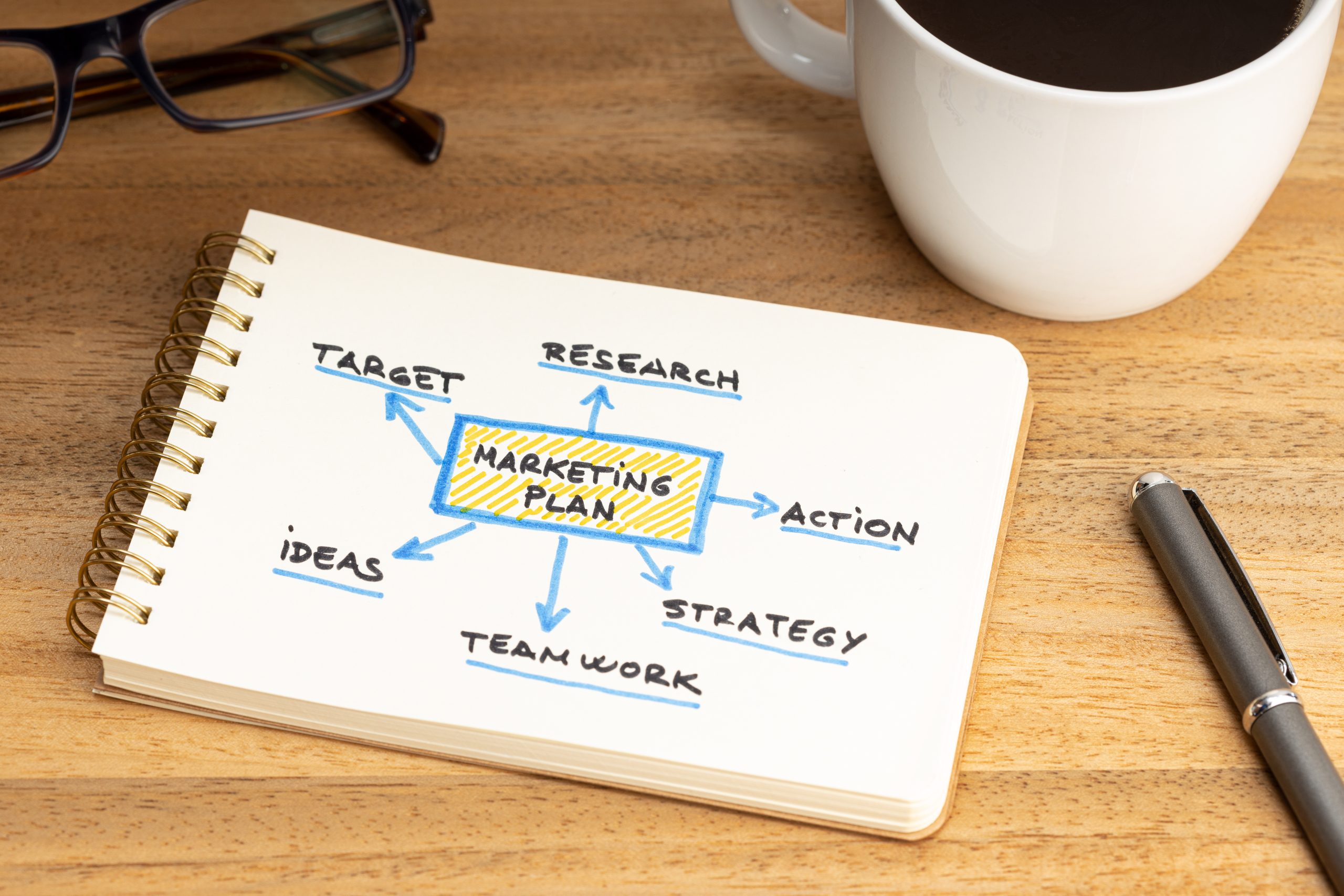
Creating a marketing strategy from zero can feel overwhelming. There’s pressure to do everything at once—ads, content, email, influencers, SEO. And the moment you start Googling frameworks, you’re hit with diagrams, funnel shapes, and spreadsheets that make it all feel even more complicated.
But here’s the truth: you don’t need a perfect strategy. You need a clear one. One that’s simple, focused, and built to evolve as you grow.
If you're starting fresh—whether you're launching a brand, reviving a business, or finally getting serious about growth—this is how to build a strategy that actually moves the needle, step by step.
Start with one goal
Your marketing strategy needs a single, measurable goal to anchor everything else. Not five. Not a vague “build awareness.” Pick one.
That goal could be:
- Get 1,000 email subscribers
- Drive 100 purchases this month
- Book 10 discovery calls
- Hit $25K in monthly revenue
Once you have that target, every channel, campaign, and creative decision gets run through one filter: Does this move us toward that goal?
Clarity kills overwhelm.
Know exactly who you're trying to reach
If your strategy is trying to speak to everyone, it’s speaking to no one.
Create a real profile of your ideal customer—what they’re struggling with, what they want, where they spend time, and how they make buying decisions. Forget demographics. Focus on desires, fears, and beliefs.
If you can finish this sentence, you’re ahead of most brands:
“Our customer is trying to solve ______, and believes ______.”
That belief drives how you position, what you say, and where you show up.
Pick your core channels (and ignore the rest—at first)
One of the fastest ways to fail is trying to show up everywhere with limited time and money. You don’t need to be on every platform—you need to own the ones that matter most to your audience.
For example:
- A skincare brand might focus on TikTok and email
- A B2B service might go heavy on LinkedIn and organic SEO
- A new food product might start with Instagram + IRL sampling
Start with two channels max: one that builds awareness, and one that nurtures conversion. Once those are running smoothly, expand.
Map your funnel (without making it a funnel)
Forget about fancy diagrams. Just ask:
- How do people discover us?
- What convinces them to try us?
- What makes them stick around?
Those three stages define your content and campaign strategy.
Discovery = content (short-form video, search, partnerships)
Conversion = proof and clarity (landing pages, email, retargeting)
Retention = value and relationship (community, SMS, surprise perks)
If you're clear on these, you’re building more than a strategy. You're building a system.
Create a 30-day sprint, not a 12-month plan
Long-term strategy is important—but don’t fall into the trap of planning everything in theory. Start small. Run a 30-day sprint focused on your goal.
Set a few key actions:
- Launch 2 ad creatives
- Publish 8 pieces of content
- Run 1 offer
- Send 4 emails
Measure what happens. Adjust. Repeat. Marketing isn’t a perfect blueprint—it’s a living feedback loop. You learn by doing.
A marketing strategy doesn’t have to be complex to be effective. It just needs to be honest, focused, and tied to what actually matters to your customer. Don’t try to build the “perfect” plan. Build a real one—then get moving.


Performance Marketing Explained Like You’re 5
Performance Marketing Explained Like You’re 5
Performance marketing sounds intimidating. ROAS, CAC, LTV, AOV—it feels like alphabet soup. But here’s the truth: performance marketing is simply marketing that’s built to be measured. You spend money, track what happens, and keep spending if it works.
It’s not just for big brands with analytics teams and $100K ad budgets. It’s how any founder, marketer, or solo creator can grow with limited resources—as long as they understand the basics.
Let’s break it down in plain English, no jargon needed.
You spend money to make money—but only if the numbers work
Imagine you’re selling cookies. You pay $5 to run an Instagram ad. If someone clicks and buys a $20 box of cookies, you made $15 (gross). That’s performance marketing.
Now, imagine that out of 100 people who see the ad, only 3 buy. That’s a 3% conversion rate.
If you made $60 in sales and spent $30 to get it, your ROAS (return on ad spend) is 2.0. For every dollar you spent, you made two. Not bad.
This is the game. You spend to get traffic. Then you measure what percentage of that traffic becomes customers—and whether the math makes sense to keep going.
Every dollar should have a job
Performance marketing isn’t about boosting posts and hoping for the best. It’s about assigning roles.
- Meta Ads (Facebook/Instagram): Grab attention fast and drive action
- Google Search Ads: Capture people already searching for a solution
- TikTok Ads: Build buzz and visibility, especially for DTC brands
- Retargeting: Bring back people who showed interest but didn’t convert
Each piece of the funnel has a role. Your job is to guide people from cold to warm to ready.
The key metrics (in human language)
- ROAS: Return on ad spend. If you spend $1 and make $3, that’s a 3.0 ROAS
- CAC: Customer acquisition cost. How much it costs to get one buyer
- LTV: Lifetime value. How much a customer is worth over time
- AOV: Average order value. How much people spend each time they buy
- CTR: Click-through rate. Percentage of people who click your ad
- CVR: Conversion rate. Percentage of site visitors who buy
Don’t get overwhelmed by the numbers. Focus on one thing first: profitability. Are you spending less than you’re making?
Performance doesn’t mean ignoring brand
One mistake brands make is thinking that performance marketing and brand marketing are opposites. They’re not.
Your best-performing ads are often the ones that feel on-brand, human, and emotionally relevant. Performance just means those ads are built with a goal—clicks, leads, or sales—and you’re tracking how well they perform.
Brand without performance is awareness with no action. Performance without brand is sales with no soul. You need both.
You don’t need a marketing degree to run performance campaigns. Not only that, but you just need to know your numbers, trust your message, and be willing to test. Keep it simple. Keep it measurable. And remember—every dollar should be able to explain what it did for your business.