

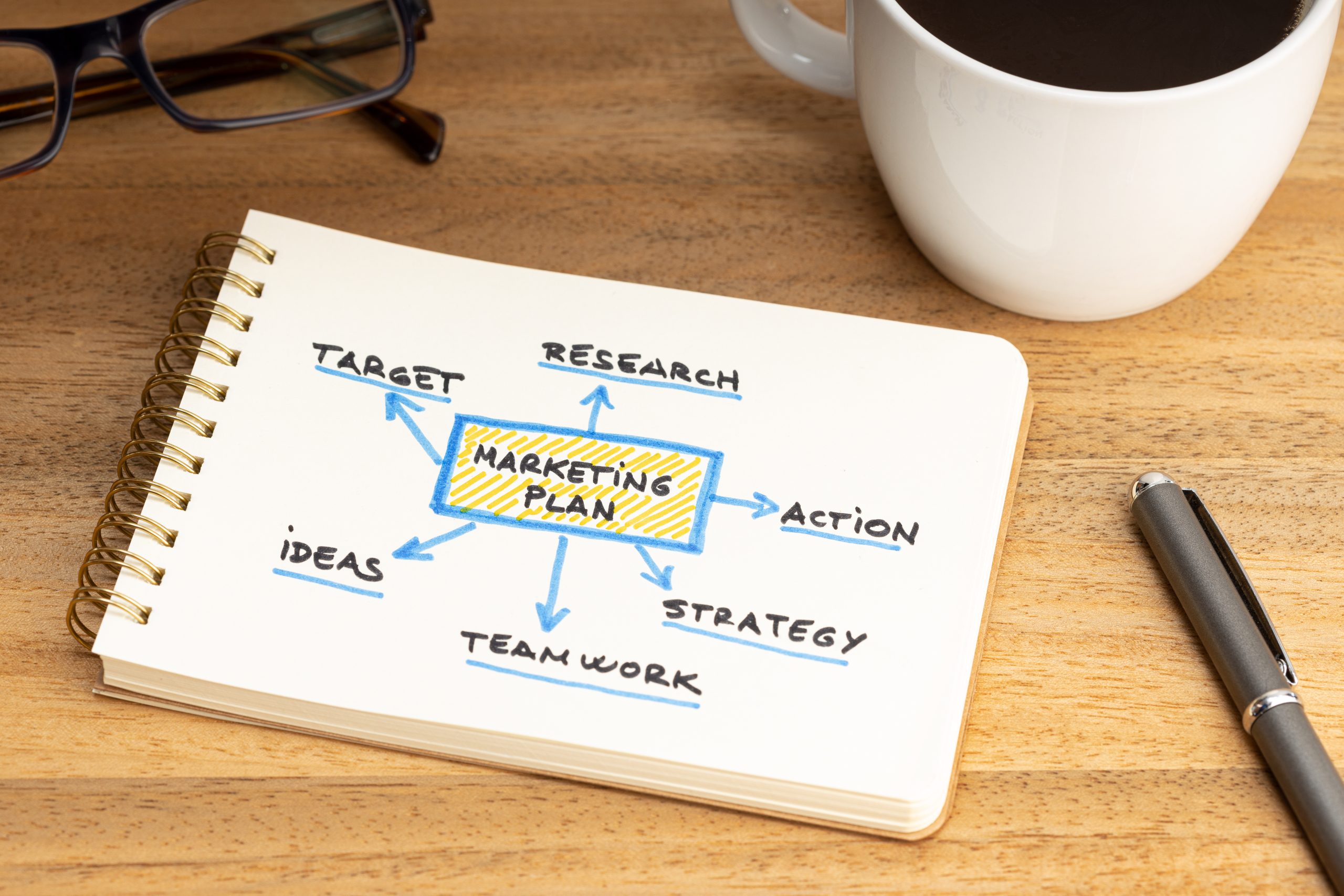
How to Build a Marketing Strategy From Scratch (Without Losing Your Mind)
How to Build a Marketing Strategy From Scratch (Without Losing Your Mind)
Creating a marketing strategy from zero can feel overwhelming. There’s pressure to do everything at once—ads, content, email, influencers, SEO. And the moment you start Googling frameworks, you’re hit with diagrams, funnel shapes, and spreadsheets that make it all feel even more complicated.
But here’s the truth: you don’t need a perfect strategy. You need a clear one. One that’s simple, focused, and built to evolve as you grow.
If you're starting fresh—whether you're launching a brand, reviving a business, or finally getting serious about growth—this is how to build a strategy that actually moves the needle, step by step.
Start with one goal
Your marketing strategy needs a single, measurable goal to anchor everything else. Not five. Not a vague “build awareness.” Pick one.
That goal could be:
- Get 1,000 email subscribers
- Drive 100 purchases this month
- Book 10 discovery calls
- Hit $25K in monthly revenue
Once you have that target, every channel, campaign, and creative decision gets run through one filter: Does this move us toward that goal?
Clarity kills overwhelm.
Know exactly who you're trying to reach
If your strategy is trying to speak to everyone, it’s speaking to no one.
Create a real profile of your ideal customer—what they’re struggling with, what they want, where they spend time, and how they make buying decisions. Forget demographics. Focus on desires, fears, and beliefs.
If you can finish this sentence, you’re ahead of most brands:
“Our customer is trying to solve ______, and believes ______.”
That belief drives how you position, what you say, and where you show up.
Pick your core channels (and ignore the rest—at first)
One of the fastest ways to fail is trying to show up everywhere with limited time and money. You don’t need to be on every platform—you need to own the ones that matter most to your audience.
For example:
- A skincare brand might focus on TikTok and email
- A B2B service might go heavy on LinkedIn and organic SEO
- A new food product might start with Instagram + IRL sampling
Start with two channels max: one that builds awareness, and one that nurtures conversion. Once those are running smoothly, expand.
Map your funnel (without making it a funnel)
Forget about fancy diagrams. Just ask:
- How do people discover us?
- What convinces them to try us?
- What makes them stick around?
Those three stages define your content and campaign strategy.
Discovery = content (short-form video, search, partnerships)
Conversion = proof and clarity (landing pages, email, retargeting)
Retention = value and relationship (community, SMS, surprise perks)
If you're clear on these, you’re building more than a strategy. You're building a system.
Create a 30-day sprint, not a 12-month plan
Long-term strategy is important—but don’t fall into the trap of planning everything in theory. Start small. Run a 30-day sprint focused on your goal.
Set a few key actions:
- Launch 2 ad creatives
- Publish 8 pieces of content
- Run 1 offer
- Send 4 emails
Measure what happens. Adjust. Repeat. Marketing isn’t a perfect blueprint—it’s a living feedback loop. You learn by doing.
A marketing strategy doesn’t have to be complex to be effective. It just needs to be honest, focused, and tied to what actually matters to your customer. Don’t try to build the “perfect” plan. Build a real one—then get moving.


The Founder’s Guide to Building a Personal Brand That Drives Business
The Founder’s Guide to Building a Personal Brand That Drives Business
Let’s be real—people are tired of brands that feel faceless. They want to know who’s behind the product. Who made this? What do they believe in? Why should I trust them?
In 2025, your face, your voice, your story—it’s not just personal. It’s strategic. Because people buy from people, not just product pages.
That’s why founders who show up consistently—on video, in writing, on stage—build stronger trust, attract better talent, land bigger partnerships, and convert more customers. Not because they’re influencers, but because they’re real.
And here’s the best part: you don’t need to be a content creator to build a personal brand that moves the needle. You just need a point of view, a bit of courage, and a smart system.
This is how to make your founder brand, your business’s secret weapon.
Your personal brand isn’t separate from your business—it is the business
You don’t need to post selfies every day or talk about your breakfast. But you do need to make yourself visible. Because when a customer is choosing between two similar products, they’ll go with the one that feels more human—the one with a story they can connect to.
Whether you’re bootstrapping an ecommerce brand, raising a round for your tech startup, or growing a service-based business, your visibility as a founder builds momentum across every part of the business:
- It shortens the trust cycle with customers
- It attracts media and podcast invites
- It gives your product a story, not just a SKU
- It makes recruiting feel magnetic, not transactional
People want to follow people who stand for something. That’s what you’re here to build.
Start with three stories: origin, mission, and moment
You don’t need a personal brand strategy doc. You need stories that are true, repeatable, and aligned with what your business solves.
- Origin story: Why did you start this? What problem were you trying to fix?
Make it personal. “I couldn’t find X, so I made it” is powerful. - Mission story: What do you believe about the world, industry, or future that most people don’t?
This creates identity. “We’re not just a hydration brand—we’re a focus brand for founders who hate burnout.” - Moment story: What challenge, pivot, or win changed the way you saw the business?
Share it as a post, a caption, or even a 60-second talking head video.
These aren’t “about me” stories. They’re brand-building narratives told through your voice.
Pick your platform and your format
You don’t need to be everywhere. You need to be visible somewhere consistently.
If you’re good on video:
Start with Instagram Stories, TikTok, or YouTube Shorts. Shoot 30–60 second founder insights, product demos, or mini-rants.
If you prefer writing:
Post short-form content on LinkedIn or Twitter/X. Focus on POV, lessons, customer insights, or founder mistakes.
If you hate both:
Start with podcast appearances. Use your voice. Let someone else guide the conversation. Then repurpose the clips.
The goal is not to perform—it’s to show up as yourself, with clarity and intent. Frequency builds familiarity. Familiarity builds trust.
Show the process, not just the product
People don’t just want the final product—they want to see how it’s made, what decisions were hard, what tradeoffs you made, and what’s coming next. That’s the power of building in public.
Think about content like:
- Sneak peeks of a launch
- The 3 hardest things about your last week
- Why you killed a product idea
- What you’re testing next month
- How you got your first 100 customers
These posts don't need to go viral. They need to build connection. And over time, that’s what builds community.
Your face builds faster trust than your logo ever will
Let’s say someone discovers your brand through an ad. They like the product, but they’re unsure. They visit your site, maybe follow you on Instagram. Now imagine they see a reel where the founder talks directly to camera:
“Here’s why we built this. I was tired of products that made big promises and delivered nothing. So we made something that actually works.”
Now you’re not just a brand. You’re a person. That moment of directness—of showing your face—creates trust faster than any brand animation ever will.
And if you do it consistently? You’re not just marketing. You’re compounding.
Not only that, but you don’t need to be loud. You need to be clear.
Some founders avoid building a personal brand because they don’t want to feel like they’re “building a following” or turning into influencers. That’s fair. But that’s not the point.
The point is to be findable, followable, and believable.
You want people to know what you stand for, why you built this, and where you're going next.
Because at the end of the day, the founder who hides behind the product gets lost in the noise.
The one who shows up—with honesty, with direction, with their own voice—is the one who gets remembered.
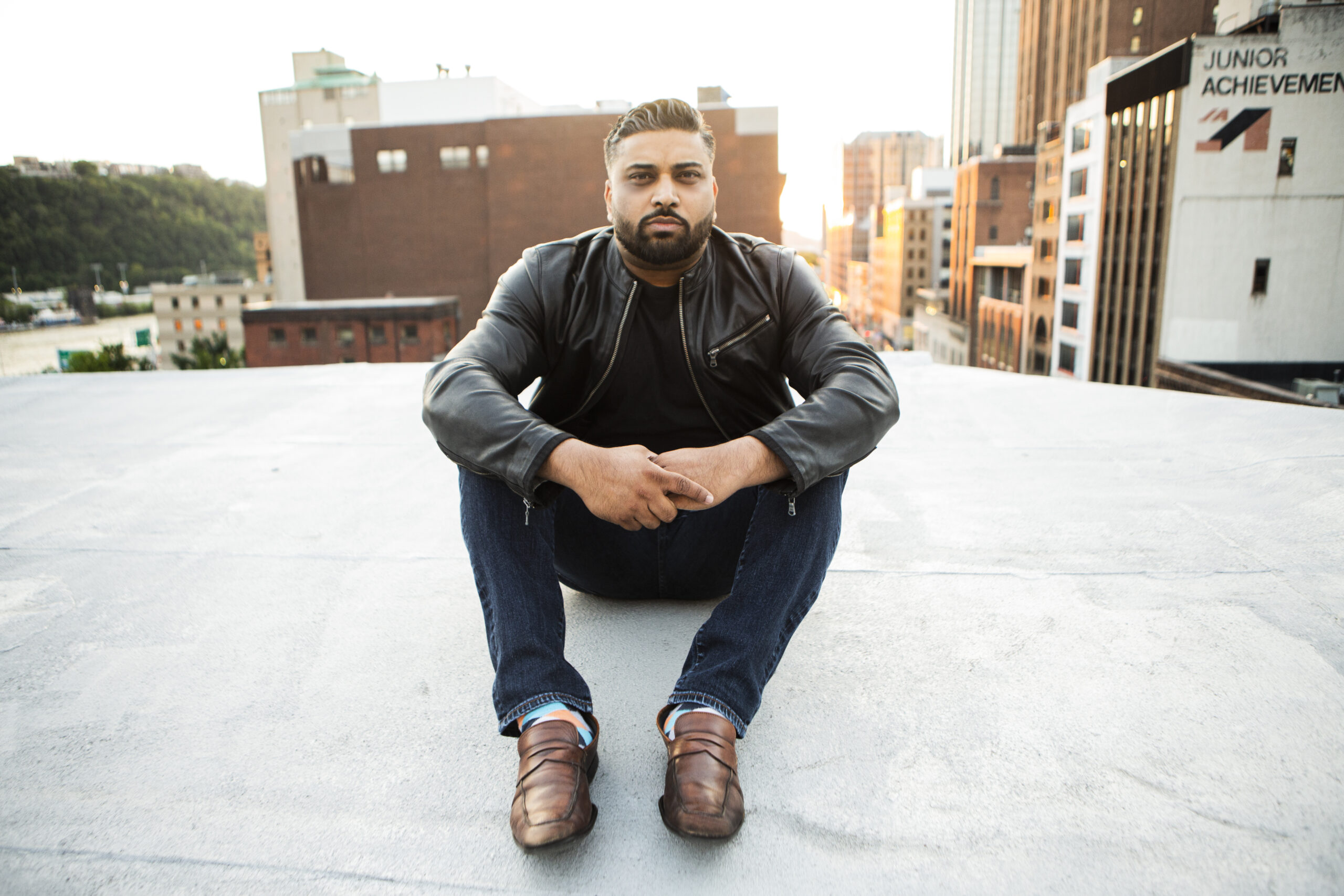
Introducing the New Youngry: A Legacy Reimagined
In life, some ideas refuse to fade away. They live in the corners of our minds, waiting for the right moment to rise again, stronger and more relevant than ever. Youngry is one of those ideas.
Once a passion project fueled by youthful ambition, Youngry started as a blog back in the early 2000s. My fraternity brother, Ravi Kudesia, and I poured our hearts into it, crafting a space for ideas, stories, and conversations that resonated with over 10,000 subscribers—a staggering number for a time when the concept of “blogging” was still in its infancy. It was a spark of something bigger, but like many great ideas, life had other plans. College demands, career aspirations, and the unpredictable nature of growing up led us to put Youngry on the shelf.
From Dorm Room to the Drapers
The spark was reignited in 2014 when I teamed up with my business partner, Ash Kumra. Together, we breathed new life into Youngry, evolving it from a nostalgic passion into a platform with real potential. It pivoted, grew, and broke ground as one of the first Title III equity-crowdfunded companies on Republic, gaining national attention and even earning a spot on Sony TV’s “Meet the Drapers.”
Despite the momentum, the venture faced its share of challenges. After years of fighting to sustain the vision, Youngry ultimately closed its doors. The lessons learned were invaluable, and though the chapter ended, the story never truly felt over.
A New Era: Rebirth as a Disruption Marketing Agency
Fast forward to 2025, and the world is vastly different, but my hunger to build something meaningful has only intensified. Over the last few years, I’ve had the privilege of working alongside an incredible team at AKG Creative, where we’ve built a reputation as a disruption marketing agency—helping brands break through the noise, tell bold stories, and grow in ways they didn’t think possible.
But as we grew, something became clear: AKG Creative needed a name that carried the spirit of who we are and what we stand for. Something that captured not just our creativity, but our relentless drive. And there it was, staring back at me from the past.
Youngry.
Not just a brand. A mindset. Young in spirit. Hungry in ambition.
Our Mission
According to Harvard Business Review, over 95% of businesses fail in their first 18 months. We really hate that statistic with every fiber of our beings. It’s unacceptable that so many dreams are extinguished before they even get the chance to shine.
That’s why we assembled a team of experienced and early-stage entrepreneurs with a common goal: to bring about change. With this collective spirit, we affirm that we are in this journey with you. By connecting those with knowledge and experience to those in need of solutions, we’re here to help you beat the odds as a team.
This mission isn’t just about business—it’s about building a community of creators, innovators, and go-getters who refuse to accept failure as inevitable. Together, we can rewrite the narrative.
Why This Moment Matters
Rebranding isn’t just a fresh coat of paint. It’s an acknowledgment of growth, failure, resilience, and reinvention. For me, this journey—from the dorm room blog with Ravi to the crowdfunding campaigns with Ash, and now to this next chapter with the incredible team we’ve built—has been about honoring the lessons that life and business have taught me.
Youngry is more than a name. It’s a testament to dreaming big, falling hard, getting up, and doing it all over again—this time, smarter, stronger, and hungrier.
What’s Next?
In the coming weeks and months, you’ll see the new Youngry emerge. From fresh branding to bold campaigns, our mission is clear: to help businesses embrace the disruptive energy that fuels growth and innovation. Whether it’s through strategic marketing, storytelling, or creative problem-solving, Youngry is here to help you thrive.
Thank you to everyone who has been part of this journey—those who believed in the blog, supported the equity crowdfunding campaign, or worked with AKG Creative. This isn’t just my story. It’s ours.
Here’s to being Young in spirit and hungry in ambition—together.
Stay tuned. The best is yet to come.
